
Static Electricity How Static Electricity Builds Up When
Static Electricity
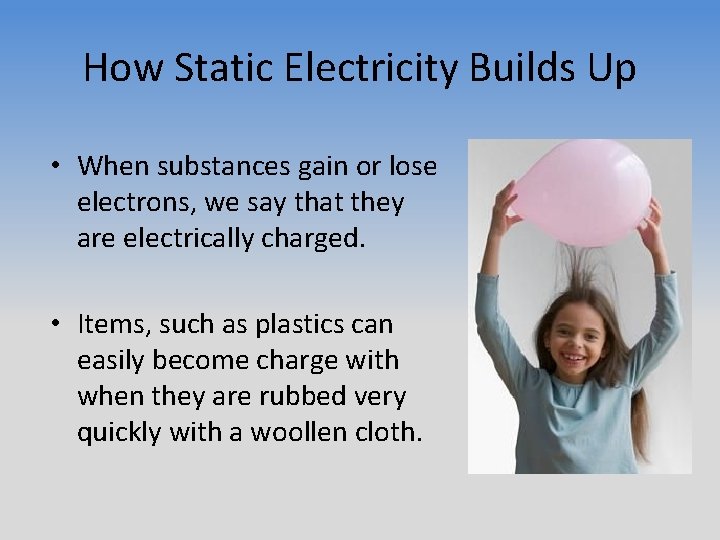
How Static Electricity Builds Up • When substances gain or lose electrons, we say that they are electrically charged. • Items, such as plastics can easily become charge with when they are rubbed very quickly with a woollen cloth.
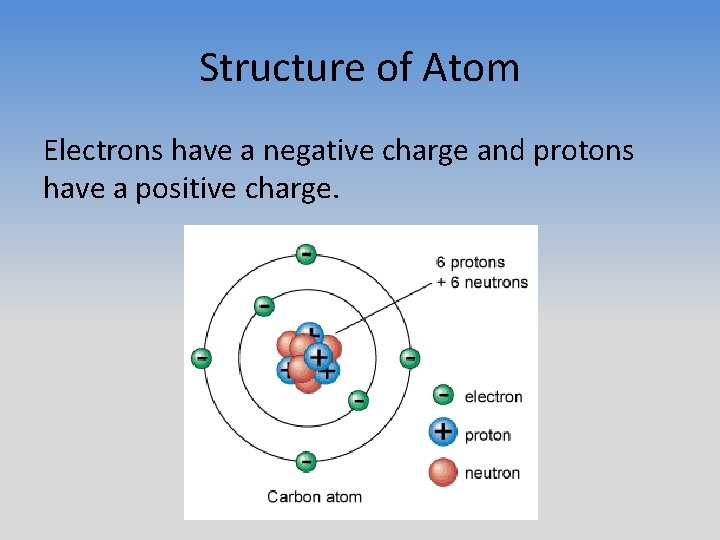
Structure of Atom Electrons have a negative charge and protons have a positive charge.

Positive and Negative Charges • In most substances, there are the exact same number of protons as electrons and we say that the substance is neutral. • When a substance (e. g. perspex) loses electrons, it becomes positively charged. • When a substance (e. g. polythene) gains electrons, it becomes negatively charged.
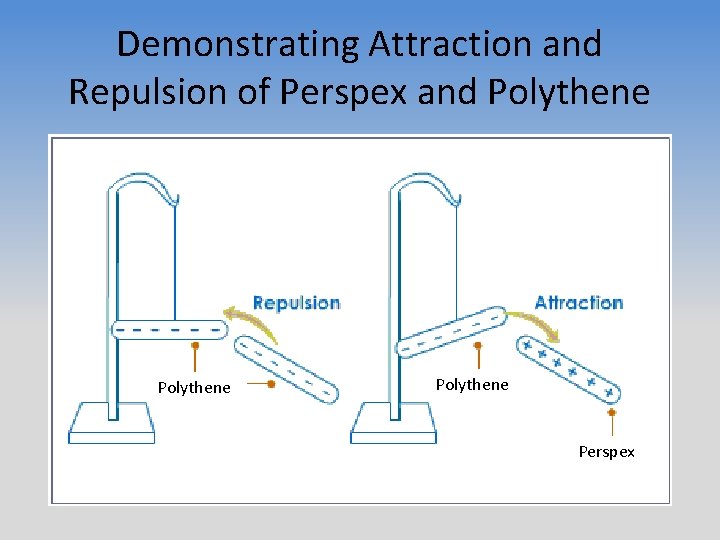
Demonstrating Attraction and Repulsion of Perspex and Polythene Perspex
Attraction and Repulsion • Like charges repel each other (e. g. positive and positive) • Unlike charges attract each other (e. g. positive and negative)
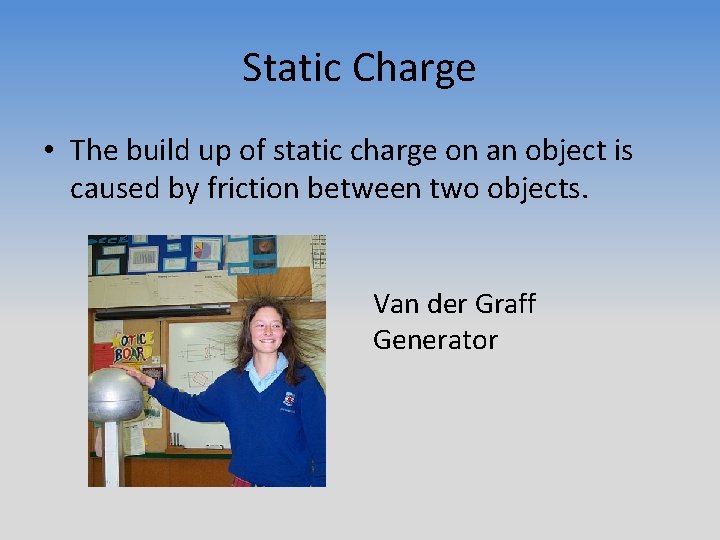
Static Charge • The build up of static charge on an object is caused by friction between two objects. Van der Graff Generator
• Insulators: do not normally allow electric charge to pass through them (e. g. rubber, plastic) • Conductors: allow electric charge to pass through them easily (e. g. most metals) • Earthing: means connecting an object to the earth by means of a conductor, so that the object shares its charge with the earth.
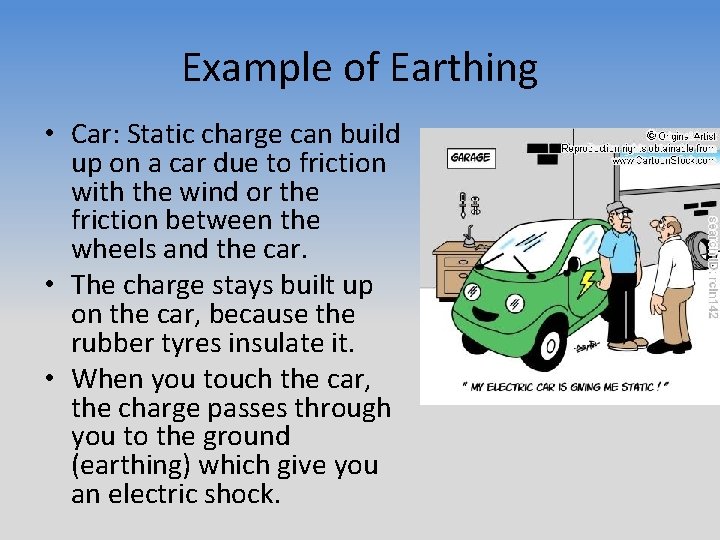
Example of Earthing • Car: Static charge can build up on a car due to friction with the wind or the friction between the wheels and the car. • The charge stays built up on the car, because the rubber tyres insulate it. • When you touch the car, the charge passes through you to the ground (earthing) which give you an electric shock.
• Static Charge does not build up when there is water present, because water allows the charge to be earthed.
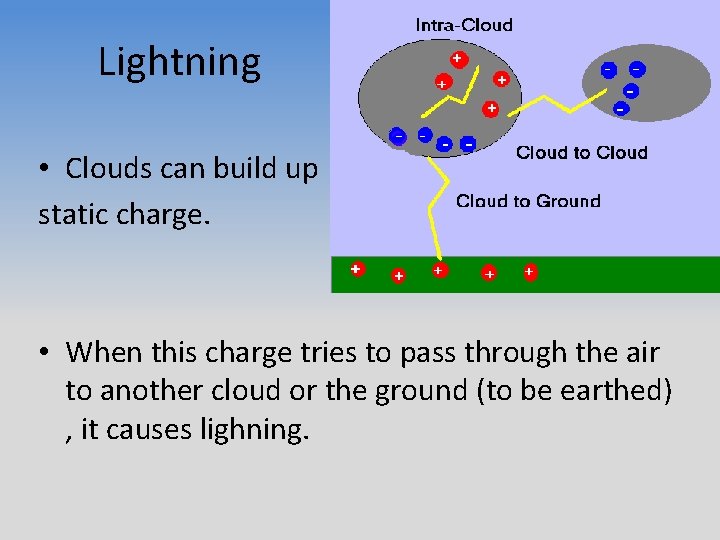
Lightning • Clouds can build up static charge. • When this charge tries to pass through the air to another cloud or the ground (to be earthed) , it causes lighning.
- Slides: 11