
STATIC AND KINETIC FRICTION Lesson 3 What is
- Slides: 9
STATIC AND KINETIC FRICTION Lesson 3
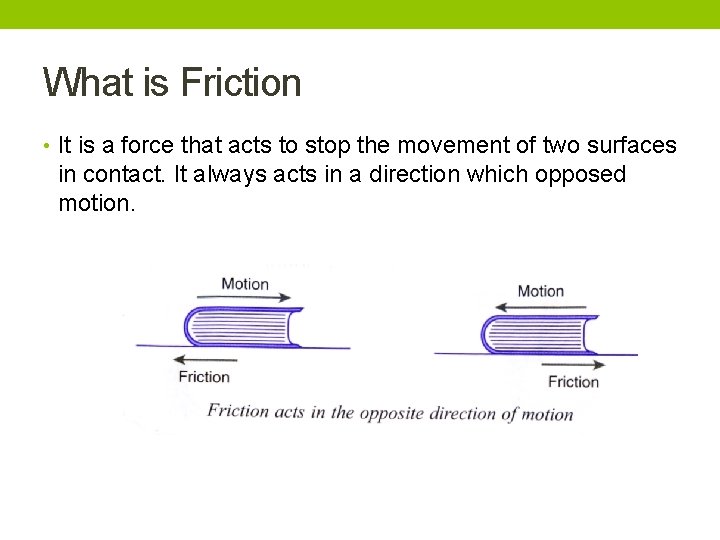
What is Friction • It is a force that acts to stop the movement of two surfaces in contact. It always acts in a direction which opposed motion.
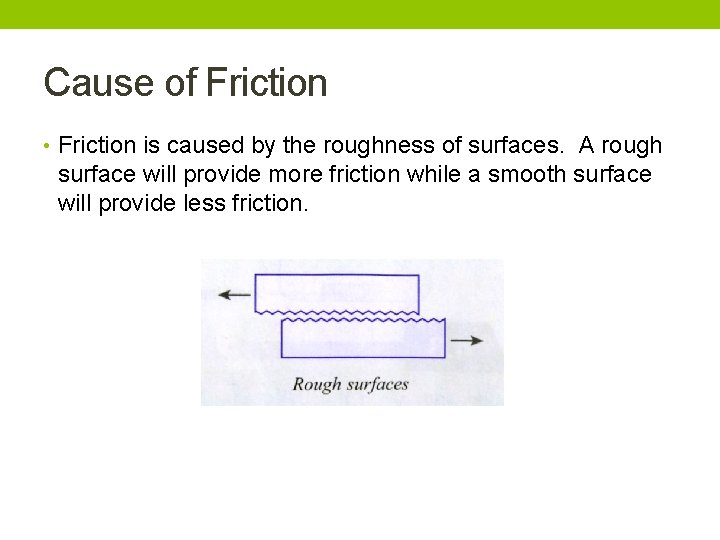
Cause of Friction • Friction is caused by the roughness of surfaces. A rough surface will provide more friction while a smooth surface will provide less friction.
Types of Friction Static Friction Kinetic Friction • It is the friction that acts • Is a friction that acts on on two surfaces in contact that are not moving when a force to move is applied. • Static friction has a maximum and as long as the force applied does not exceed this maximum, the two surfaces will not move. two surfaces in contact that are moving. • This type of friction has a constant magnitude regardless of the relative speed at which the two surfaces are moving.
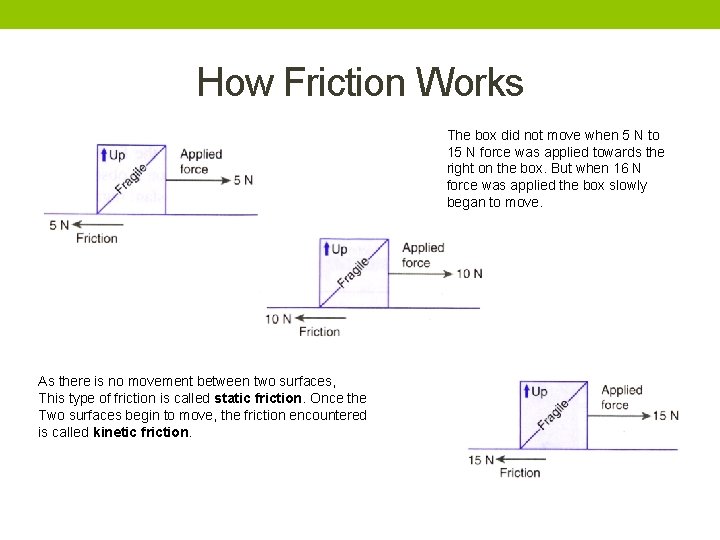
How Friction Works The box did not move when 5 N to 15 N force was applied towards the right on the box. But when 16 N force was applied the box slowly began to move. As there is no movement between two surfaces, This type of friction is called static friction. Once the Two surfaces begin to move, the friction encountered is called kinetic friction.
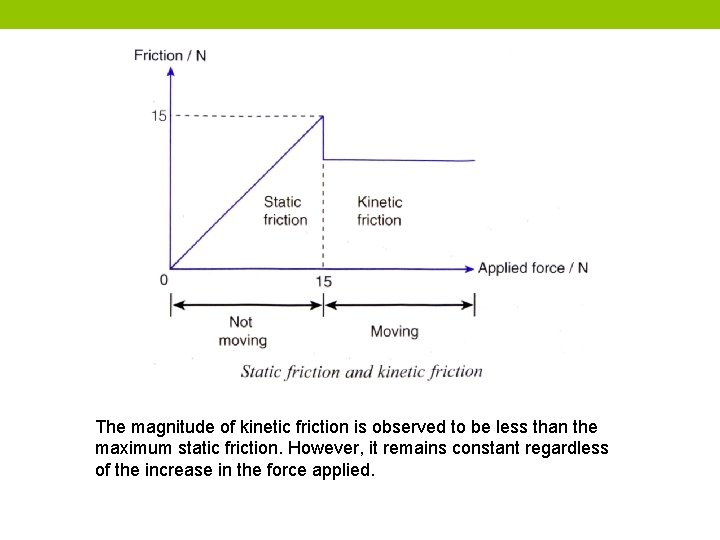
The magnitude of kinetic friction is observed to be less than the maximum static friction. However, it remains constant regardless of the increase in the force applied.
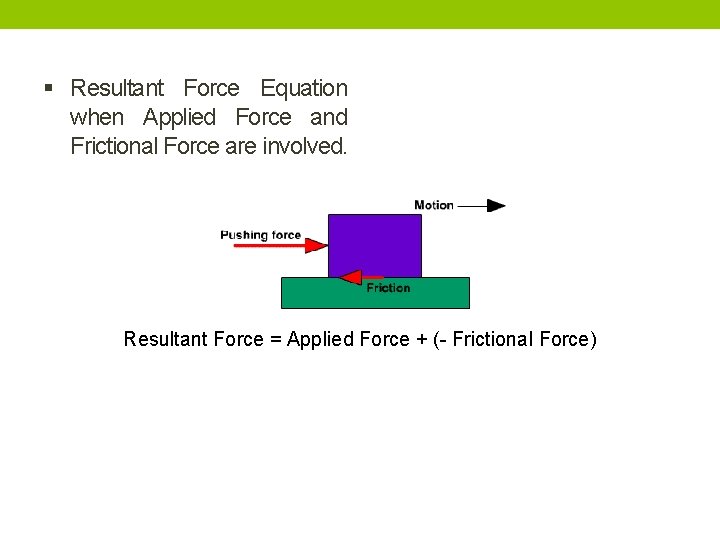
§ Resultant Force Equation when Applied Force and Frictional Force are involved. Resultant Force = Applied Force + (- Frictional Force)
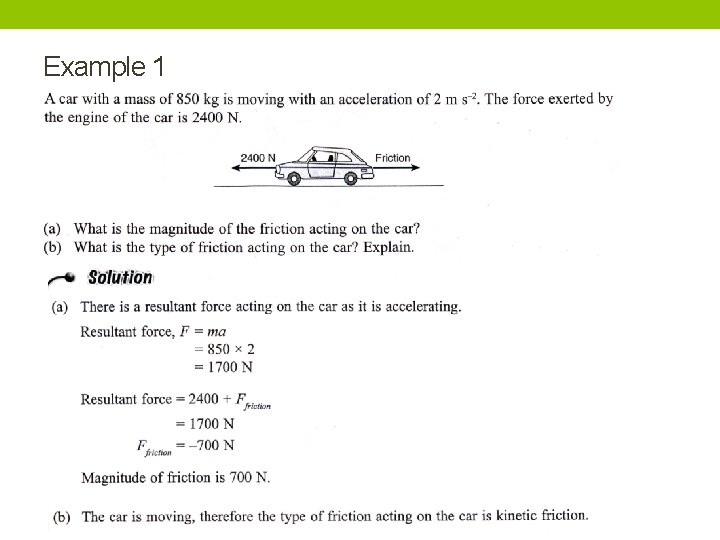
Example 1
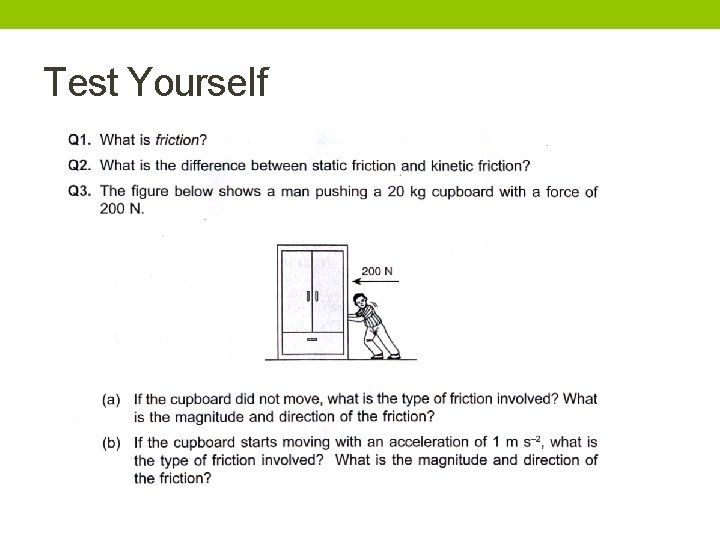
Test Yourself