
Static Analysis for Security Amir Bazine Per Rehnberg
Static Analysis for Security Amir Bazine Per Rehnberg
Content • • • Background Static Analysis tools Our resarch and tests Test results Conclusion
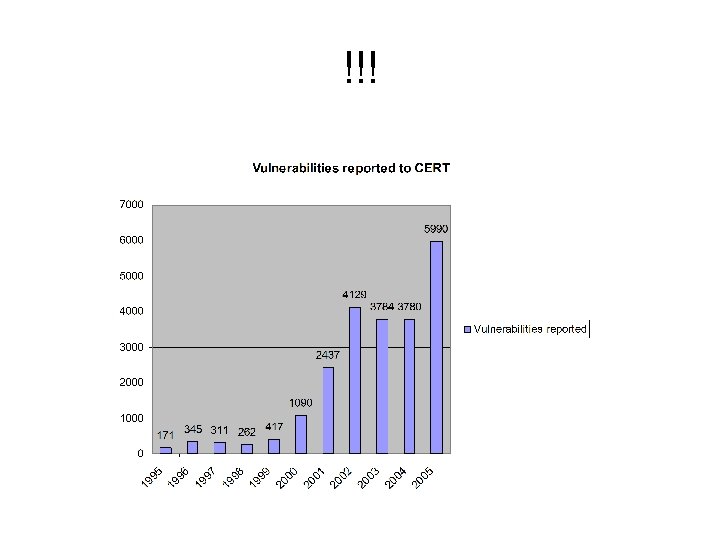
Background • Increase of reported vulnerabilities • Dynamic analysis not enough • Developed new static analysis tools – Ease the auditing process
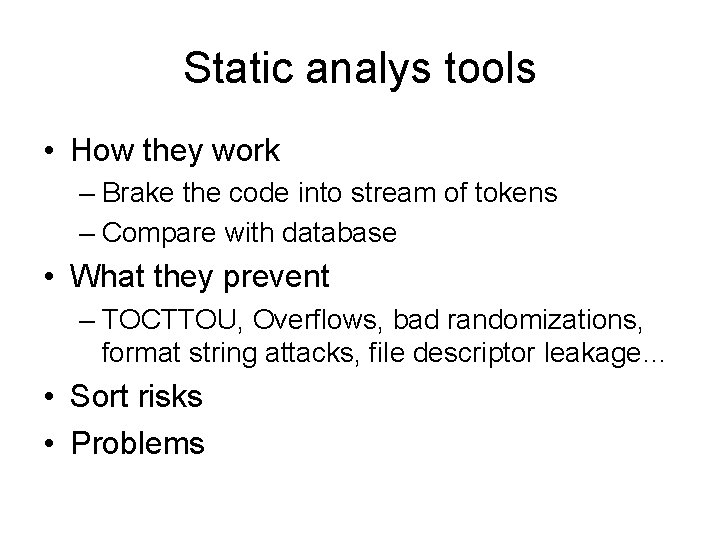
Static analys tools • How they work – Brake the code into stream of tokens – Compare with database • What they prevent – TOCTTOU, Overflows, bad randomizations, format string attacks, file descriptor leakage… • Sort risks • Problems
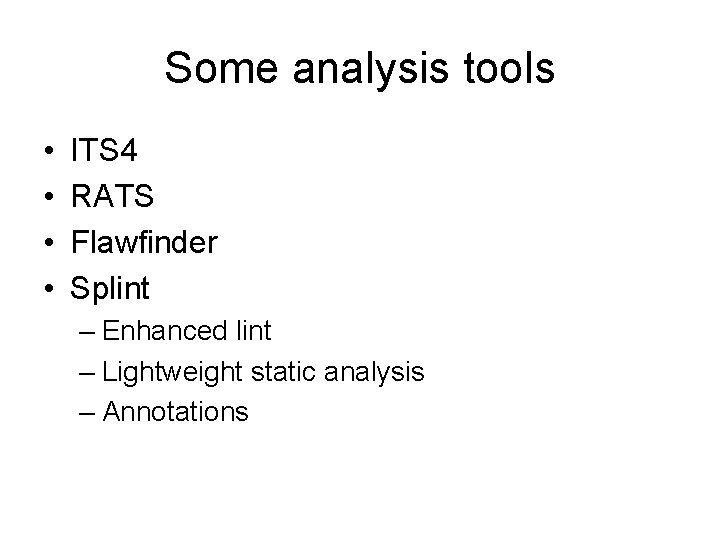
Some analysis tools • • ITS 4 RATS Flawfinder Splint – Enhanced lint – Lightweight static analysis – Annotations
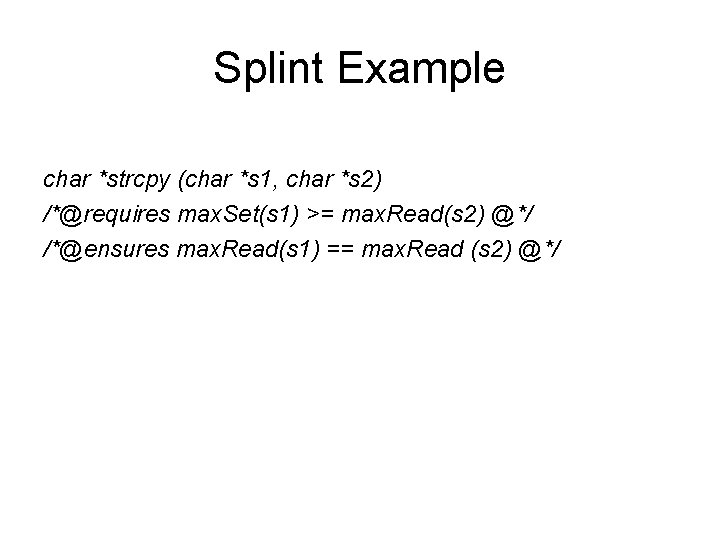
Splint Example char *strcpy (char *s 1, char *s 2) /*@requires max. Set(s 1) >= max. Read(s 2) @*/ /*@ensures max. Read(s 1) == max. Read (s 2) @*/
Survey • Our survey was about finding out how static analysis tools works and what they can do.
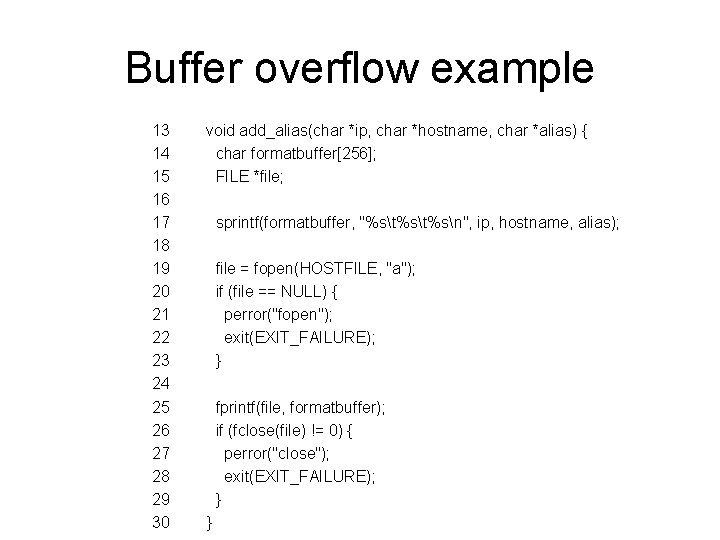
Buffer overflow example 13 14 15 16 17 18 19 20 21 22 23 24 25 26 27 28 29 30 void add_alias(char *ip, char *hostname, char *alias) { char formatbuffer[256]; FILE *file; sprintf(formatbuffer, "%st%sn", ip, hostname, alias); file = fopen(HOSTFILE, "a"); if (file == NULL) { perror("fopen"); exit(EXIT_FAILURE); } fprintf(file, formatbuffer); if (fclose(file) != 0) { perror("close"); exit(EXIT_FAILURE); } }
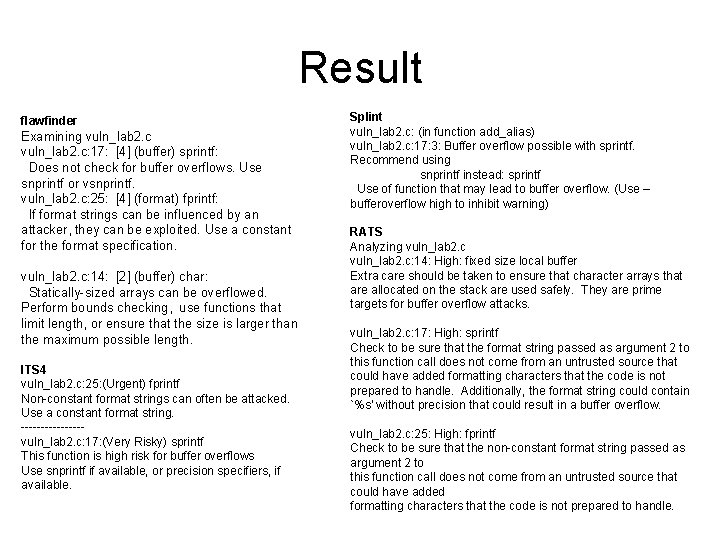
Result flawfinder Examining vuln_lab 2. c: 17: [4] (buffer) sprintf: Does not check for buffer overflows. Use snprintf or vsnprintf. vuln_lab 2. c: 25: [4] (format) fprintf: If format strings can be influenced by an attacker, they can be exploited. Use a constant for the format specification. vuln_lab 2. c: 14: [2] (buffer) char: Statically-sized arrays can be overflowed. Perform bounds checking, use functions that limit length, or ensure that the size is larger than the maximum possible length. ITS 4 vuln_lab 2. c: 25: (Urgent) fprintf Non-constant format strings can often be attacked. Use a constant format string. --------vuln_lab 2. c: 17: (Very Risky) sprintf This function is high risk for buffer overflows Use snprintf if available, or precision specifiers, if available. Splint vuln_lab 2. c: (in function add_alias) vuln_lab 2. c: 17: 3: Buffer overflow possible with sprintf. Recommend using snprintf instead: sprintf Use of function that may lead to buffer overflow. (Use – bufferoverflow high to inhibit warning) RATS Analyzing vuln_lab 2. c: 14: High: fixed size local buffer Extra care should be taken to ensure that character arrays that are allocated on the stack are used safely. They are prime targets for buffer overflow attacks. vuln_lab 2. c: 17: High: sprintf Check to be sure that the format string passed as argument 2 to this function call does not come from an untrusted source that could have added formatting characters that the code is not prepared to handle. Additionally, the format string could contain `%s' without precision that could result in a buffer overflow. vuln_lab 2. c: 25: High: fprintf Check to be sure that the non-constant format string passed as argument 2 to this function call does not come from an untrusted source that could have added formatting characters that the code is not prepared to handle.
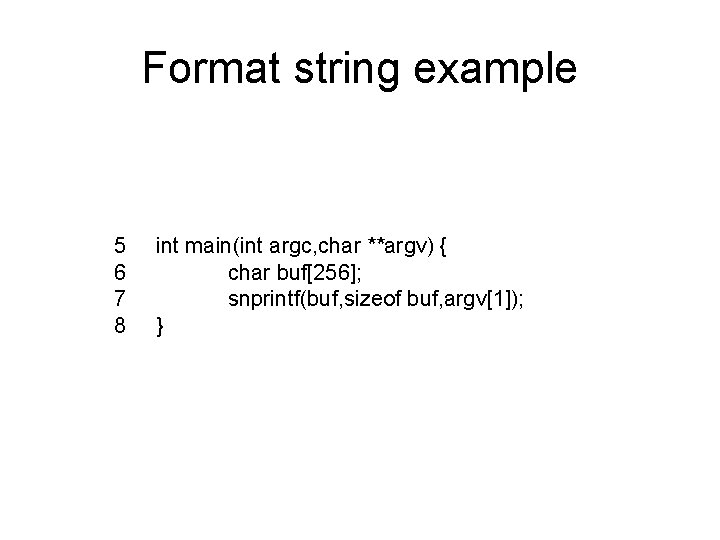
Format string example 5 6 7 8 int main(int argc, char **argv) { char buf[256]; snprintf(buf, sizeof buf, argv[1]); }
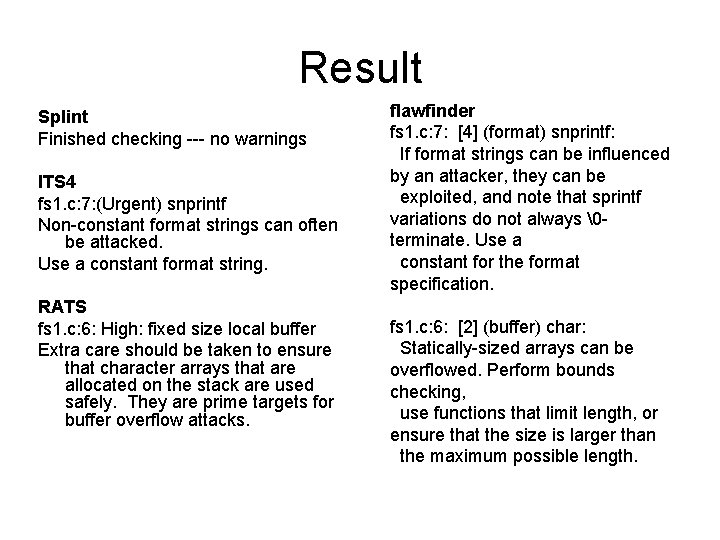
Result Splint Finished checking --- no warnings ITS 4 fs 1. c: 7: (Urgent) snprintf Non-constant format strings can often be attacked. Use a constant format string. RATS fs 1. c: 6: High: fixed size local buffer Extra care should be taken to ensure that character arrays that are allocated on the stack are used safely. They are prime targets for buffer overflow attacks. flawfinder fs 1. c: 7: [4] (format) snprintf: If format strings can be influenced by an attacker, they can be exploited, and note that sprintf variations do not always terminate. Use a constant for the format specification. fs 1. c: 6: [2] (buffer) char: Statically-sized arrays can be overflowed. Perform bounds checking, use functions that limit length, or ensure that the size is larger than the maximum possible length.
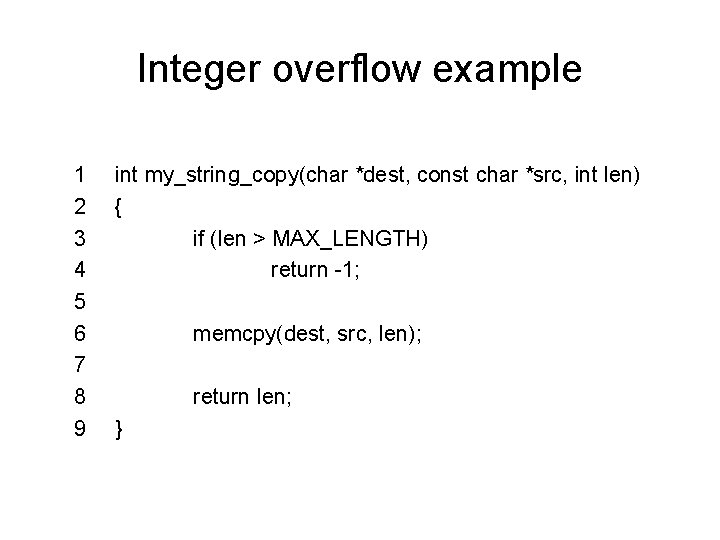
Integer overflow example 1 2 3 4 5 6 7 8 9 int my_string_copy(char *dest, const char *src, int len) { if (len > MAX_LENGTH) return -1; memcpy(dest, src, len); return len; }
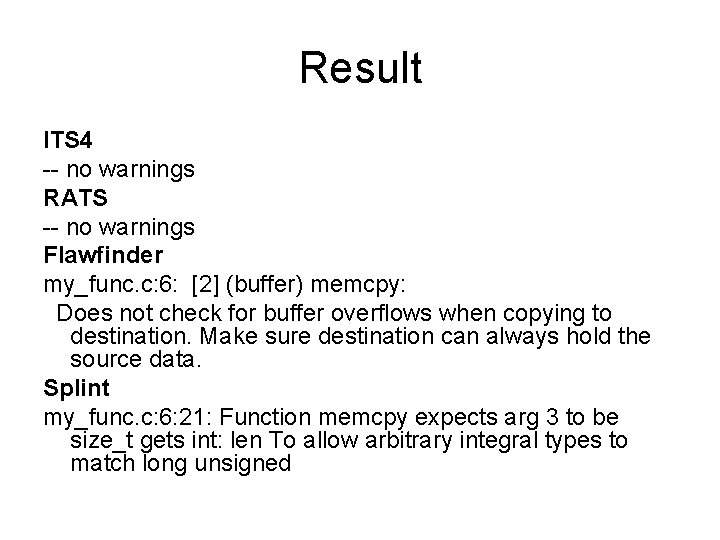
Result ITS 4 -- no warnings RATS -- no warnings Flawfinder my_func. c: 6: [2] (buffer) memcpy: Does not check for buffer overflows when copying to destination. Make sure destination can always hold the source data. Splint my_func. c: 6: 21: Function memcpy expects arg 3 to be size_t gets int: len To allow arbitrary integral types to match long unsigned
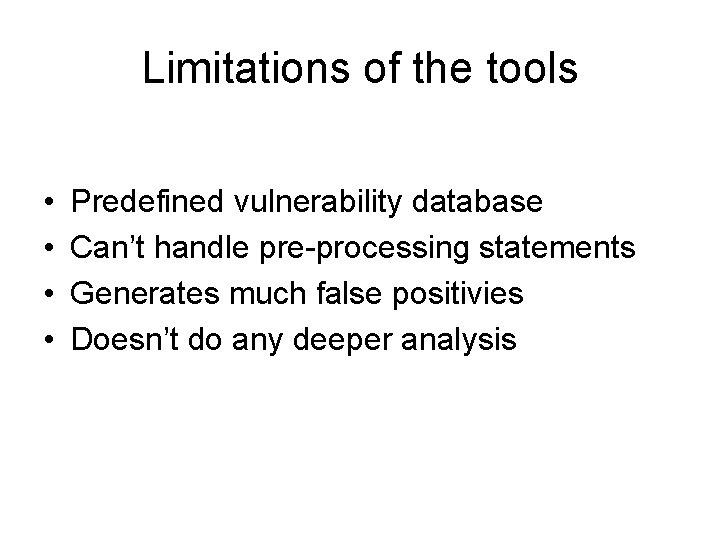
Limitations of the tools • • Predefined vulnerability database Can’t handle pre-processing statements Generates much false positivies Doesn’t do any deeper analysis
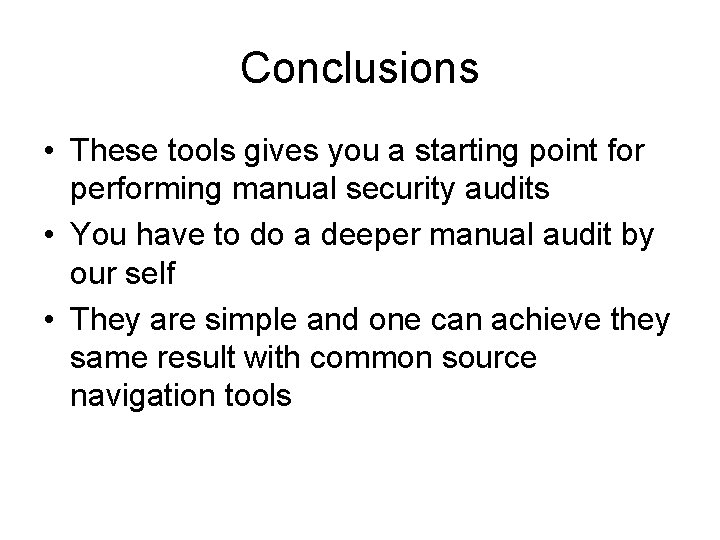
Conclusions • These tools gives you a starting point for performing manual security audits • You have to do a deeper manual audit by our self • They are simple and one can achieve they same result with common source navigation tools
Our recommendations • Check the warnings that your compiler gives you! • Use static/dynamic tools to check your source code for flaws • Do manual security audits!

Questions?
- Slides: 18