
Statewide Solid Waste Plan UpdateElement 171 State of
- Slides: 22
Statewide Solid Waste Plan Update-Element 171 State of Waste Review Advisory Committee Review May 21, 2013 Michael OConnell, Executive Director Rhode Island Resource Recovery Corporation 1
Presentation Purpose: • Overview of Regional Solid Waste Market and RIRRC Solid Waste and Recycling Trends • Review strategies that optimize RI’s solid waste facilities and financial resources in the best long term interest of Rhode Islanders. • Examine the environmental opportunities available to Rhode Island as we transition to the next stage of solid waste management 2
Plan Vision-2035: To be truly sustainable, Rhode Island must invest in full-scale residential composting facilities. We must make organics management a top statewide priority. This will remove 30% of the waste from the waste stream, and will generate much needed energy. We must continue to invest in manufacturing processes that use recyclables as feedstock and provide longterm high-quality jobs. We must implement the best state of the art technologies and public policy practices to maximize the remaining years of the central landfill, increase the remaining usefulness of the Materials Recycling Facility, and begin the transition to the solid waste management practices that will take Rhode Island into the 22 nd century. 3
Plan Goals: • Goal 1: Significantly reduce the amount of RI generated solid waste requiring disposal through increased source reduction, reuse, recycling, and composting. • Goal 2: Manage the solid waste that ultimately must be disposed in an efficient, equitable, and environmentally protective manner, consistent with the established solid waste hierarchy. • Goal 3: Adopt stable, long-term funding mechanisms that provide sufficient revenue for state, regional, and local programs while providing incentives for increased waste reduction and diversion. 4
Regional Solid Waste Market 5
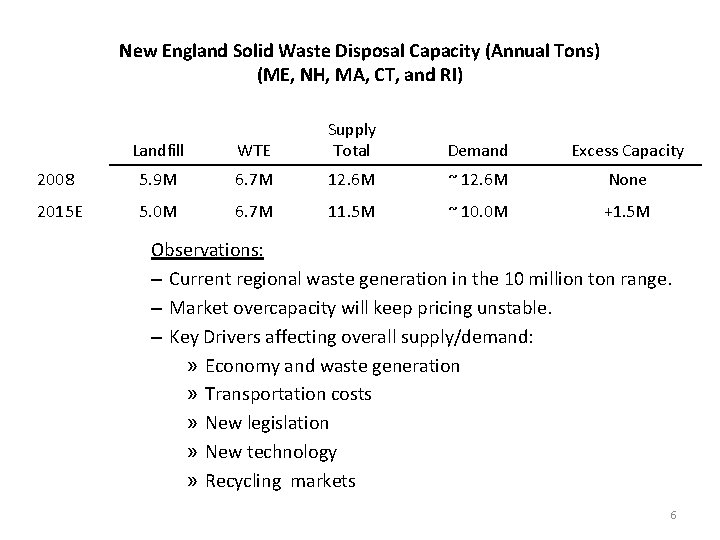
New England Solid Waste Disposal Capacity (Annual Tons) (ME, NH, MA, CT, and RI) Landfill WTE Supply Total 2008 5. 9 M 6. 7 M 12. 6 M ~ 12. 6 M None 2015 E 5. 0 M 6. 7 M 11. 5 M ~ 10. 0 M +1. 5 M Demand Excess Capacity Observations: – Current regional waste generation in the 10 million ton range. – Market overcapacity will keep pricing unstable. – Key Drivers affecting overall supply/demand: » Economy and waste generation » Transportation costs » New legislation » New technology » Recycling markets 6
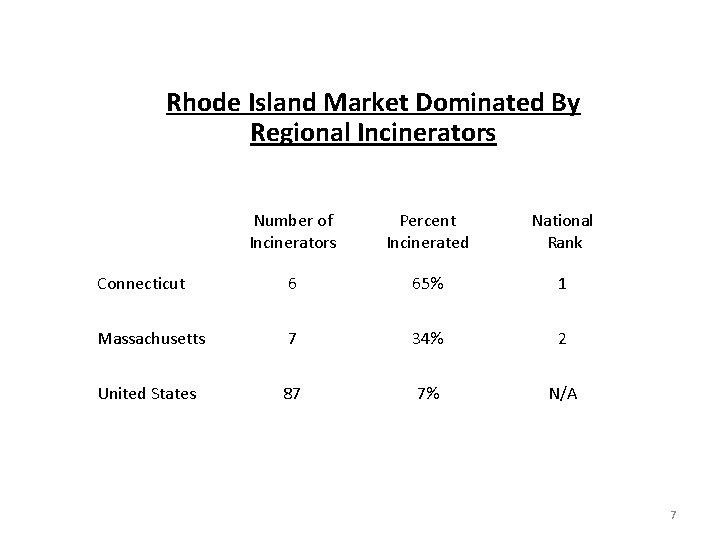
Rhode Island Market Dominated By Regional Incinerators Number of Incinerators Percent Incinerated National Rank Connecticut 6 65% 1 Massachusetts 7 34% 2 United States 87 7% N/A 7
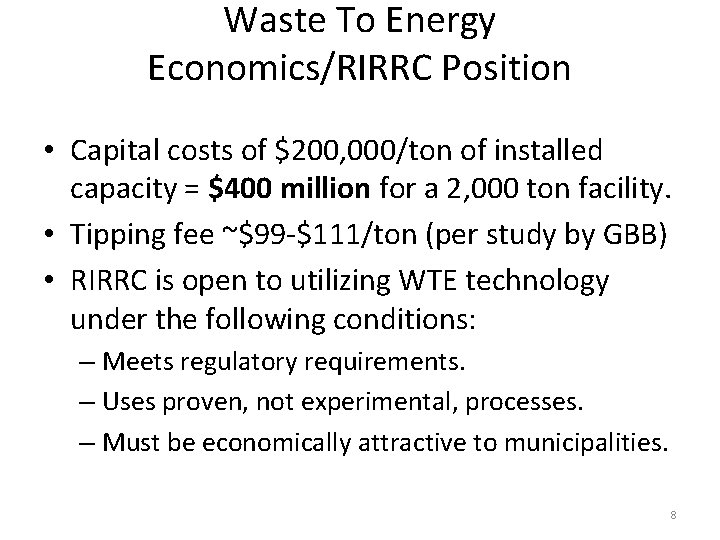
Waste To Energy Economics/RIRRC Position • Capital costs of $200, 000/ton of installed capacity = $400 million for a 2, 000 ton facility. • Tipping fee ~$99 -$111/ton (per study by GBB) • RIRRC is open to utilizing WTE technology under the following conditions: – Meets regulatory requirements. – Uses proven, not experimental, processes. – Must be economically attractive to municipalities. 8
Regional Solid Waste Market in Conclusion • Waste Disposal currently a buyer’s market. • No opportunity for RIRRC to raise prices and increase cash flow. • No new greenfield WTE plant built in 18 years. • Incinerators are price leaders, landfills are price followers. • Potential now exists to lock up relatively low disposal prices for major long term commitments of solid waste volumes. 9
Rhode Island Resource Recovery Corporation Quasi-public state agency, established in 1974, charged with managing the state’s solid waste and recycling program by meeting high industry standards for recycling and waste disposal, and using the best mix of public and private processing, recycling and disposal systems, programs, and facilities for both commercial and municipal waste in order to meet Rhode Island's needs. RIGL 23 -19 10
Current Mission/objectives Mission: Provide safe, environmentally compliant, clean, and cost effective solid waste and recycling services for all Rhode Islanders. Key Objectives: 1. Work collaboratively with stakeholders to increase recycling and diversion to make RI a greener and healthier place to live. 2. Continue to increase the life of the landfill in order to provide long term significantly reduced waste disposal costs versus the market for all municipalities. 3. Remain financially self-sufficient funding all operational and capital requirements from fees. 11
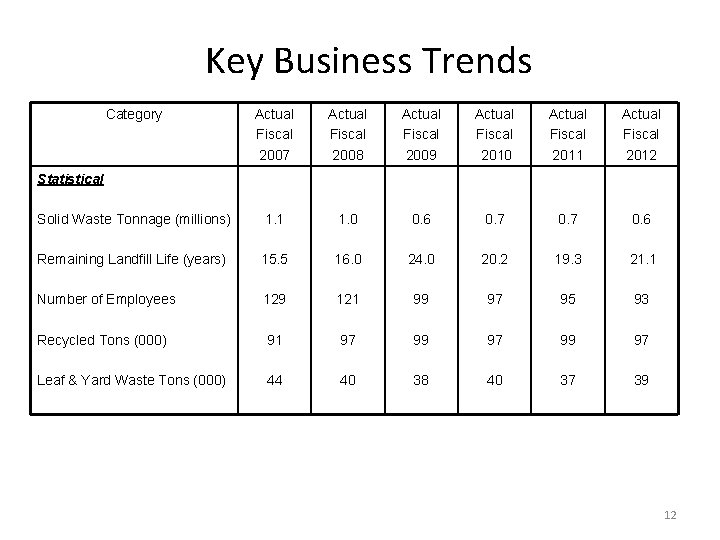
Key Business Trends Category Actual Fiscal 2007 Actual Fiscal 2008 Actual Fiscal 2009 Actual Fiscal 2010 Actual Fiscal 2011 Actual Fiscal 2012 Solid Waste Tonnage (millions) 1. 1 1. 0 0. 6 0. 7 0. 6 Remaining Landfill Life (years) 15. 5 16. 0 24. 0 20. 2 19. 3 21. 1 Number of Employees 129 121 99 97 95 93 Recycled Tons (000) 91 97 99 97 Leaf & Yard Waste Tons (000) 44 40 38 40 37 39 Statistical 12
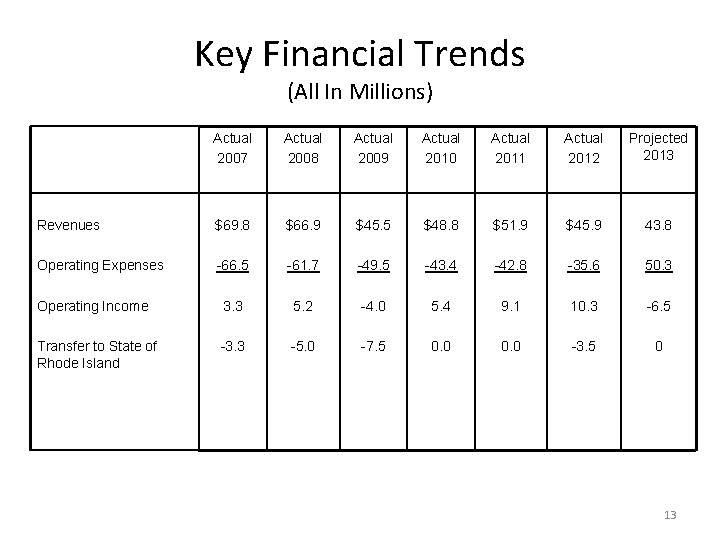
Key Financial Trends (All In Millions) Actual 2007 Actual 2008 Actual 2009 Actual 2010 Actual 2011 Actual 2012 Projected 2013 Revenues $69. 8 $66. 9 $45. 5 $48. 8 $51. 9 $45. 9 43. 8 Operating Expenses -66. 5 -61. 7 -49. 5 -43. 4 -42. 8 -35. 6 50. 3 Operating Income 3. 3 5. 2 -4. 0 5. 4 9. 1 10. 3 -6. 5 Transfer to State of Rhode Island -3. 3 -5. 0 -7. 5 0. 0 -3. 5 0 13
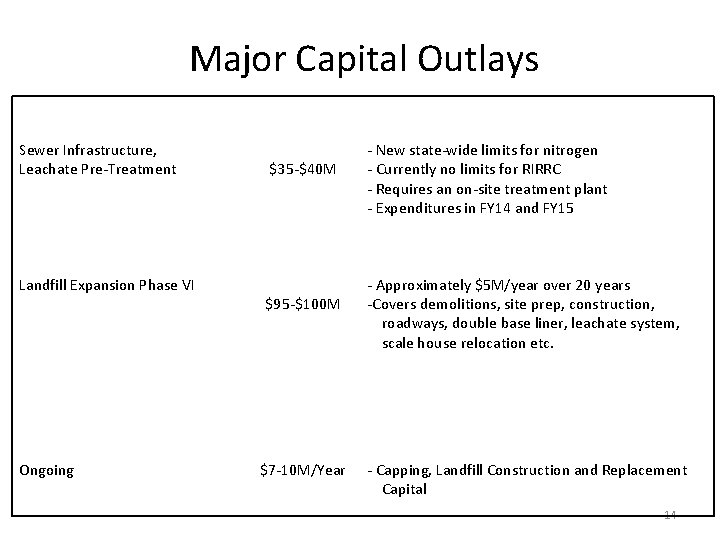
Major Capital Outlays Sewer Infrastructure, Leachate Pre-Treatment Landfill Expansion Phase VI Ongoing $35 -$40 M $95 -$100 M $7 -10 M/Year - New state-wide limits for nitrogen - Currently no limits for RIRRC - Requires an on-site treatment plant - Expenditures in FY 14 and FY 15 - Approximately $5 M/year over 20 years -Covers demolitions, site prep, construction, roadways, double base liner, leachate system, scale house relocation etc. - Capping, Landfill Construction and Replacement Capital 14
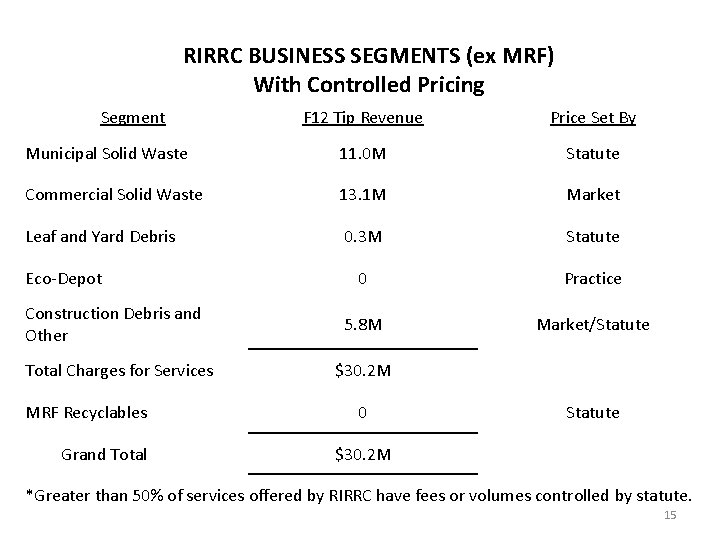
RIRRC BUSINESS SEGMENTS (ex MRF) With Controlled Pricing Segment F 12 Tip Revenue Price Set By Municipal Solid Waste 11. 0 M Statute Commercial Solid Waste 13. 1 M Market Leaf and Yard Debris 0. 3 M Statute 0 Practice 5. 8 M Market/Statute Eco-Depot Construction Debris and Other Total Charges for Services MRF Recyclables Grand Total $30. 2 M 0 Statute $30. 2 M *Greater than 50% of services offered by RIRRC have fees or volumes controlled by statute. 15
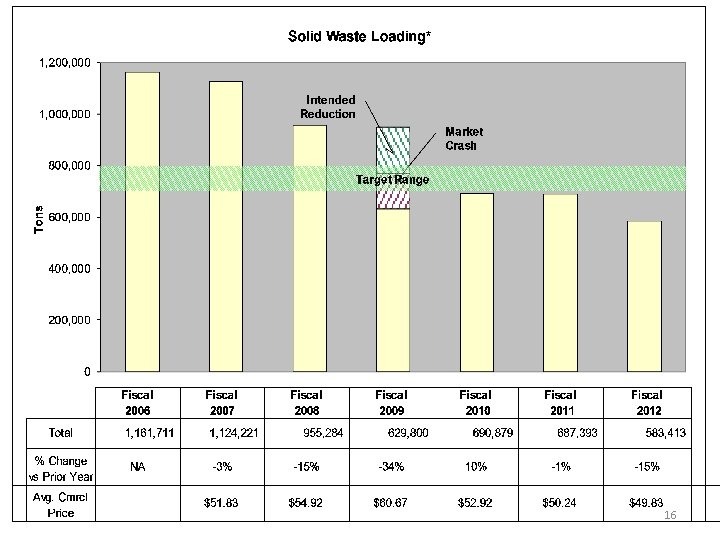
16
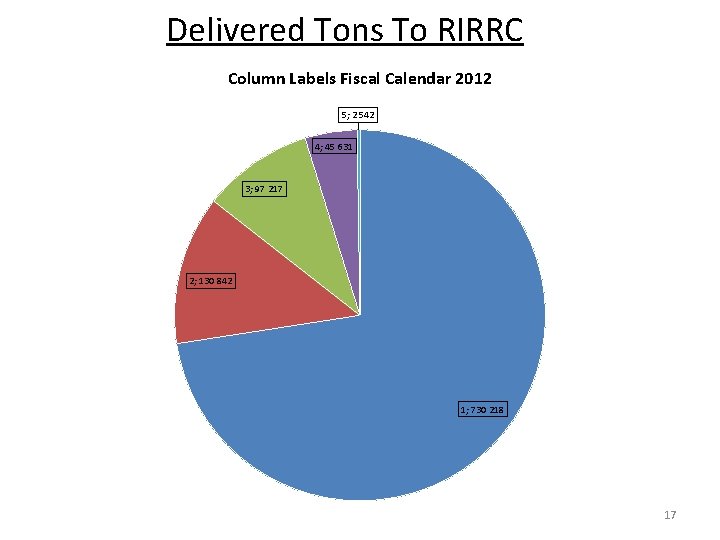
Delivered Tons To RIRRC Column Labels Fiscal Calendar 2012 5; 2 542 4; 45 631 3; 97 217 2; 130 842 1; 730 218 17
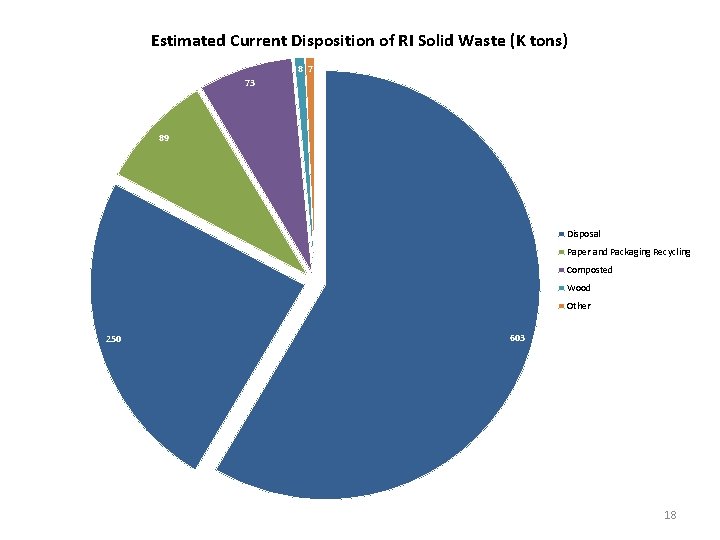
Estimated Current Disposition of RI Solid Waste (K tons) 8 7 73 89 Disposal Paper and Packaging Recycling Composted Wood Other 250 603 18
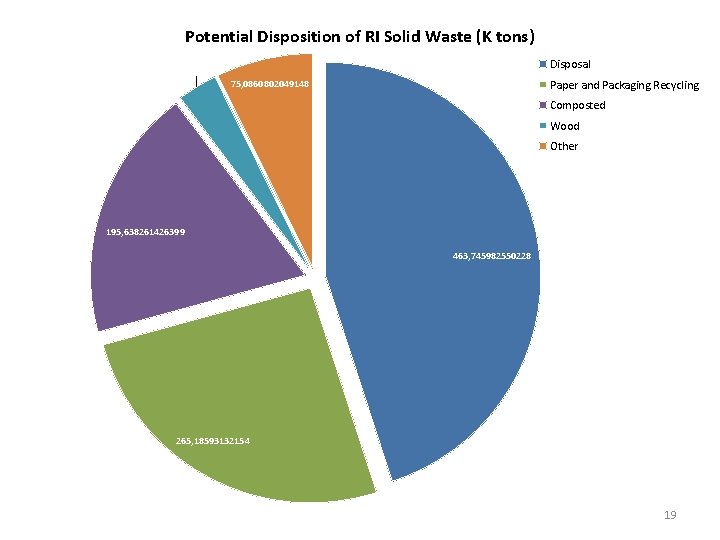
Potential Disposition of RI Solid Waste (K tons) Disposal 30, 7437444969183 75, 0860802049148 Paper and Packaging Recycling Composted Wood Other 195, 638261426399 463, 745982550228 265, 18593132154 19
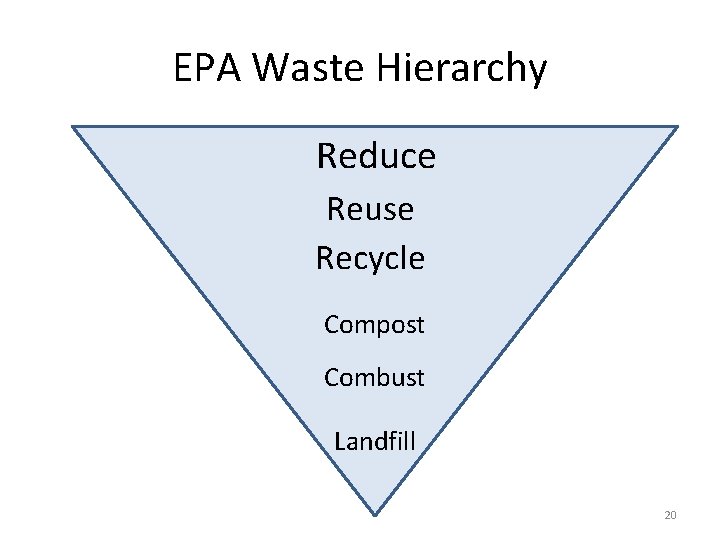
EPA Waste Hierarchy Reduce Reuse Recycle Compost Combust Landfill 20
Municipal Costs & Opportunities • Bulky Wastes -Mattresses; Scrap Metal; Appliances; Tires • Extended Producer Responsibility -Mattresses; Paint; Unwanted Medications; Carpet • Leaf & Yard -Local composting areas; Backyard composting • Automated collection -Large wheeled carts for recycling, smaller carts for refuse • Pay As You Throw -Treat trash and recycling as a utility; Use (create) less, pay less. 21
Strategic Options to Extend Landfill Life 1. Become primarily a municipal disposal/recycling facility. • Municipalities = shareholders 2. Develop specific programs to further divert materials from disposal. • Extended Producer Responsibility • Maximize municipal transfer stations, recycling centers 3. Utilize technology that meets RIRRC stated objectives. 4. Before landfill closes, develop long term/cost effective contracts with regional incinerators/transfer station owners to ship RI municipal sector solid waste out of state. 22