
States of Matter Matter Anything that has mass
- Slides: 20
States of Matter
Matter Anything that has mass and takes up space Matter is basically “stuff. ” If it has substance, it is matter.
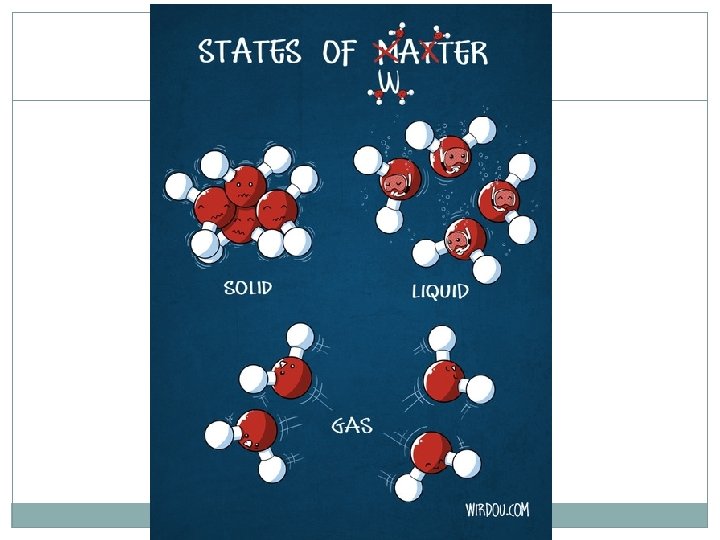
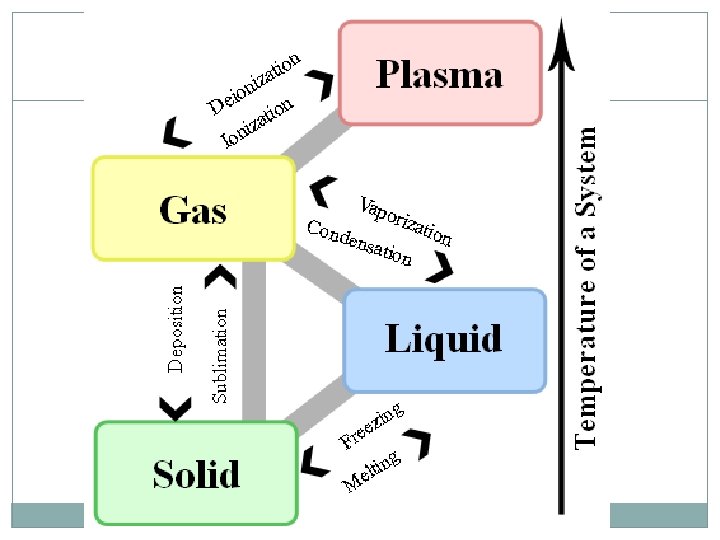
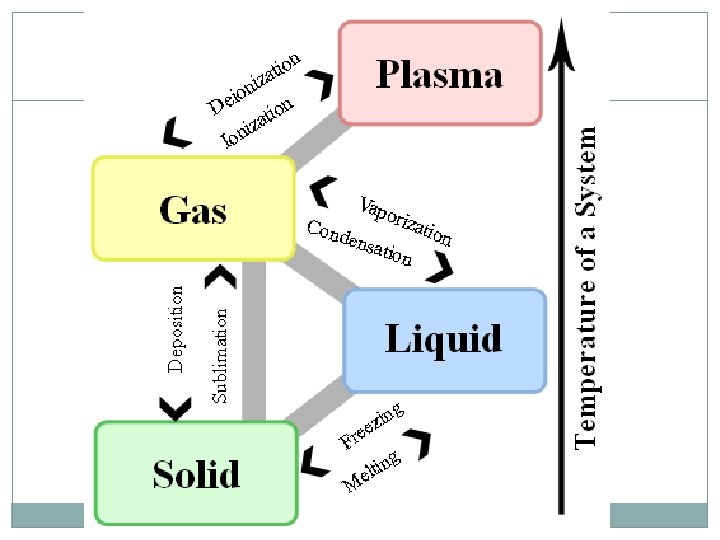
States of Matter 4 States of matter: Solid Liquid Gas Plasma Each is designated by the energy, movement, and behavior of the particles
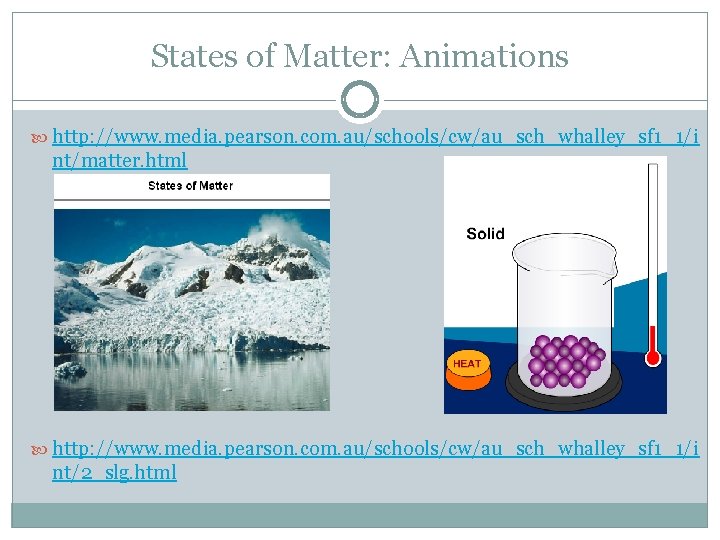
States of Matter: Animations http: //www. media. pearson. com. au/schools/cw/au_sch_whalley_sf 1_1/i nt/matter. html http: //www. media. pearson. com. au/schools/cw/au_sch_whalley_sf 1_1/i nt/2_slg. html
States of Matter Each state of matter has a different: Energy level of the particles Amount of movement Spacing of the particles Temperature ENERGY of a particle determines the kinetic energy (and thus the temperature and state) of a substance
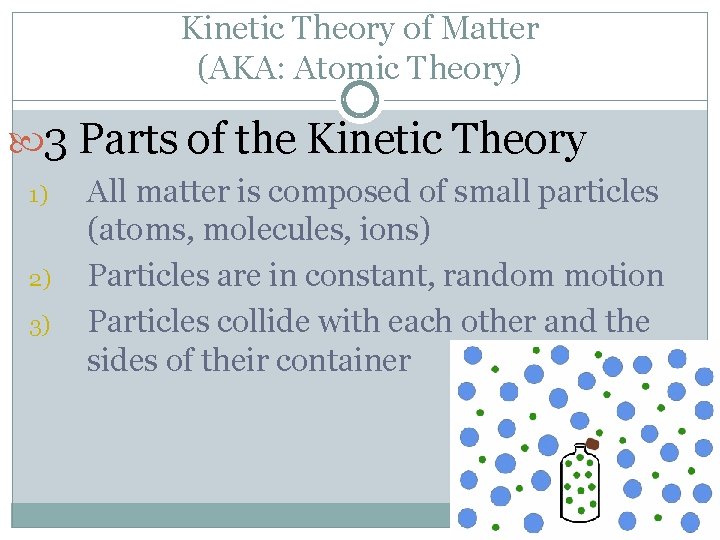
Kinetic Theory of Matter (AKA: Atomic Theory) 3 Parts of the Kinetic Theory 1) 2) 3) All matter is composed of small particles (atoms, molecules, ions) Particles are in constant, random motion Particles collide with each other and the sides of their container
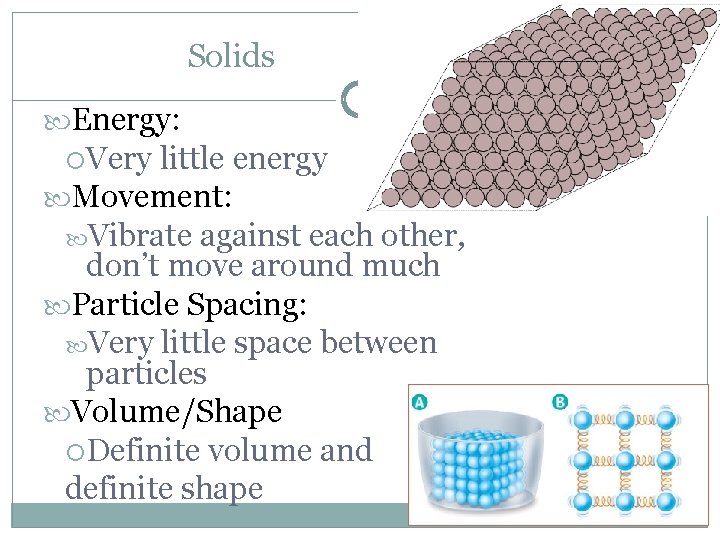
Solids Energy: Very little energy Movement: Vibrate against each other, don’t move around much Particle Spacing: Very little space between particles Volume/Shape Definite volume and definite shape
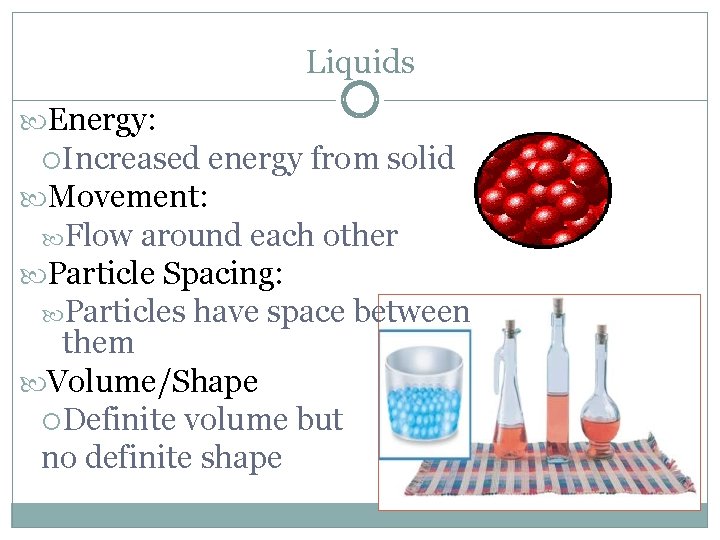
Liquids Energy: Increased energy from solid Movement: Flow around each other Particle Spacing: Particles have space between them Volume/Shape Definite volume but no definite shape
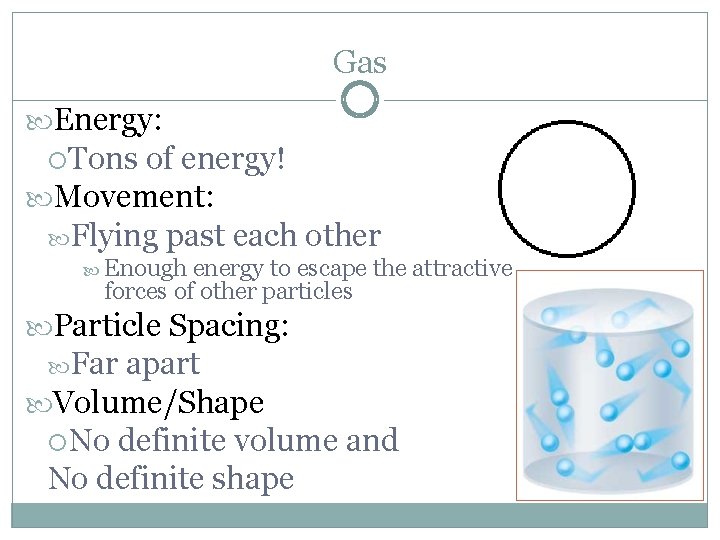
Gas Energy: Tons of energy! Movement: Flying past each other Enough energy to escape the attractive forces of other particles Particle Spacing: Far apart Volume/Shape No definite volume and No definite shape
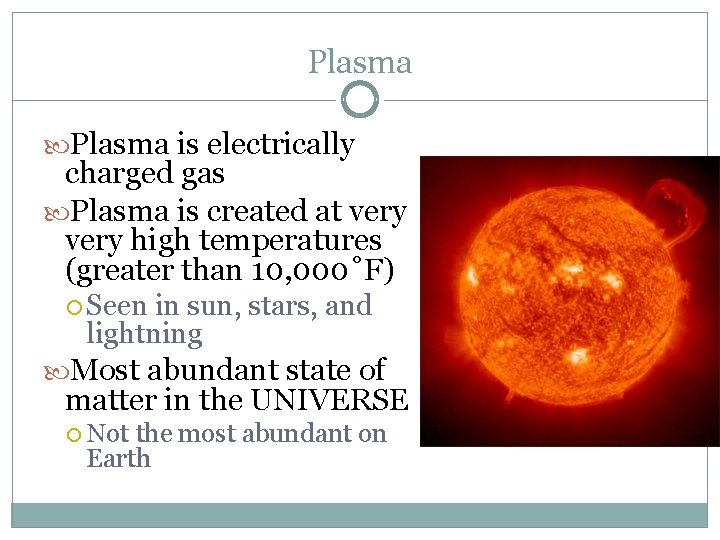
Plasma is electrically charged gas Plasma is created at very high temperatures (greater than 10, 000˚F) Seen in sun, stars, and lightning Most abundant state of matter in the UNIVERSE Not the most abundant on Earth
Changes in State ENERGY of the particles influences the state of matter Temperature is just something we can easily measure. Energy is more complicated to measure… Increase energy Molecules move faster and spread out Temperature increases Decrease energy Molecules move slower and are closer together Temperature decreases
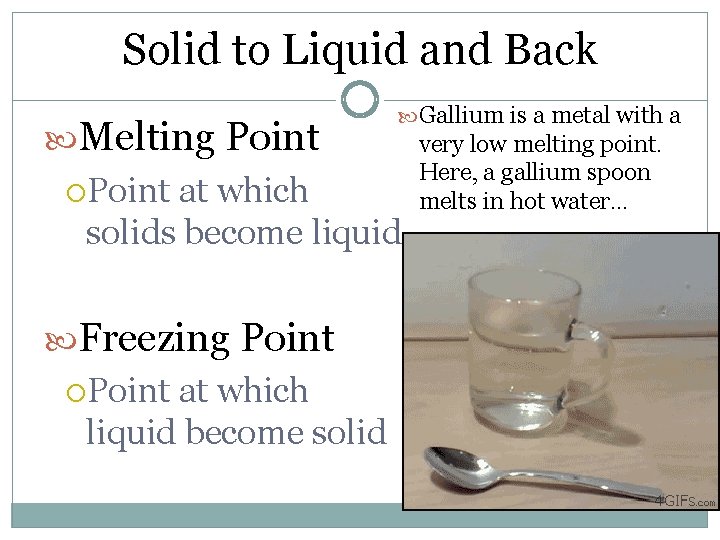
Solid to Liquid and Back Gallium is a metal with a Melting Point at which solids become liquid Freezing Point at which liquid become solid very low melting point. Here, a gallium spoon melts in hot water…
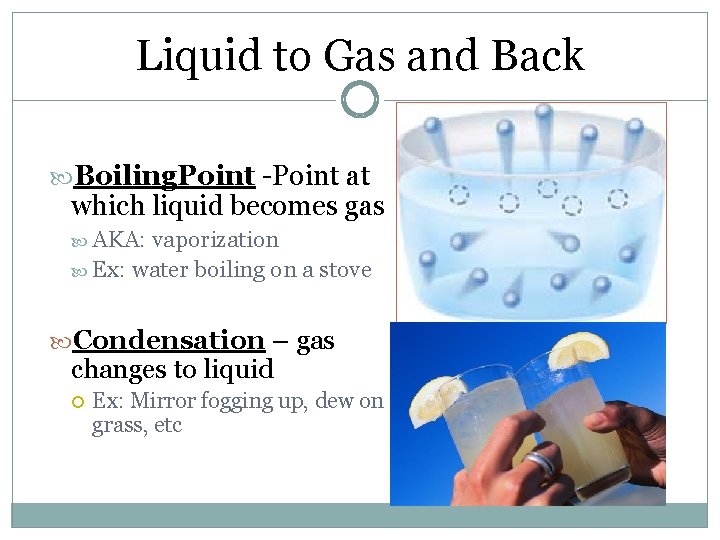
Liquid to Gas and Back Boiling. Point -Point at which liquid becomes gas AKA: vaporization Ex: water boiling on a stove Condensation – gas changes to liquid Ex: Mirror fogging up, dew on grass, etc
Solid to Gas and Back Sublimation- change from solid directly to gas Ex: Dry Ice Deposition – change from gas directly to solid Ex: Snow and Hail
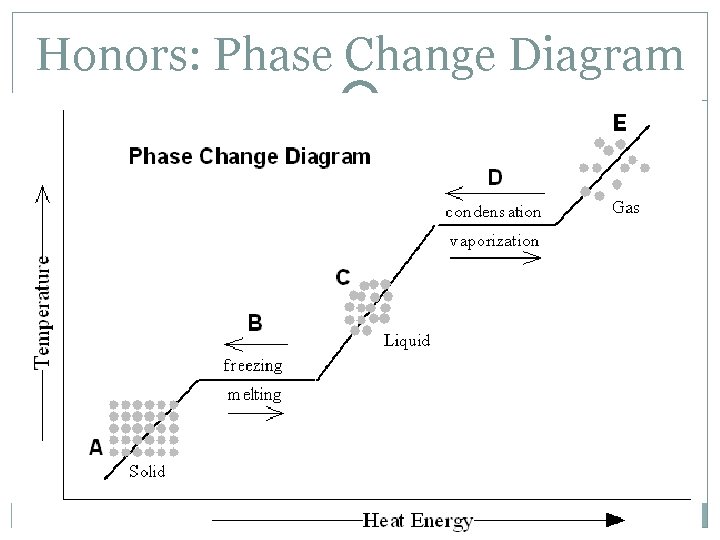
Honors: Phase Change Diagram
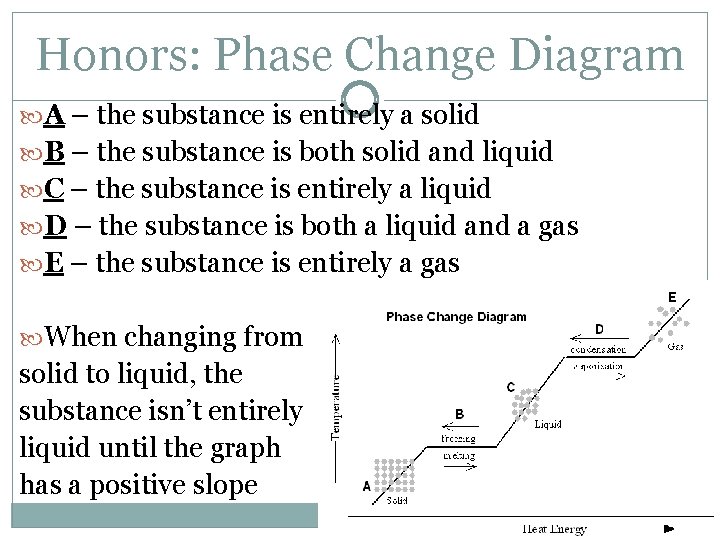
Honors: Phase Change Diagram A – the substance is entirely a solid B – the substance is both solid and liquid C – the substance is entirely a liquid D – the substance is both a liquid and a gas E – the substance is entirely a gas When changing from solid to liquid, the substance isn’t entirely liquid until the graph has a positive slope
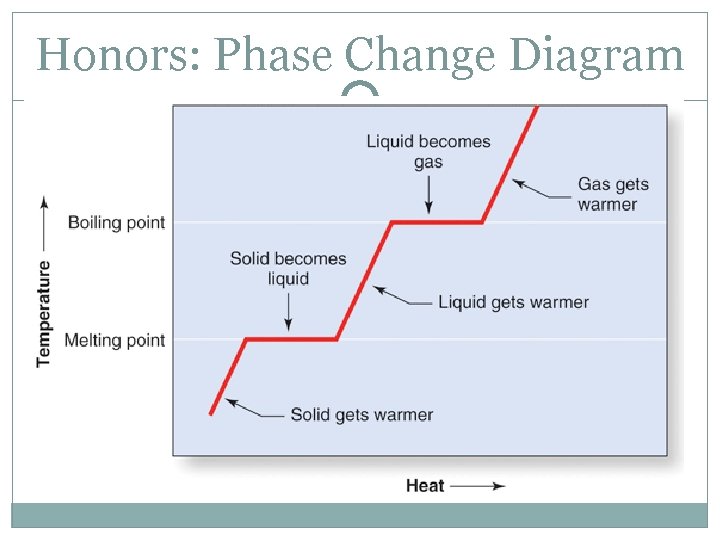
Honors: Phase Change Diagram