
States of matter Introduction to solids liquids and
- Slides: 7
States of matter Introduction to solids, liquids and gases
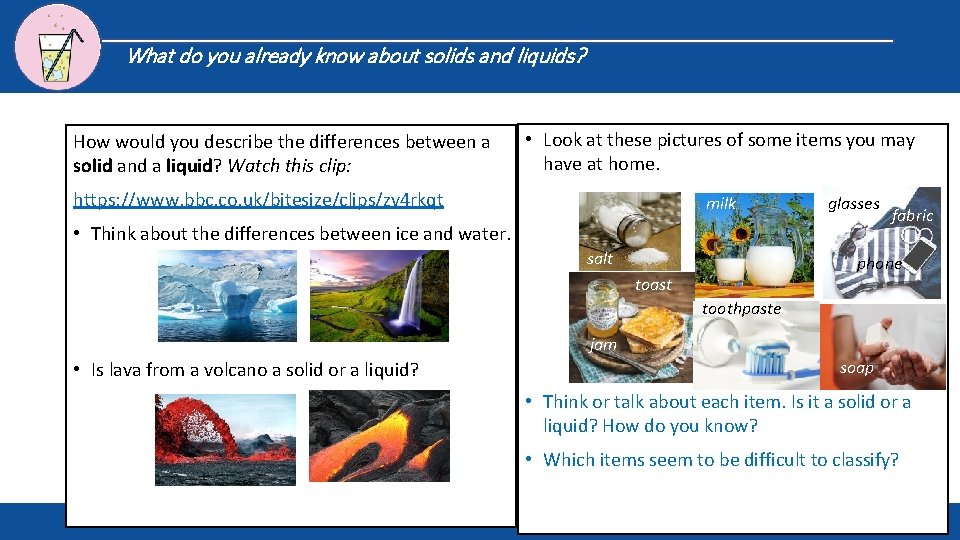
What do you already know about solids and liquids? How would you describe the differences between a solid and a liquid? Watch this clip: • Look at these pictures of some items you may have at home. https: //www. bbc. co. uk/bitesize/clips/zv 4 rkqt milk glasses • Think about the differences between ice and water. salt fabric phone toast toothpaste jam • Is lava from a volcano a solid or a liquid? soap • Think or talk about each item. Is it a solid or a liquid? How do you know? • Which items seem to be difficult to classify?
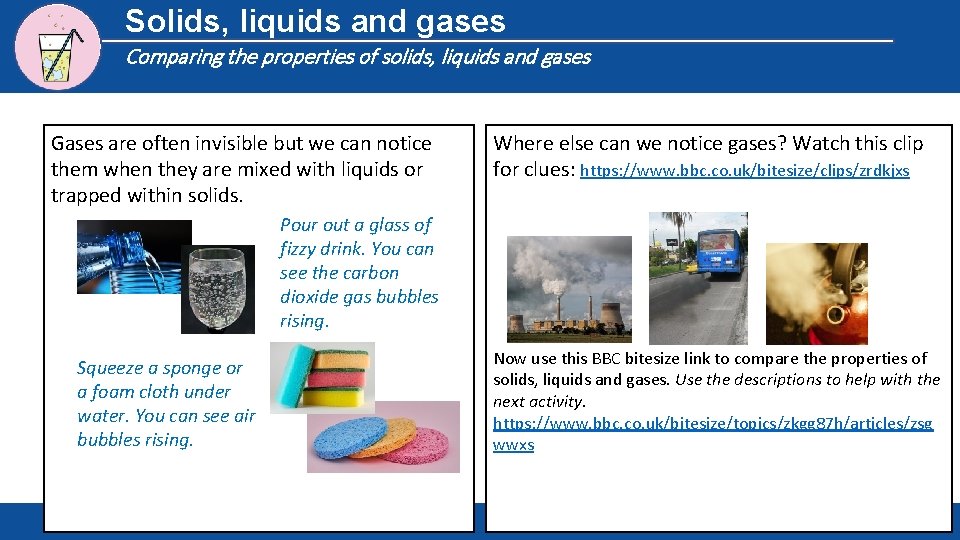
Solids, liquids and gases Comparing the properties of solids, liquids and gases Gases are often invisible but we can notice them when they are mixed with liquids or trapped within solids. Where else can we notice gases? Watch this clip for clues: https: //www. bbc. co. uk/bitesize/clips/zrdkjxs Pour out a glass of fizzy drink. You can see the carbon dioxide gas bubbles rising. Squeeze a sponge or a foam cloth under water. You can see air bubbles rising. Now use this BBC bitesize link to compare the properties of solids, liquids and gases. Use the descriptions to help with the next activity. https: //www. bbc. co. uk/bitesize/topics/zkgg 87 h/articles/zsg wwxs
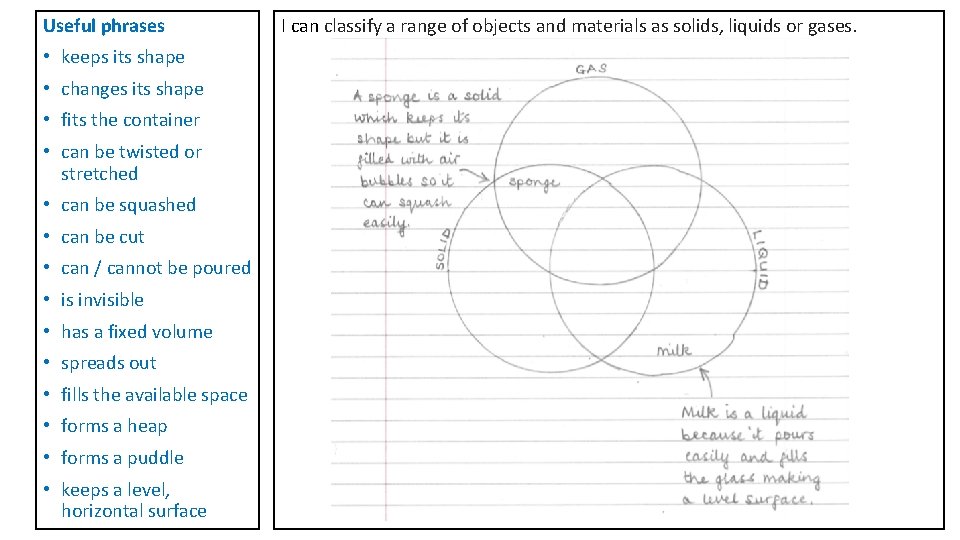
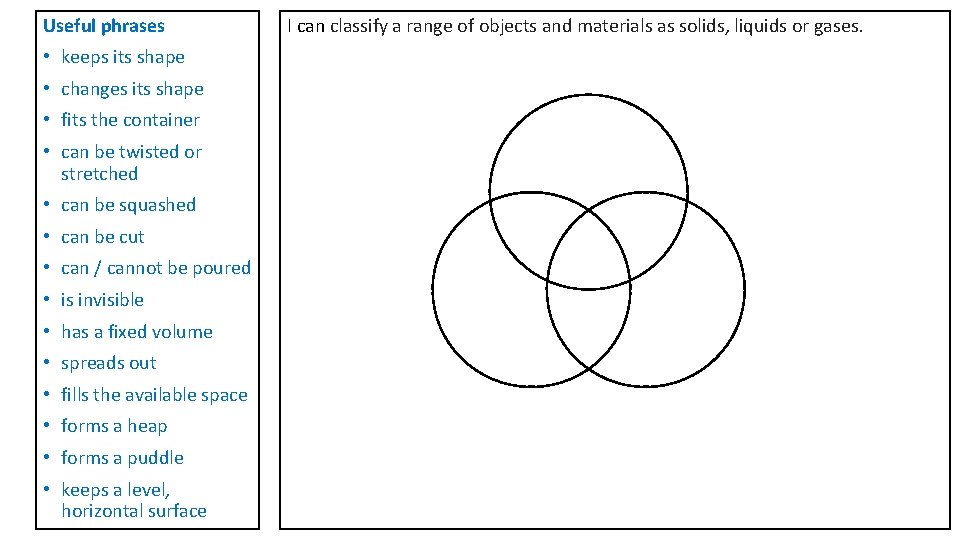
Useful phrases • keeps its shape • changes its shape • fits the container • can be twisted or stretched • can be squashed • can be cut • can / cannot be poured • is invisible • has a fixed volume • spreads out • fills the available space • forms a heap • forms a puddle • keeps a level, horizontal surface I can classify a range of objects and materials as solids, liquids or gases.
Useful phrases • keeps its shape • changes its shape • fits the container • can be twisted or stretched • can be squashed • can be cut • can / cannot be poured • is invisible • has a fixed volume • spreads out • fills the available space • forms a heap • forms a puddle • keeps a level, horizontal surface I can classify a range of objects and materials as solids, liquids or gases.
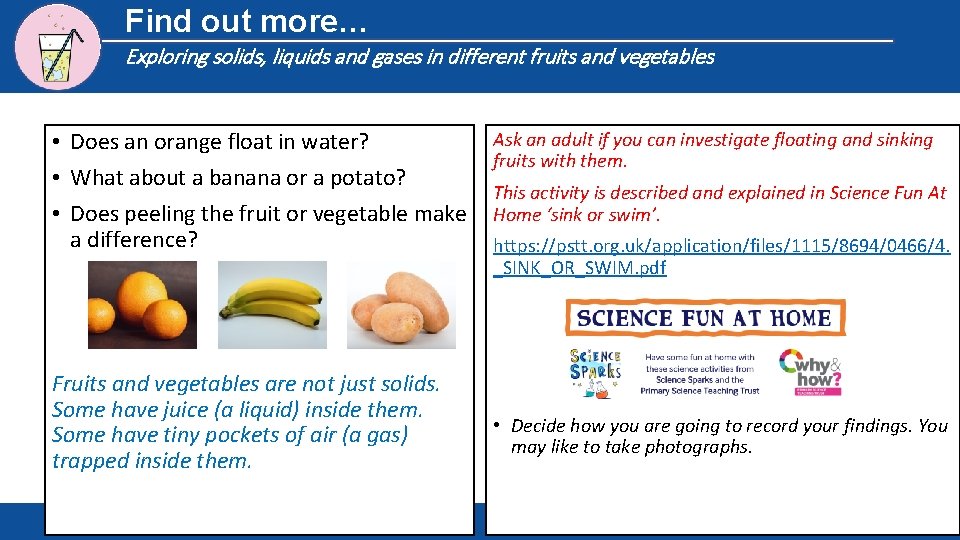
Find out more… Exploring solids, liquids and gases in different fruits and vegetables • Does an orange float in water? • What about a banana or a potato? • Does peeling the fruit or vegetable make a difference? Fruits and vegetables are not just solids. Some have juice (a liquid) inside them. Some have tiny pockets of air (a gas) trapped inside them. Ask an adult if you can investigate floating and sinking fruits with them. This activity is described and explained in Science Fun At Home ‘sink or swim’. https: //pstt. org. uk/application/files/1115/8694/0466/4. _SINK_OR_SWIM. pdf • Decide how you are going to record your findings. You may like to take photographs.
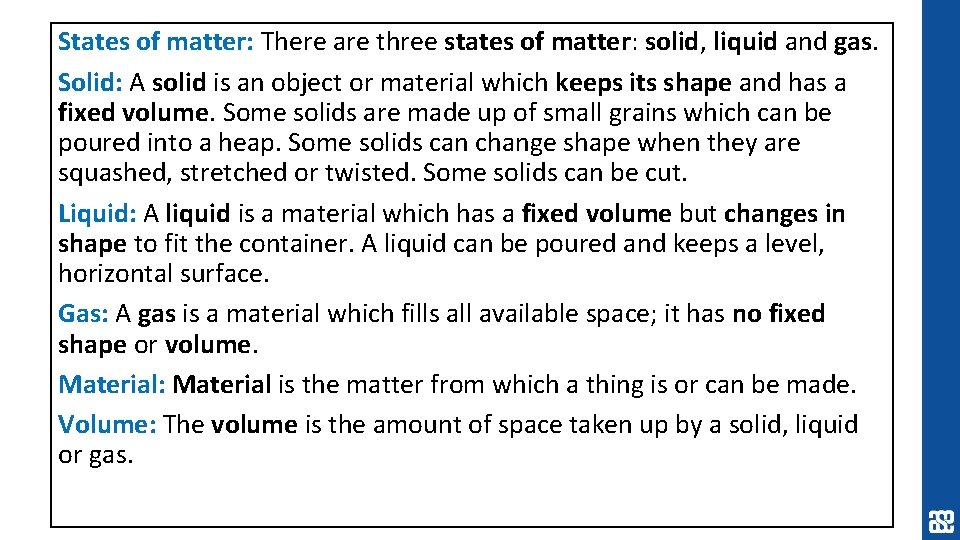
States of matter: There are three states of matter: solid, liquid and gas. Solid: A solid is an object or material which keeps its shape and has a fixed volume. Some solids are made up of small grains which can be poured into a heap. Some solids can change shape when they are squashed, stretched or twisted. Some solids can be cut. Liquid: A liquid is a material which has a fixed volume but changes in shape to fit the container. A liquid can be poured and keeps a level, horizontal surface. Gas: A gas is a material which fills all available space; it has no fixed shape or volume. Material: Material is the matter from which a thing is or can be made. Volume: The volume is the amount of space taken up by a solid, liquid or gas.