
States of Matter 90 95 1 What is




- Slides: 36
States of Matter 90 -95
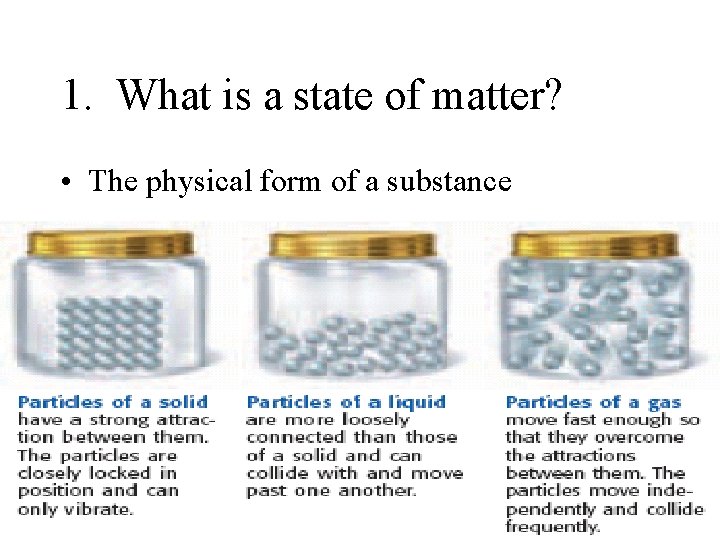
1. What is a state of matter? • The physical form of a substance
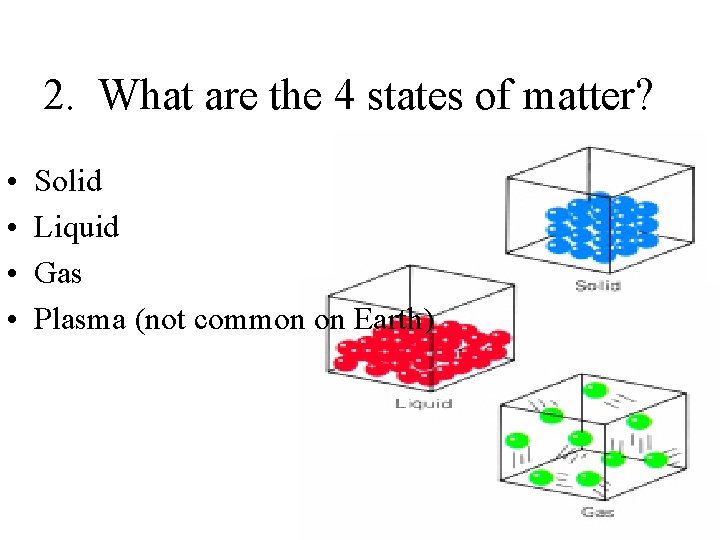
2. What are the 4 states of matter? • • Solid Liquid Gas Plasma (not common on Earth)
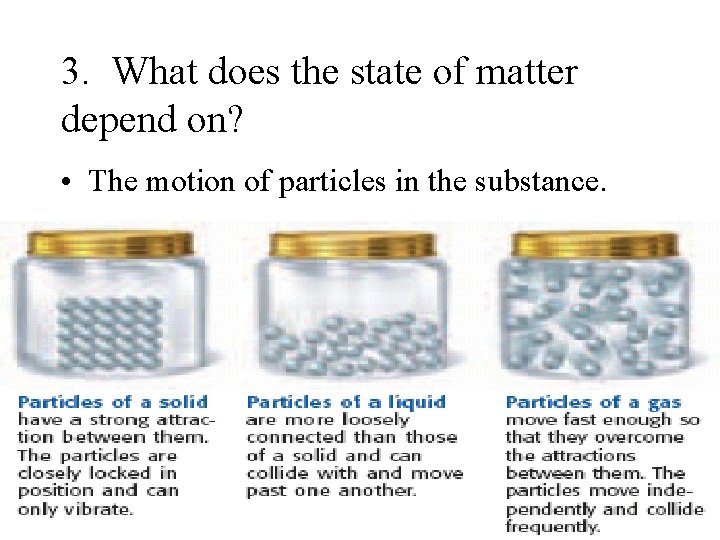
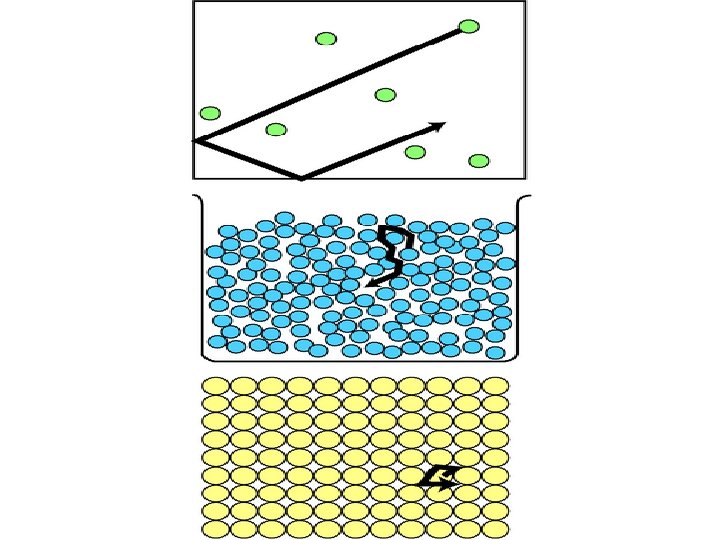
3. What does the state of matter depend on? • The motion of particles in the substance.
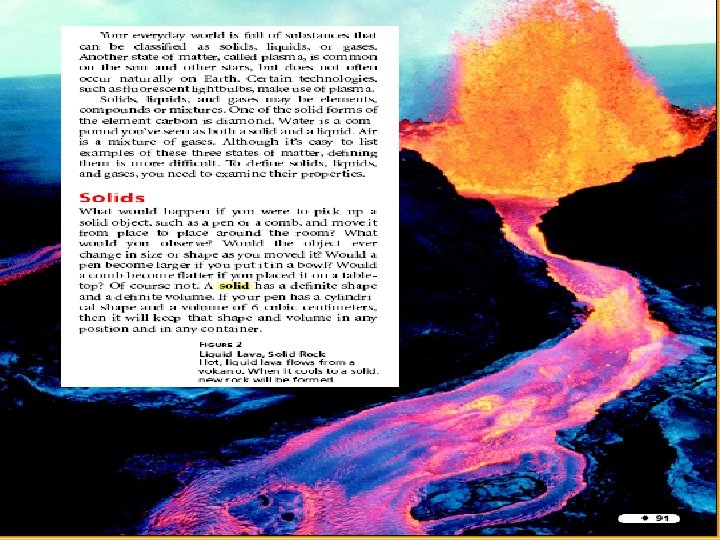
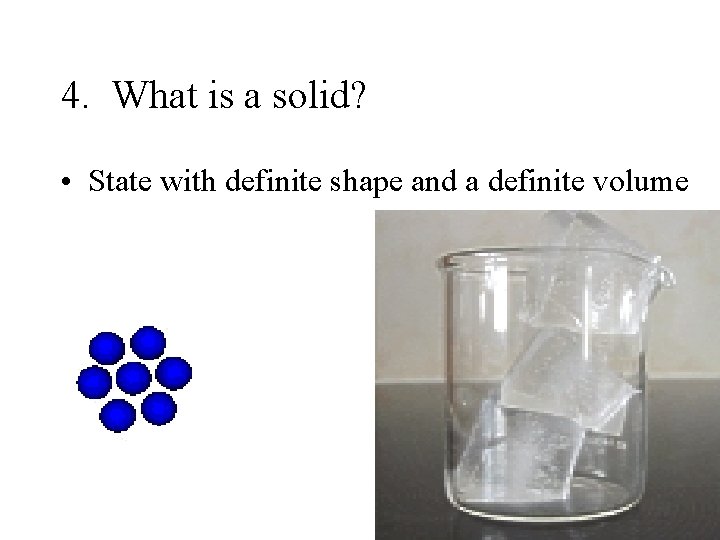
4. What is a solid? • State with definite shape and a definite volume
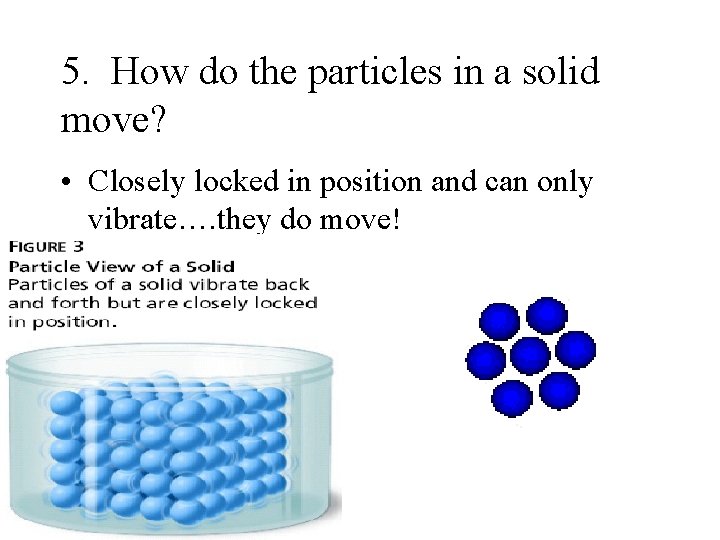
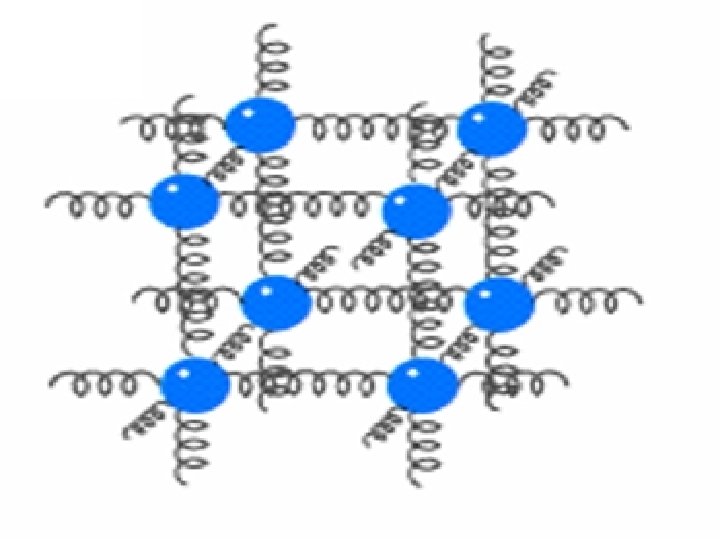
5. How do the particles in a solid move? • Closely locked in position and can only vibrate…. they do move!
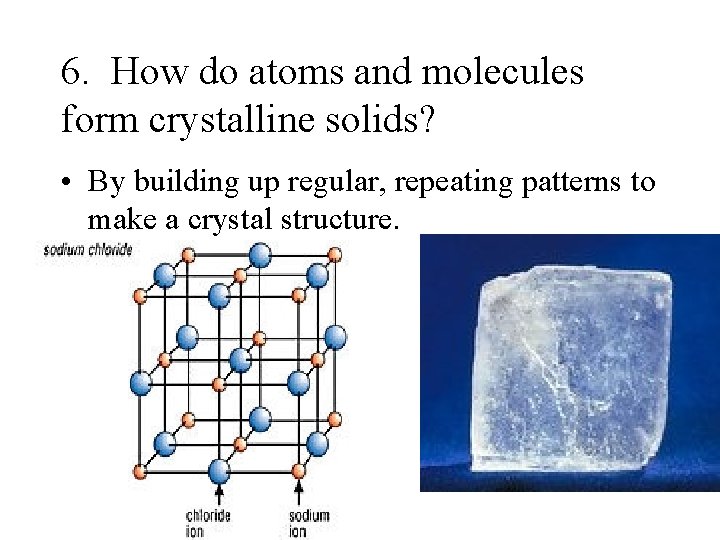
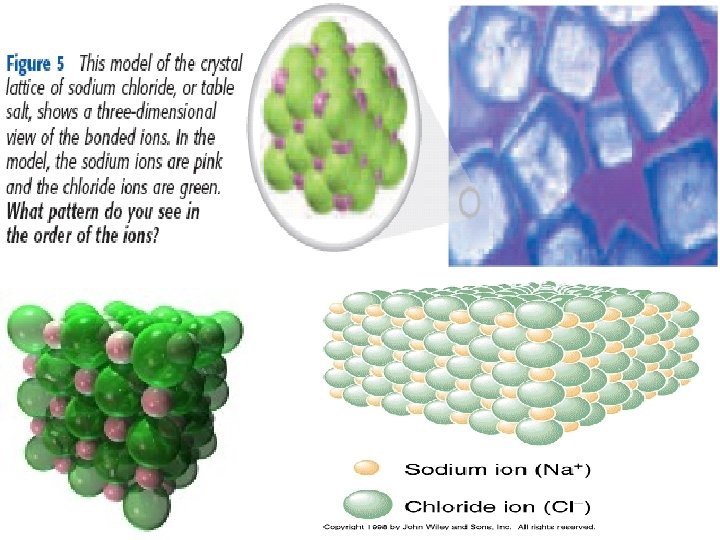
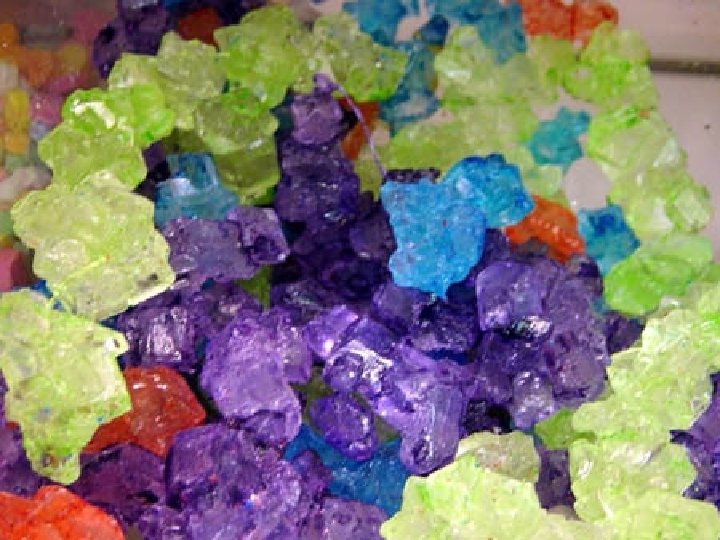
6. How do atoms and molecules form crystalline solids? • By building up regular, repeating patterns to make a crystal structure.
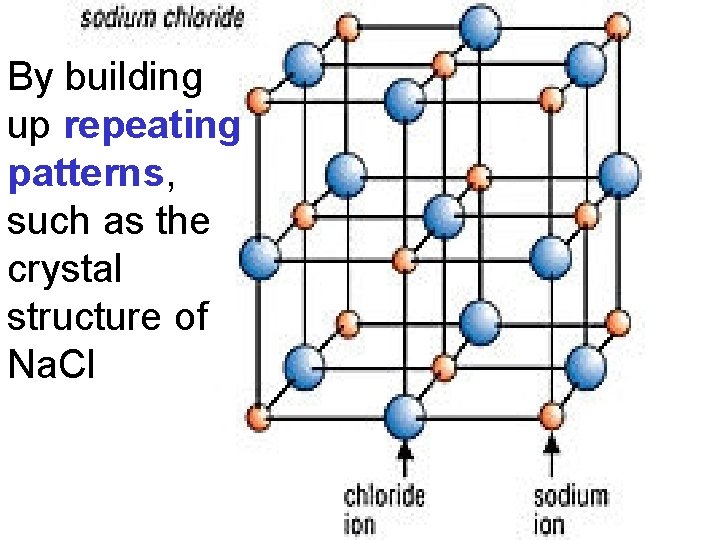
By building up repeating patterns, such as the crystal structure of Na. Cl
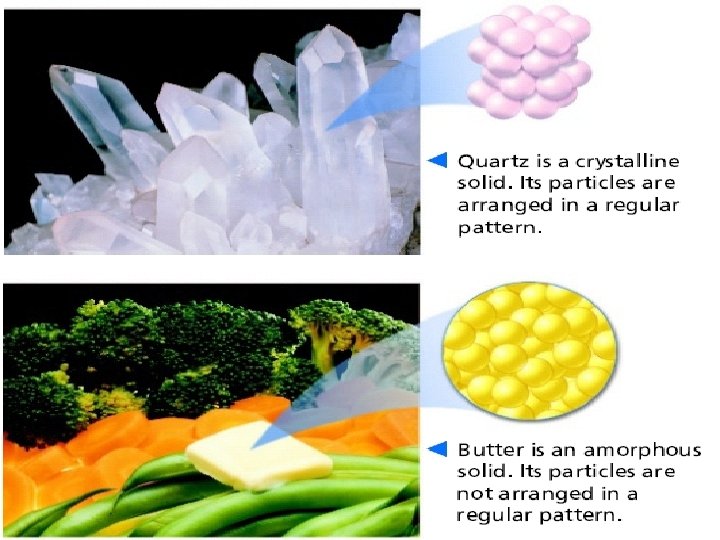
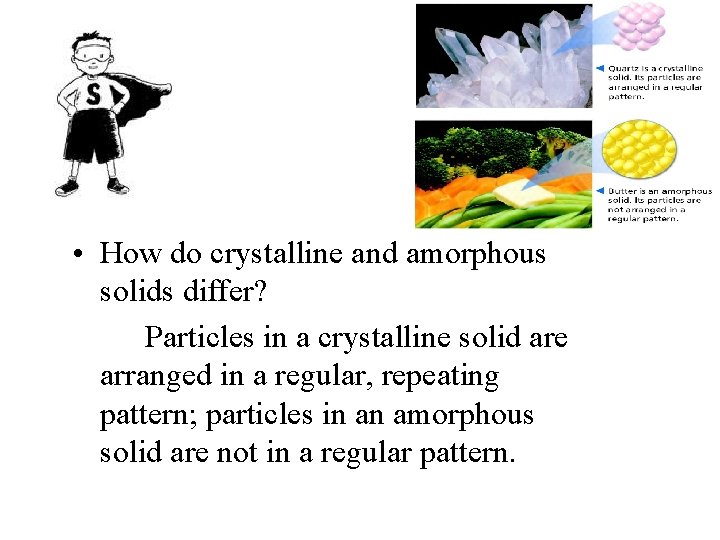
• How do crystalline and amorphous solids differ? Particles in a crystalline solid are arranged in a regular, repeating pattern; particles in an amorphous solid are not in a regular pattern.
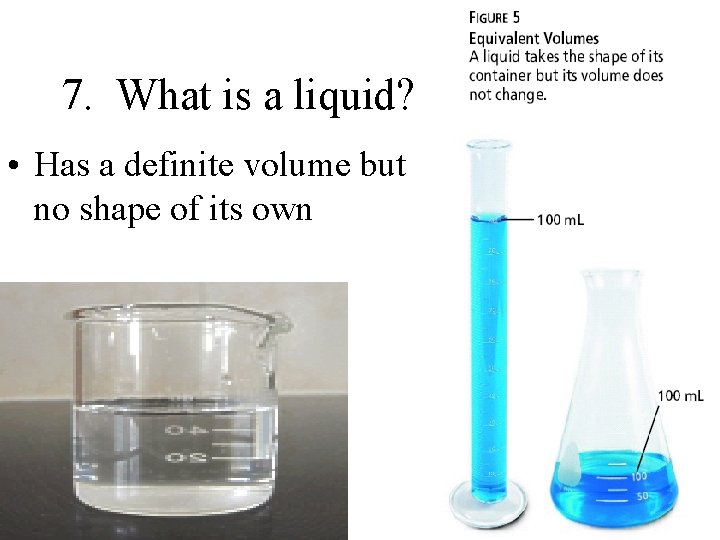
7. What is a liquid? • Has a definite volume but no shape of its own
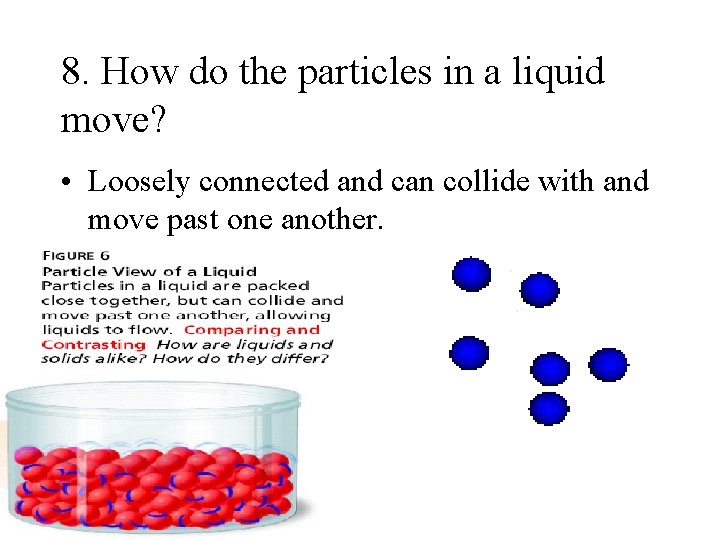
8. How do the particles in a liquid move? • Loosely connected and can collide with and move past one another.
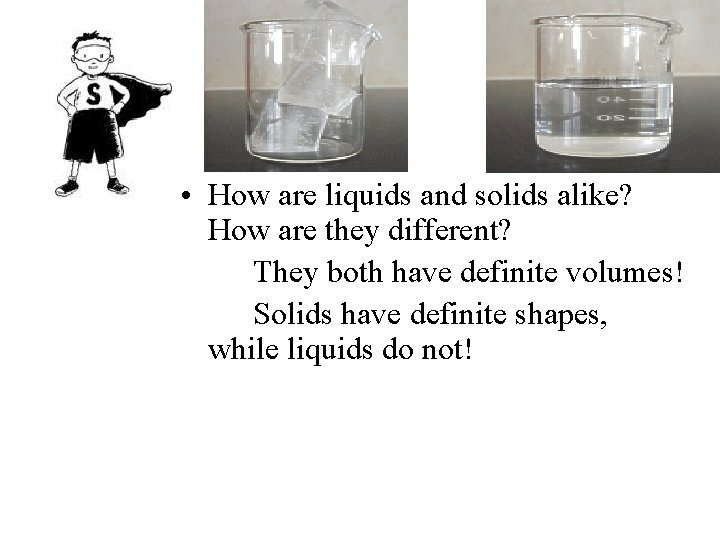
• How are liquids and solids alike? How are they different? They both have definite volumes! Solids have definite shapes, while liquids do not!
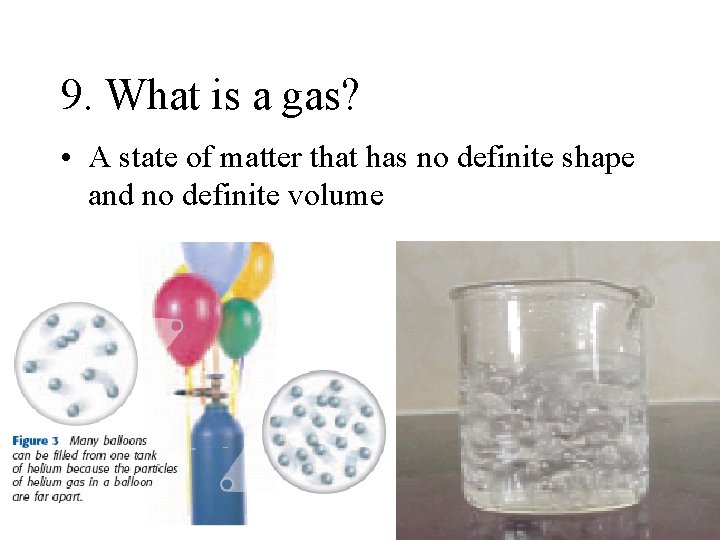
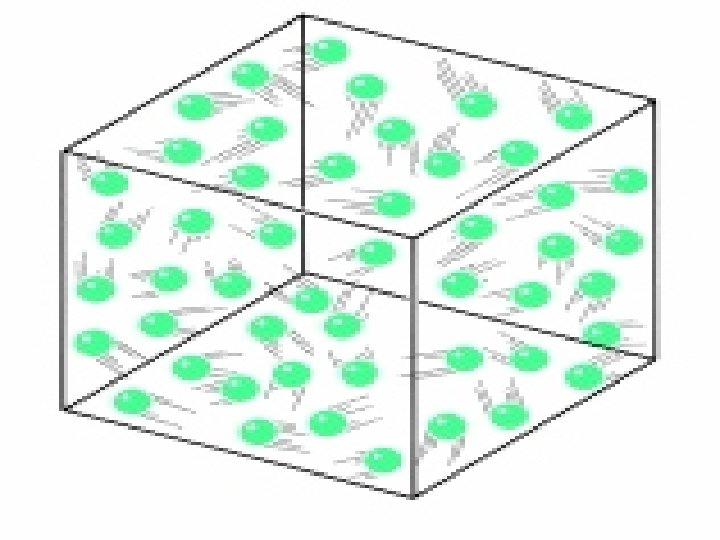
9. What is a gas? • A state of matter that has no definite shape and no definite volume
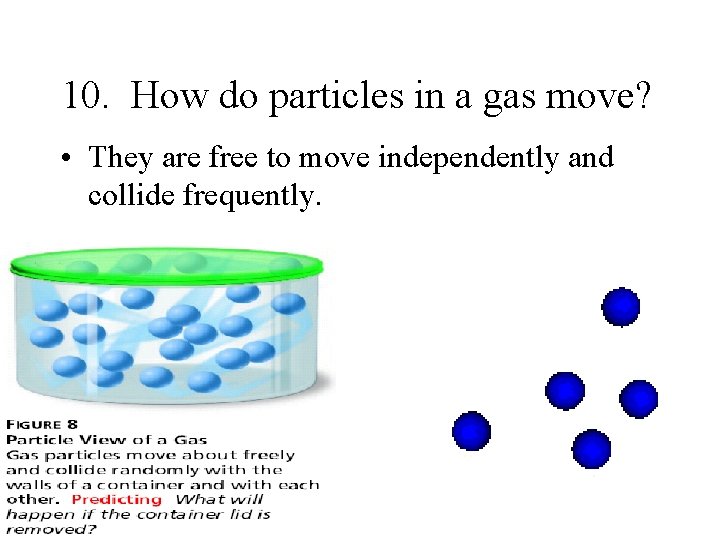
10. How do particles in a gas move? • They are free to move independently and collide frequently.
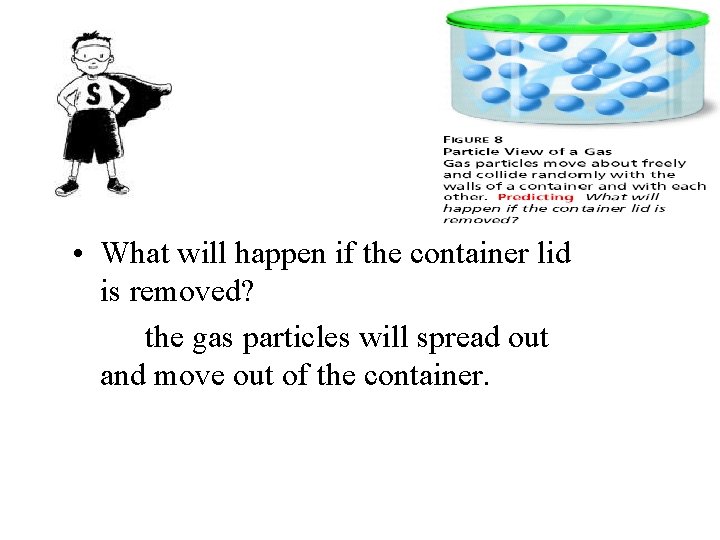
• What will happen if the container lid is removed? the gas particles will spread out and move out of the container.
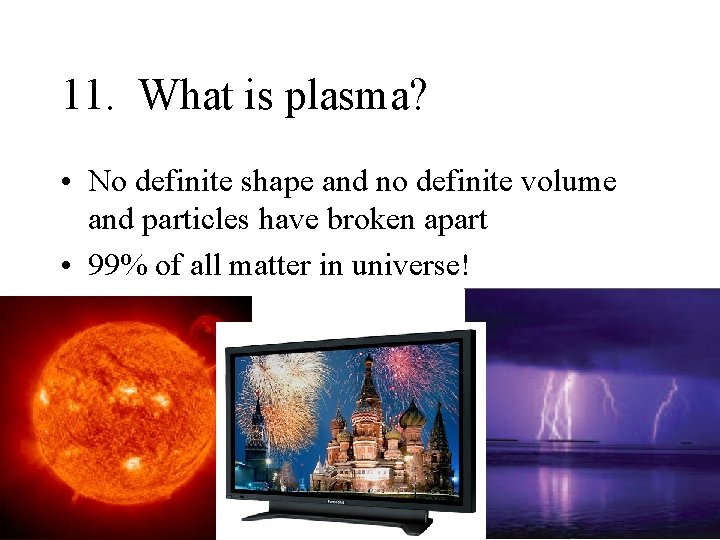
11. What is plasma? • No definite shape and no definite volume and particles have broken apart • 99% of all matter in universe!
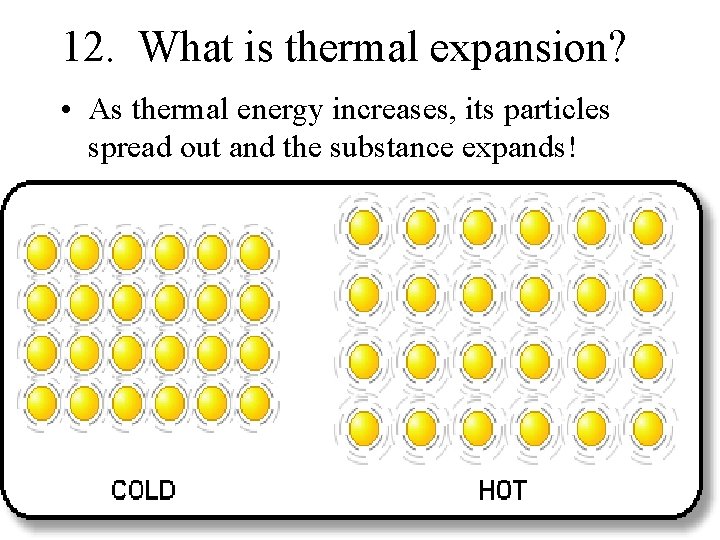
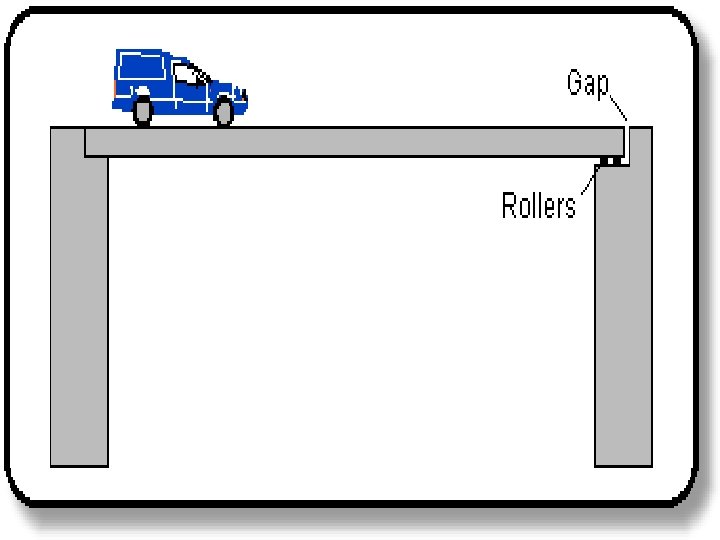
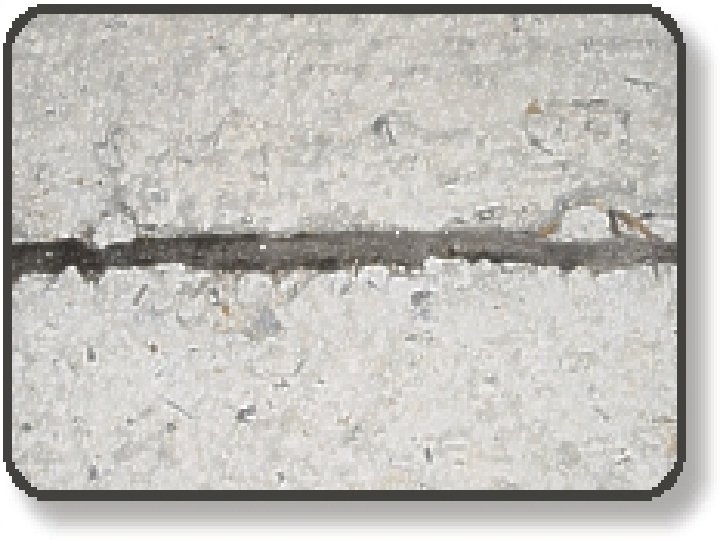
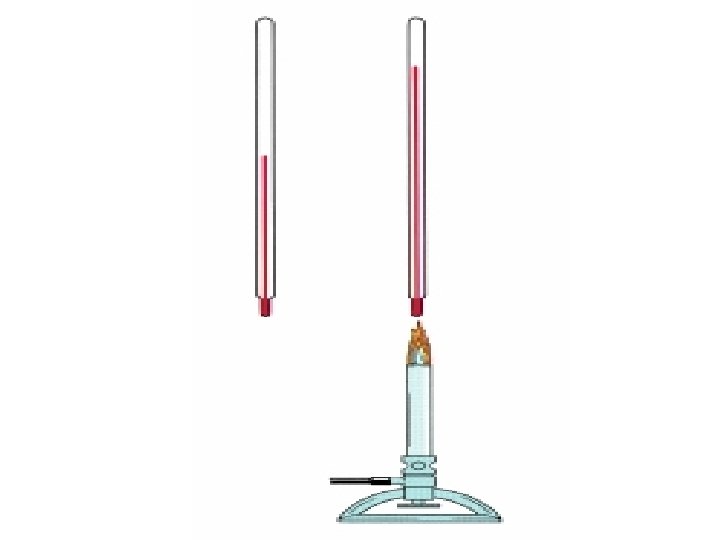
12. What is thermal expansion? • As thermal energy increases, its particles spread out and the substance expands!