
States of Consciousness Your awareness of the outside
- Slides: 49
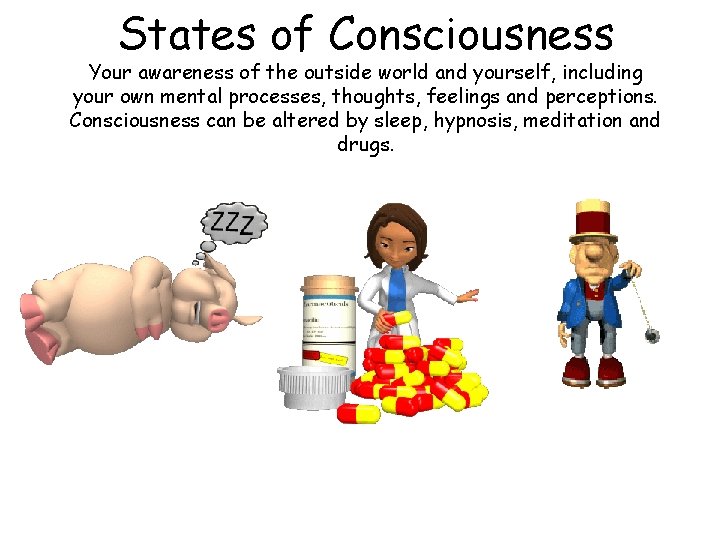
States of Consciousness Your awareness of the outside world and yourself, including your own mental processes, thoughts, feelings and perceptions. Consciousness can be altered by sleep, hypnosis, meditation and drugs.
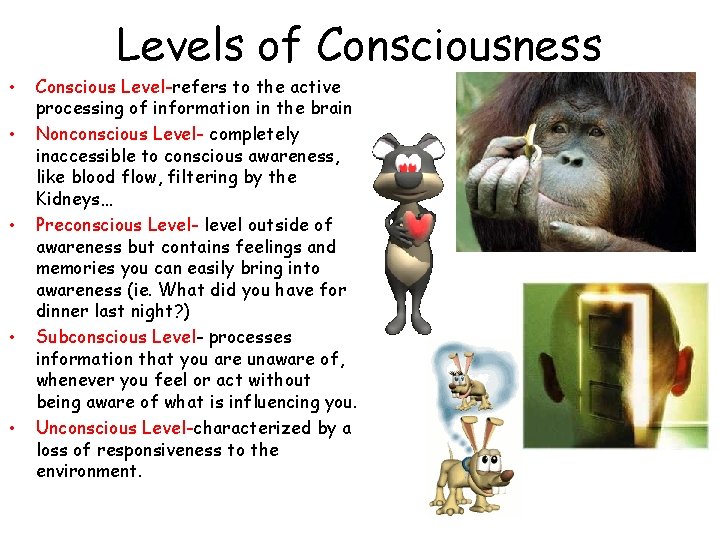
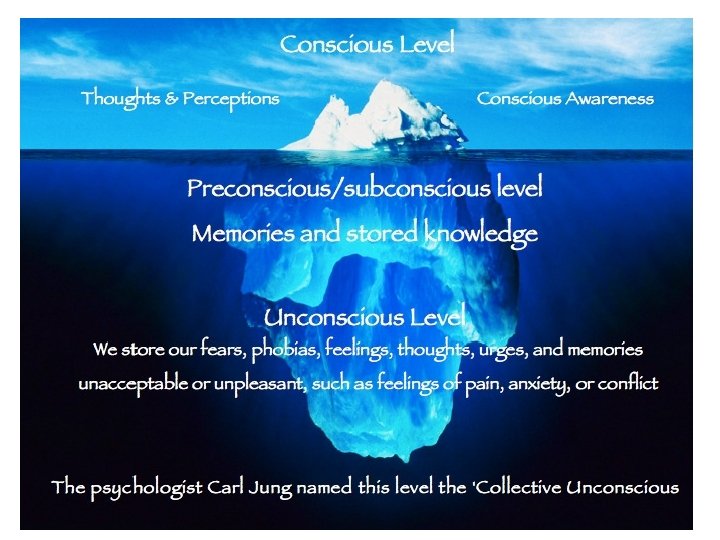
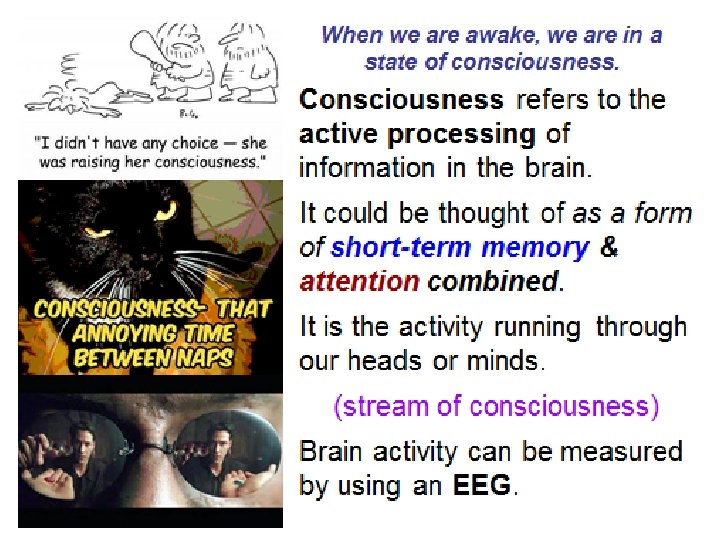
Levels of Consciousness • • • Conscious Level-refers to the active processing of information in the brain Nonconscious Level- completely inaccessible to conscious awareness, like blood flow, filtering by the Kidneys… Preconscious Level- level outside of awareness but contains feelings and memories you can easily bring into awareness (ie. What did you have for dinner last night? ) Subconscious Level- processes information that you are unaware of, whenever you feel or act without being aware of what is influencing you. Unconscious Level-characterized by a loss of responsiveness to the environment.
Go to youtube clip
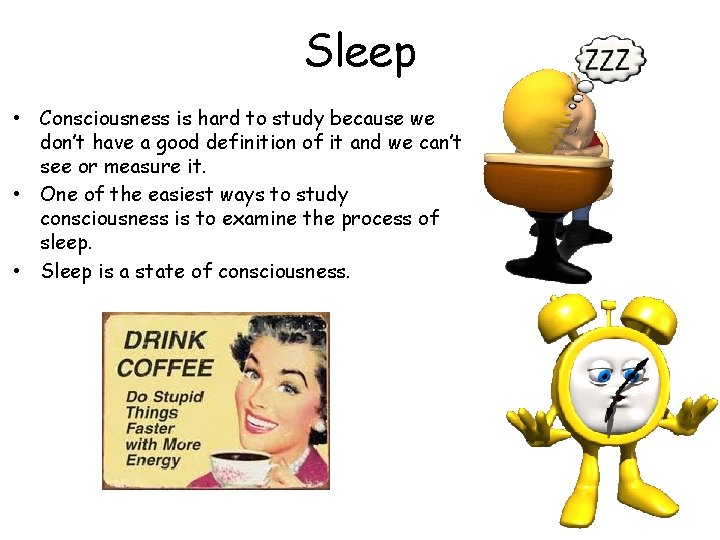
Sleep • Consciousness is hard to study because we don’t have a good definition of it and we can’t see or measure it. • One of the easiest ways to study consciousness is to examine the process of sleep. • Sleep is a state of consciousness.
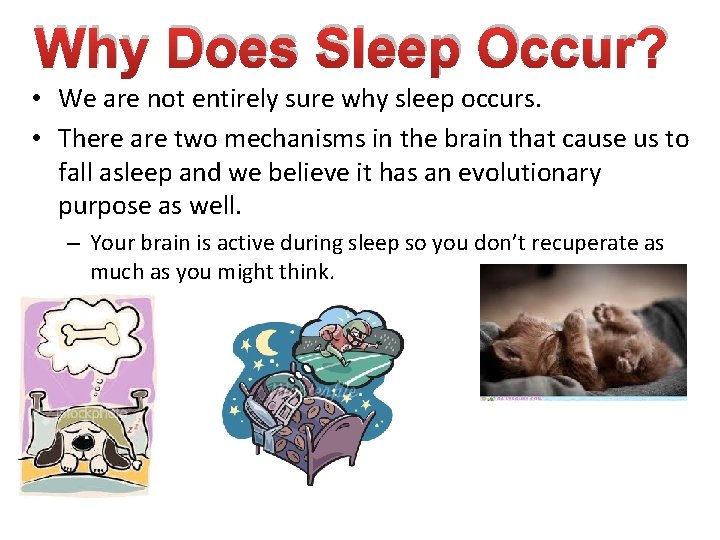
Why Does Sleep Occur? • We are not entirely sure why sleep occurs. • There are two mechanisms in the brain that cause us to fall asleep and we believe it has an evolutionary purpose as well. – Your brain is active during sleep so you don’t recuperate as much as you might think.
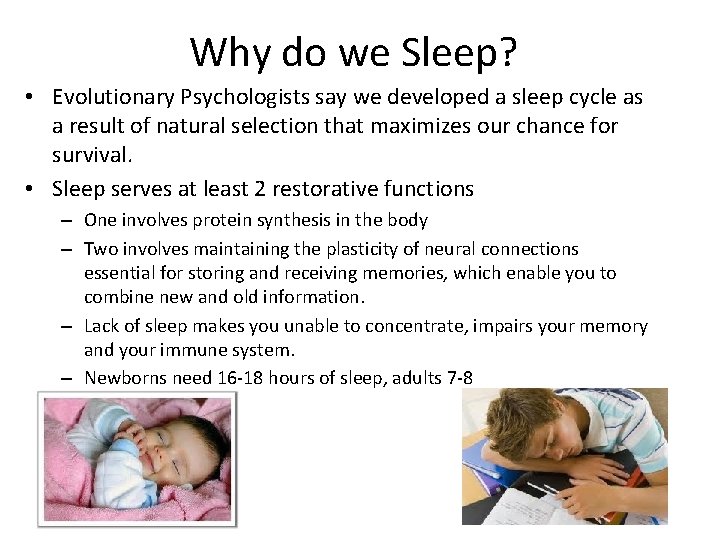
Why do we Sleep? • Evolutionary Psychologists say we developed a sleep cycle as a result of natural selection that maximizes our chance for survival. • Sleep serves at least 2 restorative functions – One involves protein synthesis in the body – Two involves maintaining the plasticity of neural connections essential for storing and receiving memories, which enable you to combine new and old information. – Lack of sleep makes you unable to concentrate, impairs your memory and your immune system. – Newborns need 16 -18 hours of sleep, adults 7 -8
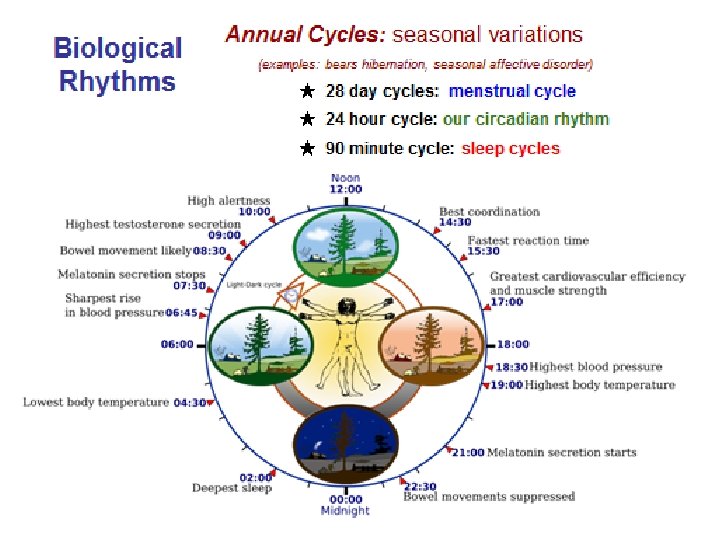
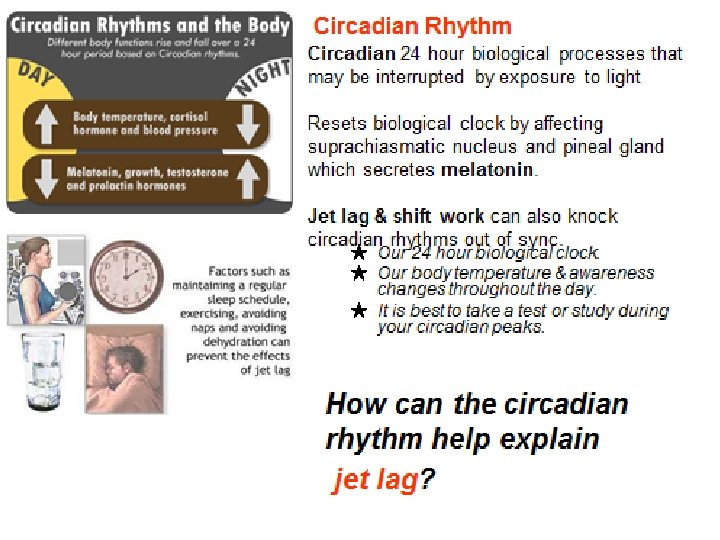
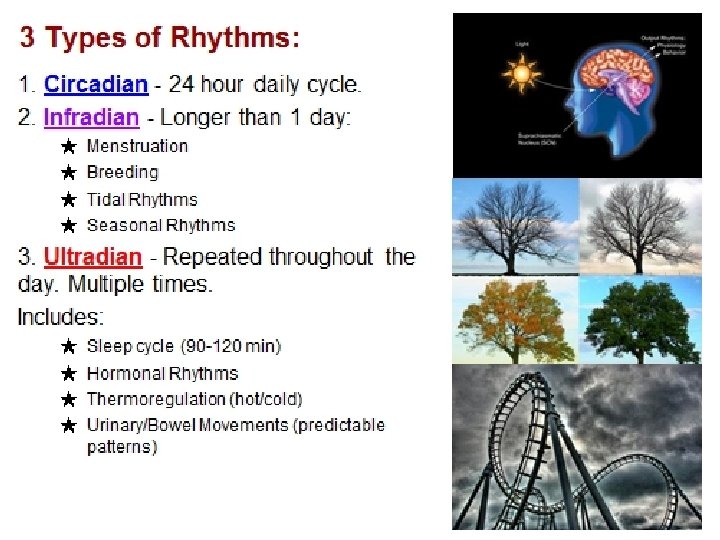
Biological Rhythms • Your biological clock- hypothalamus regulates changes in body temp, blood pressure, pulse, blood sugar, hormones and activity levels throughout the day. • In an environment without environmental cues, your biological clock would reset every 25 hours. • In an environment with light and dark, circadian rhythms occur every 24 hours. Exposure to light resets biological clock • Your forebrain, reticular formation and thalamus are involved in changes of wakefulness, arousal and attention. • So what is this mysterious rhythm we refer to…
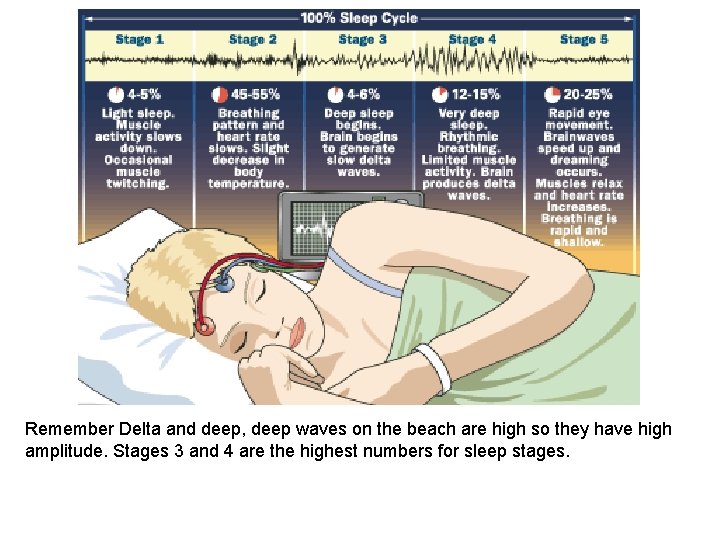
Sleep Cycle • • • Nightly, cycles 1 -4 and REM last 90 minutes (As the night progresses we spend more time in REM) 4 to 6 cycles a night is typical Use an EEG machine to measure stages of sleep. When you are in the onset of sleep you experience alpha waves. Produces mild hallucinations, like a feeling of falling.
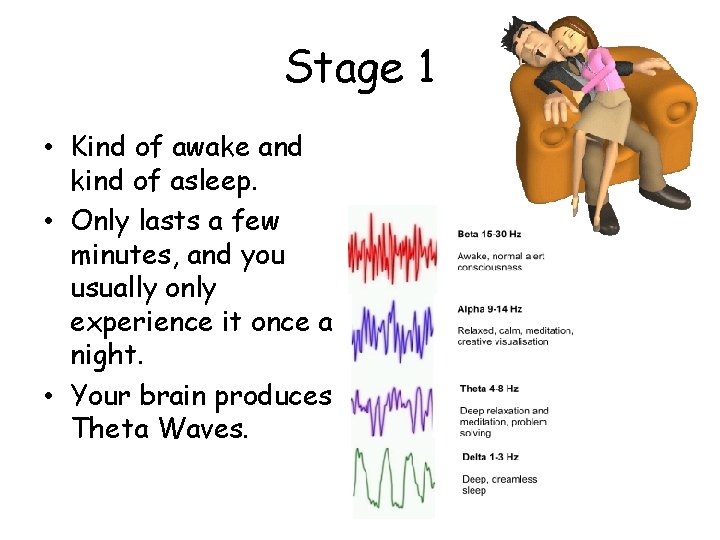
Stage 1 • Kind of awake and kind of asleep. • Only lasts a few minutes, and you usually only experience it once a night. • Your brain produces Theta Waves.
Stage 2 • More Theta Waves that get progressively slower. • Begin to show sleep spindles…short bursts of rapid brain waves. • Not easy to wake up
Stages 3 and 4 • Slow wave sleep. • You produce Delta waves. • If awoken you will be very groggy. • Vital for restoring body’s growth hormones and good overall health. From stage 4, your brain begins to speed up and you go to stage 3, then 2…. then ……
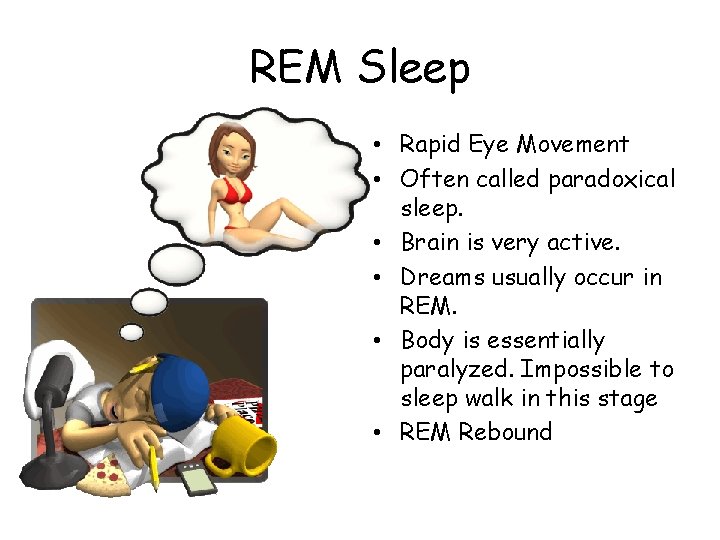
REM Sleep • Rapid Eye Movement • Often called paradoxical sleep. • Brain is very active. • Dreams usually occur in REM. • Body is essentially paralyzed. Impossible to sleep walk in this stage • REM Rebound
Remember Delta and deep, deep waves on the beach are high so they have high amplitude. Stages 3 and 4 are the highest numbers for sleep stages.
• Electroencephalogram (EEGs)- can be recorded with electrodes on the surface of the skull. EEG’s revealed that brain waves change in form throughout the sleep cycle. • Activation synthesis hypothesis- when we dream, our brain is as active as while we are awake. • Content of one’s dreams may be affected by gender, events in one’s life and external stimuli experienced while dreaming.
Sleep Disorders
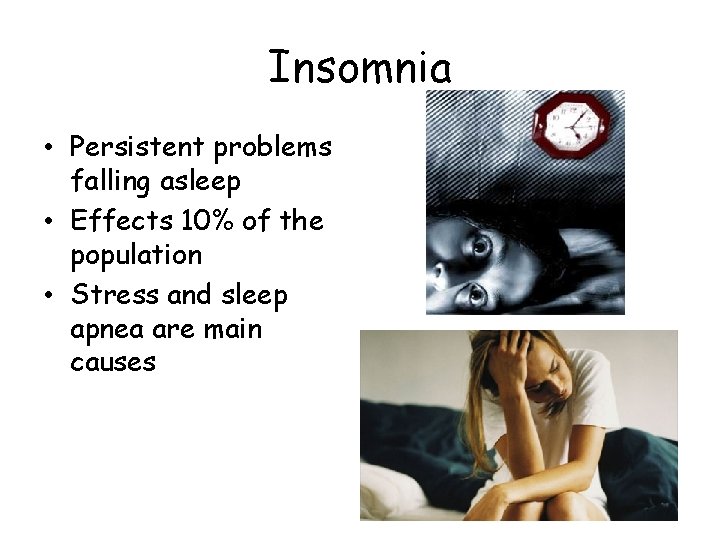
Insomnia • Persistent problems falling asleep • Effects 10% of the population • Stress and sleep apnea are main causes
Narcolepsy • http: //www. youtube. co m/watch? v=Lbmb. Qk. X 7 czo Click above to see Skeeter the narcoleptic dog. • Suffer from sleeplessness and may fall asleep at unpredictable or inappropriate times. • Directly into REM sleep • Less than. 001 % of population.
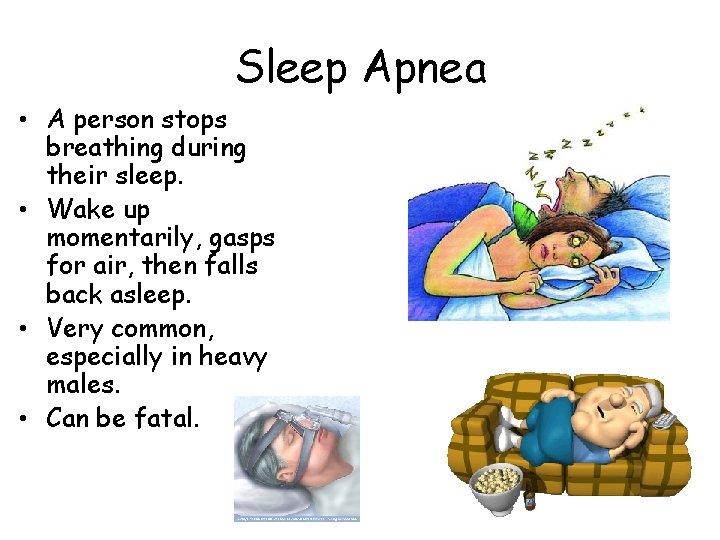
Sleep Apnea • A person stops breathing during their sleep. • Wake up momentarily, gasps for air, then falls back asleep. • Very common, especially in heavy males. • Can be fatal.
Night Terrors • Wake up screaming and have no idea why. • Not a nightmare. • Most common in children (boys) between ages 2 -8.
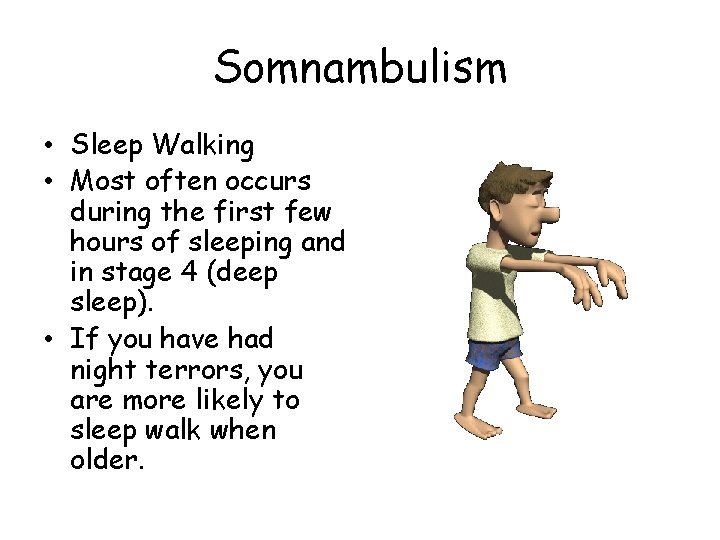
Somnambulism • Sleep Walking • Most often occurs during the first few hours of sleeping and in stage 4 (deep sleep). • If you have had night terrors, you are more likely to sleep walk when older.
Dreams
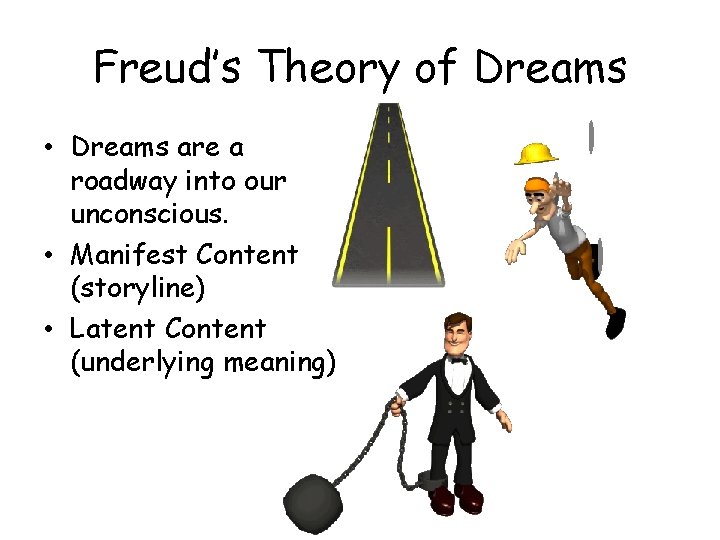
Freud’s Theory of Dreams • Dreams are a roadway into our unconscious. • Manifest Content (storyline) • Latent Content (underlying meaning)
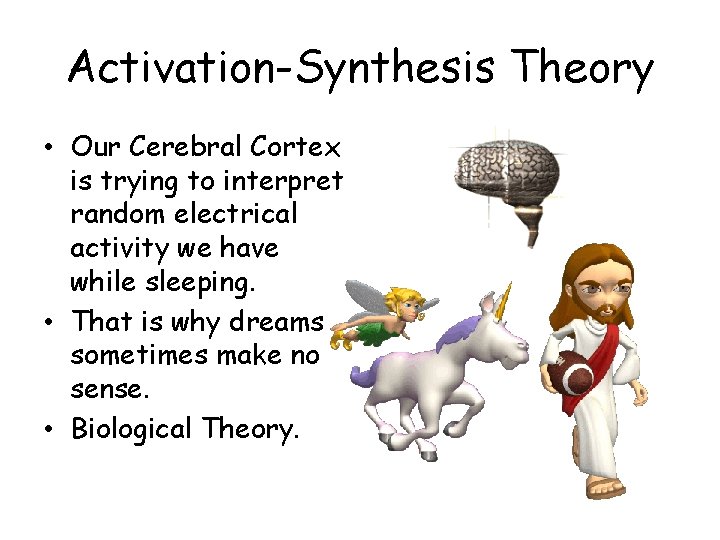
Activation-Synthesis Theory • Our Cerebral Cortex is trying to interpret random electrical activity we have while sleeping. • That is why dreams sometimes make no sense. • Biological Theory.
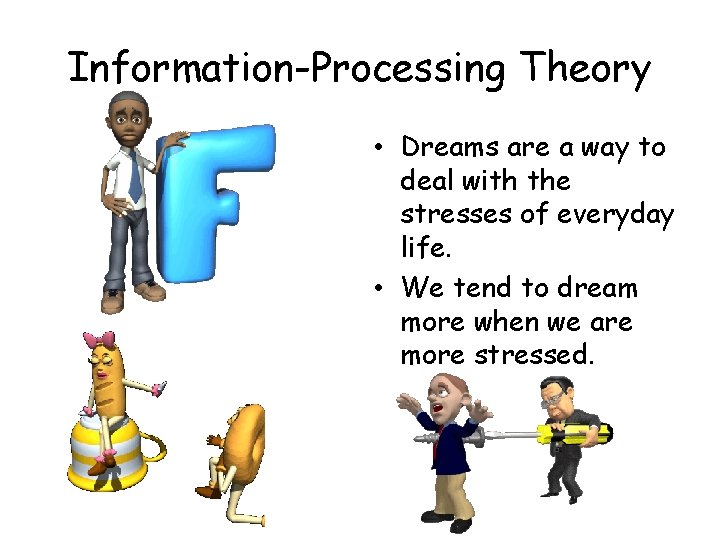
Information-Processing Theory • Dreams are a way to deal with the stresses of everyday life. • We tend to dream more when we are more stressed.
Hypnosis
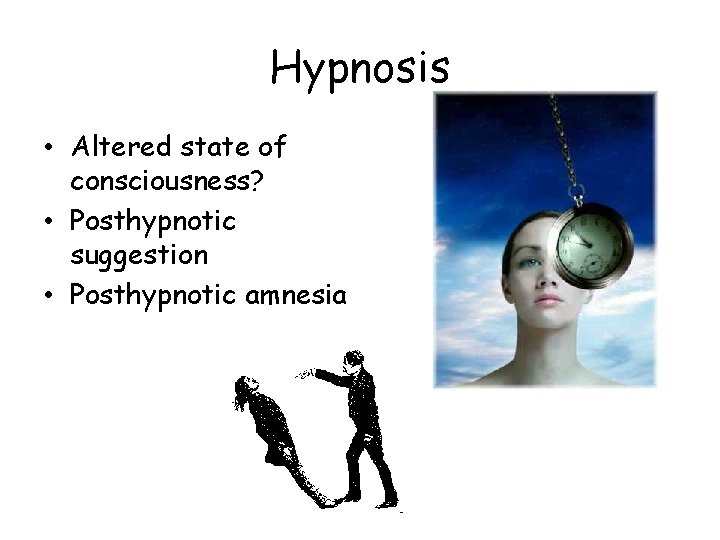
Hypnosis • Altered state of consciousness? • Posthypnotic suggestion • Posthypnotic amnesia
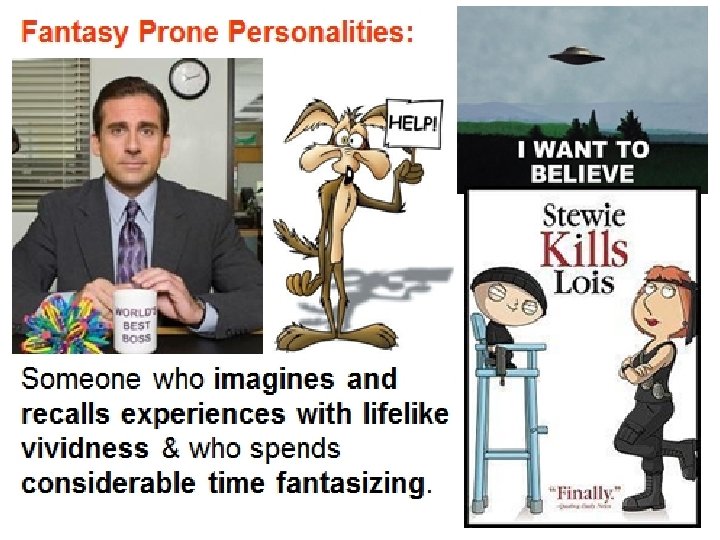
Hypnotic Theories Role Theory • Hypnosis is NOT an altered state of consciousness. • Different people have various state of hypnotic suggestibility. • A social phenomenon where people want to believe. • Work better on people with richer fantasy lives. State Theory • Hypnosis is an altered state of consciousness. • Dramatic health benefits • It works for pain best.
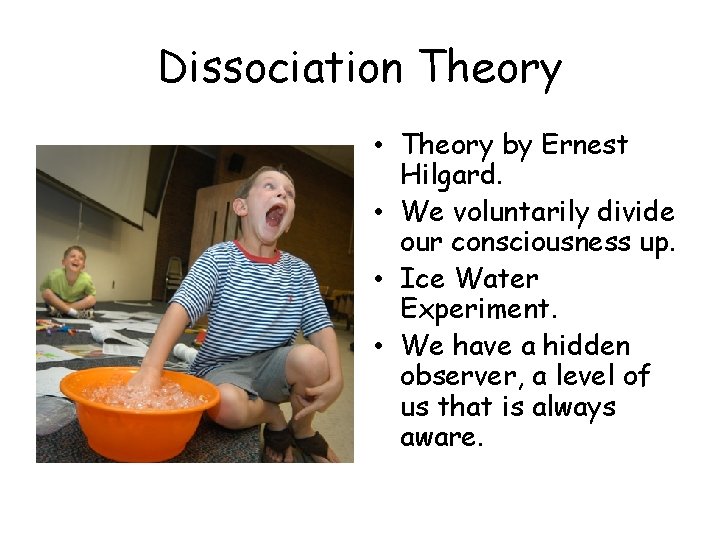
Dissociation Theory • Theory by Ernest Hilgard. • We voluntarily divide our consciousness up. • Ice Water Experiment. • We have a hidden observer, a level of us that is always aware.
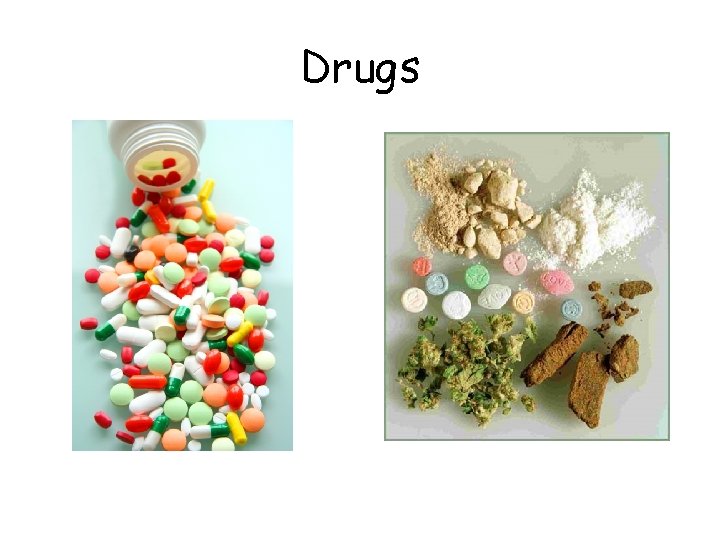
Drugs
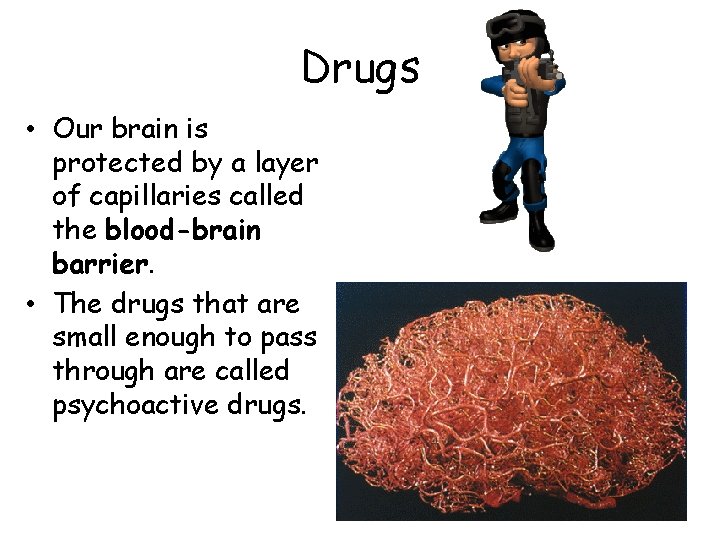
Drugs • Our brain is protected by a layer of capillaries called the blood-brain barrier. • The drugs that are small enough to pass through are called psychoactive drugs.
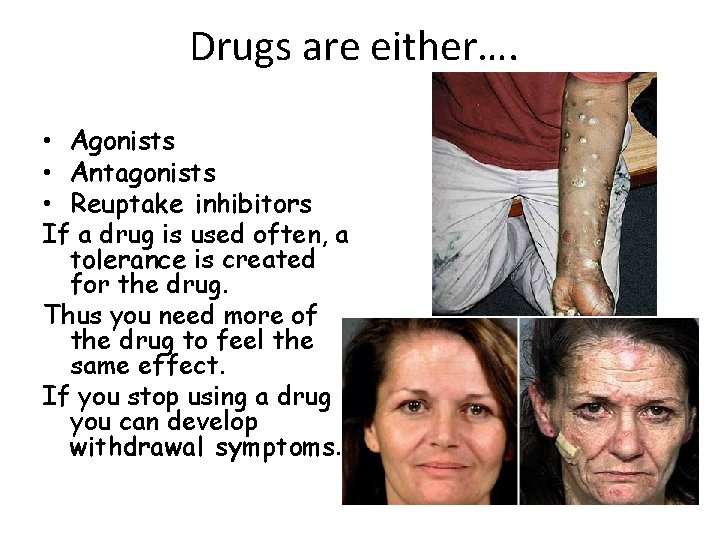
Drugs are either…. • Agonists • Antagonists • Reuptake inhibitors If a drug is used often, a tolerance is created for the drug. Thus you need more of the drug to feel the same effect. If you stop using a drug you can develop withdrawal symptoms.
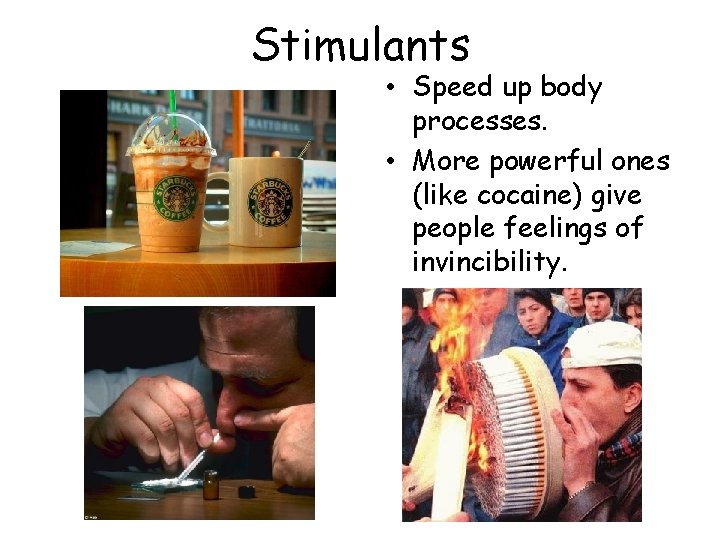
Stimulants • Speed up body processes. • More powerful ones (like cocaine) give people feelings of invincibility.
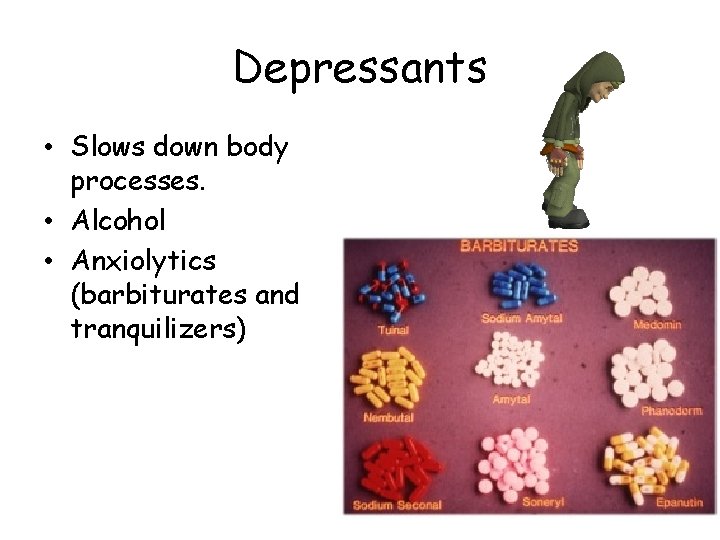
Depressants • Slows down body processes. • Alcohol • Anxiolytics (barbiturates and tranquilizers)
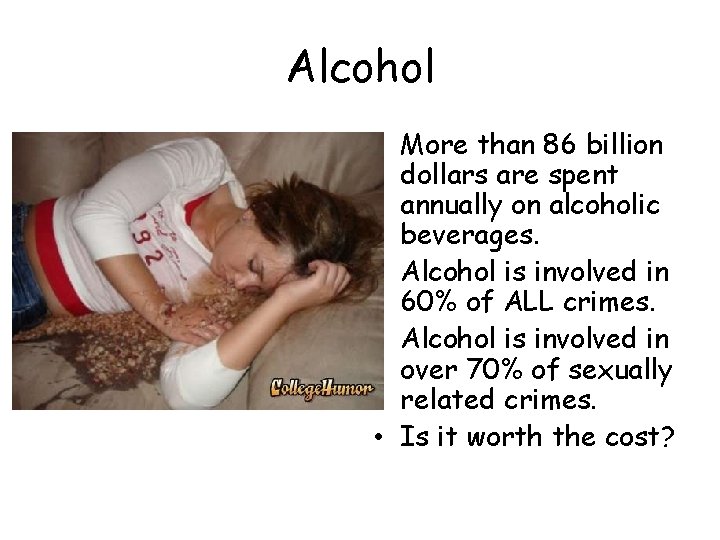
Alcohol • More than 86 billion dollars are spent annually on alcoholic beverages. • Alcohol is involved in 60% of ALL crimes. • Alcohol is involved in over 70% of sexually related crimes. • Is it worth the cost?
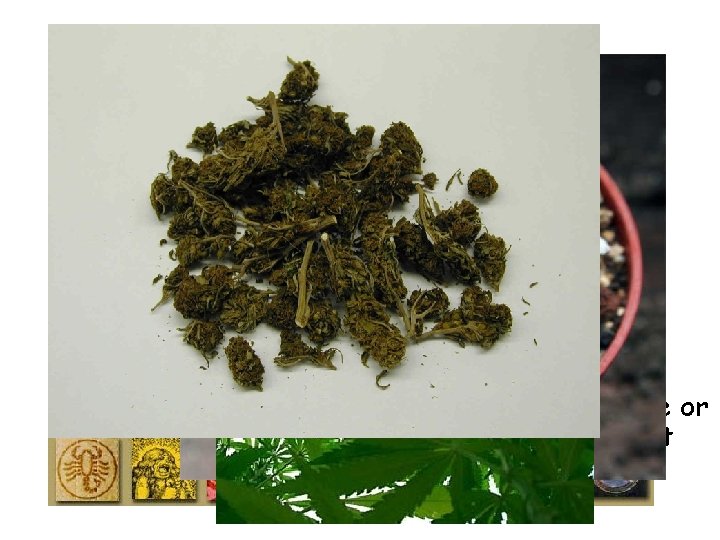
Hallucinogens • Psychedelics • Causes changes in perceptions of reality • LSD, peyote, psilocybin mushrooms and marijuana. • Reverse tolerance or synergistic effect
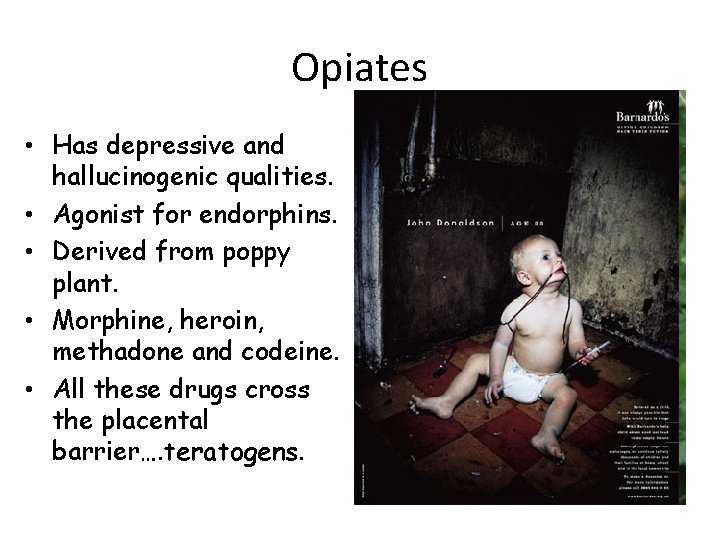
Opiates • Has depressive and hallucinogenic qualities. • Agonist for endorphins. • Derived from poppy plant. • Morphine, heroin, methadone and codeine. • All these drugs cross the placental barrier…. teratogens.