
States of Consciousness Drugs Understanding Drugs Important Terminology

- Slides: 33
States of Consciousness: Drugs
Understanding Drugs: Important Terminology Psychoactive drugs – are chemicals that change conscious awareness, mood, or perception Drug abuse – drug taking that causes emotional or physical harm to the individual or others Addiction – broad term describing a compulsion to use a specific drug What is the difference between Abuse and Addiction?
Psychological Terminology � Psychological dependence (abuse) – mental desire or craving to achieve the effects produced by a drug � Physical dependence (addiction) – changes in bodily processes that make a drug necessary for minimum daily functioning � Withdrawal – discomfort and distress, including physical pain and intense cravings, experienced after stopping the use of addictive drugs � Tolerance – decreased sensitivity to a drug brought about by its continuous use Why do you think people develop tolerance? Which drugs do you think have the worst withdrawal symptoms?
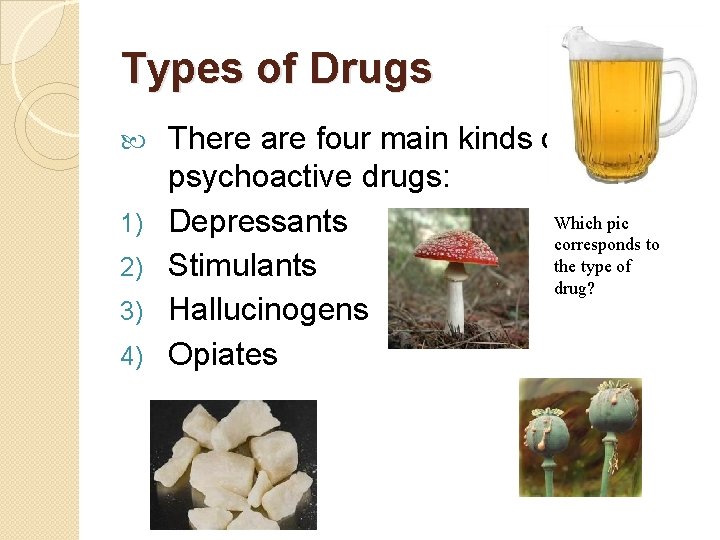
Types of Drugs 1) 2) 3) 4) There are four main kinds of psychoactive drugs: Which pic Depressants corresponds to the type of Stimulants drug? Hallucinogens Opiates
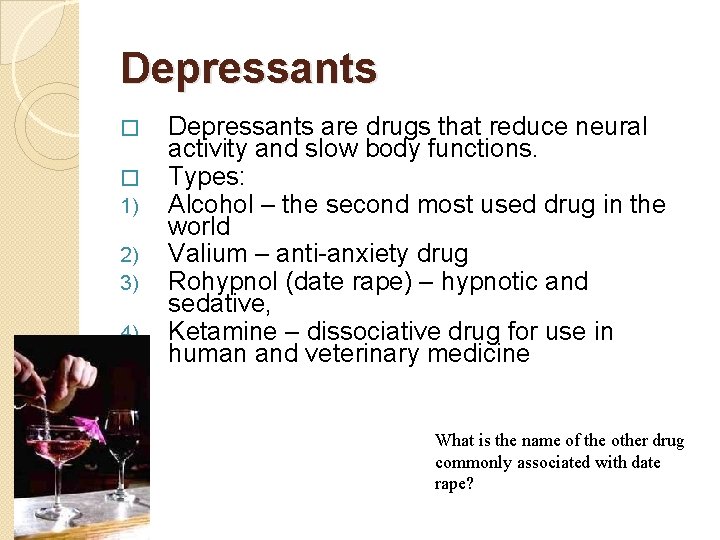
Depressants � � 1) 2) 3) 4) Depressants are drugs that reduce neural activity and slow body functions. Types: Alcohol – the second most used drug in the world Valium – anti-anxiety drug Rohypnol (date rape) – hypnotic and sedative, Ketamine – dissociative drug for use in human and veterinary medicine What is the name of the other drug commonly associated with date rape?
Alcohol is the second most used psychoactive drug in the world. Alcohol slows thinking and impairs physical activity. Alcohol is unique among the depressants in that its use is largely recreational: “social drinker” Alcoholic beverages vary widely in the amount of alcohol they contain: beer (3. 5% 5%); wine (9% - 12%); hard liqueur (40%) Lets say you take three shots of tequila. How many beers would equal the same amount of alcohol
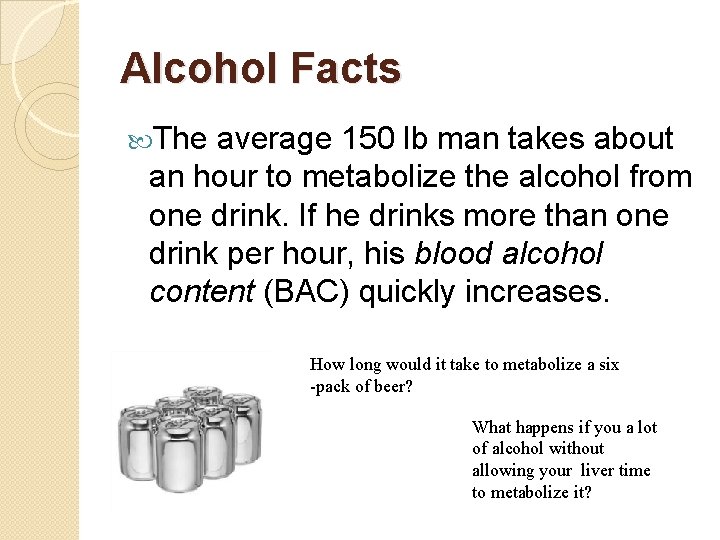
Alcohol Facts The average 150 lb man takes about an hour to metabolize the alcohol from one drink. If he drinks more than one drink per hour, his blood alcohol content (BAC) quickly increases. How long would it take to metabolize a six -pack of beer? What happens if you a lot of alcohol without allowing your liver time to metabolize it?
Alcohol - Problems Alcohol affects women and men differently A man and a woman who both weigh the same and drink the same amount of alcohol will have different amounts of alcohol in the bloodstream an hour later for the following three reasons:
Issues 1) Poor decisions and unrestrained behaviors are typical in those under the influence of alcohol, because alcohol tends to shut down the parts of the brain responsible for controlling inhibitions and making judgments. 2) Alcohol impairs memory – experiences from the intoxicated state may not transfer to sober state. Also, alcohol suppresses REM (dream) sleep, which further disrupts memory storage 3) The recreational use of alcohol often gets out of hand, leading to dependence, health problems, accidental injuries, or death. No other drug has generated more problems, concerns, and controversies than alcohol has in this century. What kind of poor decision making is shown by intoxicated people?
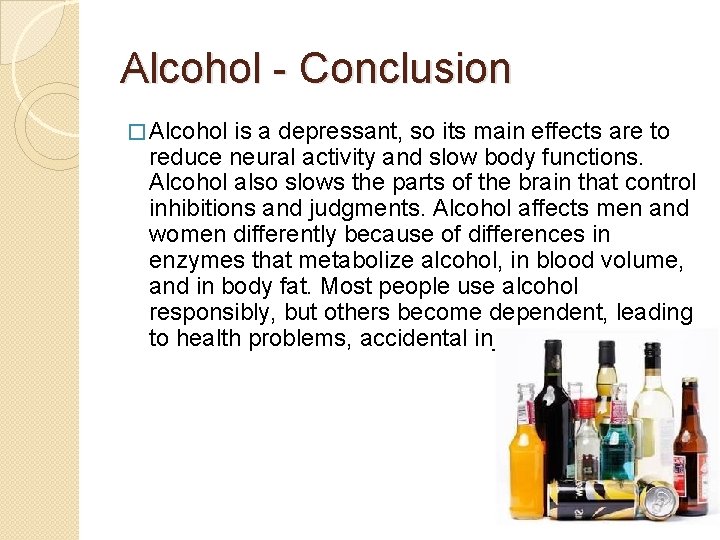
Alcohol - Conclusion � Alcohol is a depressant, so its main effects are to reduce neural activity and slow body functions. Alcohol also slows the parts of the brain that control inhibitions and judgments. Alcohol affects men and women differently because of differences in enzymes that metabolize alcohol, in blood volume, and in body fat. Most people use alcohol responsibly, but others become dependent, leading to health problems, accidental injuries or death.
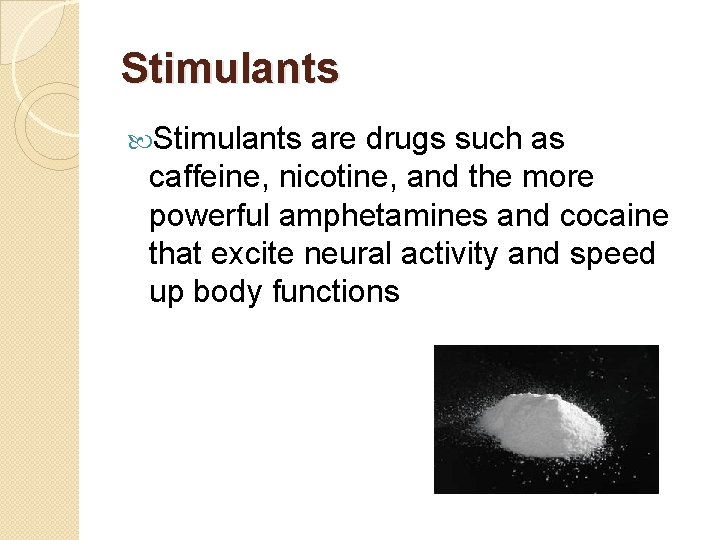
Stimulants are drugs such as caffeine, nicotine, and the more powerful amphetamines and cocaine that excite neural activity and speed up body functions
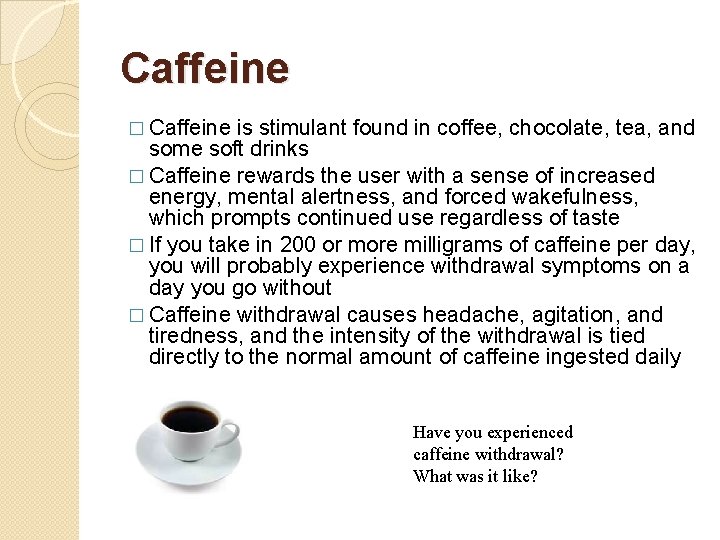
Caffeine � Caffeine is stimulant found in coffee, chocolate, tea, and some soft drinks � Caffeine rewards the user with a sense of increased energy, mental alertness, and forced wakefulness, which prompts continued use regardless of taste � If you take in 200 or more milligrams of caffeine per day, you will probably experience withdrawal symptoms on a day you go without � Caffeine withdrawal causes headache, agitation, and tiredness, and the intensity of the withdrawal is tied directly to the normal amount of caffeine ingested daily Have you experienced caffeine withdrawal? What was it like?
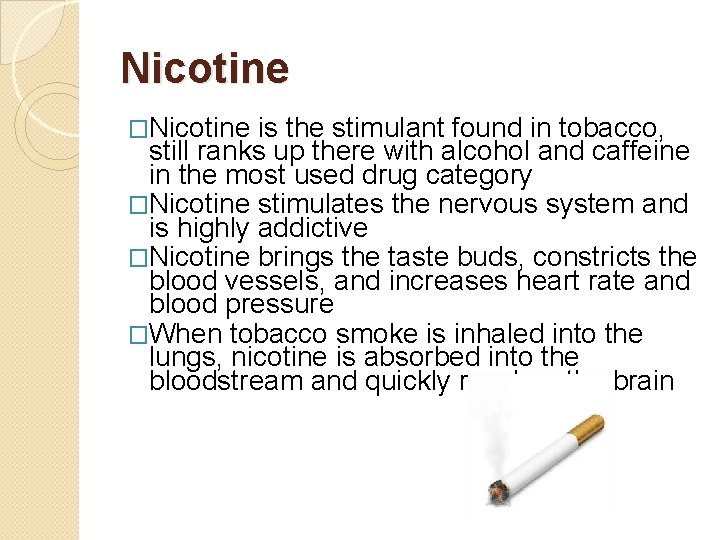
Nicotine �Nicotine is the stimulant found in tobacco, still ranks up there with alcohol and caffeine in the most used drug category �Nicotine stimulates the nervous system and is highly addictive �Nicotine brings the taste buds, constricts the blood vessels, and increases heart rate and blood pressure �When tobacco smoke is inhaled into the lungs, nicotine is absorbed into the bloodstream and quickly reaches the brain
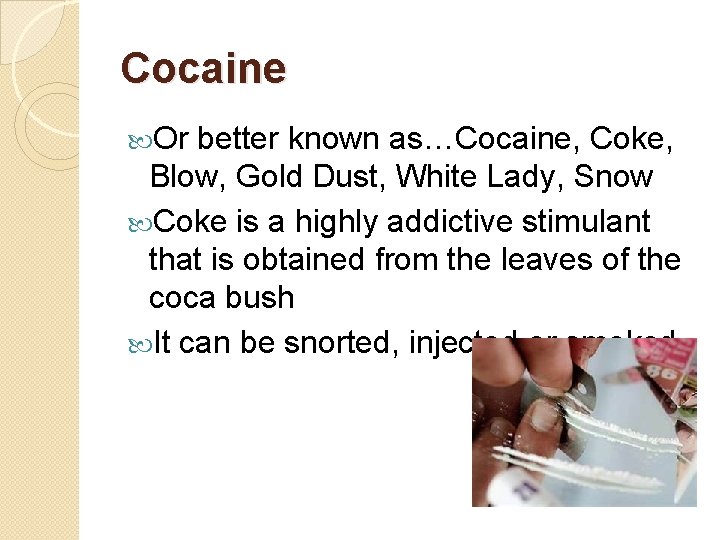
Cocaine Or better known as…Cocaine, Coke, Blow, Gold Dust, White Lady, Snow Coke is a highly addictive stimulant that is obtained from the leaves of the coca bush It can be snorted, injected or smoked
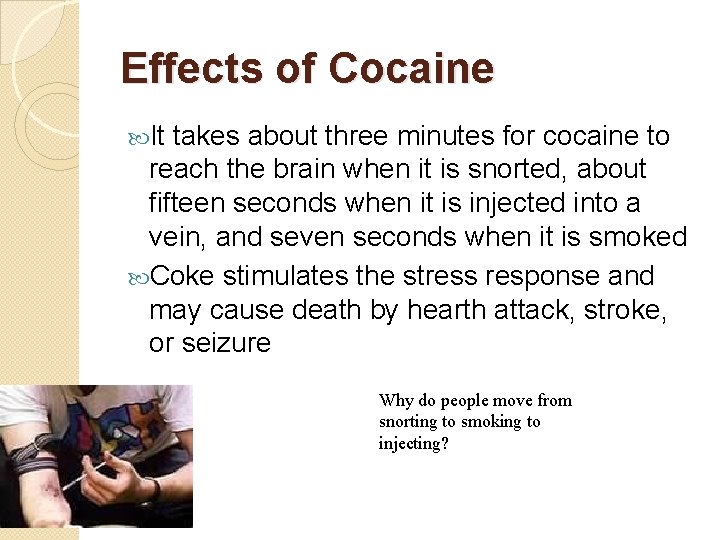
Effects of Cocaine It takes about three minutes for cocaine to reach the brain when it is snorted, about fifteen seconds when it is injected into a vein, and seven seconds when it is smoked Coke stimulates the stress response and may cause death by hearth attack, stroke, or seizure Why do people move from snorting to smoking to injecting?
Crack or Rock �Crack is purified cocaine that is smoked to produce a rapid and intense reaction. It is named for the sound it produces when smoked �Crack is MORE addictive than cocaine; therefore, the effects of crack are ten times greater than those of snorted cocaine �People who use crack may become rapidly addicted Why do you think that crack is so addictive? Any guesses?
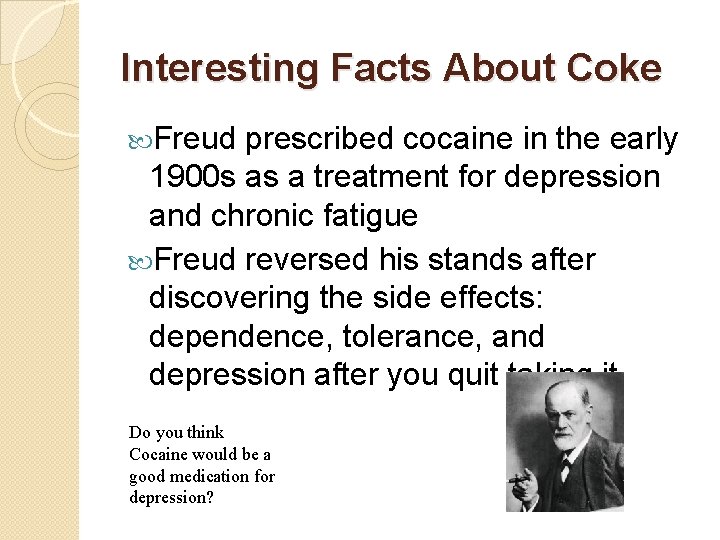
Interesting Facts About Coke Freud prescribed cocaine in the early 1900 s as a treatment for depression and chronic fatigue Freud reversed his stands after discovering the side effects: dependence, tolerance, and depression after you quit taking it Do you think Cocaine would be a good medication for depression?
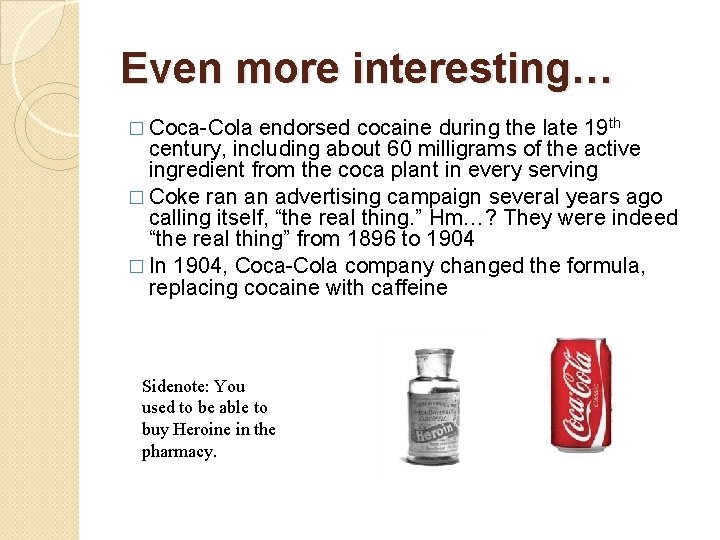
Even more interesting… � Coca-Cola endorsed cocaine during the late 19 th century, including about 60 milligrams of the active ingredient from the coca plant in every serving � Coke ran an advertising campaign several years ago calling itself, “the real thing. ” Hm…? They were indeed “the real thing” from 1896 to 1904 � In 1904, Coca-Cola company changed the formula, replacing cocaine with caffeine Sidenote: You used to be able to buy Heroine in the pharmacy.
Amphetamines are drugs that stimulate neural activity, speeding up body functions – this is why it is better known as speed or uppers Speed is chemically manufactured stimulant, it use to be taken as a diet pill Why do you think amphetamines would help with dieting?
Methamphetamine Or Meth, Crank, Crystal meth, Crystal tea, Crystal, Ice It is a highly addictive central nervous system stimulant in the amphetamine family that can be injected, snorted, smoked, or ingested orally Users feel a short yet intense “rush” when the drug is initially administered
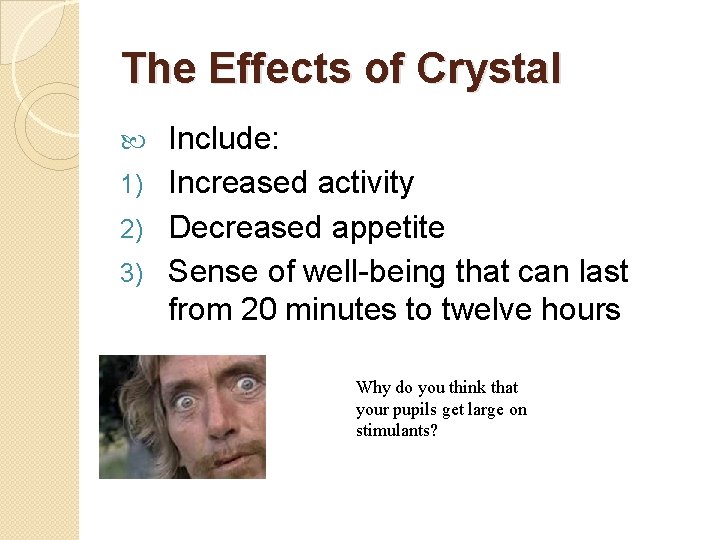
The Effects of Crystal Include: 1) Increased activity 2) Decreased appetite 3) Sense of well-being that can last from 20 minutes to twelve hours Why do you think that your pupils get large on stimulants?
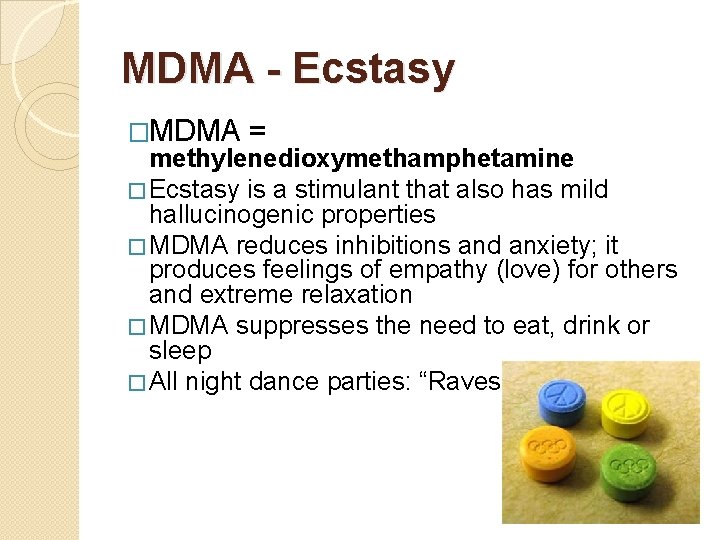
MDMA - Ecstasy �MDMA = methylenedioxymethamphetamine � Ecstasy is a stimulant that also has mild hallucinogenic properties � MDMA reduces inhibitions and anxiety; it produces feelings of empathy (love) for others and extreme relaxation � MDMA suppresses the need to eat, drink or sleep � All night dance parties: “Raves”
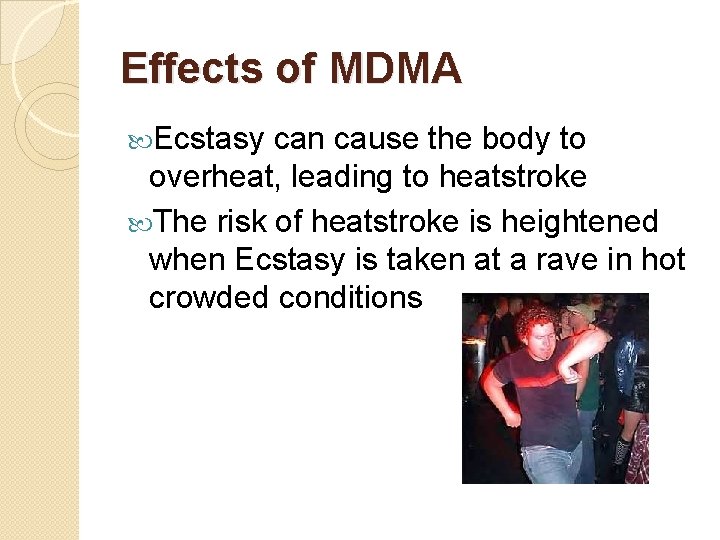
Effects of MDMA Ecstasy can cause the body to overheat, leading to heatstroke The risk of heatstroke is heightened when Ecstasy is taken at a rave in hot crowded conditions
Hallucinogens � Hallucinogens – sometimes called psychedelics (mind-manifesting) – are drugs that distort perceptions and evoke sensory images in the absence of sensory input � The most commonly used hallucinogens were first made in a laboratory � Most common hallucinogens are: LSD, marijuana and MDMA (also a stimulant) How and why do hallucinations occur?
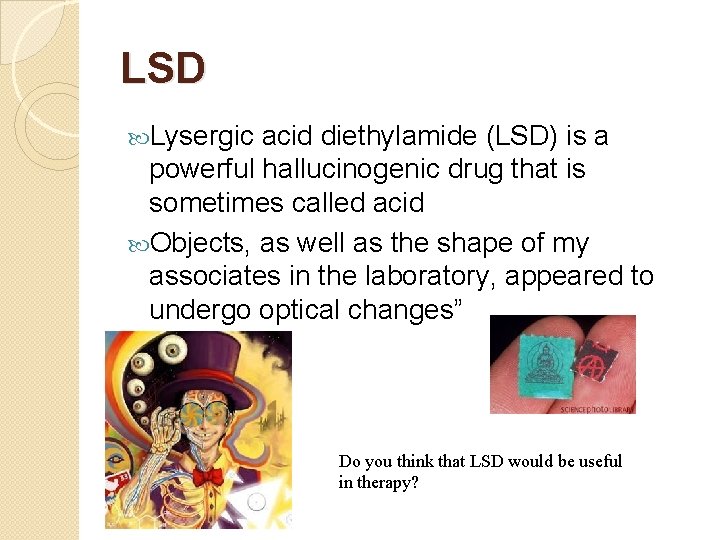
LSD Lysergic acid diethylamide (LSD) is a powerful hallucinogenic drug that is sometimes called acid Objects, as well as the shape of my associates in the laboratory, appeared to undergo optical changes” Do you think that LSD would be useful in therapy?
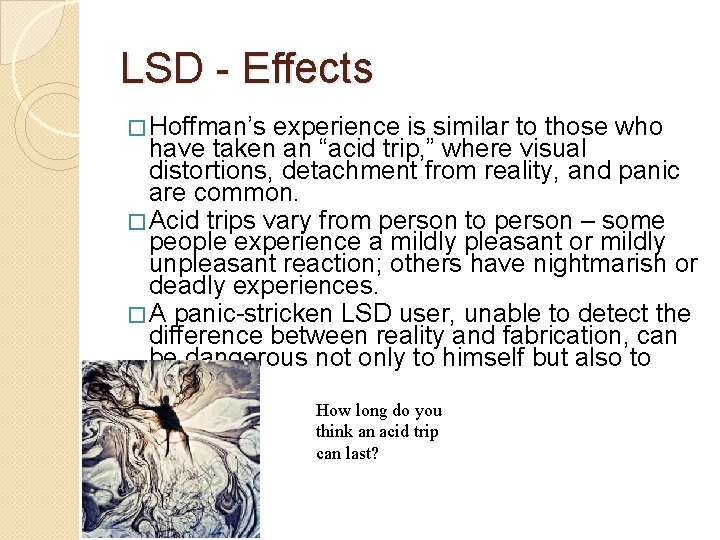
LSD - Effects � Hoffman’s experience is similar to those who have taken an “acid trip, ” where visual distortions, detachment from reality, and panic are common. � Acid trips vary from person to person – some people experience a mildly pleasant or mildly unpleasant reaction; others have nightmarish or deadly experiences. � A panic-stricken LSD user, unable to detect the difference between reality and fabrication, can be dangerous not only to himself but also to others How long do you think an acid trip can last?
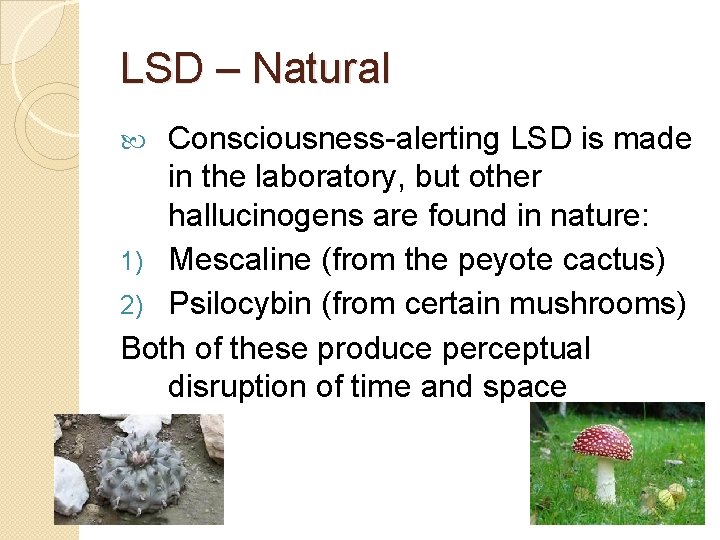
LSD – Natural Consciousness-alerting LSD is made in the laboratory, but other hallucinogens are found in nature: 1) Mescaline (from the peyote cactus) 2) Psilocybin (from certain mushrooms) Both of these produce perceptual disruption of time and space
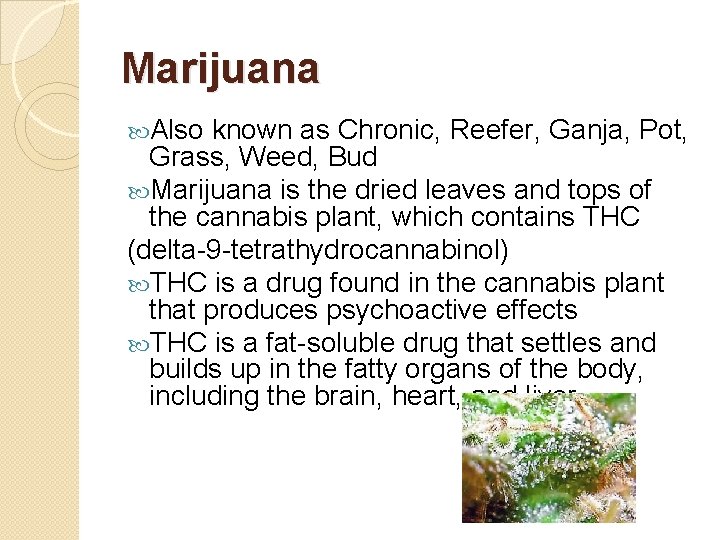
Marijuana Also known as Chronic, Reefer, Ganja, Pot, Grass, Weed, Bud Marijuana is the dried leaves and tops of the cannabis plant, which contains THC (delta-9 -tetrathydrocannabinol) THC is a drug found in the cannabis plant that produces psychoactive effects THC is a fat-soluble drug that settles and builds up in the fatty organs of the body, including the brain, heart, and liver
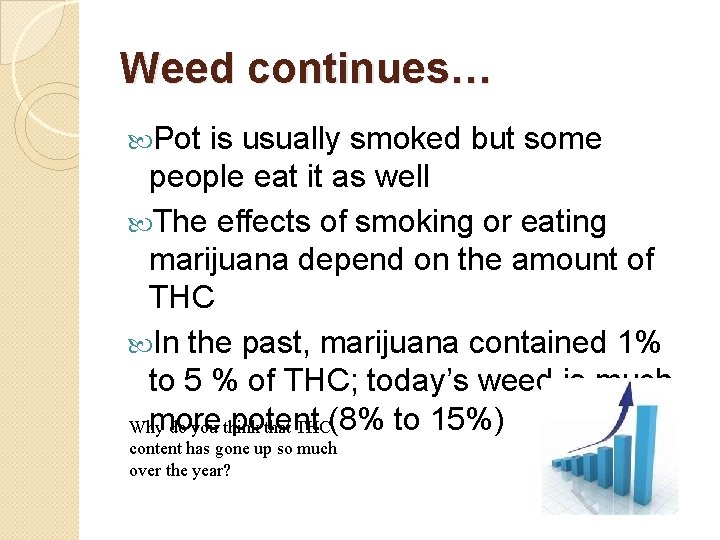
Weed continues… Pot is usually smoked but some people eat it as well The effects of smoking or eating marijuana depend on the amount of THC In the past, marijuana contained 1% to 5 % of THC; today’s weed is much more potent Why do you think that THC(8% to 15%) content has gone up so much over the year?
Marijuana’s Identity Problems Marijuana does not fit neatly into any of the drug categories for several reasons: 1) Its behavioral effects are similar to those of low doses of alcohol but different in that high doses do not suppress breathing and are not lethal 2) Compared with LSD, it produces only mild hallucinogenic experiences 3) Its chemical structure does not resemble that of hallucinogens
Marijuana’s Long-Term Effects �Pot smoke is far harder on your lungs than cigarette smoke �Brain cell loss accelerates with large doses �Memory is still impaired long after marijuana’s effect has worn off �Marijuana seems to suppress the immune system, making it harder for your body to fight off disease and infection Why would marijuana smoke have more tar Than cigarette smoke?
Opiates (Narcotics) 1) 2) 3) Opiates are drugs derived from opium that function as an analgesic or pain reliever Desired effects – euphoria, “rush” of pleasure, pain relief, prevention of withdrawal discomfort Undesirable effects – nausea, vomiting, constipation, painful withdrawal, coma, death Types: Morphine – is a highly-potent opiate drug and is the active agent in opium Heroin - is a semi-synthetic opioid synthesized from morphine, a derivative of the opium poppy Codeine or methylmorphine is an opiate used for its analgesic, antitussive and antidiarrheal properties
Handout with Articles Using your text become familiar with the psychoactive drugs discussed in this powerpoint. Read the articles on Marijuana, Heroin and Alcohol. This is your Homework. Focus on the main points and what they argue in each article. 5 points review next class (at the start of class!)