
States of aggregation of matter Kelly Aline Hiplito


- Slides: 12
States of aggregation of matter Kelly Aline Hipólito de Medeiros
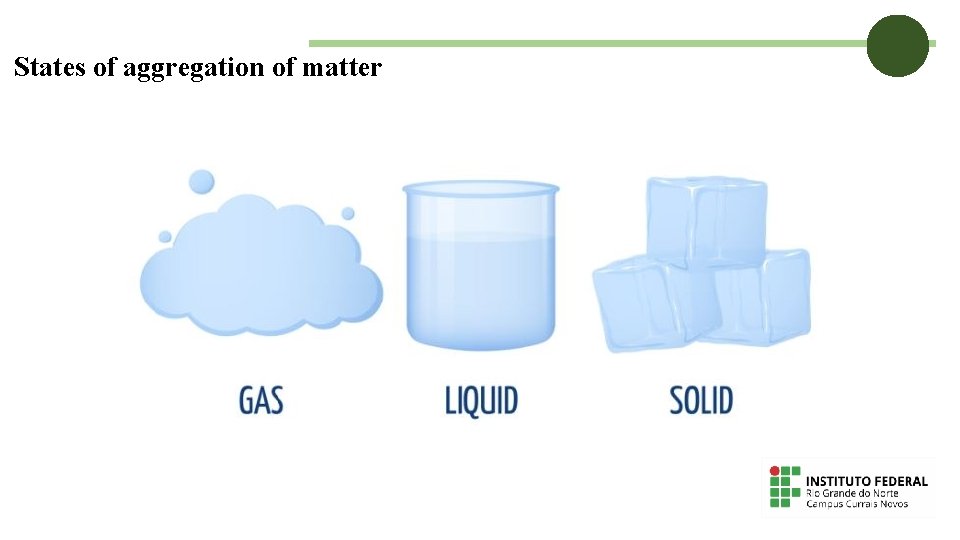
States of aggregation of matter
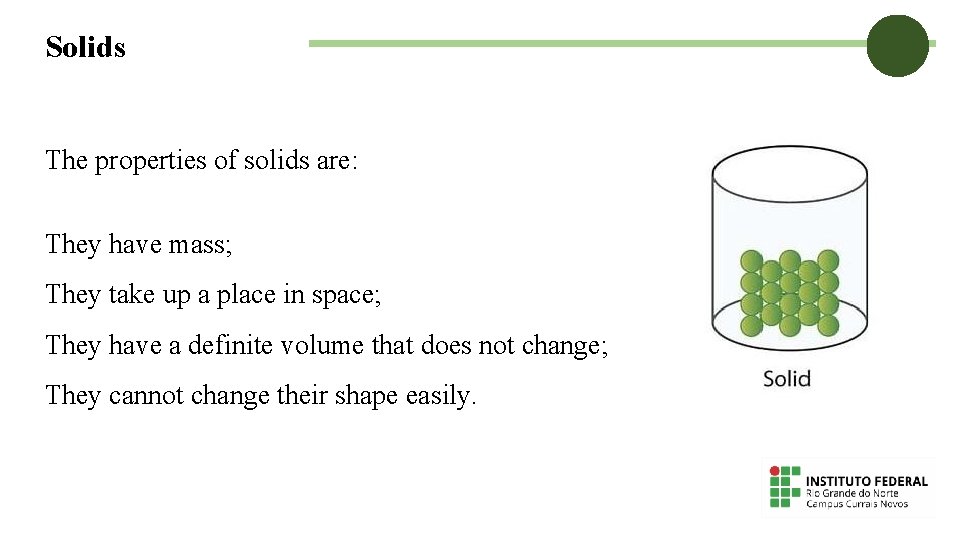
Solids The properties of solids are: They have mass; They take up a place in space; They have a definite volume that does not change; They cannot change their shape easily.
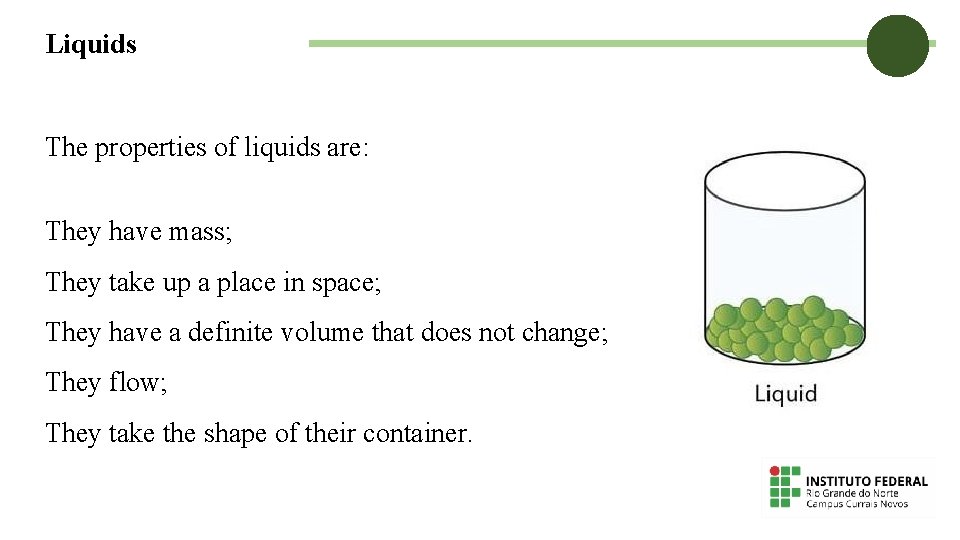
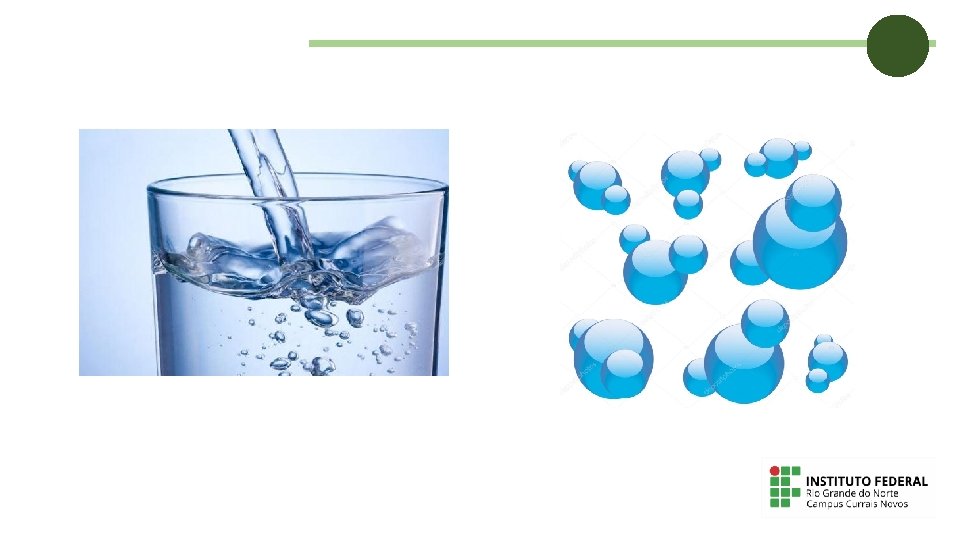
Liquids The properties of liquids are: They have mass; They take up a place in space; They have a definite volume that does not change; They flow; They take the shape of their container.
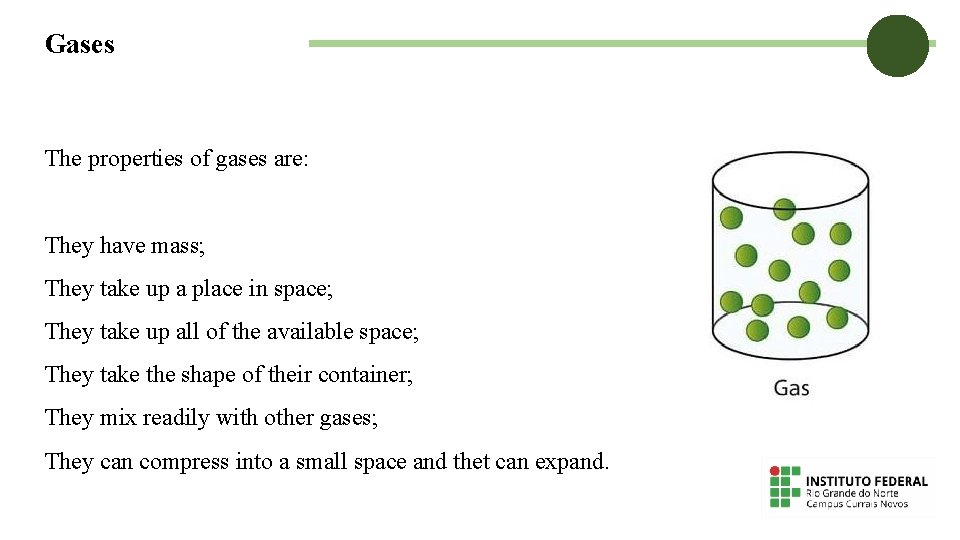
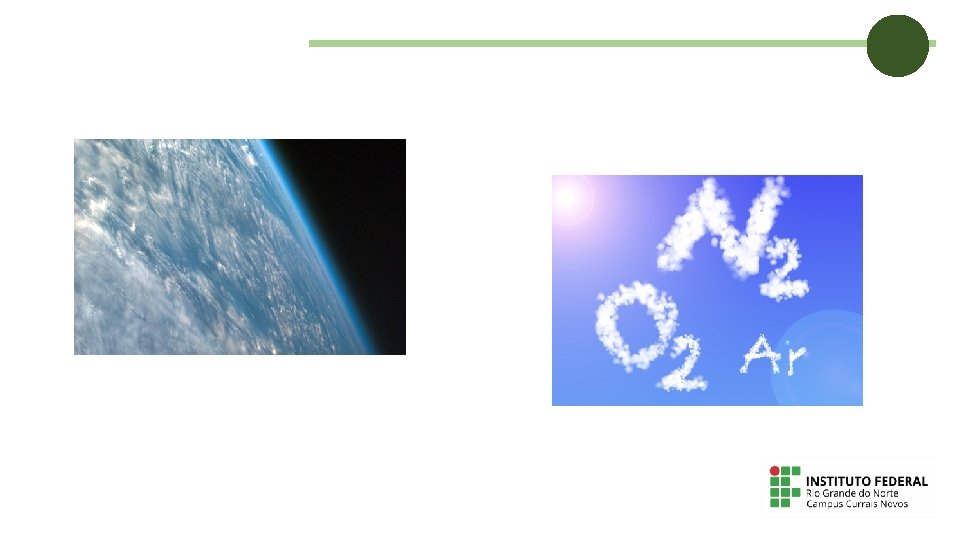
Gases The properties of gases are: They have mass; They take up a place in space; They take up all of the available space; They take the shape of their container; They mix readily with other gases; They can compress into a small space and thet can expand.
Don’t be confused about this Molecules are very small, any small piece of matter, has thousand of millions of molecules; Molecules do not expand or compresse, the molecules move away or approach; The speed of molecules does not change if the temperature does not change.
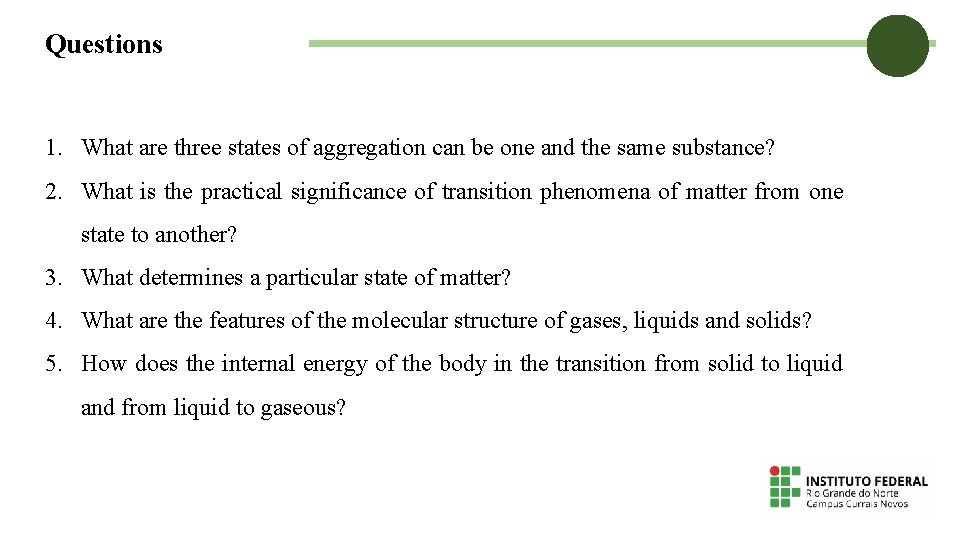
Questions 1. What are three states of aggregation can be one and the same substance? 2. What is the practical significance of transition phenomena of matter from one state to another? 3. What determines a particular state of matter? 4. What are the features of the molecular structure of gases, liquids and solids? 5. How does the internal energy of the body in the transition from solid to liquid and from liquid to gaseous?
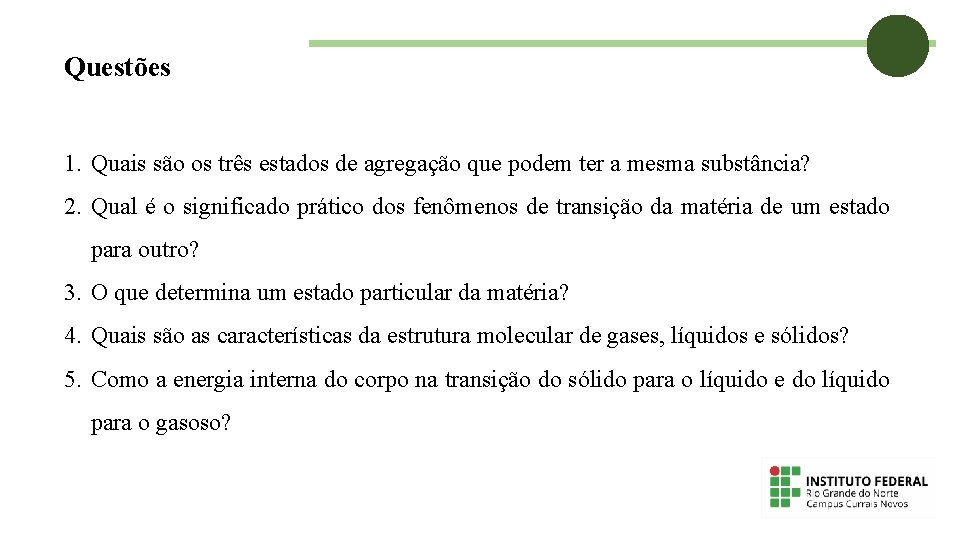
Questões 1. Quais são os três estados de agregação que podem ter a mesma substância? 2. Qual é o significado prático dos fenômenos de transição da matéria de um estado para outro? 3. O que determina um estado particular da matéria? 4. Quais são as características da estrutura molecular de gases, líquidos e sólidos? 5. Como a energia interna do corpo na transição do sólido para o líquido e do líquido para o gasoso?
Sobre o plano de aula: