
Stateoftheart management of multipleinjured patients AO Trauma Advanced

- Slides: 40
State-of-the-art management of multiple-injured patients AO Trauma Advanced Principles Course
Learning objectives • Understand the pathophysiology of major trauma and patients’ underlying susceptibility for “ 2 nd hit” insults • Set priorities for management of injuries • Identify the patients that can safely have early total care (ETC) • Distinguish the borderline and at-risk patient • Consider the patient condition for damage control surgery
What is the definition of “polytrauma”? • “More than two significant injuries in ≥ 2 body regions. ” (Border et al. Prog Surg. 1975; 14: 84– 120) • “Two or more injuries, among which at least one injury or the sum of all injuries is life-threatening. ” (Tscherne 1984) • “A syndrome of multiple injuries exceeding a defined injury severity (ISS > 17) with consecutive systemic trauma reactions which may lead to dysfunction or failure of remote—primarily not injured—organs and vital systems. ” (Trentz. AO Principles of Fracture Management; 2000)
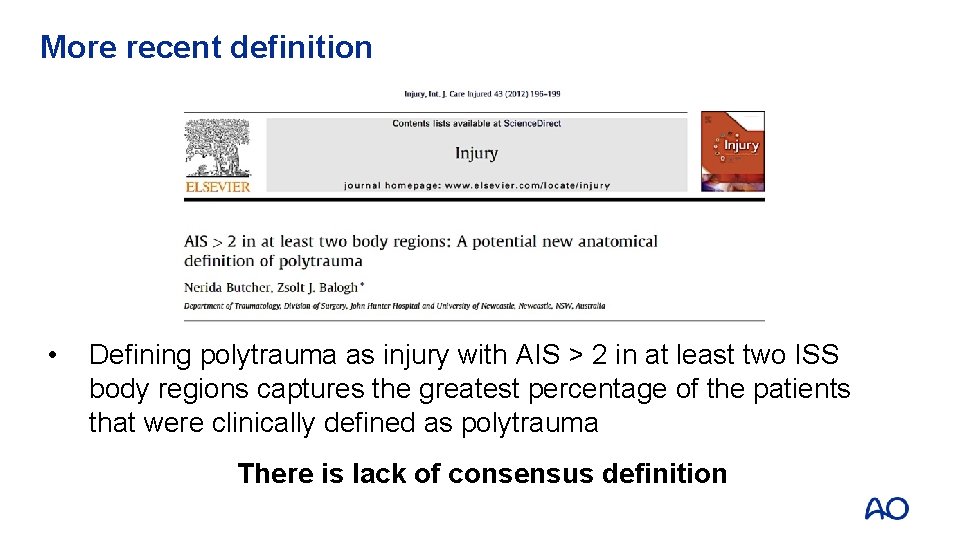
More recent definition • Defining polytrauma as injury with AIS > 2 in at least two ISS body regions captures the greatest percentage of the patients that were clinically defined as polytrauma There is lack of consensus definition
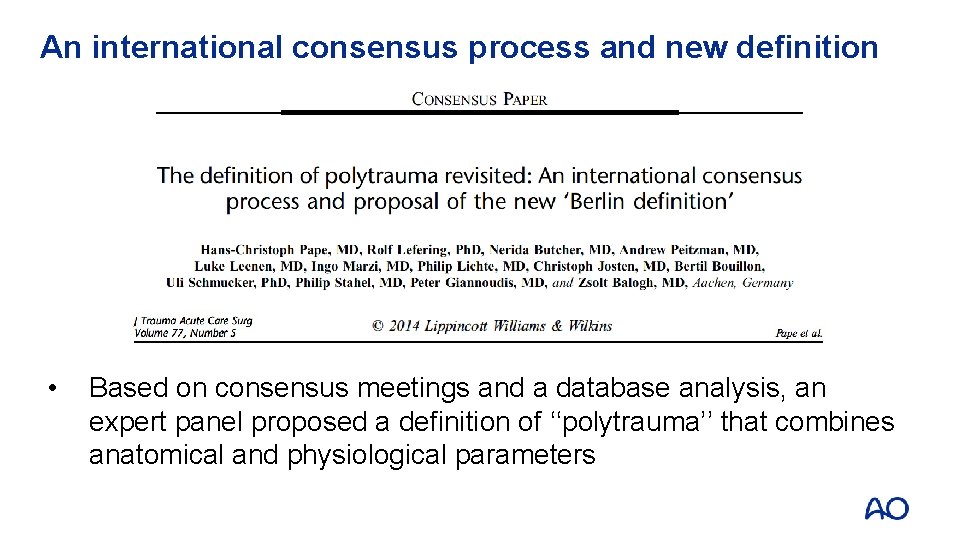
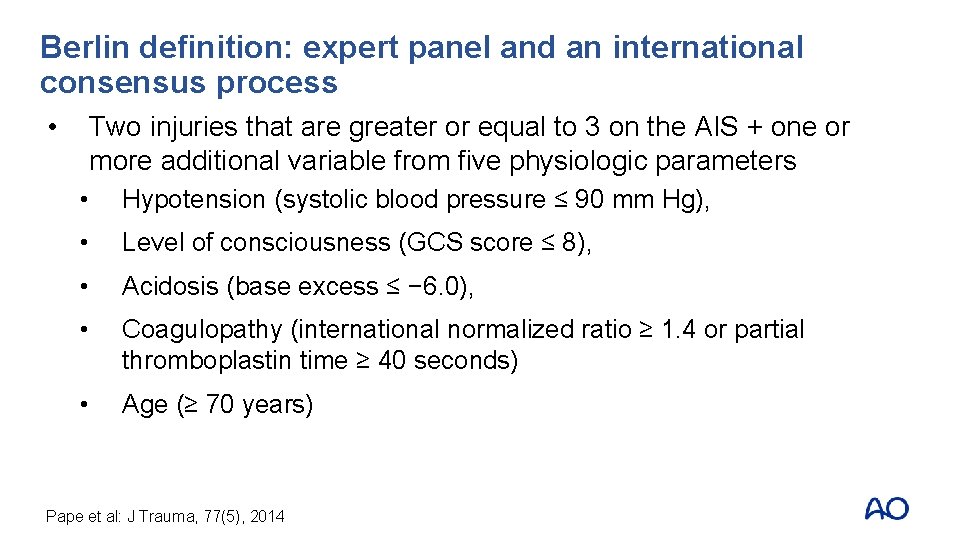
An international consensus process and new definition • Based on consensus meetings and a database analysis, an expert panel proposed a definition of ‘‘polytrauma’’ that combines anatomical and physiological parameters
Berlin definition: expert panel and an international consensus process • Two injuries that are greater or equal to 3 on the AIS + one or more additional variable from five physiologic parameters • Hypotension (systolic blood pressure ≤ 90 mm Hg), • Level of consciousness (GCS score ≤ 8), • Acidosis (base excess ≤ − 6. 0), • Coagulopathy (international normalized ratio ≥ 1. 4 or partial thromboplastin time ≥ 40 seconds) • Age (≥ 70 years) Pape et al: J Trauma, 77(5), 2014
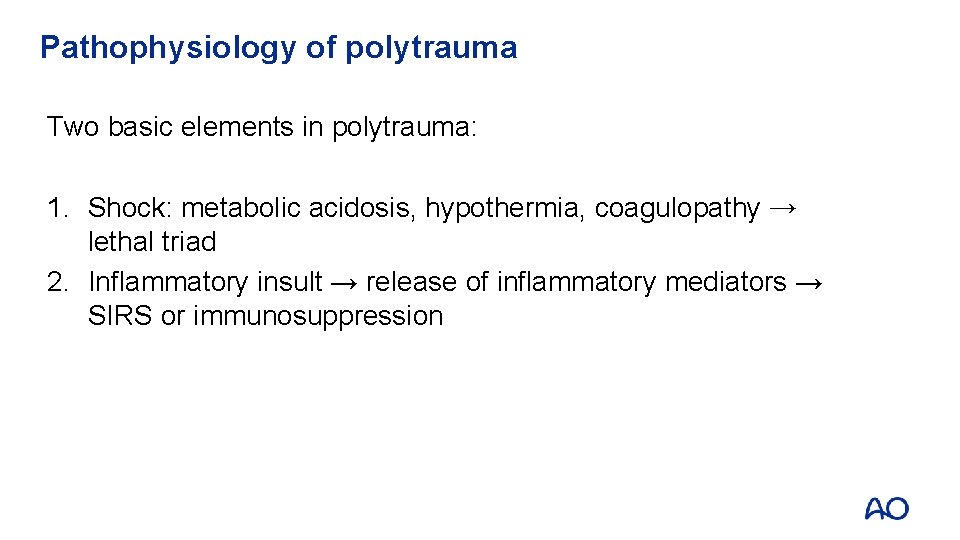
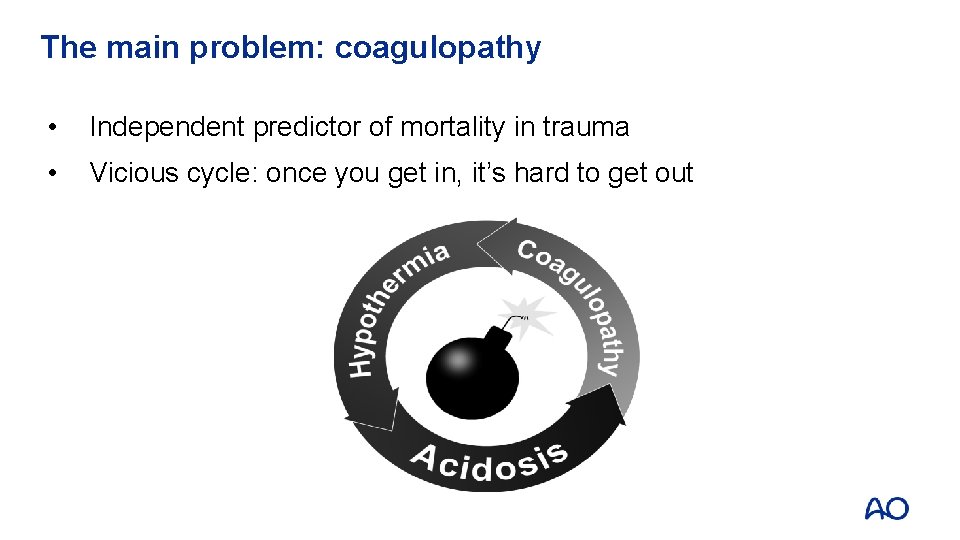
Pathophysiology of polytrauma Two basic elements in polytrauma: 1. Shock: metabolic acidosis, hypothermia, coagulopathy → lethal triad 2. Inflammatory insult → release of inflammatory mediators → SIRS or immunosuppression
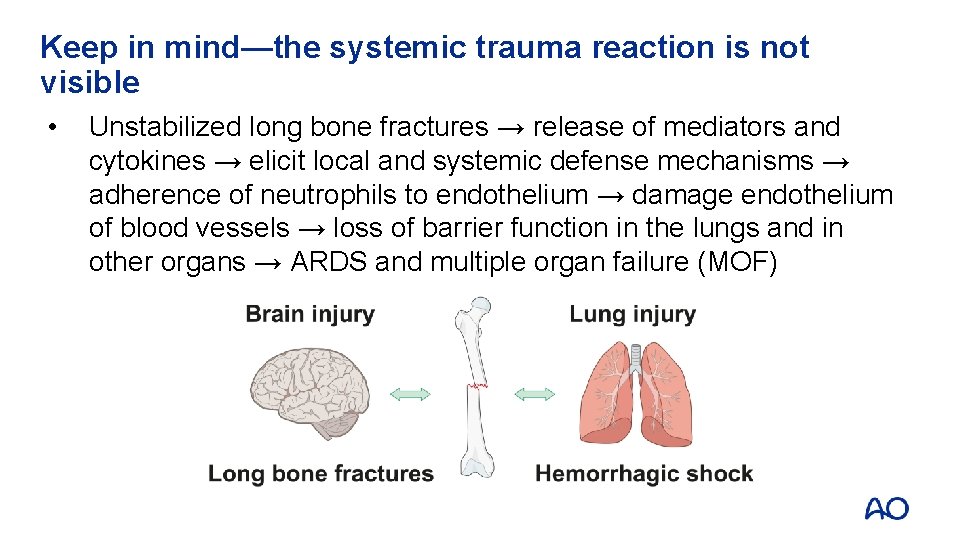
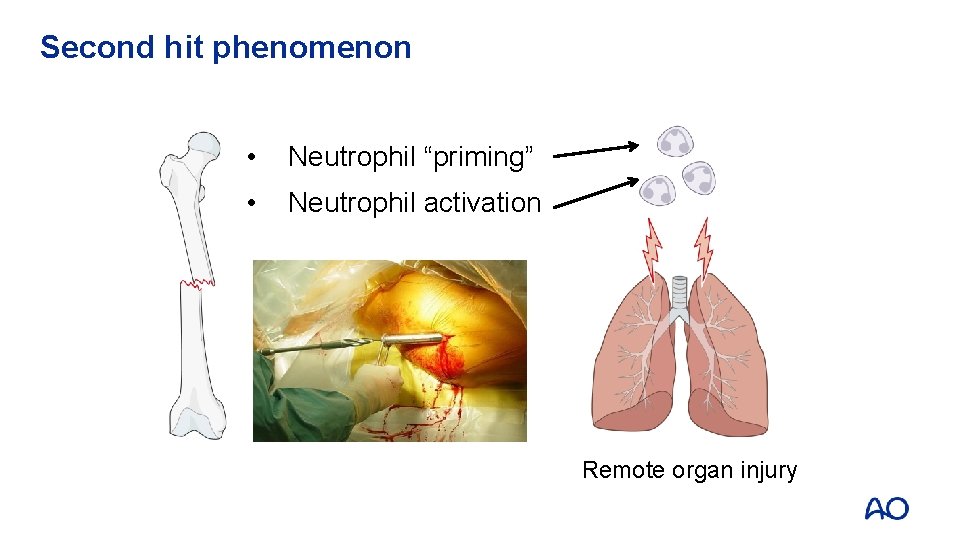
Keep in mind—the systemic trauma reaction is not visible • Unstabilized long bone fractures → release of mediators and cytokines → elicit local and systemic defense mechanisms → adherence of neutrophils to endothelium → damage endothelium of blood vessels → loss of barrier function in the lungs and in other organs → ARDS and multiple organ failure (MOF)
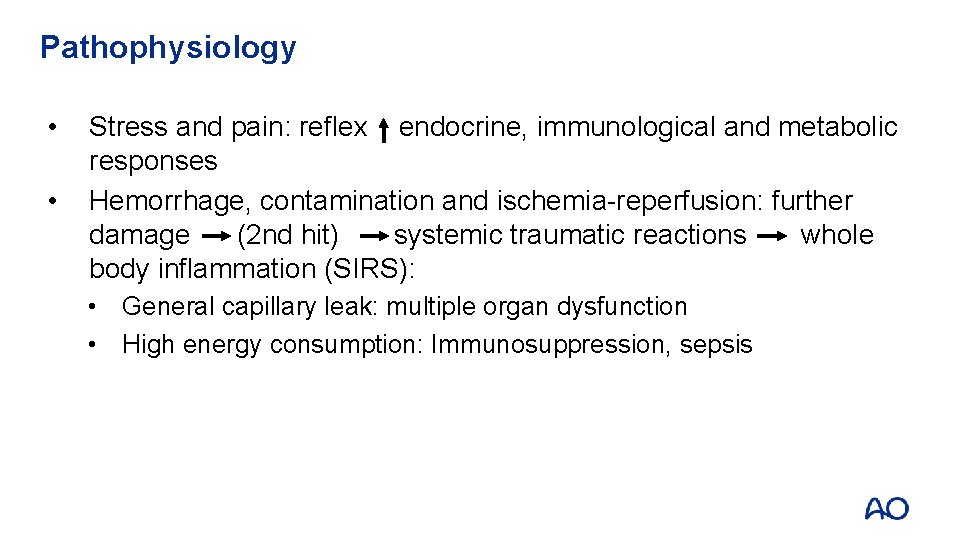
Pathophysiology • • Stress and pain: reflex endocrine, immunological and metabolic responses Hemorrhage, contamination and ischemia-reperfusion: further damage (2 nd hit) systemic traumatic reactions whole body inflammation (SIRS): • General capillary leak: multiple organ dysfunction • High energy consumption: Immunosuppression, sepsis
Second hit phenomenon • Neutrophil “priming” • Neutrophil activation Remote organ injury
Systemic Inflammatory Response Syndrome (SIRS) Manifestations • Leukocyte count above 12 or below 4 • Heart rate greater than 90 beats/min • Respiratory rate above 20 breaths/min (or p. CO 2 < 33 mm. Hg) • Core temperature below 36°C or above 38°C • At least two of four clinical parameters should be defined
Principles of polytrauma management 1. Simultaneous assessment and resuscitation • Application of ATLS protocol 2. • • • Establishing the surgical priorities Life saving surgeries Limb saving surgeries Function saving surgeries
Assessment and resuscitation The golden hours Advanced Trauma Life Support (ATLS) Primary Survey (A, B, C, D, E) • • • Airway maintenance with cervical spine protection Breathing and ventilation Circulation and hemorrhage control Disability: neurologic status Exposure/Environmental control
Assessment and resuscitation First-priority injuries Life-saving surgeries • Stop massive hemorrhage (internal or external) • • Inside the chest • Intraperitoneal • Retroperitoneal from fracture pelvis • Long bones Intracranial bleeding → compression
Secondary survey • Vital functions have been stabilized • AMPLE history • • Allergies Medications Past illness/Pregnancy Last meal Events/Environment related to injury Head-to-toe evaluation More diagnostic procedures can be done
Delayed primary surgeries Priorities of long-bone fracture management • • Critical limb injuries (limb-saving surgery) • Fractures with concomitant injuries to major vessels • Fractures with severe compartment syndrome • Open fractures with massive soft-tissue injuries Closed shaft fractures
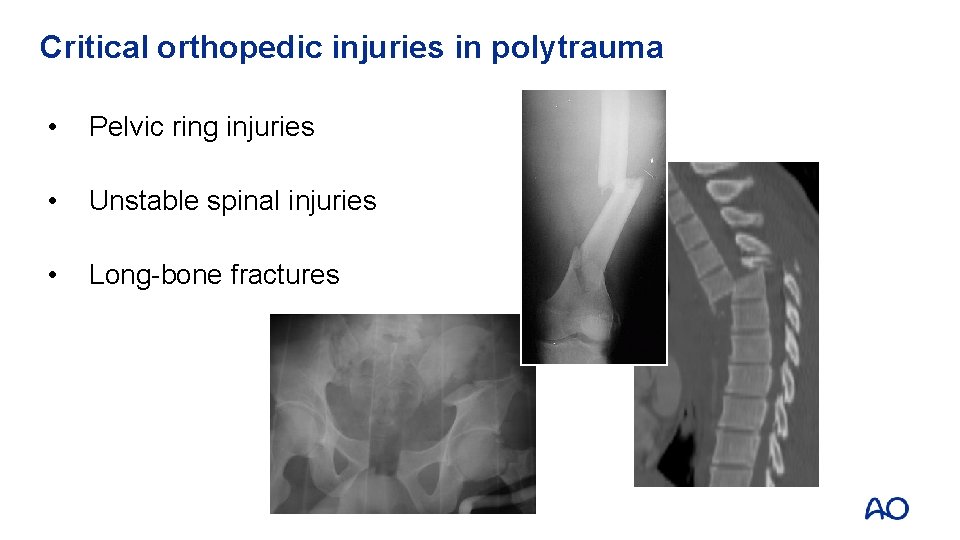
Critical orthopedic injuries in polytrauma • Pelvic ring injuries • Unstable spinal injuries • Long-bone fractures
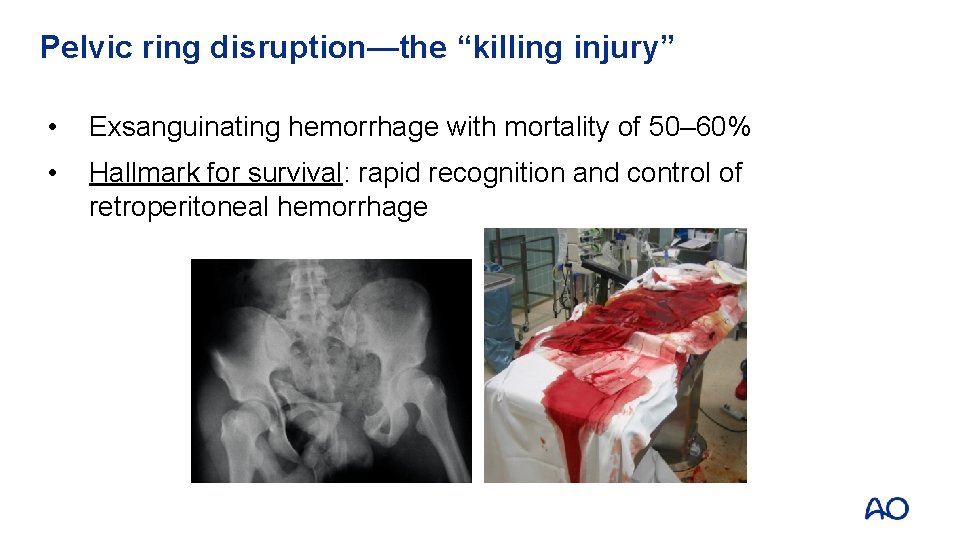
Pelvic ring disruption—the “killing injury” • Exsanguinating hemorrhage with mortality of 50– 60% • Hallmark for survival: rapid recognition and control of retroperitoneal hemorrhage
The main problem: coagulopathy • Independent predictor of mortality in trauma • Vicious cycle: once you get in, it’s hard to get out
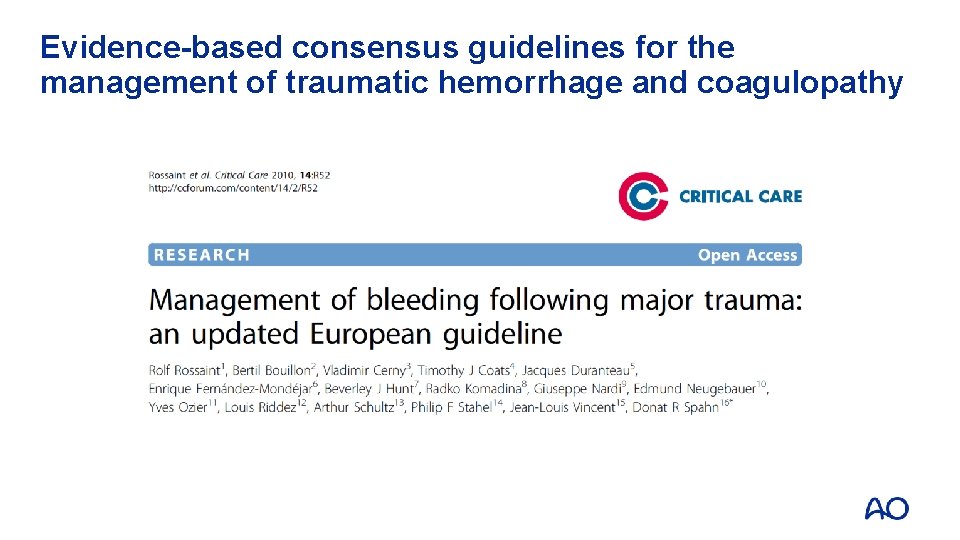
Evidence-based consensus guidelines for the management of traumatic hemorrhage and coagulopathy
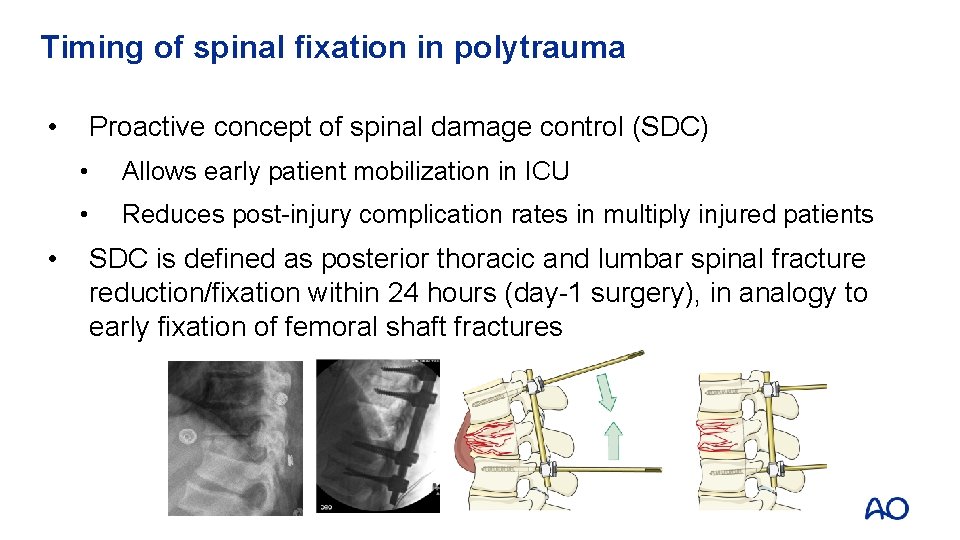
Timing of spinal fixation in polytrauma • • Proactive concept of spinal damage control (SDC) • Allows early patient mobilization in ICU • Reduces post-injury complication rates in multiply injured patients SDC is defined as posterior thoracic and lumbar spinal fracture reduction/fixation within 24 hours (day-1 surgery), in analogy to early fixation of femoral shaft fractures
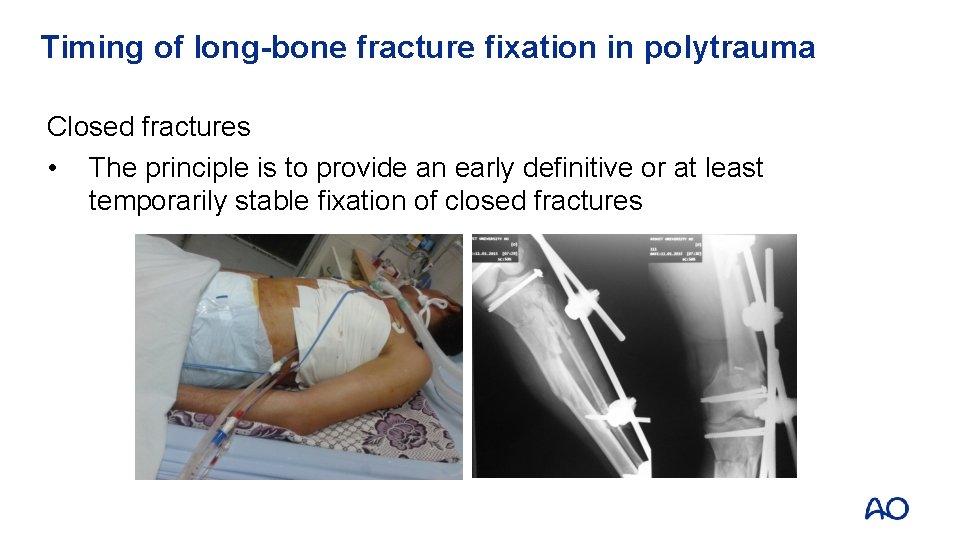
Timing of long-bone fracture fixation in polytrauma Closed fractures • The principle is to provide an early definitive or at least temporarily stable fixation of closed fractures
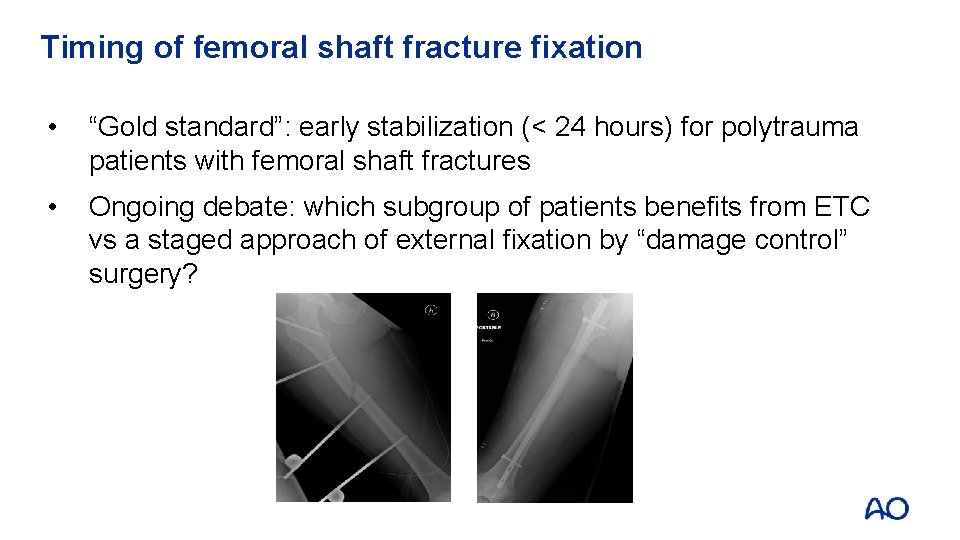
Timing of femoral shaft fracture fixation • “Gold standard”: early stabilization (< 24 hours) for polytrauma patients with femoral shaft fractures • Ongoing debate: which subgroup of patients benefits from ETC vs a staged approach of external fixation by “damage control” surgery?
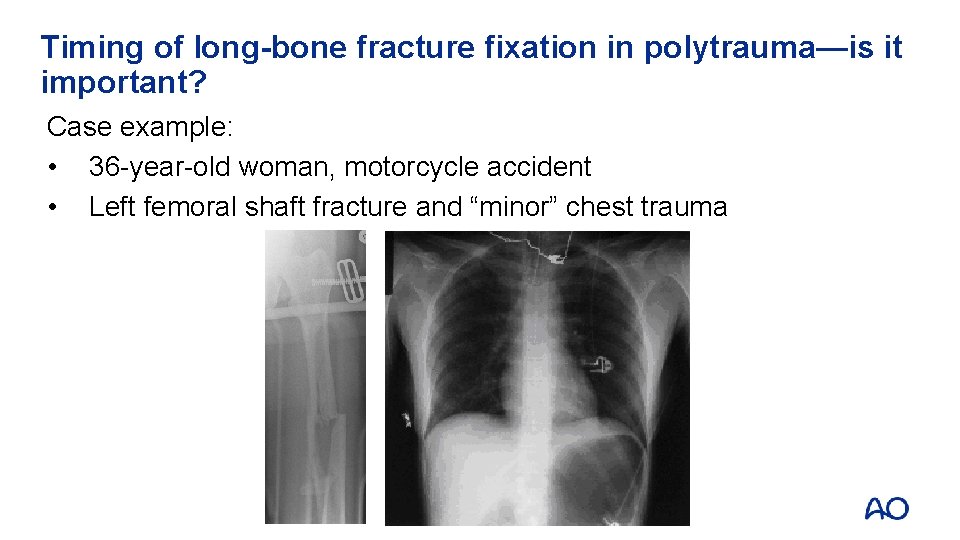
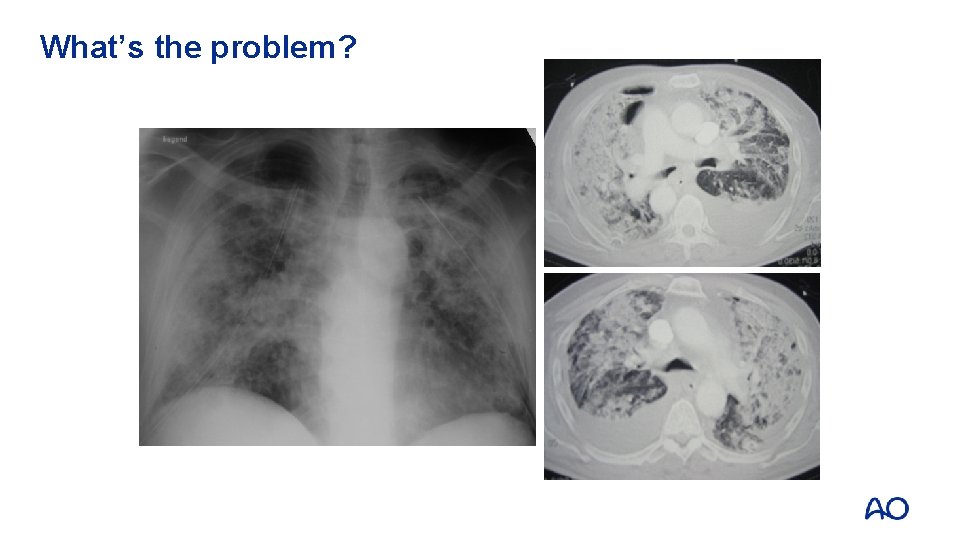
Timing of long-bone fracture fixation in polytrauma—is it important? Case example: • 36 -year-old woman, motorcycle accident • Left femoral shaft fracture and “minor” chest trauma
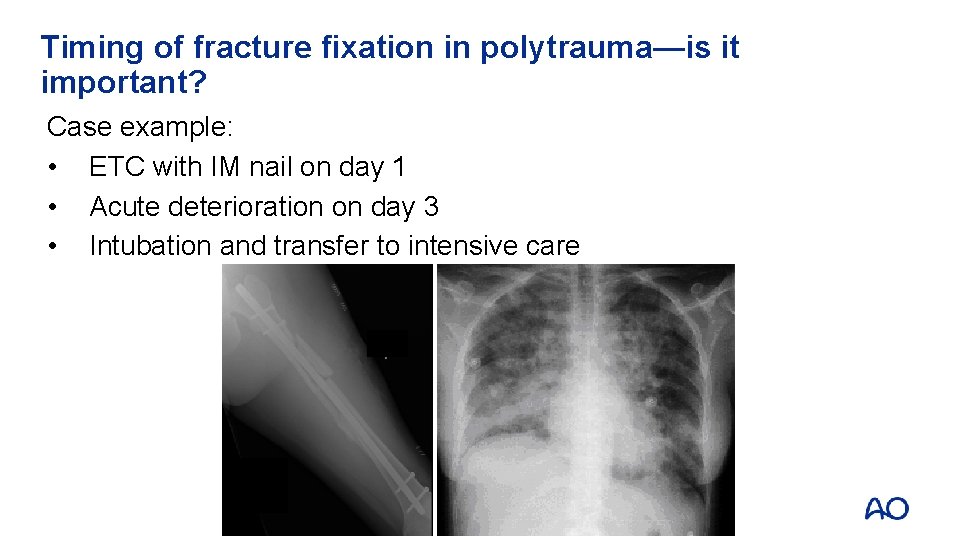
Timing of fracture fixation in polytrauma—is it important? Case example: • ETC with IM nail on day 1 • Acute deterioration on day 3 • Intubation and transfer to intensive care
What’s the problem?
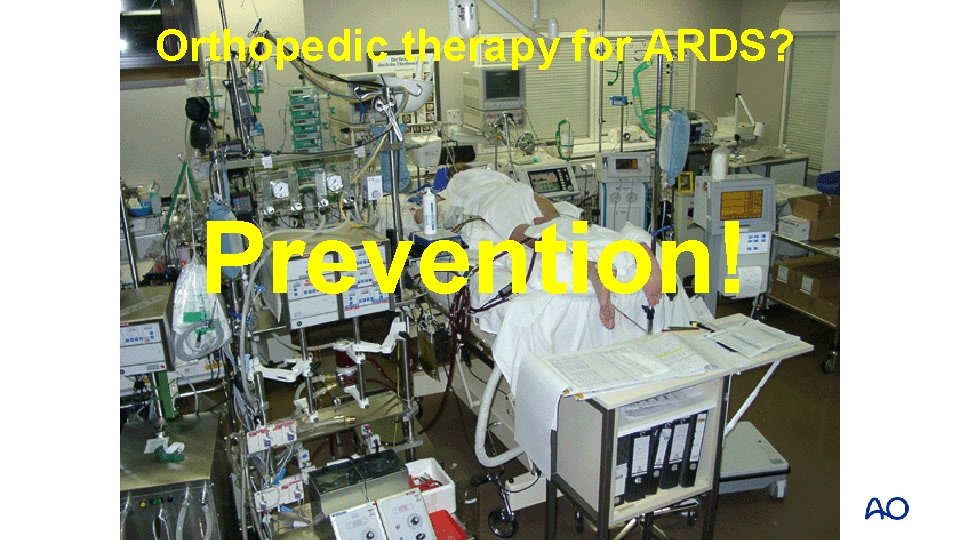
Orthopedic therapy for ARDS? Prevention!
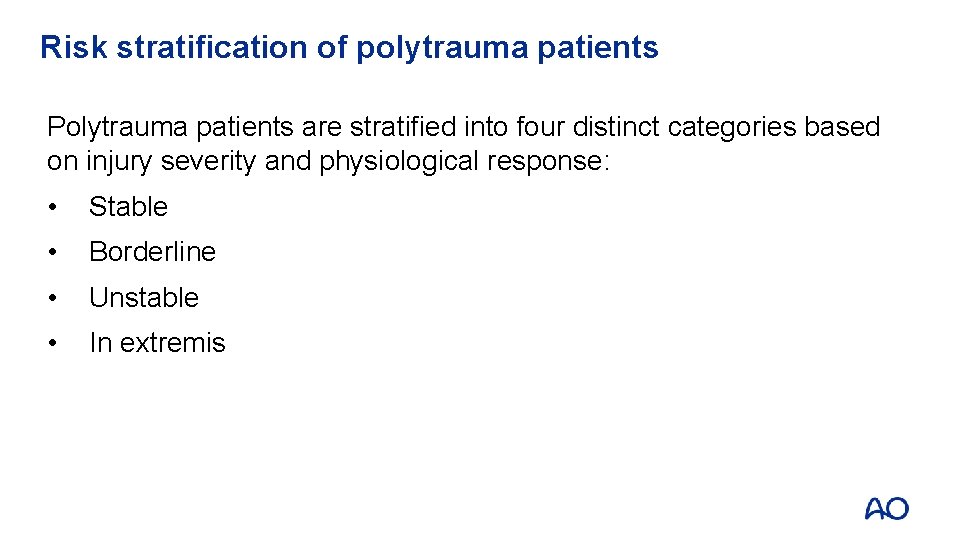
Risk stratification of polytrauma patients Polytrauma patients are stratified into four distinct categories based on injury severity and physiological response: • Stable • Borderline • Unstable • In extremis
Definition of the stable patient • Achieved endpoints of resuscitation • Has the physiological reserve to withstand prolonged operative intervention • Can be managed using an ETC approach, with reconstruction of complex injuries
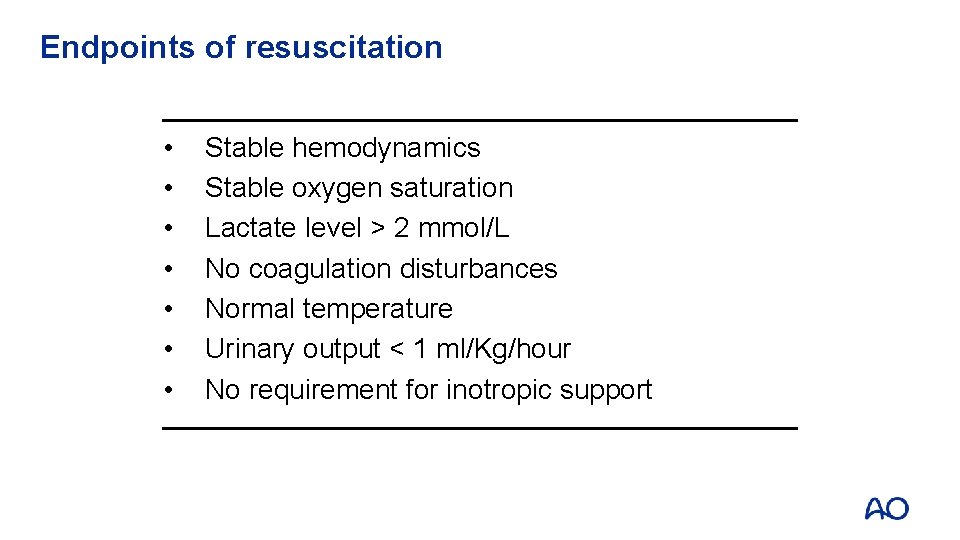
Endpoints of resuscitation • • Stable hemodynamics Stable oxygen saturation Lactate level > 2 mmol/L No coagulation disturbances Normal temperature Urinary output < 1 ml/Kg/hour No requirement for inotropic support
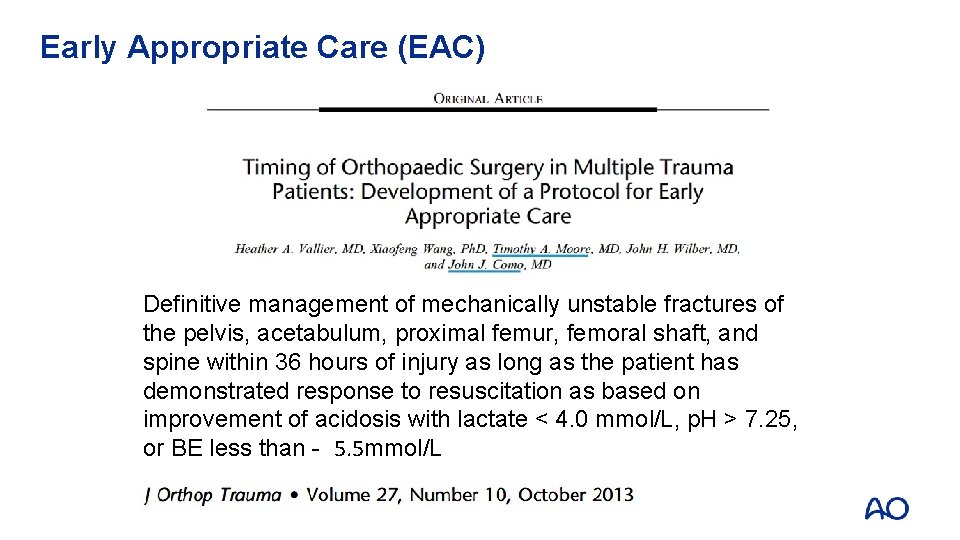
Early Appropriate Care (EAC) Definitive management of mechanically unstable fractures of the pelvis, acetabulum, proximal femur, femoral shaft, and spine within 36 hours of injury as long as the patient has demonstrated response to resuscitation as based on improvement of acidosis with lactate < 4. 0 mmol/L, p. H > 7. 25, or BE less than - 5. 5 mmol/L
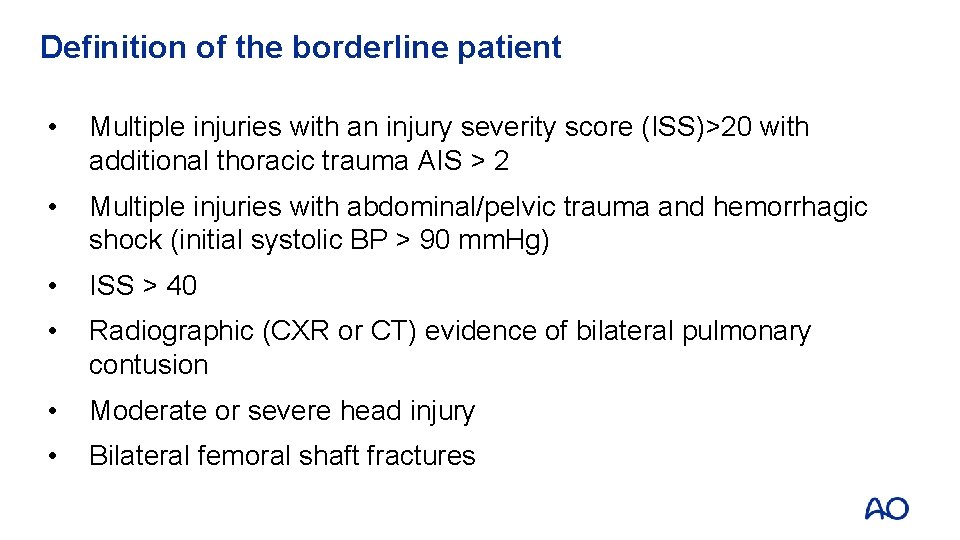
Definition of the borderline patient • Multiple injuries with an injury severity score (ISS)>20 with additional thoracic trauma AIS > 2 • Multiple injuries with abdominal/pelvic trauma and hemorrhagic shock (initial systolic BP > 90 mm. Hg) • ISS > 40 • Radiographic (CXR or CT) evidence of bilateral pulmonary contusion • Moderate or severe head injury • Bilateral femoral shaft fractures
Definition of the unstable patient • Remains hemodynamically unstable despite initial resuscitation Patient in extremis • Very close to death, suffer severe injuries, and have ongoing uncontrolled blood loss • Remain severely unstable despite ongoing resuscitative efforts • Usually suffering the effects of a deadly triad of hypothermia, acidosis, and coagulopathy
Decision-making: ETC versus DCO • Damage control orthopedics (DCO): staged conversion spanning from external fixation to internal fixation during a physiologically safe time-window of opportunity • There is evidence that a staged DCO procedure minimizes the incidence of “ 2 nd hit” insults due to the reduced interventional load during the initial management phase • Recent studies show that DCO is faster and associated with decreased blood loss compared to ETC • ETC is safely performed in stable patients, but is associated with higher mortality in “borderline patients” than DCO
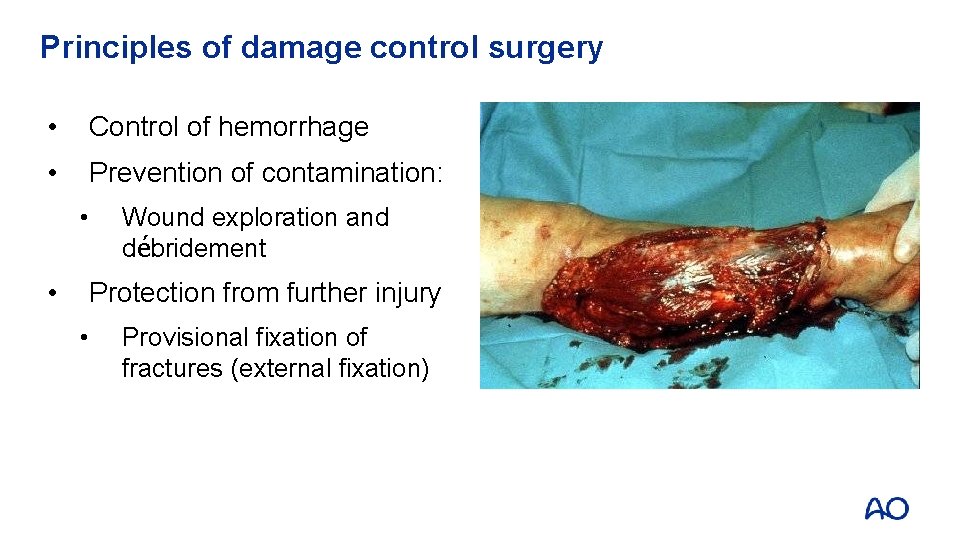
Principles of damage control surgery • Control of hemorrhage • Prevention of contamination: • • Wound exploration and débridement Protection from further injury • Provisional fixation of fractures (external fixation)
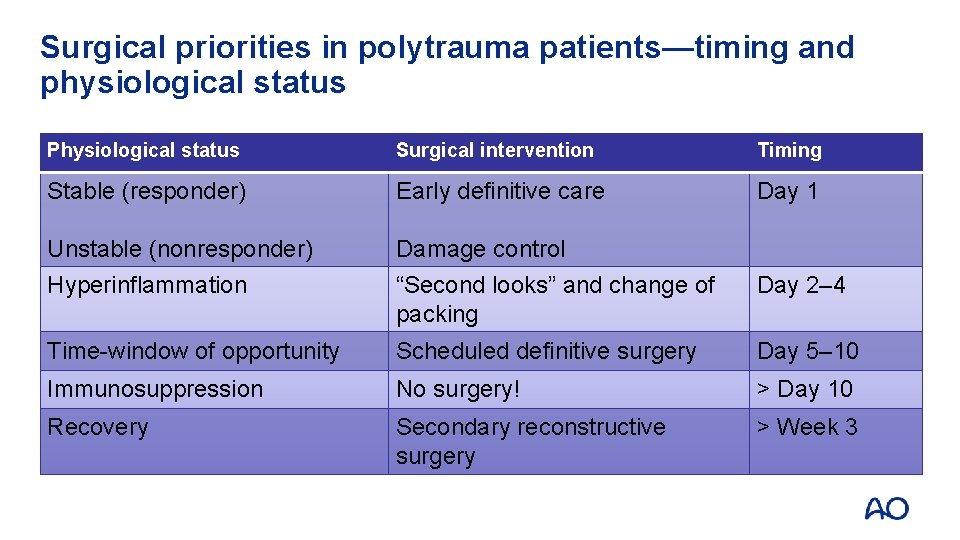
Window of opportunity (5– 10 days) • Definitive fixation of long-bone fractures can be done between the 5 th and 10 th day after trauma, as there is an immunological window of opportunity • By the 5 th day after trauma, the phase of hyperinflammation comes to an end; followed later after the 10 th day by a period of immunosuppression
Surgical priorities in polytrauma patients 1. Life-saving surgery (ATLS) 2. Delayed primary surgery* Day-1 surgery 3. Scheduled definitive surgery (time-window of opportunity) *Delayed = after stabilization of vital functions: • Repair of vascular injuries, management of soft-tissue injuries, contaminated wounds, compartment syndrome • Damage control for long-bone fractures, pelvic ring injuries, open fractures, and fracture dislocations • Damage control for unstable spinal injuries
Surgical priorities in polytrauma patients—timing and physiological status Physiological status Surgical intervention Timing Stable (responder) Early definitive care Day 1 Unstable (nonresponder) Damage control Hyperinflammation “Second looks” and change of packing Day 2– 4 Time-window of opportunity Scheduled definitive surgery Day 5– 10 Immunosuppression No surgery! > Day 10 Recovery Secondary reconstructive surgery > Week 3
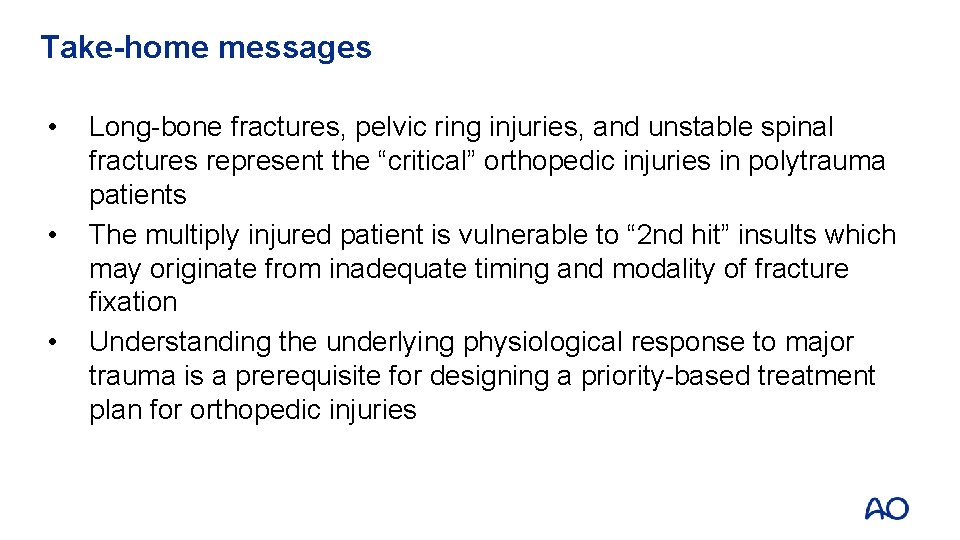
Take-home messages • • • Long-bone fractures, pelvic ring injuries, and unstable spinal fractures represent the “critical” orthopedic injuries in polytrauma patients The multiply injured patient is vulnerable to “ 2 nd hit” insults which may originate from inadequate timing and modality of fracture fixation Understanding the underlying physiological response to major trauma is a prerequisite for designing a priority-based treatment plan for orthopedic injuries
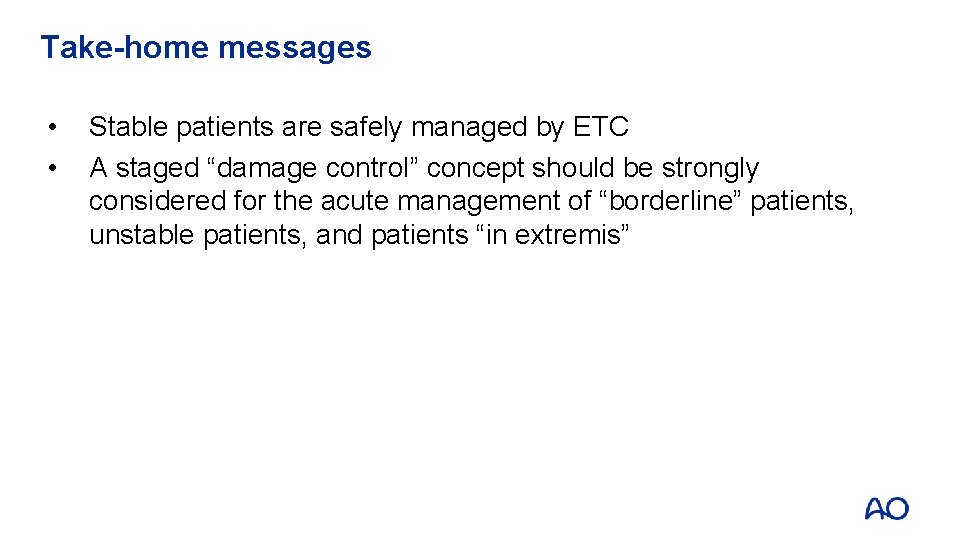
Take-home messages • • Stable patients are safely managed by ETC A staged “damage control” concept should be strongly considered for the acute management of “borderline” patients, unstable patients, and patients “in extremis”