
Staten Island Bluebelt NYC Department of Environmental Protection
Staten Island Bluebelt NYC Department of Environmental Protection July 2, 2010
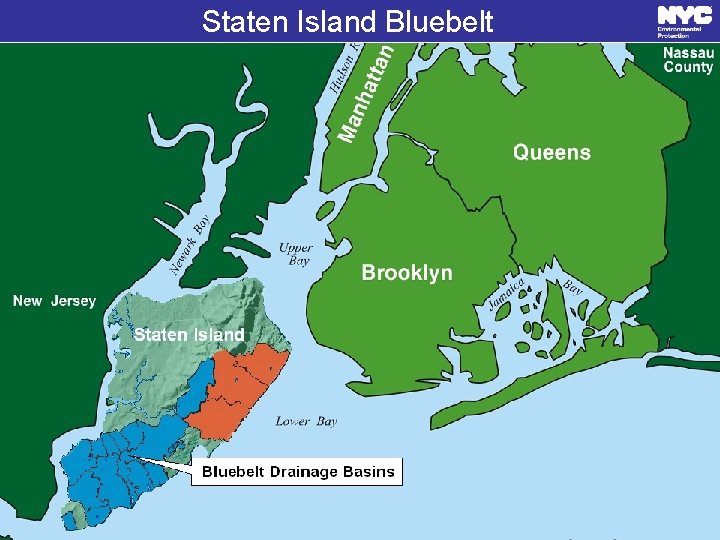
Staten Island Bluebelt 2
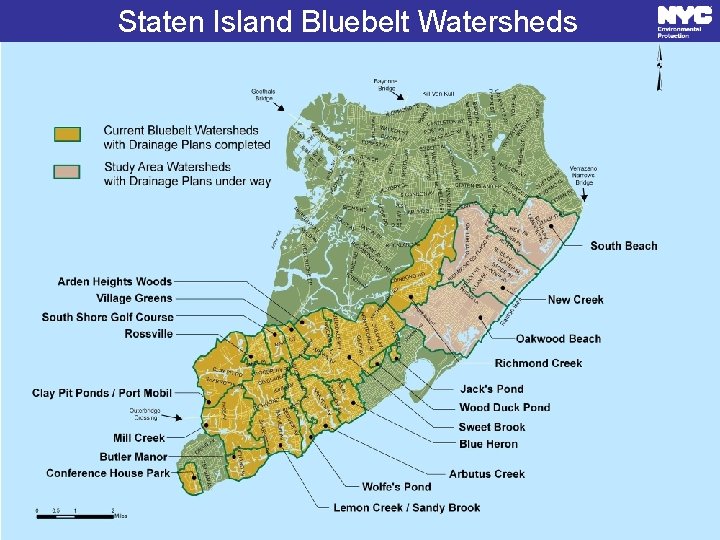
Staten Island Bluebelt Watersheds 3
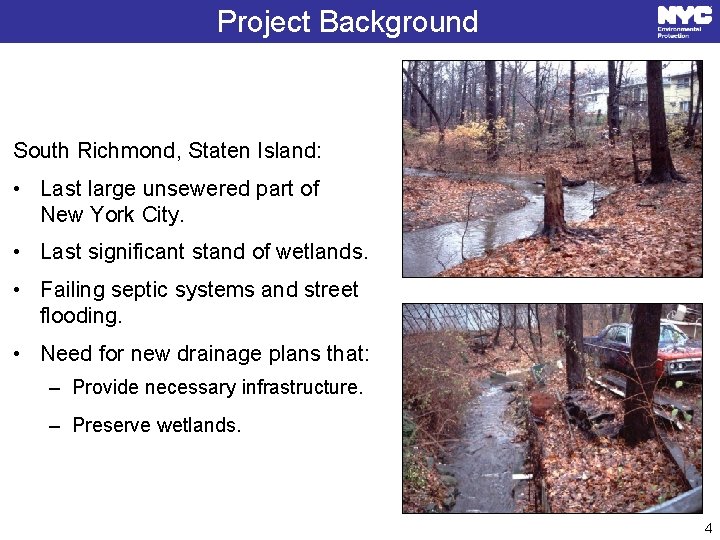
Project Background South Richmond, Staten Island: • Last large unsewered part of New York City. • Last significant stand of wetlands. • Failing septic systems and street flooding. • Need for new drainage plans that: – Provide necessary infrastructure. – Preserve wetlands. 4
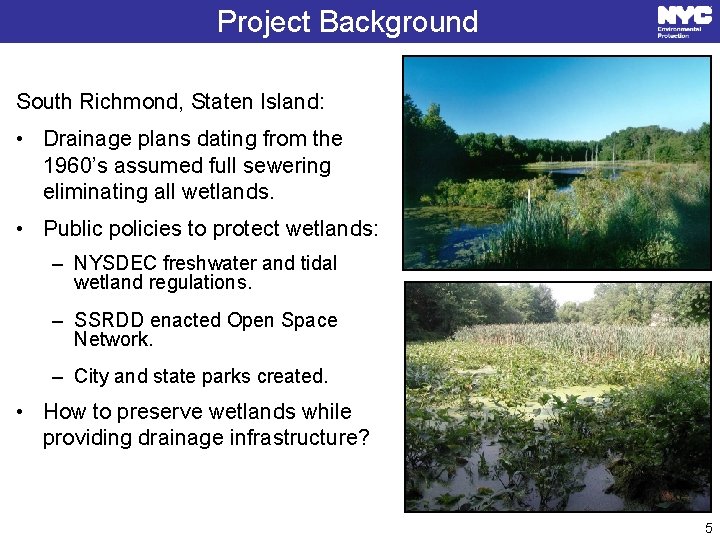
Project Background South Richmond, Staten Island: • Drainage plans dating from the 1960’s assumed full sewering eliminating all wetlands. • Public policies to protect wetlands: – NYSDEC freshwater and tidal wetland regulations. – SSRDD enacted Open Space Network. – City and state parks created. • How to preserve wetlands while providing drainage infrastructure? 5
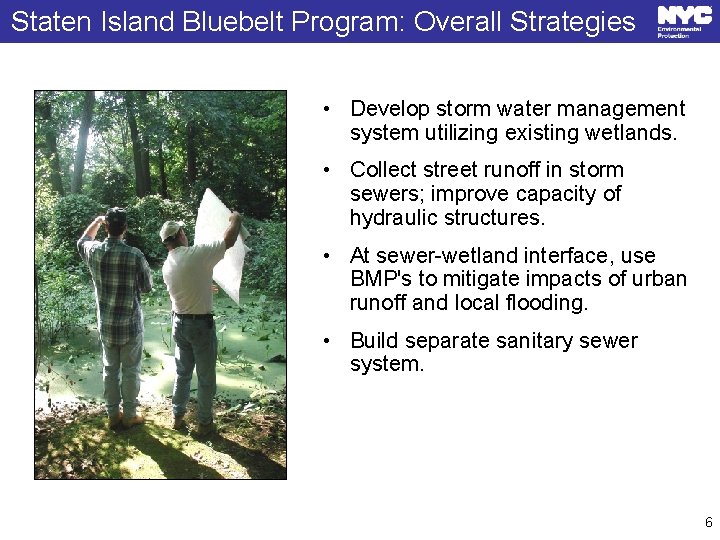
Staten Island Bluebelt Program: Overall Strategies • Develop storm water management system utilizing existing wetlands. • Collect street runoff in storm sewers; improve capacity of hydraulic structures. • At sewer-wetland interface, use BMP's to mitigate impacts of urban runoff and local flooding. • Build separate sanitary sewer system. 6
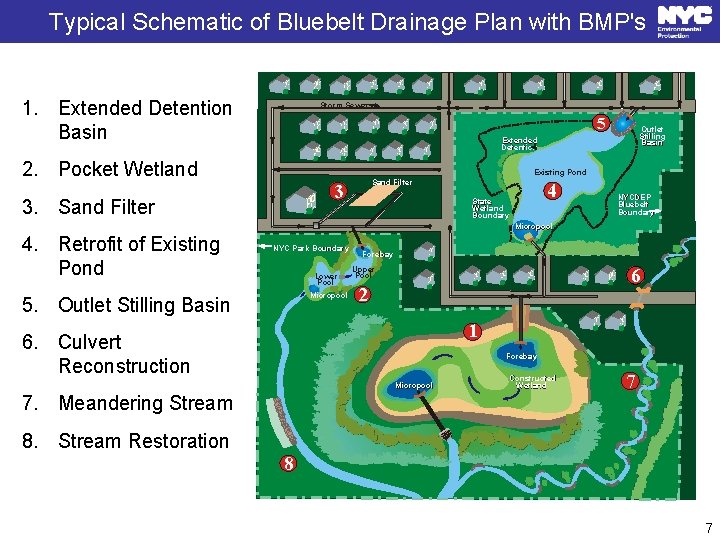
Typical Schematic of Bluebelt Drainage Plan with BMP's 1. Extended Detention Basin Storm Sewers 5 Outlet Stilling Basin Extended Detention 2. Pocket Wetland Existing Pond Sand Filter 3 3. Sand Filter 4 State Wetland Boundary NYCDEP Bluebelt Boundary Micropool 4. Retrofit of Existing Pond NYC Park Boundary Lower Pool Micropool 5. Outlet Stilling Basin Forebay 6 Upper Pool 2 1 6. Culvert Reconstruction Forebay Micropool 7. Meandering Stream 8. Stream Restoration Constructed Wetland 7 8 7
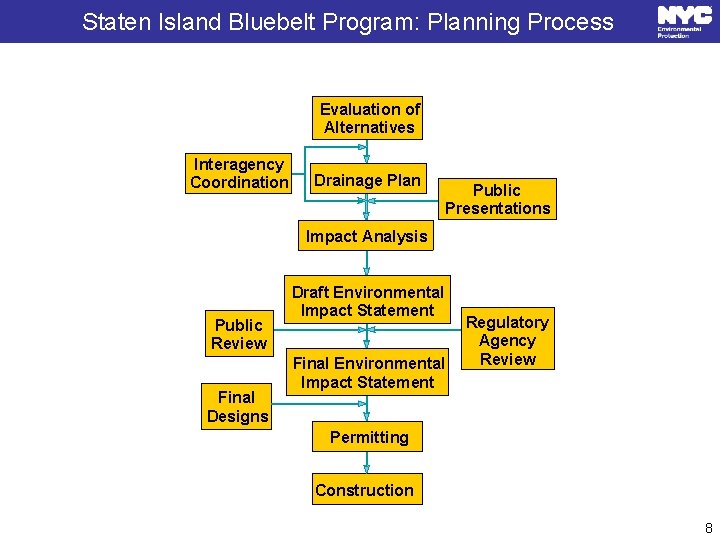
Staten Island Bluebelt Program: Planning Process Evaluation of Alternatives Interagency Coordination Drainage Plan Public Presentations Impact Analysis Public Review Final Designs Draft Environmental Impact Statement Final Environmental Impact Statement Regulatory Agency Review Permitting Construction 8
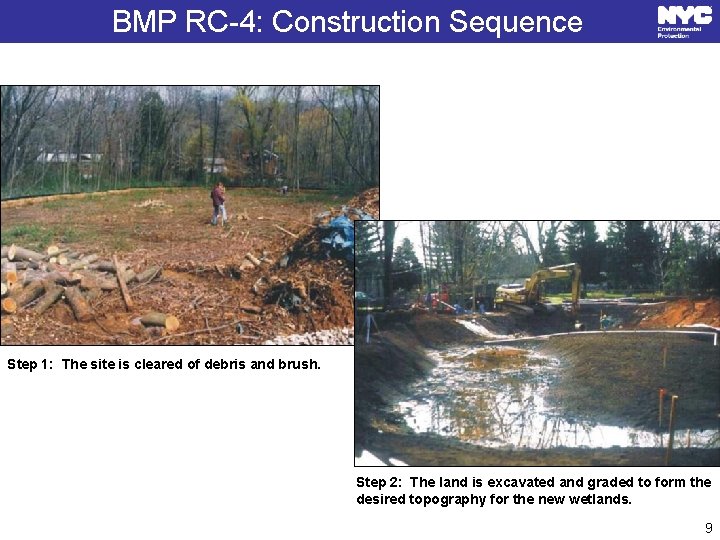
BMP RC-4: Construction Sequence Step 1: The site is cleared of debris and brush. Step 2: The land is excavated and graded to form the desired topography for the new wetlands. 9
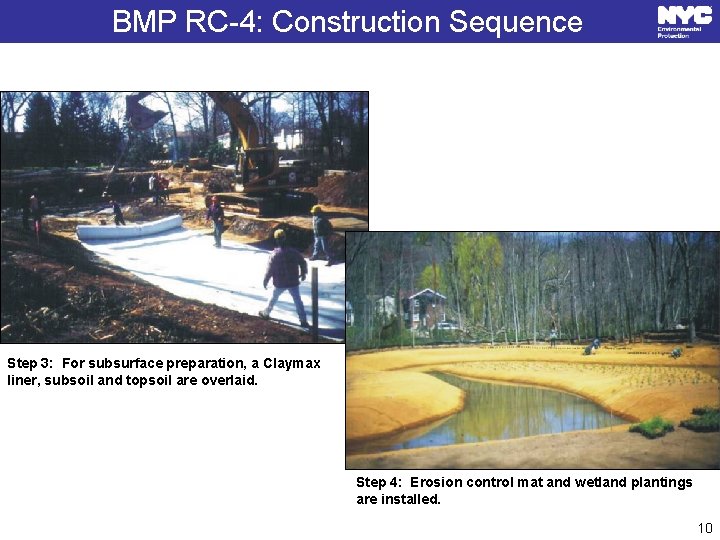
BMP RC-4: Construction Sequence Step 3: For subsurface preparation, a Claymax liner, subsoil and topsoil are overlaid. Step 4: Erosion control mat and wetland plantings are installed. 10
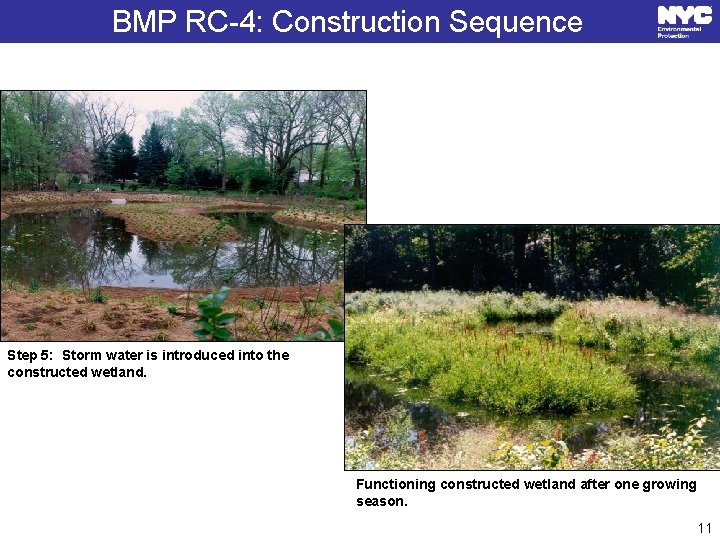
BMP RC-4: Construction Sequence Step 5: Storm water is introduced into the constructed wetland. Functioning constructed wetland after one growing season. 11
Bluebelt Field Management • Vactor Operations • Maintenance Accessways • Perimeter Treatments • Field Operations • Adopt-A-Bluebelt 12
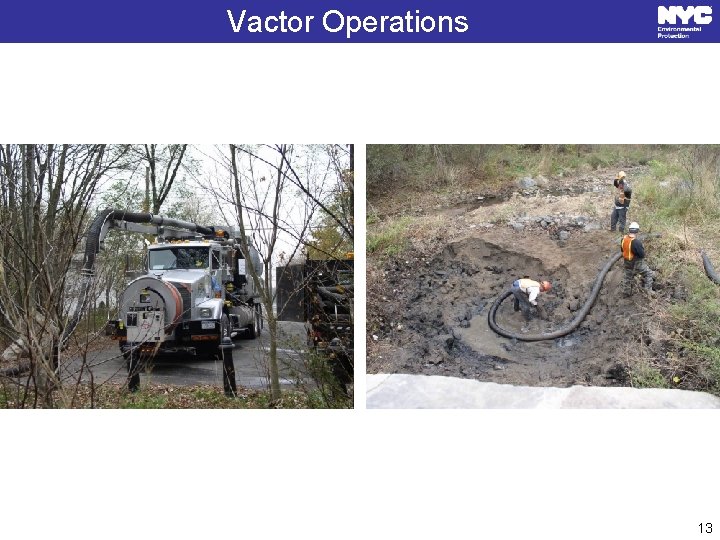
Vactor Operations 13
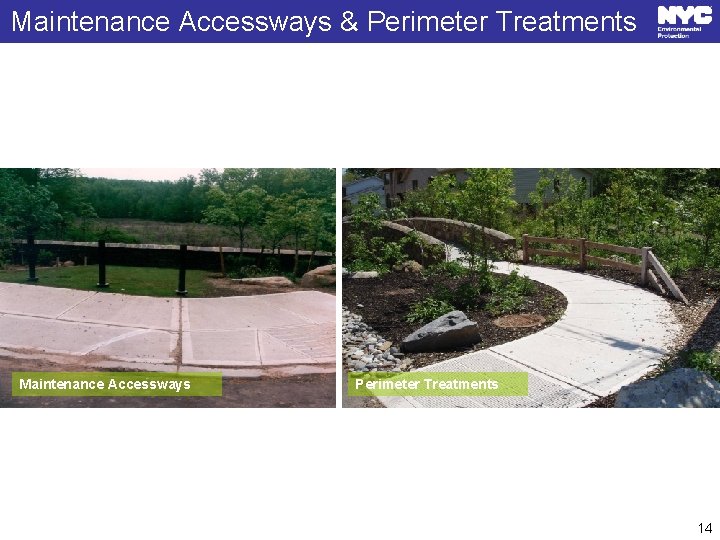
Maintenance Accessways & Perimeter Treatments Maintenance Accessways Perimeter Treatments 14
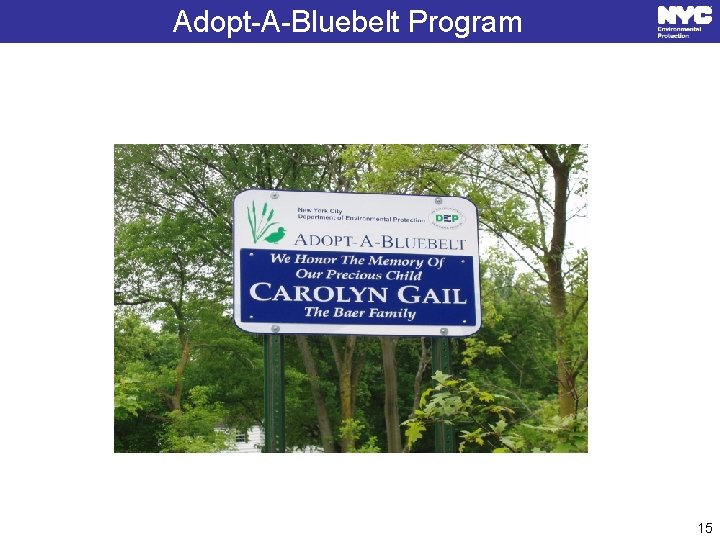
Adopt-A-Bluebelt Program 15
- Slides: 15