
StateBuilding The Missing Dimensions of Stateness Francis Fukuyama

State-Building: The Missing Dimensions of Stateness Francis Fukuyama Johns Hopkins University School of Advanced International Studies
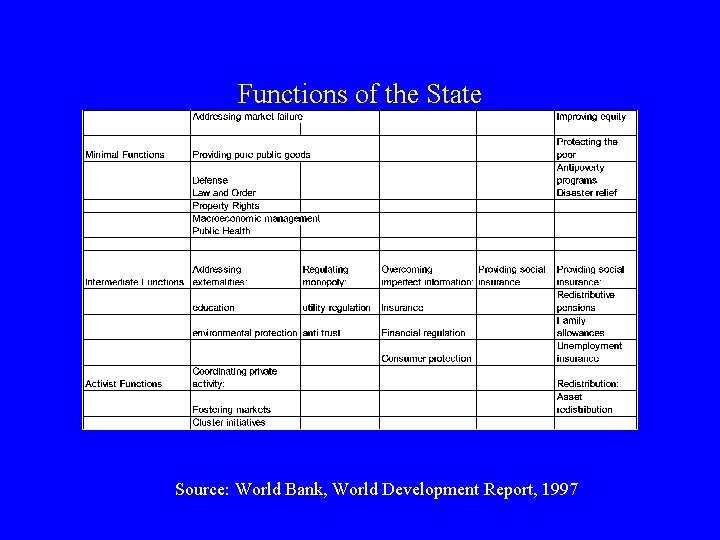
Functions of the State Source: World Bank, World Development Report, 1997
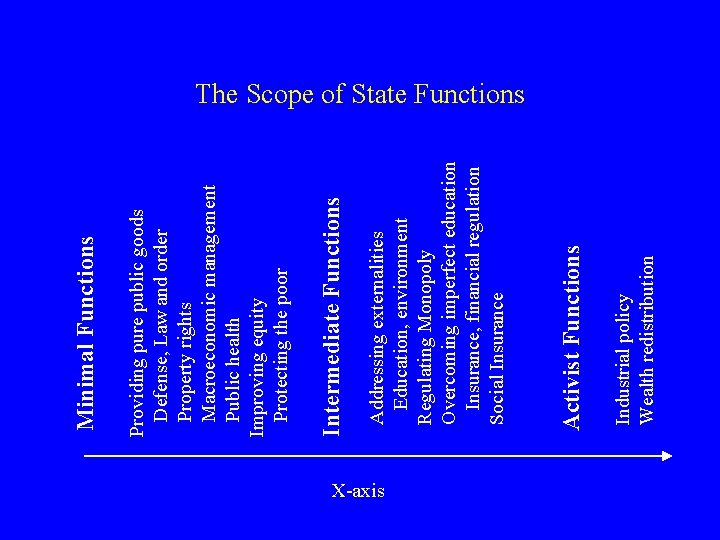
X-axis Industrial policy Wealth redistribution Activist Functions Addressing externalities Education, environment Regulating Monopoly Overcoming imperfect education Insurance, financial regulation Social Insurance Intermediate Functions Providing pure public goods Defense, Law and order Property rights Macroeconomic management Public health Improving equity Protecting the poor Minimal Functions The Scope of State Functions

Strength of State Institutions Two Dimensions of Stateness Scope of State Functions
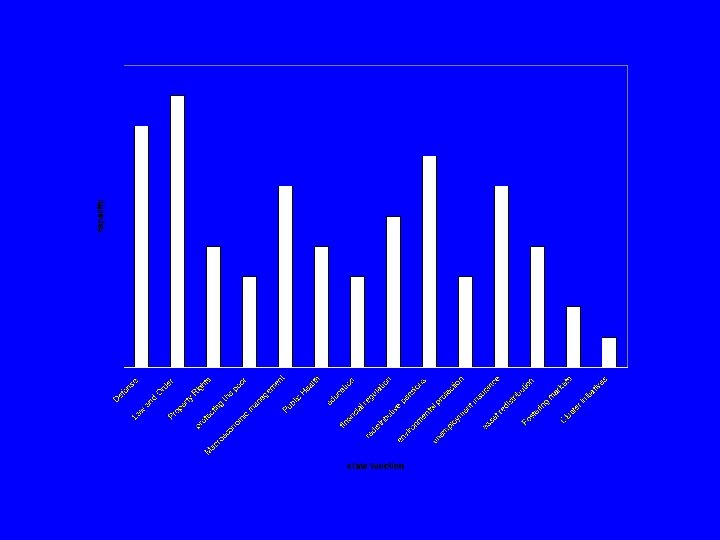
State Capacity
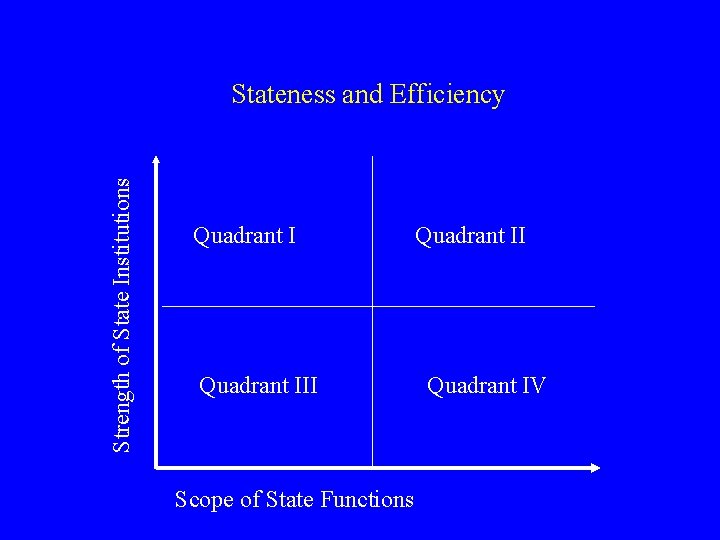
Strength of State Institutions Stateness and Efficiency Quadrant III Scope of State Functions Quadrant II Quadrant IV
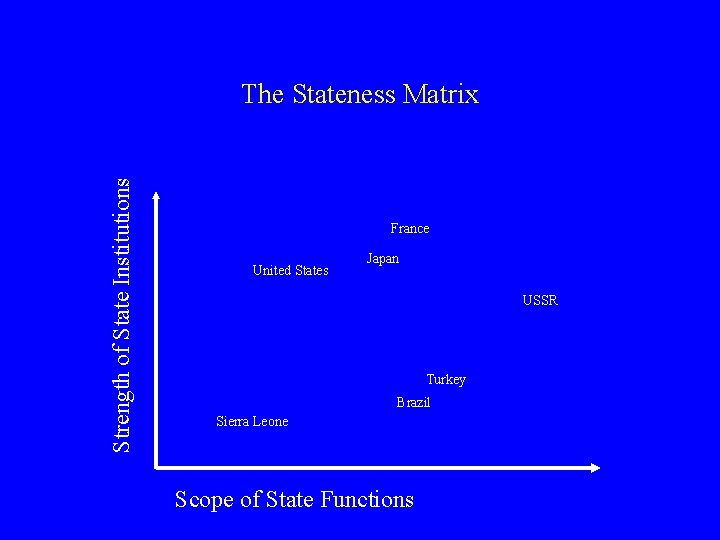
Strength of State Institutions The Stateness Matrix France United States Japan USSR Turkey Brazil Sierra Leone Scope of State Functions
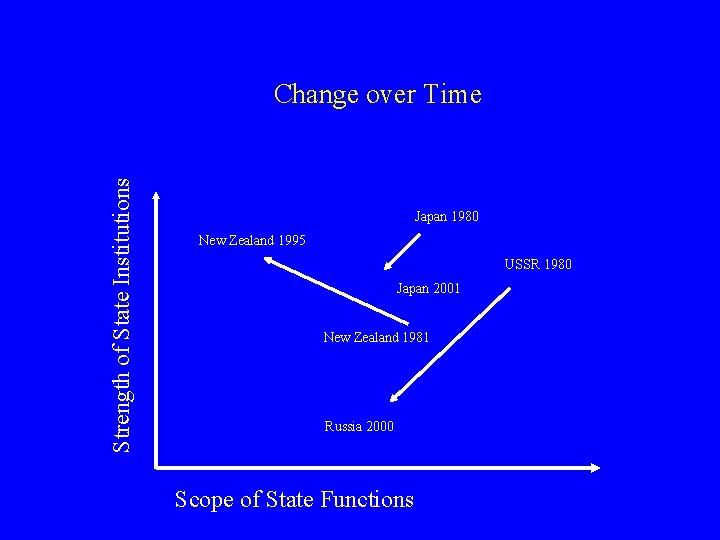
Strength of State Institutions Change over Time Japan 1980 New Zealand 1995 USSR 1980 Japan 2001 New Zealand 1981 Russia 2000 Scope of State Functions
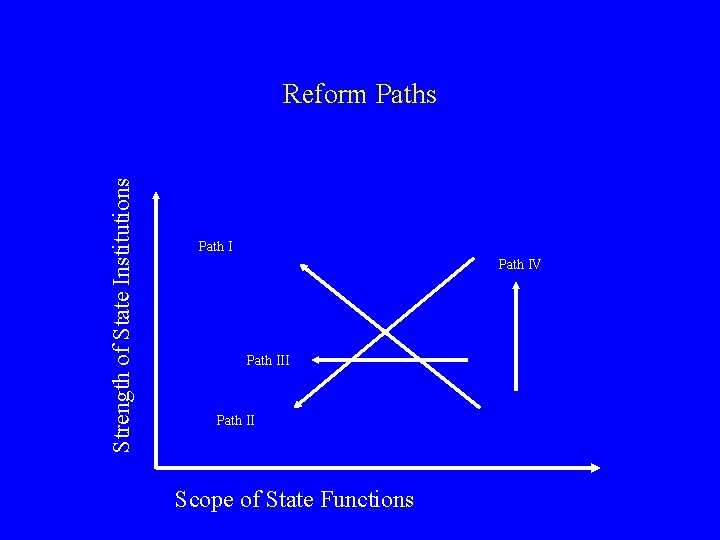
Strength of State Institutions Reform Paths Path IV Path III Path II Scope of State Functions

Tax Extraction Rates v. Per Capita GDP
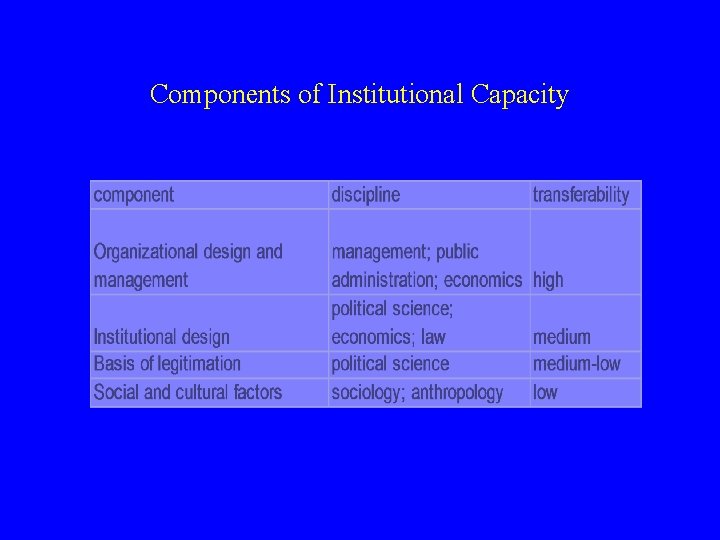
Components of Institutional Capacity
Weak States and the Black Hole of Public Administration • Central issue of all organizational theory is delegated discretion • Underlying issue in socialism debate (Hayek), corporate structure (Chandler), federalism • Contemporary approach brings this under a principal-agent framework
Principal-Agent Theory • Coase, theory of the firm 1937 • Alchian and Demsetz, firms as nexus of contracts 1972 • Williamson, opportunism and bounded rationality • Jensen and Meckling, agency costs 1976 • Fama, markets for managers 1980
Domains of Organizational Uncertainty • Ambiguity of goals • Impossibility of erecting formal system of monitoring and incentives • Inability to determine appropriate degree of delegation ex ante
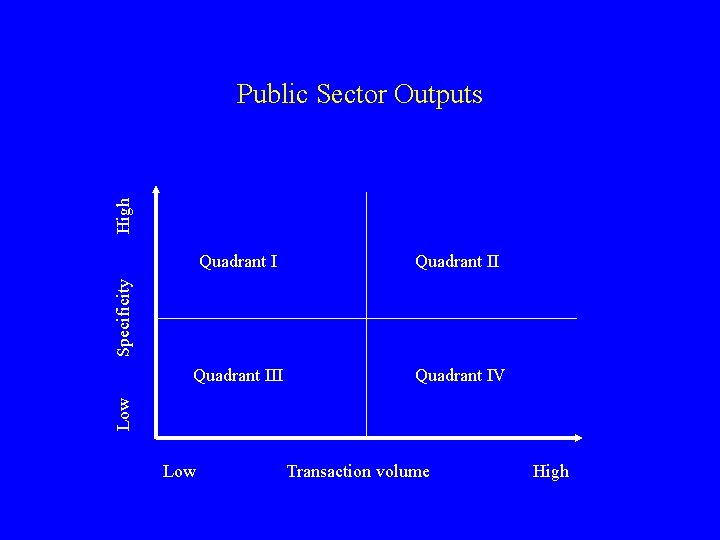
High Public Sector Outputs Quadrant III Quadrant IV Low Specificity Quadrant I Low Transaction volume High

High Monitorability of Public Sector Outputs Aircraft maintenance Telecoms Central banking Specificity Railroads Highway maintenance Foreign affairs Low University education Low Court systems Primary school teaching Preventative medicine Guidance counseling Transaction volume High
Consequences of Organizational Ambiguity • Need to understand better where different public sector activities fall in the matrix – Seek to fix problems that are actually solvable • New approaches to activities for which there are no “best practices” • Need to teach development differently
What follows if public administration is not a science? • Need for metis (Scott) • Does not necessarily imply leaving local institutions in place • Requires rather contextual judgment about applicability of foreign models • Need to think about the structure of decision -making rather than content of decisions
Applications • Japan: Mac. Arthur’s decision to keep the Emperor – versus the clean break in Germany • Iraq: disbanding the Iraqi Army • Iraq: tribalism in the Sunni triangle

Making Things Worse • IFIs and donor community complicit in destruction of institutional capacity • Contradiction between objectives of capacity-building and provision of services • Need to rethink aims and emphasis of Phase II nation-building
Implications for Democracy Promotion • Need to rethink 1990 s emphasis on civil society – Good theory but questionable allocation of resources • Need to deal first with problem of weak states – Party-building ahead of civil society promotion
- Slides: 21