
STATE PLANE COORDINATE COMPUTATIONS Lectures 14 15 GISC3325




![REDUCTION TO ELLIPSOID S = D x [R / (R + h)] D =](https://slidetodoc.com/presentation_image_h2/f35041cabc593efb5fe91361f67831ea/image-62.jpg "REDUCTION TO ELLIPSOID S = D x [R / (R + h)] D =")
- Slides: 70
STATE PLANE COORDINATE COMPUTATIONS Lectures 14 – 15 GISC-3325
Updates and details Required reading assignments were due last Thursday. Extra credit still available Review class syllabus to see how final grades are assigned: labs, reading assignments and homework make up a significant part of the grade.
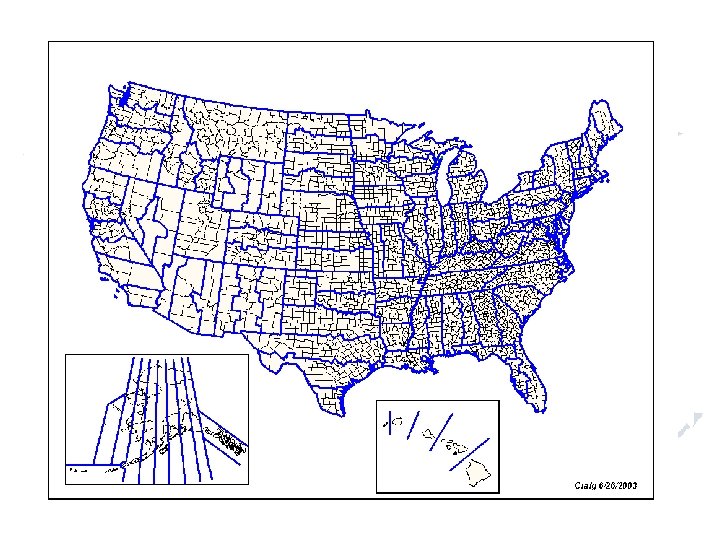
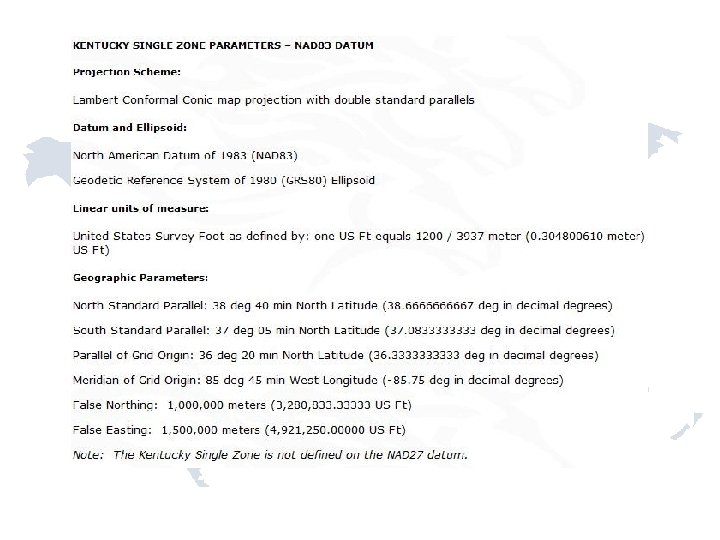
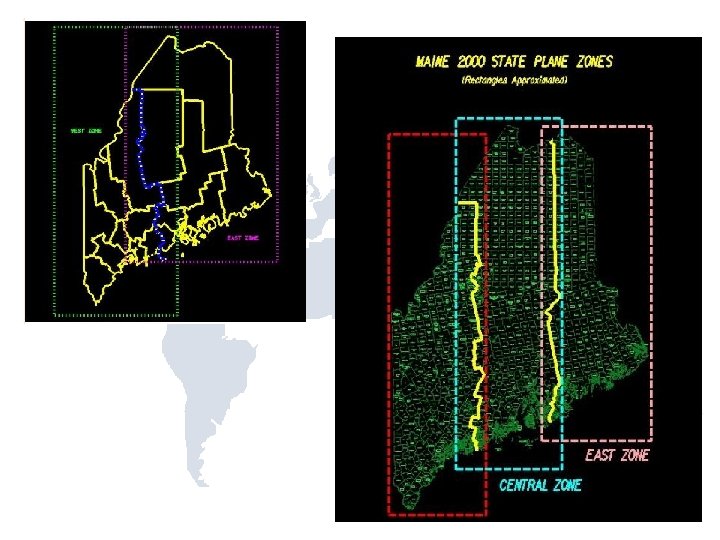
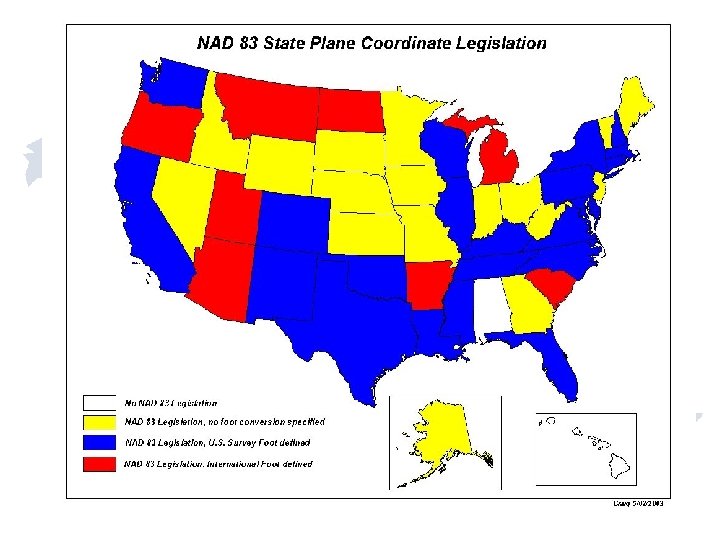
Plane Coordinate Trends Two contrary trends have emerged in the implementation of SPCS. Some states, e. g. MT and recently KY, have adopted one zone. Others, e. g. ME, have wanted to add zones. Why? One zone simplifies working with projects spanning multiple zones; adding zones makes scale factor closer to one making grid distances close to grid. Also low-distortion projections.
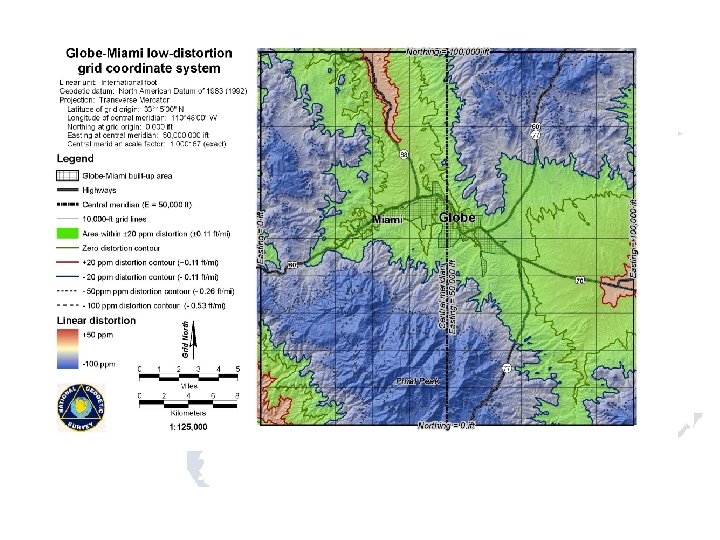
Low Distortion Projections – what are we talking about? • A mapping projection that minimizes the difference between distances depicted in a GIS when compared to the real-world distances “at ground”. • “Standard” mapping projections are “at sea level” (ellipsoid), elevation increases the distortion – Flagstaff, AZ (ellipsoid ht ~ 7000 ft) • SPC Distortion = ~ 1: 2, 300 or -2. 3 ft per mile – Phoenix, AZ (ellipsoid ht ~ 1000 ft. ) • SPC Distortion = ~ 1: 6, 800 or -0. 8 ft per mile • “Standard” mapping projections usually do not have Central Meridian and Latitude origin near project, which increases distortion variability and convergence angle.
Cartoon: Distortion due to change in Earth curvature (1 of 2)
LDPs – Who wants them and why? • Engineers & Surveyors use them daily • The value of a GIS increases directly as a function of its accurate portrayal of items of interest – Local govt. GIS managers are realizing the benefits of incorporating as-builts and COGO – Better decision support from the GIS • There is virtually no “cost” to using them – “On-the-fly” reprojection is a reality • Standard Projections are not good enough for local GIS – UTM distortion is 1: 2, 500 (2. 1 ft per mile) – SPC distortion is 1: 10, 000 (0. 5 ft per mile) – But in both cases distortion at ground usually much greater
LDP Definition Tool 1. User specifies area of interest 2. LDP Tool: – Determines projection parameters – Utilizes USGS National Elevation Dataset and NGS Geoid Model to: • Determine a representative ellipsoid height • Generate a distortion contour plot – Displays distortion plot to user 3. User accepts, or modifies parameters and iterates 4. Upon completion: – a final graphic is provided along with metadata files – Offer to “register” the projection
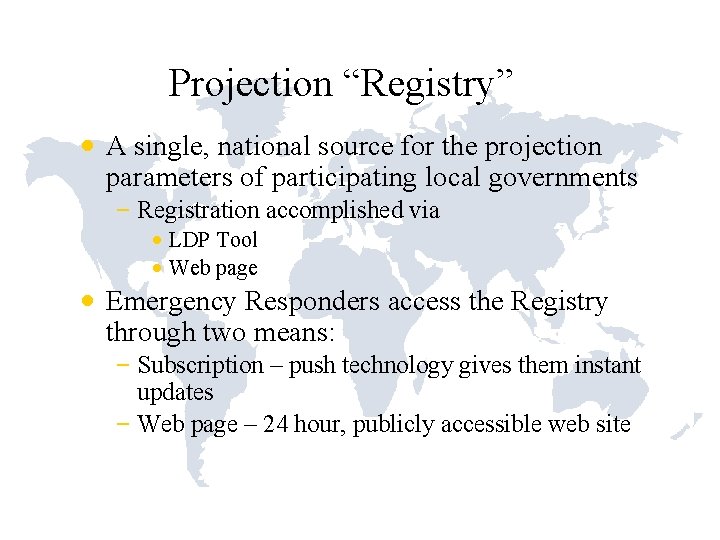
Projection “Registry” • A single, national source for the projection parameters of participating local governments – Registration accomplished via • LDP Tool • Web page • Emergency Responders access the Registry through two means: – Subscription – push technology gives them instant updates – Web page – 24 hour, publicly accessible web site
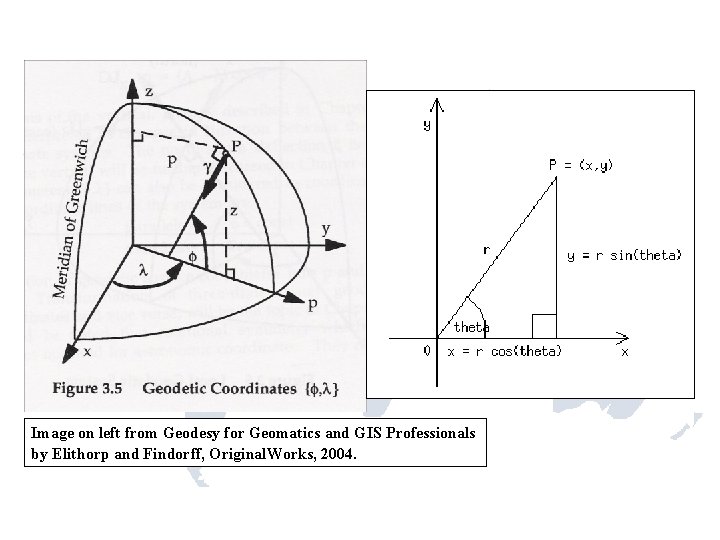
Image on left from Geodesy for Geomatics and GIS Professionals by Elithorp and Findorff, Original. Works, 2004.
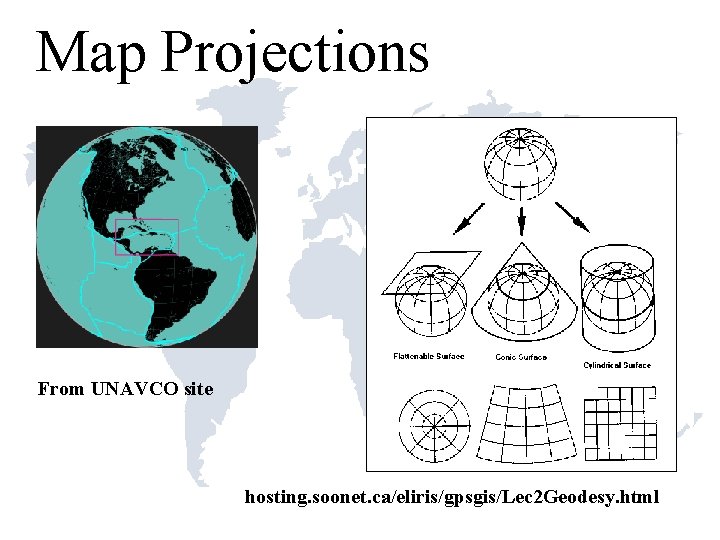
Map Projections From UNAVCO site hosting. soonet. ca/eliris/gpsgis/Lec 2 Geodesy. html
Taken from Ghilani, SPC
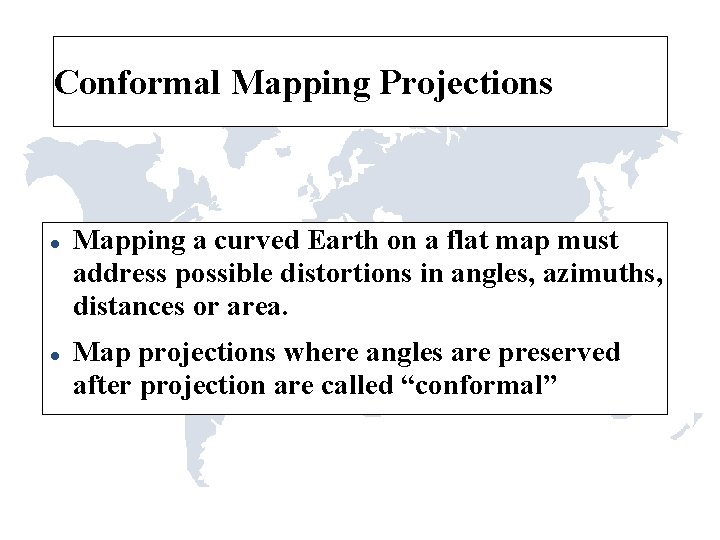
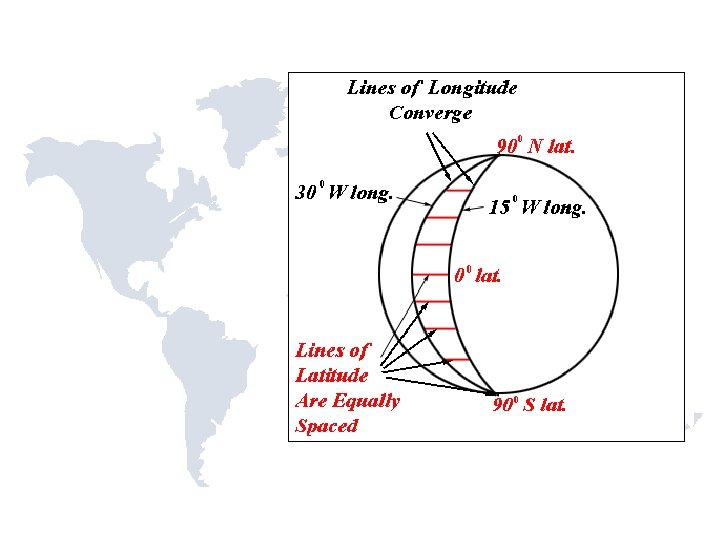
Conformal Mapping Projections Mapping a curved Earth on a flat map must address possible distortions in angles, azimuths, distances or area. Map projections where angles are preserved after projection are called “conformal”
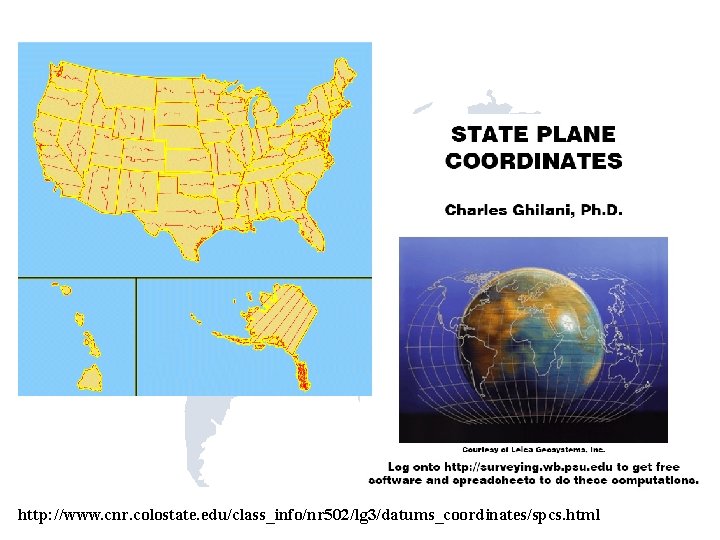
http: //www. cnr. colostate. edu/class_info/nr 502/lg 3/datums_coordinates/spcs. html
• SPCS 27 designed in 1930 s to facilitate the attachment of surveys to the national system. • Uses conformal mapping projections. • Restricts maximum scale distortion to less than 1 part in 10 000. • Uses as few zones as possible to cover a state. • Defines boundaries of zones on countybasis.
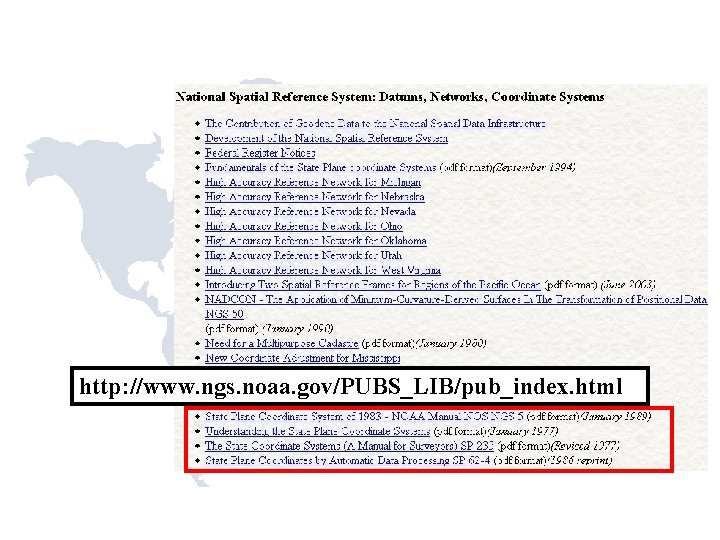
http: //www. ngs. noaa. gov/PUBS_LIB/pub_index. html
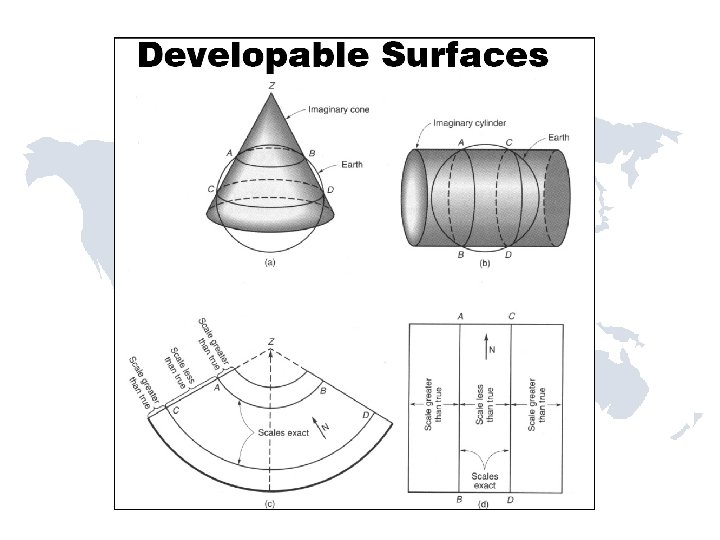
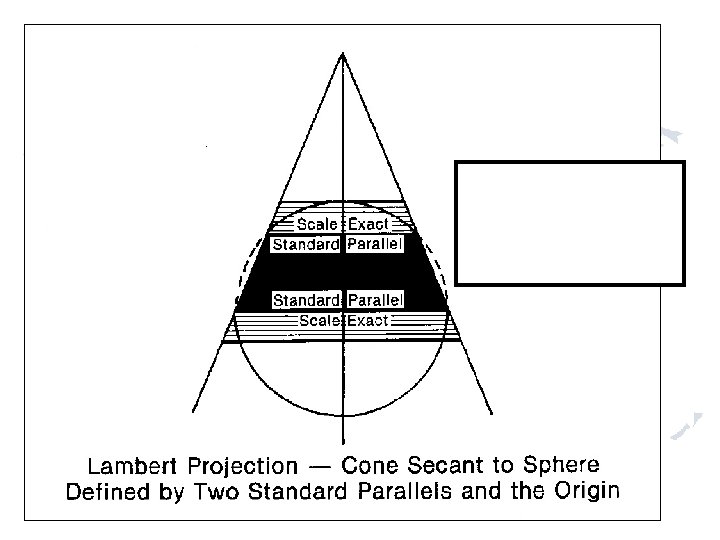
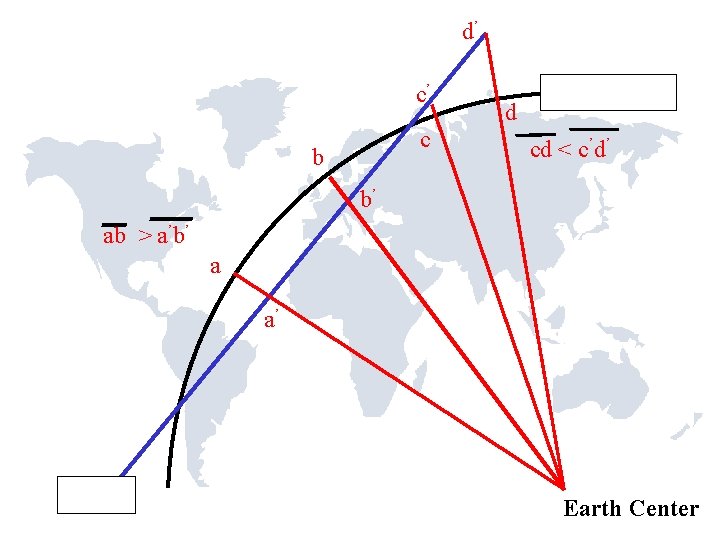
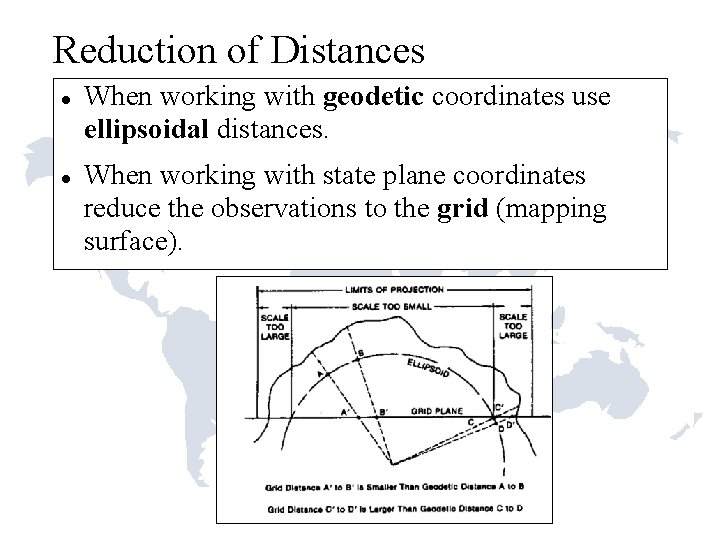
Secant cone intersects the surface of the ellipsoid NOT the earth’s surface.
d’ c’ c b d Ellipsoid cd < c’d’ b’ ab > a’b’ a a’ Grid Earth Center
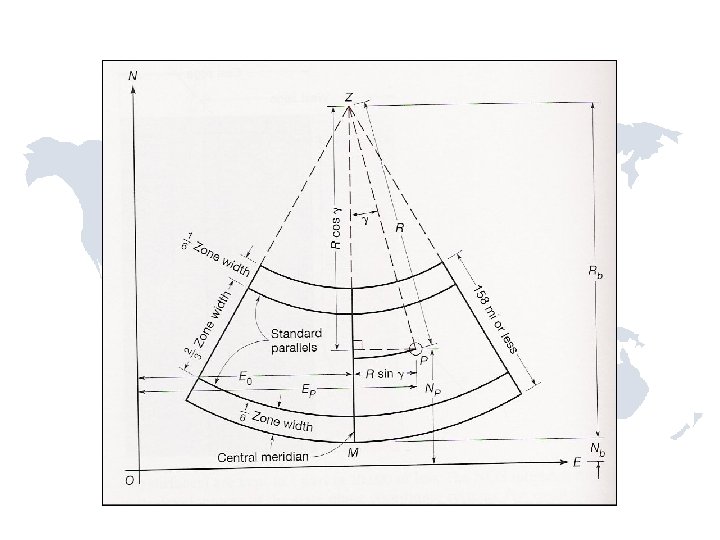
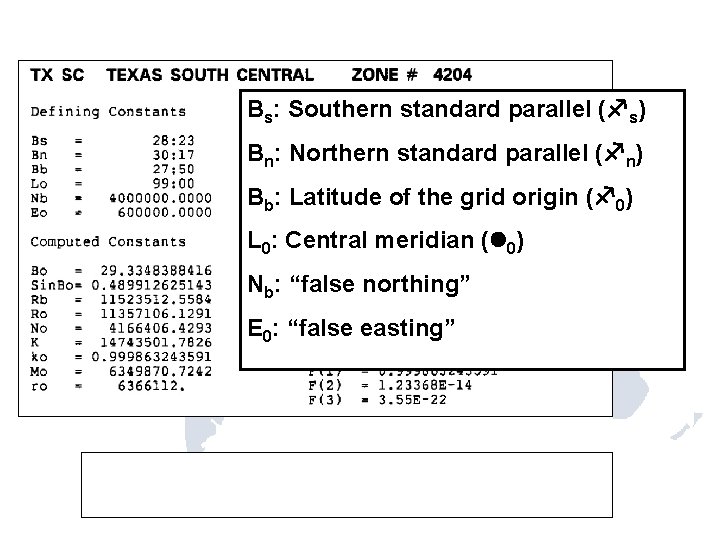
Bs: Southern standard parallel ( s) Bn: Northern standard parallel ( n) Bb: Latitude of the grid origin ( 0) L 0: Central meridian ( 0) Nb: “false northing” E 0: “false easting” Constants were copied from NOAA Manual NOS NGS 5 (available on-line)
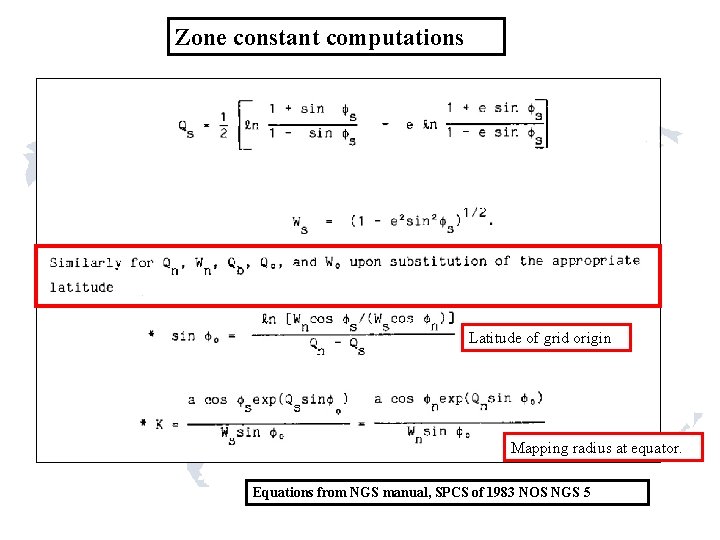
Zone constant computations Latitude of grid origin Mapping radius at equator. Equations from NGS manual, SPCS of 1983 NOS NGS 5
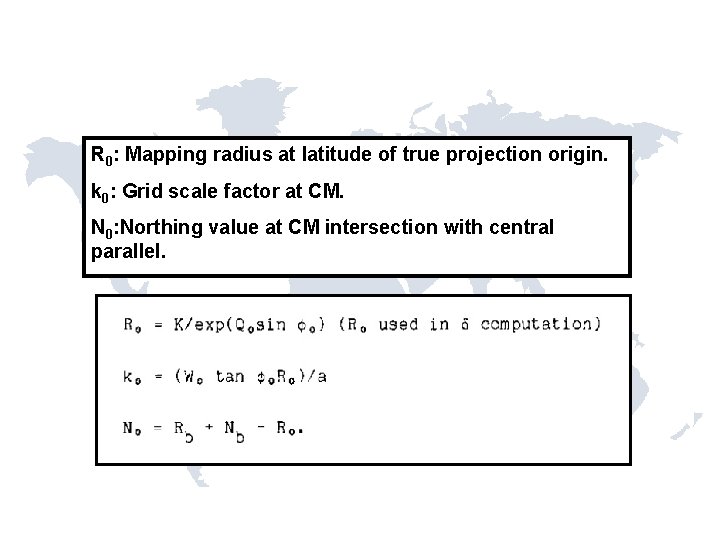
R 0: Mapping radius at latitude of true projection origin. k 0: Grid scale factor at CM. N 0: Northing value at CM intersection with central parallel.
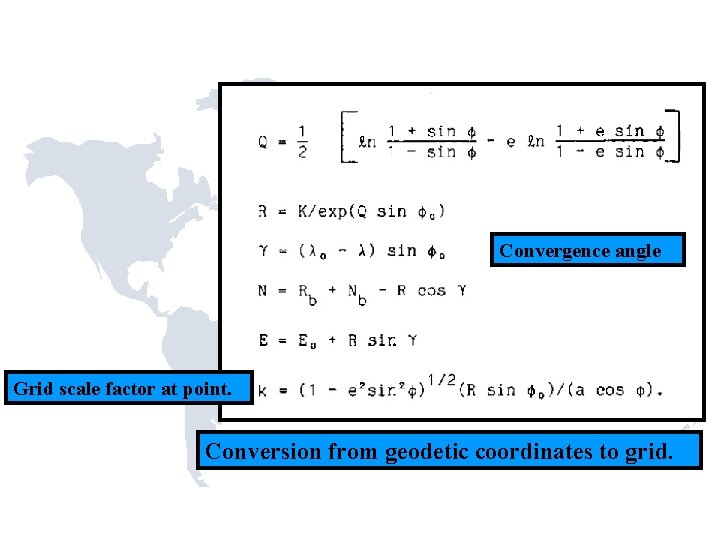
Convergence angle Grid scale factor at point. Conversion from geodetic coordinates to grid.
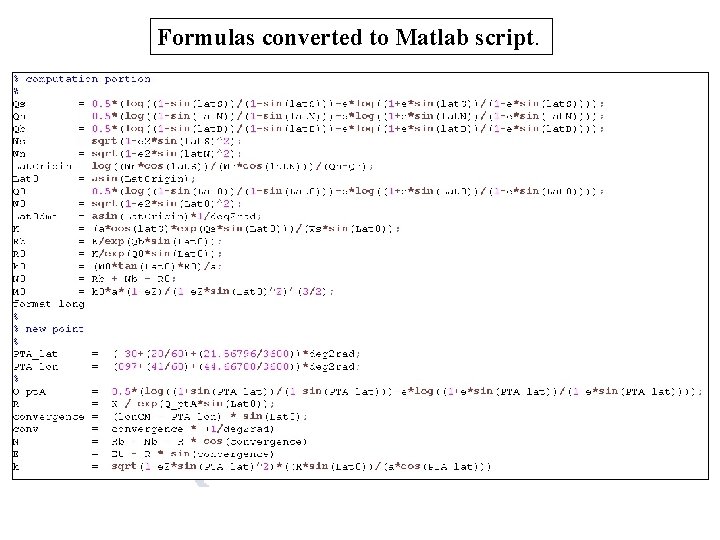
Formulas converted to Matlab script.
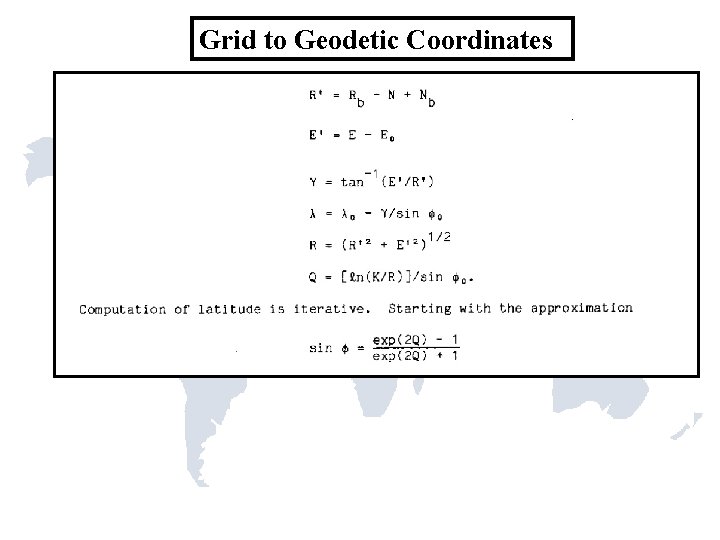
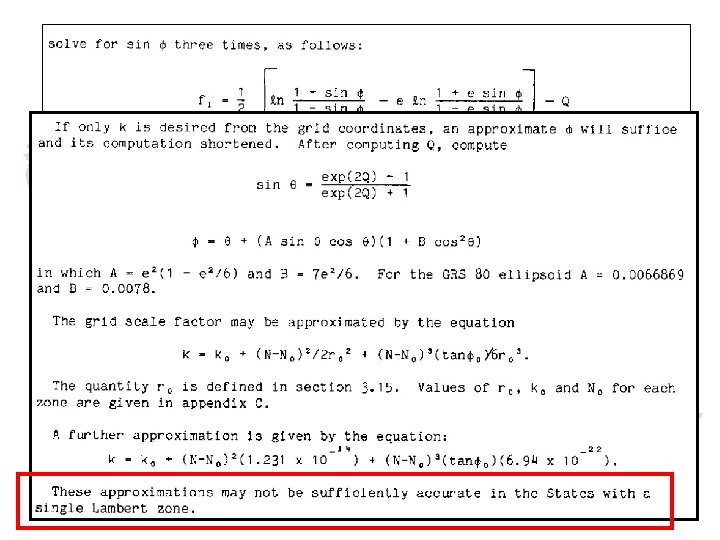
Grid to Geodetic Coordinates
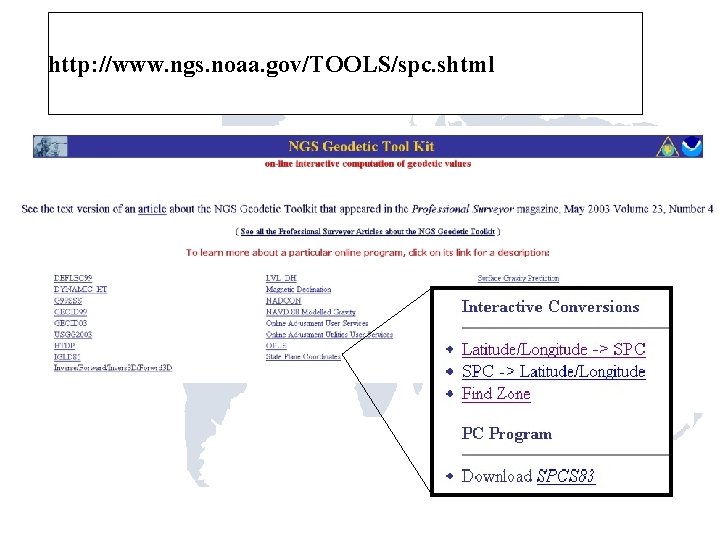
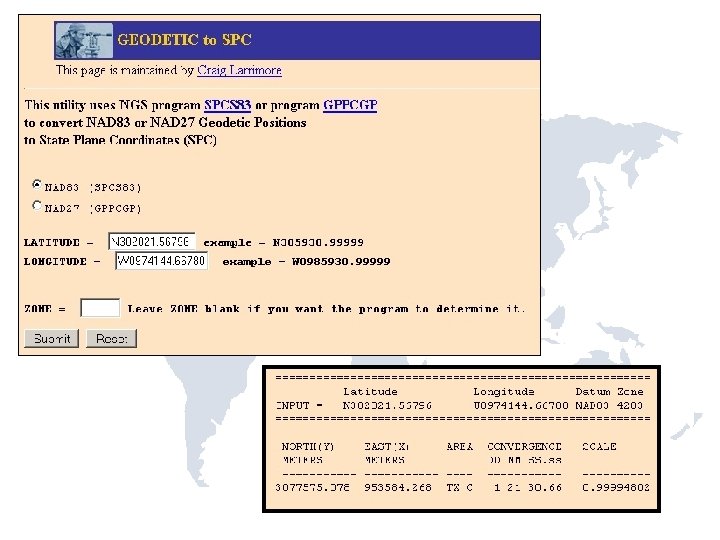
http: //www. ngs. noaa. gov/TOOLS/spc. shtml
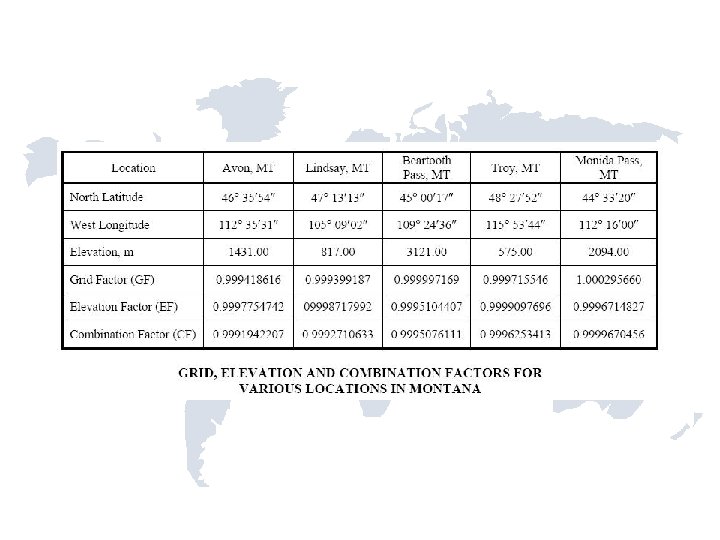
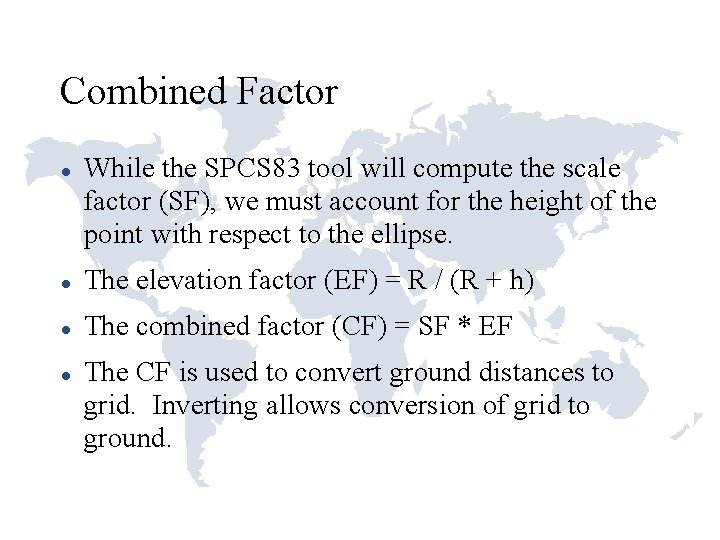
Combined Factor While the SPCS 83 tool will compute the scale factor (SF), we must account for the height of the point with respect to the ellipse. The elevation factor (EF) = R / (R + h) The combined factor (CF) = SF * EF The CF is used to convert ground distances to grid. Inverting allows conversion of grid to ground.
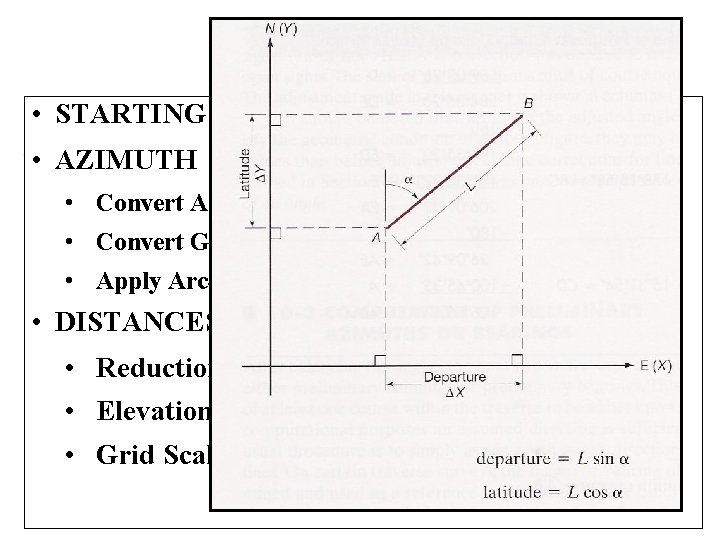
• STARTING COORDINATES • AZIMUTH • Convert Astronomic to Geodetic • Convert Geodetic to Grid (Convergence angle) • Apply Arc-to-Chord Correction (t-T) • DISTANCES • Reduction from Horizontal to Ellipsoidal • Elevation “Sea-Level” Reduction Factor • Grid Scale Factor
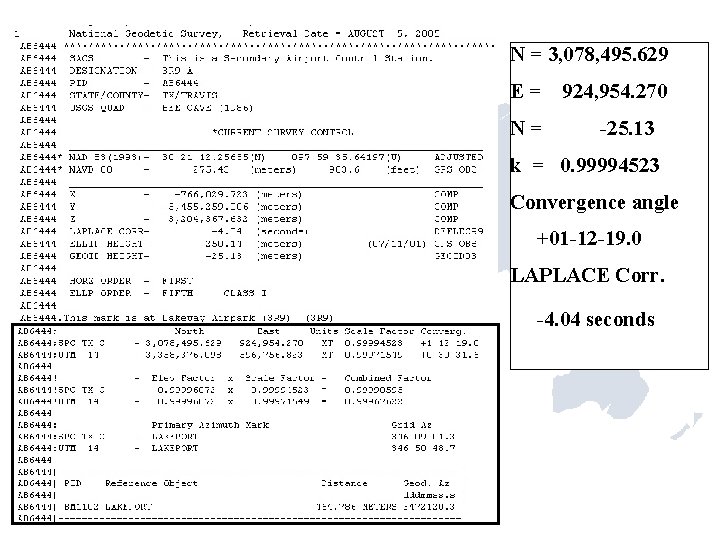
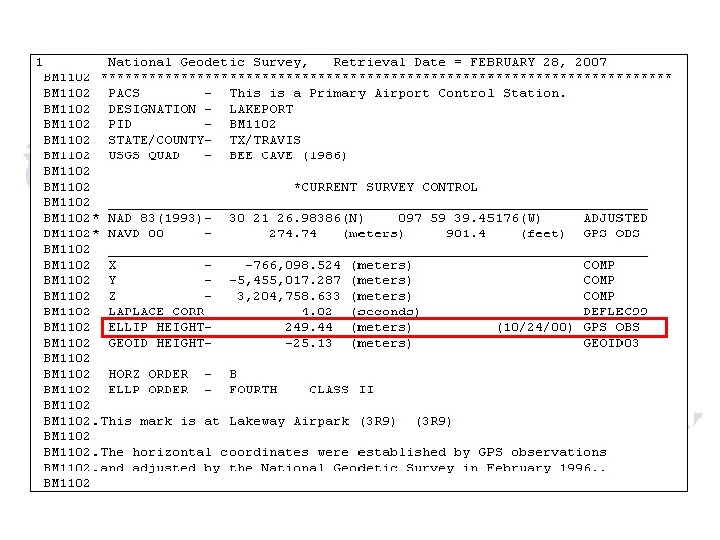
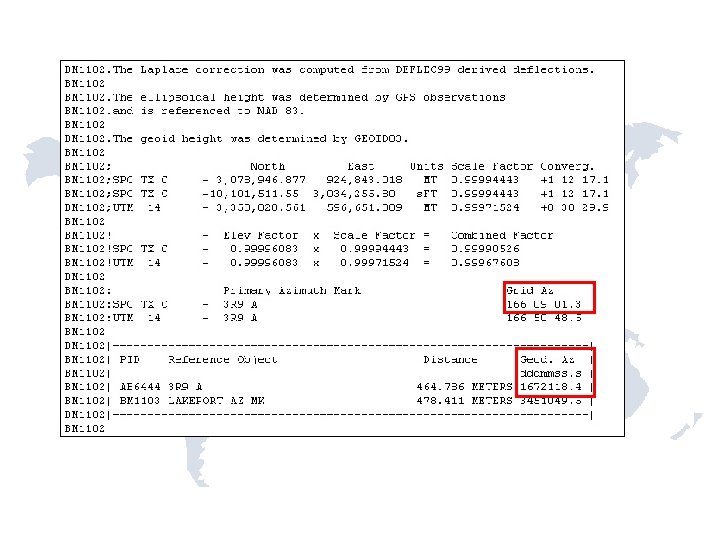
N = 3, 078, 495. 629 E= N= 924, 954. 270 -25. 13 k = 0. 99994523 Convergence angle +01 -12 -19. 0 LAPLACE Corr. -4. 04 seconds
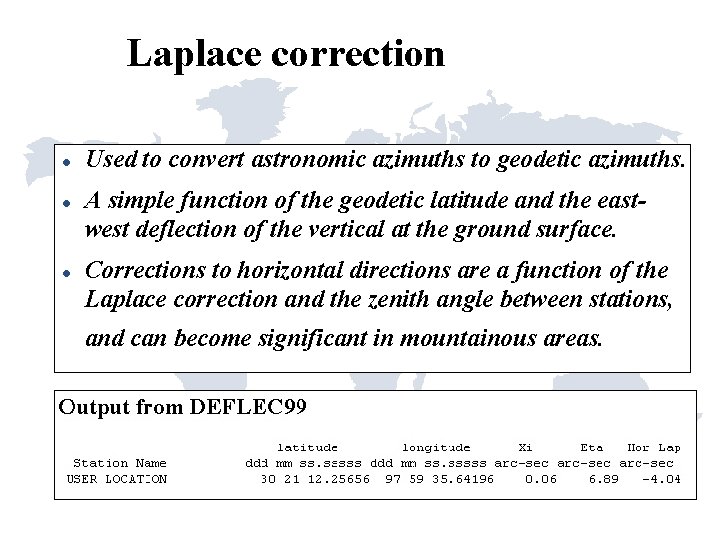
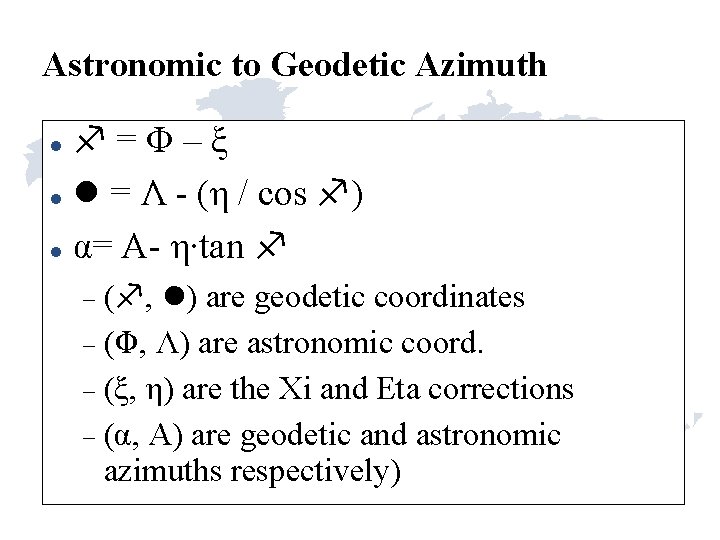
Laplace correction Used to convert astronomic azimuths to geodetic azimuths. A simple function of the geodetic latitude and the eastwest deflection of the vertical at the ground surface. Corrections to horizontal directions are a function of the Laplace correction and the zenith angle between stations, and can become significant in mountainous areas.
Astronomic to Geodetic Azimuth =Φ–ξ = Λ - (η / cos ) α= A- η∙tan ) are geodetic coordinates (Φ, Λ) are astronomic coord. (ξ, η) are the Xi and Eta corrections (α, A) are geodetic and astronomic azimuths respectively) ( ,
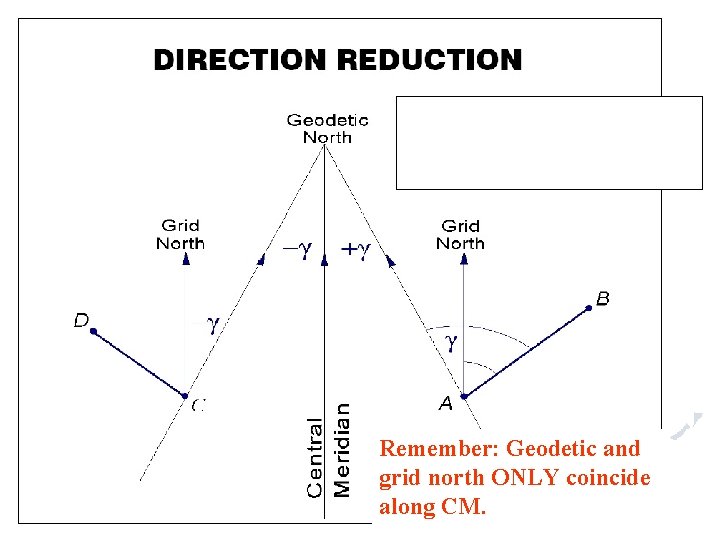
Grid directions (t) are based on north being parallel to the Central Meridian. Remember: Geodetic and grid north ONLY coincide along CM.
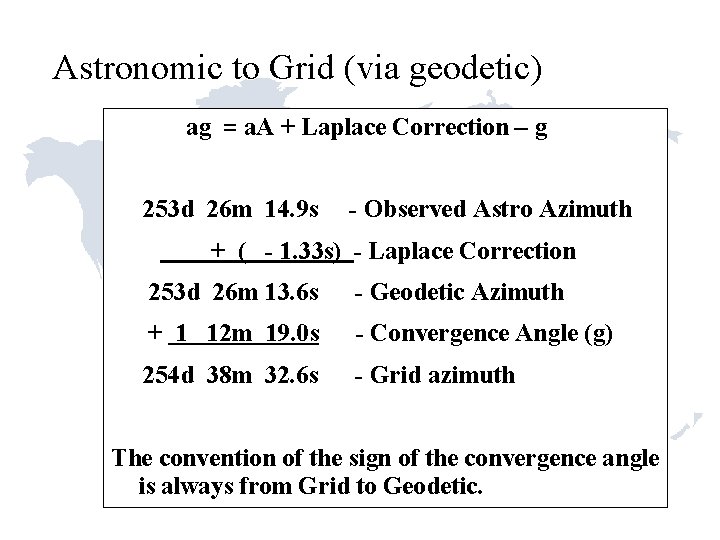
Astronomic to Grid (via geodetic) ag = a. A + Laplace Correction – g 253 d 26 m 14. 9 s - Observed Astro Azimuth + ( - 1. 33 s) - Laplace Correction 253 d 26 m 13. 6 s - Geodetic Azimuth + 1 12 m 19. 0 s - Convergence Angle (g) 254 d 38 m 32. 6 s - Grid azimuth The convention of the sign of the convergence angle is always from Grid to Geodetic.
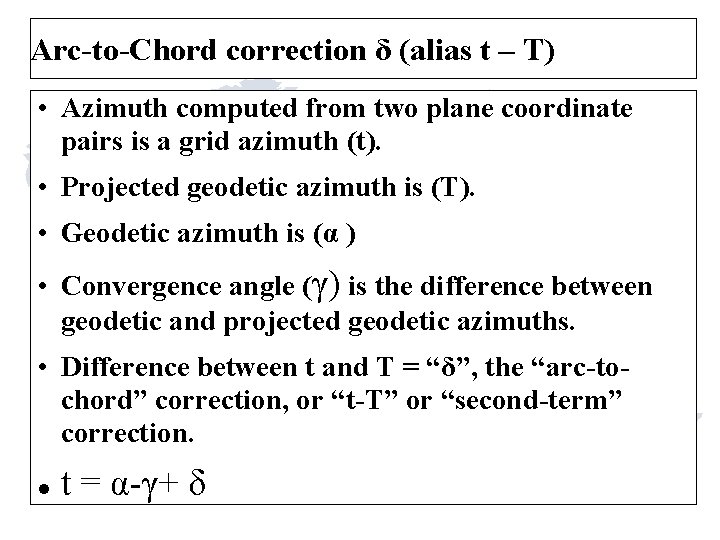
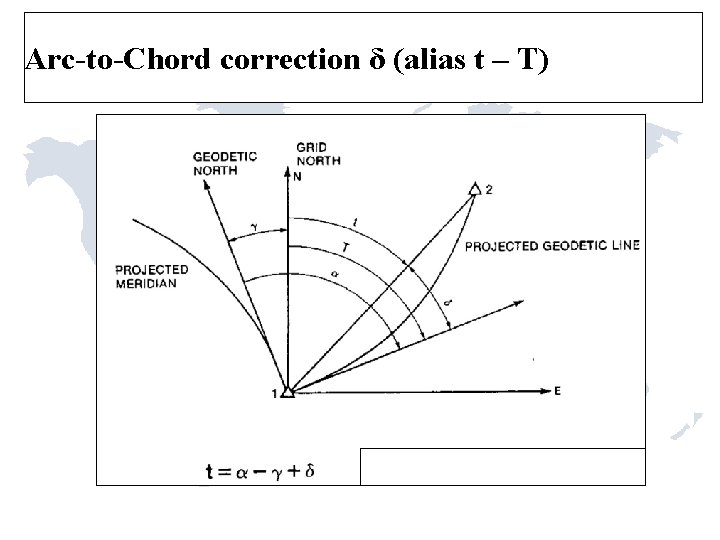
Arc-to-Chord correction δ (alias t – T) • Azimuth computed from two plane coordinate pairs is a grid azimuth (t). • Projected geodetic azimuth is (T). • Geodetic azimuth is (α ) • Convergence angle (γ) is the difference between geodetic and projected geodetic azimuths. • Difference between t and T = “δ”, the “arc-tochord” correction, or “t-T” or “second-term” correction. t = α-γ+ δ
Arc-to-Chord correction δ (alias t – T) Where t is grid azimuth.
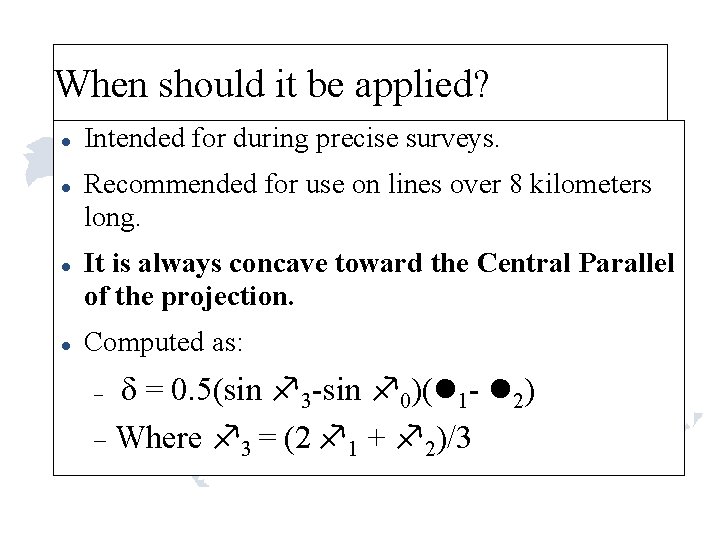
When should it be applied? Intended for during precise surveys. Recommended for use on lines over 8 kilometers long. It is always concave toward the Central Parallel of the projection. Computed as: δ = 0. 5(sin 3 -sin 0)( 1 - 2) Where 3 = (2 1 + 2)/3
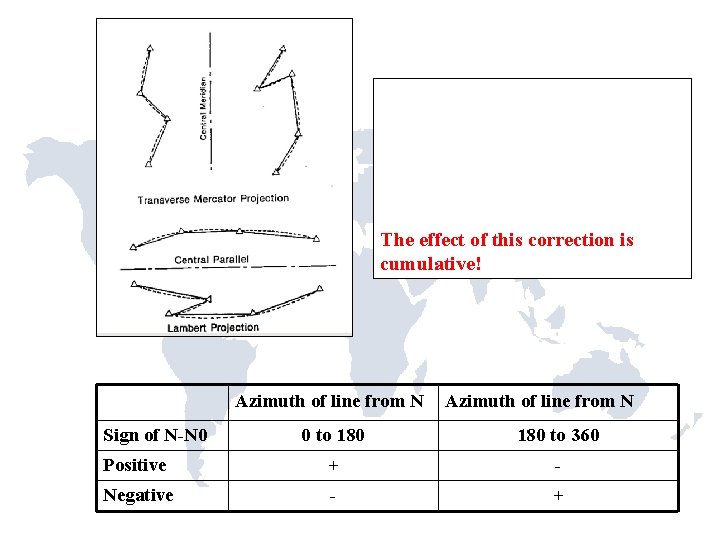
Compute magnitude of the secondterm correction from preliminary coordinates. It is not significant for short sight distances (< 8 km) but … The effect of this correction is cumulative! Azimuth of line from N Sign of N-N 0 Azimuth of line from N 0 to 180 to 360 Positive + - Negative - +
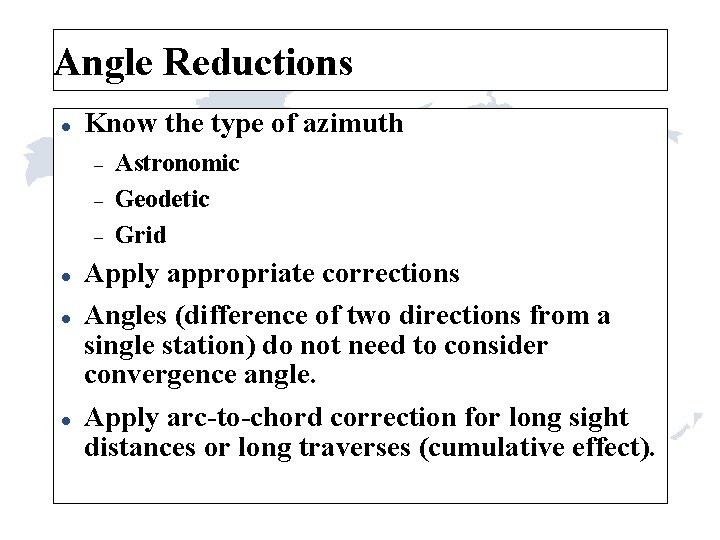
Angle Reductions Know the type of azimuth Astronomic Geodetic Grid Apply appropriate corrections Angles (difference of two directions from a single station) do not need to consider convergence angle. Apply arc-to-chord correction for long sight distances or long traverses (cumulative effect).
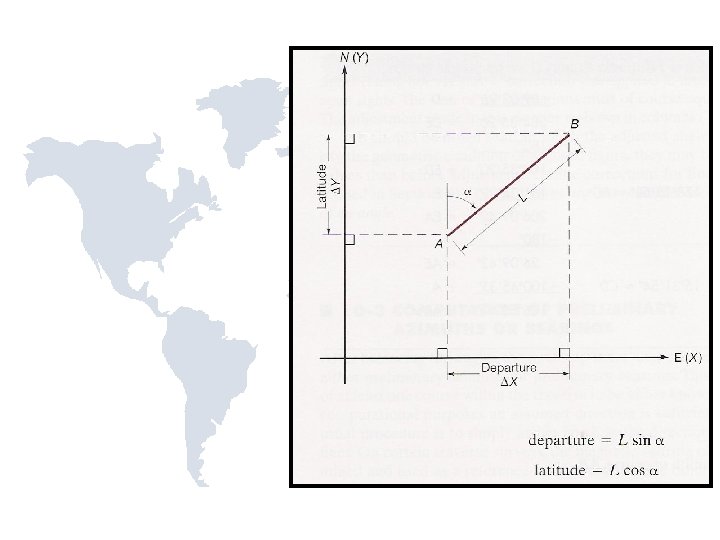
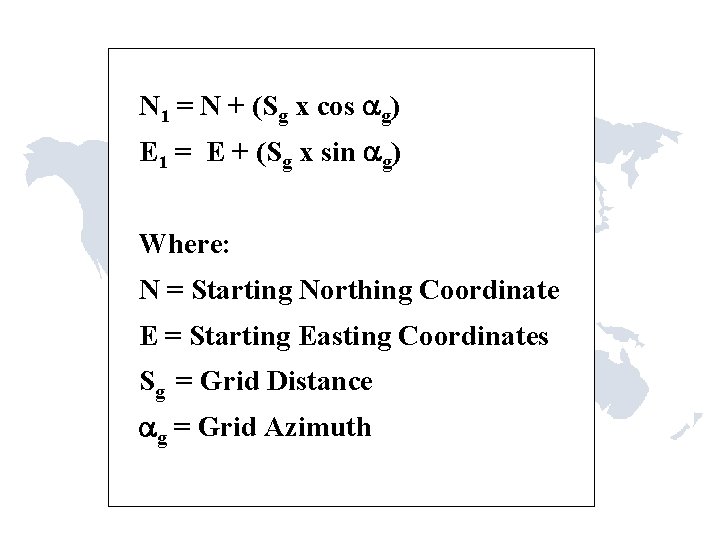
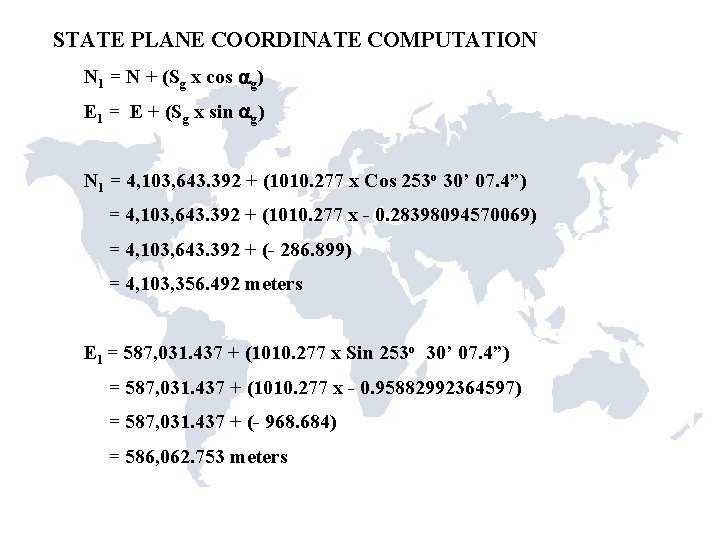
N 1 = N + (Sg x cos g) E 1 = E + (Sg x sin g) Where: N = Starting Northing Coordinate E = Starting Easting Coordinates Sg = Grid Distance g = Grid Azimuth
Reduction of Distances When working with geodetic coordinates use ellipsoidal distances. When working with state plane coordinates reduce the observations to the grid (mapping surface).
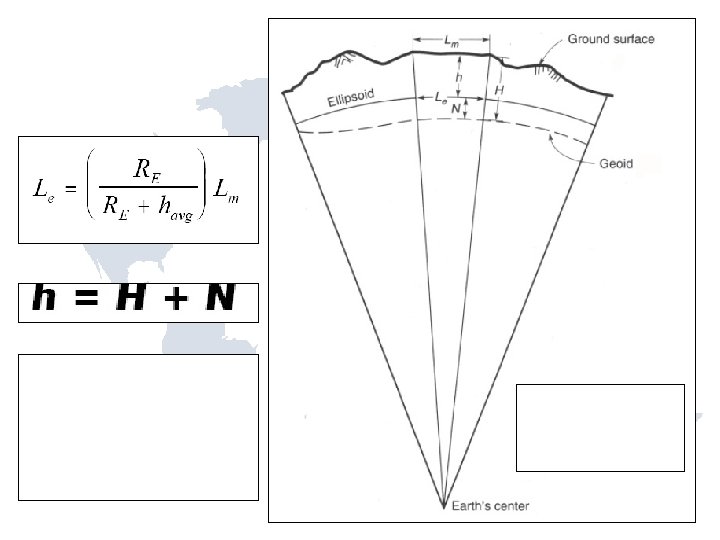
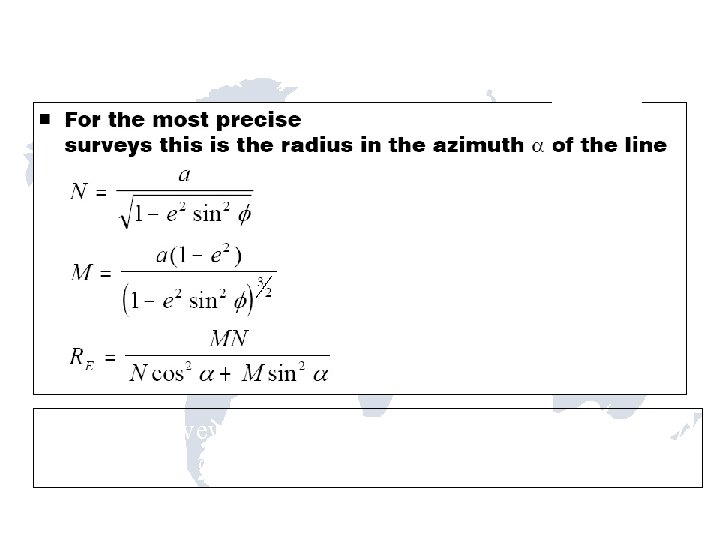
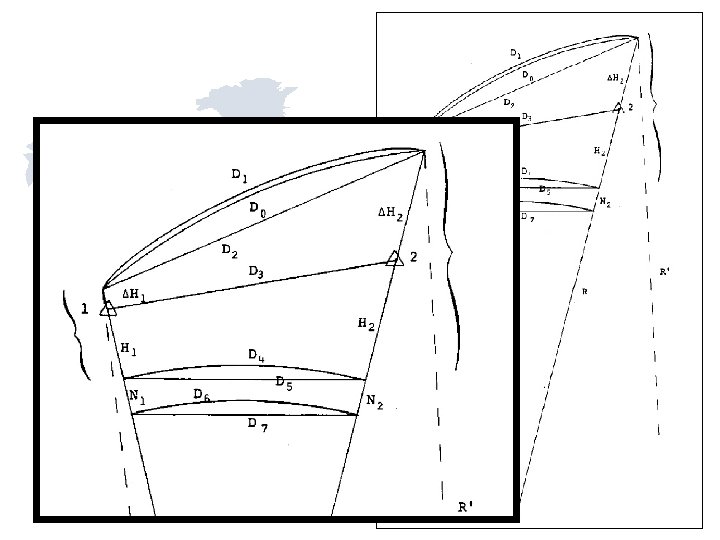
Re is the radius of the Earth in the azimuth of the line. Lm is surface Le is ellipsoid
For most surveys the approximate radius used in NAD 27 (6, 372, 000 m or 20, 906, 000 ft) can be used for Re.
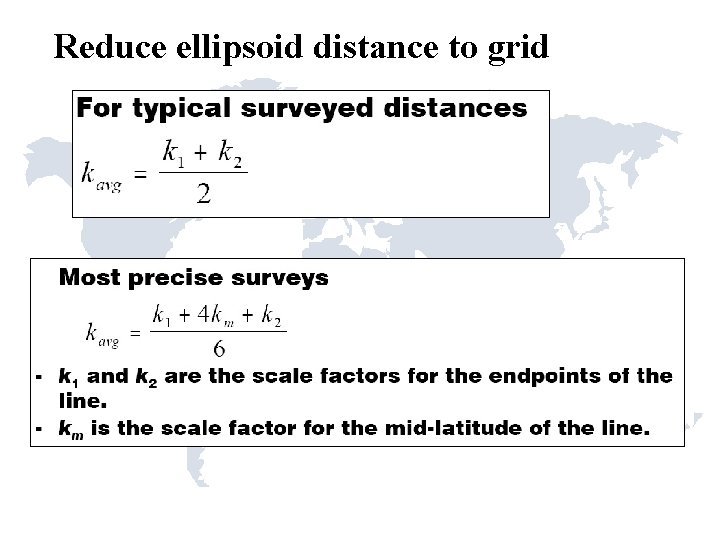
Reduce ellipsoid distance to grid
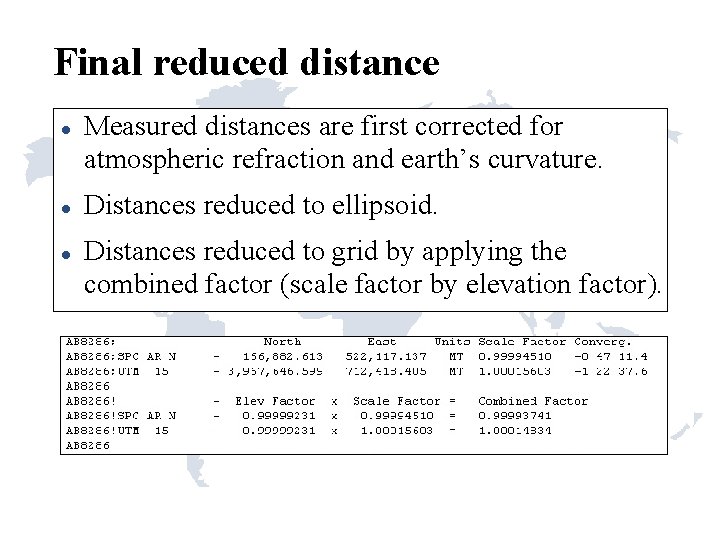
Final reduced distance Measured distances are first corrected for atmospheric refraction and earth’s curvature. Distances reduced to ellipsoid. Distances reduced to grid by applying the combined factor (scale factor by elevation factor).
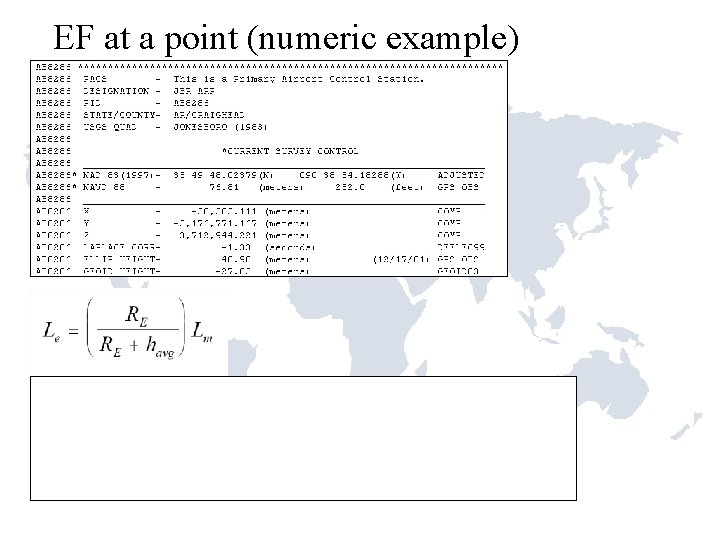
EF at a point (numeric example) Let R = 6372000, h = 48. 98 EF = R/(R + h) = 0. 999992313 if we do not have h, compute it via relationship: N + H
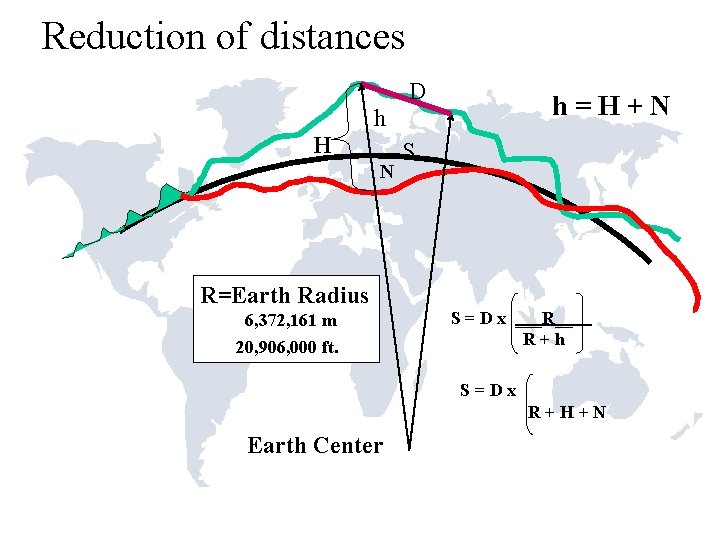
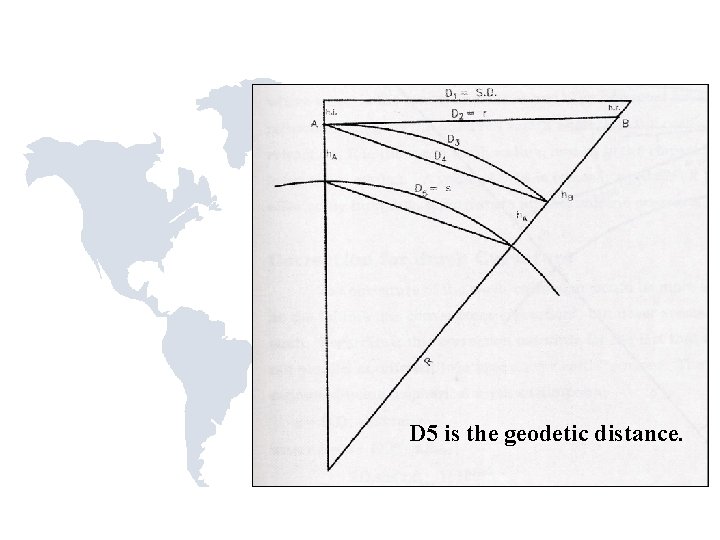
Reduction of distances D h=H+N h H N R=Earth Radius 6, 372, 161 m 20, 906, 000 ft. S S = D x ___R__ R+h S=Dx R+H+N Earth Center
D 5 is the geodetic distance.
REDUCTION TO ELLIPSOID S = D x [R / (R + h)] D = 1010. 387 meters (Measured Horizontal Distance) R = 6, 372, 162 meters (Mean Radius of the Earth) h = H + N (H = 2 m, N = - 26 m) = - 24 meters (Ellipsoidal Height) S = 1010. 387 [6, 372, 162 / 6, 372, 162 - 24] S = 1010. 387 x 1. 00000377 S = 1010. 391 meters If N is ignored: S = 1010. 387 [6, 372, 162 / 6, 372, 162 + 2] S = 1010. 387 x 0. 99999969 S = 1010. 387 meters -- 0. 004 m or about 1: 252, 600
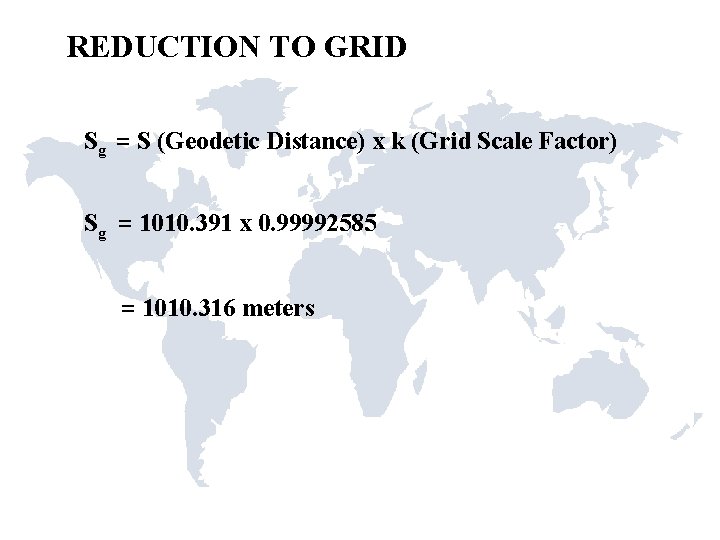
REDUCTION TO GRID Sg = S (Geodetic Distance) x k (Grid Scale Factor) Sg = 1010. 391 x 0. 99992585 = 1010. 316 meters
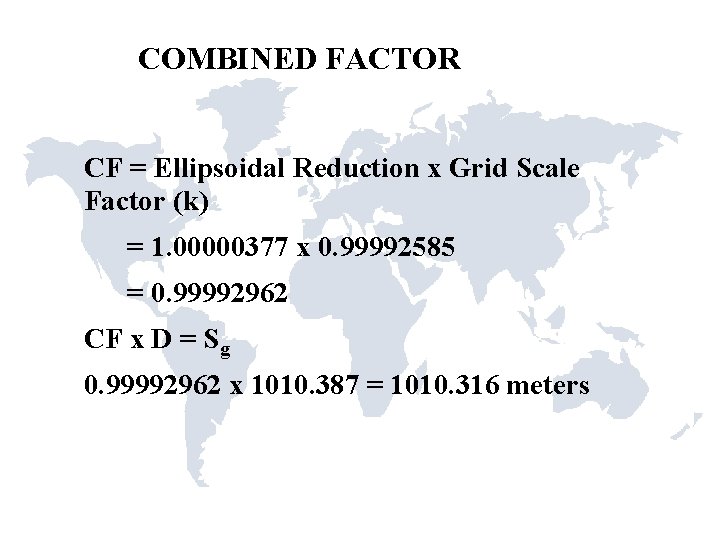
COMBINED FACTOR CF = Ellipsoidal Reduction x Grid Scale Factor (k) = 1. 00000377 x 0. 99992585 = 0. 99992962 CF x D = Sg 0. 99992962 x 1010. 387 = 1010. 316 meters
STATE PLANE COORDINATE COMPUTATION N 1 = N + (Sg x cos g) E 1 = E + (Sg x sin g) N 1 = 4, 103, 643. 392 + (1010. 277 x Cos 253 o 30’ 07. 4”) = 4, 103, 643. 392 + (1010. 277 x - 0. 28398094570069) = 4, 103, 643. 392 + (- 286. 899) = 4, 103, 356. 492 meters E 1 = 587, 031. 437 + (1010. 277 x Sin 253 o 30’ 07. 4”) = 587, 031. 437 + (1010. 277 x - 0. 95882992364597) = 587, 031. 437 + (- 968. 684) = 586, 062. 753 meters
“I WANT STATE PLANE COORDINATES RAISED TO GROUND LEVEL” GROUND LEVEL COORDINATES ARE NOT STATE PLANE COORDINATES!!!!!
PROBLEMS WITH GROUND LEVEL COORDINATES • RAPID DISTORTIONS • PROJECTS DIFFICULT TO TIE TOGETHER • CONFUSION OF COORDINATE SYSTEMS • LACK OF DOCUMENTATION
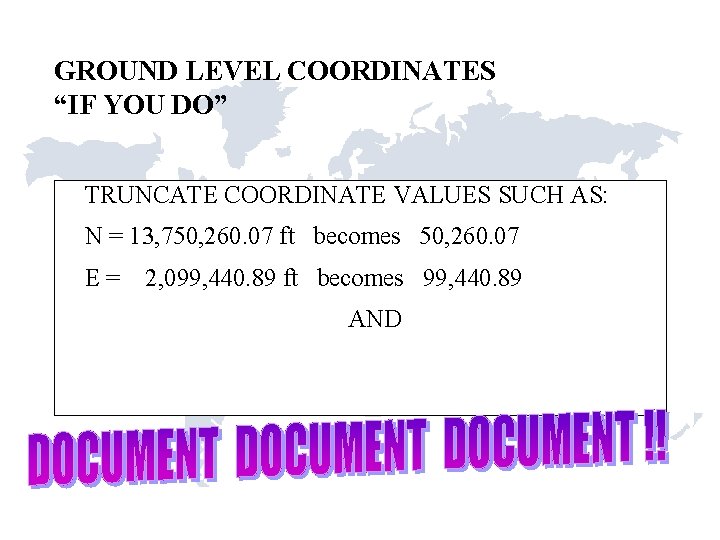
GROUND LEVEL COORDINATES “IF YOU DO” TRUNCATE COORDINATE VALUES SUCH AS: N = 13, 750, 260. 07 ft becomes 50, 260. 07 E= 2, 099, 440. 89 ft becomes 99, 440. 89 AND
GOOD COORDINATION BEGINS WITH GOOD COORDINATES GEOGRAPHY WITHOUT GEODESY IS A FELONY
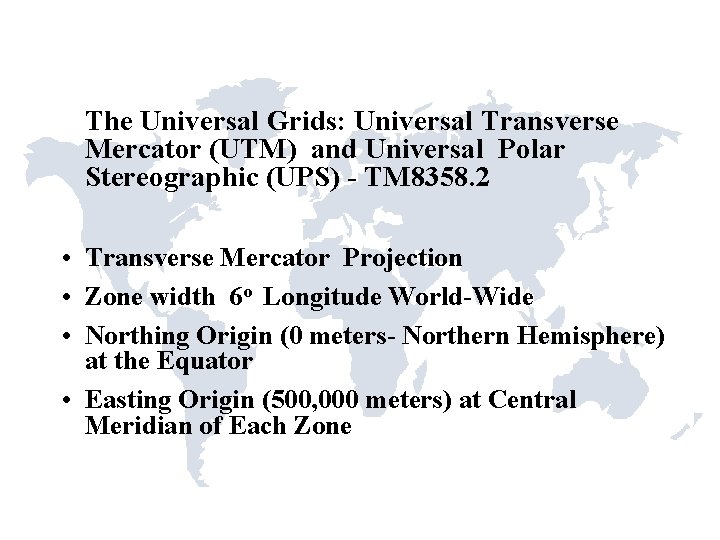
The Universal Grids: Universal Transverse Mercator (UTM) and Universal Polar Stereographic (UPS) - TM 8358. 2 • Transverse Mercator Projection • Zone width 6 o Longitude World-Wide • Northing Origin (0 meters- Northern Hemisphere) at the Equator • Easting Origin (500, 000 meters) at Central Meridian of Each Zone