
State of Malaria in Africa and the rest

- Slides: 38
State of Malaria in Africa and the rest of the World Dr Abraham Aseffa Scientific Director Armauer Hansen Research Institute/ALERT Centre Federal Ministry of Health 4 TH Corporate Africa Business Coalition Partnerships for Prevention and Care Africa Health Conference 7 -9 February 2011, UNECA CC, Addis Ababa
Outline • • Global burden of malaria Malaria in Africa Malaria control Current trends
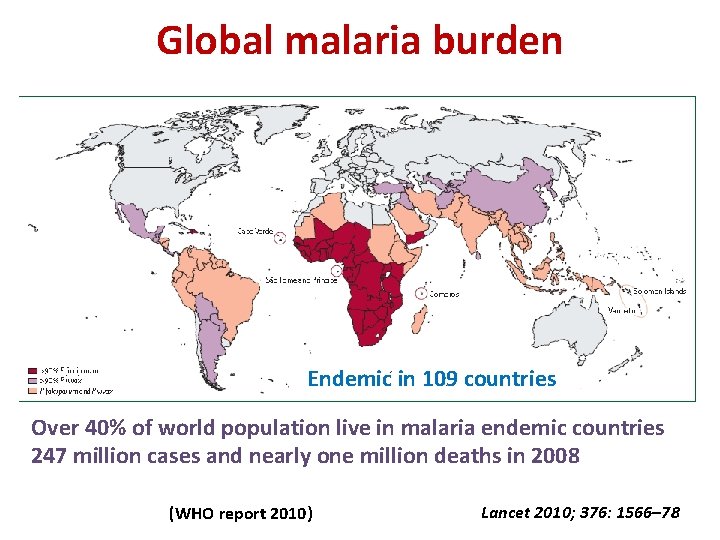
Global malaria burden Endemic in 109 countries Over 40% of world population live in malaria endemic countries 247 million cases and nearly one million deaths in 2008 (WHO report 2010) Lancet 2010; 376: 1566– 78
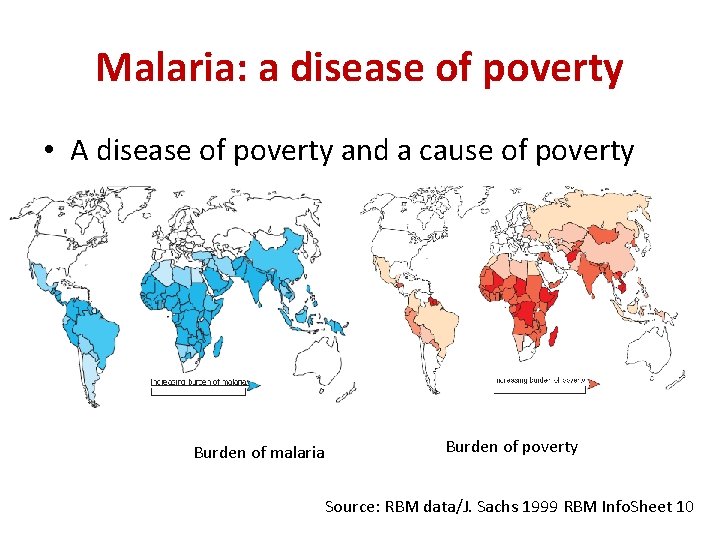
Malaria: a disease of poverty • A disease of poverty and a cause of poverty Burden of malaria Burden of poverty Source: RBM data/J. Sachs 1999 RBM Info. Sheet 10
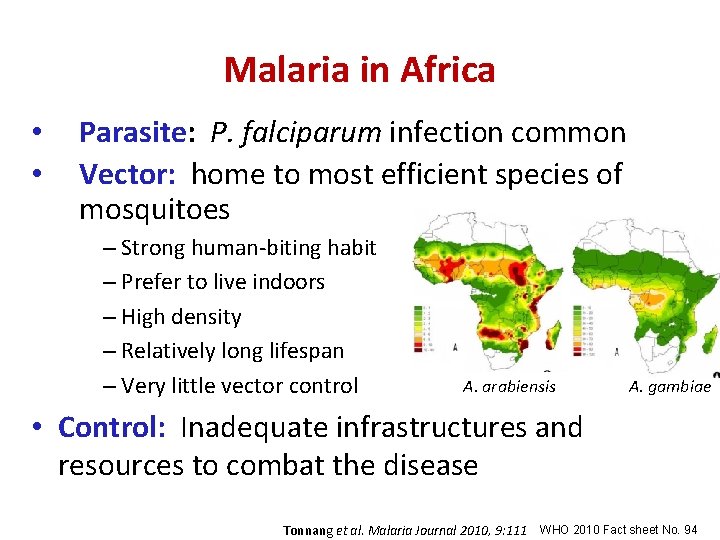
Malaria in Africa • • Parasite: P. falciparum infection common Vector: home to most efficient species of mosquitoes – Strong human-biting habit – Prefer to live indoors – High density – Relatively long lifespan – Very little vector control A. arabiensis A. gambiae • Control: Inadequate infrastructures and resources to combat the disease Tonnang et al. Malaria Journal 2010, 9: 111 WHO 2010 Fact sheet No. 94
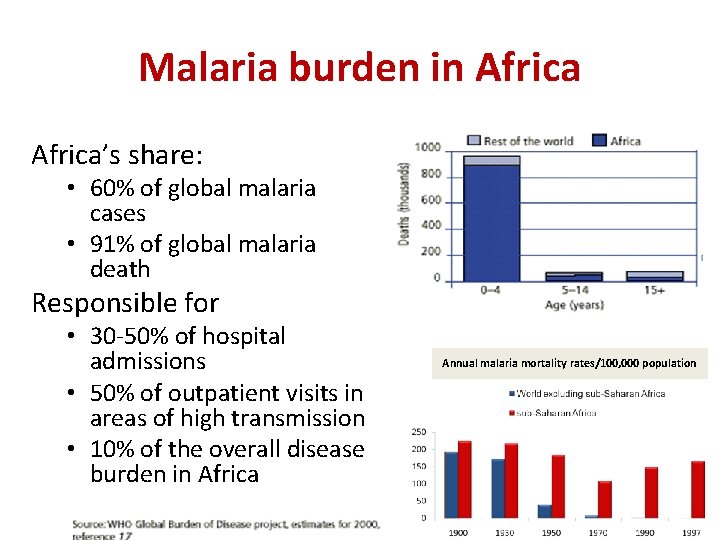
Malaria burden in Africa’s share: • 60% of global malaria cases • 91% of global malaria death Responsible for • 30 -50% of hospital admissions • 50% of outpatient visits in areas of high transmission • 10% of the overall disease burden in Africa Annual malaria mortality rates/100, 000 population
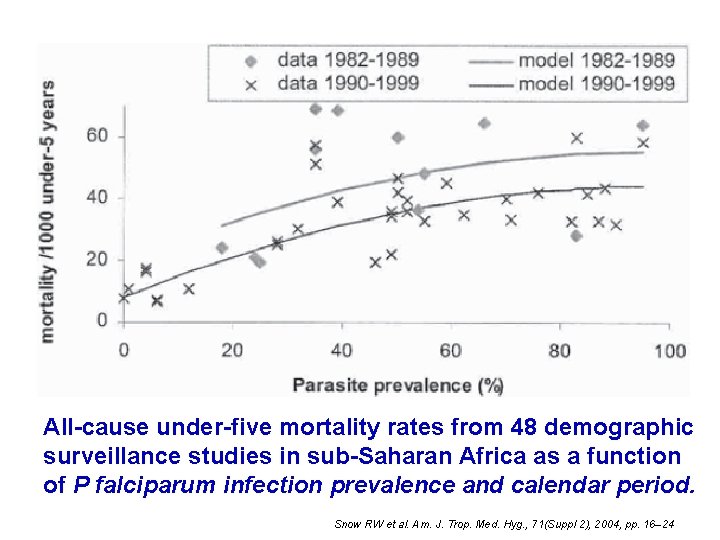
All-cause under-five mortality rates from 48 demographic surveillance studies in sub-Saharan Africa as a function of P falciparum infection prevalence and calendar period. Snow RW et al. Am. J. Trop. Med. Hyg. , 71(Suppl 2), 2004, pp. 16– 24
Malaria burden in Africa. . . • Malaria kills more African children than any other disease — Accounts for nearly 20 percent of under-five mortality in Africa. — A child dies of malaria every 30 seconds in Africa. • Malaria during pregnancy kills — 10, 000 pregnant women and 200, 000 of their infants every year • Deaths result from — infection with the malaria parasite directly, — severe anemia and malnutrition — Anemia contributes to more than half of malaria deaths in women and children.
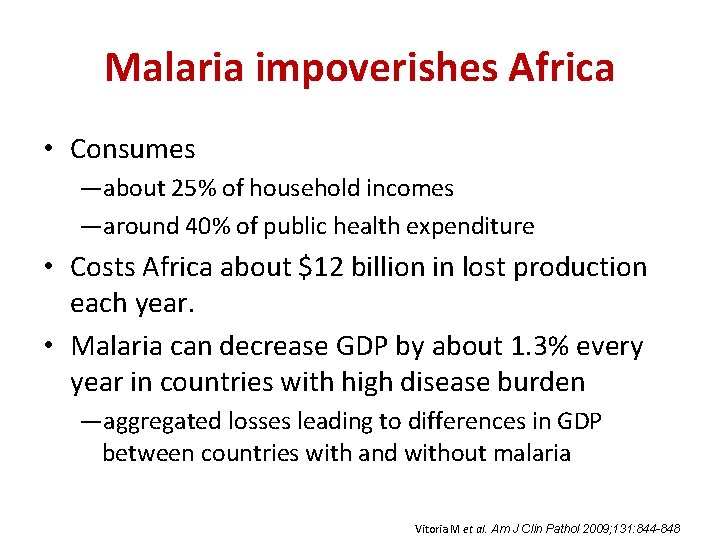
Malaria impoverishes Africa • Consumes —about 25% of household incomes —around 40% of public health expenditure • Costs Africa about $12 billion in lost production each year. • Malaria can decrease GDP by about 1. 3% every year in countries with high disease burden —aggregated losses leading to differences in GDP between countries with and without malaria Vitoria M et al. Am J Clin Pathol 2009; 131: 844 -848
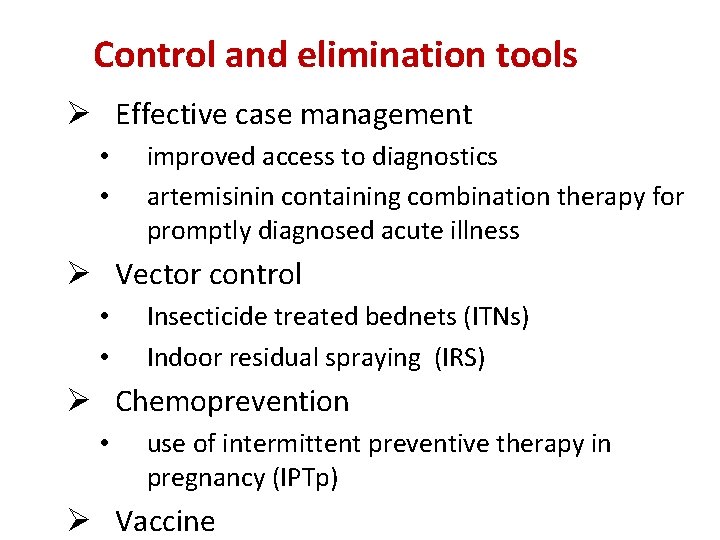
Control and elimination tools Ø Effective case management • • improved access to diagnostics artemisinin containing combination therapy for promptly diagnosed acute illness Ø Vector control • • Insecticide treated bednets (ITNs) Indoor residual spraying (IRS) Ø Chemoprevention • use of intermittent preventive therapy in pregnancy (IPTp) Ø Vaccine
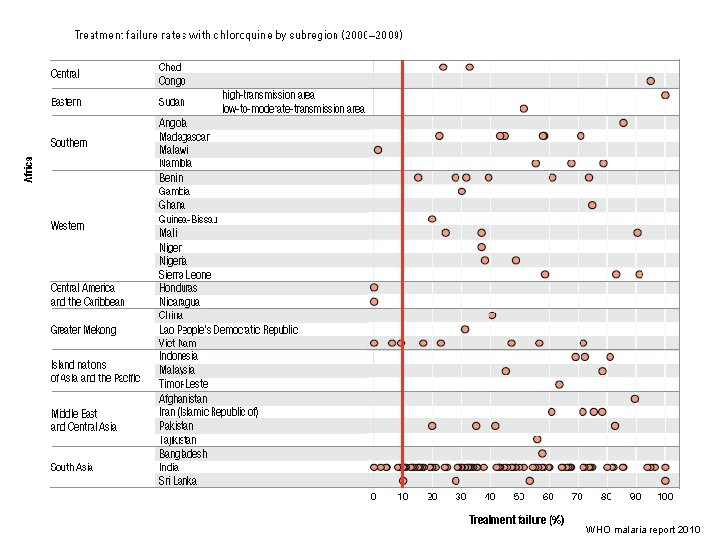
WHO malaria report 2010
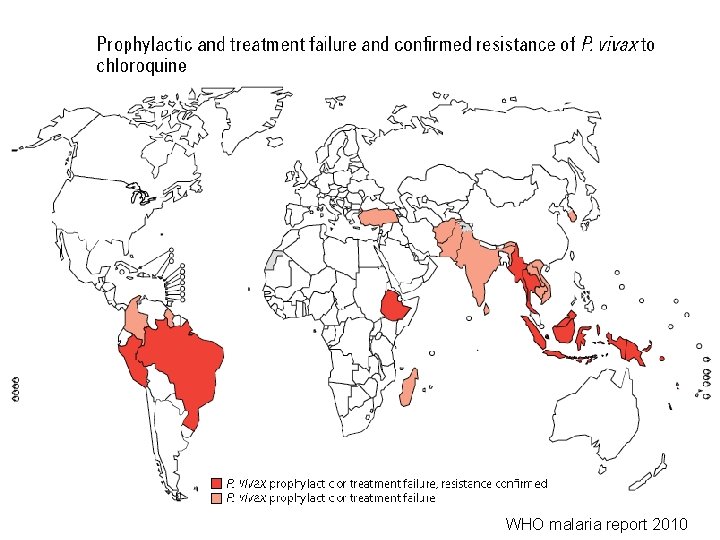
WHO malaria report 2010
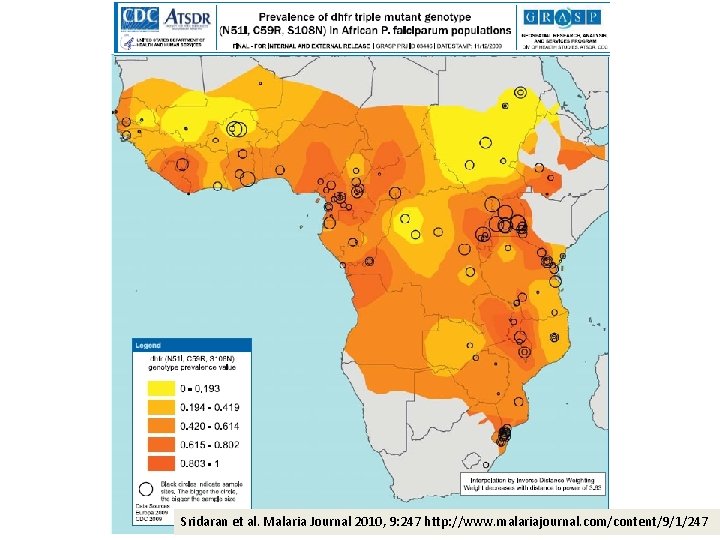
Sridaran et al. Malaria Journal 2010, 9: 247 http: //www. malariajournal. com/content/9/1/247
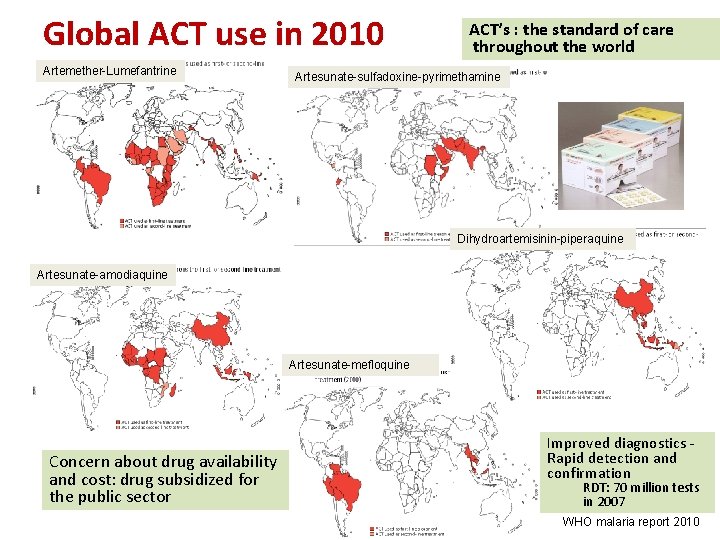
Global ACT use in 2010 Artemether-Lumefantrine ACT’s : the standard of care throughout the world Artesunate-sulfadoxine-pyrimethamine Dihydroartemisinin-piperaquine Artesunate-amodiaquine Artesunate-mefloquine Concern about drug availability and cost: drug subsidized for the public sector Improved diagnostics Rapid detection and confirmation RDT: 70 million tests in 2007 WHO malaria report 2010
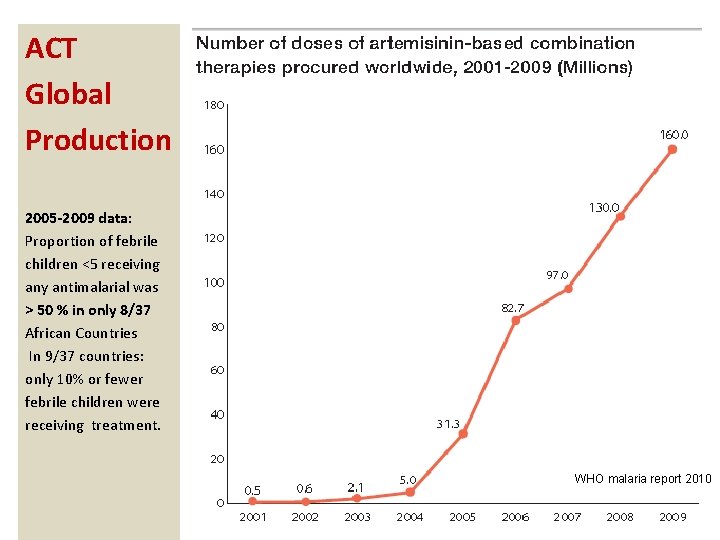
ACT Global Production 2005 -2009 data: Proportion of febrile children <5 receiving any antimalarial was > 50 % in only 8/37 African Countries In 9/37 countries: only 10% or fewer febrile children were receiving treatment. WHO malaria report 2010
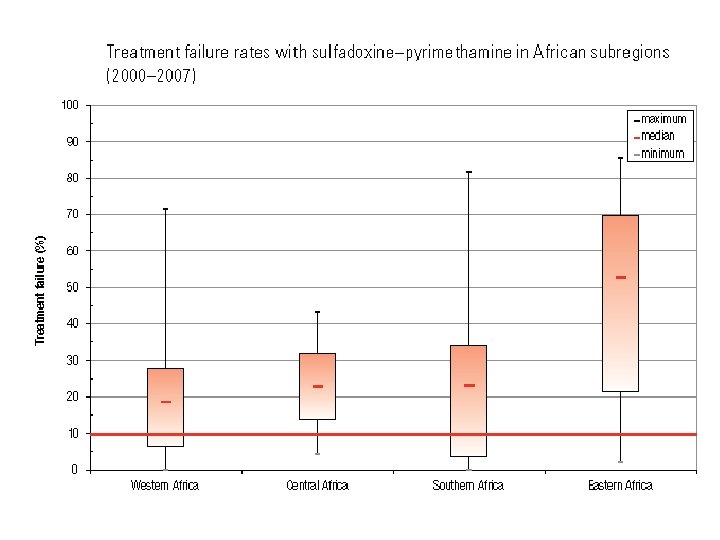
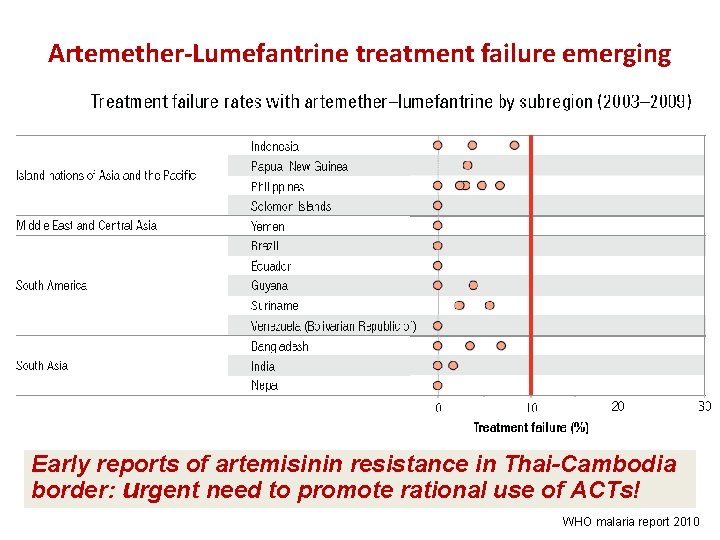
Artemether-Lumefantrine treatment failure emerging Early reports of artemisinin resistance in Thai-Cambodia border: urgent need to promote rational use of ACTs! WHO malaria report 2010
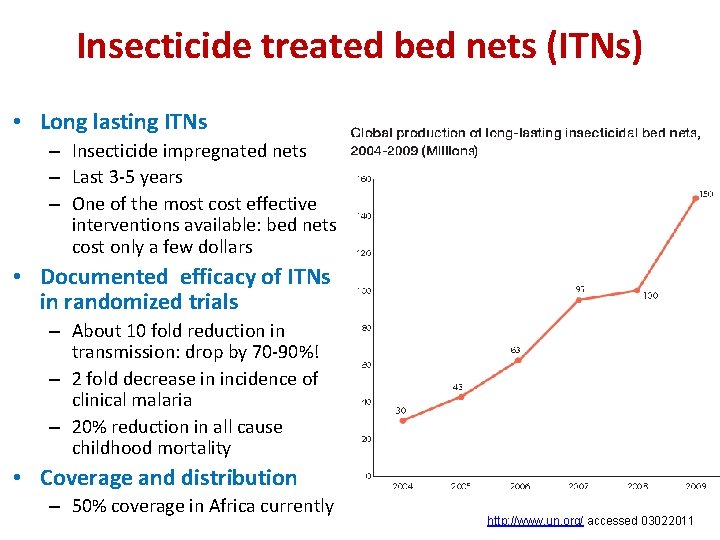
Insecticide treated bed nets (ITNs) • Long lasting ITNs – Insecticide impregnated nets – Last 3 -5 years – One of the most cost effective interventions available: bed nets cost only a few dollars • Documented efficacy of ITNs in randomized trials – About 10 fold reduction in transmission: drop by 70 -90%! – 2 fold decrease in incidence of clinical malaria – 20% reduction in all cause childhood mortality • Coverage and distribution – 50% coverage in Africa currently http: //www. un. org/ accessed 03022011
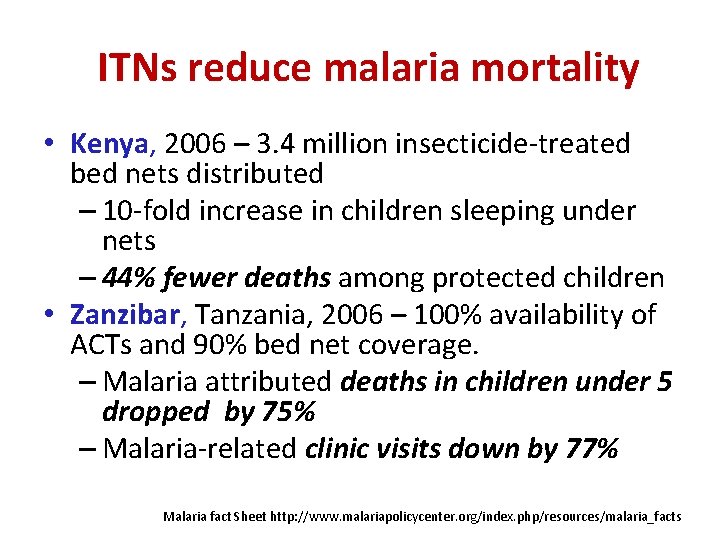
ITNs reduce malaria mortality • Kenya, 2006 – 3. 4 million insecticide-treated bed nets distributed – 10 -fold increase in children sleeping under nets – 44% fewer deaths among protected children • Zanzibar, Tanzania, 2006 – 100% availability of ACTs and 90% bed net coverage. – Malaria attributed deaths in children under 5 dropped by 75% – Malaria-related clinic visits down by 77% Malaria fact Sheet http: //www. malariapolicycenter. org/index. php/resources/malaria_facts
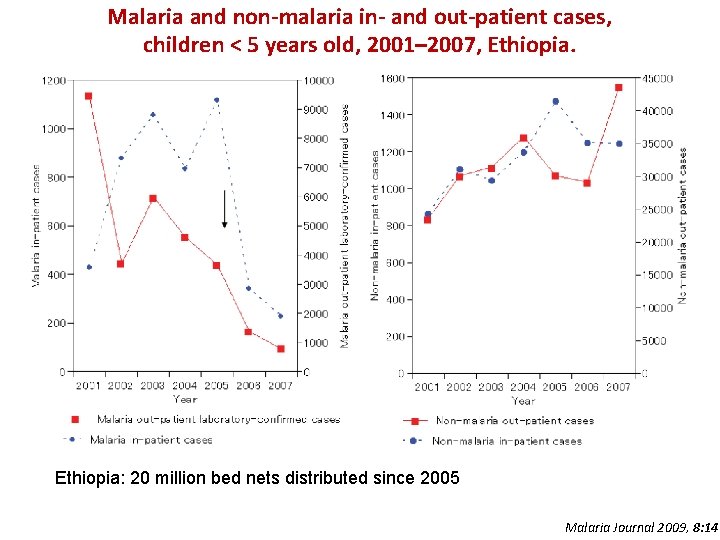
Malaria and non-malaria in- and out-patient cases, children < 5 years old, 2001– 2007, Ethiopia: 20 million bed nets distributed since 2005 Malaria Journal 2009, 8: 14
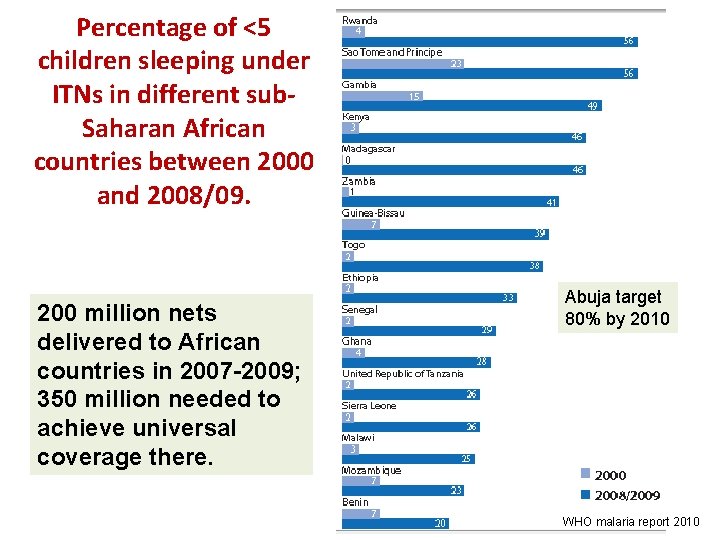
Percentage of <5 children sleeping under ITNs in different sub. Saharan African countries between 2000 and 2008/09. 200 million nets delivered to African countries in 2007 -2009; 350 million needed to achieve universal coverage there. Abuja target 80% by 2010 WHO malaria report 2010
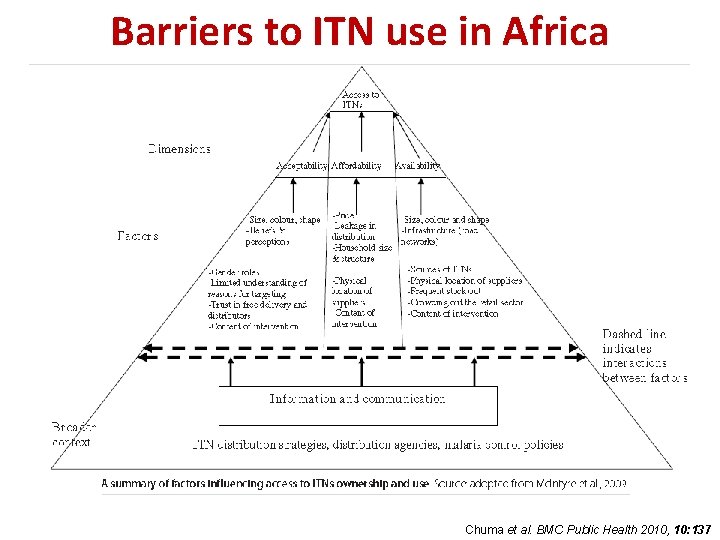
Barriers to ITN use in Africa Chuma et al. BMC Public Health 2010, 10: 137
Integrated interventions for malaria control • Global progress with the adoption of effective interventions • Dramatic impact at a community level in some studies, following: – an integrated introduction of – artemisinin-containing combination therapy and – insecticide-treated bed nets – Indoor residual spraying (IRS).
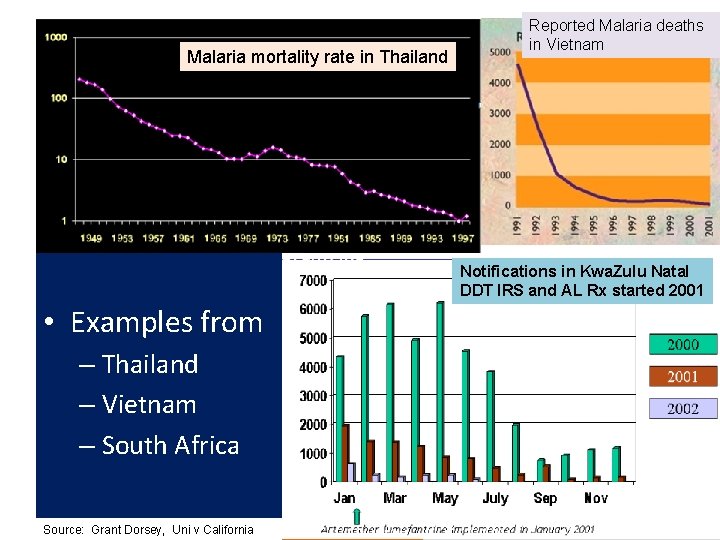
Malaria mortality rate in Thailand Reported Malaria deaths in Vietnam Notifications in Kwa. Zulu Natal DDT IRS and AL Rx started 2001 • Examples from – Thailand – Vietnam – South Africa Source: Grant Dorsey, Uni v California
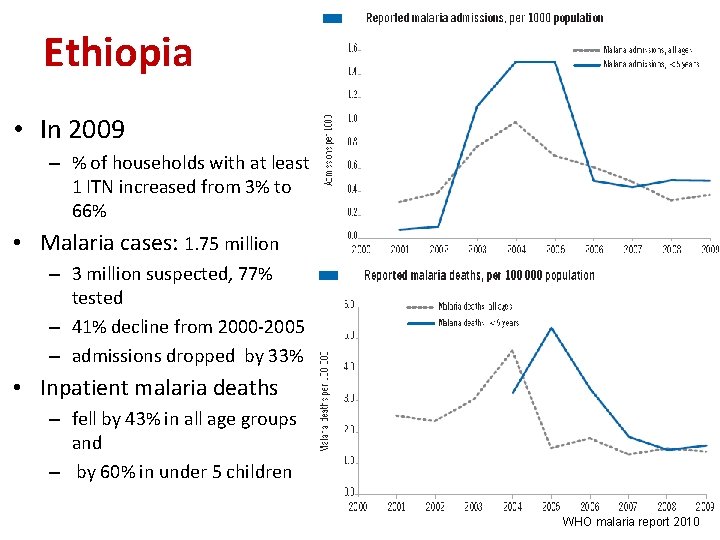
Ethiopia • In 2009 – % of households with at least 1 ITN increased from 3% to 66% • Malaria cases: 1. 75 million – 3 million suspected, 77% tested – 41% decline from 2000 -2005 – admissions dropped by 33% • Inpatient malaria deaths – fell by 43% in all age groups and – by 60% in under 5 children WHO malaria report 2010
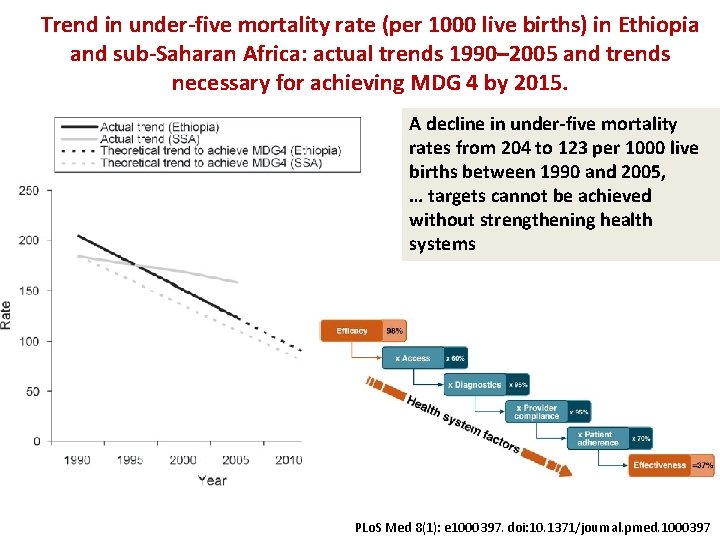
Trend in under-five mortality rate (per 1000 live births) in Ethiopia and sub-Saharan Africa: actual trends 1990– 2005 and trends necessary for achieving MDG 4 by 2015. A decline in under-five mortality rates from 204 to 123 per 1000 live births between 1990 and 2005, … targets cannot be achieved without strengthening health systems PLo. S Med 8(1): e 1000397. doi: 10. 1371/journal. pmed. 1000397
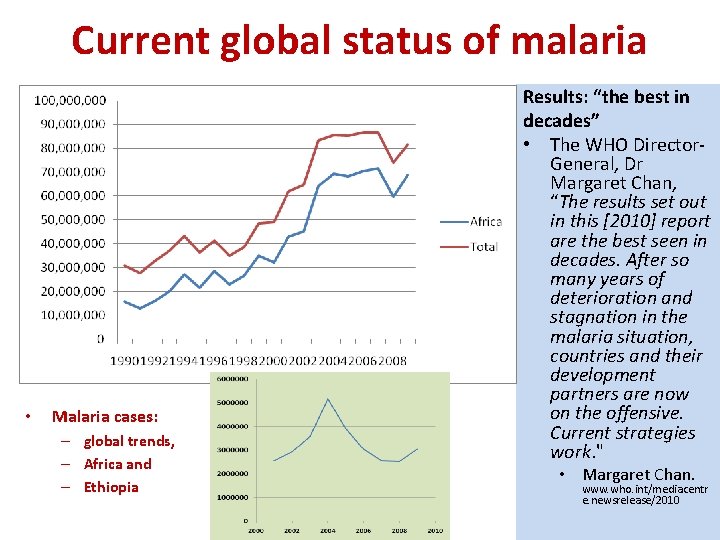
Current global status of malaria • Malaria cases: – global trends, – Africa and – Ethiopia Results: “the best in decades” • The WHO Director. General, Dr Margaret Chan, “The results set out in this [2010] report are the best seen in decades. After so many years of deterioration and stagnation in the malaria situation, countries and their development partners are now on the offensive. Current strategies work. " • Margaret Chan. www. who. int/mediacentr e. newsrelease/2010
World Malaria 2010 • WHO announced that with the reduction of malaria related deaths in Zambia to 66%, it has reached the 2010 roll back malaria target, just as UNICEF said malaria is responsible for 30% of childhood mortality and 11% maternal mortality in Nigeria. World Malaria Day 2010 http: //allafrica. com/stories/200904240159. html • More than a third of the 108 countries at risk of malaria (9 of them African and 29 non-African) documented reductions in malaria cases of over 50% in 2008, compared to 2000. UN MDG Report 2010
Malaria: current challenges and needs • Emergence of artemisinin resistance and – need for improved strategies to contain dissemination of resistant parasite strains – accelerated research into potential new drugs for firstline treatment. • New insecticides are urgently needed to replace those threatened by increased mosquito resistance • Accelerated development of vaccines remains a high priority. Lancet 2010; 376: 1566– 78
Elimination “A state where interventions have interrupted endemic transmission and limited onward transmission from imported infections below a threshold at which risk of re-establishment is minimized. Both capacity and commitment to sustain this status indefinitely are required. ” Cohen JM, Moonen B, Snow RW, Smith DL. How absolute is zero? An evaluation of historical and current defi nitions of malaria elimination. Malar J 2010; 9: 213.
Elimination: a three part strategy • A three-part strategy to eradicate malaria : 1. aggressive control in highly endemic countries, to achieve low transmission and mortality in countries that have the highest burden of disease and death; 2. progressive elimination of malaria from the endemic margins, to shrink the malaria map; 3. research into vaccines and improved drugs, diagnostics, insecticides, and other interventions, and into delivery methods that reach all at risk populations. Lancet 2010; 376: 1566– 78
Research partnership • Institutional strengthening – Universities – Health research institutes • Empowerment of the African partners – National support – International funding • Operational research – TRAC – Ethiopian Experience • ISHRe. CA • PABIN (www. pabin. org)
Vaccines • Challenges in vaccine development – Limited understanding of immune correlates of protection – Organism extremely diverse and complicated • RTS, S vaccine – Surface protein found in form of parasite injected by mosquitoes conjugated to Hep B surface Ag – Pilot study in 360 Gambian men: • 34% efficacy in protecting against malaria infection but • waned to 0% by 15 weeks – 1500 children in Mozambique: • 30% reduction in clinical malaria and • 58% reduction in severe malaria after 6 months – Entering Phase III trial
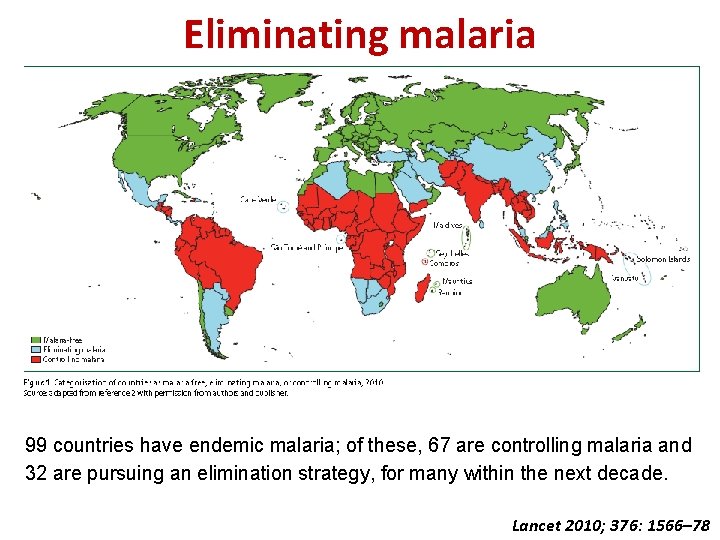
Eliminating malaria 99 countries have endemic malaria; of these, 67 are controlling malaria and 32 are pursuing an elimination strategy, for many within the next decade. Lancet 2010; 376: 1566– 78
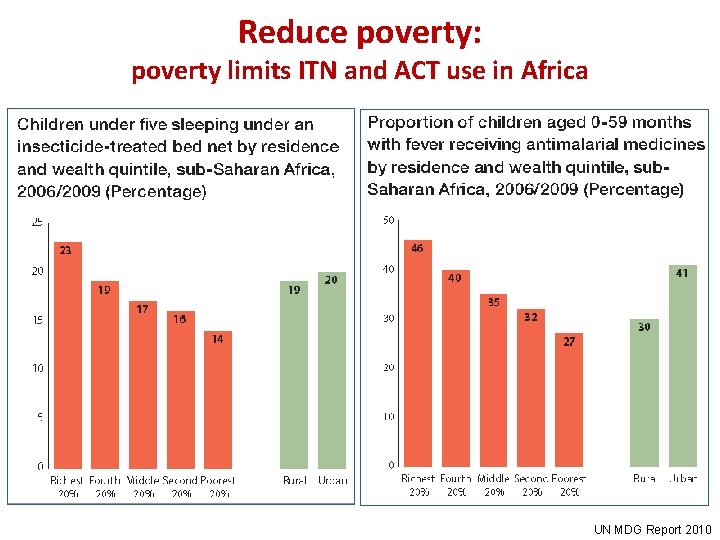
Reduce poverty: poverty limits ITN and ACT use in Africa UN MDG Report 2010
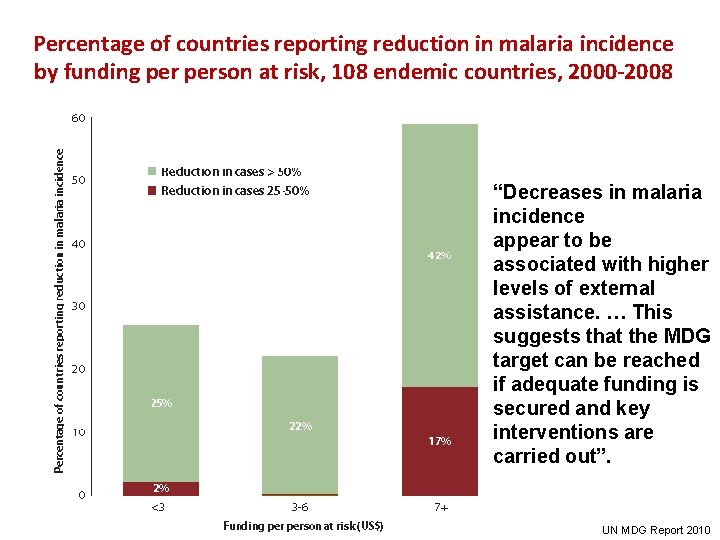
Funding • Annual funding for malaria control has increased at least 10 -fold during the last 15 years. – 80 % of external funds targeted Africa • Global resource requirements for malaria control ―Needed: 5 billion USD/yr between 2010 and 2015 (Global Malaria Action Plan estimate) ―Committed in 2010 = US$ 1. 8 billion. ―Gap: resources will have to increase to more than $3. 5 billion annually to meet the MDGs for malaria control targets (GFTAM estimate). Much more partnership work yet to be done to maintain, scale up and sustain progress
Percentage of countries reporting reduction in malaria incidence by funding person at risk, 108 endemic countries, 2000 -2008 “Decreases in malaria incidence appear to be associated with higher levels of external assistance. … This suggests that the MDG target can be reached if adequate funding is secured and key interventions are carried out”. UN MDG Report 2010
Thank you