
State of efficiency in the WASH sector Status
- Slides: 13
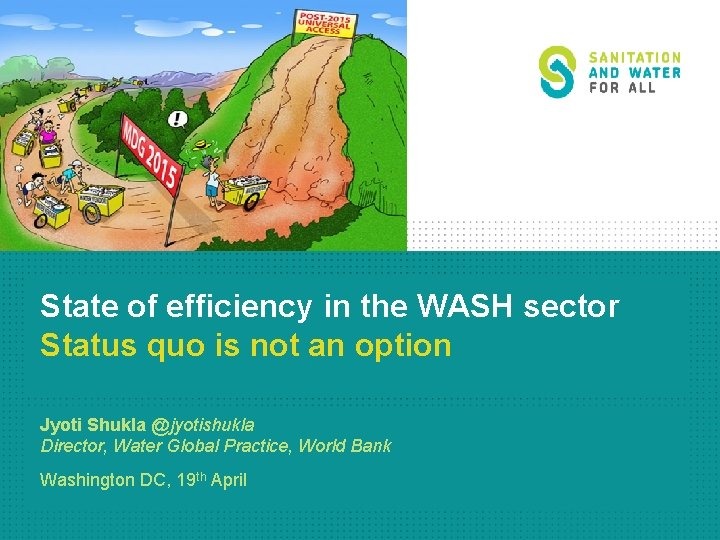
State of efficiency in the WASH sector Status quo is not an option Jyoti Shukla @jyotishukla Director, Water Global Practice, World Bank Washington DC, 19 th April
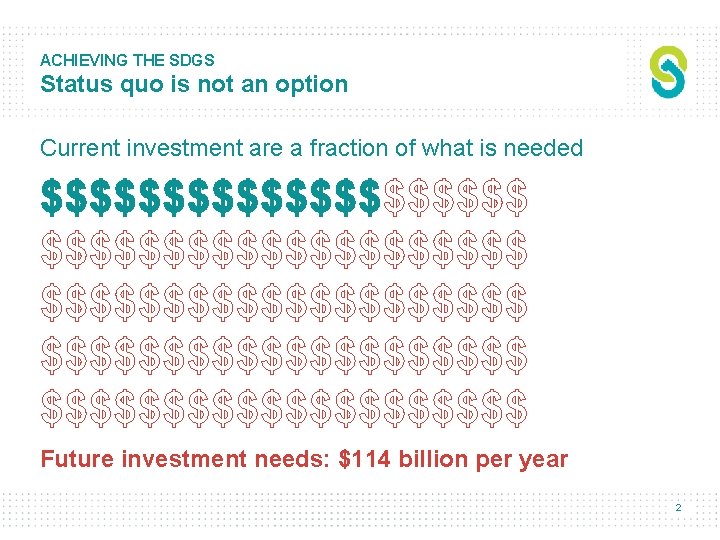
ACHIEVING THE SDGS Status quo is not an option Current investment are a fraction of what is needed $$$$$$$$$$$$$$$$$$$$ $$$$$$$$$$ Future investment needs: $114 billion per year 2
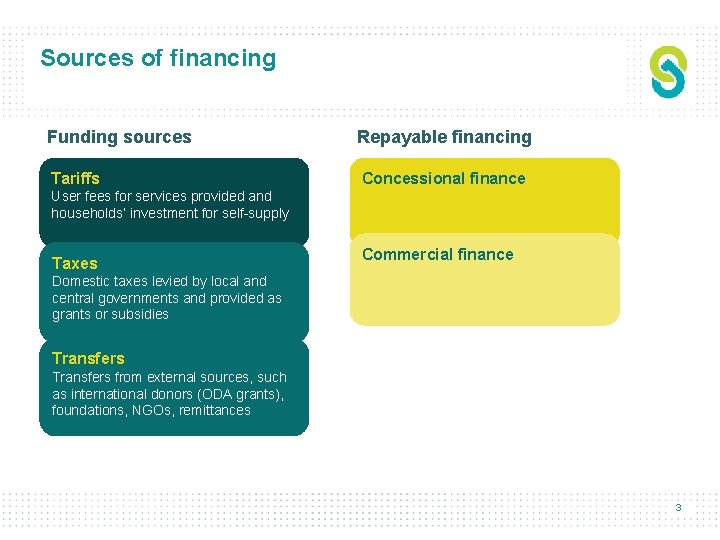
Sources of financing Funding sources Repayable financing Tariffs Concessional finance User fees for services provided and households’ investment for self-supply Taxes Commercial finance Domestic taxes levied by local and central governments and provided as grants or subsidies Transfers from external sources, such as international donors (ODA grants), foundations, NGOs, remittances 3
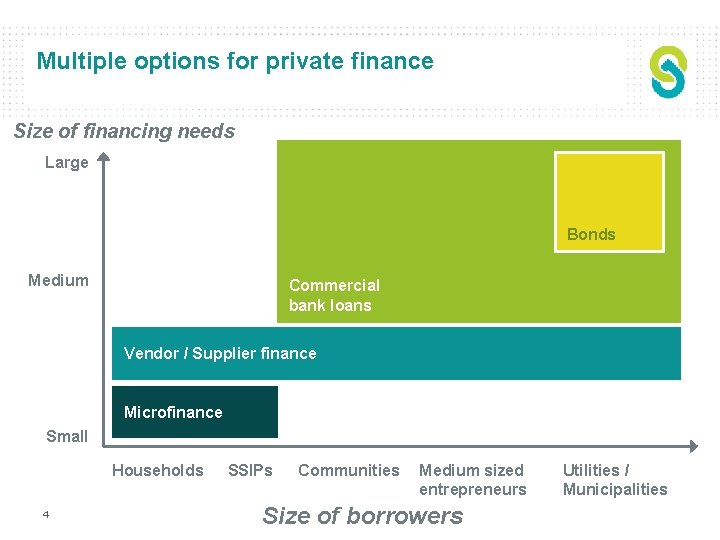
Multiple options for private finance Size of financing needs Large Bonds Medium Commercial bank loans Vendor / Supplier finance Microfinance Small Households 4 SSIPs Communities Medium sized entrepreneurs Size of borrowers Utilities / Municipalities
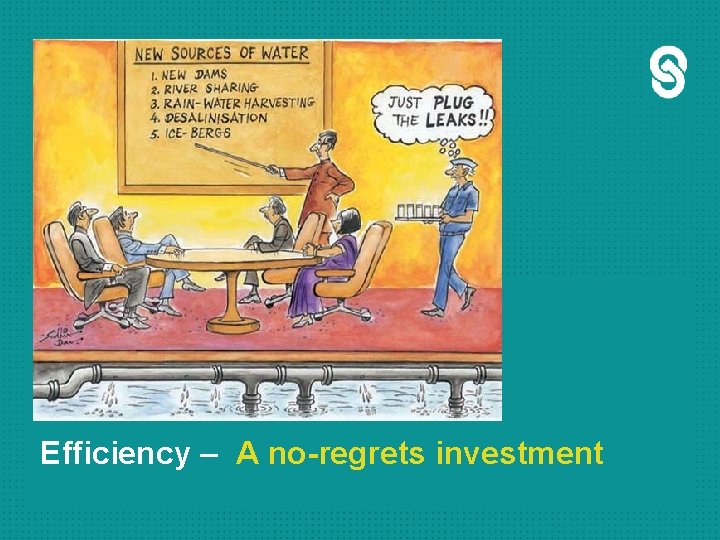
Efficiency – A no-regrets investment
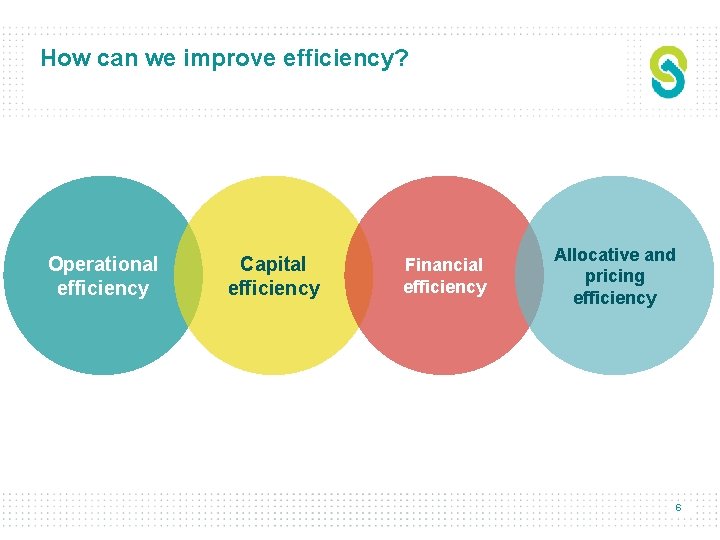
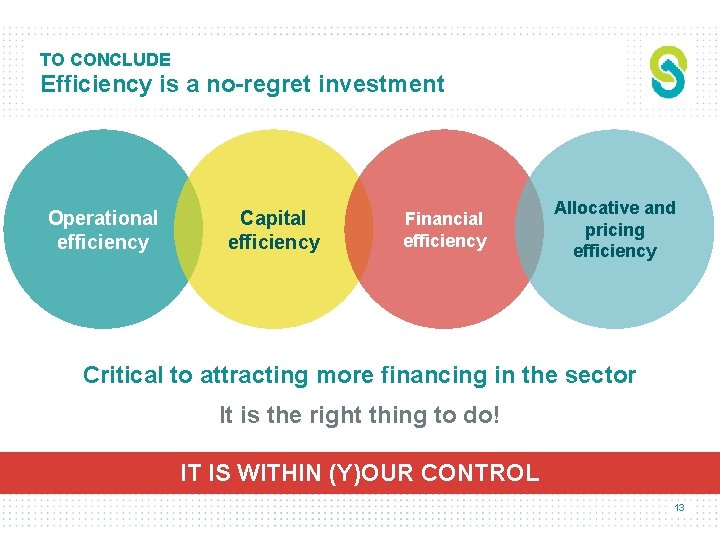
How can we improve efficiency? Operational efficiency Capital efficiency Financial efficiency Allocative and pricing efficiency 6
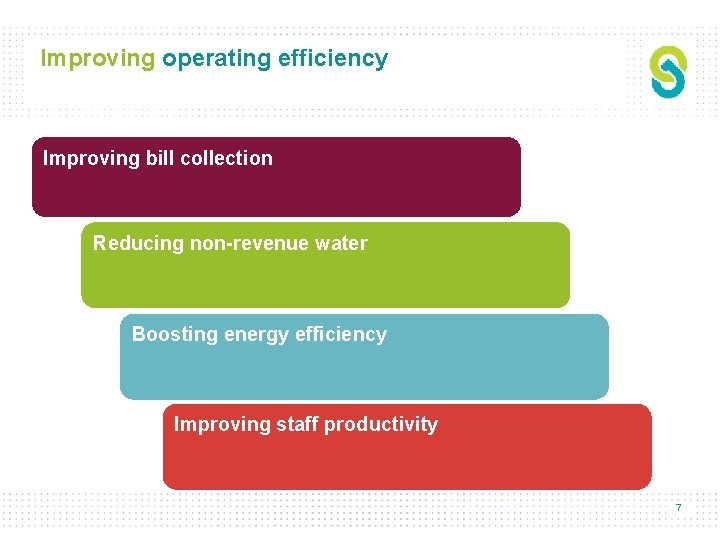
Improving operating efficiency Improving bill collection Reducing non-revenue water Boosting energy efficiency Improving staff productivity 7
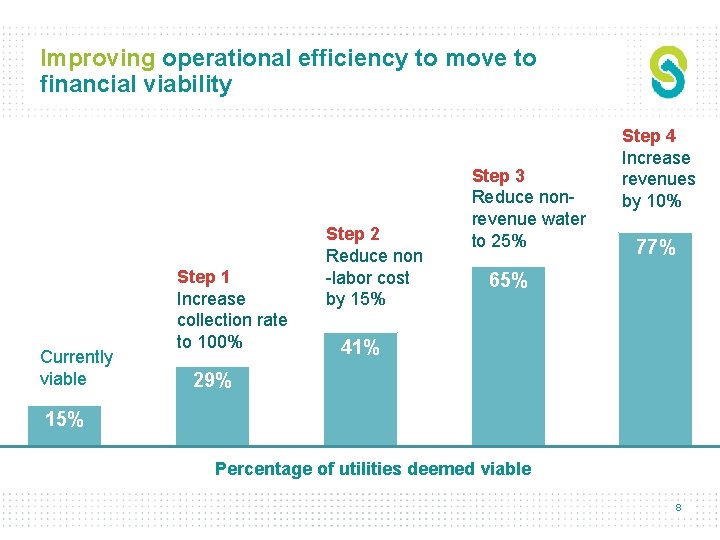
Improving operational efficiency to move to financial viability Currently viable Step 1 Increase collection rate to 100% Step 2 Reduce non -labor cost by 15% Step 3 Reduce nonrevenue water to 25% Step 4 Increase revenues by 10% 77% 65% 41% 29% 15% Percentage of utilities deemed viable 8
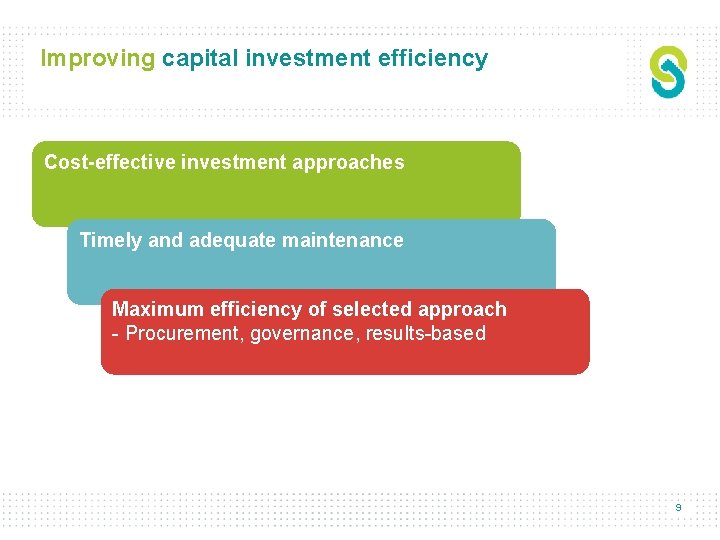
Improving capital investment efficiency Cost-effective investment approaches Timely and adequate maintenance Maximum efficiency of selected approach - Procurement, governance, results-based 9
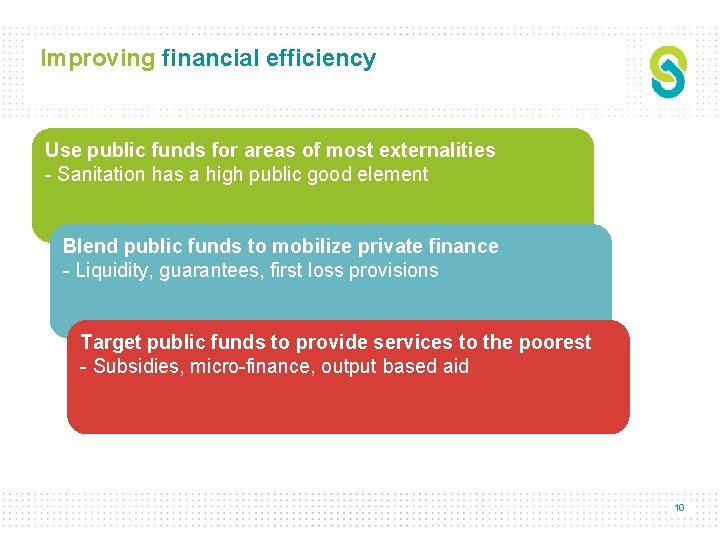
Improving financial efficiency Use public funds for areas of most externalities - Sanitation has a high public good element Blend public funds to mobilize private finance - Liquidity, guarantees, first loss provisions Target public funds to provide services to the poorest - Subsidies, micro-finance, output based aid 10
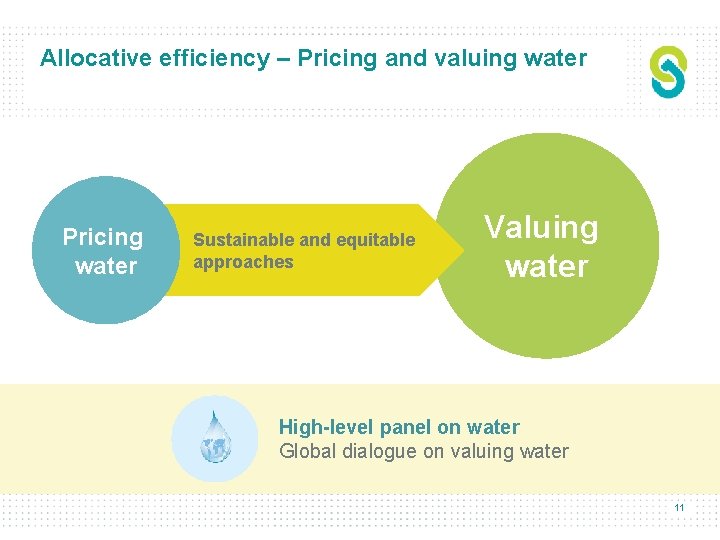
Allocative efficiency – Pricing and valuing water Pricing water Sustainable and equitable approaches Valuing water High-level panel on water Global dialogue on valuing water 11
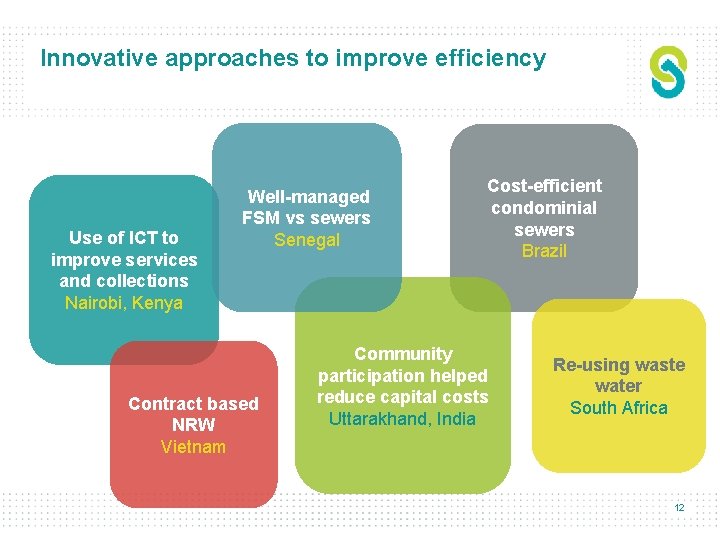
Innovative approaches to improve efficiency Use of ICT to improve services and collections Nairobi, Kenya Well-managed FSM vs sewers Senegal Contract based NRW Vietnam Cost-efficient condominial sewers Brazil Community participation helped reduce capital costs Uttarakhand, India Re-using waste water South Africa 12
TO CONCLUDE Efficiency is a no-regret investment Operational efficiency Capital efficiency Financial efficiency Allocative and pricing efficiency Critical to attracting more financing in the sector It is the right thing to do! IT IS WITHIN (Y)OUR CONTROL 13