
state NCD control program STEPWISE Approach To Airway
- Slides: 20
state NCD control program STEPWISE Approach To Airway DISEASE Kerala COPD Control Initiative Dr. Latheesh K V, District program manager (nhm), kannur, 9946105496 dpmknr@gmail. com
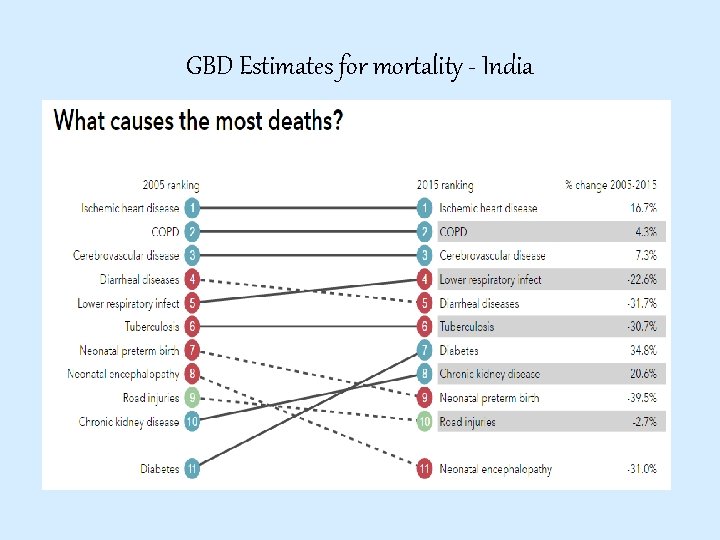
GBD Estimates for mortality - India
COPD Burden of Kerala • Studies shown 6 -10 % of total population • Scarcity of data • Estimated COPD cases in Kerala - 530, 000, Estimated Asthma patients among adults 480, 000. • Increased Life Expectancy – More COPD • There is no specific public health program for COPD in India or Kerala
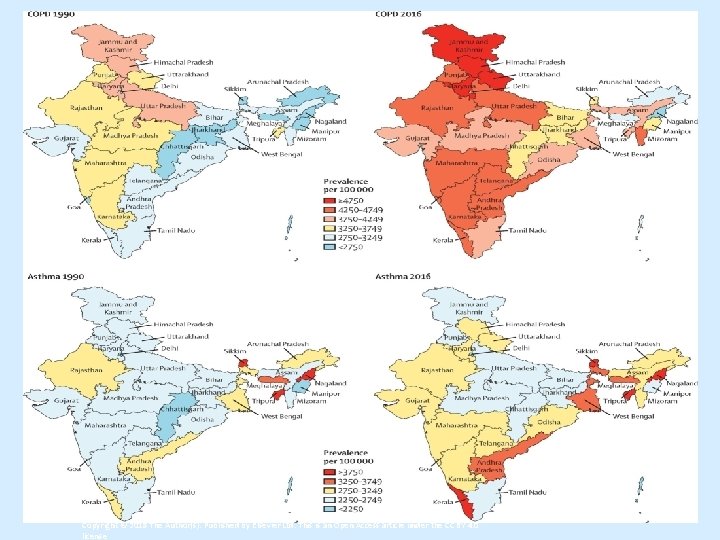
Figure 1 The Lancet Global Health 2018 6, e 1363 -e 1374 DOI: (10. 1016/S 2214 -109 X(18)30409 -1) Copyright © 2018 The Author(s). Published by Elsevier Ltd. This is an Open Access article under the CC BY 4. 0 license
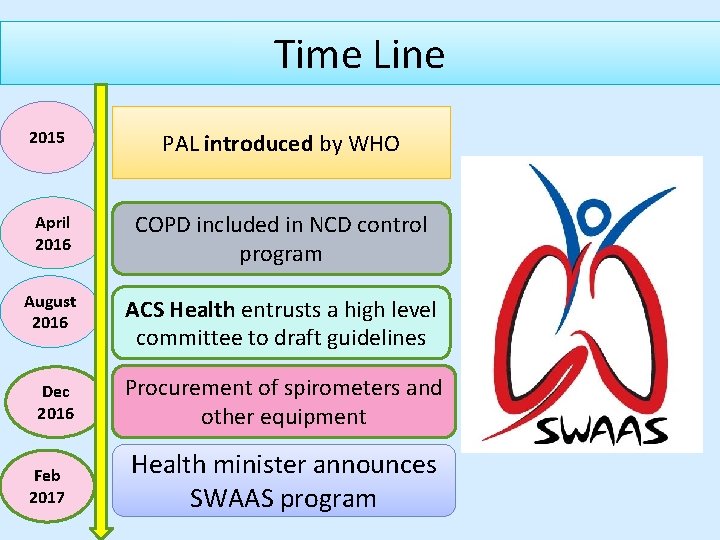
Time Line 2015 PAL introduced by WHO April 2016 COPD included in NCD control program August 2016 ACS Health entrusts a high level committee to draft guidelines Dec 2016 Procurement of spirometers and other equipment Feb 2017 Health minister announces SWAAS program
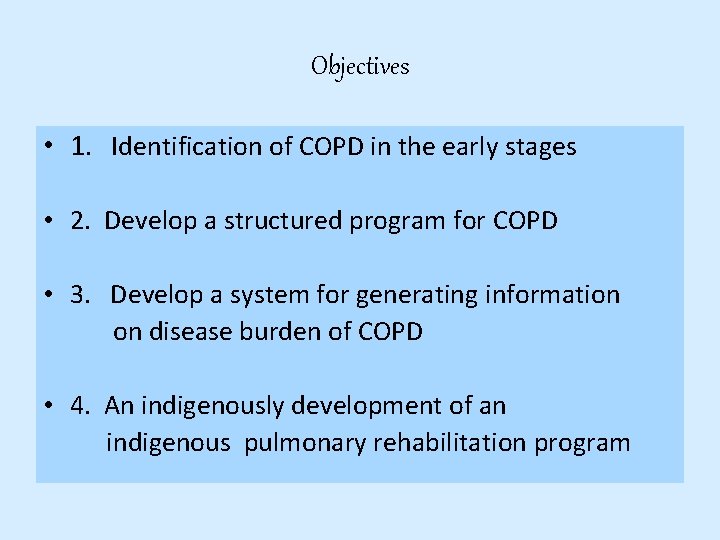
Objectives • 1. Identification of COPD in the early stages • 2. Develop a structured program for COPD • 3. Develop a system for generating information on disease burden of COPD • 4. An indigenously development of an indigenous pulmonary rehabilitation program
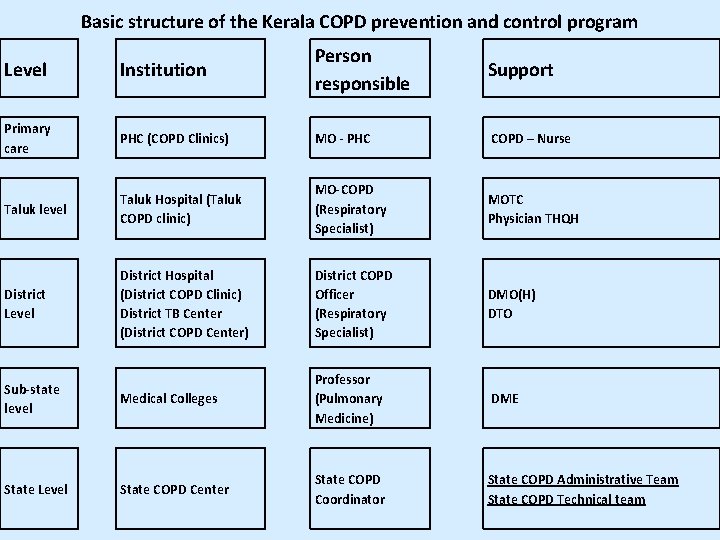
Basic structure of the Kerala COPD prevention and control program Level Institution Person responsible Support Primary care PHC (COPD Clinics) MO - PHC COPD – Nurse Taluk level Taluk Hospital (Taluk COPD clinic) MO-COPD (Respiratory Specialist) MOTC Physician THQH District Level District Hospital (District COPD Clinic) District TB Center (District COPD Center) District COPD Officer (Respiratory Specialist) DMO(H) DTO Sub-state level Medical Colleges Professor (Pulmonary Medicine) DME State Level State COPD Center State COPD Coordinator State COPD Administrative Team State COPD Technical team
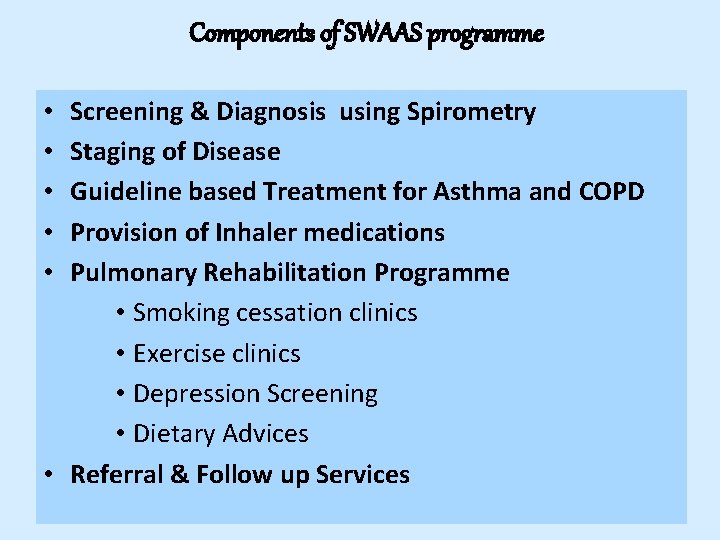
Components of SWAAS programme Screening & Diagnosis using Spirometry Staging of Disease Guideline based Treatment for Asthma and COPD Provision of Inhaler medications Pulmonary Rehabilitation Programme • Smoking cessation clinics • Exercise clinics • Depression Screening • Dietary Advices • Referral & Follow up Services • • •
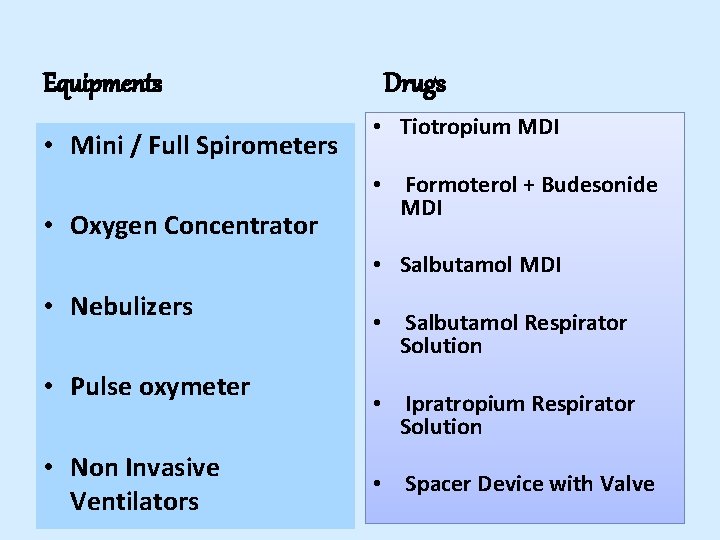
Equipments • Mini / Full Spirometers • Oxygen Concentrator Drugs • Tiotropium MDI • Formoterol + Budesonide MDI • Salbutamol MDI • Nebulizers • Pulse oxymeter • Non Invasive Ventilators • Salbutamol Respirator Solution • Ipratropium Respirator Solution • Spacer Device with Valve
Materials Developed • SWAAS Operational Guidelines • SWAAS Module for Medical Officers • SWAAS Module for Staff Nurses • SWAAS Registers, Reporting Formats and SWAAS Diary for Patients • SWAAS Training Demonstration Videos
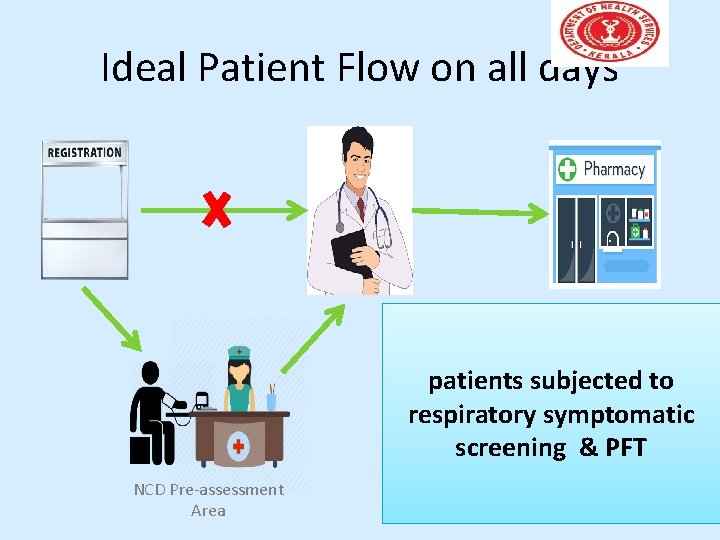
Ideal Patient Flow on all days patients subjected to respiratory symptomatic screening & PFT NCD Pre-assessment Area
Patient flow in SWAAS clinic ØIdentification of Respiratory symptomatic ØMedical Officer will identify patients who requires PFT & schedule an appointment for PFT ØAfter diagnosis medications will be started by M. O as per guidelines ØInhaler technique demonstration , smoking cessation advice and breathing exercise training ØReferring to concerned Sub centre for follow up
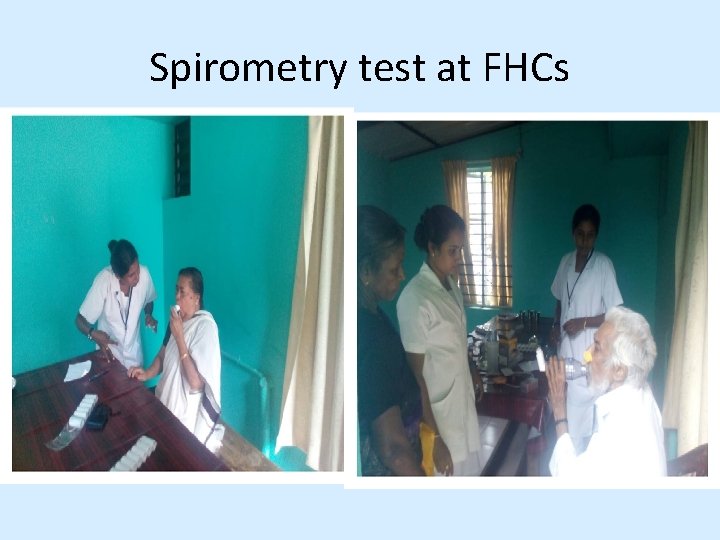
Spirometry test at FHCs
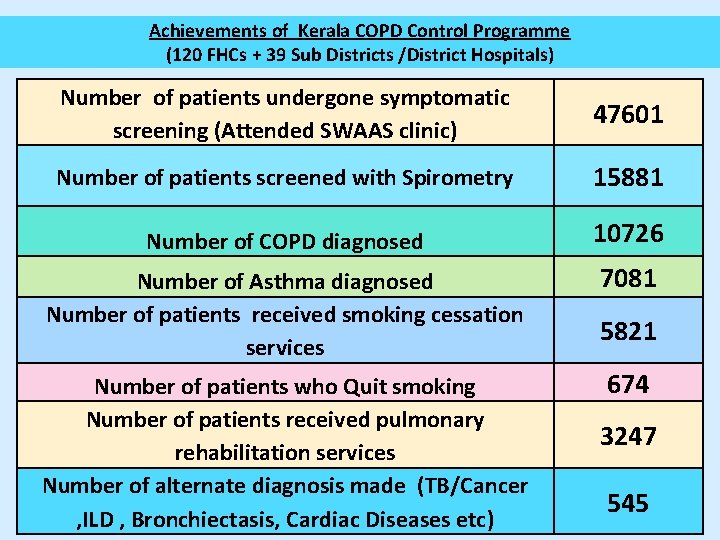
Achievements of Kerala COPD Control Programme (120 FHCs + 39 Sub Districts /District Hospitals) Number of patients undergone symptomatic screening (Attended SWAAS clinic) 47601 Number of patients screened with Spirometry 15881 Number of COPD diagnosed 10726 Number of Asthma diagnosed Number of patients received smoking cessation services 7081 Number of patients who Quit smoking Number of patients received pulmonary rehabilitation services Number of alternate diagnosis made (TB/Cancer , ILD , Bronchiectasis, Cardiac Diseases etc) 674 5821 3247 545
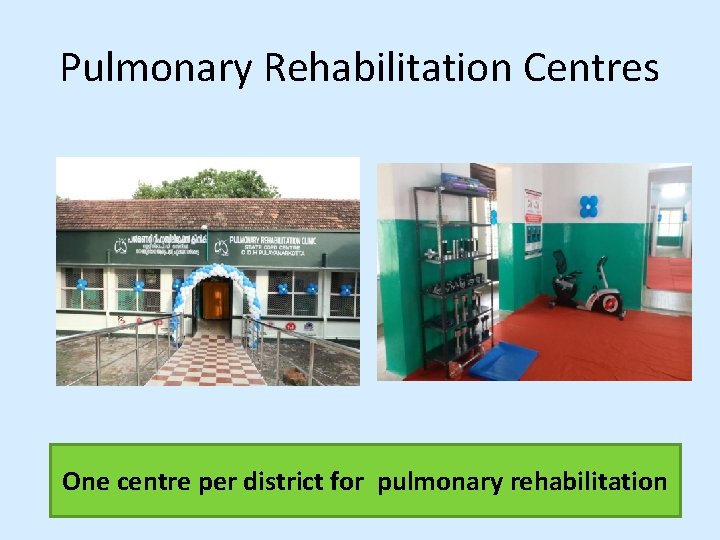
Pulmonary Rehabilitation Centres One centre per district for pulmonary rehabilitation
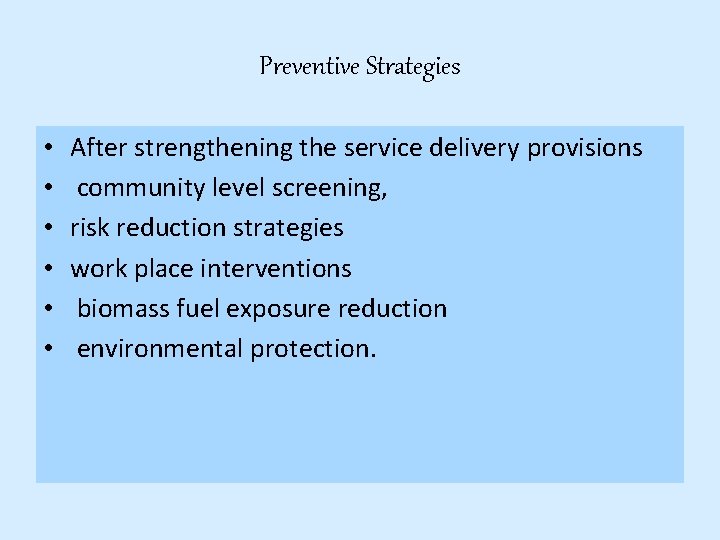
Preventive Strategies • • • After strengthening the service delivery provisions community level screening, risk reduction strategies work place interventions biomass fuel exposure reduction environmental protection.
Scope of the Programme • • • Early diagnosis Standard Treatment Improving Quality of life of Patients Alternate Diagnosis Focus on Risk reduction
Evaluation by an Independent agency major findings • Among the patients registered at FHCs, 98% of the symptomatic patients undergone spirometry. • The average number of visits per patient to health centre for taking injectable drugs and for nebulisation was significantly decreased
Conclusion • The overall experience shows a feasible model in the field of Airway Diseases Control • Decentralised planning and policies, Pooling of resources , Multisectoral coordination and Strict Monitoring & Evaluation aids sustainability
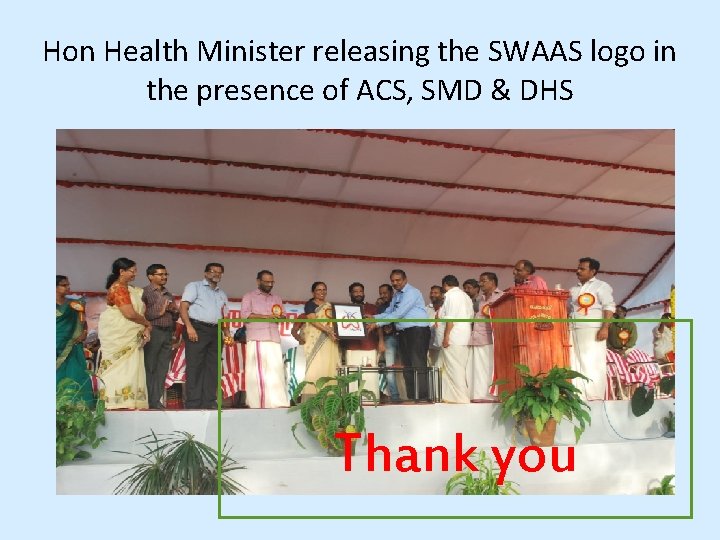
Hon Health Minister releasing the SWAAS logo in the presence of ACS, SMD & DHS Thank you