
state Maternal Mortality Review Committee Member Orientation Objectives
<state> Maternal Mortality Review Committee Member Orientation
Objectives • Review and define key terms • Provide an overview of the maternal mortality review history and data • Discuss the authorities and protections in place for maternal death review • Understand the Maternal Mortality Review Committee (MMRC) process • Provide an overview of Maternal Mortality Review Information Application (MMRIA) • Review the MMRC roles and member responsibilities • Discuss the MMRC Timeline/First Meeting/Next Steps

Key Definitions
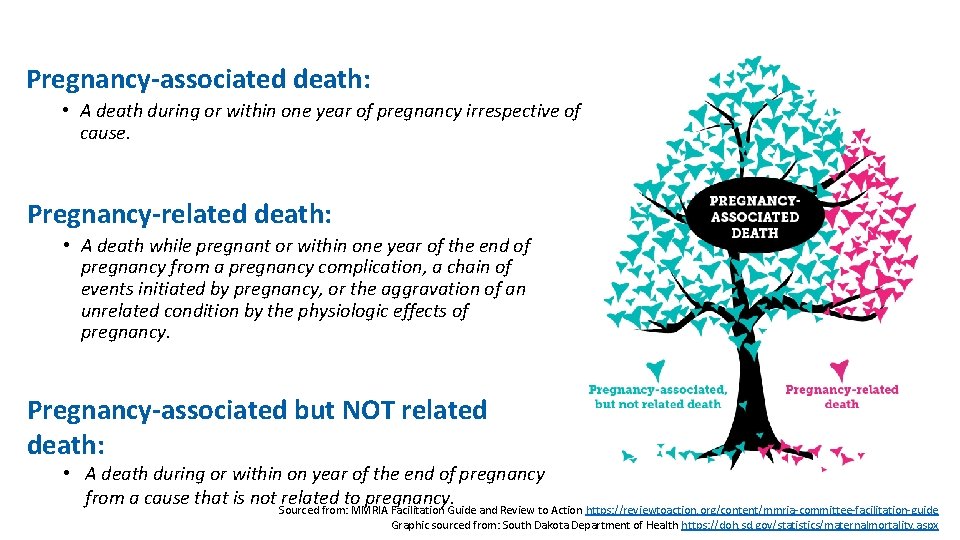
Pregnancy-associated death: • A death during or within one year of pregnancy irrespective of cause. Pregnancy-related death: • A death while pregnant or within one year of the end of pregnancy from a pregnancy complication, a chain of events initiated by pregnancy, or the aggravation of an unrelated condition by the physiologic effects of pregnancy. Pregnancy-associated but NOT related death: • A death during or within on year of the end of pregnancy from a cause that is not related to pregnancy. Sourced from: MMRIA Facilitation Guide and Review to Action https: //reviewtoaction. org/content/mmria-committee-facilitation-guide Graphic sourced from: South Dakota Department of Health https: //doh. sd. gov/statistics/maternalmortality. aspx
Maternal Mortality Review History and Data (enter corresponding slides, as appropriate)
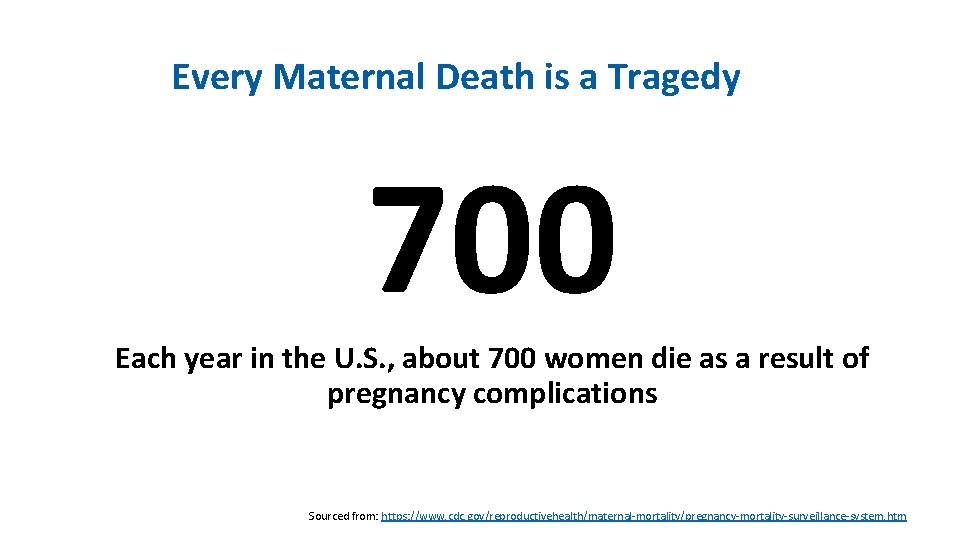
Every Maternal Death is a Tragedy 700 Each year in the U. S. , about 700 women die as a result of pregnancy complications Sourced from: https: //www. cdc. gov/reproductivehealth/maternal-mortality/pregnancy-mortality-surveillance-system. htm
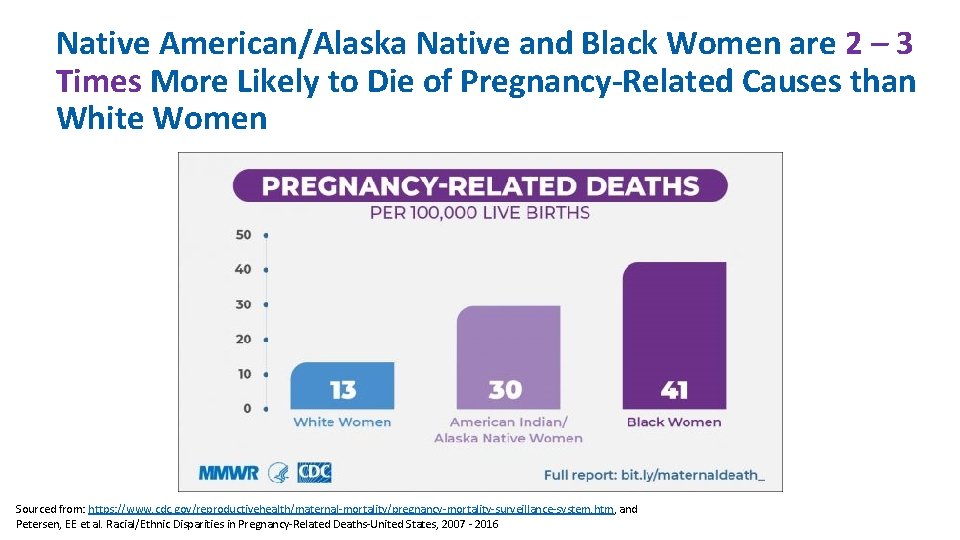
Native American/Alaska Native and Black Women are 2 – 3 Times More Likely to Die of Pregnancy-Related Causes than White Women Sourced from: https: //www. cdc. gov/reproductivehealth/maternal-mortality/pregnancy-mortality-surveillance-system. htm, and Petersen, EE et al. Racial/Ethnic Disparities in Pregnancy-Related Deaths-United States, 2007 - 2016
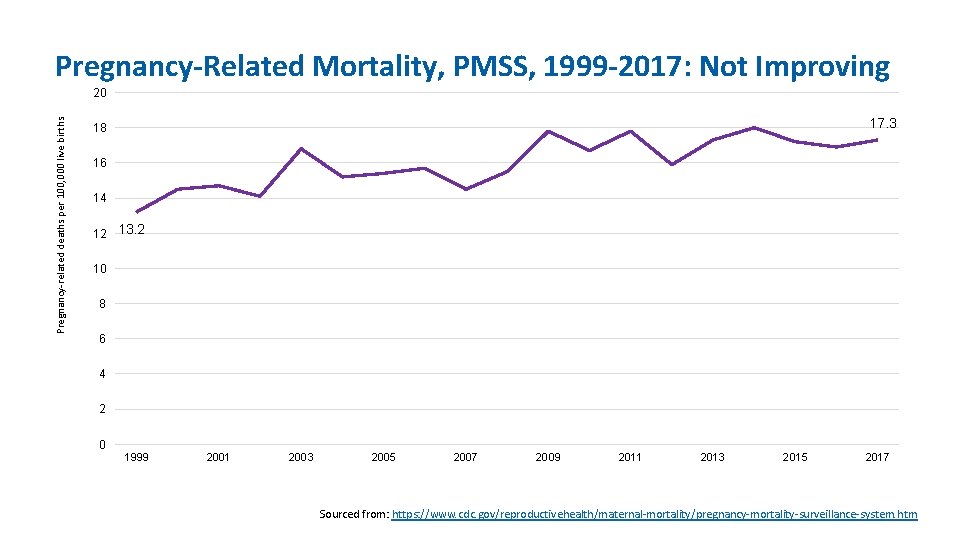
Pregnancy-Related Mortality, PMSS, 1999 -2017: Not Improving Pregnancy-related deaths per 100, 000 live births 20 17. 3 18 16 14 12 13. 2 10 8 6 4 2 0 1999 2001 2003 2005 2007 2009 2011 2013 2015 2017 Sourced from: https: //www. cdc. gov/reproductivehealth/maternal-mortality/pregnancy-mortality-surveillance-system. htm
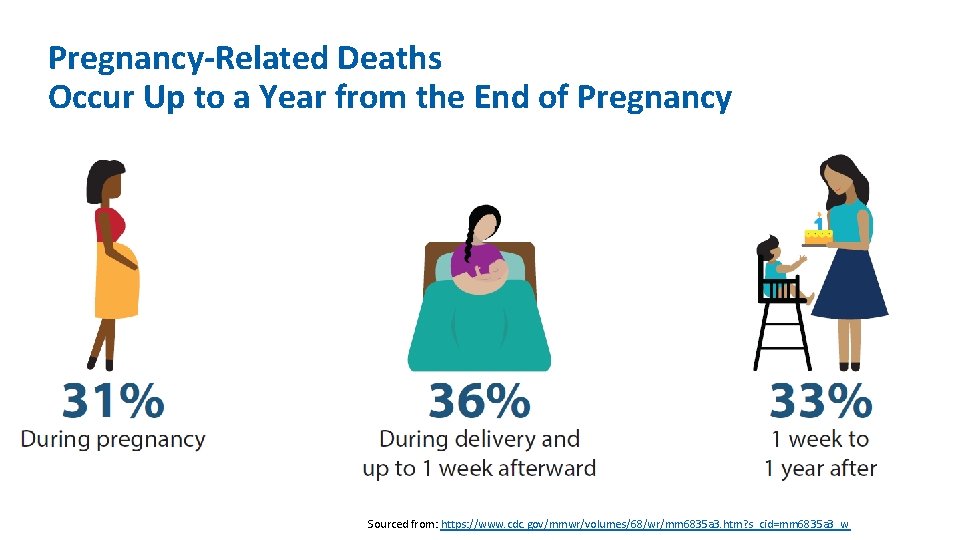
Pregnancy-Related Deaths Occur Up to a Year from the End of Pregnancy Sourced from: https: //www. cdc. gov/mmwr/volumes/68/wr/mm 6835 a 3. htm? s_cid=mm 6835 a 3_w
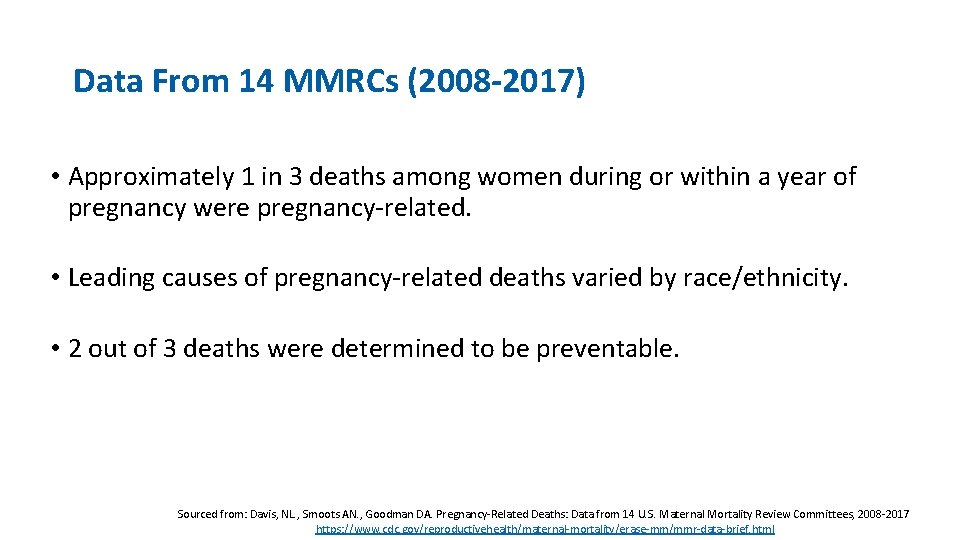
Data From 14 MMRCs (2008 -2017) • Approximately 1 in 3 deaths among women during or within a year of pregnancy were pregnancy-related. • Leading causes of pregnancy-related deaths varied by race/ethnicity. • 2 out of 3 deaths were determined to be preventable. Sourced from: Davis, NL. , Smoots AN. , Goodman DA. Pregnancy-Related Deaths: Data from 14 U. S. Maternal Mortality Review Committees, 2008 -2017 https: //www. cdc. gov/reproductivehealth/maternal-mortality/erase-mm/mmr-data-brief. html

<state>-specific Data Enter corresponding slides from recent analyses and reports, see notes for further consideration on state-specific data to present, as relevant
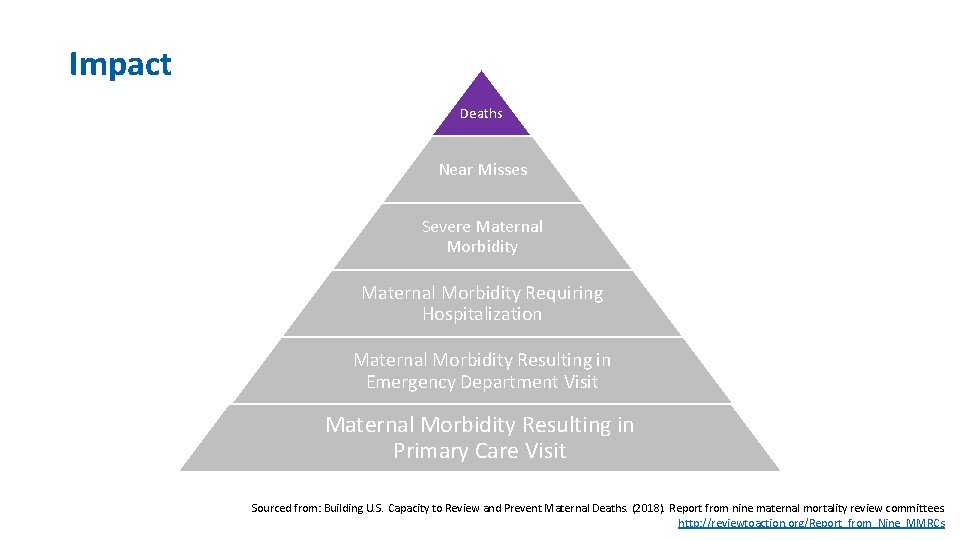
Impact Deaths Near Misses Severe Maternal Morbidity Requiring Hospitalization Maternal Morbidity Resulting in Emergency Department Visit Maternal Morbidity Resulting in Primary Care Visit Sourced from: Building U. S. Capacity to Review and Prevent Maternal Deaths. (2018). Report from nine maternal mortality review committees. http: //reviewtoaction. org/Report_from_Nine_MMRCs
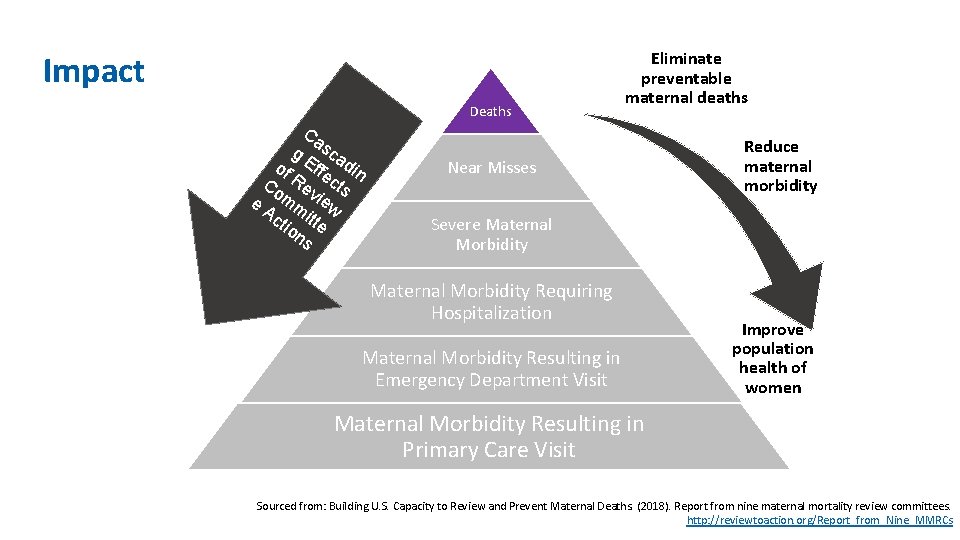
Impact Deaths Ca g sca of Effe din Co Rev cts e mm iew Ac it tio te ns Eliminate preventable maternal deaths Near Misses Reduce maternal morbidity Severe Maternal Morbidity Requiring Hospitalization Maternal Morbidity Resulting in Emergency Department Visit Improve population health of women Maternal Morbidity Resulting in Primary Care Visit Sourced from: Building U. S. Capacity to Review and Prevent Maternal Deaths. (2018). Report from nine maternal mortality review committees. http: //reviewtoaction. org/Report_from_Nine_MMRCs

Authorities and Protections (enter corresponding slides, as appropriate)
![Authorities and Protections The maternal mortality review is conducted pursuant to [§______] and Department](http://slidetodoc.com/presentation_image_h2/b016048e24a01834cdf108c032ea3186/image-15.jpg "Authorities and Protections The maternal mortality review is conducted pursuant to [§______] and Department")
Authorities and Protections The maternal mortality review is conducted pursuant to [§______] and Department of Public Health rules and regulations pertaining to the reporting of selected causes of mortality in <state>. The Department may have access to medical records of fatalities that occur in association with pregnancy or for up to one year from the end of pregnancy.

Overview of the Review Committee Process
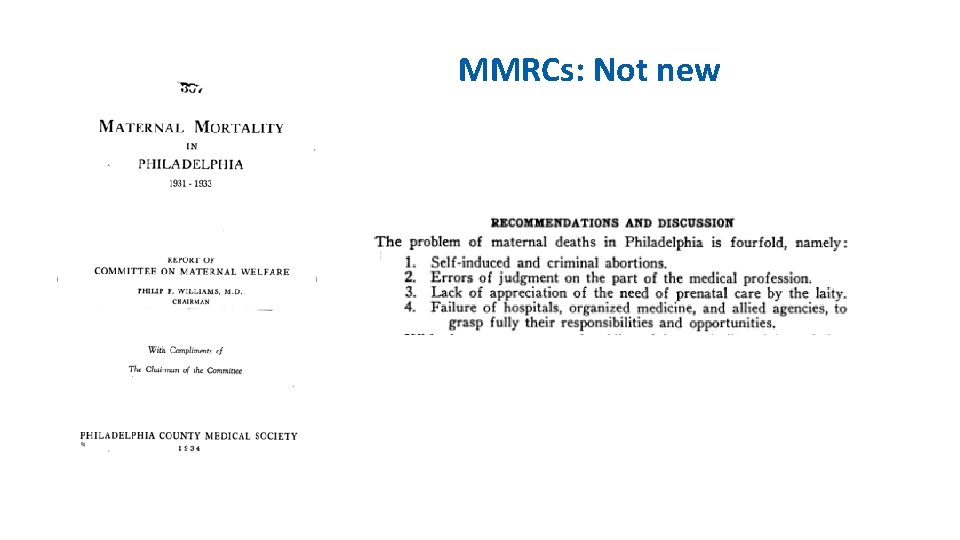
MMRCs: Not new
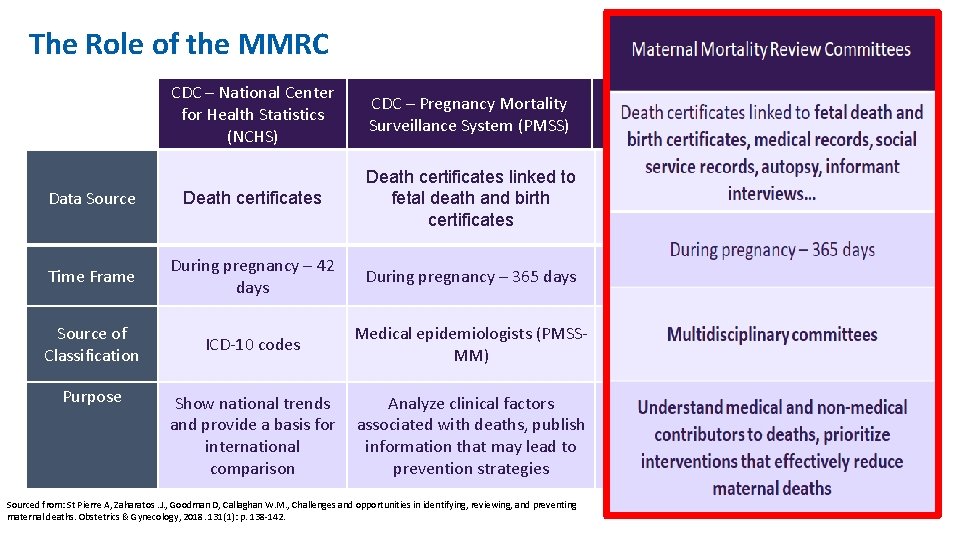
The Role of the MMRC CDC – National Center for Health Statistics (NCHS) CDC – Pregnancy Mortality Surveillance System (PMSS) Maternal Mortality Review Committees Data Source Death certificates linked to fetal death and birth certificates, medical records, social service records, autopsy, informant interviews… Time Frame During pregnancy – 42 days During pregnancy – 365 days Source of Classification ICD-10 codes Medical epidemiologists (PMSSMM) Multidisciplinary committees Show national trends and provide a basis for international comparison Analyze clinical factors associated with deaths, publish information that may lead to prevention strategies Understand medical and non-medical contributors to deaths, prioritize interventions that effectively reduce maternal deaths Purpose Sourced from: St Pierre A, Zaharatos. J. , Goodman D, Callaghan W. M. , Challenges and opportunities in identifying, reviewing, and preventing maternal deaths. Obstetrics & Gynecology, 2018. 131(1): p. 138 -142.
Understanding the Data • MMRC-reported pregnancy-related mortality ratios are the most accurate source for state data. • The Pregnancy Mortality Surveillance System is the source of a national pregnancy-related mortality ratio. Sourced from: St Pierre A, Zaharatos J, Goodman D, Callaghan WM. Challenges and Opportunities in Identifying, Reviewing, and Preventing Maternal Deaths. Obstet Gynecol. 2018; 131(1): 138– 142.
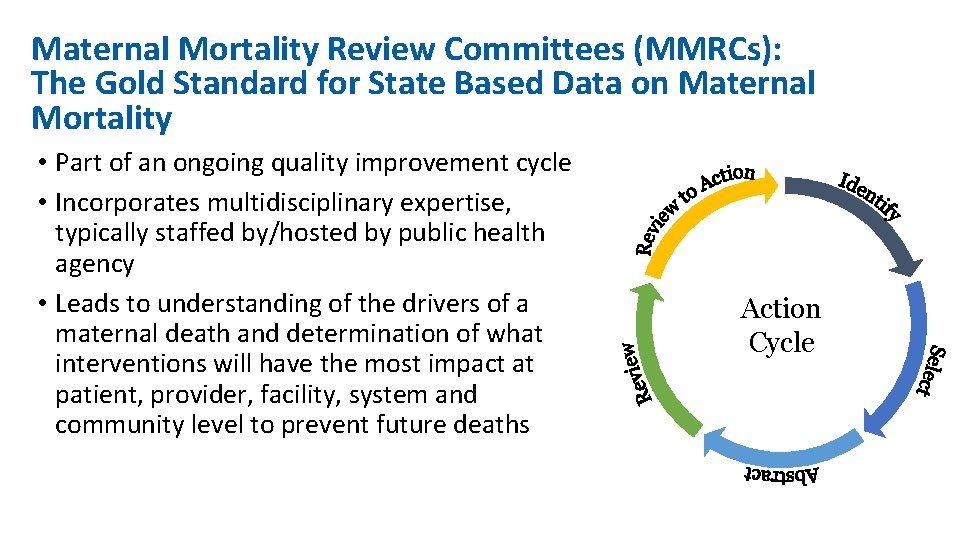
Maternal Mortality Review Committees (MMRCs): The Gold Standard for State Based Data on Maternal Mortality • Part of an ongoing quality improvement cycle • Incorporates multidisciplinary expertise, typically staffed by/hosted by public health agency • Leads to understanding of the drivers of a maternal death and determination of what interventions will have the most impact at patient, provider, facility, system and community level to prevent future deaths Action Cycle
Maternal Mortality Review… IS IS NOT • Ongoing anonymous and confidential process of data collection, analysis, interpretation and action • Systematic process guided by policies, statutes, rules, etc. • Intended to move from data collection to prevention activities • A mechanism for assigning blame or responsibility for any death • A research study • Peer review • An institutional review • A substitute for existing mortality and morbidity inquiries Sourced from: Berg, C. , Danel, I. , Atrash H. , Zane, S. Bartlett, L. (Eds. ). Strategies to reduce pregnancy-related deaths: From identification and review to action. Atlanta: Centers for Disease Control and Prevention; 2001
Review to Action: www. reviewtoaction. org MMRC Example: Review of a Cardiomyopathy Death www. reviewtoaction. org/mock-panel
<state> MMRC Scope, Mission, and Vision Scope <or edit>: To review all pregnancyassociated deaths of persons with indication of pregnancy up to 365 days, regardless of cause. Mission <or edit>: To identify pregnancyassociated deaths, review those caused by pregnancy complications and other associated causes, and identify the factors contributing to these deaths and recommend public health and clinical interventions that may reduce these deaths and improve systems of care. Vision <or edit>: The Maternal Mortality Review Committee’s vision is to eliminate preventable maternal deaths, reduce maternal morbidities, and improve population health for those of reproductive age. Sourced from: MMRIA Facilitation Guide https: //reviewtoaction. org/content/committee-facilitation-guide
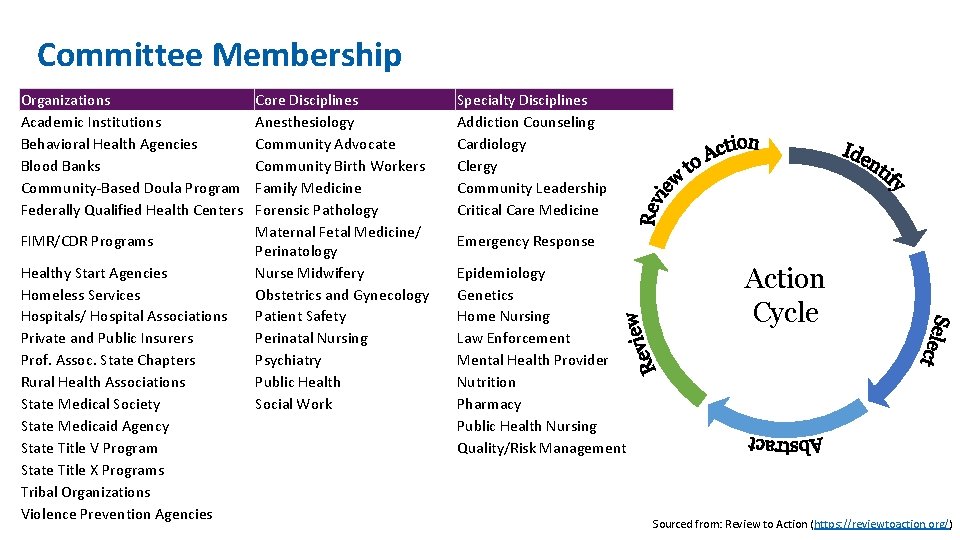
Committee Membership Organizations Academic Institutions Behavioral Health Agencies Blood Banks Community-Based Doula Program Federally Qualified Health Centers FIMR/CDR Programs Healthy Start Agencies Homeless Services Hospitals/ Hospital Associations Private and Public Insurers Prof. Assoc. State Chapters Rural Health Associations State Medical Society State Medicaid Agency State Title V Program State Title X Programs Tribal Organizations Violence Prevention Agencies Core Disciplines Anesthesiology Community Advocate Community Birth Workers Family Medicine Forensic Pathology Maternal Fetal Medicine/ Perinatology Nurse Midwifery Obstetrics and Gynecology Patient Safety Perinatal Nursing Psychiatry Public Health Social Work Specialty Disciplines Addiction Counseling Cardiology Clergy Community Leadership Critical Care Medicine Emergency Response Epidemiology Genetics Home Nursing Law Enforcement Mental Health Provider Nutrition Pharmacy Public Health Nursing Quality/Risk Management Action Cycle Sourced from: Review to Action (https: //reviewtoaction. org/)
<state> Confidentiality Guidance Enter corresponding slides, as appropriate Sourced from: https: //reviewtoaction. org/content/mmrc-policies-procedures-0
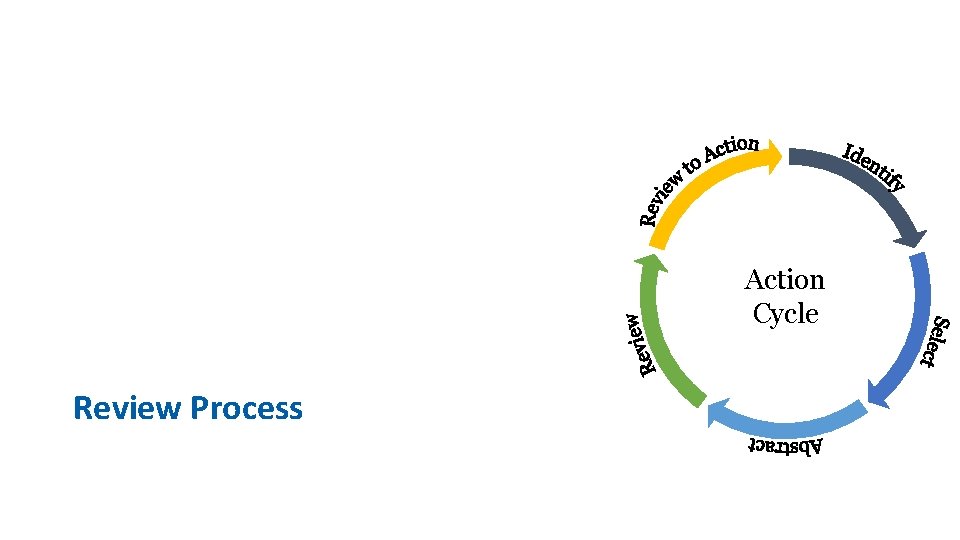
Action Cycle Review Process
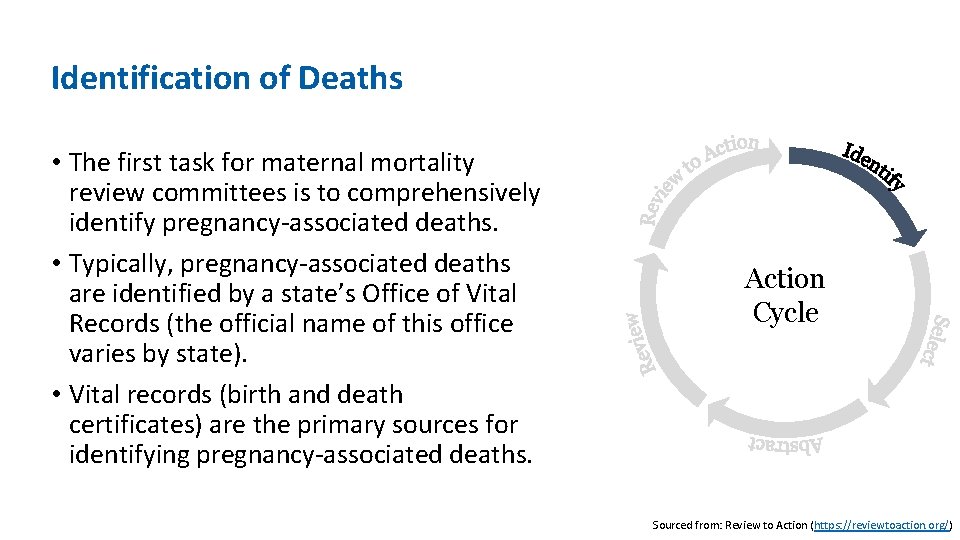
Identification of Deaths • The first task for maternal mortality review committees is to comprehensively identify pregnancy-associated deaths. • Typically, pregnancy-associated deaths are identified by a state’s Office of Vital Records (the official name of this office varies by state). • Vital records (birth and death certificates) are the primary sources for identifying pregnancy-associated deaths. Action Cycle Sourced from: Review to Action (https: //reviewtoaction. org/)
Identification Best Practices Vital Record Linkage (maternal death and birth or fetal death) • Death certificates linked with birth and fetal death certificates for year prior to death • Death records should be selected for linkage if they are for: • Women ages 10 – 60 years and residents of the state, regardless of where the death occurred • Death certificates that did not link, but have pregnancy checkbox marked, or contain ICD-10 O codes or select key words (e. g. , amniotic, eclampsia) Additional sources: • • Linkage of deaths to hospital discharge records (pregnancy codes) Hospital reporting Social media Obituaries Sourced from: Reference Guide for Pregnancy-Associated Death Identification https: //reviewtoaction. org/content/pregnancy-associated-deaths-brief-case-review

Selection of Deaths for Review • Jurisdictions determine their scope based on available resources. • Some jurisdictions may limit to cases most likely to be causally related to pregnancy (i. e. may exclude motor vehicle deaths from reviews). Action Cycle Sourced from: Review to Action (https: //reviewtoaction. org/)
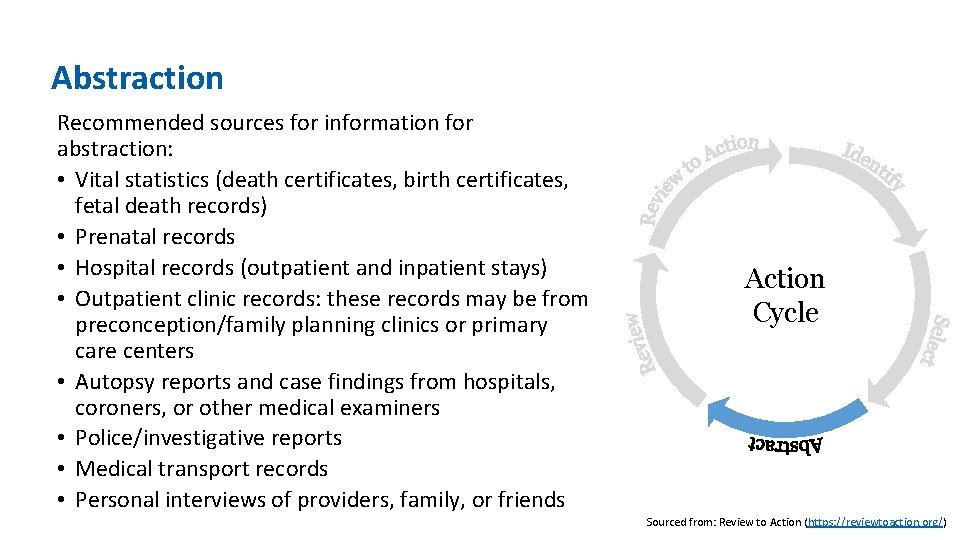
Abstraction Recommended sources for information for abstraction: • Vital statistics (death certificates, birth certificates, fetal death records) • Prenatal records • Hospital records (outpatient and inpatient stays) • Outpatient clinic records: these records may be from preconception/family planning clinics or primary care centers • Autopsy reports and case findings from hospitals, coroners, or other medical examiners • Police/investigative reports • Medical transport records • Personal interviews of providers, family, or friends Action Cycle Sourced from: Review to Action (https: //reviewtoaction. org/)
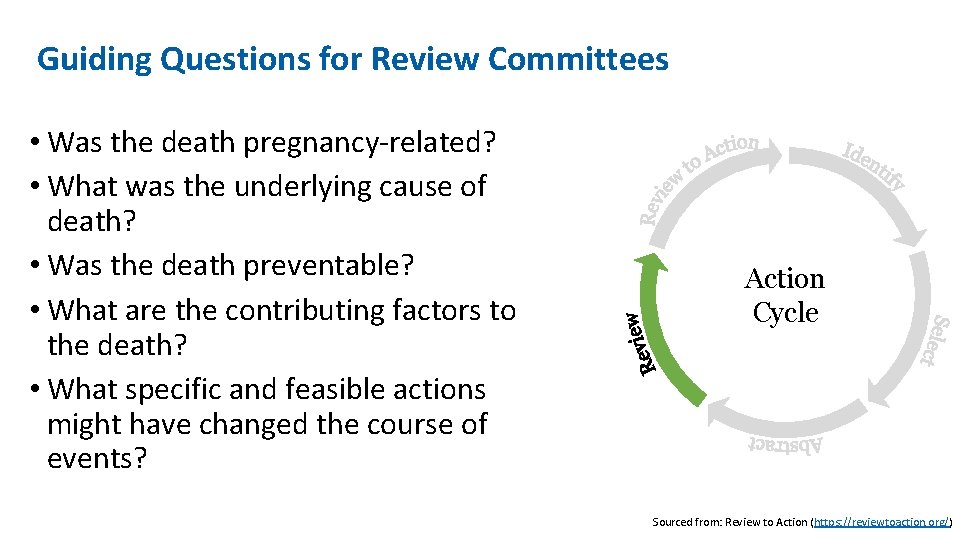
Guiding Questions for Review Committees • Was the death pregnancy-related? • What was the underlying cause of death? • Was the death preventable? • What are the contributing factors to the death? • What specific and feasible actions might have changed the course of events? Action Cycle Sourced from: Review to Action (https: //reviewtoaction. org/)
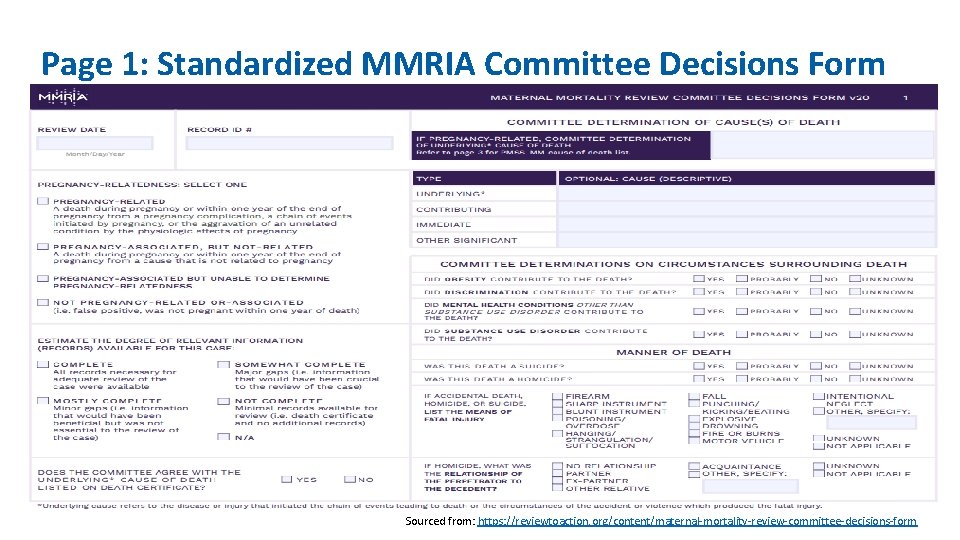
Page 1: Standardized MMRIA Committee Decisions Form Sourced from: https: //reviewtoaction. org/content/maternal-mortality-review-committee-decisions-form
https: //reviewtoaction. org/content/guidanceusing-mmria-committee-decisions-form
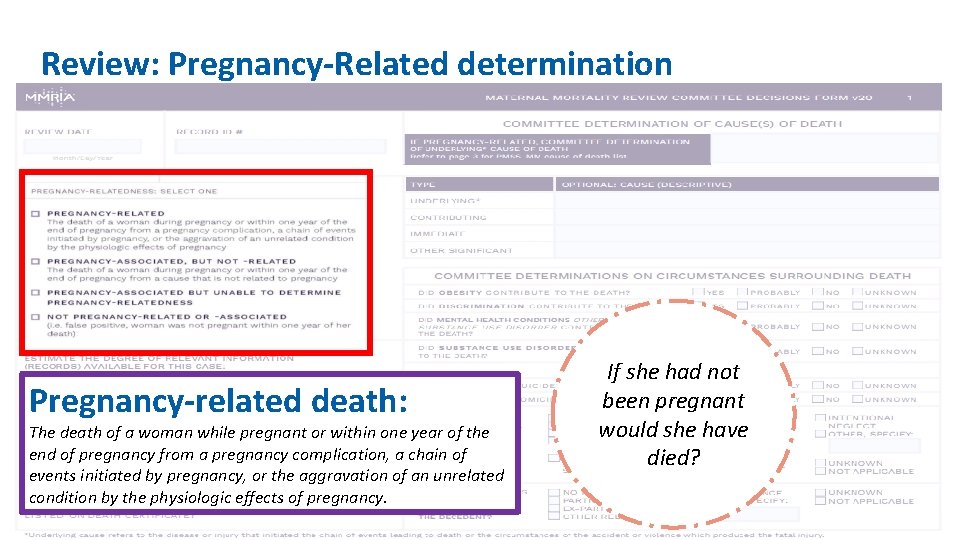
Review: Pregnancy-Related determination Pregnancy-related death: The death of a woman while pregnant or within one year of the end of pregnancy from a pregnancy complication, a chain of events initiated by pregnancy, or the aggravation of an unrelated condition by the physiologic effects of pregnancy. If she had not been pregnant would she have died?
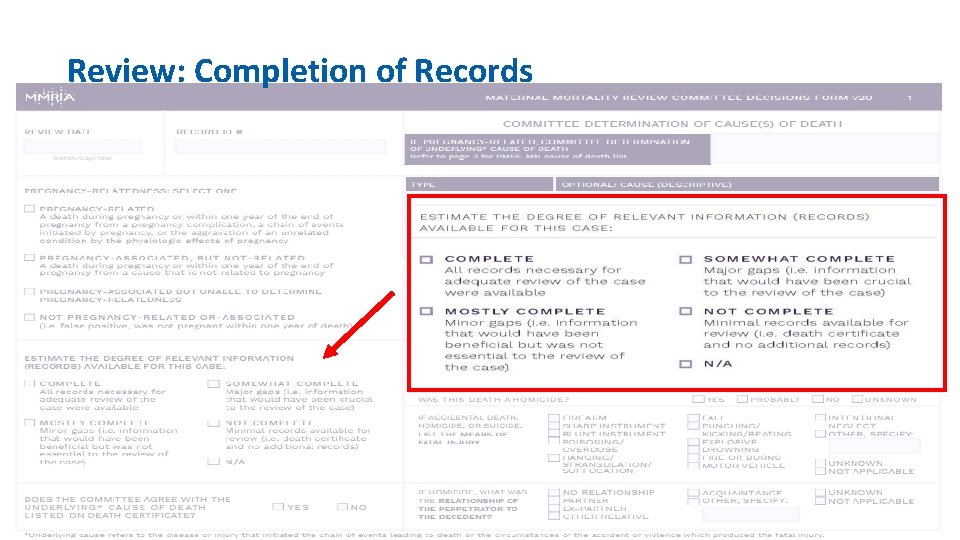
Review: Completion of Records
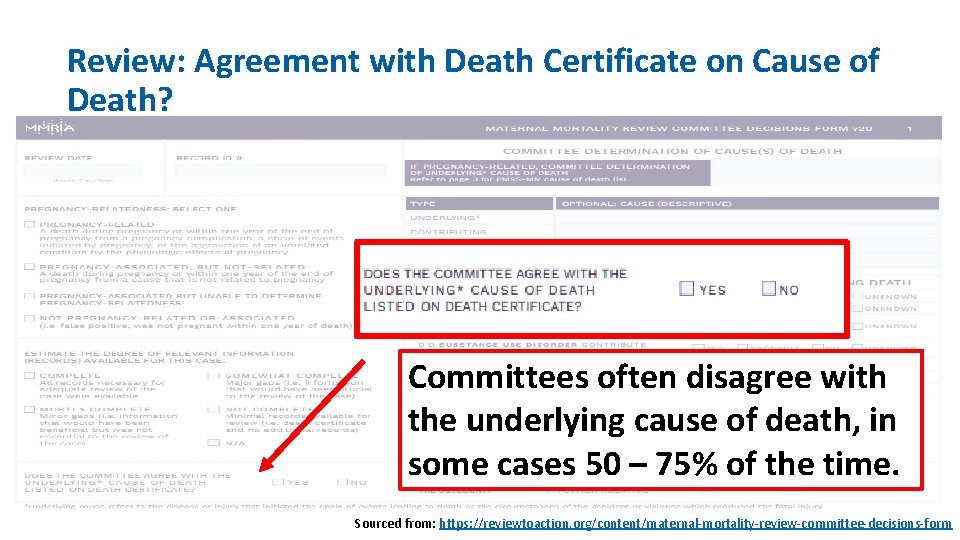
Review: Agreement with Death Certificate on Cause of Death? Committees often disagree with the underlying cause of death, in some cases 50 – 75% of the time. Sourced from: https: //reviewtoaction. org/content/maternal-mortality-review-committee-decisions-form
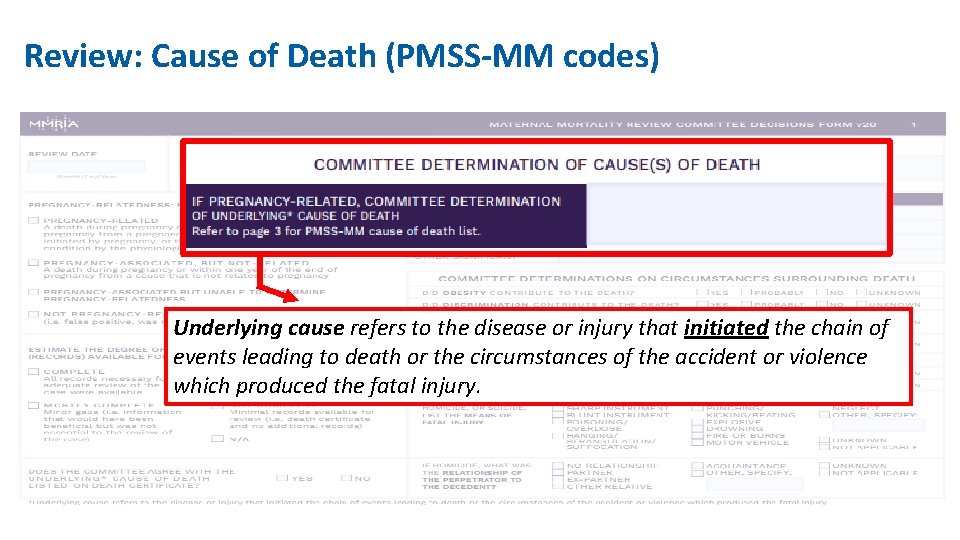
Review: Cause of Death (PMSS-MM codes) Underlying cause refers to the disease or injury that initiated the chain of events leading to death or the circumstances of the accident or violence which produced the fatal injury.
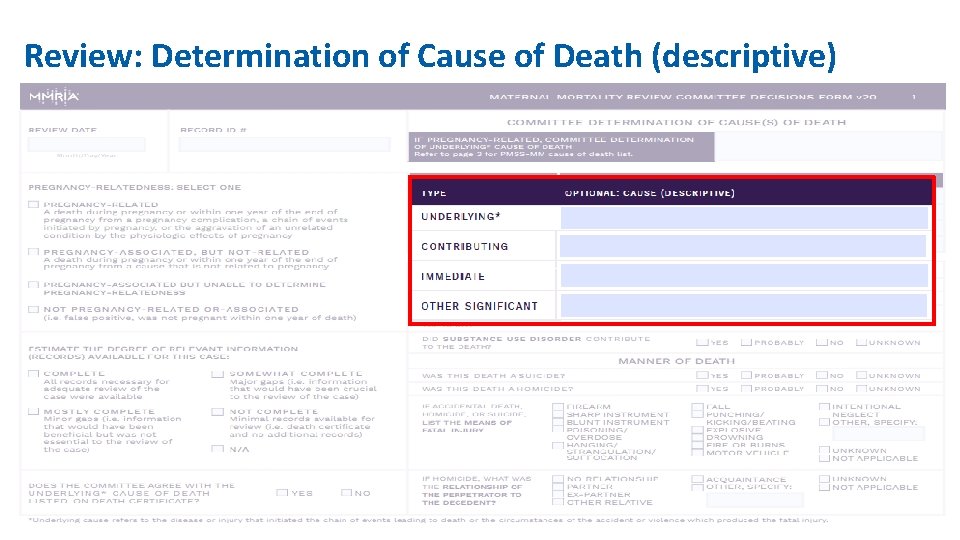
Review: Determination of Cause of Death (descriptive)
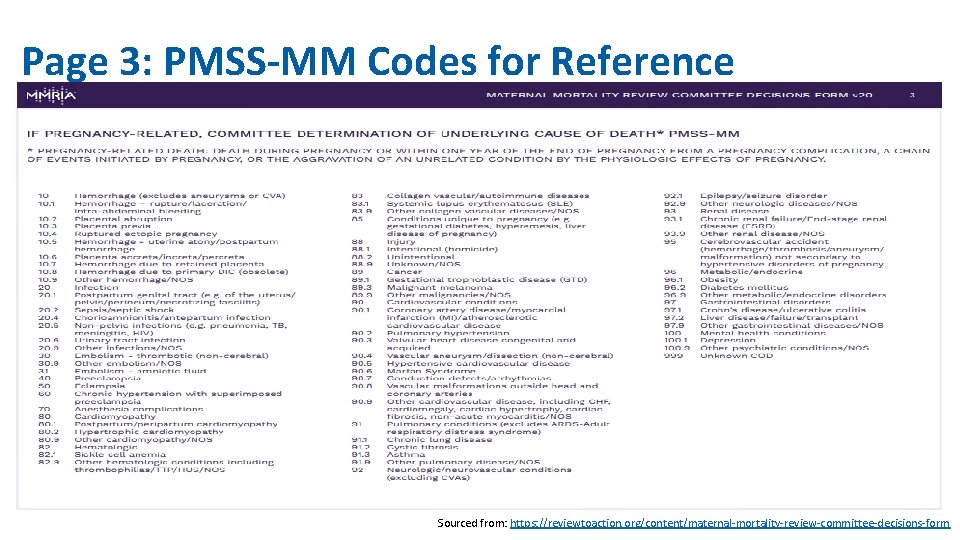
Page 3: PMSS-MM Codes for Reference Sourced from: https: //reviewtoaction. org/content/maternal-mortality-review-committee-decisions-form

Review: Committee Determinations on Circumstances Surrounding Death Complete section for all pregnancy-associated deaths reviewed by your committee, regardless of relatedness.
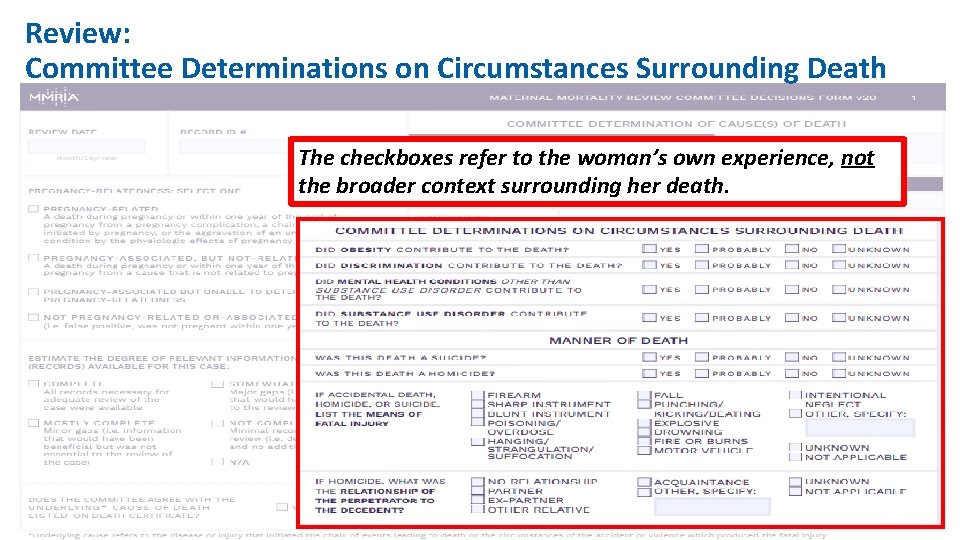
Review: Committee Determinations on Circumstances Surrounding Death The checkboxes refer to the woman’s own experience, not the broader context surrounding her death.
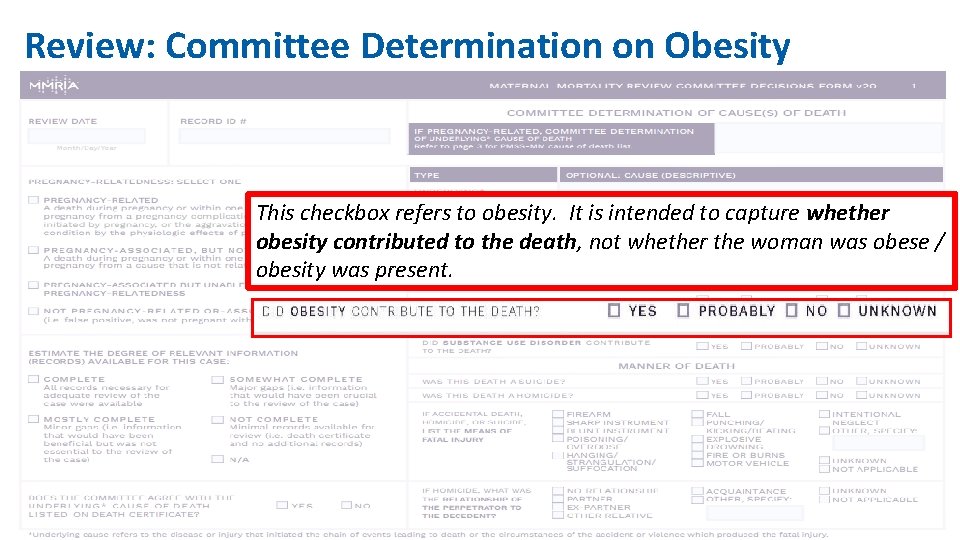
Review: Committee Determination on Obesity This checkbox refers to obesity. It is intended to capture whether obesity contributed to the death, not whether the woman was obese / obesity was present.
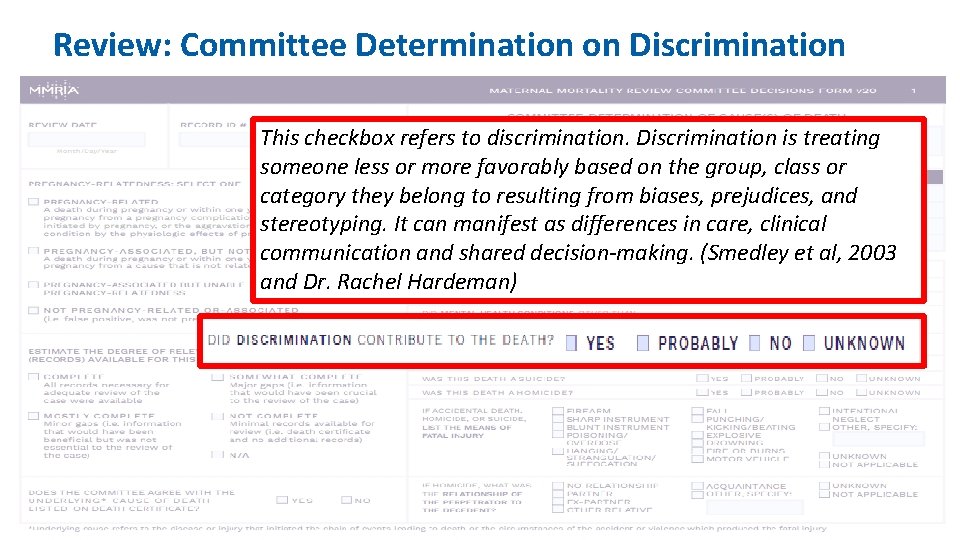
Review: Committee Determination on Discrimination This checkbox refers to discrimination. Discrimination is treating someone less or more favorably based on the group, class or category they belong to resulting from biases, prejudices, and stereotyping. It can manifest as differences in care, clinical communication and shared decision-making. (Smedley et al, 2003 and Dr. Rachel Hardeman)
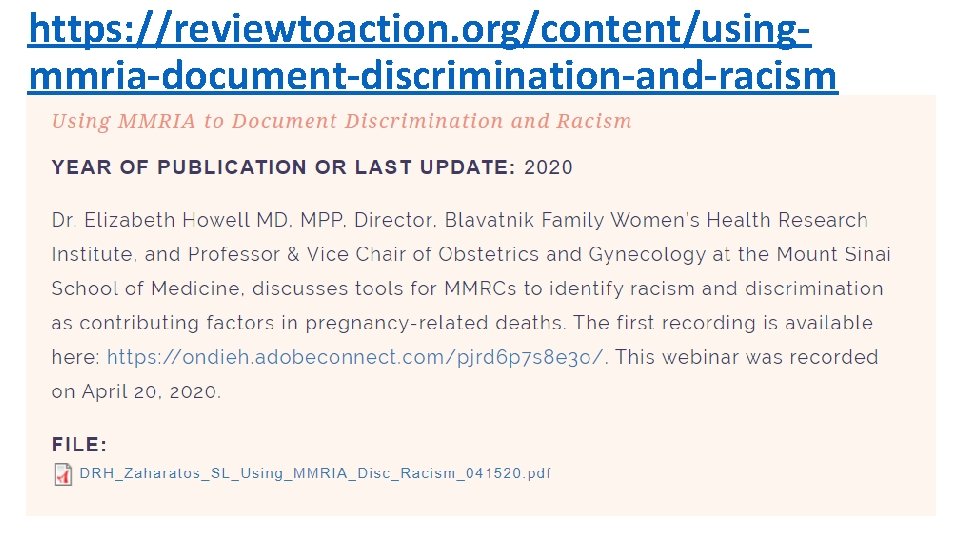
https: //reviewtoaction. org/content/usingmmria-document-discrimination-and-racism
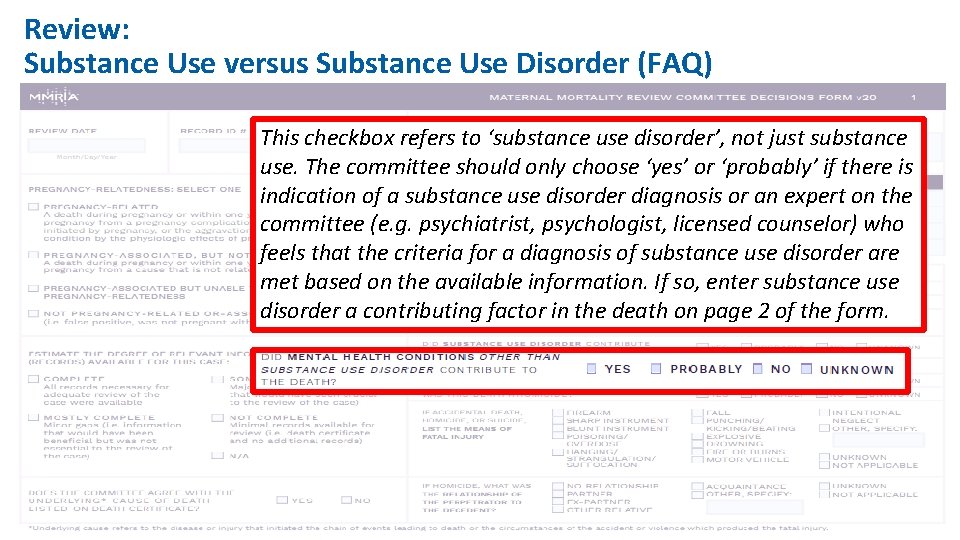
Review: Substance Use versus Substance Use Disorder (FAQ) This checkbox refers to ‘substance use disorder’, not just substance use. The committee should only choose ‘yes’ or ‘probably’ if there is indication of a substance use disorder diagnosis or an expert on the committee (e. g. psychiatrist, psychologist, licensed counselor) who feels that the criteria for a diagnosis of substance use disorder are met based on the available information. If so, enter substance use disorder a contributing factor in the death on page 2 of the form.
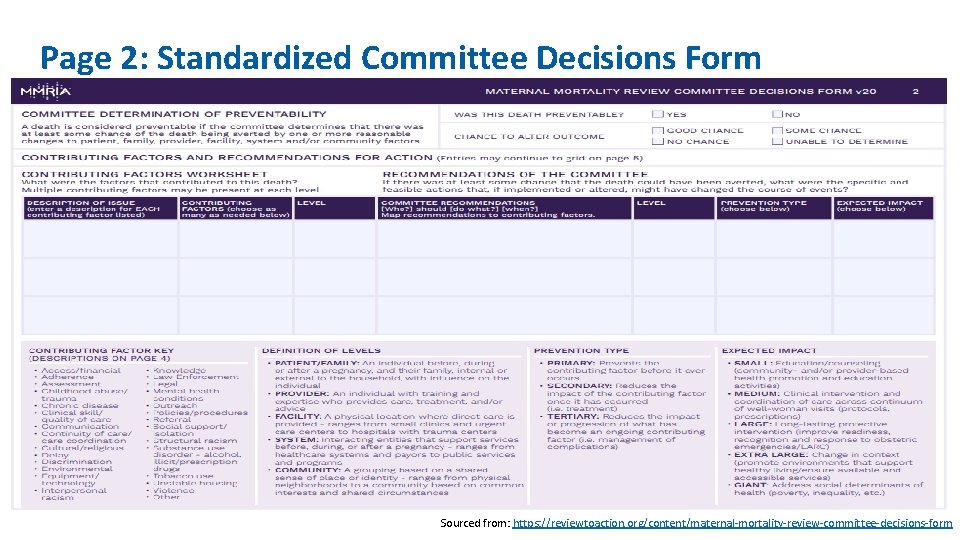
Page 2: Standardized Committee Decisions Form Sourced from: https: //reviewtoaction. org/content/maternal-mortality-review-committee-decisions-form
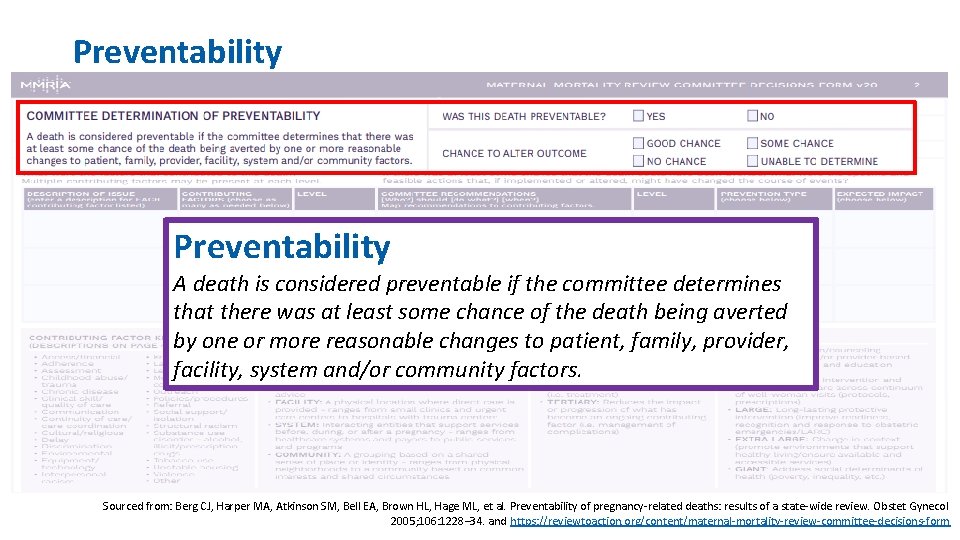
Preventability A death is considered preventable if the committee determines that there was at least some chance of the death being averted by one or more reasonable changes to patient, family, provider, facility, system and/or community factors. Sourced from: Berg CJ, Harper MA, Atkinson SM, Bell EA, Brown HL, Hage ML, et al. Preventability of pregnancy-related deaths: results of a state-wide review. Obstet Gynecol 2005; 106: 1228– 34. and https: //reviewtoaction. org/content/maternal-mortality-review-committee-decisions-form
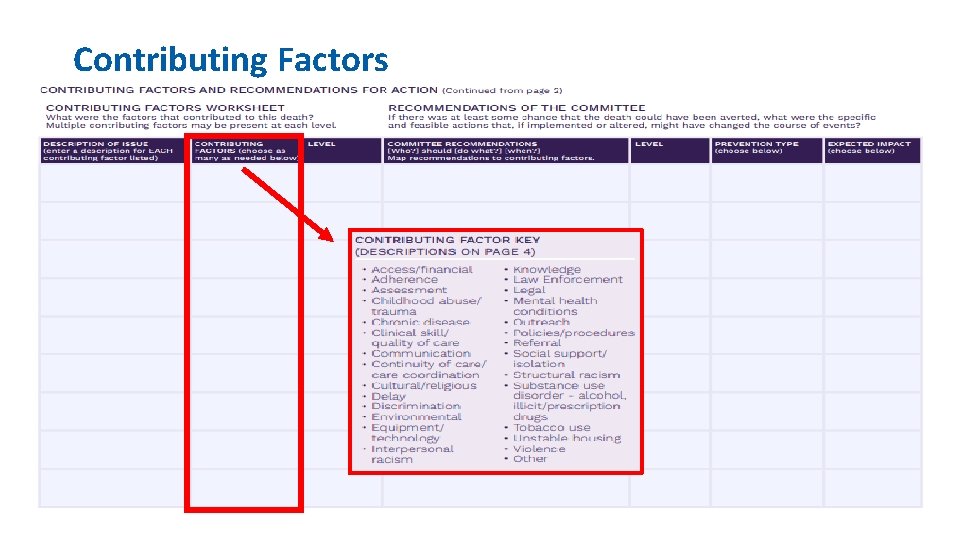
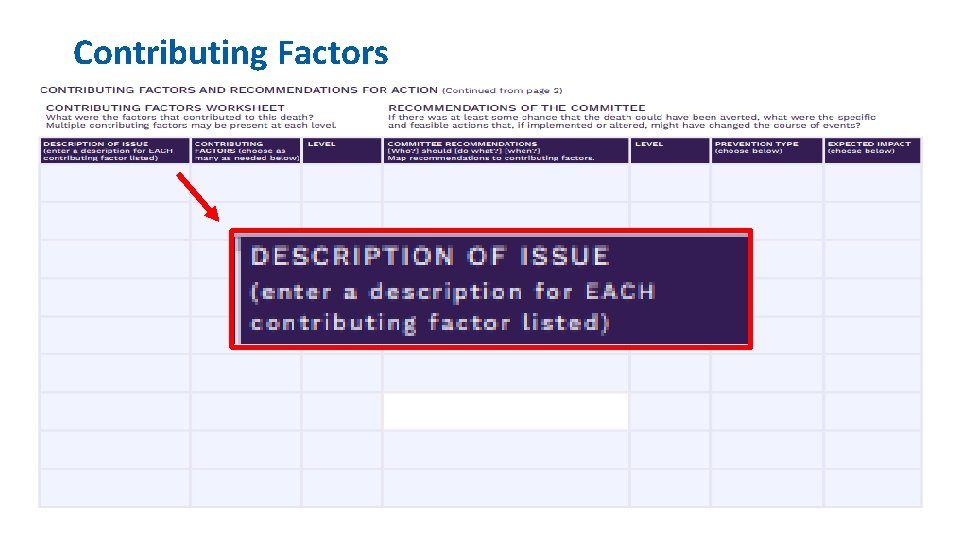
Contributing Factors
Contributing Factors
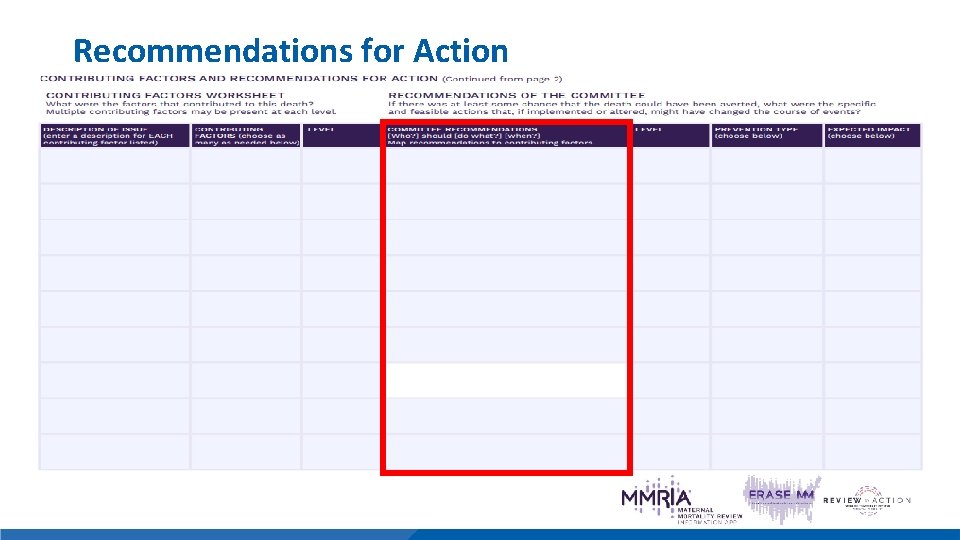
Recommendations for Action
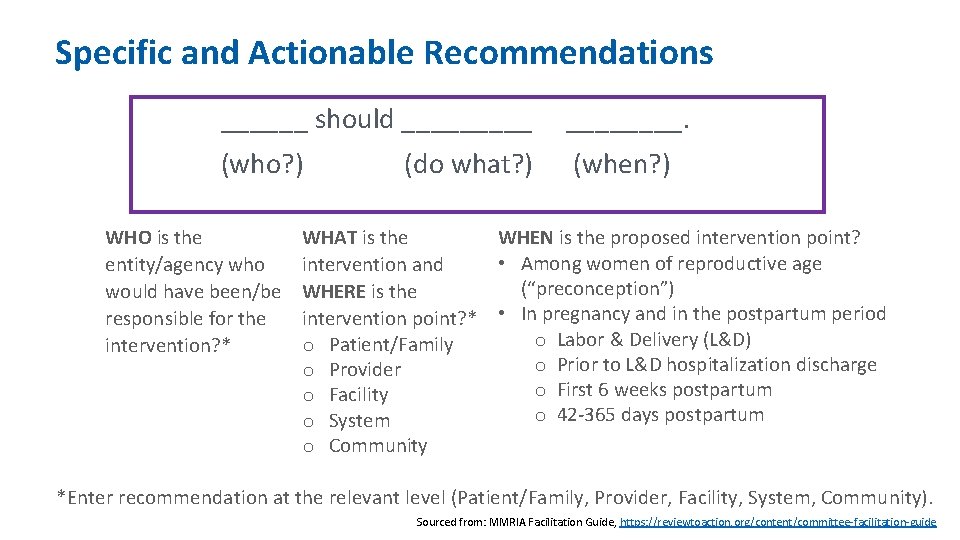
Specific and Actionable Recommendations ______ should _____. (who? ) (when? ) WHO is the entity/agency who would have been/be responsible for the intervention? * (do what? ) WHAT is the WHEN is the proposed intervention point? • Among women of reproductive age intervention and (“preconception”) WHERE is the intervention point? * • In pregnancy and in the postpartum period o Labor & Delivery (L&D) o Patient/Family o Prior to L&D hospitalization discharge o Provider o First 6 weeks postpartum o Facility o 42 -365 days postpartum o System o Community *Enter recommendation at the relevant level (Patient/Family, Provider, Facility, System, Community). Sourced from: MMRIA Facilitation Guide, https: //reviewtoaction. org/content/committee-facilitation-guide
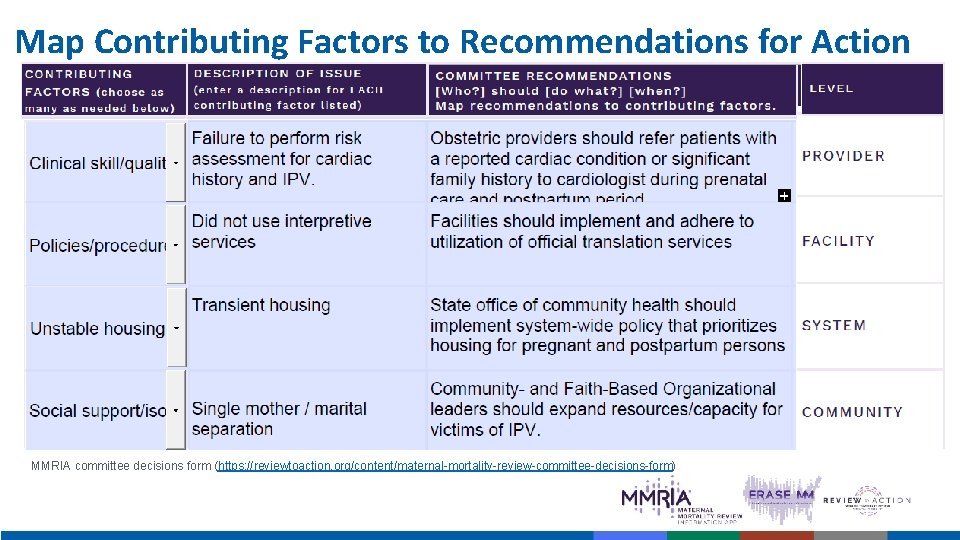
Map Contributing Factors to Recommendations for Action MMRIA committee decisions form (https: //reviewtoaction. org/content/maternal-mortality-review-committee-decisions-form)
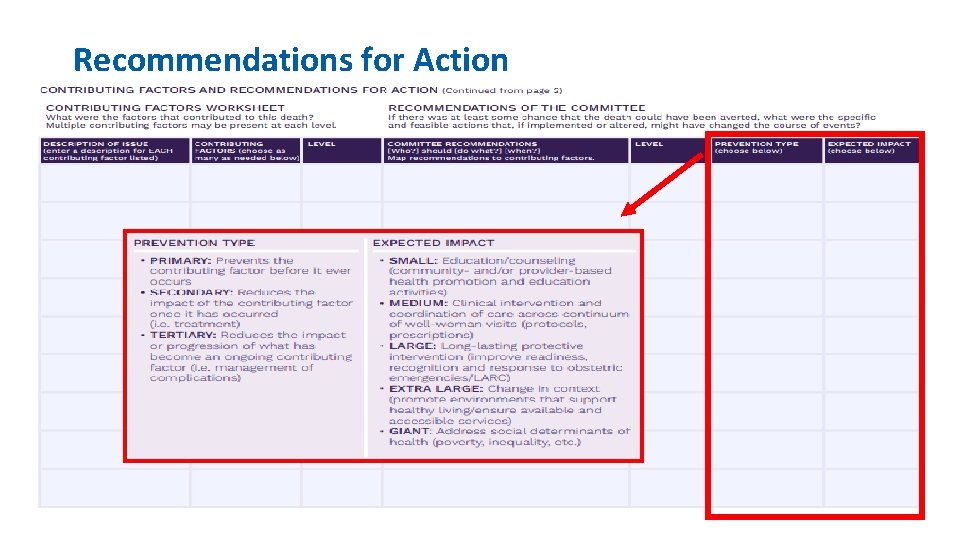
Recommendations for Action

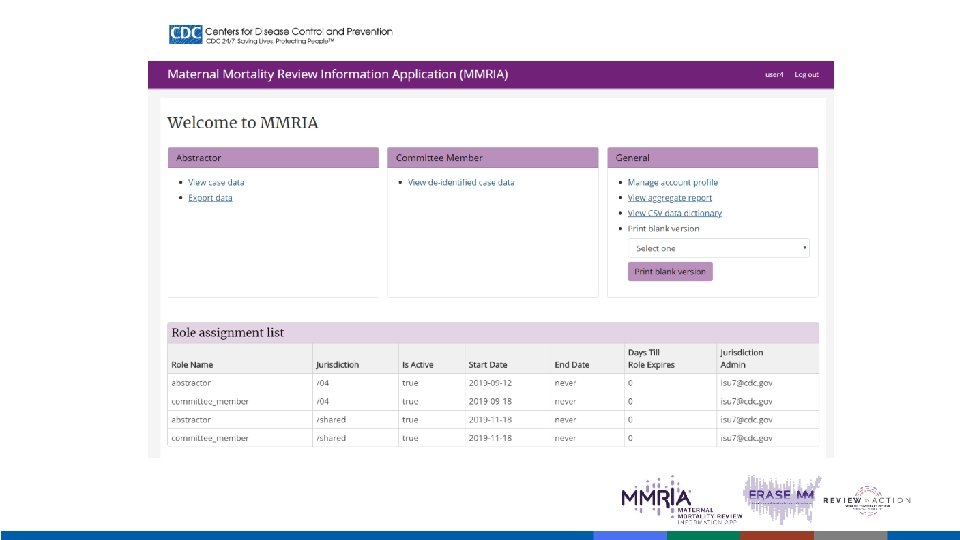
MMRIA Overview <insert MMRIA jurisdiction page link here>
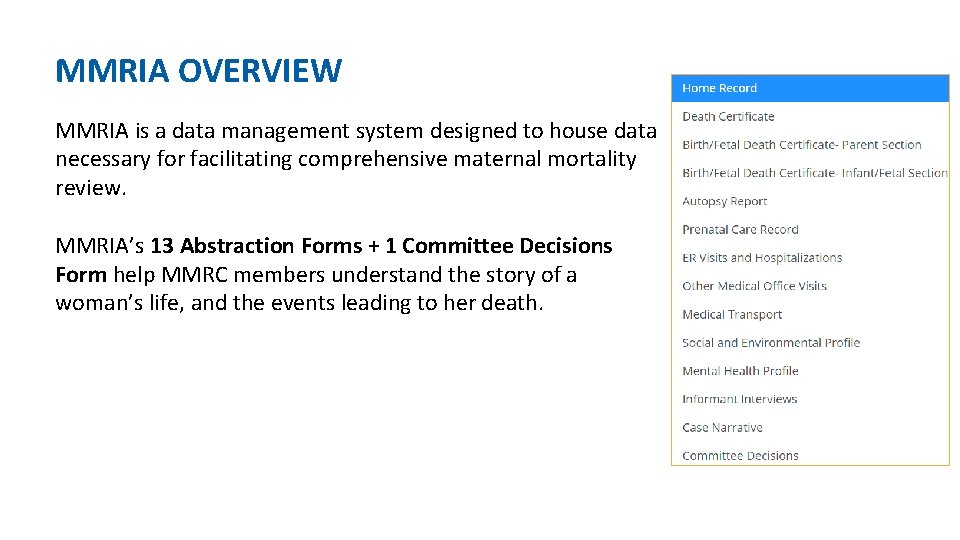
MMRIA OVERVIEW MMRIA is a data management system designed to house data necessary for facilitating comprehensive maternal mortality review. MMRIA’s 13 Abstraction Forms + 1 Committee Decisions Form help MMRC members understand the story of a woman’s life, and the events leading to her death.
PURPOSE Primary purpose is to serve as a repository of medical and non-clinical information needed for Maternal Mortality Review Committee case review. Secondary purpose is to standardize maternal mortality data collection, so that it can be used for surveillance, monitoring, and research. MMRIA serves as a one-stop shop for Abstracted and Committee decision data.
MMRC Structure and Member Responsibilities (enter corresponding slides, as appropriate, to explain your specific committee member responsibilities and structure)
<state> Committee Structure Representation The Committee is comprised of a multidisciplinary team including representatives from rural and urban midwifery, family medicine, nursing, forensic pathology, psychology and psychiatry, anesthesiology, maternal-fetal medicine, and obstetrics and gynecology; doula services and patient advocacy; social work; health systems; state and local public health and epidemiology; addiction treatment; home visiting; and violence prevention. <or edit> Appointment Committee members are selected via competitive application and appointed by the Department <or edit> Term limits MMRC members serve three-year terms and may serve up to three terms <or edit> Sourced from: MMRIA Facilitation Guide, https: //reviewtoaction. org/content/committee-facilitation-guide
<state> Committee Roles Chair<or edit> • • Participates in process to prioritize cases for review Facilitates discussion, engaging all members in committee decisions Engages support staff to ensure complete committee decisions Reviews case narratives for completion prior to committee meeting Coordinator <or edit> • Participates in process to prioritize cases for review • Ensures key committee documents are updated, meetings are scheduled, members invited, agendas drafted, members receive narratives in advance of meeting, multiple notetakers are assigned to record decisions made during meetings, and combines notes into one version that is entered into MMRIA. May coordinate activities to implement findings from review deliberations. Abstractor(s) • Participates in process to prioritize cases for review • Abstracts cases and maintains regular communication with coordinator to review the status of a case abstraction Epidemiologist(s) • • May assist in case identification process Provides data analysis support for developing products from the reviews Provides data quality checks of MMRIA data and during the deliberation process. May assist in abstracting vital records and entering final committee decisions in MMRIA Sourced from: MMRIA Facilitation Guide, https: //reviewtoaction. org/content/committee-facilitation-guide
<state> Committee Facilitation Roles The ability of committee members to interact and relate with each other is a key factor in determining how successful they will be in accomplishing their goals and reaching their vision. A cohesive environment should not prevent diversity of thought or opinion but rather help the committee avoid losing sight of its scope, mission, scope, and vision. Sourced from: MMRIA Facilitation Guide, https: //reviewtoaction. org/content/committee-facilitation-guide
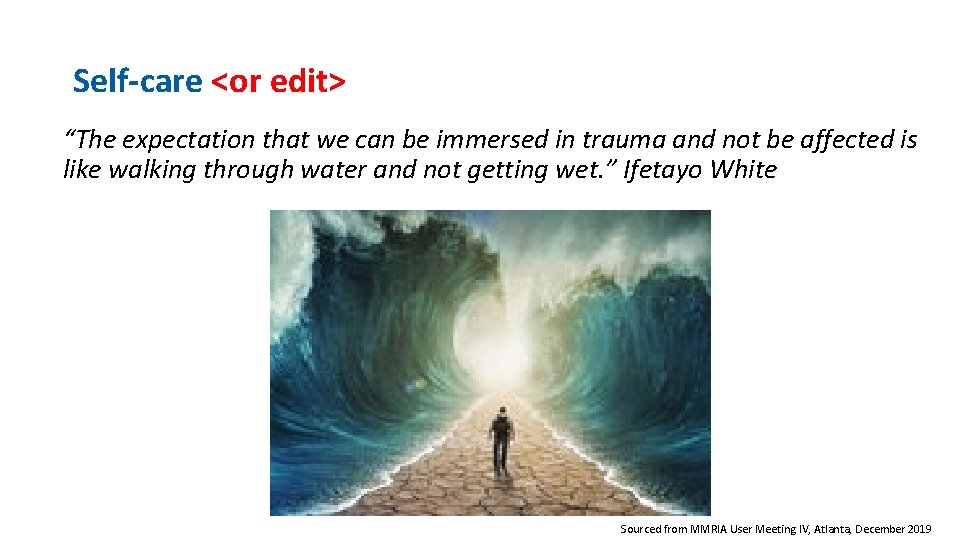
Self-care <or edit> “The expectation that we can be immersed in trauma and not be affected is like walking through water and not getting wet. ” Ifetayo White Sourced from MMRIA User Meeting IV, Atlanta, December 2019
Caring Begins With You We will take a moment of silence at the opening and closing of each review to center ourselves in the work that lies ahead. Reviewing maternal deaths can be physically, mentally, and emotionally exhausting. Remember that the weight of this work does not rest on any one person’s shoulders. We are part of a greater network striving to save the lives of mothers and improve the lives of women. Sourced from: MMRIA Facilitation Guide, https: //reviewtoaction. org/content/committee-facilitation-guide
MMRC Timeline/Next Steps (enter corresponding slides, as appropriate)

Questions?
- Slides: 65