
State Health Improvement Model PREVENTION LEVEL Strategy Creation
- Slides: 2
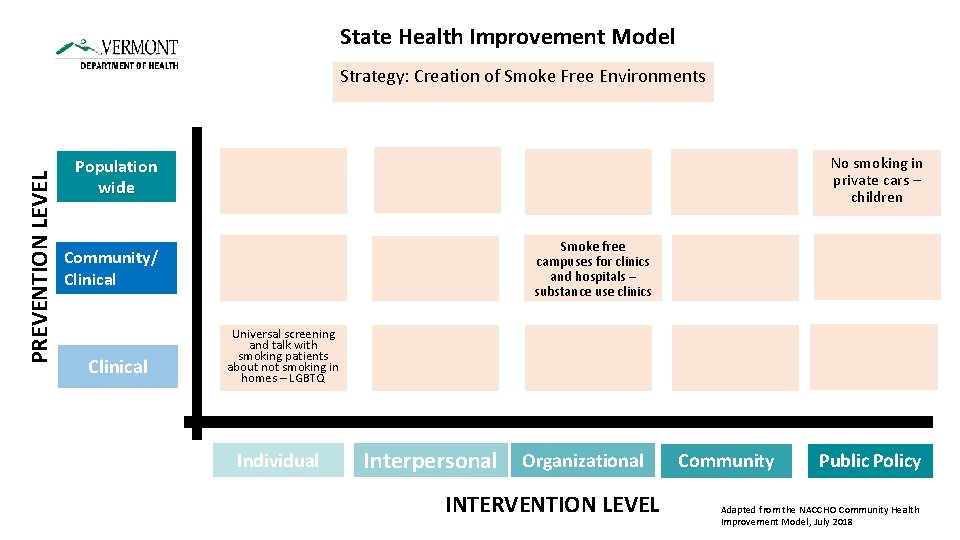
State Health Improvement Model PREVENTION LEVEL Strategy: Creation of Smoke Free Environments No smoking in private cars – children Population wide Smoke free campuses for clinics and hospitals – substance use clinics Community/ Clinical Universal screening and talk with smoking patients about not smoking in homes – LGBTQ Individual Interpersonal Organizational INTERVENTION LEVEL Community Public Policy Adapted from the NACCHO Community Health Improvement Model, July 2018
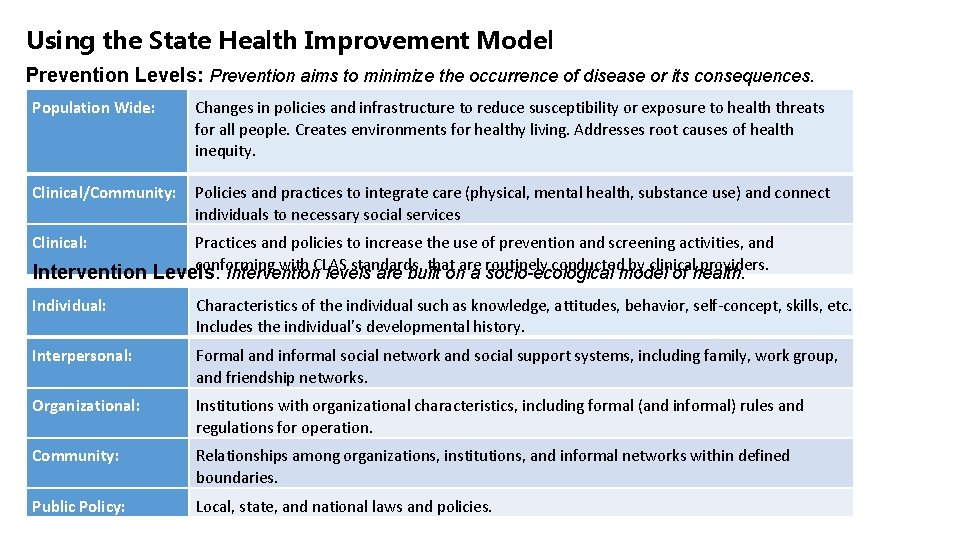
Using the State Health Improvement Model Prevention Levels: Prevention aims to minimize the occurrence of disease or its consequences. Population Wide: Changes in policies and infrastructure to reduce susceptibility or exposure to health threats for all people. Creates environments for healthy living. Addresses root causes of health inequity. Clinical/Community: Policies and practices to integrate care (physical, mental health, substance use) and connect individuals to necessary social services Clinical: Practices and policies to increase the use of prevention and screening activities, and conforming with CLAS standards, that are routinely conducted by clinical providers. Intervention Levels: Intervention levels are built on a socio-ecological model of health. Individual: Characteristics of the individual such as knowledge, attitudes, behavior, self-concept, skills, etc. Includes the individual’s developmental history. Interpersonal: Formal and informal social network and social support systems, including family, work group, and friendship networks. Organizational: Institutions with organizational characteristics, including formal (and informal) rules and regulations for operation. Community: Relationships among organizations, institutions, and informal networks within defined boundaries. Public Policy: Local, state, and national laws and policies.