
Starting an Endovascular Program at VA Madhan Sundaram


- Slides: 20
Starting an Endovascular Program at VA Madhan Sundaram, MD FACC Southern Arizona VA Health Care System University of Arizona College of Medicine
Madhan Shanmugasundaram, MD FACC I have no relevant financial relationships
Outline • • • Importance of Endovascular program at VA Challenges Credentialing Competence in endovascular interventions My experience
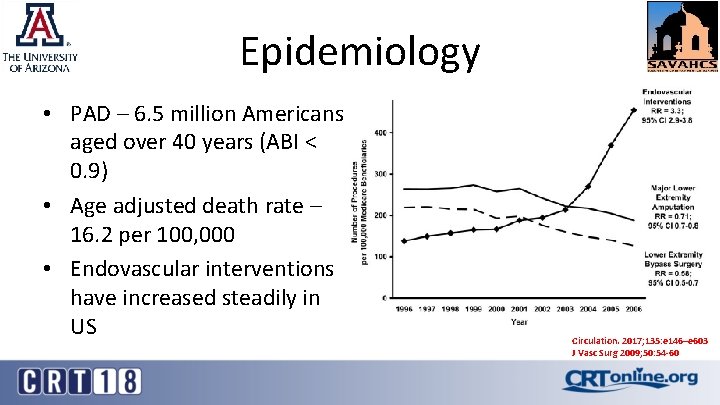
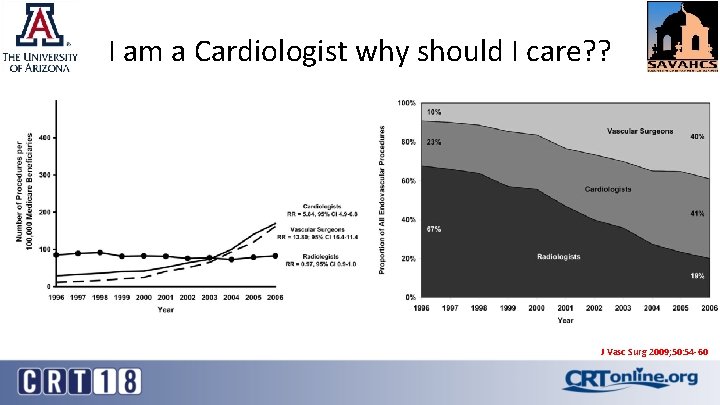
Epidemiology • PAD – 6. 5 million Americans aged over 40 years (ABI < 0. 9) • Age adjusted death rate – 16. 2 per 100, 000 • Endovascular interventions have increased steadily in US Circulation. 2017; 135: e 146–e 603 J Vasc Surg 2009; 50: 54 -60
I am a Cardiologist why should I care? ? J Vasc Surg 2009; 50: 54 -60
Challenges • • Credentialing Competing with IR/ vascular surgery Setting up vascular medicine clinic Availability of timely noninvasive testing • ABI • Duplex/ CTA/ MRA • Procedure room (cath lab/ IR/ Hybrid lab) • Equipment/ Supplies
Credentialing • Hard part – Depends on who wrote the credentialing requirements for the facility!! – For us it was under vascular surgery or radiology – 1 st step was to create privileges under medicine/ cardiology – Apply for those privileges
Competence in Endovascular Interventions • Duration of training ---- 12 months • Diagnostic peripheral angiograms --- 100 cases (50 as 1 st operator) • Peripheral interventional cases --- 50 cases (25 as 1 st operator)
Credentialed now What? • Need to understand who else was performing these procedures • Opportunities to collaborate? – IR – Vascular • First few cases need proctoring – Vascular surgeon/ IR/ outside proctor – 5 proctored cases
Set up Referral • Critical to establish a referral base – Vascular medicine consult – Clinic • Start from within the division – Get support of your colleagues and fellows – Talk to PCPs/ Podiatry and other ancillary services who can help refer patients
Referral • Grand rounds/ conference – Important to educate physicians – Can also review services offered – Review work up needed (ABI/ CTA/MRA)
Procedure Room/ Time • Important to understand where these procedures will be done – IR – Cath lab – Hybrid OR
Staff training and room set up • Important step – – – Can be time consuming Room set up (power injector) Familiarize staff to equipment Help them understand key aspects of procedure Often device reps can help with training
Supplies • Significant rate limiting step! – Expensive – As a solo operator need to figure out what and how much to order – May run into the 3000$ credit card limit issue – Can do prior auth consult and post implant consult (rep to bring trunk stock) – Best is to work on a consignment contract
System Support/ Issues • Non-invasive laboratory – ABI/ Exercise ABI – CTA w/runoff / MRA • Scheduling for procedure – Mostly same instructions as for a cath procedure • Admission after procedure/ Intervention • Follow up imaging and clinic visits
Selecting “Right” Patients • Lots of opportunities – – – Claudicants Critical limb ischemia Acute limb ischemia Stroke/ asymptomatic carotid stenosis interventions EVAR
My Experience • • Biggest delay was credentialing Proctored cases (5) with vascular surgeon Vascular clinic (half a day) Trained staff with patient and room set up Worked with colleagues to get referral Grand rounds on PAD treatment options Consignment contract for supplies
Actual Case • Usually have CTA/ MRA to help localize lesion and order equipment • Prior auth consult and have rep bring in equipment for case and post implant place prosthetic consult
“Slow but Steady” • Has been a slow, at times frustrating process • After a few trial runs and “working out kinks” • Fairly straightforward process from clinic to actual procedure • After procedure – 4 week follow up in interventional fellows clinic
Thanks!