
Starter What are the strengthsweaknesses of questionnaires in
- Slides: 28
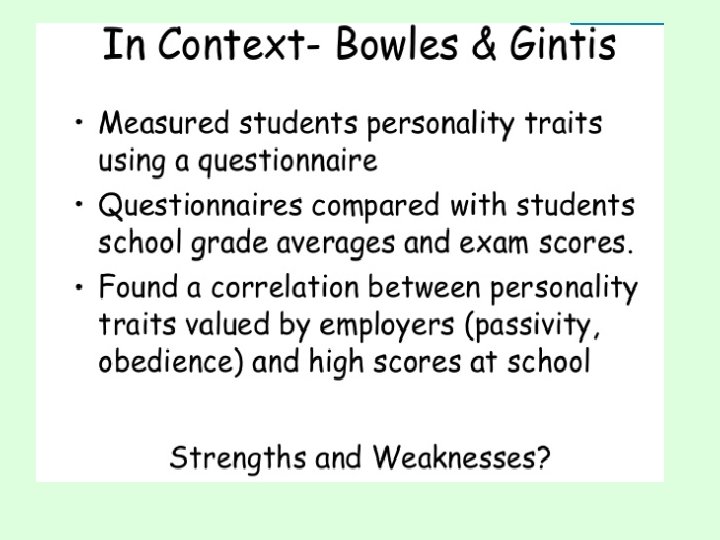
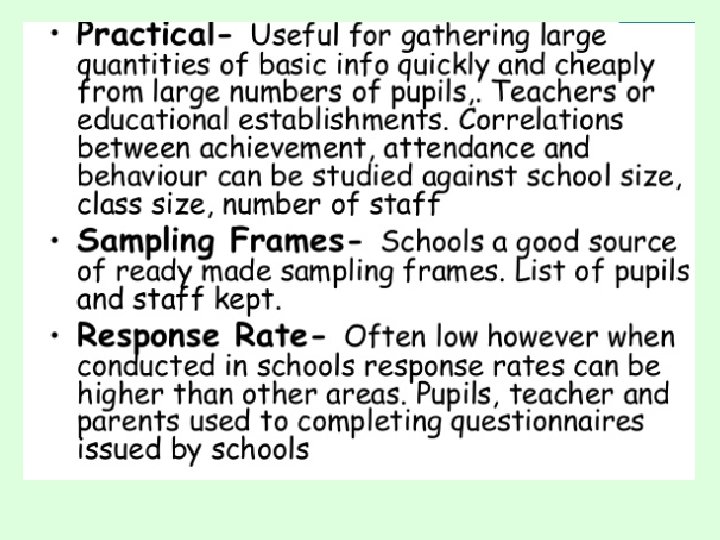
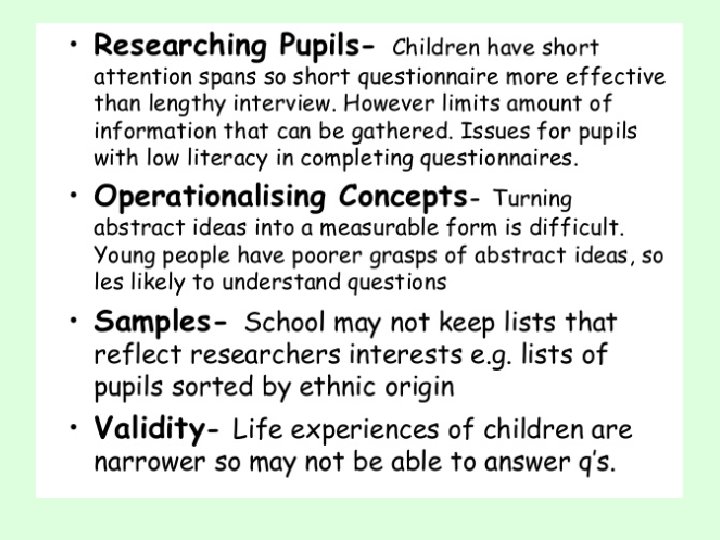
Starter • What are the strengths/weaknesses of questionnaires in sociological research? • Recap your knowledge using page 7 of your booklet.
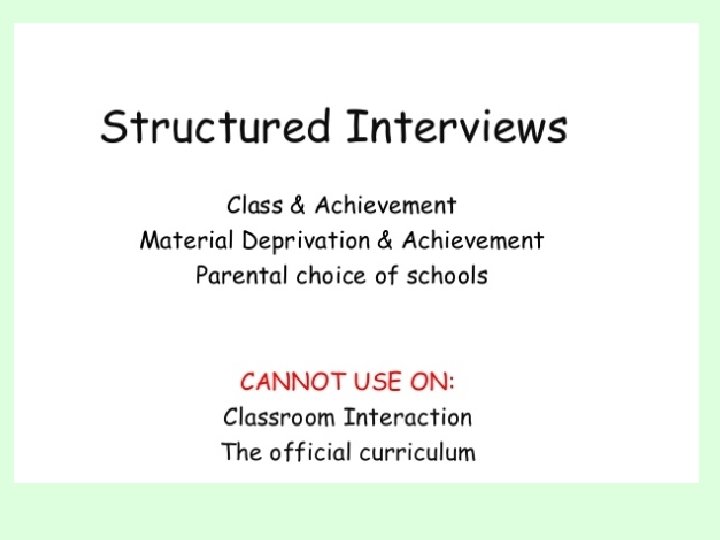
MIC Lesson 3 Interviews Objectives: • To recap on the strengths and limitations of Interviews • To apply this knowledge to the study of education • To plan an answer to a MIC question
TASK pg. 132 -134 • In your booklet on page 13 complete your knowledge of interviews to education.
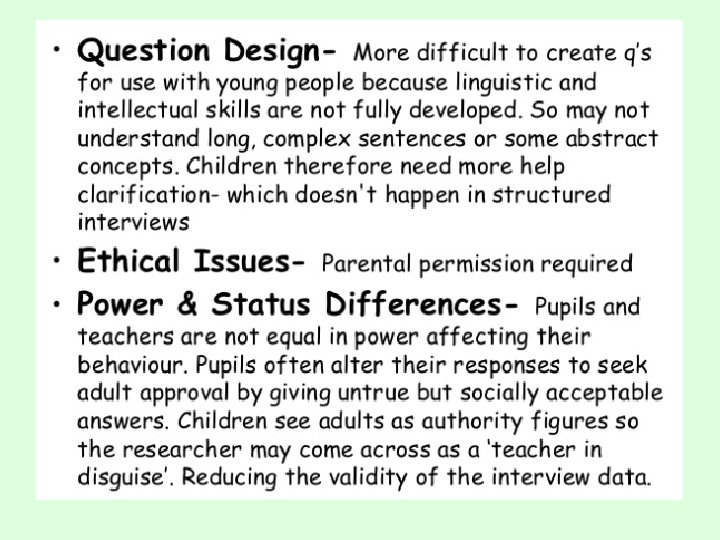
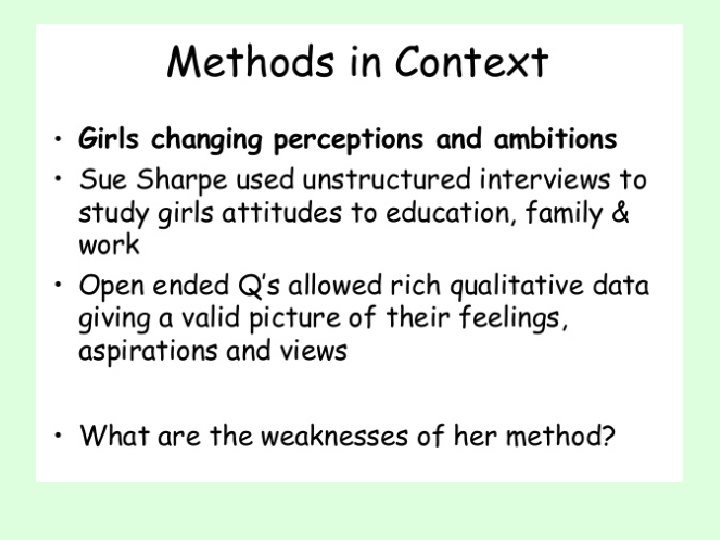
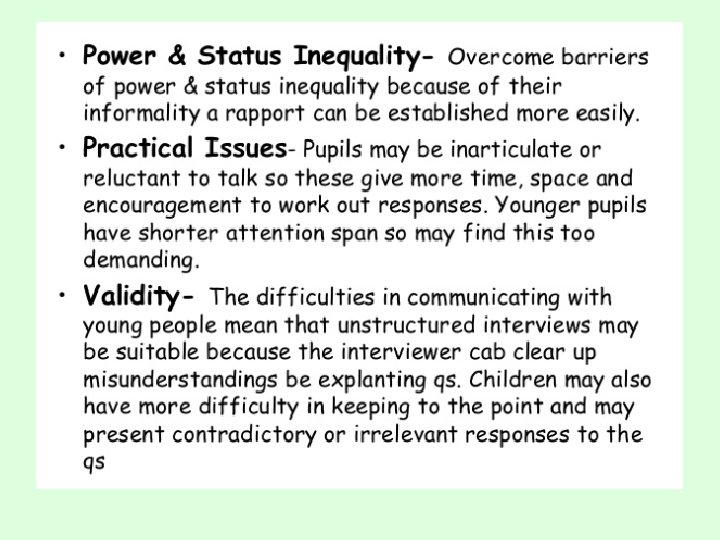
Interviews – Practical Issues Young interviewees may: - Be less articulate or reluctant to talk - Not understand long, complex, questions or some abstract ideas - Limited vocab and use words incorrectly e. g slang - Have a shorter attention span and memory retrieval than adults - Read body language differently from adults
Practical issues linguistic and intellectual skills of the pupils • Can lead to misunderstandings and incorrect or incomplete answers – leading to problems with validity of the data • Unstructured interviews may be more suitable than structured ones, since they allow the interviewer to clear up any misunderstandings • Unstructured interviews can cause problems though, especially with students and keeping to the point • Interview may be better though, than a questionnaire as children tend to have better verbal skills
Practical issues linguistic and intellectual skills of the pupils • Location can also be an issue… • On school premises, could affect how comfortable the pupil or parent feels • Classrooms and schools often feel like they are a place of higher authority which could be off-putting for some parents or students • Teachers may also be put off with colleagues or students hearing the interview if it is conducted at a school
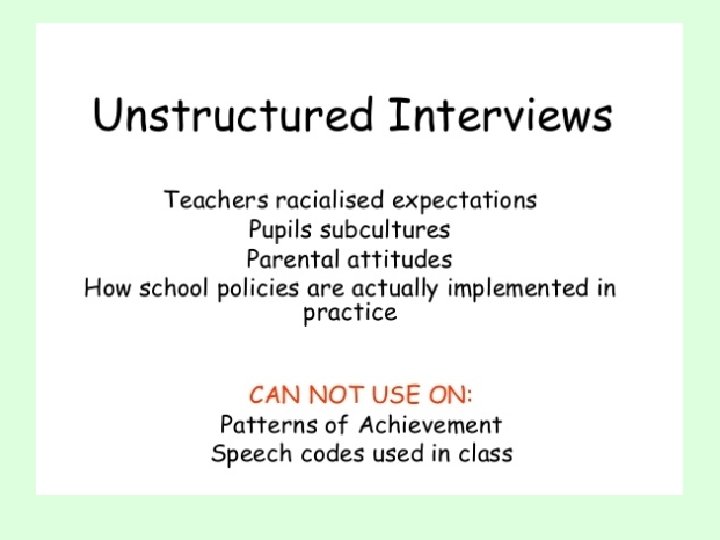
What are the problems with unstructured interviews? Refer to your booklet if you need to… Hints… Training: Interpersonal skills: Time and sample size:
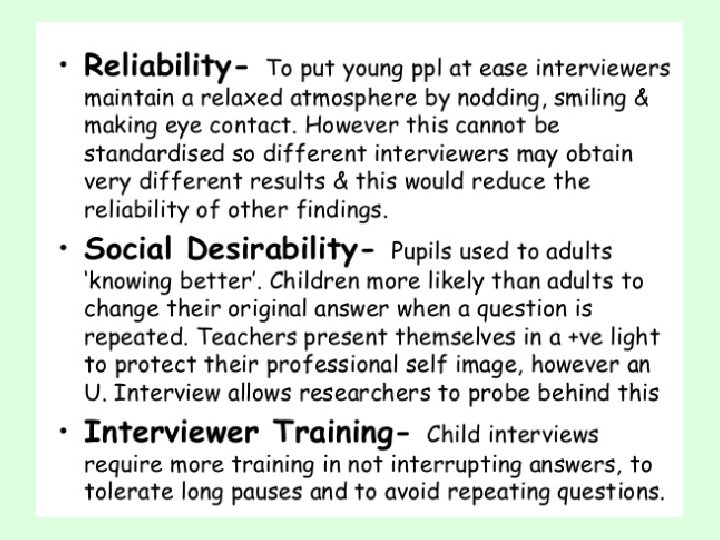
Practical problems of unstructured interviews Time and sample size: because they are in-depth they take a long time to conduct (usually a few hours each) this limits the number that can be carried out (small sample). This means it is less ______ Training: needs to be more thourough than structured interviews. Need to have a background in sociology. Adds to the costs Interpersonal skills: interviewers need good interpersonal skills to establish rapport so interviewers answer openly and honestly
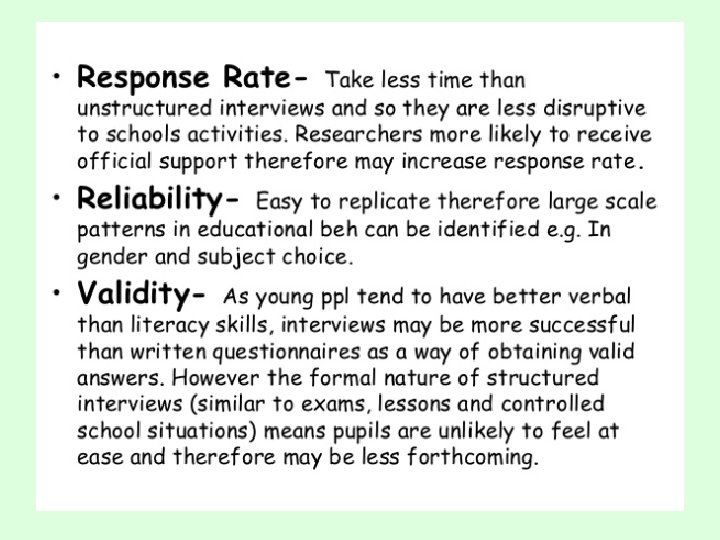
Access and response rate… • Problems with gaining permission (students = parents) (teachers = head teacher) • Schools may be reluctant to allow sociologists to conduct interviews during lesson time due to disruption or the topic chosen • Problems conducting interviews after school hours either at home or school • Problems gaining parental permission e. g sensitive topics - field’s (1987) study of pupils experience of sex and health education in schools had a high refusal rate of 29% due to parental consent
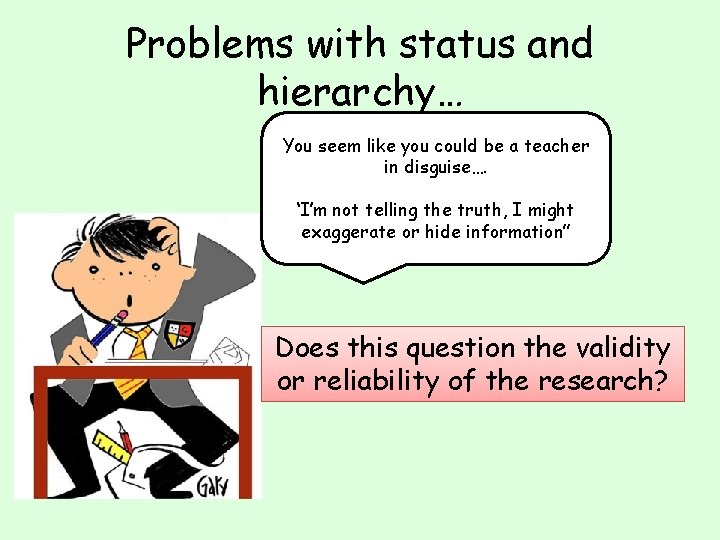
Problems with status and hierarchy… You seem like you could be a teacher in disguise…. ‘I’m not telling the truth, I might exaggerate or hide information” Does this question the validity or reliability of the research?
Improving the validity of interviews Greene & Hogan (2005)… • Use open-ended rather than close-ended questions • Not interrupt children’s answers • Tolerate long pauses to allow children to think about what they want to say • Recognise that children are more suggestible therefore it is important to avoid asking leading questions • Avoid repeating questions, this makes children change their first answer because they think it was wrong
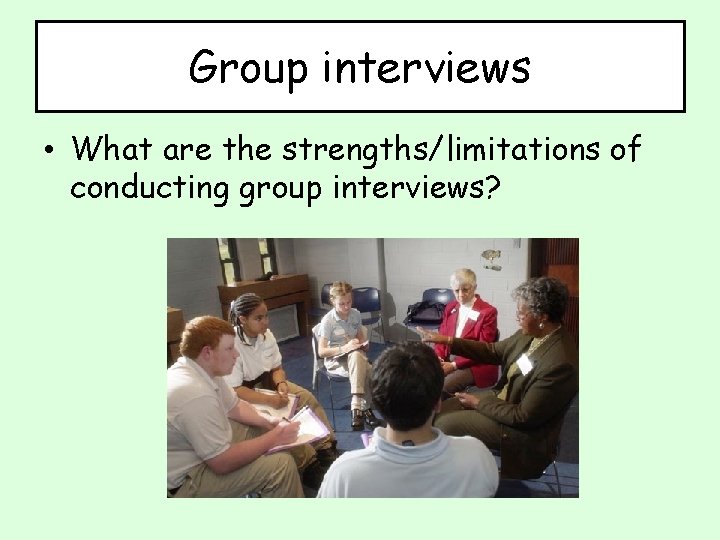
Group interviews • What are the strengths/limitations of conducting group interviews?
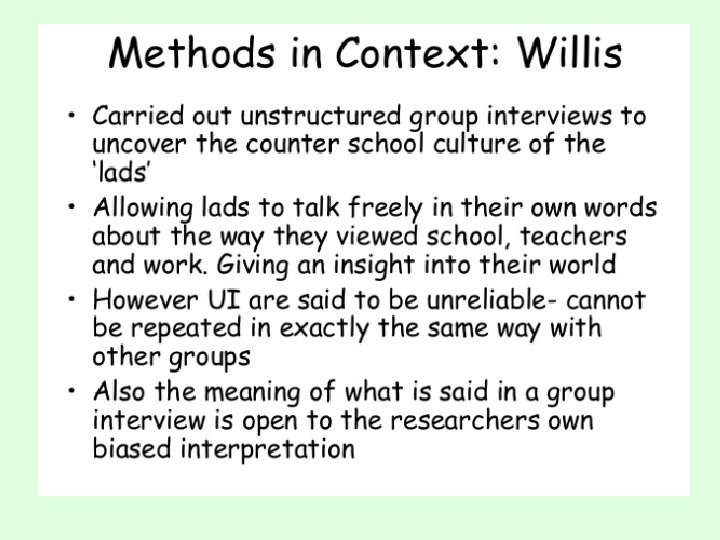
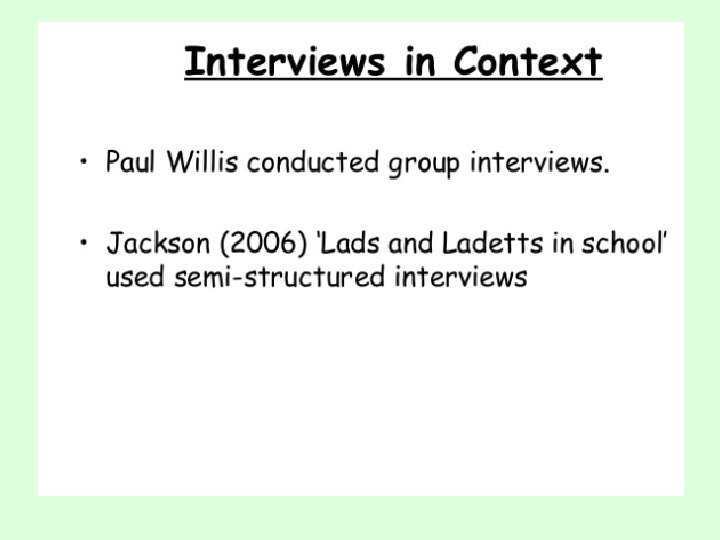
Group interviews L Young people are strongly influenced by peer pressure reducing the validity of the data gathered L E. g very difficult to interview peer groups in a group! L Impossible to standardise, reducing reliability J Safe peer environment and reproduce the small group settings that young people are familiar with in classrooms J Peer support reduces the imbalance between adult interviewer and young interviewee found in 1 -2 -1 interviews J Can reveal interactions between pupils
Planning a question! Step 1: read and highlight the item Which group in education are we researching? Step 2: fill in the table – you may want to start at the beginning of the booklet (page 5) to look at generic issues with using parents. Step 3: work through each step for strengths and weaknesses.