
Starter Culture and Fermented Milk Products DR Sonia

- Slides: 18
Starter Culture and Fermented Milk Products DR. Sonia Kumari Asstt. Prof Cum Jr. Scientist Dairy Microbiology SGIDT, BASU Patna-800014
Starter Culture Ø Microorganisms that are used in the production of cultured dairy products such as dahi, yogurt and cheese. ØThe organisms selected for this purpose of need to produce the desired effect in the finished product. ØStarters are a group of active and desirable microorganims capable of bringing about desirable changes in the milk product through the process of fermentation. ØThese are carefully selected microorganisms that are deliberately added to milk to initiate ("Start') and carry out the desired fermentation in the production of fermented milk products. Ø In other words starters bring about the specific changes in the appearance, body, texture and flavor characteristics of the final products.
History Ø The pure culture techniques in microbiology developed in the Pasteur era (1860 s) Ø Lactic acid bacteria (LAB), were identified by Lister in the 1870 s, Ø Industry developed technique to produce pure cultures only a short time later. Storch ( Denmark) Weigman (Germany), and Conn (USA) in late 1880 s showed that pure cultures could be used to ripen cream, and soon the role of flavor-producing bacteria (i. e. , citratefermenting diacetyl-producers) was established. Ø By 1878 Christian Hansen began a culture business that continues even today to be a major supplier of starter cultures for the dairy, meat, brewing, baking, and wine industries. Ø Initially, starter strains were prepared by the manufacturer by growing pure strains in heatsterilized milk. Calcium carbonate was often added as a buffer in order to maintain a neutral p. H. Ø These liquid cultures remained popular until recently, even though they had a relatively short shelf -life due to the loss of cell viability and fermentative activity.
History. . . • Eventually, rather crude dry culture preparations were produced which required several transfers in milk to revive the culture to an active state. • Freeze-dried cultures also became available, but the early product also required growth in intermediate or mother cultures. Frozen cultures, now the most common form for dairy cultures, were not introduced until the 1960 s • . Significant improvements in freezing and freeze-drying technologies have led these types of cultures to dominate the starter culture market. • The modern starter culture industry provides cultures for nearly every type of fermented food and beverage. Most culture houses also produce and sell the media used to propagate starter cultures, the enzymes used to coagulate milk for cheese production, and other ancillary products. In addition, the starter culture companies maintain a staff of highly trained microbiologists who provide expert technical service and support when issues or problems related to culture performance arise. And although there are many small culture manufacturers throughout the world, specializing in cultures for specific products or applications, • •
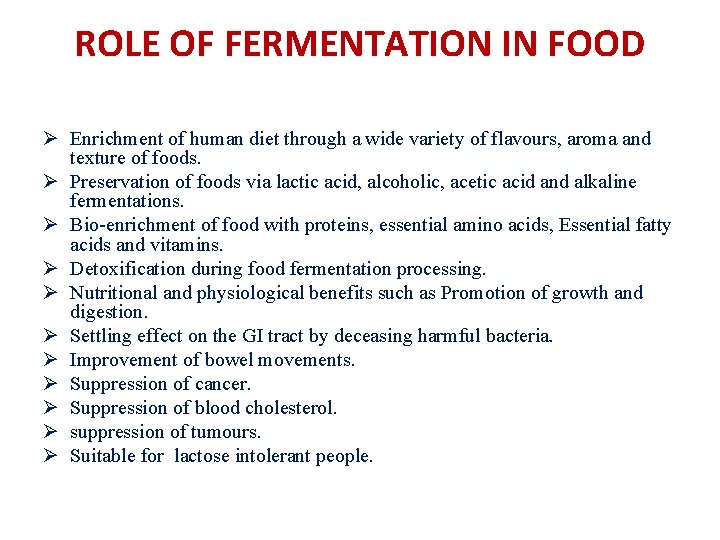
ROLE OF FERMENTATION IN FOOD Ø Enrichment of human diet through a wide variety of flavours, aroma and texture of foods. Ø Preservation of foods via lactic acid, alcoholic, acetic acid and alkaline fermentations. Ø Bio-enrichment of food with proteins, essential amino acids, Essential fatty acids and vitamins. Ø Detoxification during food fermentation processing. Ø Nutritional and physiological benefits such as Promotion of growth and digestion. Ø Settling effect on the GI tract by deceasing harmful bacteria. Ø Improvement of bowel movements. Ø Suppression of cancer. Ø Suppression of blood cholesterol. Ø suppression of tumours. Ø Suitable for lactose intolerant people.
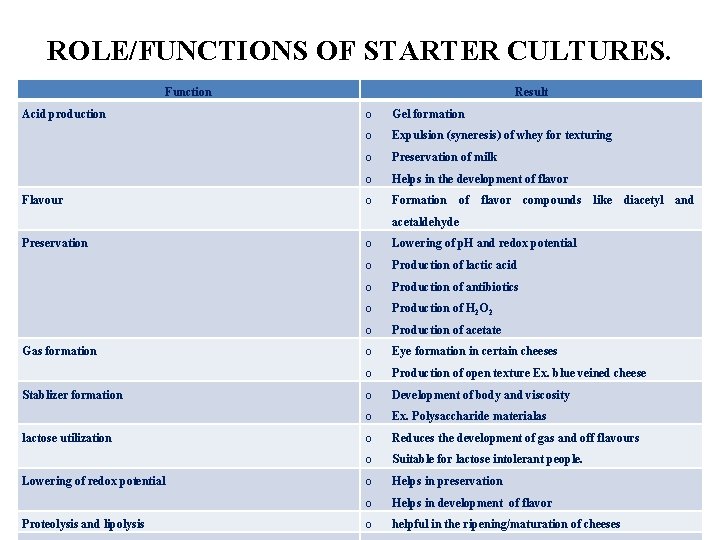
ROLE/FUNCTIONS OF STARTER CULTURES. Function Acid production Flavour Result o Gel formation o Expulsion (syneresis) of whey for texturing o Preservation of milk o Helps in the development of flavor o Formation of flavor compounds like diacetyl and acetaldehyde Preservation Gas formation Stablizer formation lactose utilization Lowering of redox potential Proteolysis and lipolysis o Lowering of p. H and redox potential o Production of lactic acid o Production of antibiotics o Production of H 2 O 2 o Production of acetate o Eye formation in certain cheeses o Production of open texture Ex. blue veined cheese o Development of body and viscosity o Ex. Polysaccharide materialas o Reduces the development of gas and off flavours o Suitable for lactose intolerant people. o Helps in preservation o Helps in development of flavor o helpful in the ripening/maturation of cheeses
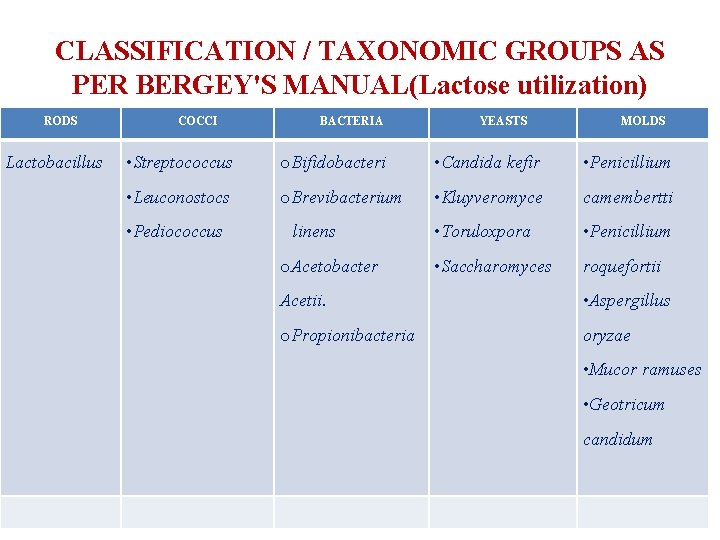
CLASSIFICATION / TAXONOMIC GROUPS AS PER BERGEY'S MANUAL(Lactose utilization) RODS Lactobacillus COCCI BACTERIA YEASTS MOLDS • Streptococcus o. Bifidobacteri • Candida kefir • Penicillium • Leuconostocs o. Brevibacterium • Kluyveromyce camembertti • Toruloxpora • Penicillium • Saccharomyces roquefortii • Pediococcus linens o. Acetobacter Acetii. • Aspergillus o. Propionibacteria oryzae • Mucor ramuses • Geotricum candidum
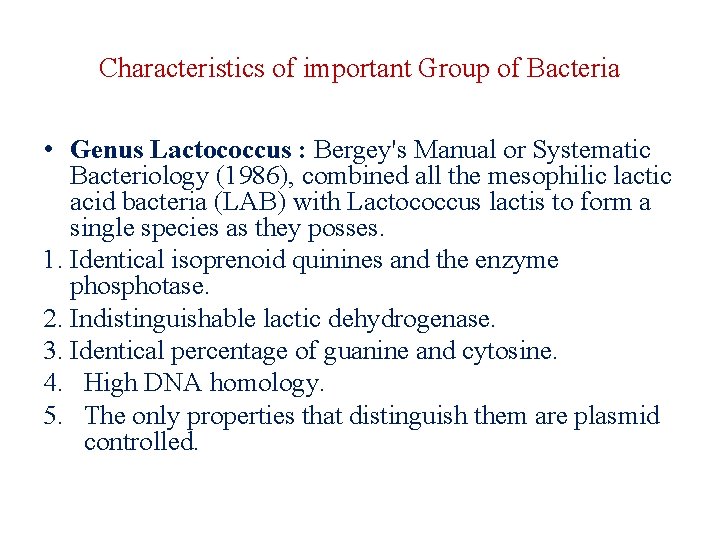
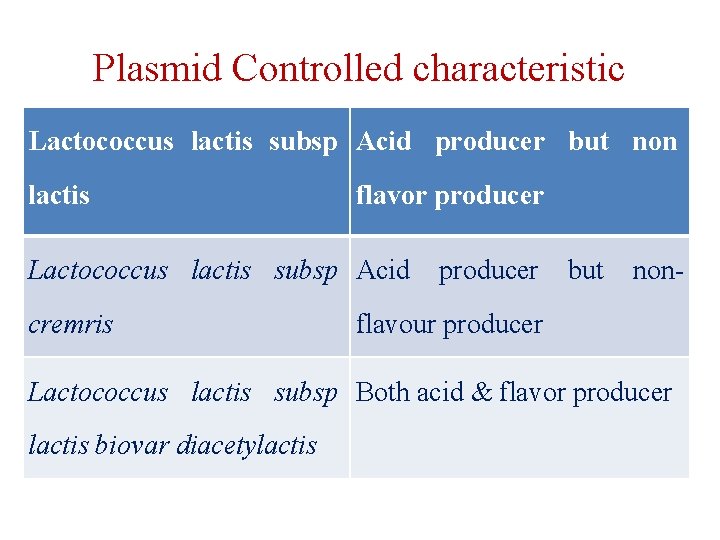
Characteristics of important Group of Bacteria • Genus Lactococcus : Bergey's Manual or Systematic Bacteriology (1986), combined all the mesophilic lactic acid bacteria (LAB) with Lactococcus lactis to form a single species as they posses. 1. Identical isoprenoid quinines and the enzyme phosphotase. 2. Indistinguishable lactic dehydrogenase. 3. Identical percentage of guanine and cytosine. 4. High DNA homology. 5. The only properties that distinguish them are plasmid controlled.
Plasmid Controlled characteristic Lactococcus lactis subsp Acid producer but non lactis flavor producer Lactococcus lactis subsp Acid producer but noncremris flavour producer Lactococcus lactis subsp Both acid & flavor producer lactis biovar diacetylactis
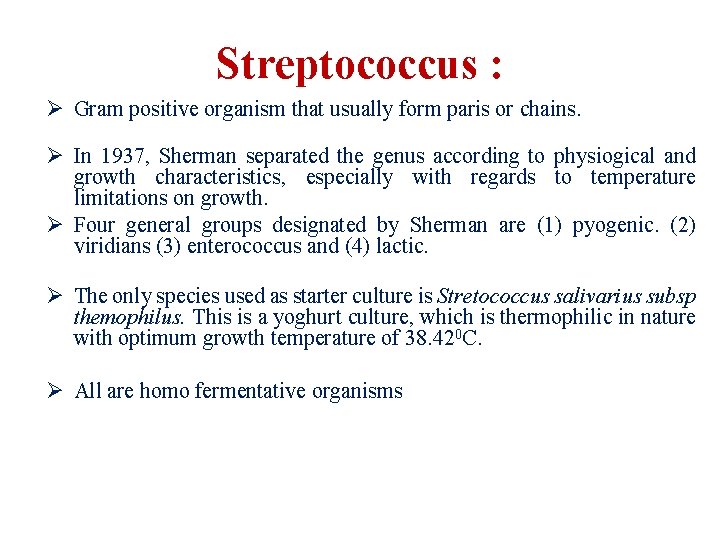
Streptococcus : Ø Gram positive organism that usually form paris or chains. Ø In 1937, Sherman separated the genus according to physiogical and growth characteristics, especially with regards to temperature limitations on growth. Ø Four general groups designated by Sherman are (1) pyogenic. (2) viridians (3) enterococcus and (4) lactic. Ø The only species used as starter culture is Stretococcus salivarius subsp themophilus. This is a yoghurt culture, which is thermophilic in nature with optimum growth temperature of 38. 420 C. Ø All are homo fermentative organisms
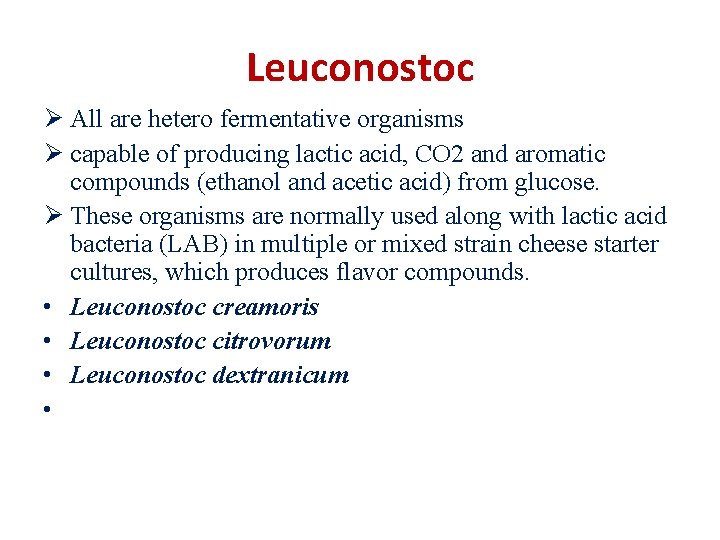
Leuconostoc Ø All are hetero fermentative organisms Ø capable of producing lactic acid, CO 2 and aromatic compounds (ethanol and acetic acid) from glucose. Ø These organisms are normally used along with lactic acid bacteria (LAB) in multiple or mixed strain cheese starter cultures, which produces flavor compounds. • Leuconostoc creamoris • Leuconostoc citrovorum • Leuconostoc dextranicum •
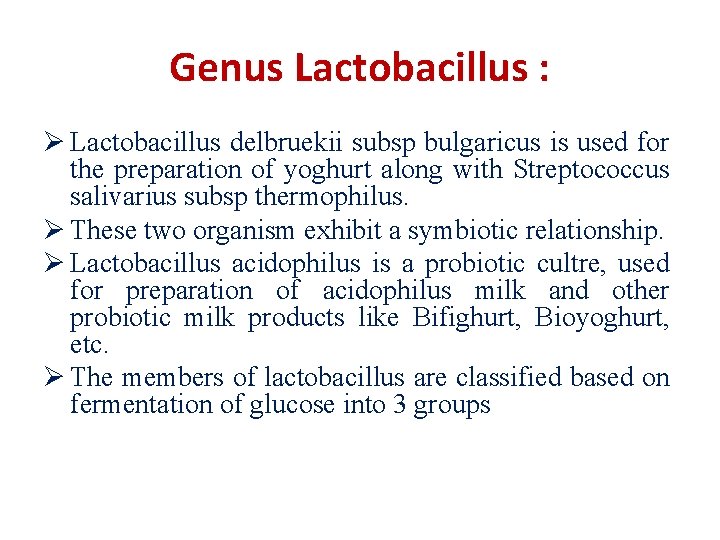
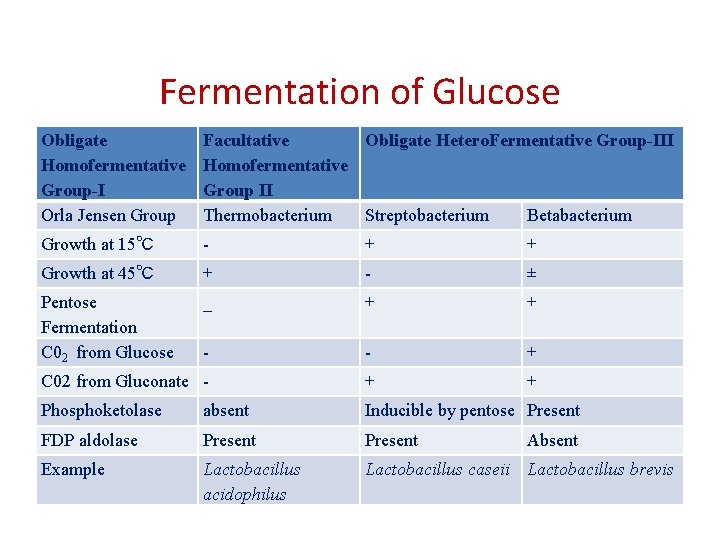
Genus Lactobacillus : Ø Lactobacillus delbruekii subsp bulgaricus is used for the preparation of yoghurt along with Streptococcus salivarius subsp thermophilus. Ø These two organism exhibit a symbiotic relationship. Ø Lactobacillus acidophilus is a probiotic cultre, used for preparation of acidophilus milk and other probiotic milk products like Bifighurt, Bioyoghurt, etc. Ø The members of lactobacillus are classified based on fermentation of glucose into 3 groups
Fermentation of Glucose Obligate Homofermentative Group-I Orla Jensen Group Facultative Obligate Hetero. Fermentative Group-III Homofermentative Group II Thermobacterium Streptobacterium Betabacterium Growth at 15℃ - + + Growth at 45℃ + - ± Pentose Fermentation C 02 from Glucose _ + + - - + C 02 from Gluconate - + + Phosphoketolase absent Inducible by pentose Present FDP aldolase Present Example Lactobacillus acidophilus Lactobacillus caseii Lactobacillus brevis Absent
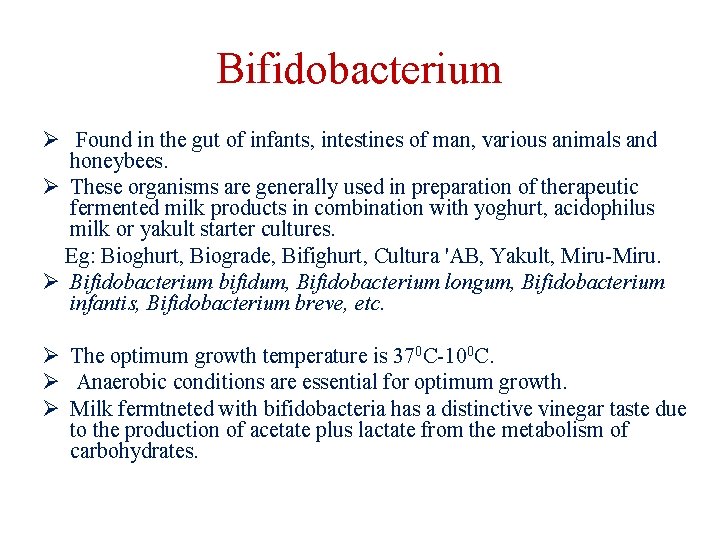
Bifidobacterium Ø Found in the gut of infants, intestines of man, various animals and honeybees. Ø These organisms are generally used in preparation of therapeutic fermented milk products in combination with yoghurt, acidophilus milk or yakult starter cultures. Eg: Bioghurt, Biograde, Bifighurt, Cultura 'AB, Yakult, Miru-Miru. Ø Bifidobacterium bifidum, Bifidobacterium longum, Bifidobacterium infantis, Bifidobacterium breve, etc. Ø The optimum growth temperature is 370 C-100 C. Ø Anaerobic conditions are essential for optimum growth. Ø Milk fermtneted with bifidobacteria has a distinctive vinegar taste due to the production of acetate plus lactate from the metabolism of carbohydrates.
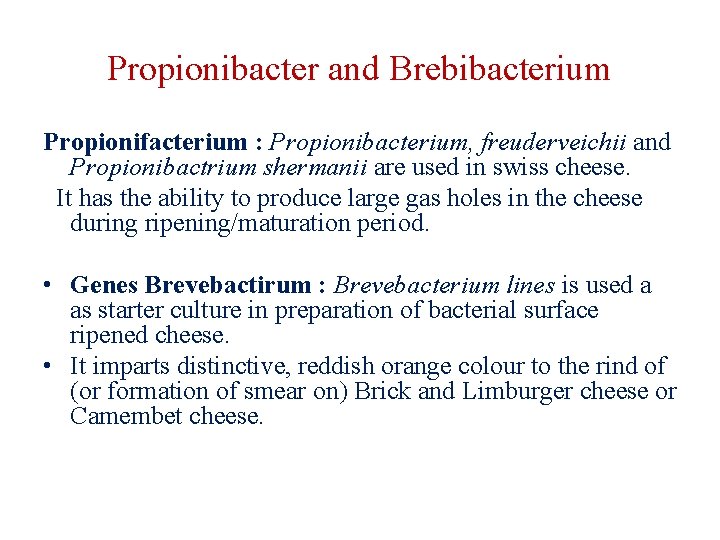
Propionibacter and Brebibacterium Propionifacterium : Propionibacterium, freuderveichii and Propionibactrium shermanii are used in swiss cheese. It has the ability to produce large gas holes in the cheese during ripening/maturation period. • Genes Brevebactirum : Brevebacterium lines is used a as starter culture in preparation of bacterial surface ripened cheese. • It imparts distinctive, reddish orange colour to the rind of (or formation of smear on) Brick and Limburger cheese or Camembet cheese.
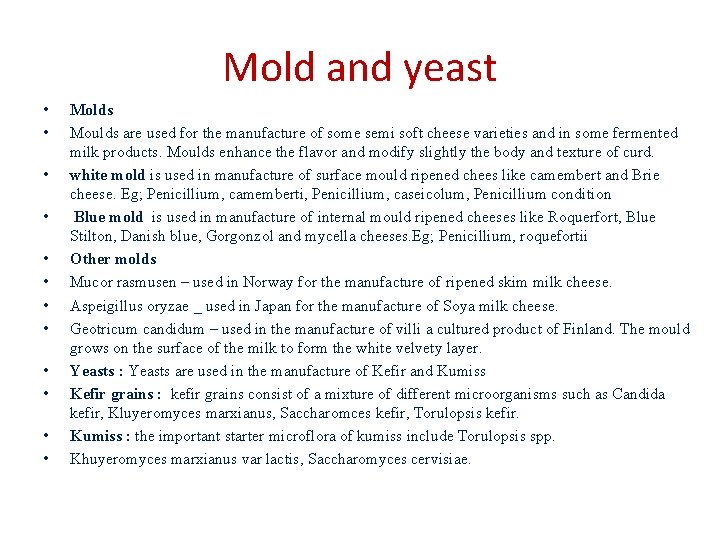
Mold and yeast • • • Molds Moulds are used for the manufacture of some semi soft cheese varieties and in some fermented milk products. Moulds enhance the flavor and modify slightly the body and texture of curd. white mold is used in manufacture of surface mould ripened chees like camembert and Brie cheese. Eg; Penicillium, camemberti, Penicillium, caseicolum, Penicillium condition Blue mold is used in manufacture of internal mould ripened cheeses like Roquerfort, Blue Stilton, Danish blue, Gorgonzol and mycella cheeses. Eg; Penicillium, roquefortii Other molds Mucor rasmusen – used in Norway for the manufacture of ripened skim milk cheese. Aspeigillus oryzae _ used in Japan for the manufacture of Soya milk cheese. Geotricum candidum – used in the manufacture of villi a cultured product of Finland. The mould grows on the surface of the milk to form the white velvety layer. Yeasts : Yeasts are used in the manufacture of Kefir and Kumiss Kefir grains : kefir grains consist of a mixture of different microorganisms such as Candida kefir, Kluyeromyces marxianus, Saccharomces kefir, Torulopsis kefir. Kumiss : the important starter microflora of kumiss include Torulopsis spp. Khuyeromyces marxianus var lactis, Saccharomyces cervisiae.
Purpose of Propagation, Traditional Methods. Advantage And Limitations. Ø Aim of propagation is to maintain pure cultures and activate cultures without any loss of viability. Ø The culture organisms are preserved in small qualities known as stock cultures. Ø Fermentation process of any cultured dairy product relies on the 'purity' and activity of the starter culture.