
Starter Activity Acute VS Chronic An illness is

- Slides: 11
Starter Activity: Acute VS Chronic “An illness is a disease or period of sickness affecting the body or mind. ” However, there are different types of illnesses which are known as either ‘acute’ or ‘chronic’. These are linked to the length/ability to overcome the illness. In pairs, discuss the definitions for these and what you think they might mean. Challenge: Try and give some examples of acute and chronic illnesses.
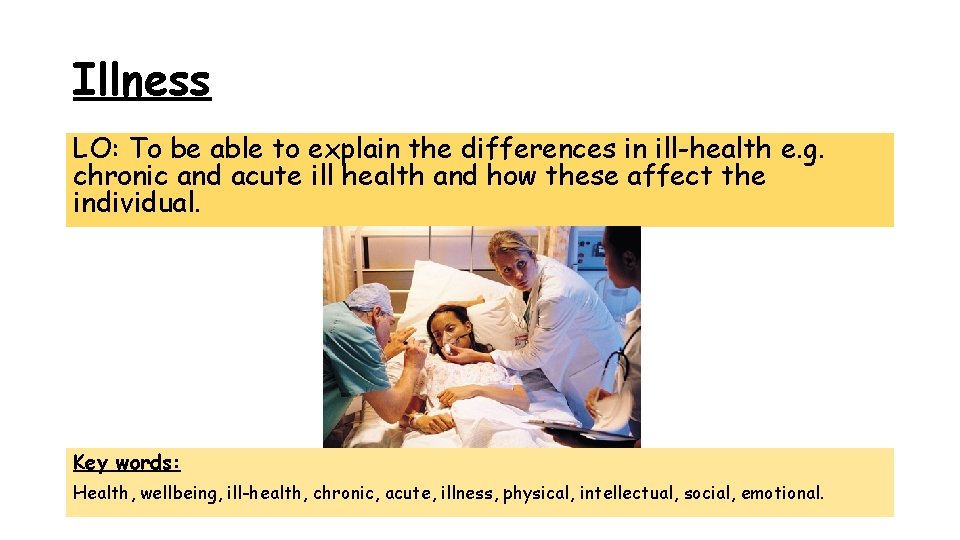
Illness LO: To be able to explain the differences in ill-health e. g. chronic and acute ill health and how these affect the individual. Key words: Health, wellbeing, ill-health, chronic, acute, illness, physical, intellectual, social, emotional.
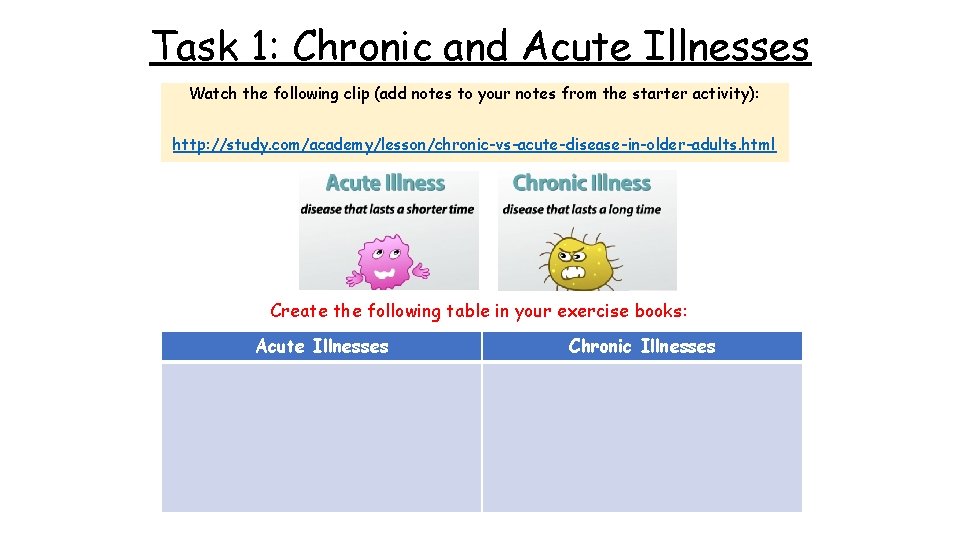
Task 1: Chronic and Acute Illnesses Watch the following clip (add notes to your notes from the starter activity): http: //study. com/academy/lesson/chronic-vs-acute-disease-in-older-adults. html Create the following table in your exercise books: Acute Illnesses Chronic Illnesses
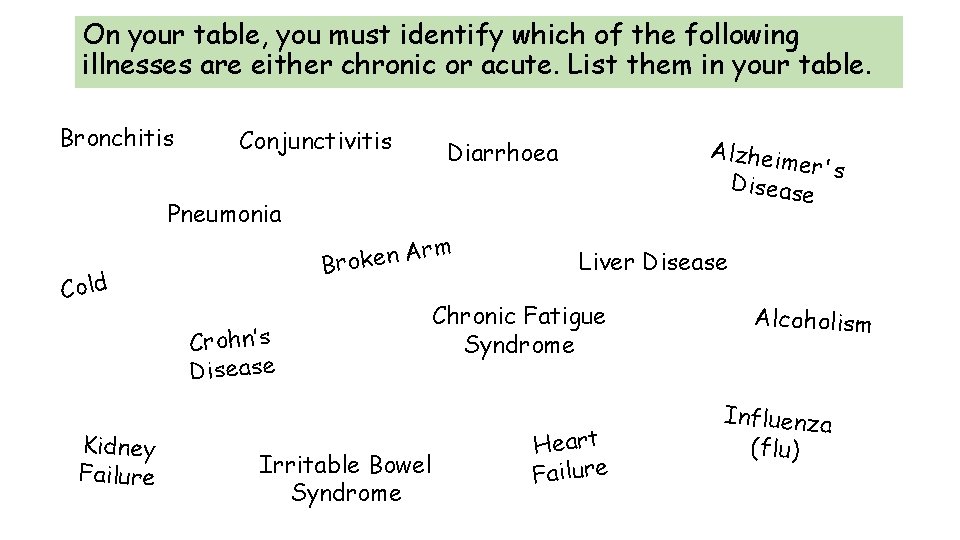
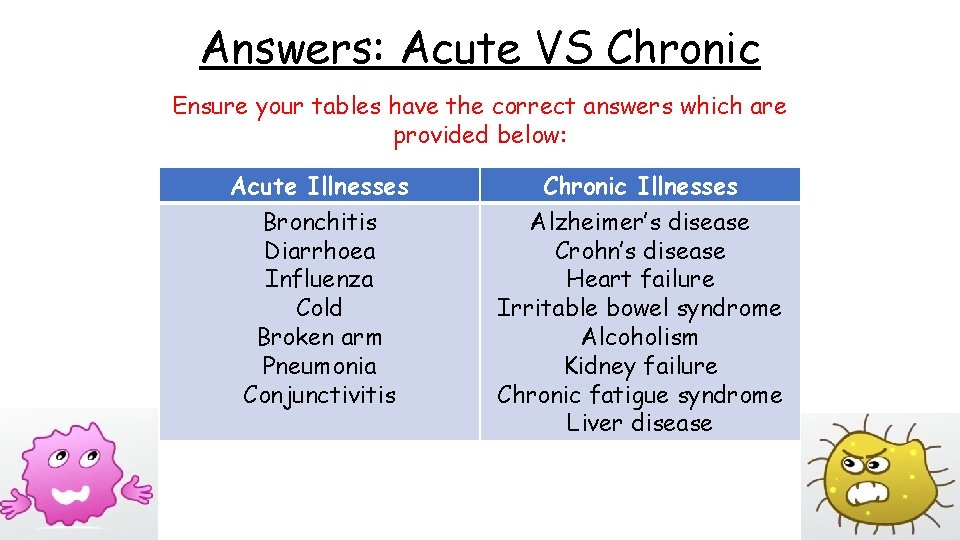
On your table, you must identify which of the following illnesses are either chronic or acute. List them in your table. Bronchitis Conjunctivitis Alzheim er's Disease Diarrhoea Pneumonia rm A Broken Cold Crohn’s Disease Kidney Failure Irritable Bowel Syndrome Liver Disease Chronic Fatigue Syndrome Heart Failure Alcoholism Influenza (flu)
Answers: Acute VS Chronic Ensure your tables have the correct answers which are provided below: Acute Illnesses Bronchitis Diarrhoea Influenza Cold Broken arm Pneumonia Conjunctivitis Chronic Illnesses Alzheimer’s disease Crohn’s disease Heart failure Irritable bowel syndrome Alcoholism Kidney failure Chronic fatigue syndrome Liver disease
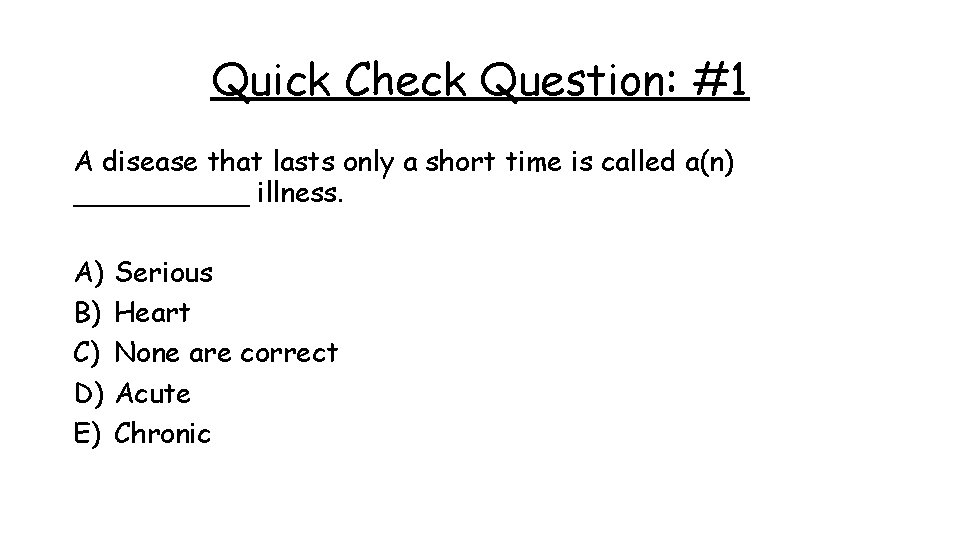
Quick Check Question: #1 A disease that lasts only a short time is called a(n) _____ illness. A) B) C) D) E) Serious Heart None are correct Acute Chronic
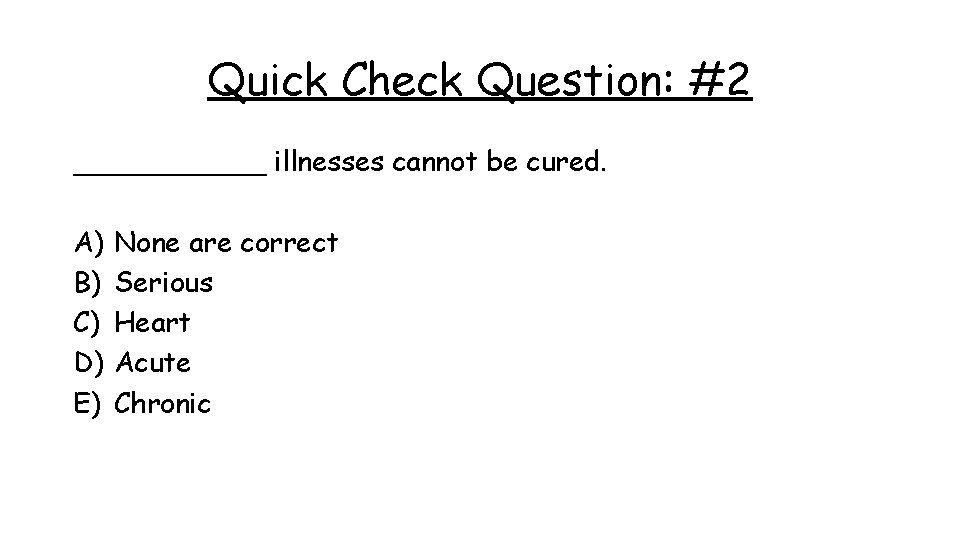
Quick Check Question: #2 ______ illnesses cannot be cured. A) B) C) D) E) None are correct Serious Heart Acute Chronic
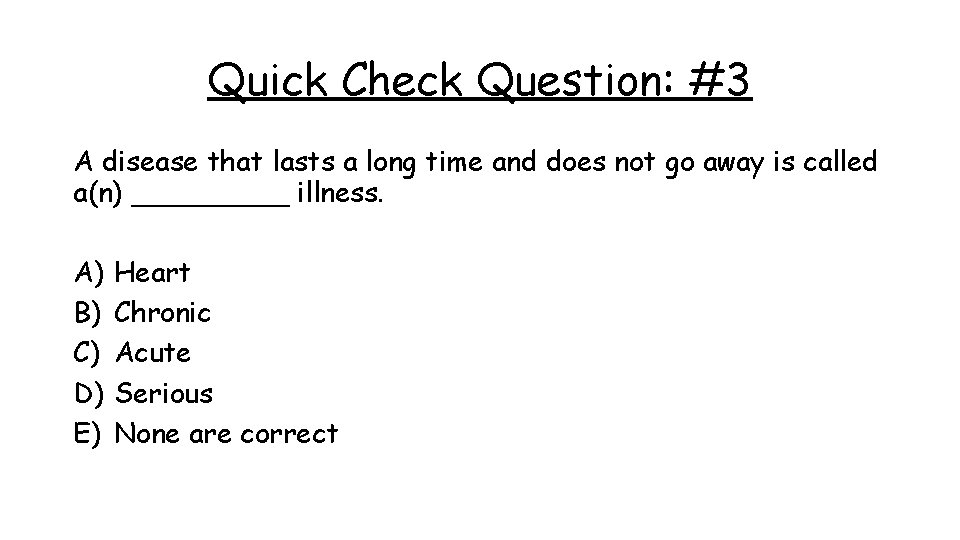
Quick Check Question: #3 A disease that lasts a long time and does not go away is called a(n) _____ illness. A) B) C) D) E) Heart Chronic Acute Serious None are correct
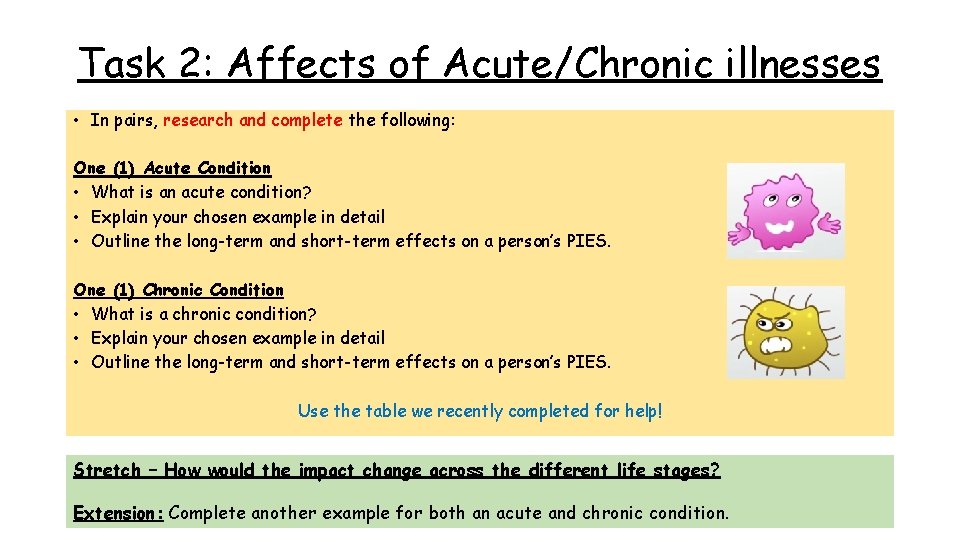
Task 2: Affects of Acute/Chronic illnesses • In pairs, research and complete the following: One (1) Acute Condition • What is an acute condition? • Explain your chosen example in detail • Outline the long-term and short-term effects on a person’s PIES. One (1) Chronic Condition • What is a chronic condition? • Explain your chosen example in detail • Outline the long-term and short-term effects on a person’s PIES. Use the table we recently completed for help! Stretch – How would the impact change across the different life stages? Extension: Complete another example for both an acute and chronic condition.
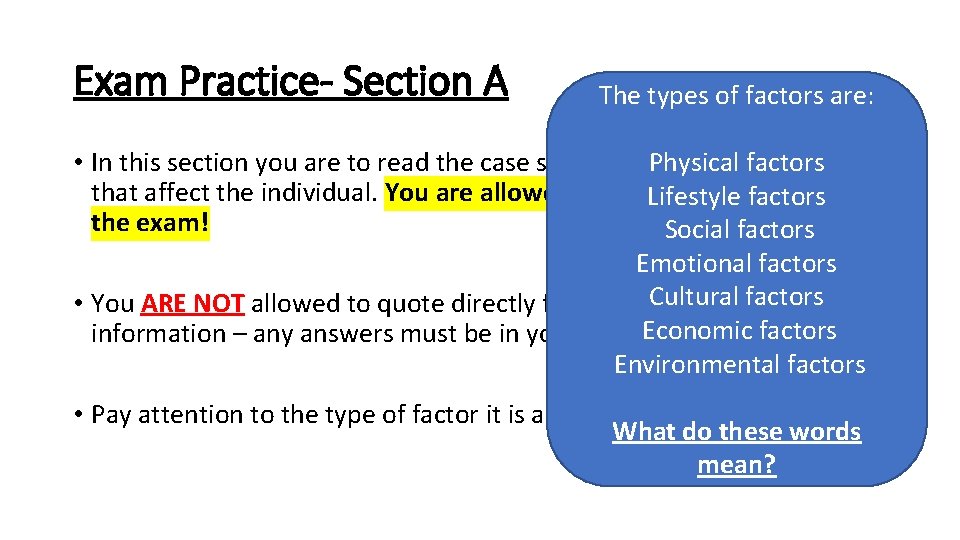
Exam Practice- Section A The types of factors are: • In this section you are to read the case study and Physical highlightfactors any factors that affect the individual. You are allowed to bring highlighters Lifestyle factorsinto the exam! Social factors Emotional factors Cultural factors • You ARE NOT allowed to quote directly from the case study Economic factors information – any answers must be in your own words. Environmental factors • Pay attention to the type of factor it is asking you about. What do these words mean?
Plenary: Debate the following: A long term condition which is controlled by medication (e. g. asthma) has more impact on the health and wellbeing of the individual as opposed to a heart attack. Do you agree or disagree? In pairs, you have 2 minutes to think of reasons why you agree/disagree. Using the random name generator, if your name of your partners name is landed on, you must give your reasons. Use examples to support!