
START Triage During a Mass Casualty Gina Smith


- Slides: 30
START Triage During a Mass Casualty Gina Smith RN Director of Emergency Management
Presenter Gina Smith RN CHEP Team Commander MA-2 DMAT UMass Memorial Medical Center Program Director EMS Emergency Management Injury Prevention
Disclosure Statement: I have no actual or potential conflict of interest in relation to this program/presentation. Gina Smith
Objectives Describe the key elements of disaster triage n Recognize the basic principles of “START” Mass Casualty Triage n Demonstrate options for Start Triage tagging n
MCI Mass Casualty Incident An incident which generates more patients than available resources can manage using routine procedures
Determining Factors · number of patients · number of ambulances. · number of available, qualified personnel. · personnel efficiency. · number of appropriate hospital beds. · minus the number of beds occupied by patients. · communications system capacity.
Medical concerns Search and rescue n Triage and initial stabilization n Evacuation n Definitive medical care n
Search and Rescue n n Local population is usually your first search and rescue team Communities are now developing specially trained Search and rescue teams Technical specialists knowledgeable in HAZMAT, structural engineering, and technical search and rescue equipment such as listening devices, remote cameras etc. May include trained canines
START Simple Triage And Rapid Treatment
START n Developed in the early 1980’s n Rapid approach to triaging large numbers of casualties n Easy to remember
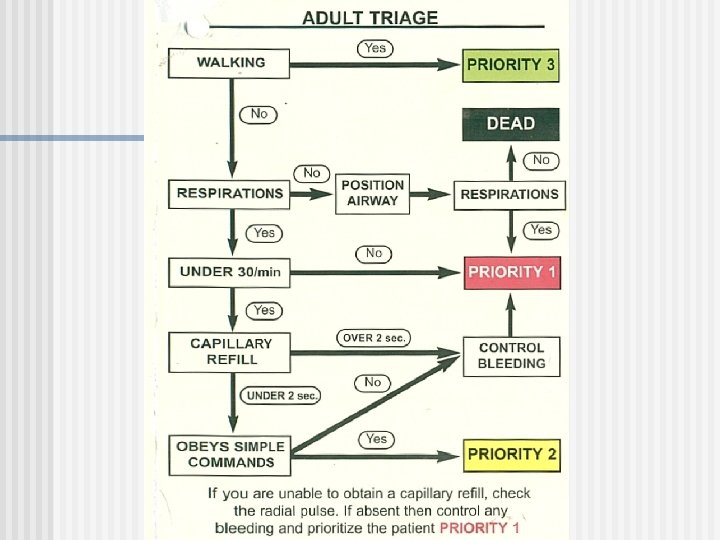
START MCI Triage n Initial assessment and treatment should take less than 30 seconds for each patient
Triage Categories Red (Priority 1) n Yellow (Priority 2) n Green (Priority 3) n Black (Dead or death is imminent) n
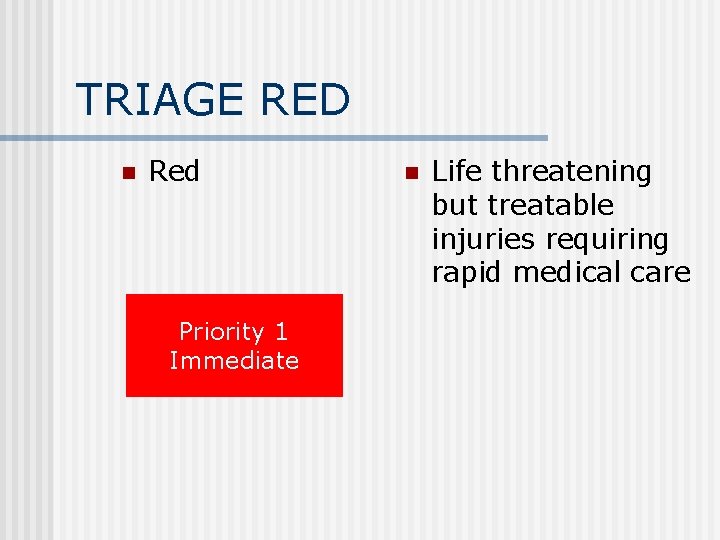
TRIAGE RED n Red Priority 1 Immediate n Life threatening but treatable injuries requiring rapid medical care
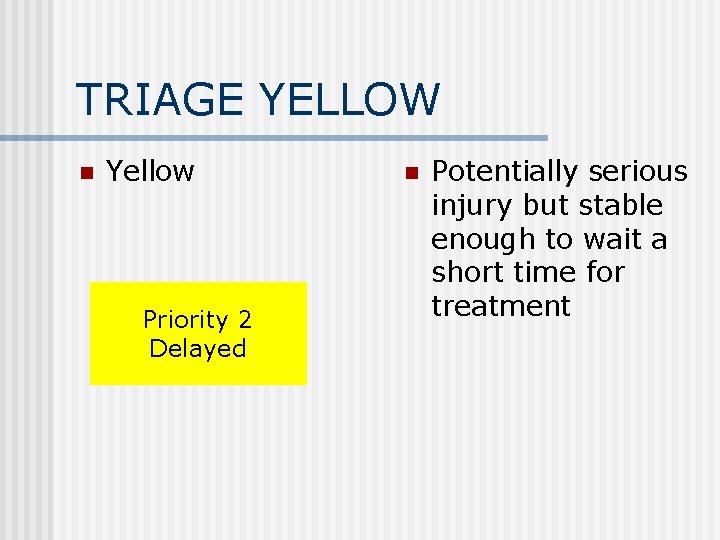
TRIAGE YELLOW n Yellow Priority 2 Delayed n Potentially serious injury but stable enough to wait a short time for treatment
TRIAGE GREEN n Green Priority 3 Minor n Minor injury that can wait longer for treatment
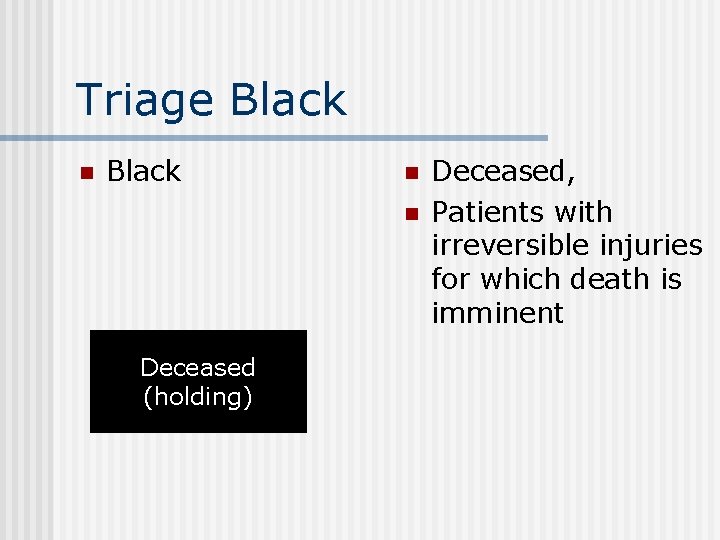
Triage Black n n Deceased (holding) Deceased, Patients with irreversible injuries for which death is imminent
Triage Begins n Clear the walking wounded from site using verbal instruction Direct them to treatment areas for detailed assessment and treatment Tag as GREEN or Priority 3
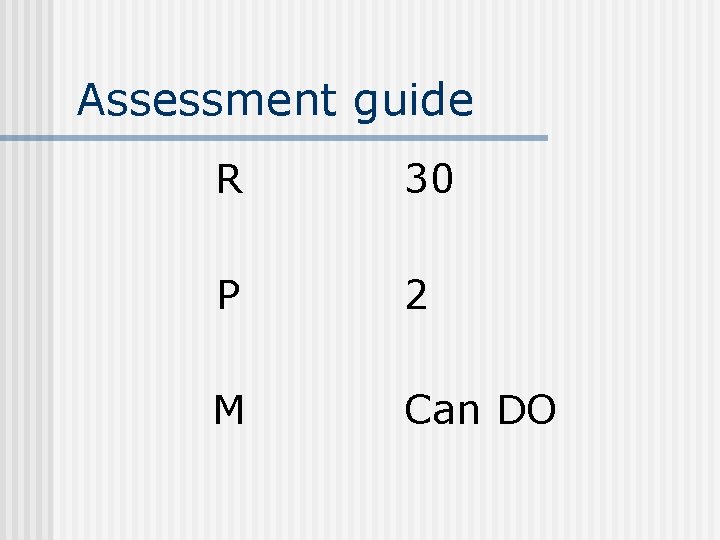
RPM n Respirations n Perfusion n Mental Status
Assessment guide R 30 P 2 M Can DO
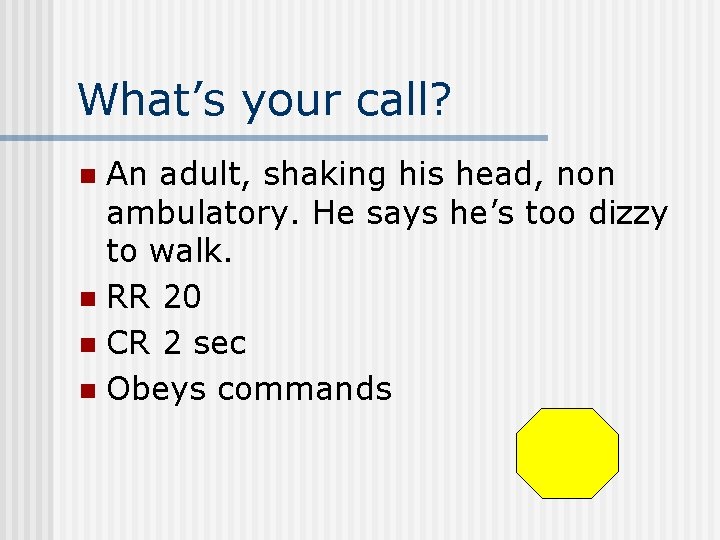
What’s your call? An adult, shaking his head, non ambulatory. He says he’s too dizzy to walk. n RR 20 n CR 2 sec n Obeys commands n
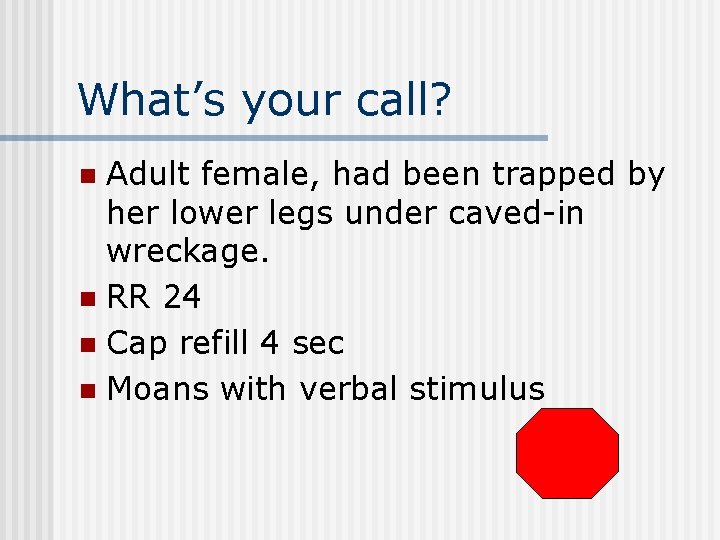
What’s your call? Adult female, had been trapped by her lower legs under caved-in wreckage. n RR 24 n Cap refill 4 sec n Moans with verbal stimulus n
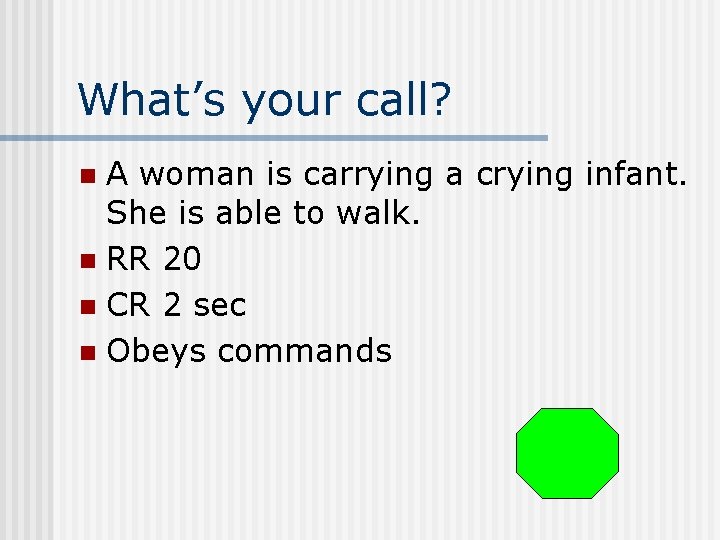
What’s your call? A woman is carrying a crying infant. She is able to walk. n RR 20 n CR 2 sec n Obeys commands n
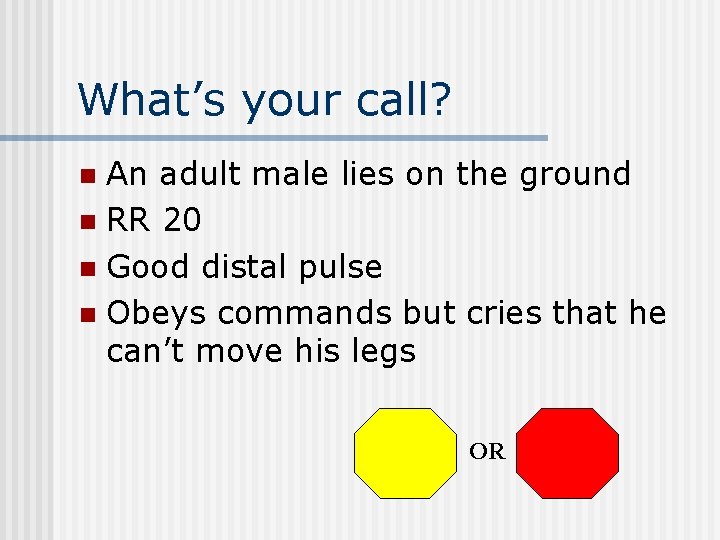
What’s your call? An adult male lies on the ground n RR 20 n Good distal pulse n Obeys commands but cries that he can’t move his legs n OR
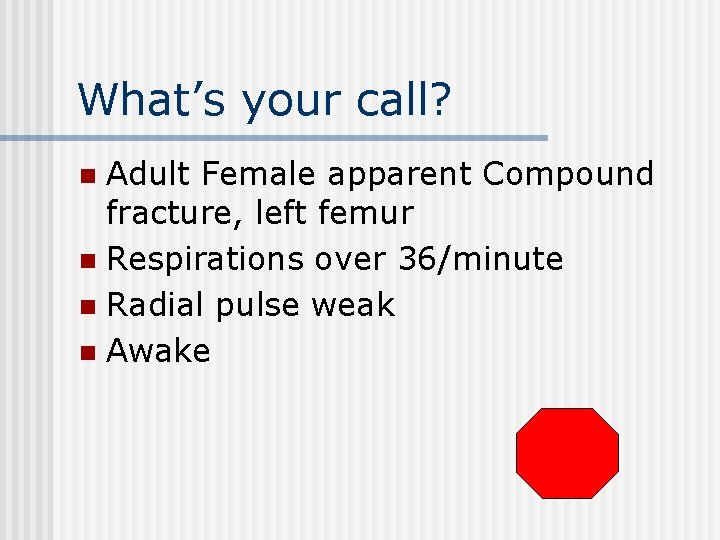
What’s your call? Adult Female apparent Compound fracture, left femur n Respirations over 36/minute n Radial pulse weak n Awake n
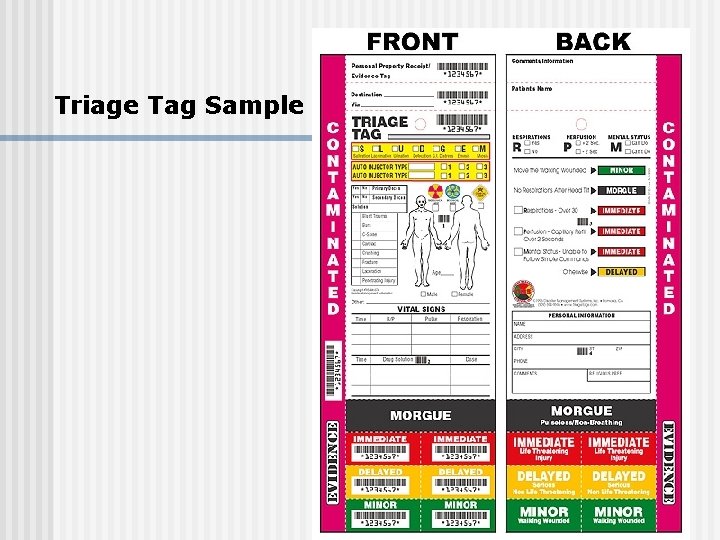
Triage Tag Sample
Hospital Triage Secondary Triage n Quickly reassess n Triage should take place outside of ER dept. n Initial hospital triage can be changed from initial field triage. n
Triage n Triage is a dynamic process and is often done more than once for each patient.
Triage Tagging Commercial product n Ribbons n Skin Markers n Colored tape n
Questions Thank you for all that you do!