
start Tightbinding Density Functional Theory DFTB an approximate

start

Tight-binding Density Functional Theory DFTB an approximate Kohn-Sham DFT scheme Gotthard Seifert Technische Universität Dresden Physikalische Chemie
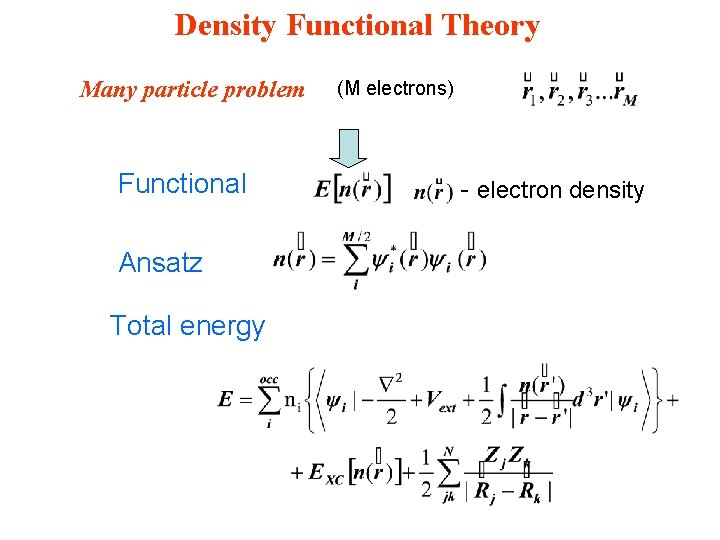
Density Functional Theory Many particle problem Functional Ansatz Total energy (M electrons) - electron density
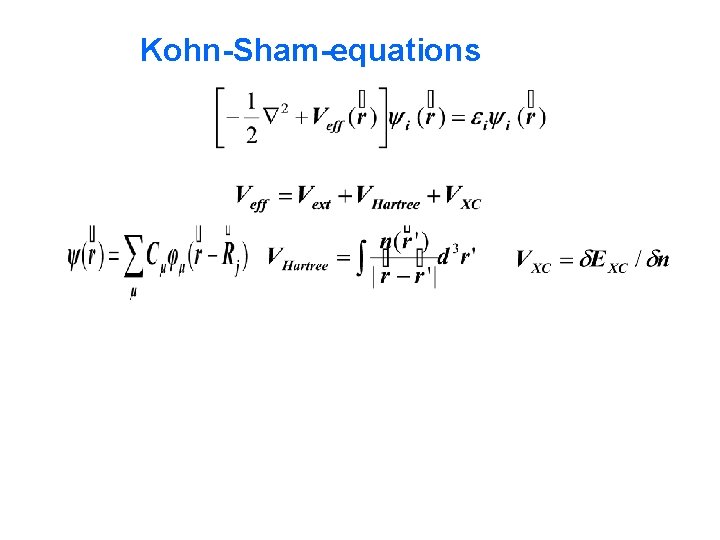
Kohn-Sham-equations Approximation for VXC LDA (LDA – Local Density Approximation) Gradient expansion GGA
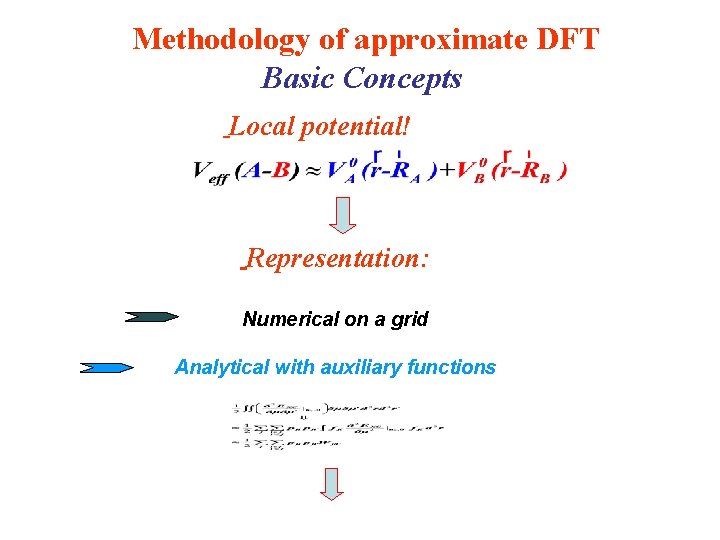
Methodology of approximate DFT Basic Concepts Local potential! Representation: Numerical on a grid Analytical with auxiliary functions
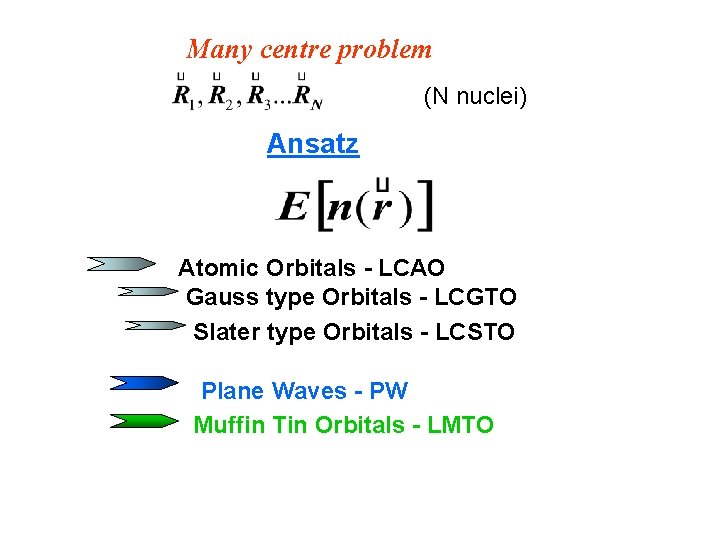
Many centre problem (N nuclei) Ansatz Atomic Orbitals - LCAO Gauss type Orbitals - LCGTO Slater type Orbitals - LCSTO Plane Waves - PW Muffin Tin Orbitals - LMTO
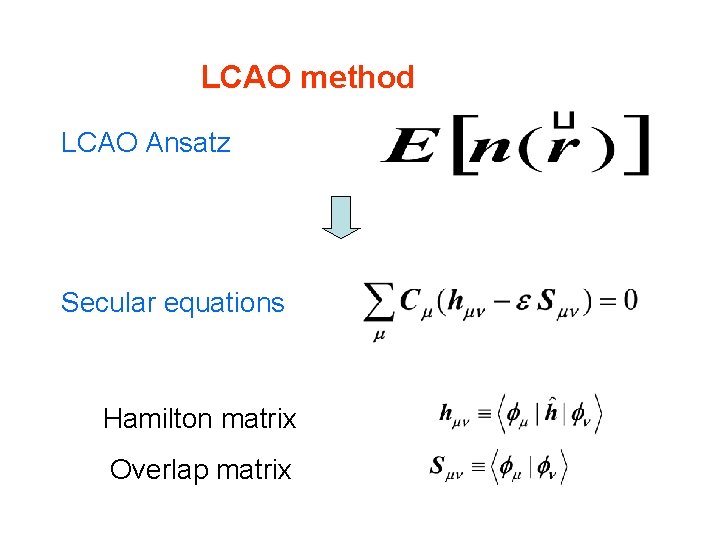
LCAO method LCAO Ansatz Secular equations Hamilton matrix Overlap matrix
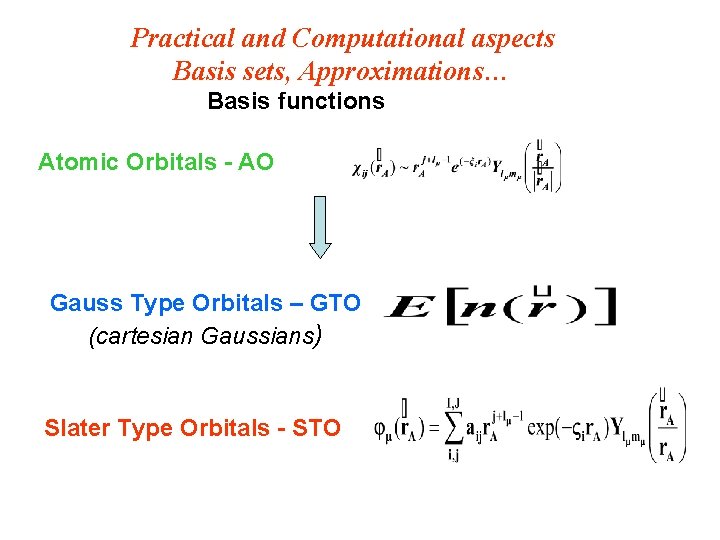
Practical and Computational aspects Basis sets, Approximations… Basis functions Atomic Orbitals - AO Gauss Type Orbitals – GTO (cartesian Gaussians) Slater Type Orbitals - STO
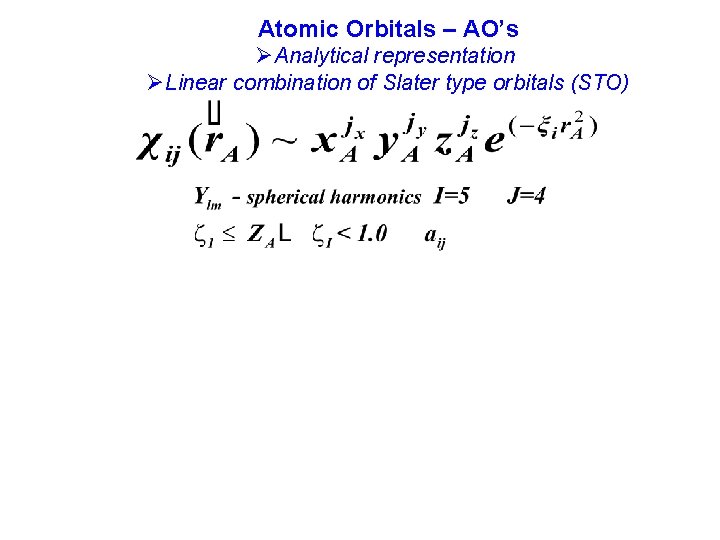
Atomic Orbitals – AO’s Analytical representation Linear combination of Slater type orbitals (STO) with
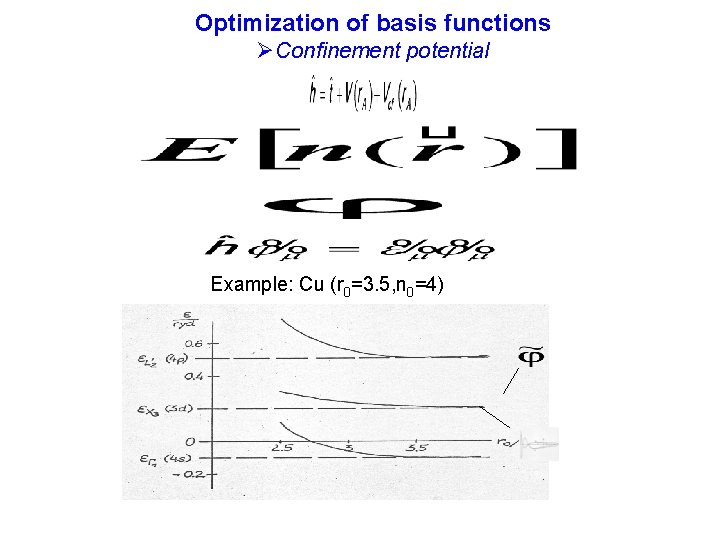
Optimization of basis functions Confinement potential Example: Cu (r 0=3. 5, n 0=4)
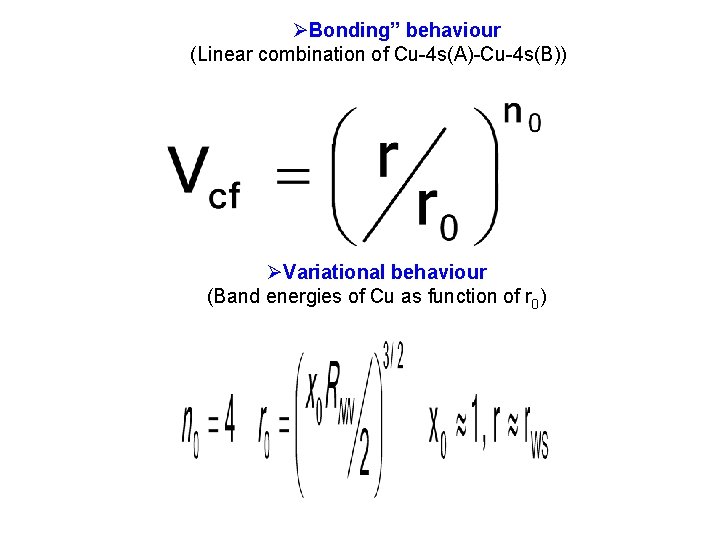
Bonding” behaviour (Linear combination of Cu-4 s(A)-Cu-4 s(B)) Variational behaviour (Band energies of Cu as function of r 0)
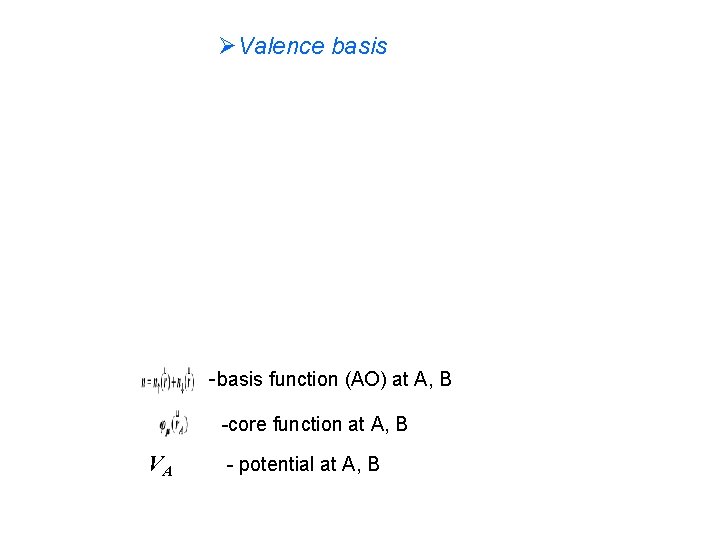
Valence basis -basis function (AO) at A, B -core function at A, B VA - potential at A, B
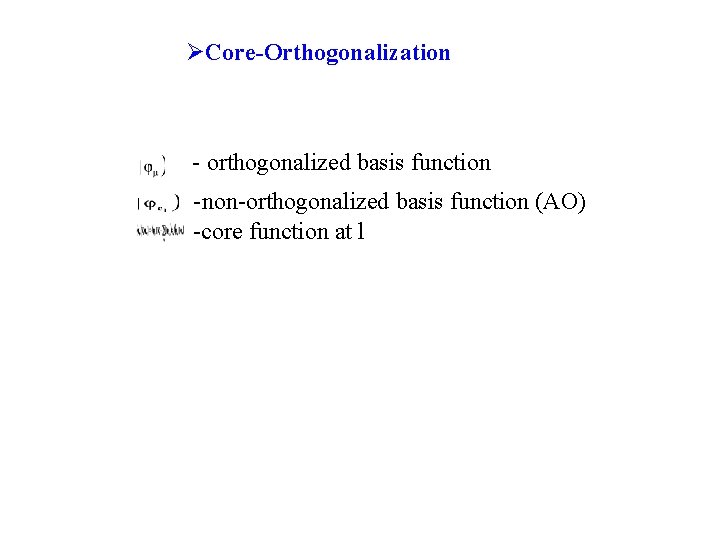
Core-Orthogonalization - orthogonalized basis function -non-orthogonalized basis function (AO) -core function at l Pseudopotentials Vl. PP I II Pseudopotentials for three centre (I) and crystal field (II) integrals
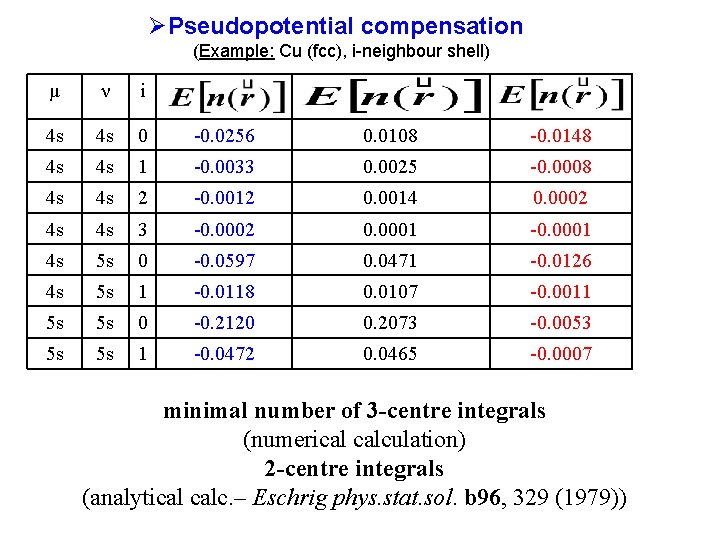
Pseudopotential compensation (Example: Cu (fcc), i-neighbour shell) μ ν i 4 s 4 s 0 -0. 0256 0. 0108 -0. 0148 4 s 4 s 1 -0. 0033 0. 0025 -0. 0008 4 s 4 s 2 -0. 0012 0. 0014 0. 0002 4 s 4 s 3 -0. 0002 0. 0001 -0. 0001 4 s 5 s 0 -0. 0597 0. 0471 -0. 0126 4 s 5 s 1 -0. 0118 0. 0107 -0. 0011 5 s 5 s 0 -0. 2120 0. 2073 -0. 0053 5 s 5 s 1 -0. 0472 0. 0465 -0. 0007 minimal number of 3 -centre integrals (numerical calculation) 2 -centre integrals (analytical calc. – Eschrig phys. stat. sol. b 96, 329 (1979))
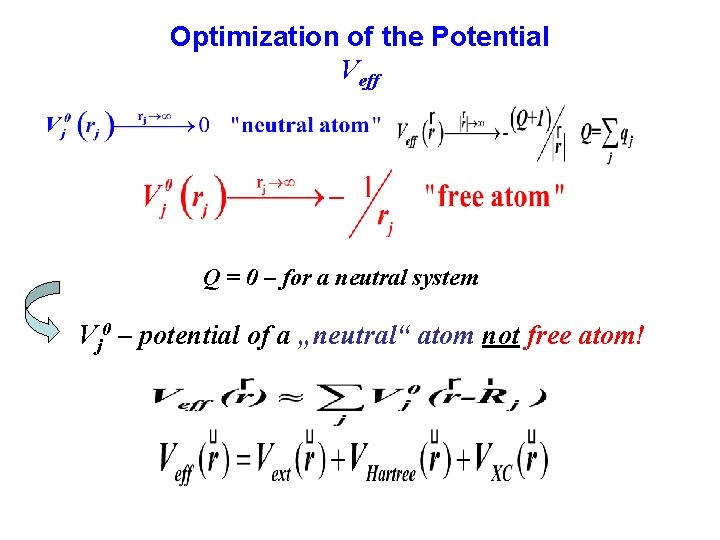
Optimization of the Potential Veff Q = 0 – for a neutral system Vj 0 – potential of a „neutral“ atom not free atom!
Potential of atomic N and around N in N 2 (spherically averaged)
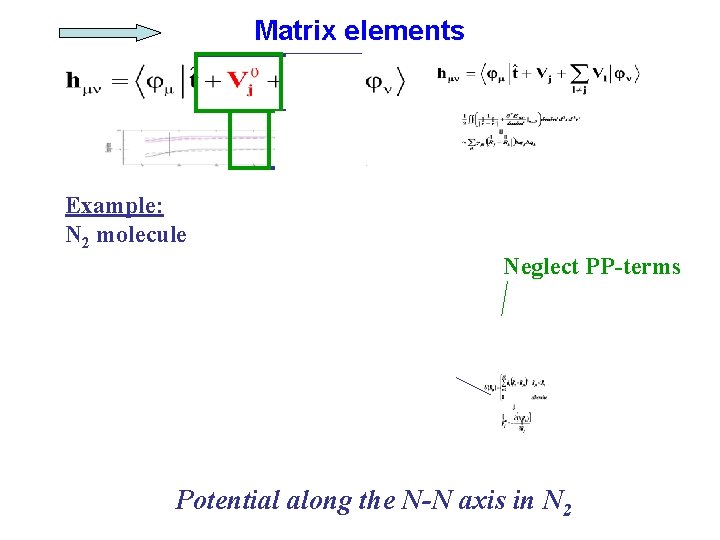
Matrix elements Example: N 2 molecule Neglect PP-terms Potential along the N-N axis in N 2
Kohn-Sham energies in CO Neglect PP-terms

Band Structure SCF-DFT calculation (FPLO)
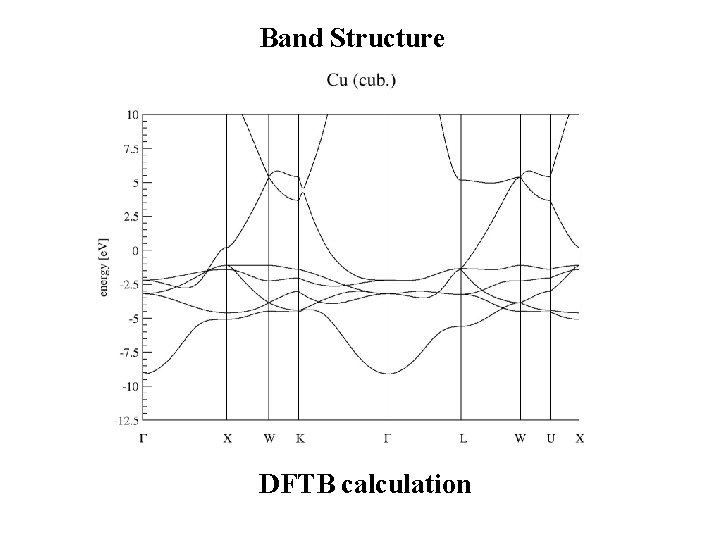
Band Structure DFTB calculation

Band Structure SCF-DFT calculation (FPLO) DFTB calculation
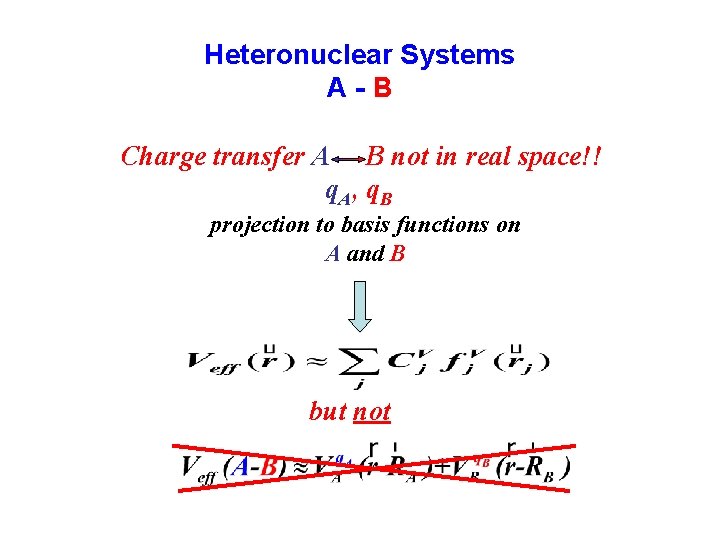
Heteronuclear Systems A-B Charge transfer A B not in real space!! q. A, q. B projection to basis functions on A and B but not
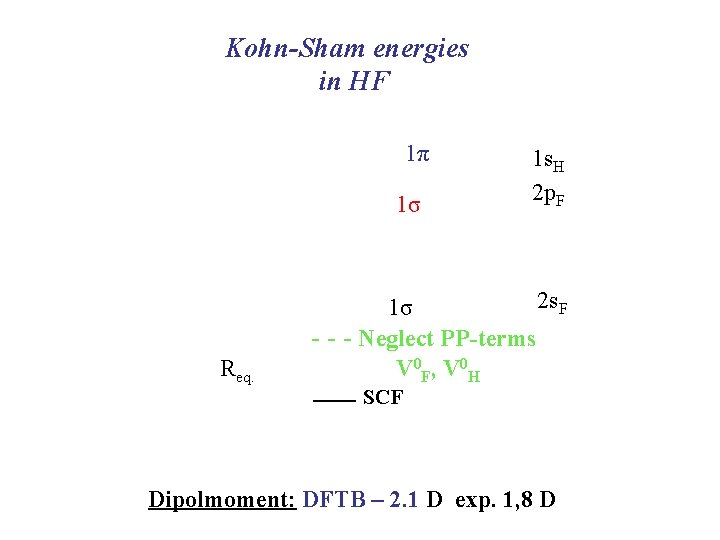
Kohn-Sham energies in HF 1π 1σ Req. 1 s. H 2 p. F 2 s. F 1σ - - - Neglect PP-terms V 0 F, V 0 H ___ SCF Dipolmoment: DFTB – 2. 1 D exp. 1, 8 D

Cadmiumsulfide — DFTB — SCF-LCAO-DFT (FPLO)

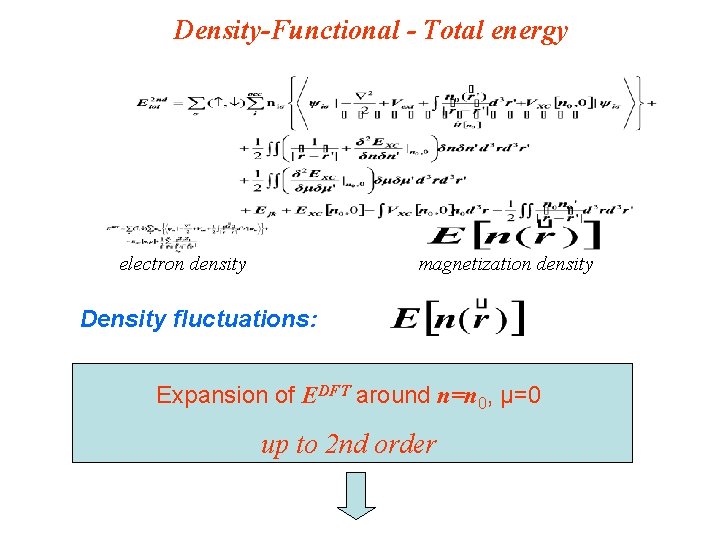
Density-Functional - Total energy electron density magnetization density Density fluctuations: Expansion of EDFT around n=n 0, μ=0 up to 2 nd order
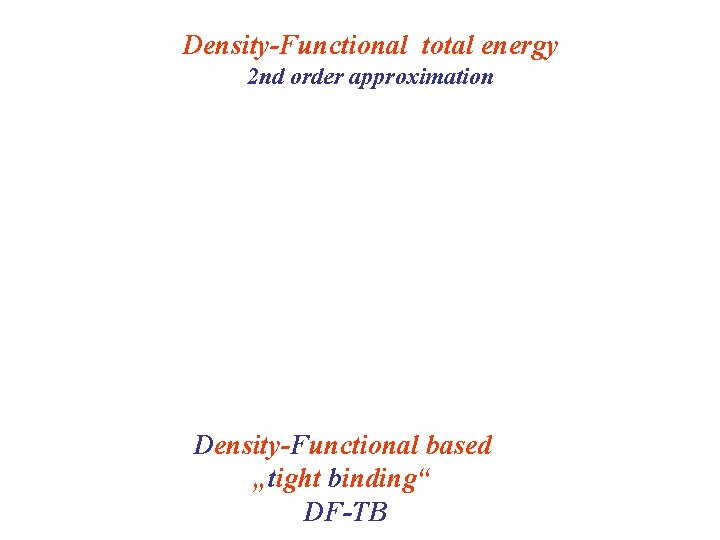
Density-Functional total energy 2 nd order approximation Density-Functional based „tight binding“ DF-TB
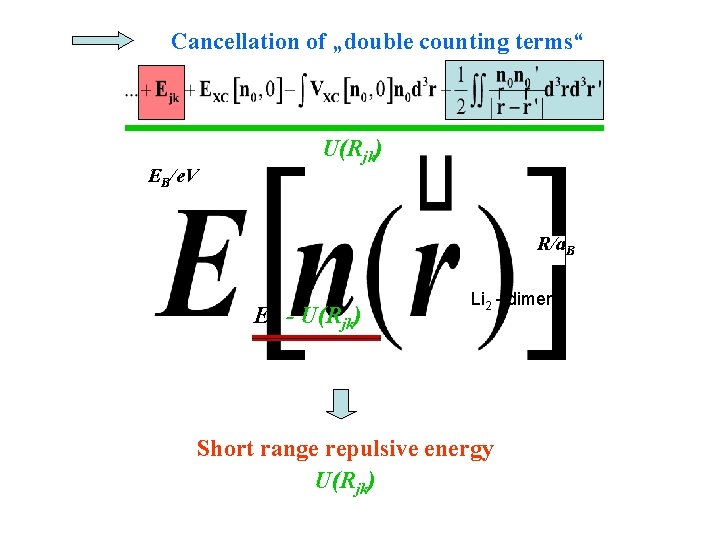
Cancellation of „double counting terms“ EB/e. V U(Rjk) R/a. B EB - U(Rjk) Li 2 - dimer Short range repulsive energy U(Rjk)
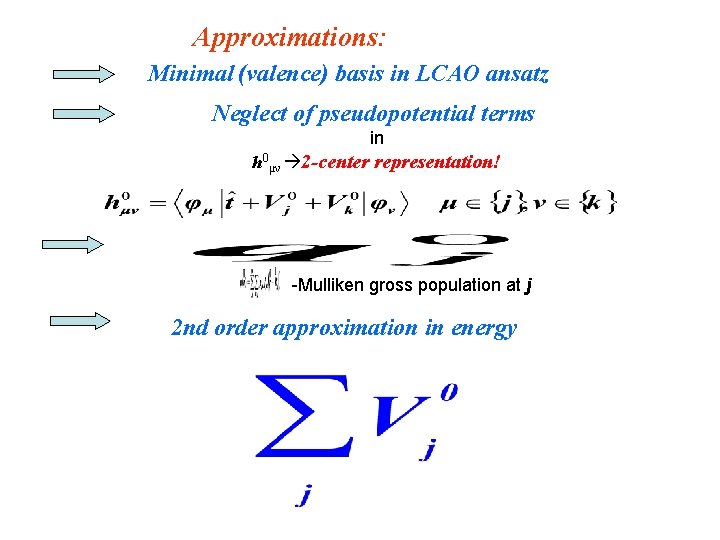
Approximations: Minimal (valence) basis in LCAO ansatz Neglect of pseudopotential terms in h 0μν 2 -center representation! -Mulliken gross population at j 2 nd order approximation in energy
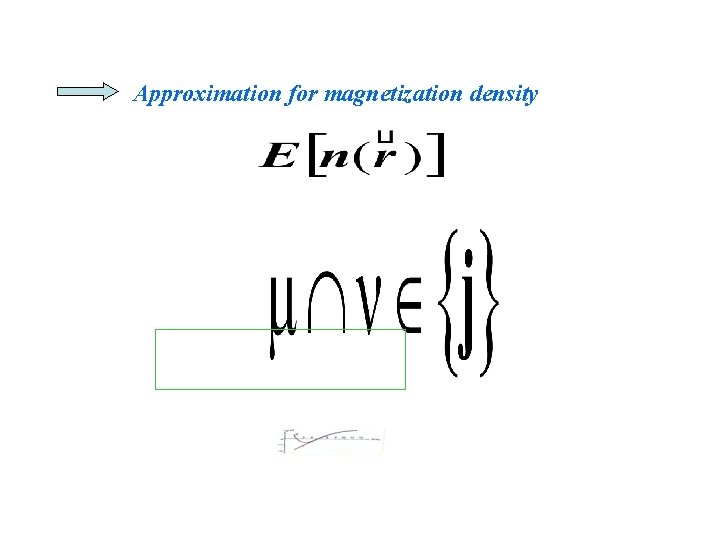
Approximation for magnetization density
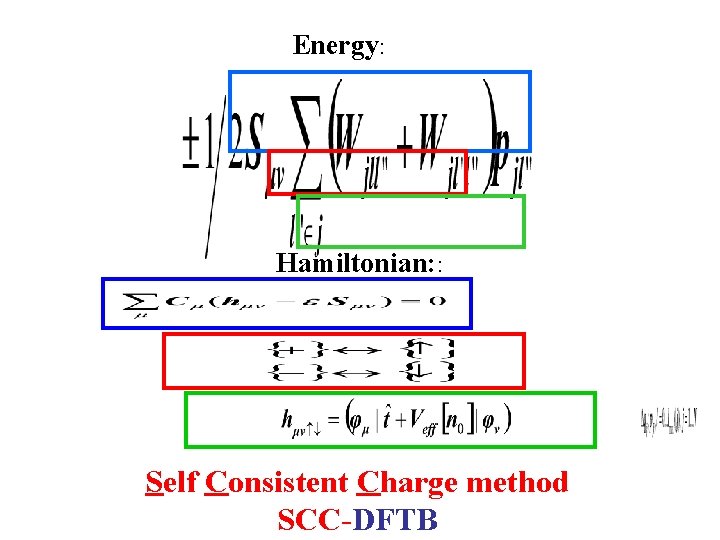
Energy: Hamiltonian: : Self Consistent Charge method SCC-DFTB
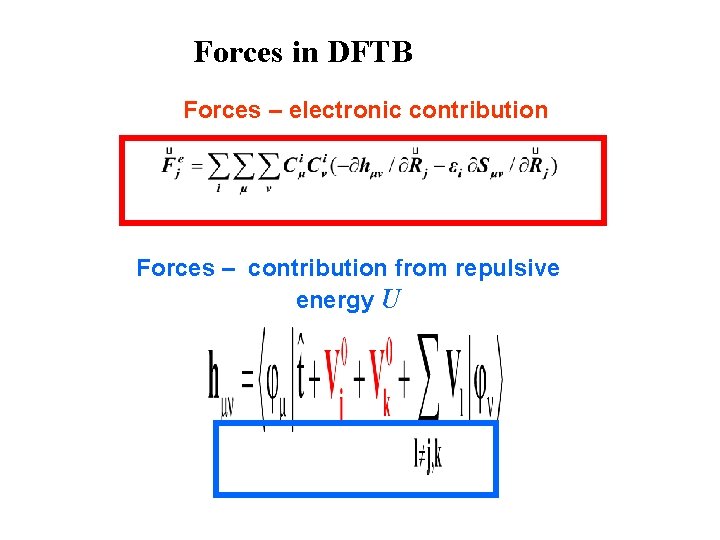
Forces in DFTB Forces – electronic contribution Forces – contribution from repulsive energy U
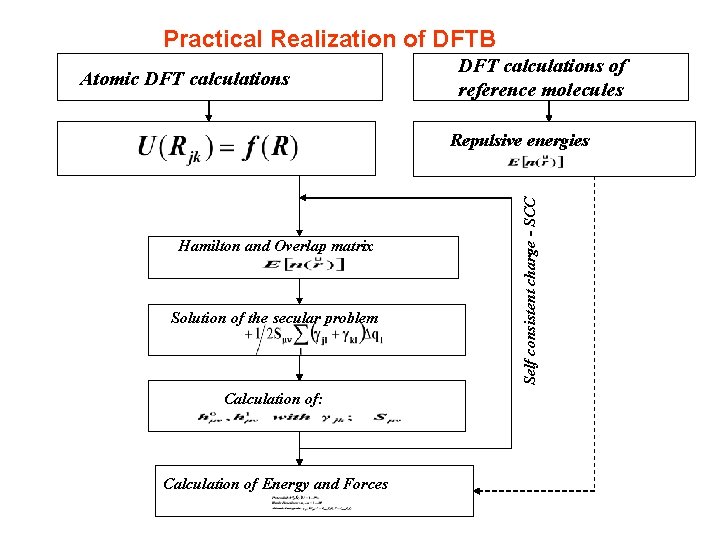
Practical Realization of DFTB Atomic DFT calculations of reference molecules Hamilton and Overlap matrix Solution of the secular problem Calculation of: Calculation of Energy and Forces Self consistent charge - SCC Repulsive energies

end
- Slides: 34