
Start of a new Roman Government Romans rebel
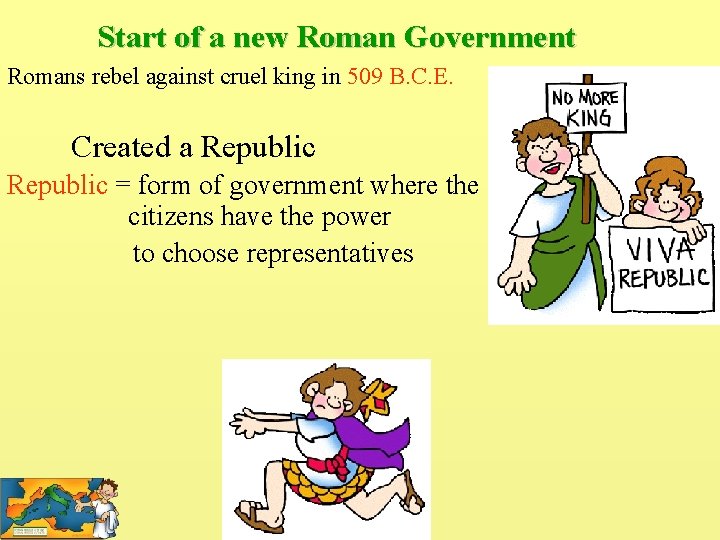
Start of a new Roman Government Romans rebel against cruel king in 509 B. C. E. Created a Republic = form of government where the citizens have the power to choose representatives
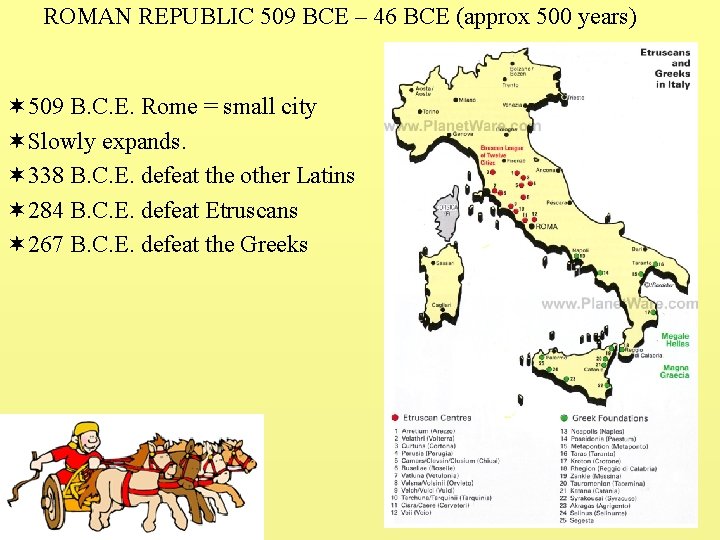
ROMAN REPUBLIC 509 BCE – 46 BCE (approx 500 years) ¬ 509 B. C. E. Rome = small city ¬Slowly expands. ¬ 338 B. C. E. defeat the other Latins ¬ 284 B. C. E. defeat Etruscans ¬ 267 B. C. E. defeat the Greeks
What was life like in the Republic? • ROME BECAME A LARGE CITY THAT WAS ABOUT 500 MILES AROUND • OUSTED KING AND INVENTED REPUBLICAN FORM OF GOVERNMENT • ONLY FREE-BORN MALES COULD VOTE (ROMAN MEN’S CLUB)
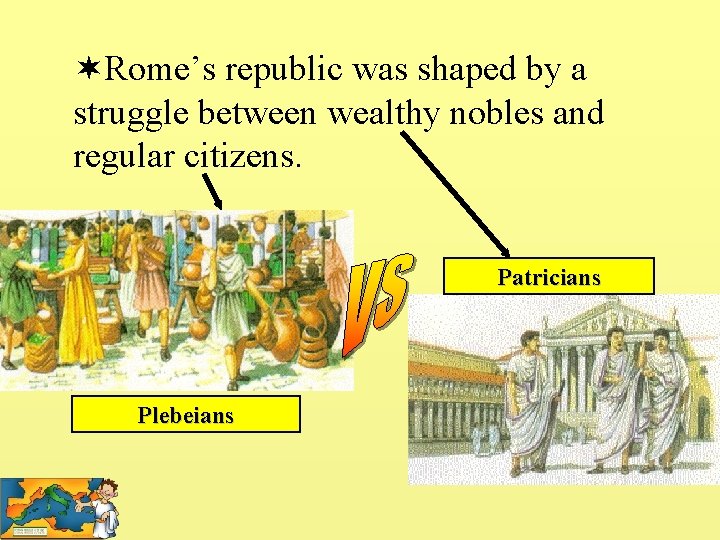
¬Rome’s republic was shaped by a struggle between wealthy nobles and regular citizens. Patricians Plebeians
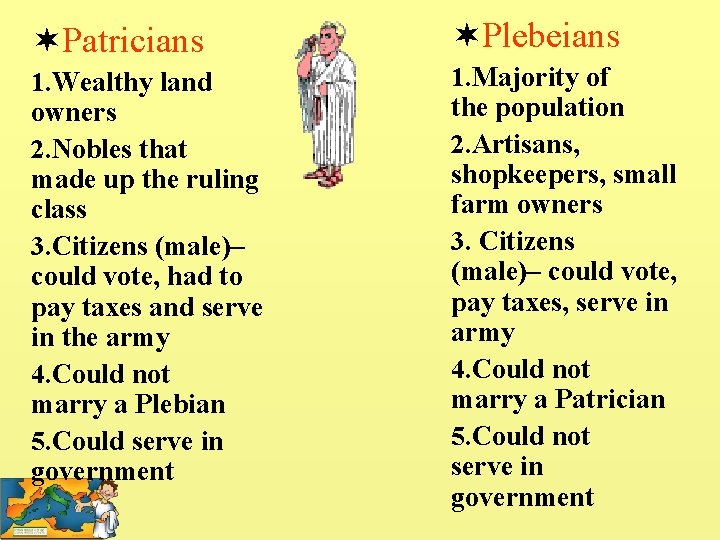
¬Patricians ¬Plebeians 1. Wealthy land owners 2. Nobles that made up the ruling class 3. Citizens (male)– could vote, had to pay taxes and serve in the army 4. Could not marry a Plebian 5. Could serve in government 1. Majority of the population 2. Artisans, shopkeepers, small farm owners 3. Citizens (male)– could vote, pay taxes, serve in army 4. Could not marry a Patrician 5. Could not serve in government
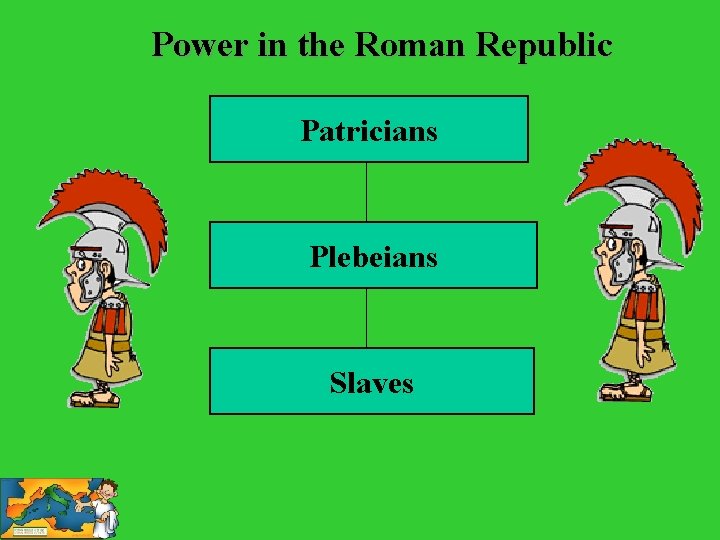
Power in the Roman Republic Patricians Plebeians Slaves
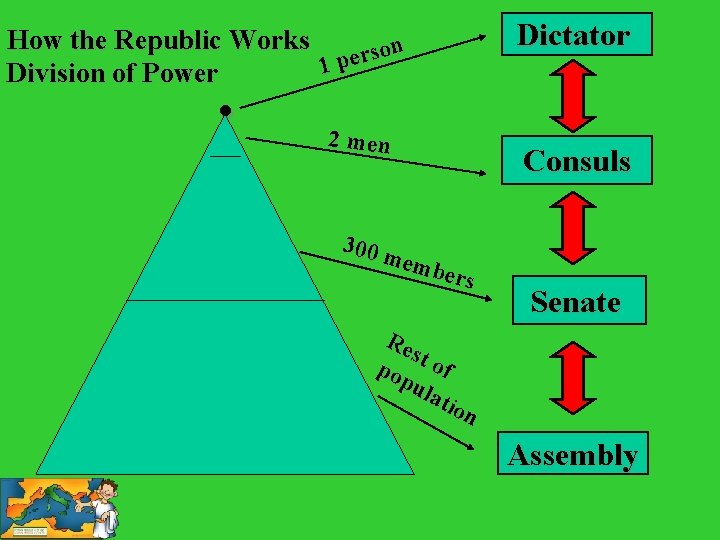
How the Republic Works n o s r e 1 p Division of Power . 2 men 300 m emb ers Dictator Consuls Senate Re st o po pu f lat ion Assembly
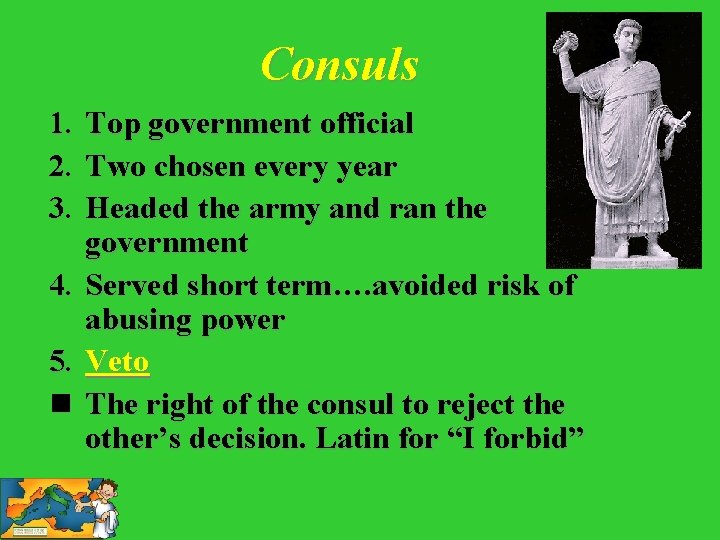
Consuls 1. 2. 3. 4. 5. n Top government official Two chosen every year Headed the army and ran the government Served short term…. avoided risk of abusing power Veto The right of the consul to reject the other’s decision. Latin for “I forbid”
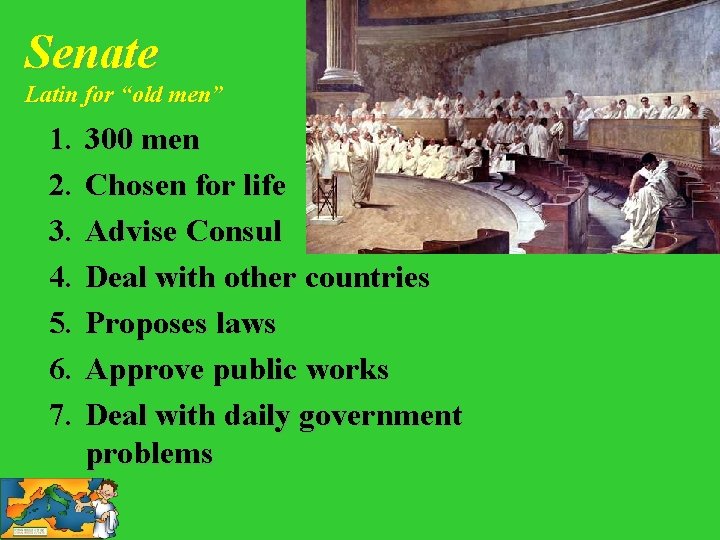
Senate Latin for “old men” 1. 2. 3. 4. 5. 6. 7. 300 men Chosen for life Advise Consul Deal with other countries Proposes laws Approve public works Deal with daily government problems
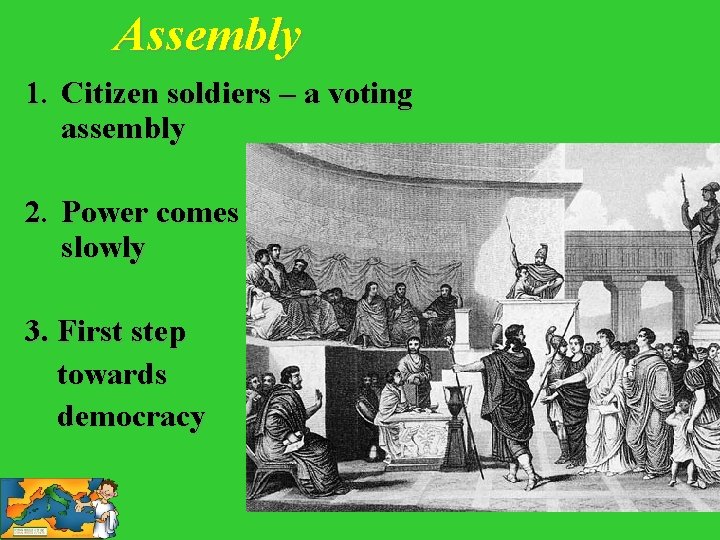
Assembly 1. Citizen soldiers – a voting assembly 2. Power comes slowly 3. First step towards democracy
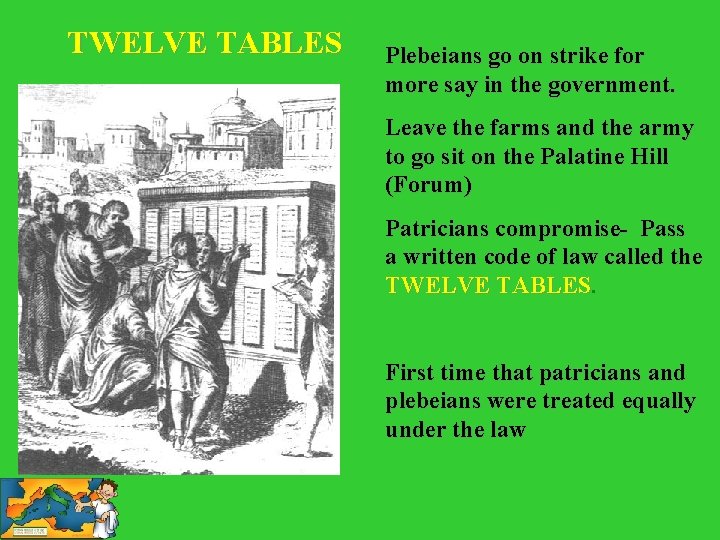
TWELVE TABLES Plebeians go on strike for more say in the government. Leave the farms and the army to go sit on the Palatine Hill (Forum) Patricians compromise- Pass a written code of law called the TWELVE TABLES. First time that patricians and plebeians were treated equally under the law
- Slides: 11