
Start at the End Problem Solving Strategy Start
Start at the End

Problem. Solving Strategy: Start at the End Almost always, the actual problem or the question that you are being asked to answer in a word problem will come at the very end of the word problem.
Problem-Solving Strategy: Start at the End An Example
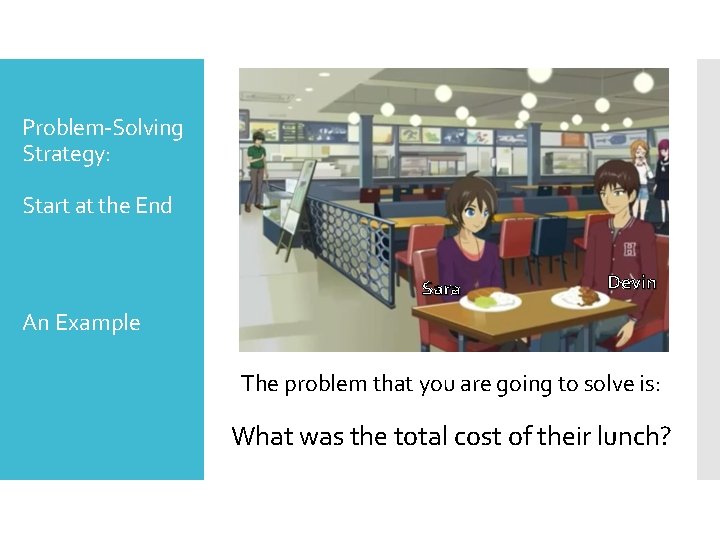
Problem-Solving Strategy: Start at the End Sara Devin An Example The problem that you are going to solve is: What was the total cost of their lunch?
Problem-Solving Strategy: Start at the End An Example
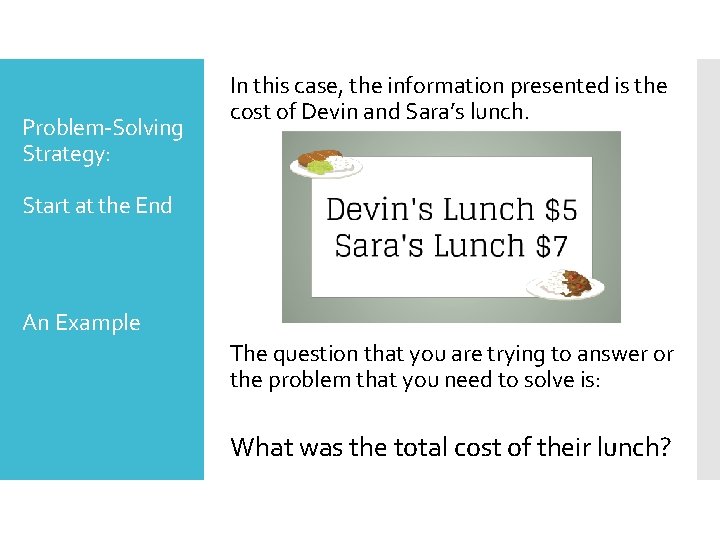
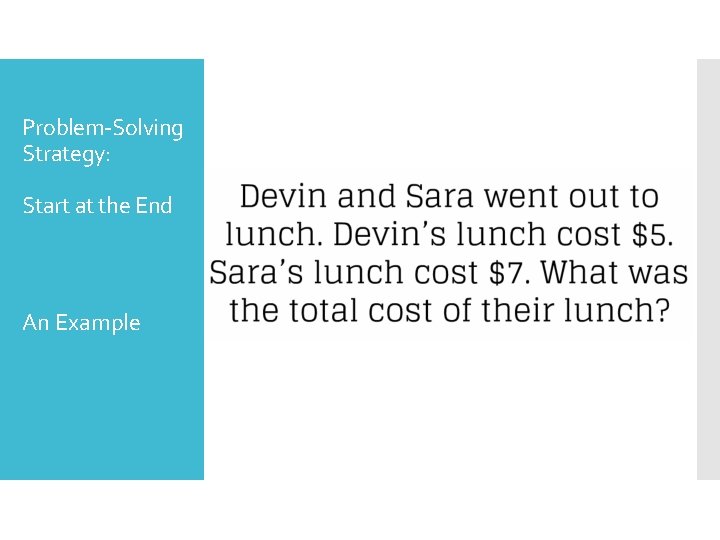
Problem-Solving Strategy: Start at the End In this case, the information presented is the cost of Devin and Sara’s lunch. Devin’s lunch $5 Sara’s lunch $7 An Example The question that you are trying to answer or the problem that you need to solve is: What was the total cost of their lunch?
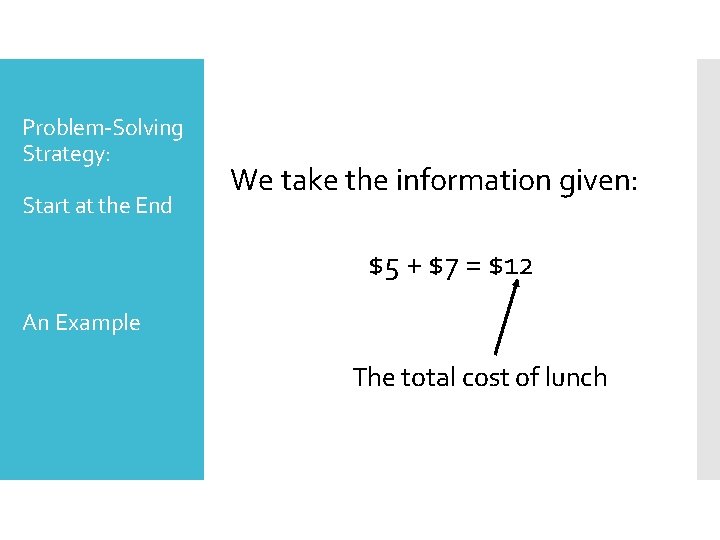
Problem-Solving Strategy: Start at the End We take the information given: $5 + $7 = $12 An Example The total cost of lunch
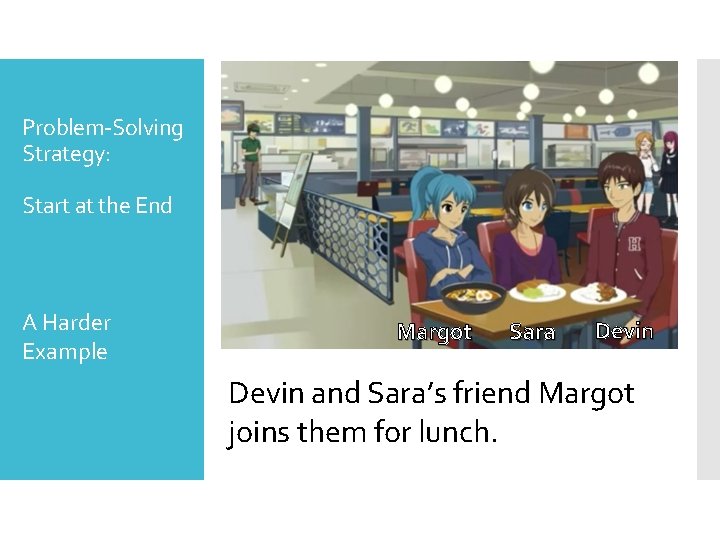
Problem-Solving Strategy: Start at the End A Harder Example Margot Sara Devin and Sara’s friend Margot joins them for lunch.
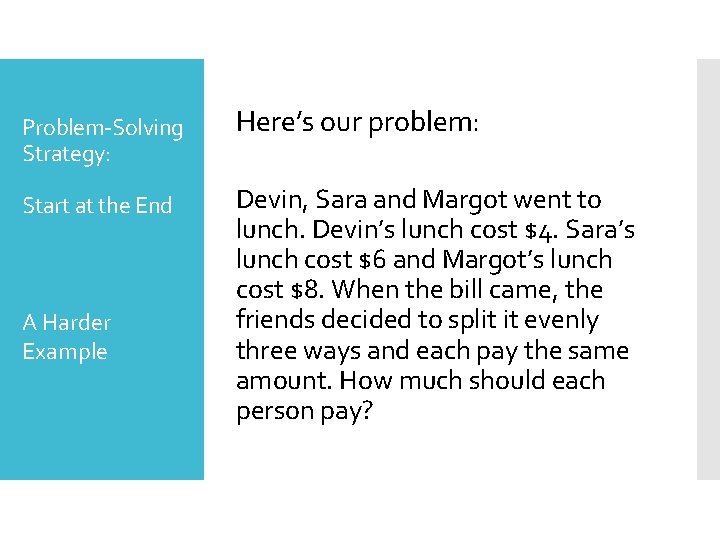
Problem-Solving Strategy: Here’s our problem: Start at the End Devin, Sara and Margot went to lunch. Devin’s lunch cost $4. Sara’s lunch cost $6 and Margot’s lunch cost $8. When the bill came, the friends decided to split it evenly three ways and each pay the same amount. How much should each person pay? A Harder Example
Problem-Solving Strategy: Let’s go directly to the end: Start at the End How much should each person pay? A Harder Example That’s the question that we need to answer.
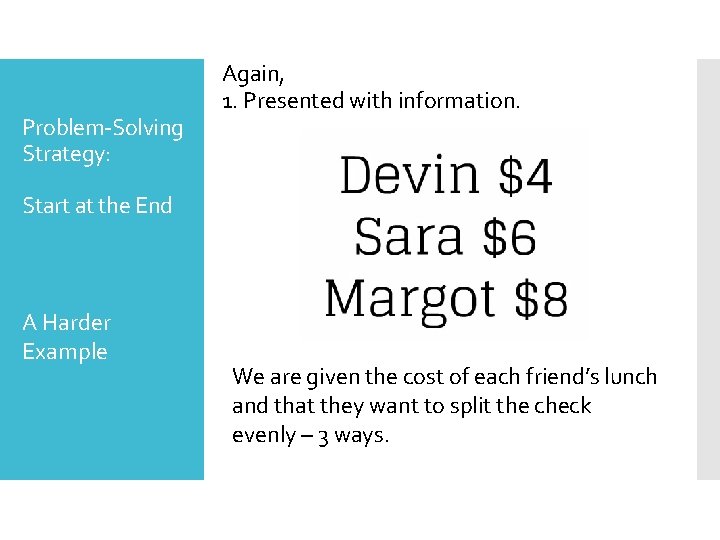
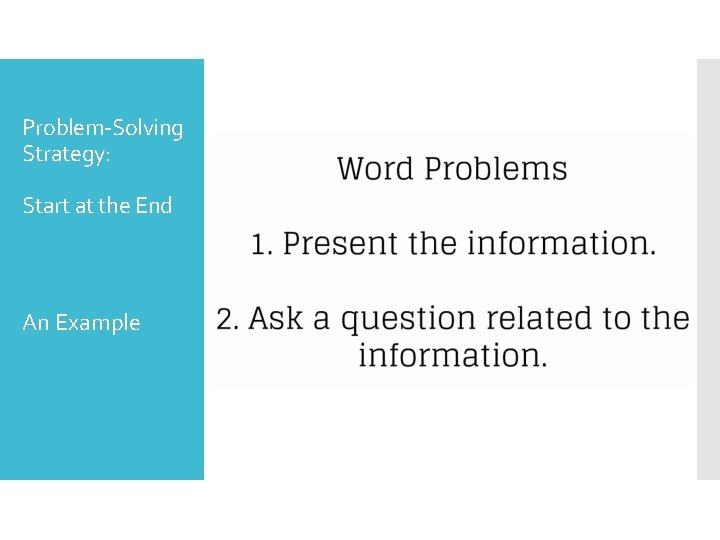
Problem-Solving Strategy: Again, 1. Presented with information. Start at the End A Harder Example We are given the cost of each friend’s lunch and that they want to split the check evenly – 3 ways.
Problem-Solving Strategy: Start at the End And, 2. Asked to answer a question related to the information. The last part of the problem is the question that we have to answer. A Harder Example How much should each person pay?
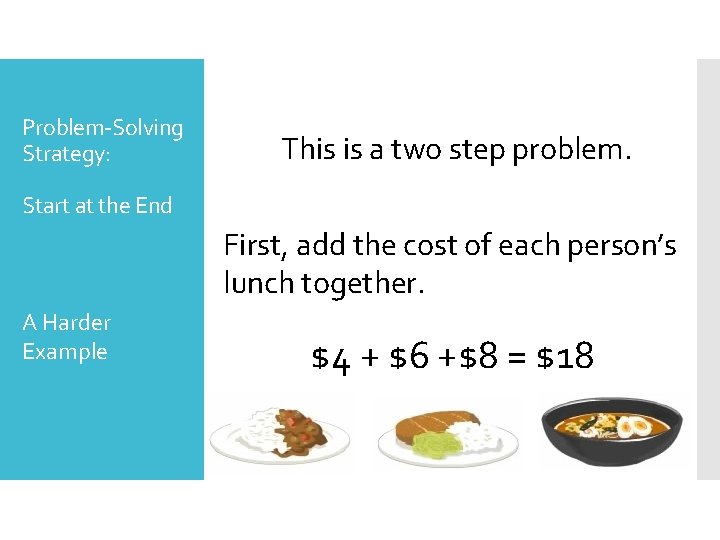
Problem-Solving Strategy: This is a two step problem. Start at the End First, add the cost of each person’s lunch together. A Harder Example $4 + $6 +$8 = $18
Problem-Solving Strategy: Always make sure that you’re answering the question at the very end of your problem. That’s important! Start at the End Final Answer? A Harder Example $18
Problem-Solving Strategy: Always make sure that you’re answering the question at the very end of your problem. That’s important! Start at the End Final Answer? A Harder Example $18 That doesn’t answer the question being asked. There’s still one more step.
Problem-Solving Strategy: Start at the End A Harder Example We started at the end to find the question that needed to be answered. That question will help us focus in on the right answer. What we need to answer to solve the problem: How much should each person pay?
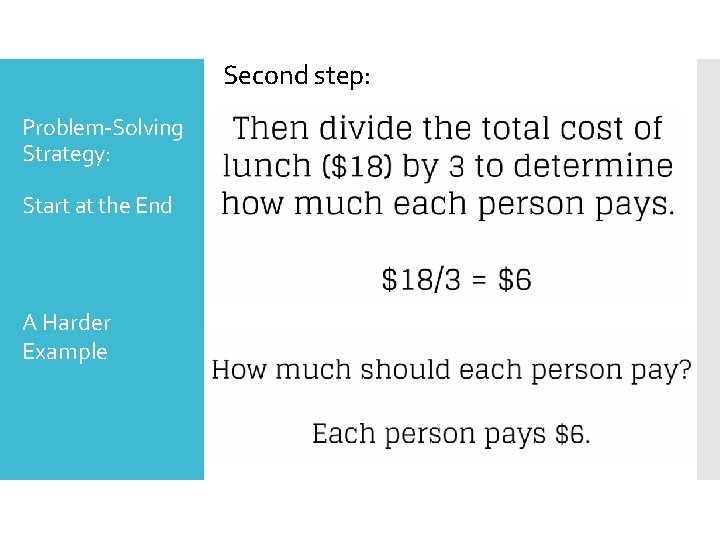
Second step: Problem-Solving Strategy: Start at the End A Harder Example
Problem-Solving Strategy: Tip #1 Start at the End When you’re done, go back to the end and make sure you’ve answered the question the problem asks. Two More Tips
Problem-Solving Strategy: Tip #2 Start at the End To determine what you need to answer in a word problem: Look for the sentence in the problem that ends with a question mark. Two More Tips
Problem. Solving Strategy: Start at the End
Visit at www. 7 generationgames. com
- Slides: 21