
Stars Birth Life Death Stars What can we
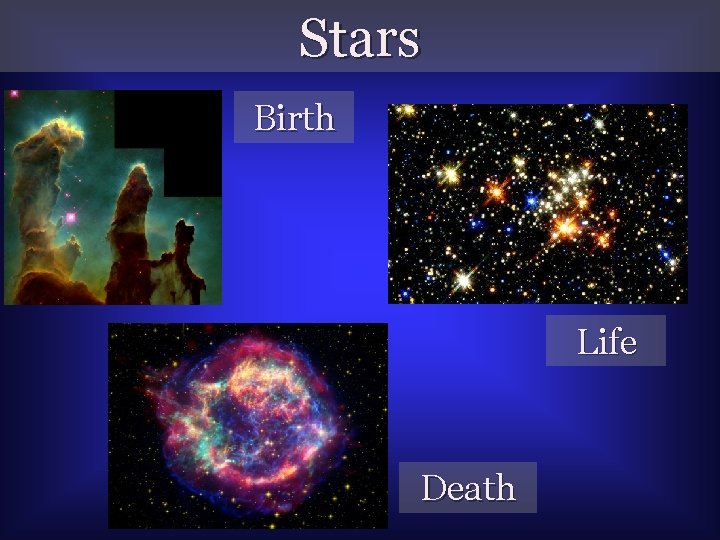
Stars Birth Life Death
Stars What can we measure about stars? Brightness (apparent) Spectrum: color absorption/emission lines blackbody curve Distance Motion: apparent and actual Doppler shift
Some Definitions Luminosity: Total energy radiated into space by a star per second. Flux: Total energy radiated per second per square meter

Some Definitions Flux Emitted: Total energy radiated per second per square meter. F= s. T 4
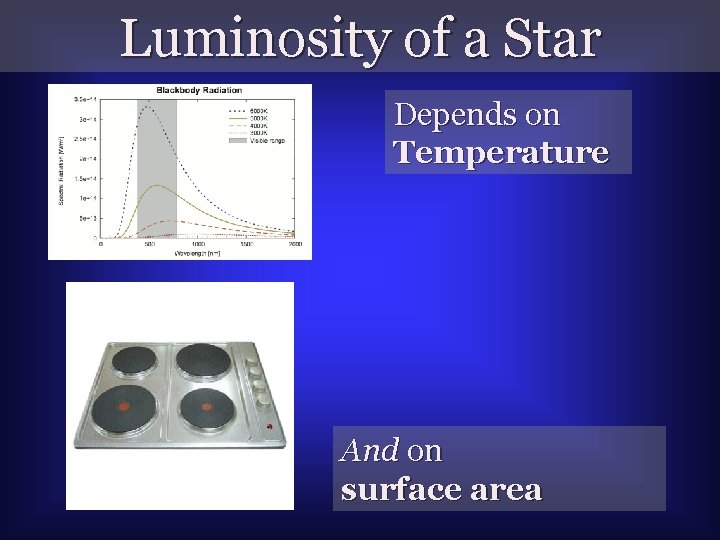
Luminosity of a Star Depends on Temperature And on surface area

Luminosity versus Apparent Brightness

Some Definitions Apparent Brightness: Amount of light at a distance? Closer = Brighter Bigger = Brighter Hotter = Brighter
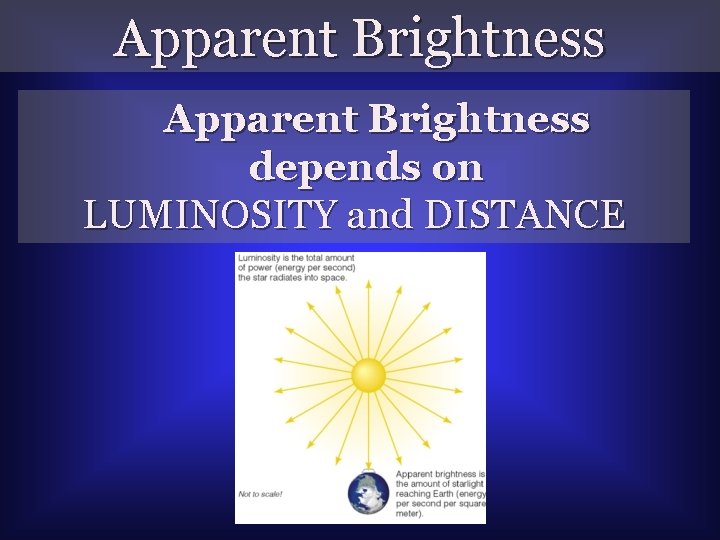
Apparent Brightness depends on LUMINOSITY and DISTANCE

Distances Radar measurements are DIRCECT measurement. 2 P = 3 a
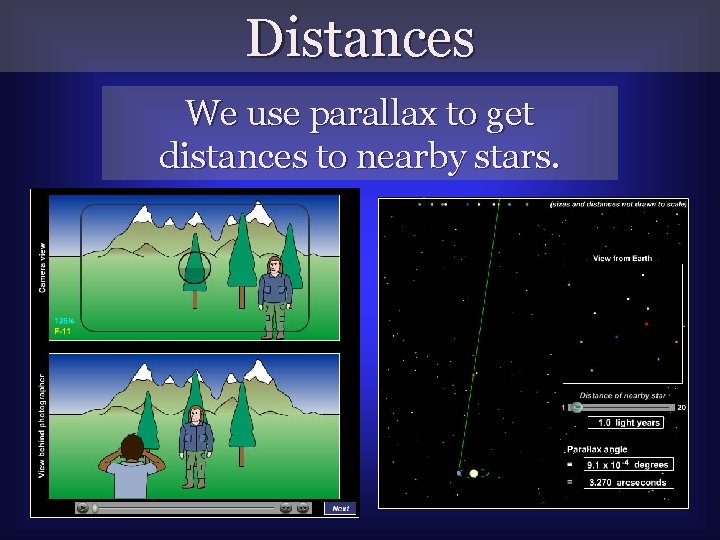
Distances We use parallax to get distances to nearby stars.
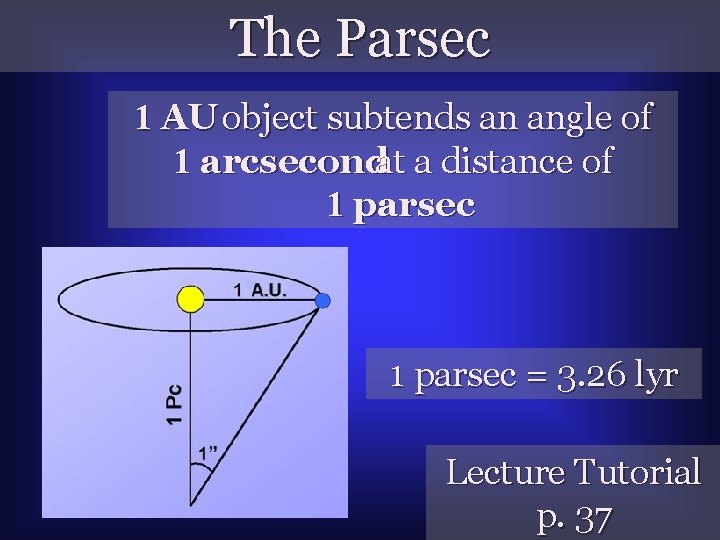
The Parsec 1 AU object subtends an angle of 1 arcsecondat a distance of 1 parsec = 3. 26 lyr Lecture Tutorial p. 37
Stars What do we want to know about stars? Luminosity Mass Size (radius) Temperature (surface, interior) Fusion / physical processes
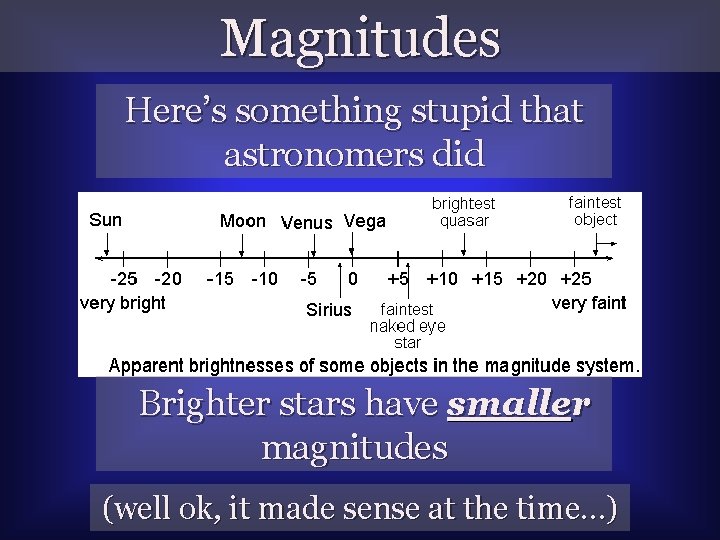
Magnitudes Here’s something stupid that astronomers did Brighter stars have smaller magnitudes (well ok, it made sense at the time…)
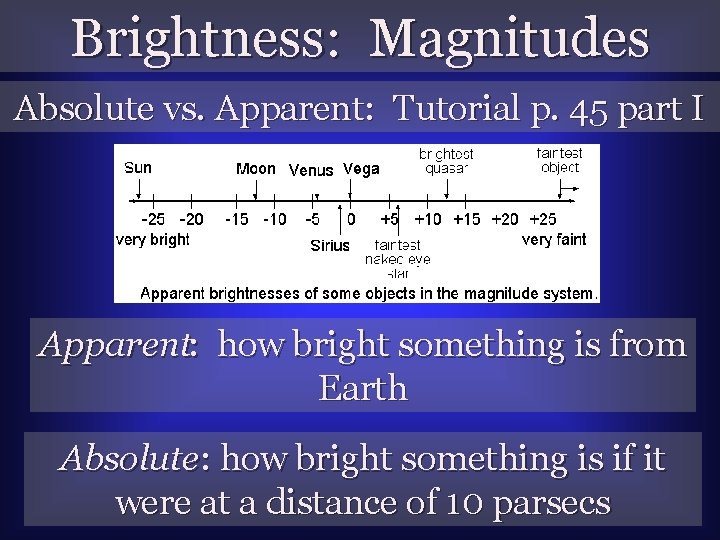
Brightness: Magnitudes Absolute vs. Apparent: Tutorial p. 45 part I Apparent: how bright something is from Earth Absolute: how bright something is if it were at a distance of 10 parsecs
Brightness: Magnitudes Which appears brighter? A. B. C. C D Neither
Brightness: Magnitudes Which is actually brighter (more luminous)? A. B. C. C D Neither
Brightness: Magnitudes Star B is: A. Closer than 10 pc B. Farther than 10 pc C. Exactly 10 pc away
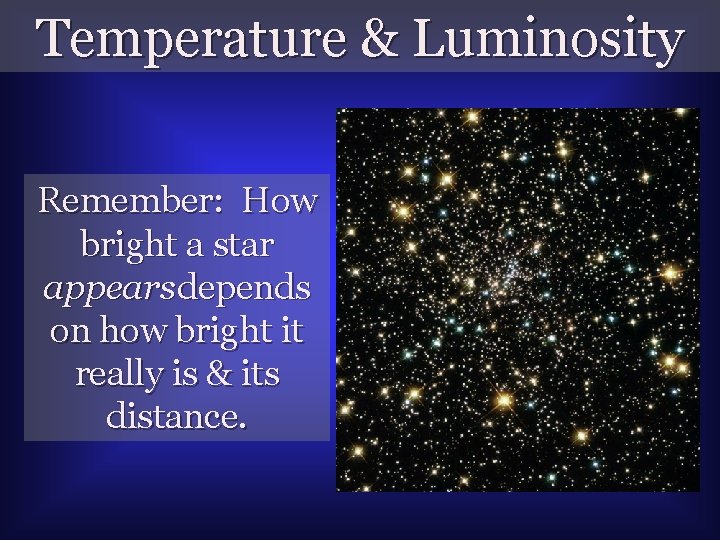
Temperature & Luminosity Remember: How bright a star appears depends on how bright it really is & its distance.
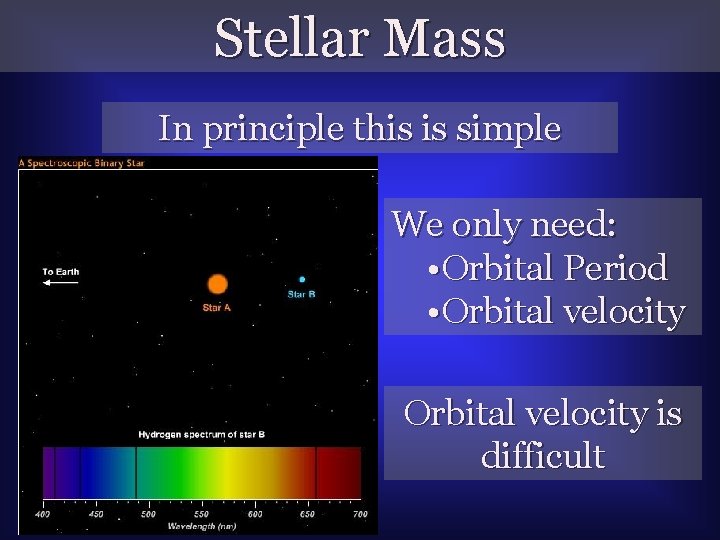
Stellar Mass In principle this is simple We only need: • Orbital Period • Orbital velocity is difficult
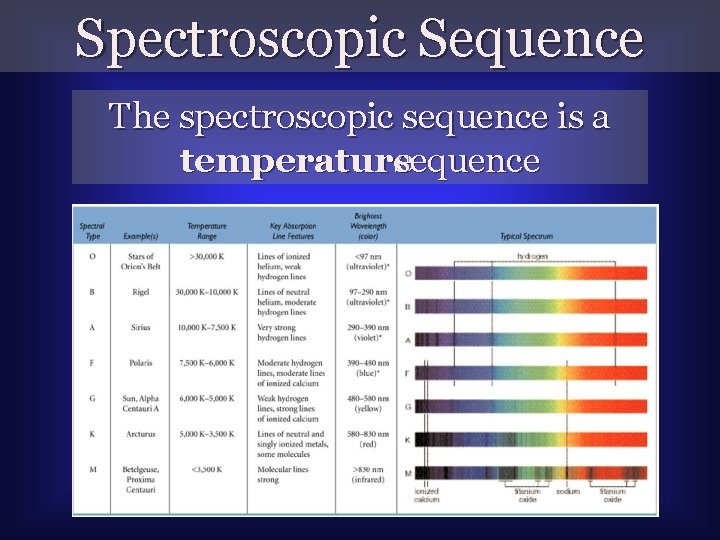
Spectroscopic Sequence The spectroscopic sequence is a temperature sequence
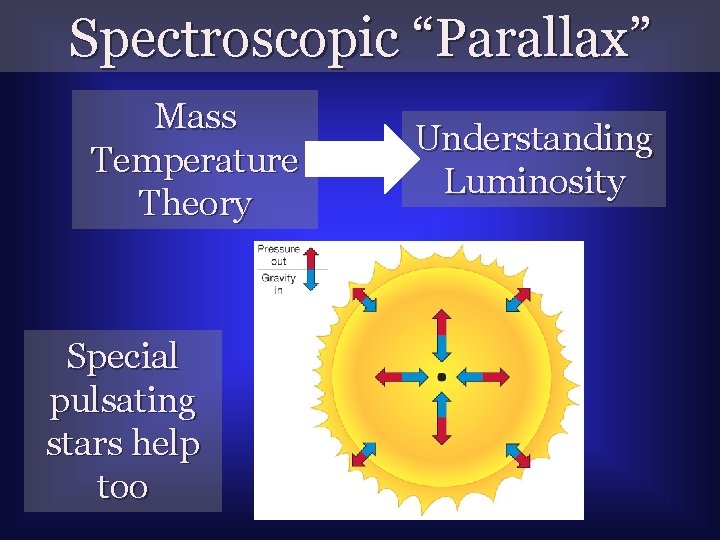
Spectroscopic “Parallax” Mass Temperature Theory Special pulsating stars help too Understanding Luminosity
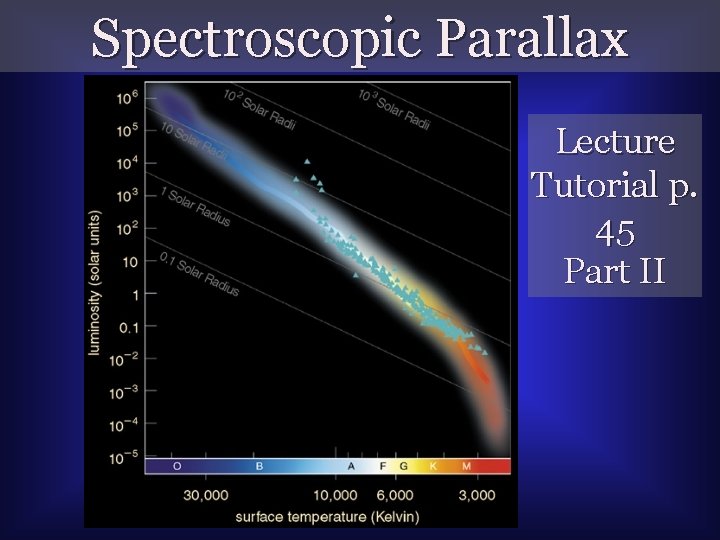
Spectroscopic Parallax Lecture Tutorial p. 45 Part II
- Slides: 22