
StarMassive Black Holes Encounters J P Luminet Tidal
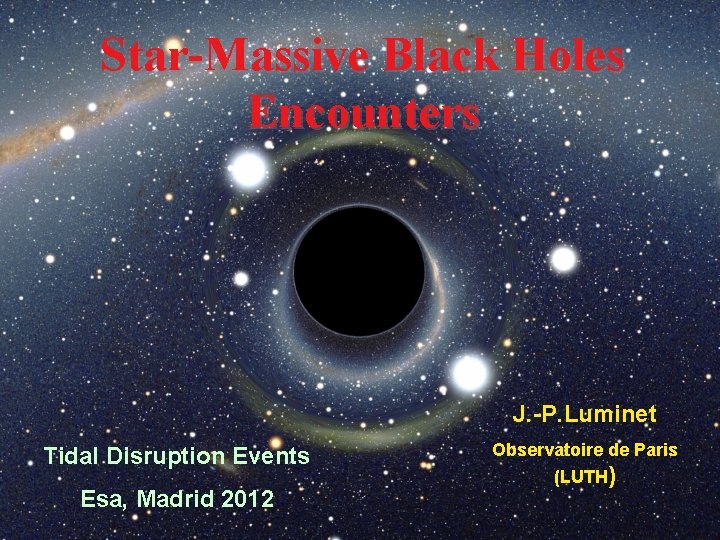
Star-Massive Black Holes Encounters J. -P. Luminet Tidal Disruption Events Esa, Madrid 2012 Observatoire de Paris (LUTH)
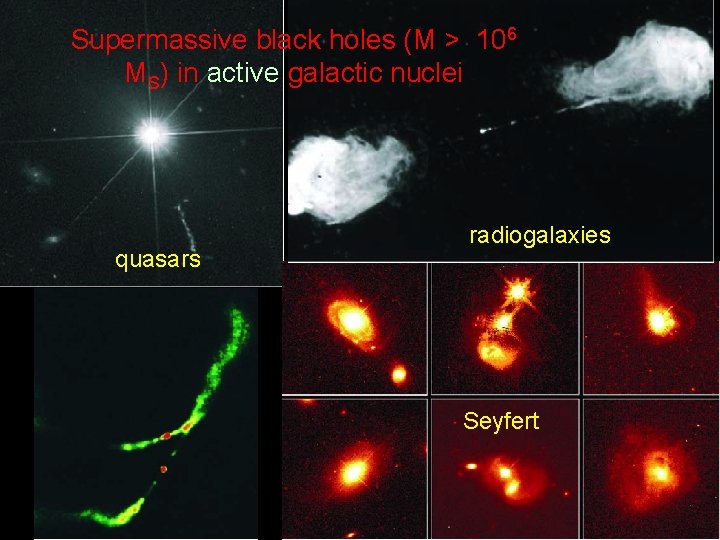
Supermassive black holes (M > 106 MS) in active galactic nuclei quasars radiogalaxies Seyfert
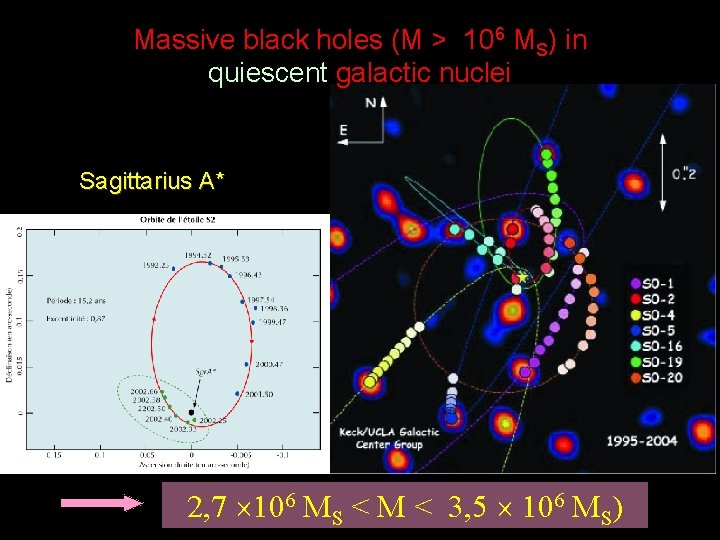
Massive black holes (M > 106 MS) in quiescent galactic nuclei Sagittarius A* 2, 7 106 MS < M < 3, 5 106 MS)
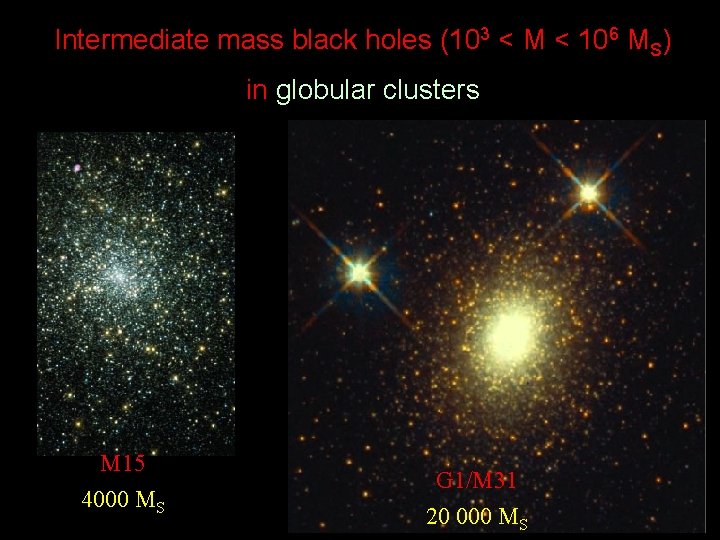
Intermediate mass black holes (103 < M < 106 MS) in globular clusters M 15 4000 MS G 1/M 31 20 000 MS
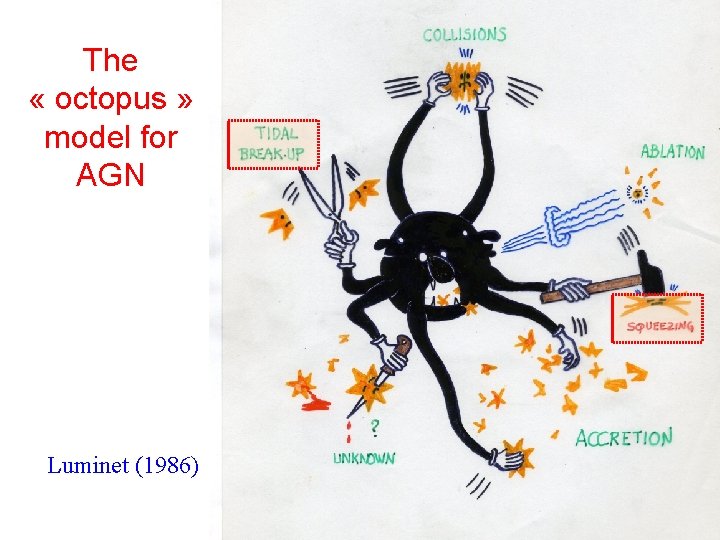
The « octopus » model for AGN Luminet (1986)
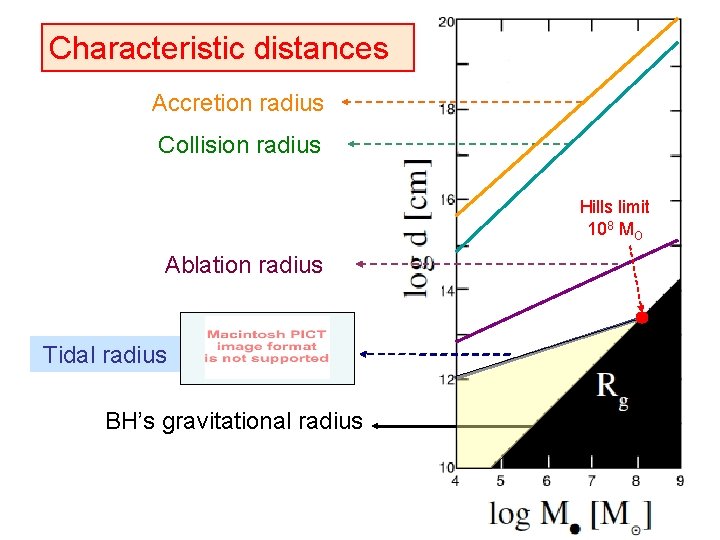
Characteristic distances Accretion radius Collision radius Hills limit 108 MO Ablation radius Tidal radius BH’s gravitational radius
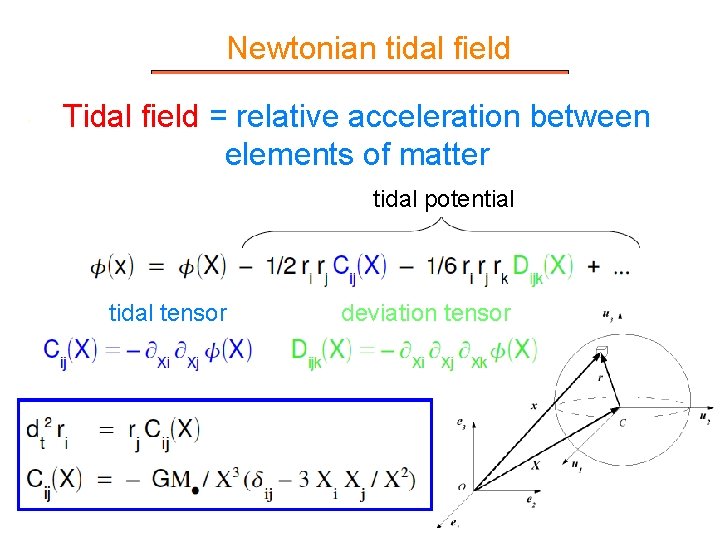
Newtonian tidal field Tidal field = relative acceleration between elements of matter tidal potential tidal tensor deviation tensor
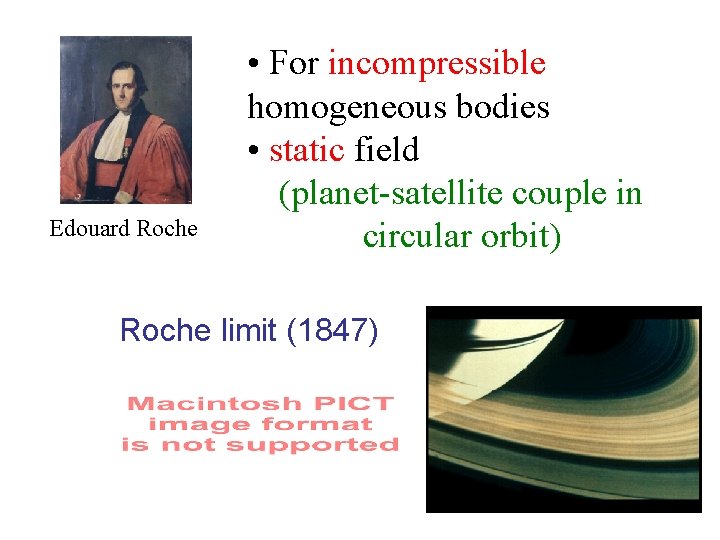
Edouard Roche • For incompressible homogeneous bodies • static field (planet-satellite couple in circular orbit) Roche limit (1847)
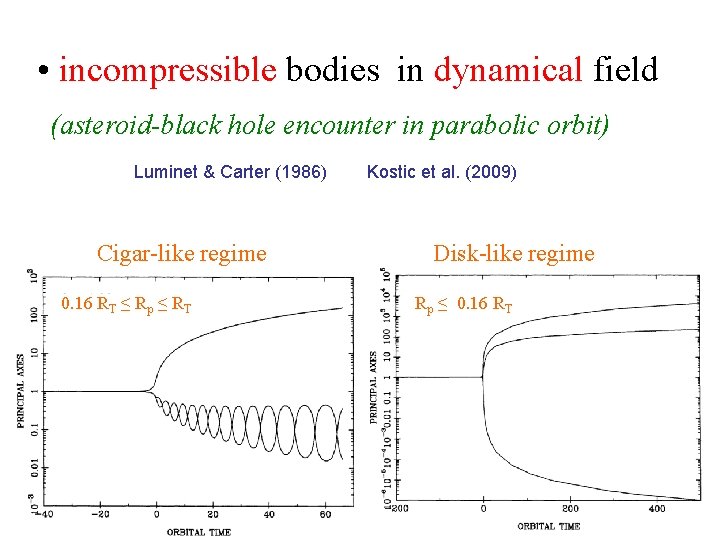
• incompressible bodies in dynamical field (asteroid-black hole encounter in parabolic orbit) Luminet & Carter (1986) Cigar-like regime 0. 16 RT ≤ Rp ≤ RT Kostic et al. (2009) Disk-like regime Rp ≤ 0. 16 RT
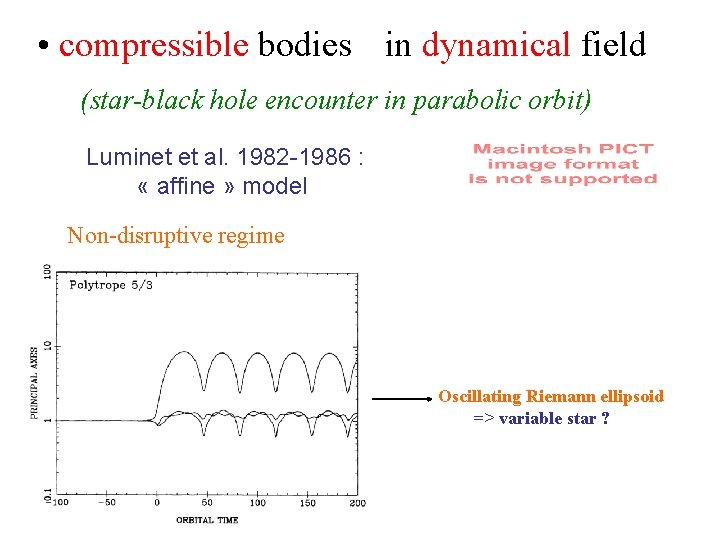
• compressible bodies in dynamical field (star-black hole encounter in parabolic orbit) Luminet et al. 1982 -1986 : « affine » model Non-disruptive regime Oscillating Riemann ellipsoid => variable star ?
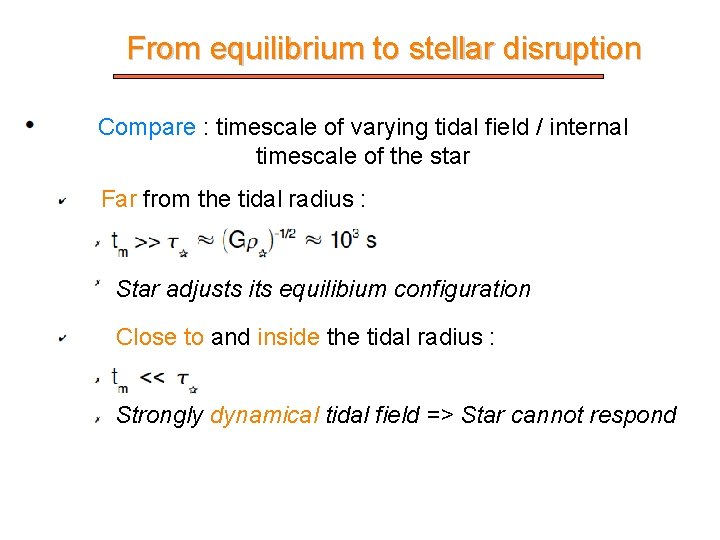
From equilibrium to stellar disruption Compare : timescale of varying tidal field / internal timescale of the star Far from the tidal radius : Star adjusts its equilibium configuration Close to and inside the tidal radius : Strongly dynamical tidal field => Star cannot respond
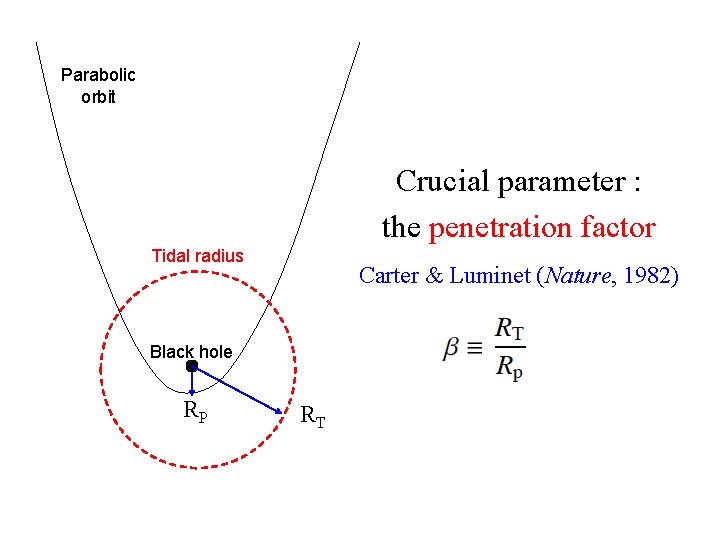
Parabolic orbit Crucial parameter : the penetration factor Tidal radius Carter & Luminet (Nature, 1982) Black hole RP RT
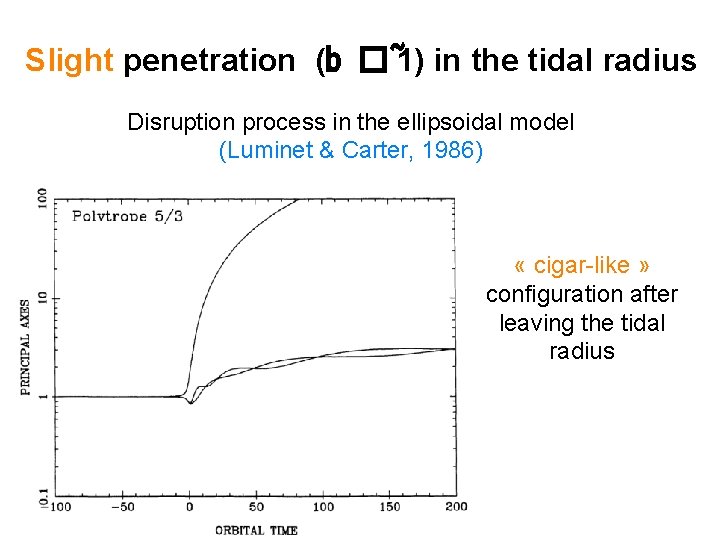
Slight penetration (b �~1) in the tidal radius Disruption process in the ellipsoidal model (Luminet & Carter, 1986) « cigar-like » configuration after leaving the tidal radius
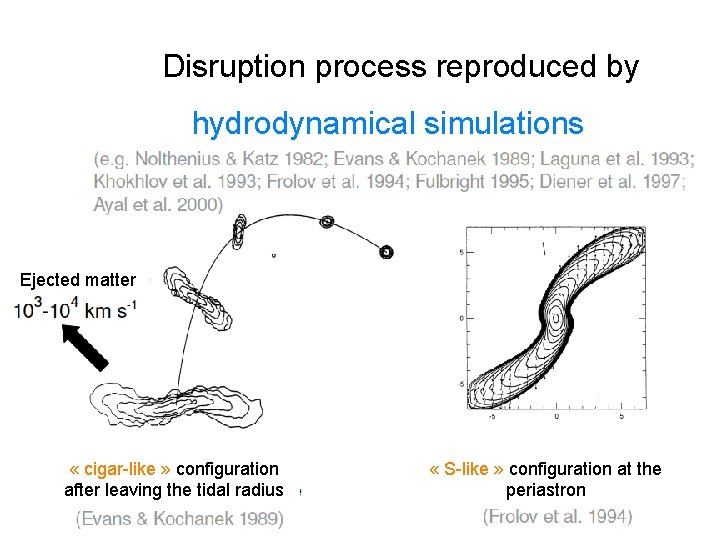
Slight penetration in the tidal radius Disruption process reproduced by hydrodynamical simulations Ejected matter « cigar-like » configuration after leaving the tidal radius « S-like » configuration at the periastron
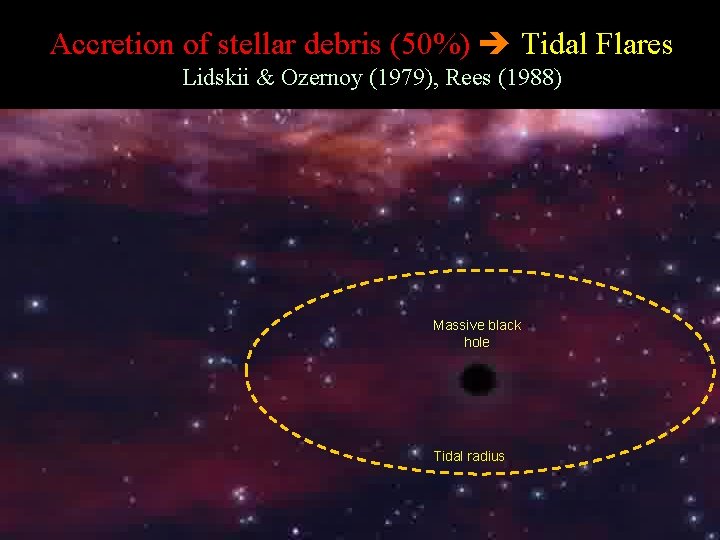
Accretion of stellar debris (50%) Tidal Flares Lidskii & Ozernoy (1979), Rees (1988) Massive black hole Tidal radius
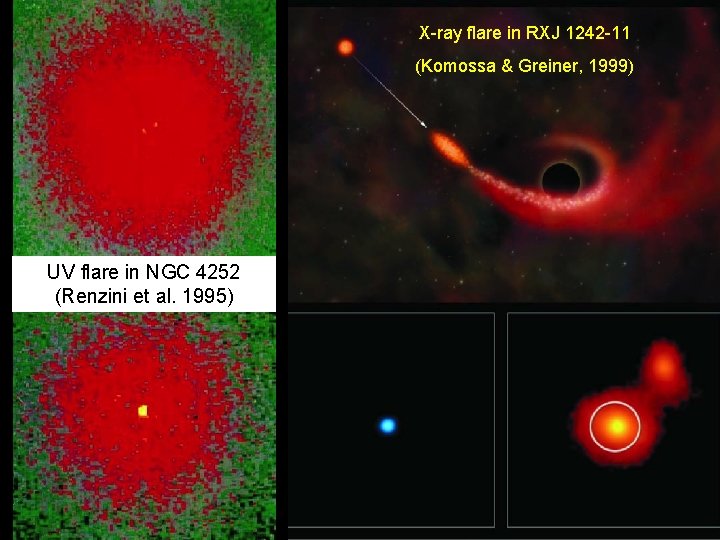
X-ray flare in RXJ 1242 -11 (Komossa & Greiner, 1999) UV flare in NGC 4252 (Renzini et al. 1995)
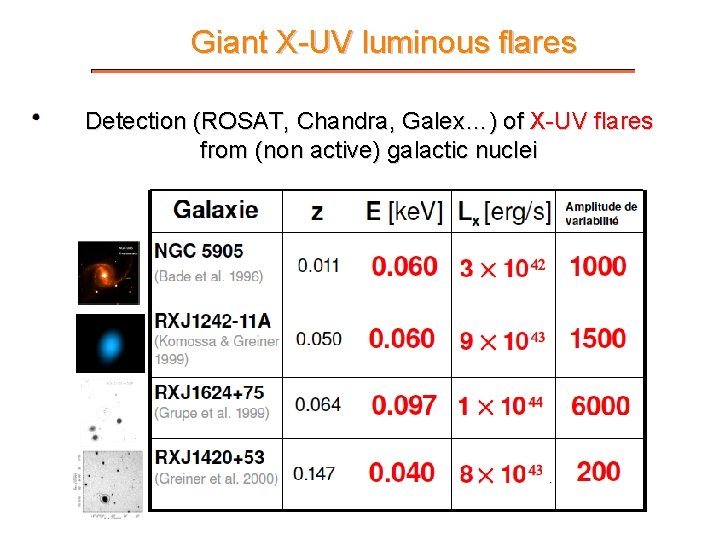
Giant X-UV luminous flares Detection (ROSAT, Chandra, Galex…) of X-UV flares from (non active) galactic nuclei
X-UV-optical luminous flares Detection (Chandra, Galex, Pan-starrs…) of flares from (non active) galactic nuclei (Komossa et al. , Saxton et al. , Esquej et al. , Gezari et al. , etc. ) « Relativistic » Tidal Flares Detection (Swift) of hard-X flares (Lx ~1047 ergs) (Zauderer et al. 2011, Cenko et al. 2012) Relativistic jets from tidal ejecta ?
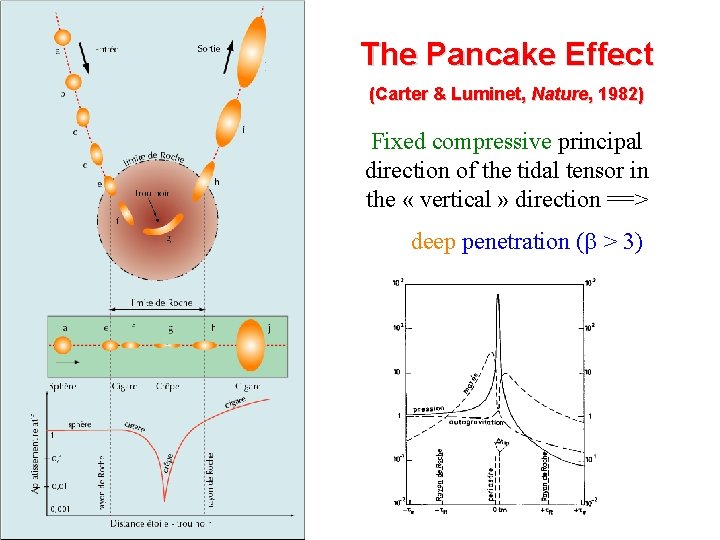
The Pancake Effect (Carter & Luminet, Nature, 1982) Fixed compressive principal direction of the tidal tensor in the « vertical » direction ==> For deep penetration ( > 3)
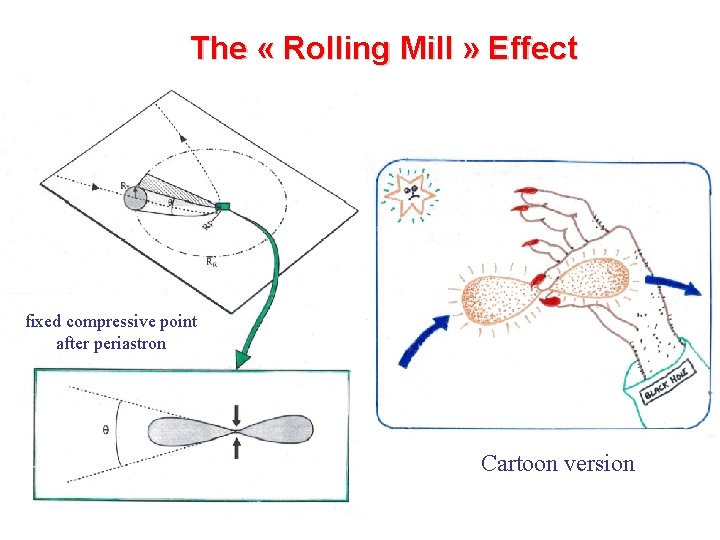
The « Rolling Mill » Effect fixed compressive point after periastron Cartoon version
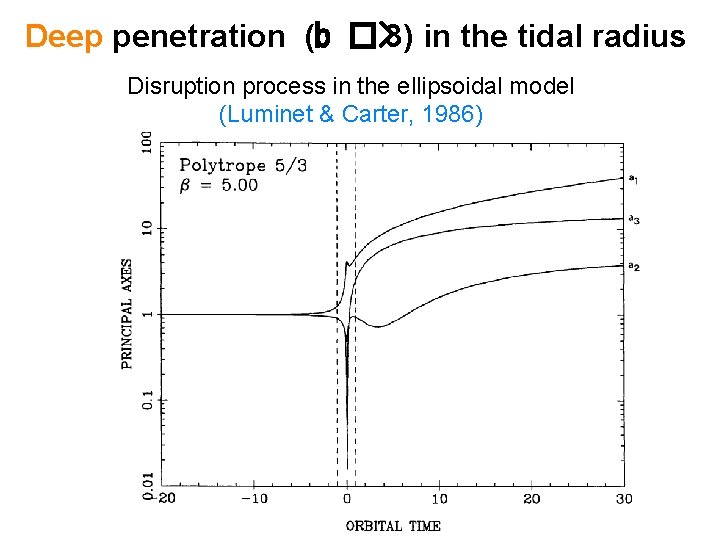
Deep penetration (b �>3) in the tidal radius Disruption process in the ellipsoidal model (Luminet & Carter, 1986)
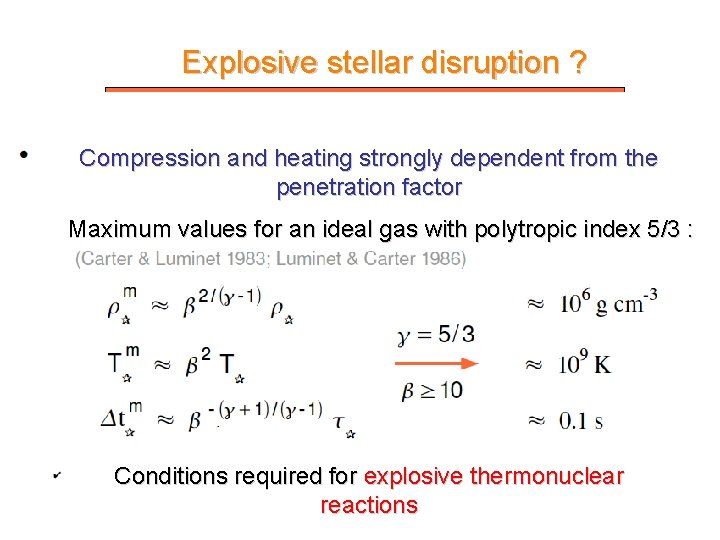
Explosive stellar disruption ? Compression and heating strongly dependent from the penetration factor Maximum values for an ideal gas with polytropic index 5/3 : Conditions required for explosive thermonuclear reactions

Detonation of metals (C, N, O, …) by radiative proton captures (Luminet & Pichon 1989) Helium detonation by triple alpha (Pichon 1985)
Tidally induced supernovae? Luminet, 1986 Rosswog et al. , 2008 A special type of GRB ? Carter, 1992 Lu et al. 2008; Gao et al. 2011
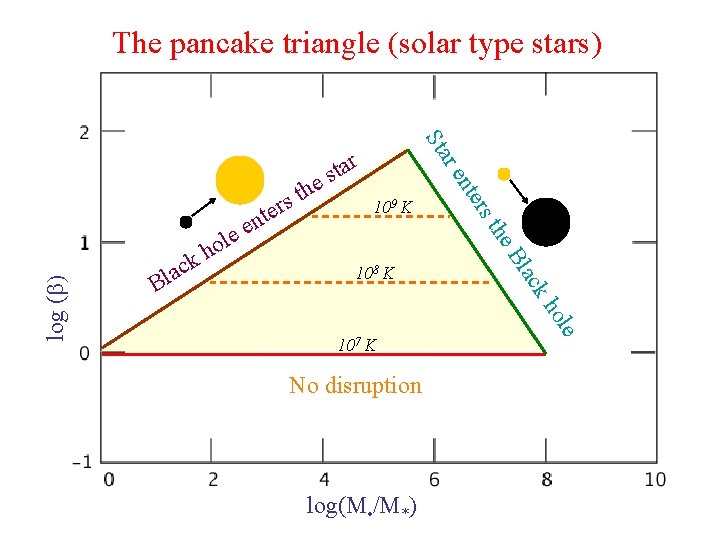
The pancake triangle (solar type stars) Sta log ( 107 K No disruption log(M • /M*) ole k h lac 108 K B the Bl l o h k c a rs t n e e 109 K nte th s er r e r ta s e
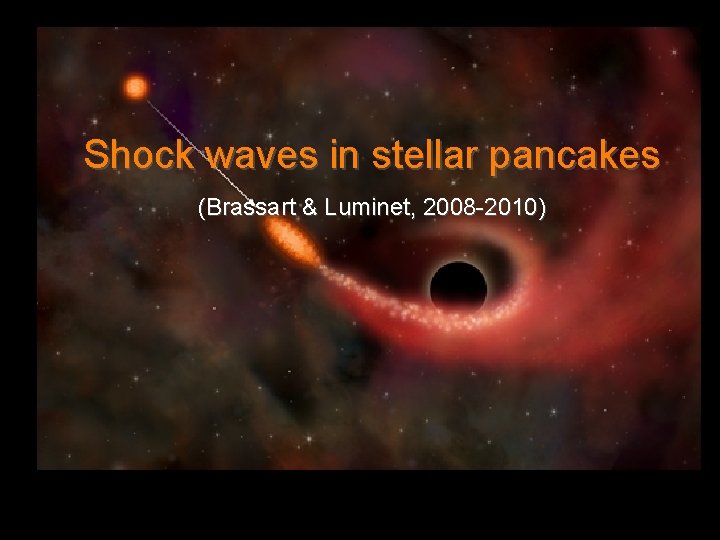
Shock waves in stellar pancakes (Brassart & Luminet, 2008 -2010)
Problematics • Stellar pancakes calculated in the affine model (Luminet et al. 1983 - 1989) ==> Elliptical deformations of the star • Stellar pancakes calculated by 3 D hydro (Bicknell & Gingold 1983; Laguna et al. 1993; Fulbright 1996) ==> SPH method (uses artificial viscosity to simulate shock waves) N. B. : Generalized affine model (Ivanov et al. 2001 -2003)
• Disagreement : compression of the stellar core less than in the affine model: max ~ 1. 5 max ~ const for < 10 for > 10 • Due to shock waves occuring during the phase of vertical direction ? ? • Or bad treatment (SPH) of shock waves ?
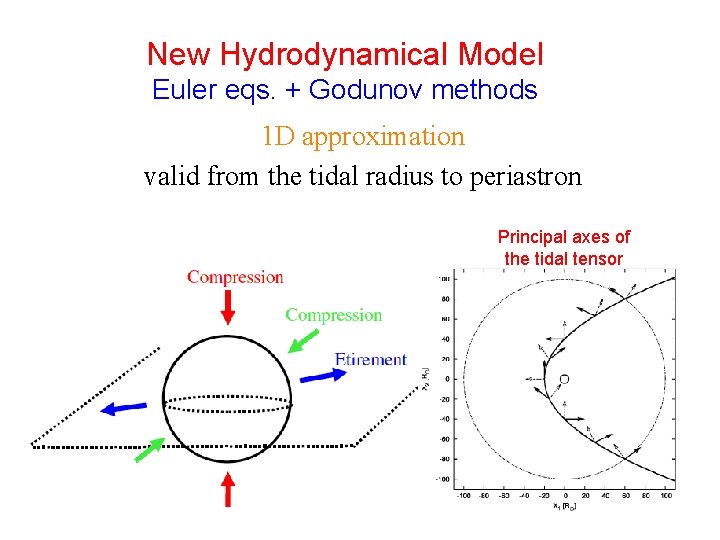
New Hydrodynamical Model Euler eqs. + Godunov methods 1 D approximation valid from the tidal radius to periastron Principal axes of the tidal tensor
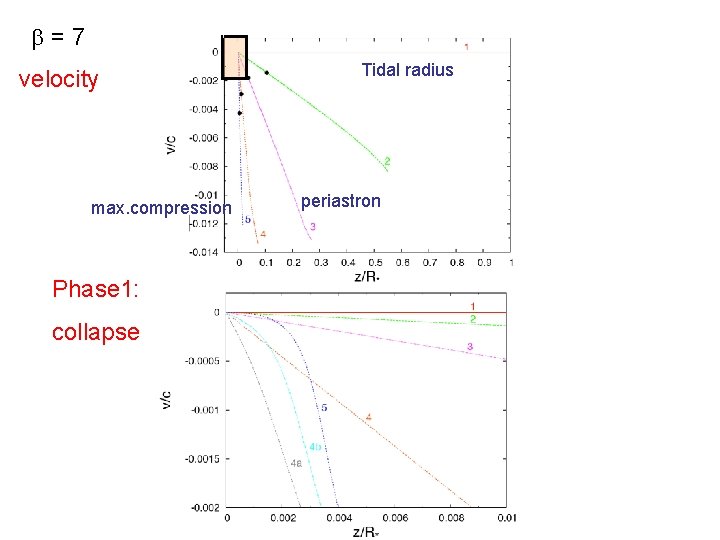
= 7 velocity max. compression Phase 1: collapse Tidal radius periastron
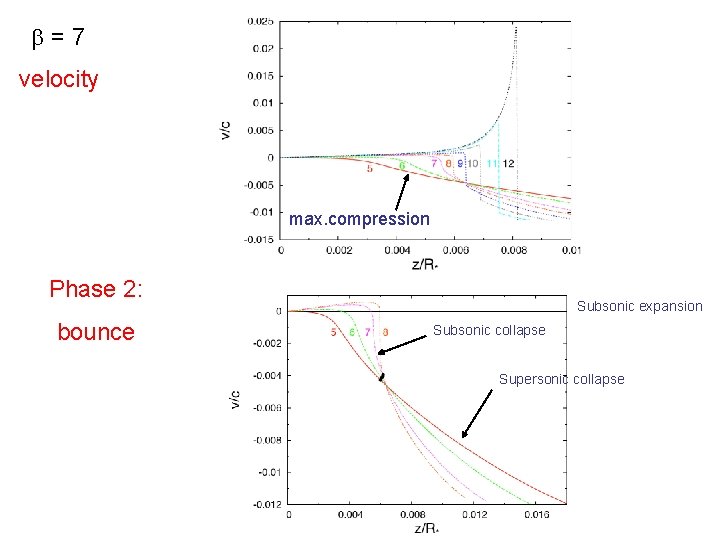
= 7 velocity max. compression Phase 2: bounce Subsonic expansion Subsonic collapse Supersonic collapse
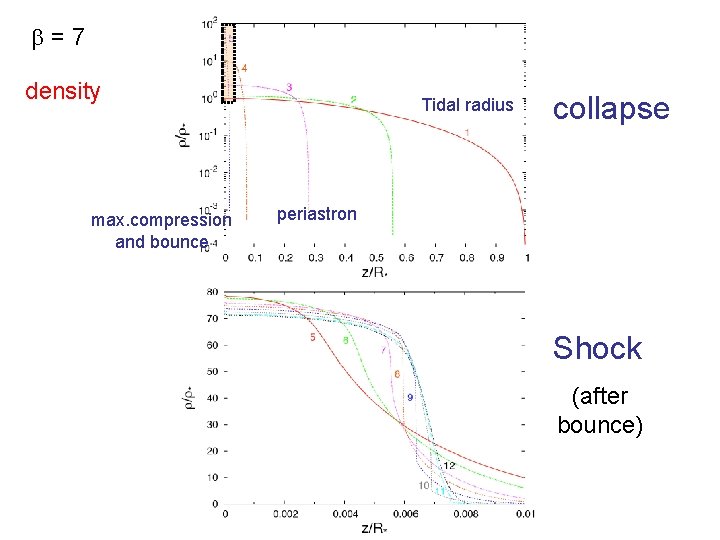
= 7 density max. compression and bounce Tidal radius collapse periastron Shock (after bounce)
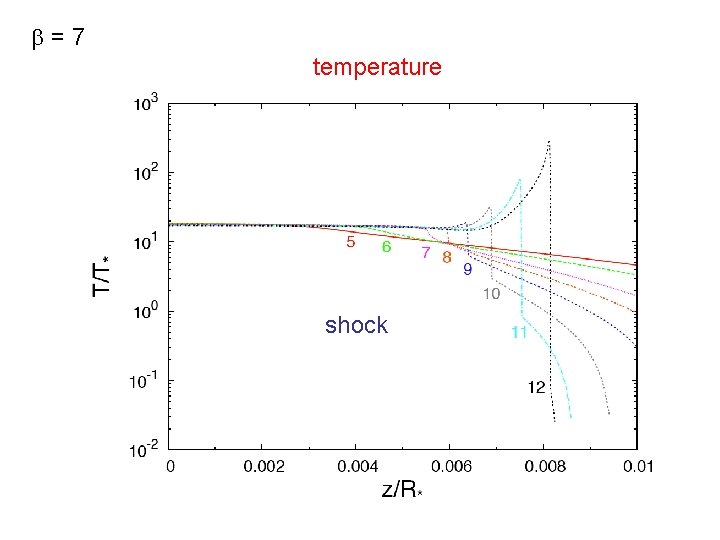
= 7 temperature shock
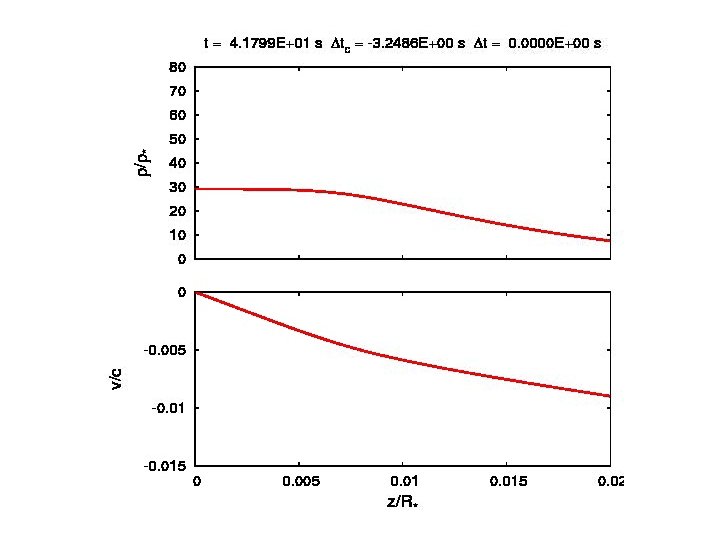
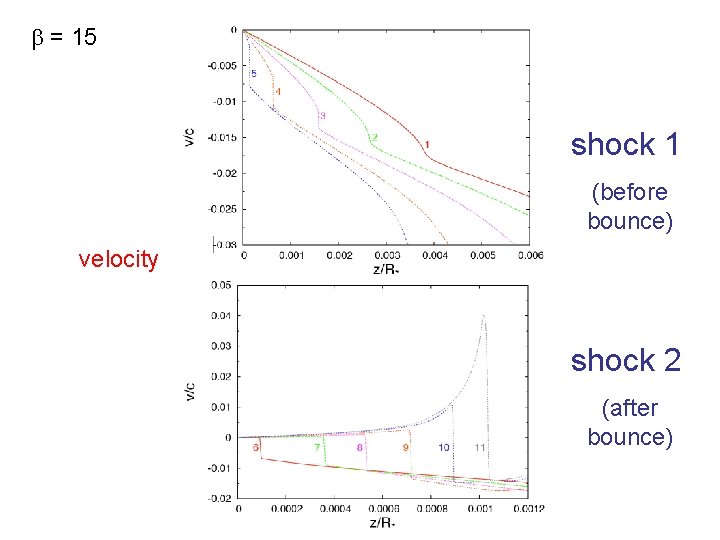
= 15 shock 1 (before bounce) velocity shock 2 (after bounce)
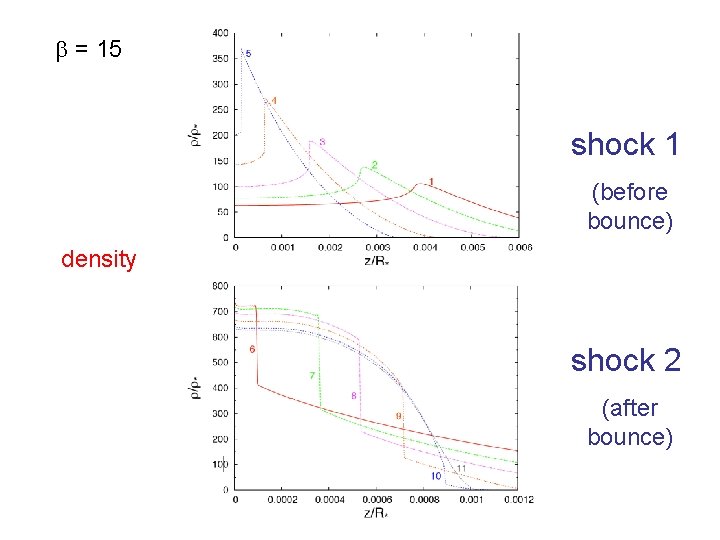
= 15 shock 1 (before bounce) density shock 2 (after bounce)
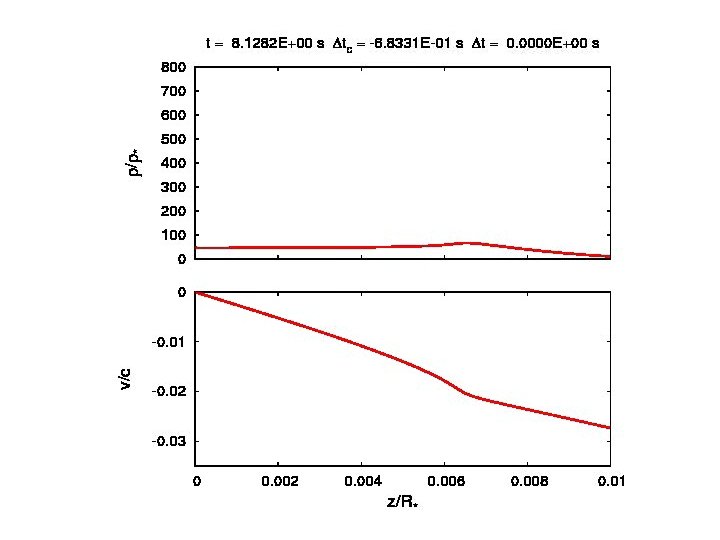
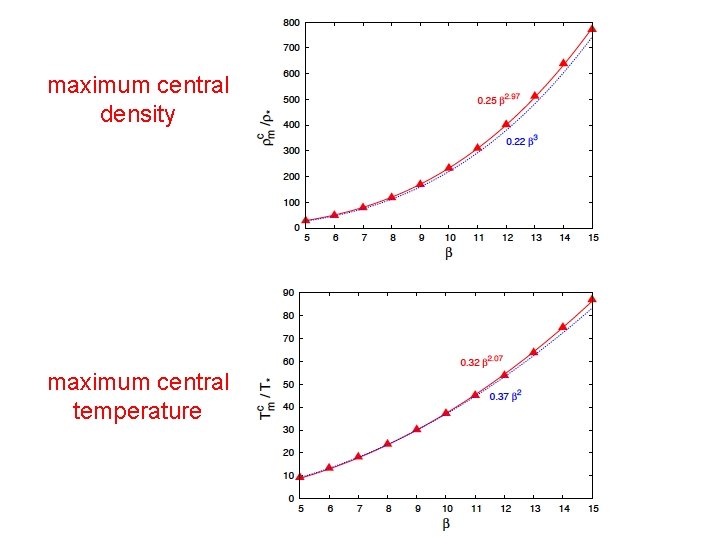
maximum central density maximum central temperature
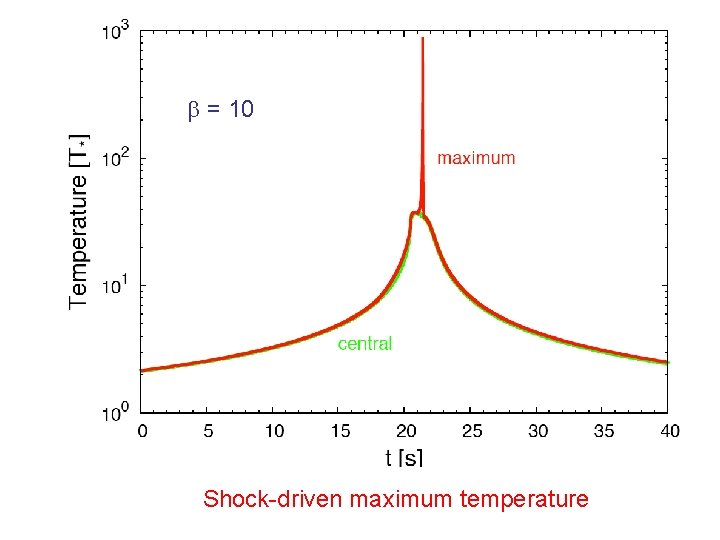
= 10 Shock-driven maximum temperature
Number of disruption events: Wang & Merritt (2004), Tal (2005) BH binaries : Chen et al (2009) UV/X/gamma-ray flares
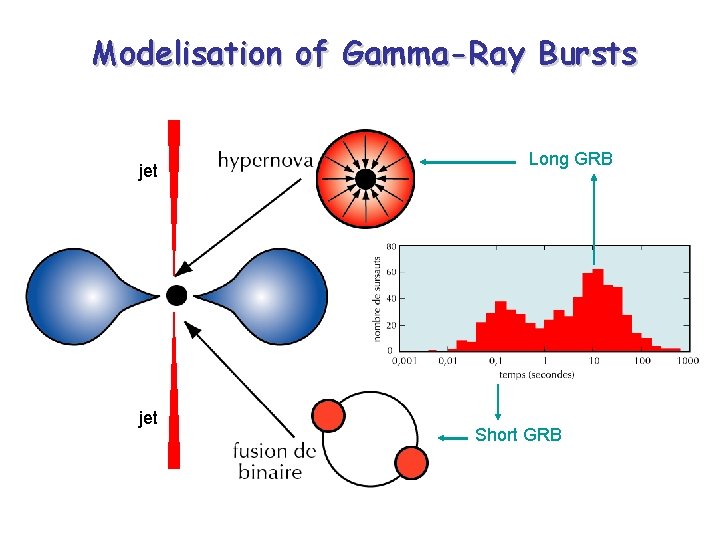
Modelisation of Gamma-Ray Bursts jet Long GRB Short GRB
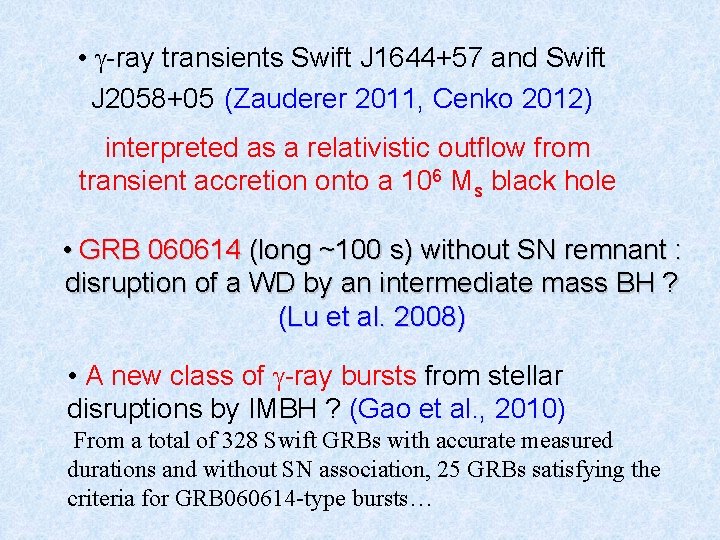
• -ray transients Swift J 1644+57 and Swift J 2058+05 (Zauderer 2011, Cenko 2012) interpreted as a relativistic outflow from transient accretion onto a 106 Ms black hole • GRB 060614 (long ~100 s) without SN remnant : disruption of a WD by an intermediate mass BH ? (Lu et al. 2008) • A new class of -ray bursts from stellar disruptions by IMBH ? (Gao et al. , 2010) From a total of 328 Swift GRBs with accurate measured durations and without SN association, 25 GRBs satisfying the criteria for GRB 060614 -type bursts…
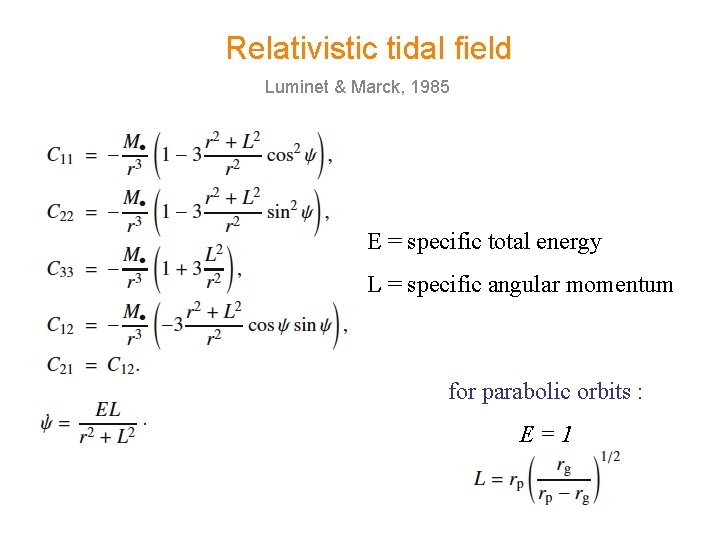
Relativistic tidal field Luminet & Marck, 1985 E = specific total energy L = specific angular momentum for parabolic orbits : E=1
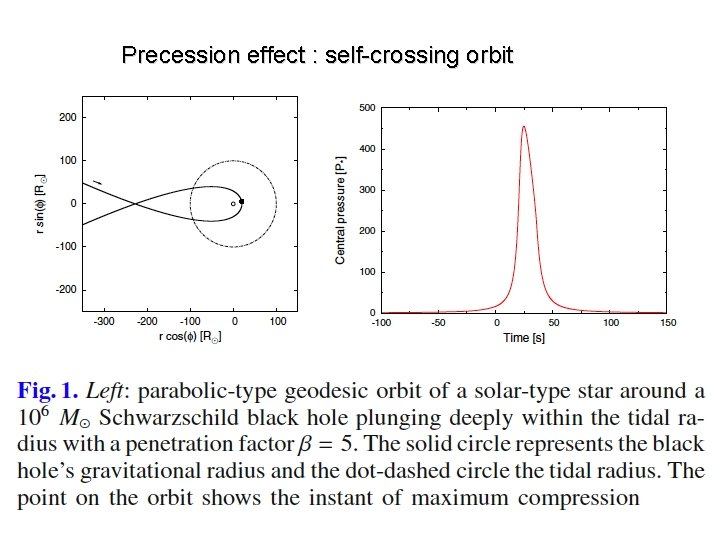
Precession effect : self-crossing orbit
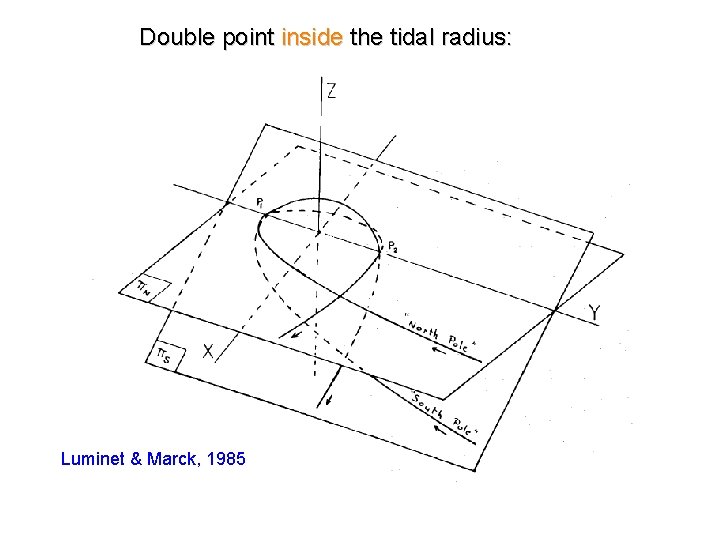
Double point inside the tidal radius: Luminet & Marck, 1985
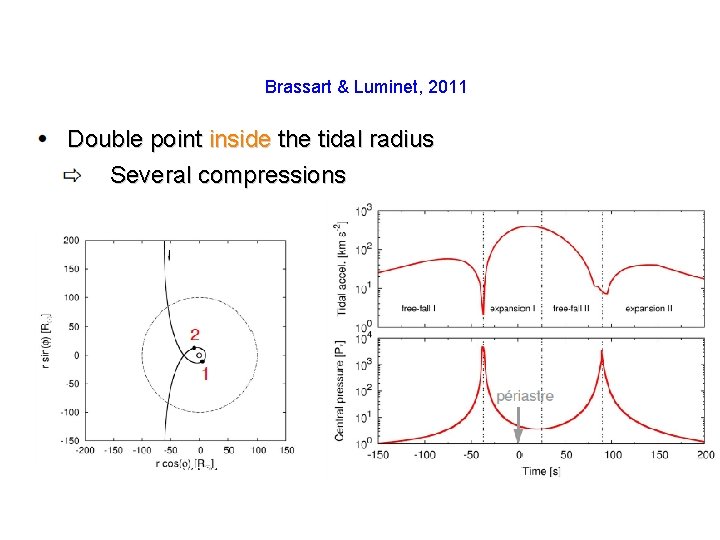
Brassart & Luminet, 2011 Double point inside the tidal radius Several compressions
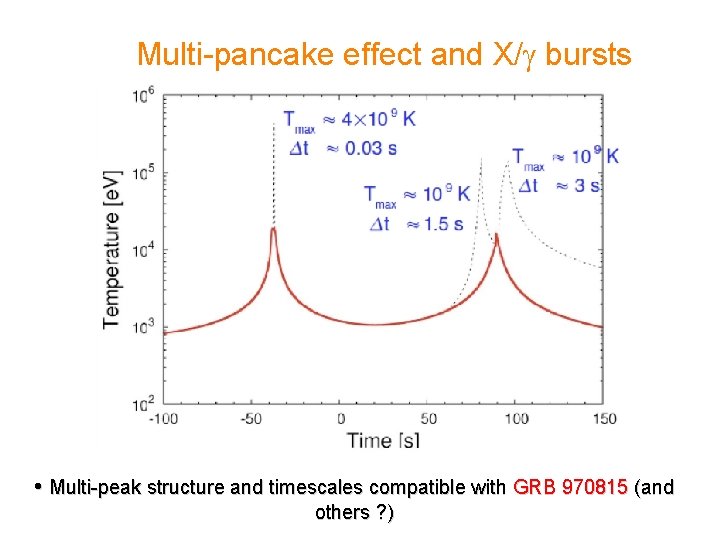
Multi-pancake effect and X/ bursts • Multi-peak structure and timescales compatible with GRB 970815 (and others ? )
Recent hydro models … • 3 D simulations coupling hydrodynamics and 3 D simulations nuclear network (Guillochon et al. , 2011): Confirm the occurrence of tidally induced supernovae • Red giants / BH interactions (Mac Leod et al. , 2012): Tidal stripping of atmosphere • White dwarfs / IM BH strong encounters (Rosswog et al. 2010, Hass et al. 2012): Confirm nuclear ignition (e. g. helium detonation)
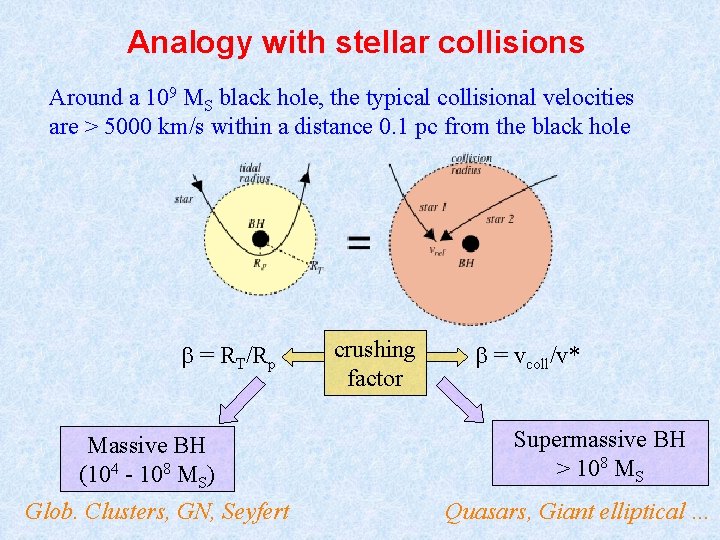
Analogy with stellar collisions Around a 109 MS black hole, the typical collisional velocities are > 5000 km/s within a distance 0. 1 pc from the black hole = RT/Rp Massive BH (104 - 108 MS) Glob. Clusters, GN, Seyfert crushing factor = vcoll/v* Supermassive BH > 108 MS Quasars, Giant elliptical …
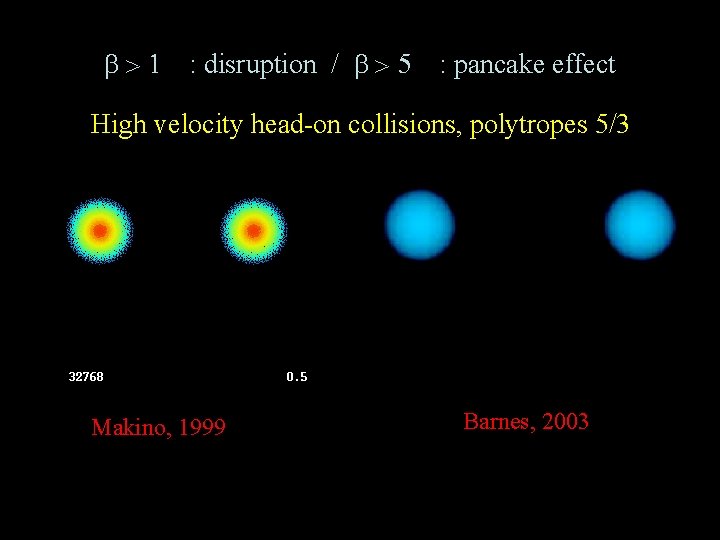
: disruption / : pancake effect High velocity head-on collisions, polytropes 5/3 Makino, 1999 Barnes, 2003
The End
- Slides: 51