
Starling X CI from zero to Zuul Elio
- Slides: 37
Starling. X CI, from zero to Zuul* Elio Martinez A fully featured Cloud for the Distributed Edge *Other names and brands may be claimed as the property of others
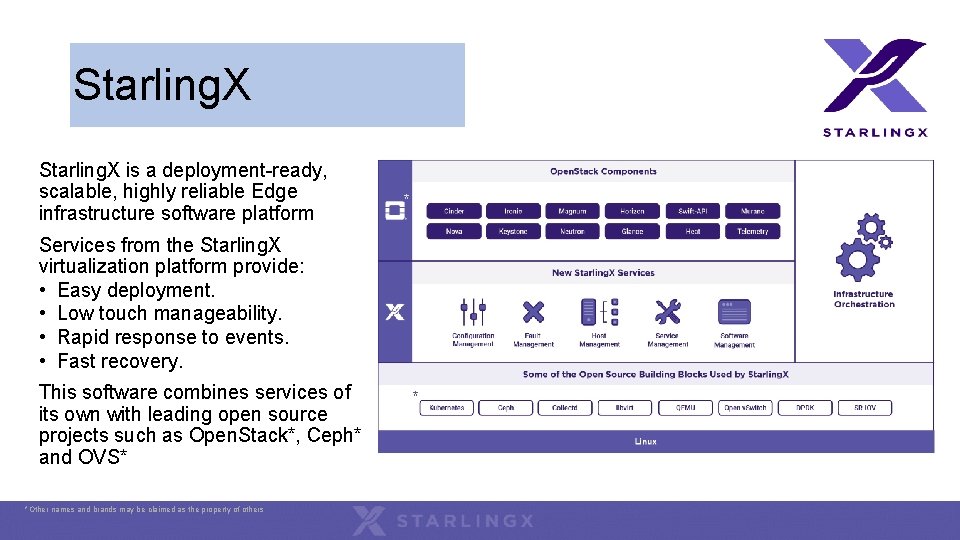
Starling. X is a deployment-ready, scalable, highly reliable Edge infrastructure software platform * Services from the Starling. X virtualization platform provide: • Easy deployment. • Low touch manageability. • Rapid response to events. • Fast recovery. This software combines services of its own with leading open source projects such as Open. Stack*, Ceph* and OVS* *Other names and brands may be claimed as the property of others *
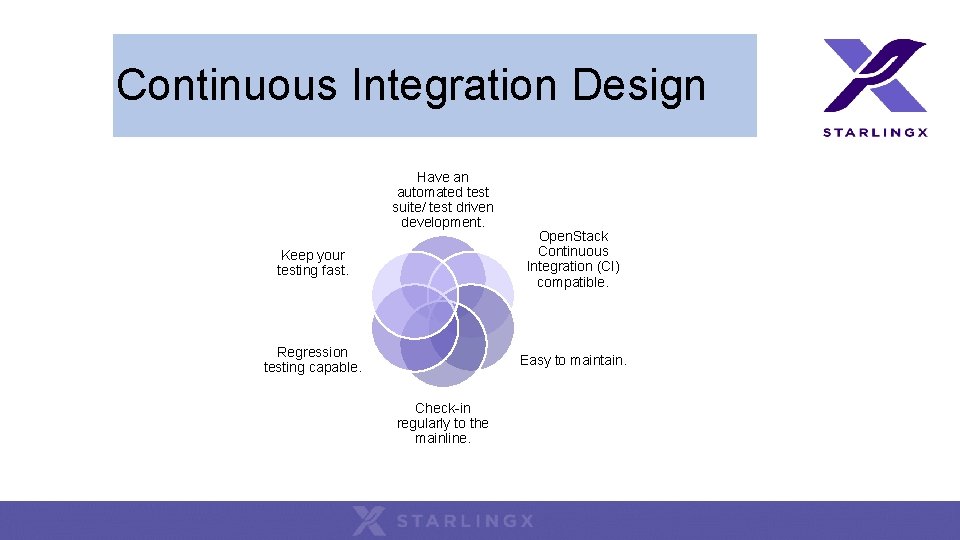
Continuous Integration Design Have an automated test suite/ test driven development. Keep your testing fast. Open. Stack Continuous Integration (CI) compatible. Regression testing capable. Easy to maintain. Check-in regularly to the mainline.
What is Zuul Definition: Zuul is a pipeline-oriented project gating system. It facilitates running tests and automated tasks in response to Gerrit events. Zuul is a program that drives continuous integration, delivery, and deployment systems with a focus on project gating and interrelated projects.
Why Zuul? We want to keep our main project principles, Open collaboration, Open design, Open Development, Open Source. Continuous Integration (CI) tool from Open. Stack Foundation (OSF) Starling. X is aligned to OSF guidelines. We can use as a gate keeper or job oriented, both options taking existing Jenkins jobs, create new jobs using Ansible and then merge everything in the same format. A project gating system that drives continuous integration, delivery, and deployment systems *Other names and brands may be claimed as the property of others
Zuul Advantages Easy to configure. Can work as gatekeeper or job oriented (both in the same project). Gerrit friendly. Jenkins compatible. Optimized for Ansible playbooks.
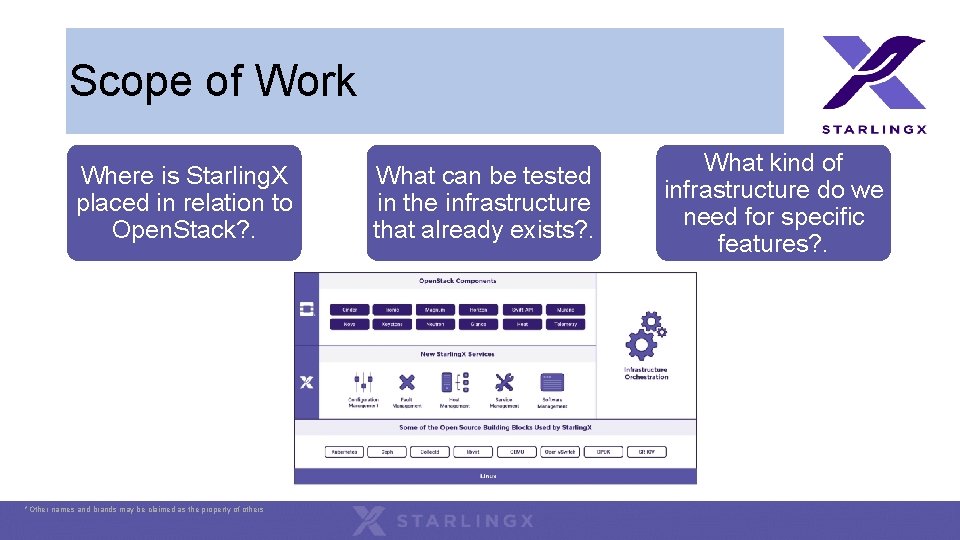
Scope of Work Where is Starling. X placed in relation to Open. Stack? . *Other names and brands may be claimed as the property of others What can be tested in the infrastructure that already exists? . What kind of infrastructure do we need for specific features? .
Challenges with Starling. X New project based on Open. Stack. New services that provide additional functionality. All configuration should be tested in an automated way. There about 3500 manual test cases that need to be automated ASAP. *Other names and brands may be claimed as the property of others
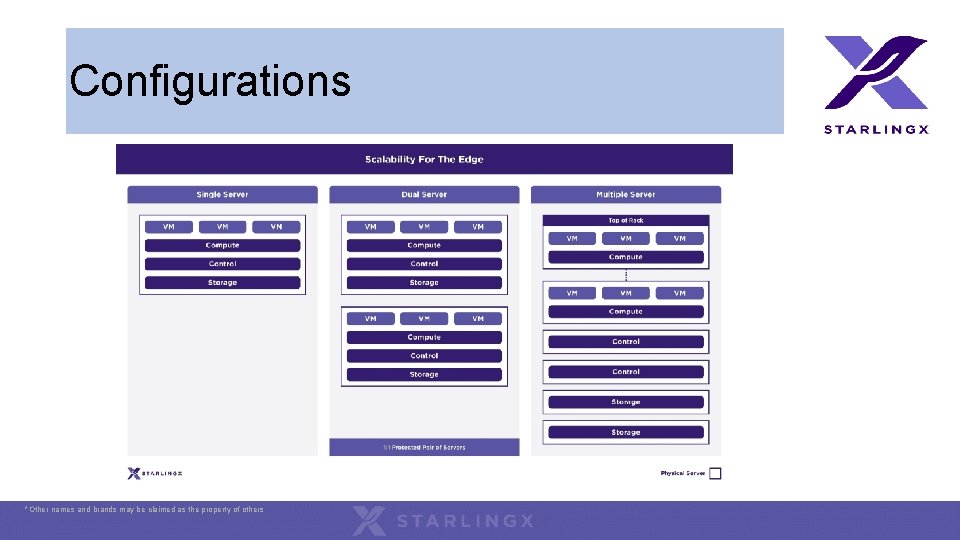
Configurations *Other names and brands may be claimed as the property of others
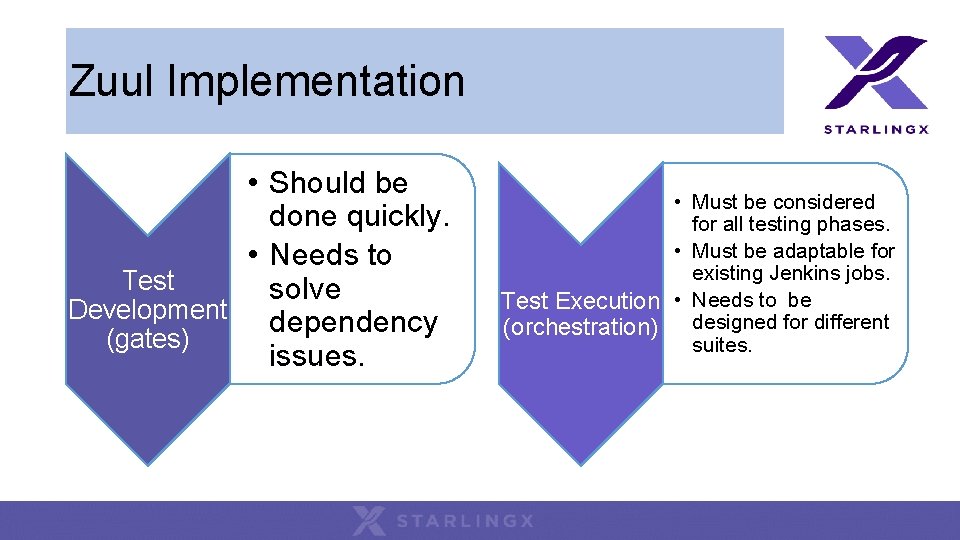
Zuul Implementation • Should be done quickly. • Needs to Test solve Development dependency (gates) issues. • Must be considered for all testing phases. • Must be adaptable for existing Jenkins jobs. Test Execution • Needs to be (orchestration) designed for different suites.
Test Code Development
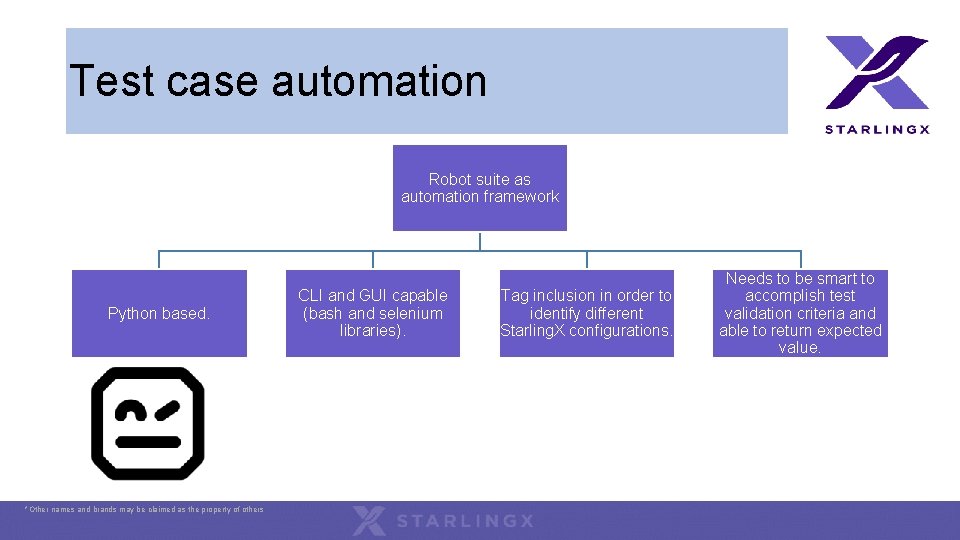
Test case automation Robot suite as automation framework Python based. *Other names and brands may be claimed as the property of others CLI and GUI capable (bash and selenium libraries). Tag inclusion in order to identify different Starling. X configurations. Needs to be smart to accomplish test validation criteria and able to return expected value.
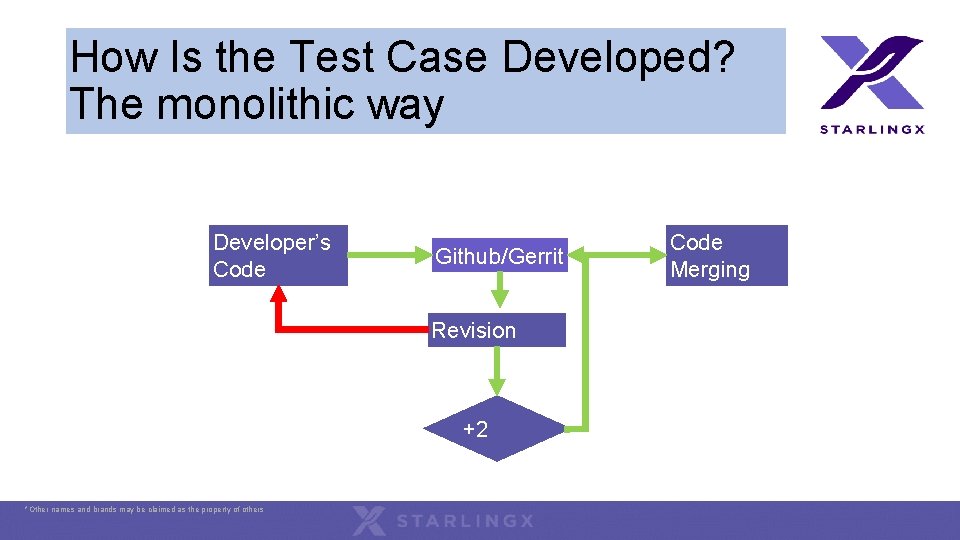
How Is the Test Case Developed? The monolithic way Developer’s Code Github/Gerrit Revision +2 *Other names and brands may be claimed as the property of others Code Merging
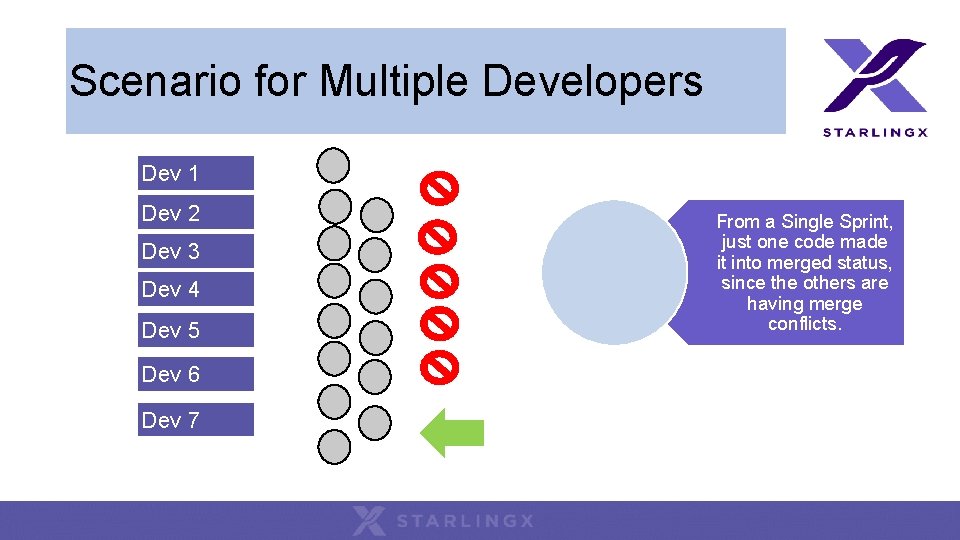
Scenario for Multiple Developers Dev 1 Dev 2 Dev 3 Dev 4 Dev 5 Dev 6 Dev 7 From a Single Sprint, just one code made it into merged status, since the others are having merge conflicts.
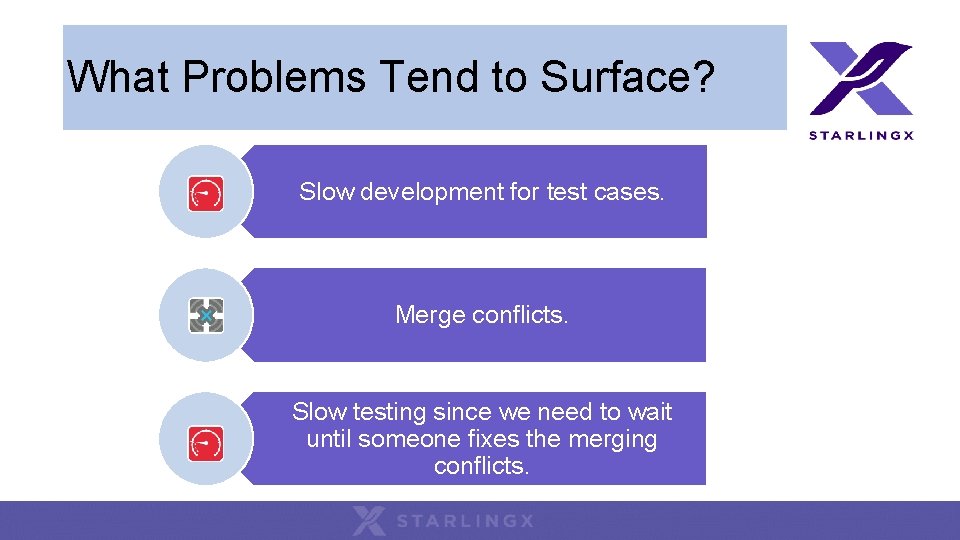
What Problems Tend to Surface? Slow development for test cases. Merge conflicts. Slow testing since we need to wait until someone fixes the merging conflicts.
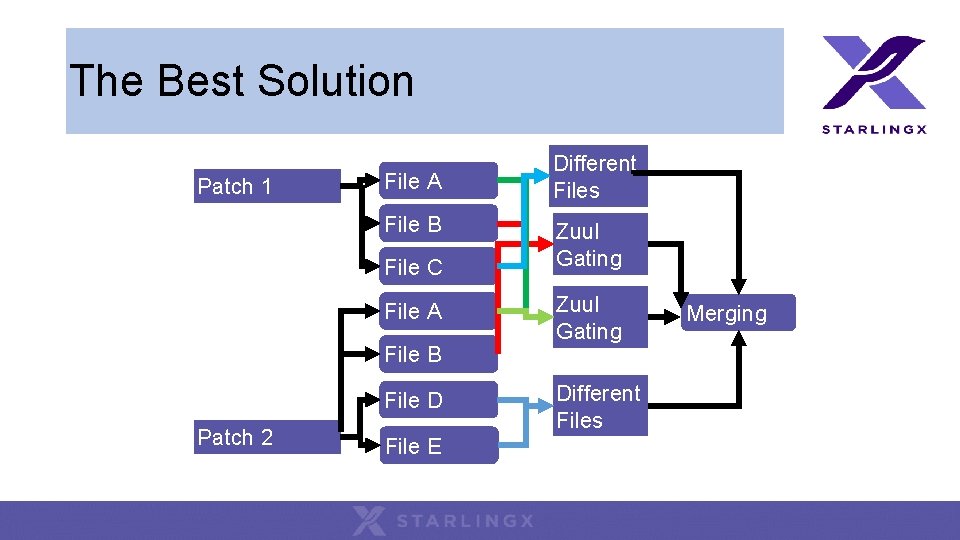
The Best Solution Patch 1 File A File B File C File A File B File D Patch 2 File E Different Files Zuul Gating Different Files Merging
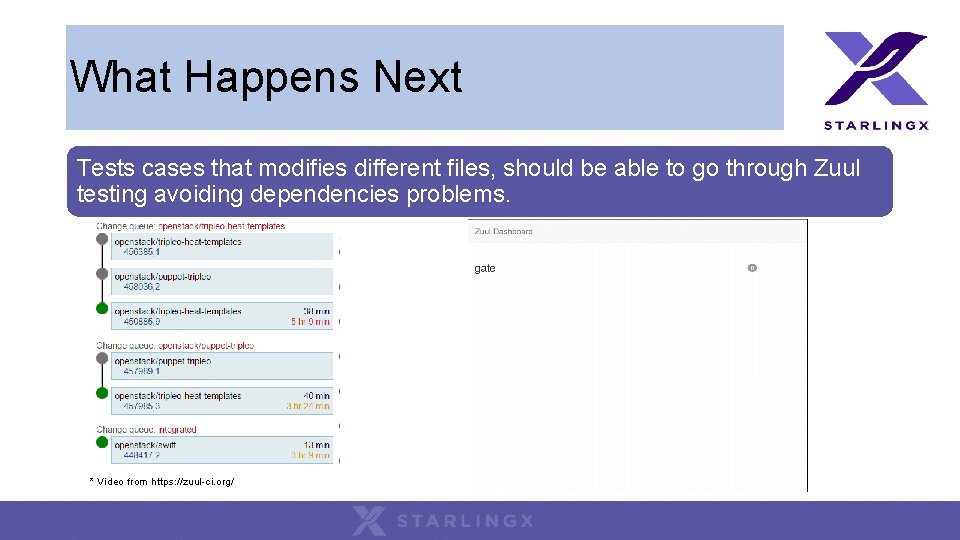
What Happens Next Tests cases that modifies different files, should be able to go through Zuul testing avoiding dependencies problems. * Video from https: //zuul-ci. org/
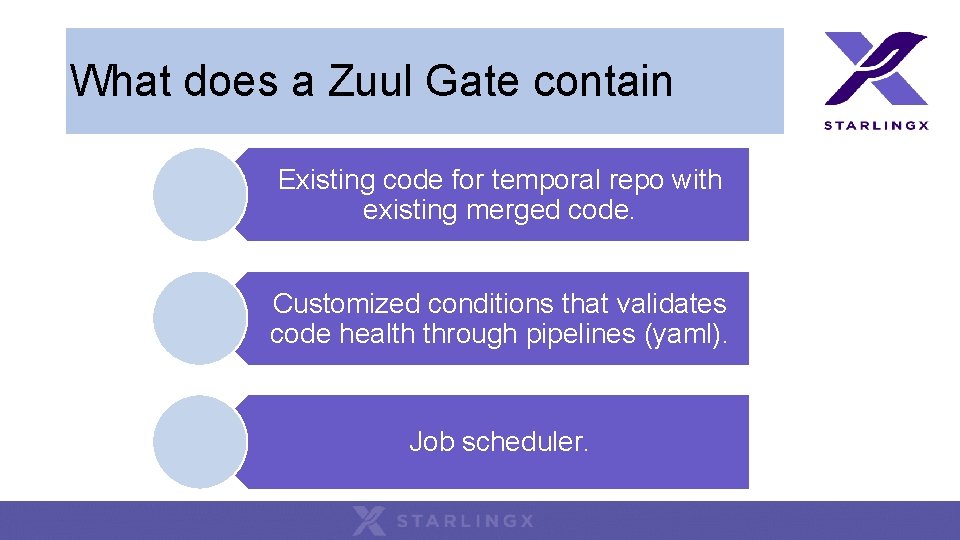
What does a Zuul Gate contain Existing code for temporal repo with existing merged code. Customized conditions that validates code health through pipelines (yaml). Job scheduler.
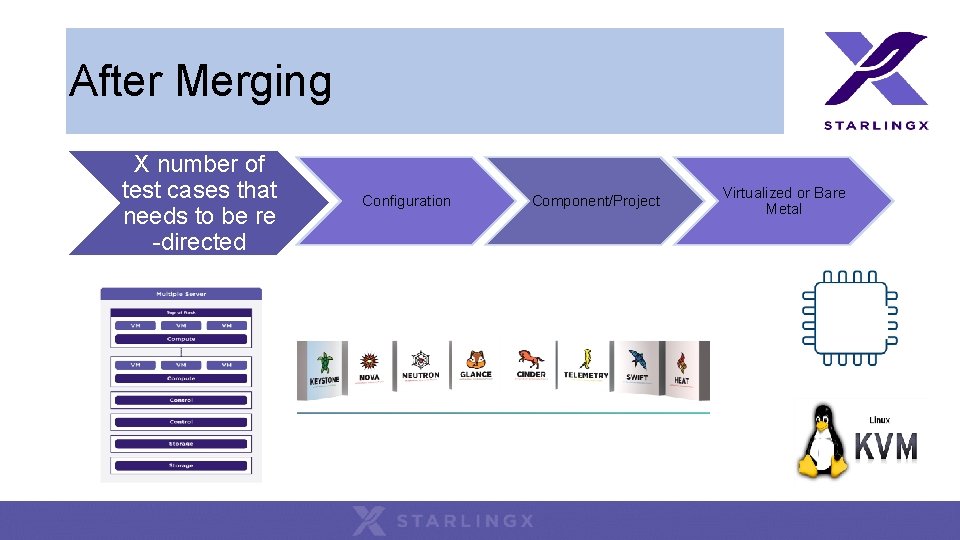
After Merging X number of test cases that needs to be re -directed Configuration Component/Project Virtualized or Bare Metal
Job orchestration
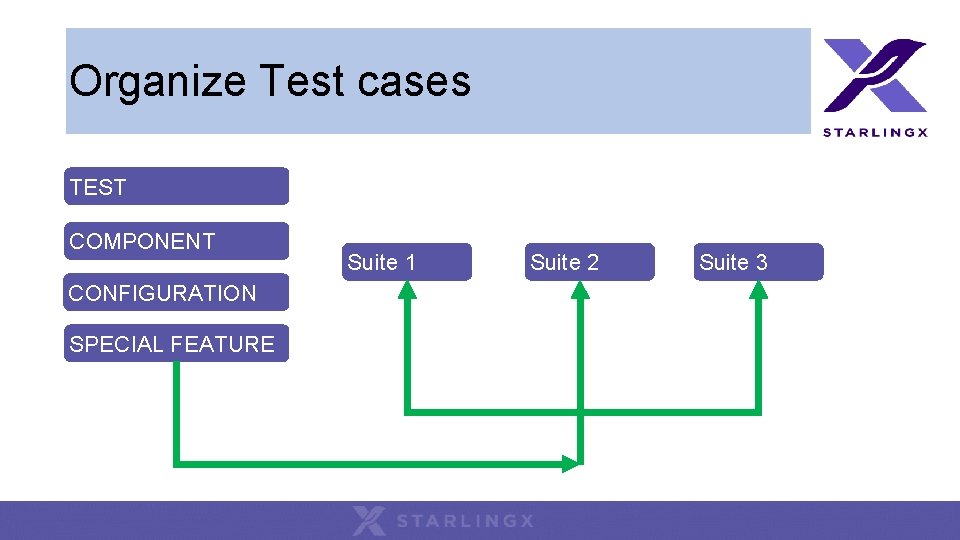
Organize Test cases TEST COMPONENT CONFIGURATION SPECIAL FEATURE Suite 1 Suite 2 Suite 3
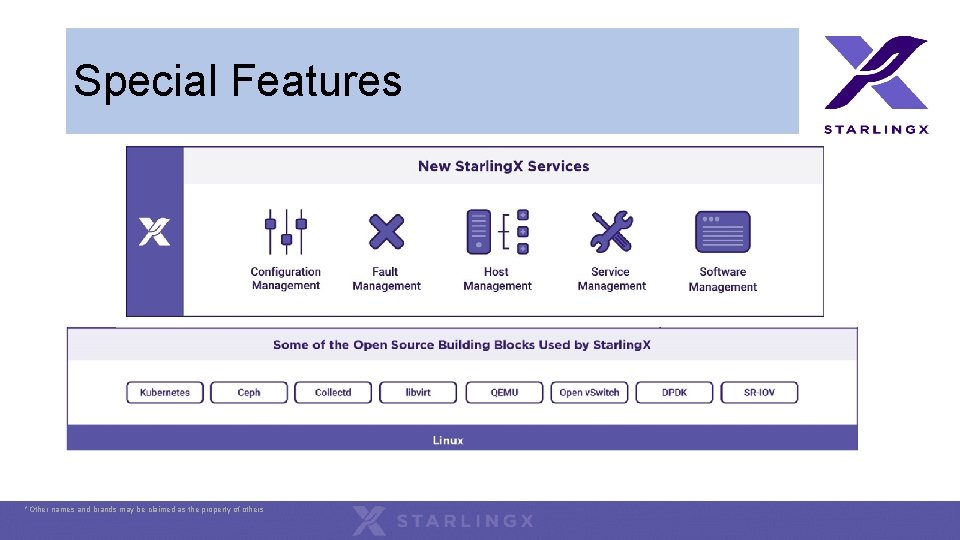
Special Features *Other names and brands may be claimed as the property of others
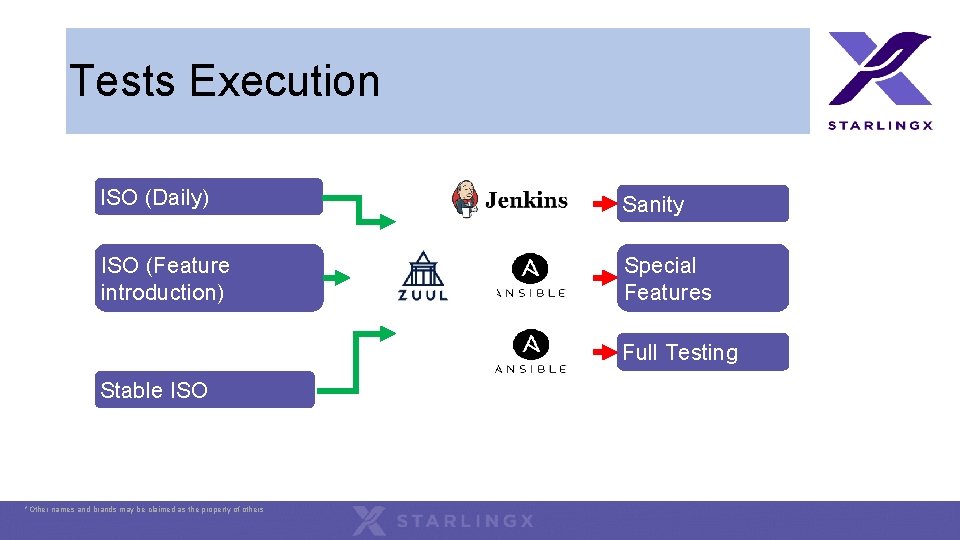
Tests Execution ISO (Daily) Sanity ISO (Feature introduction) Special Features Full Testing Stable ISO *Other names and brands may be claimed as the property of others
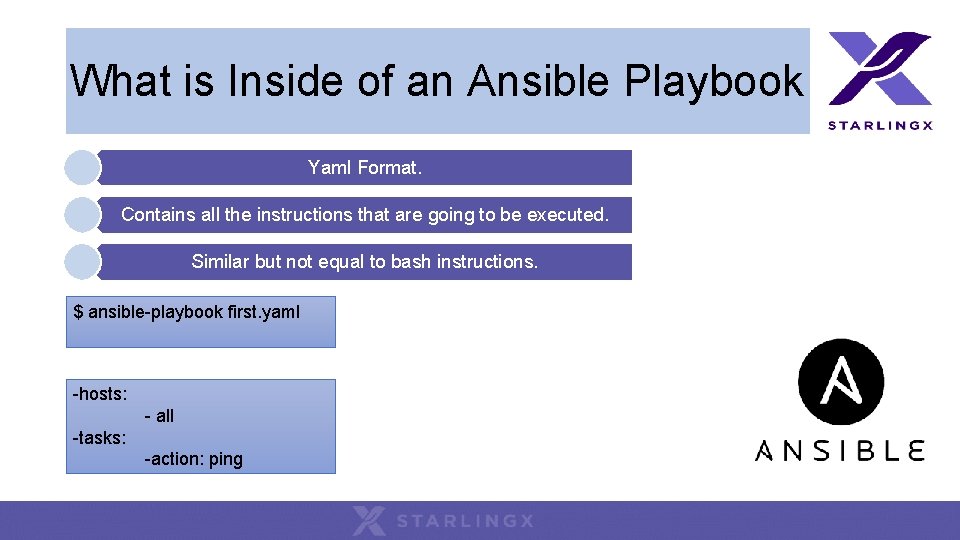
What is Inside of an Ansible Playbook Yaml Format. Contains all the instructions that are going to be executed. Similar but not equal to bash instructions. $ ansible-playbook first. yaml -hosts: - all -tasks: -action: ping
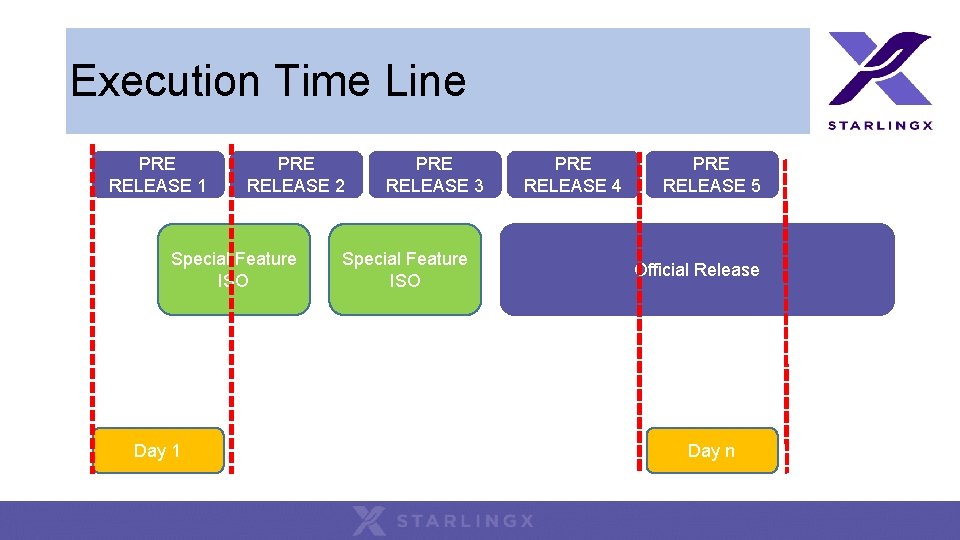
Execution Time Line PRE RELEASE 1 PRE RELEASE 2 Special Feature ISO Day 1 PRE RELEASE 3 Special Feature ISO PRE RELEASE 4 PRE RELEASE 5 Official Release Day n
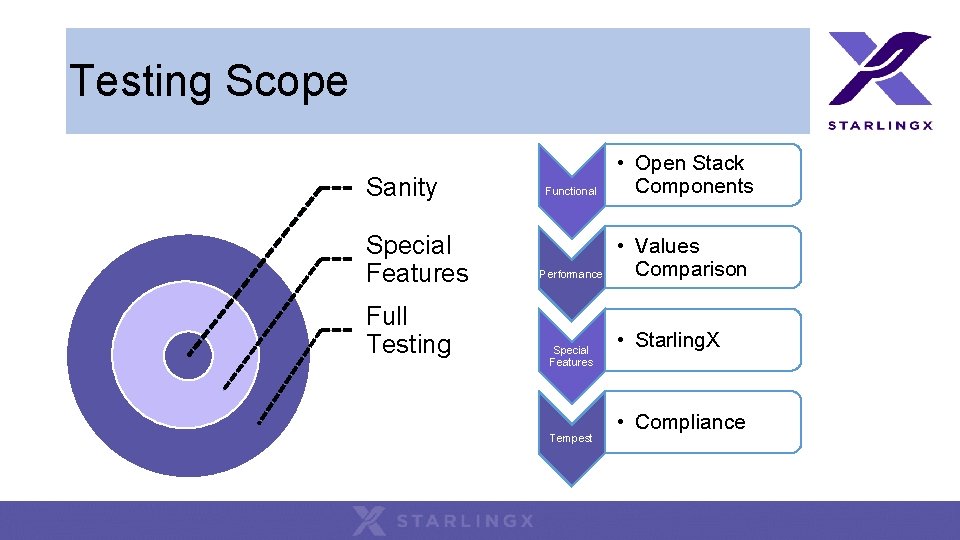
Testing Scope Sanity Special Features Full Testing Functional • Open Stack Components Performance • Values Comparison Special Features Tempest • Starling. X • Compliance
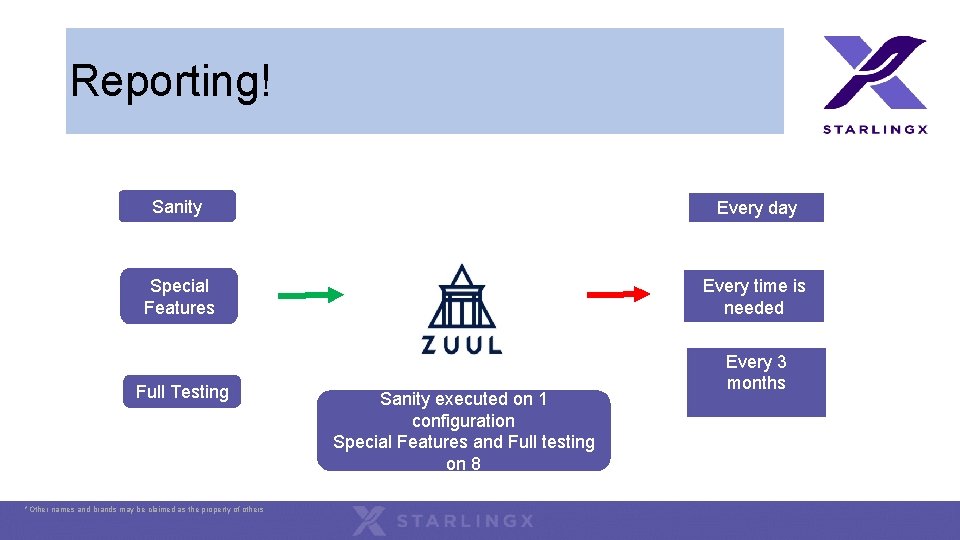
Reporting! Sanity Every day Special Features Every time is needed Full Testing Every 3 months *Other names and brands may be claimed as the property of others Sanity executed on 1 configuration Special Features and Full testing on 8
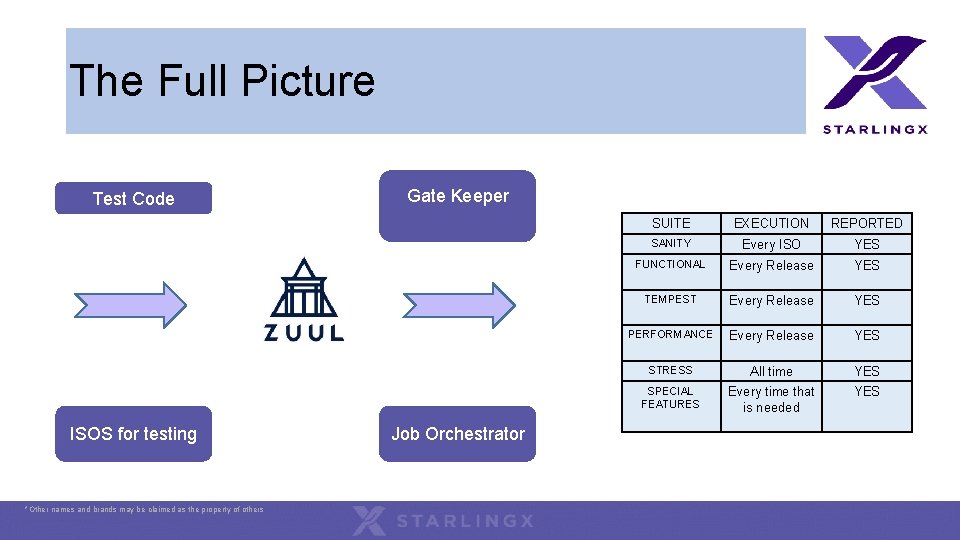
The Full Picture Test Code ISOS for testing *Other names and brands may be claimed as the property of others Gate Keeper Job Orchestrator SUITE EXECUTION REPORTED SANITY Every ISO YES FUNCTIONAL Every Release YES TEMPEST Every Release YES PERFORMANCE Every Release YES STRESS All time YES SPECIAL FEATURES Every time that is needed YES
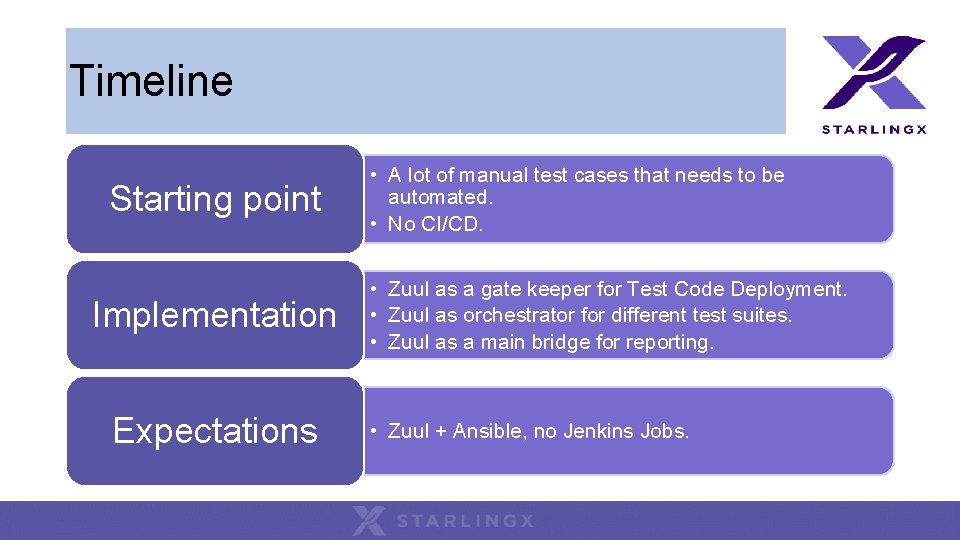
Timeline Starting point Implementation Expectations • A lot of manual test cases that needs to be automated. • No CI/CD. • Zuul as a gate keeper for Test Code Deployment. • Zuul as orchestrator for different test suites. • Zuul as a main bridge for reporting. • Zuul + Ansible, no Jenkins Jobs.
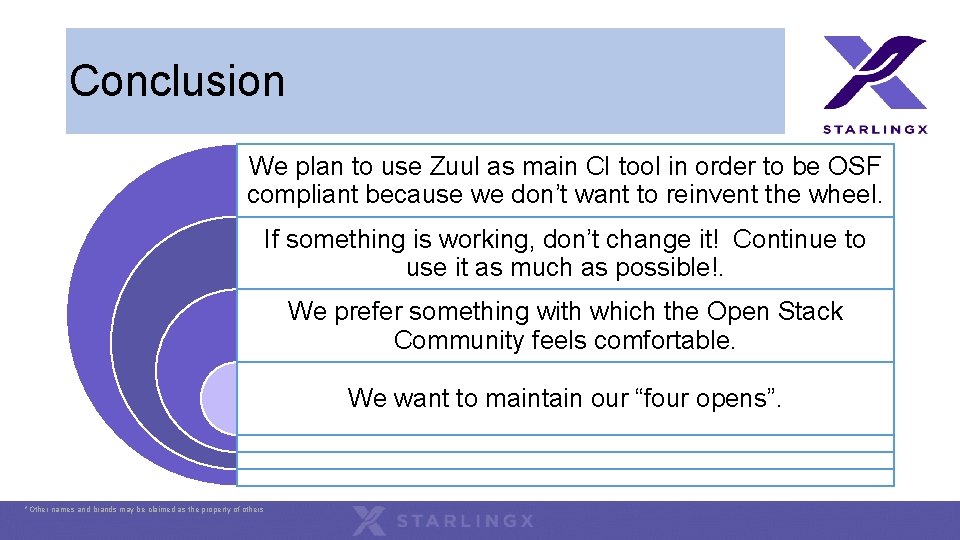
Conclusion We plan to use Zuul as main CI tool in order to be OSF compliant because we don’t want to reinvent the wheel. If something is working, don’t change it! Continue to use it as much as possible!. We prefer something with which the Open Stack Community feels comfortable. We want to maintain our “four opens”. *Other names and brands may be claimed as the property of others
Communication • #starlingx@Freenode • Mailing Lists: • lists. starlingx. io • Email: • info@starlingx. io • http: //lists. starlingx. io/cgi-bin/mailman/listinfo/starlingx-discuss • Weekly meetings: • Zoom calls • https: //wiki. openstack. org/wiki/Starlingx/Meetings
Questions?
Contact • Elio Martinez – Sr. Quality Assurance Engineer • elio. martinez. monroy@intel. com Thank you! A Different Zuul is a genus of herbivorous ankylosaurine dinosaur from the Campanian Judith River Formation of Montana. The type species is Zuul crurivastator.
Backup
Backup An Open. Stack* Pilot Project Starling. X is a Pilot Project under the governance of the Open. Stack Foundation with an Apache 2. 0 license • The first community release of Starling. X is planned for October 24 th, 2018 • Starling. X provides high performance, low latency, and high availability for Edge Cloud applications • Open. Stack invites new users, operators and contributors as we build a mission critical infrastructure stack for Edge computing • Starling. X Web Site: https: //www. starlingx. io/ *Other names and brands may be claimed as the property of others
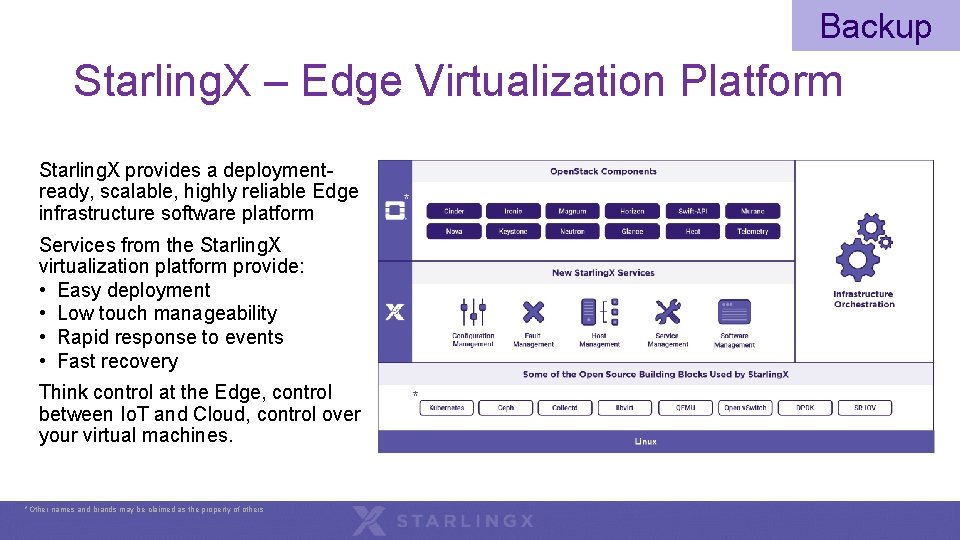
Backup Starling. X – Edge Virtualization Platform Starling. X provides a deploymentready, scalable, highly reliable Edge infrastructure software platform * Services from the Starling. X virtualization platform provide: • Easy deployment • Low touch manageability • Rapid response to events • Fast recovery Think control at the Edge, control between Io. T and Cloud, control over your virtual machines. *Other names and brands may be claimed as the property of others *
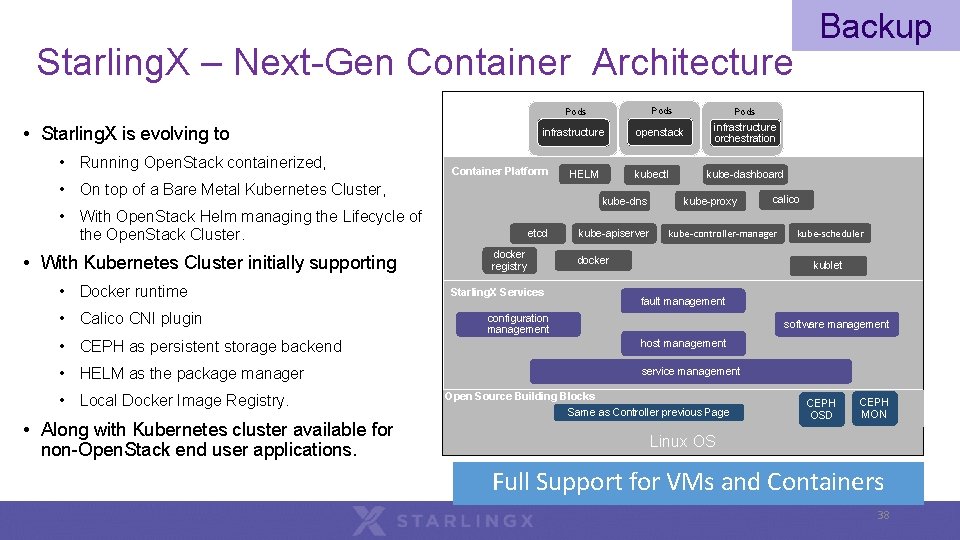
Backup Starling. X – Next-Gen Container Architecture • Starling. X is evolving to • Running Open. Stack containerized, Pods infrastructure openstack infrastructure orchestration Container Platform HELM • On top of a Bare Metal Kubernetes Cluster, kube-dns • With Open. Stack Helm managing the Lifecycle of the Open. Stack Cluster. • With Kubernetes Cluster initially supporting • Docker runtime • Calico CNI plugin kubectl etcd docker registry kube-apiserver kube-dashboard kube-proxy kube-controller-manager docker Starling. X Services fault management configuration management software management host management • HELM as the package manager service management • Along with Kubernetes cluster available for non-Open. Stack end user applications. kube-scheduler kublet • CEPH as persistent storage backend • Local Docker Image Registry. calico Open Source Building Blocks Same as Controller previous Page CEPH OSD CEPH MON Linux OS Full Support for VMs and Containers 38