
Staring and The Clinical Gaze Johanna Shapiro Ph
- Slides: 16
Staring and The Clinical Gaze Johanna Shapiro, Ph. D. Department of Family Medicine UC Irvine School of Medicine
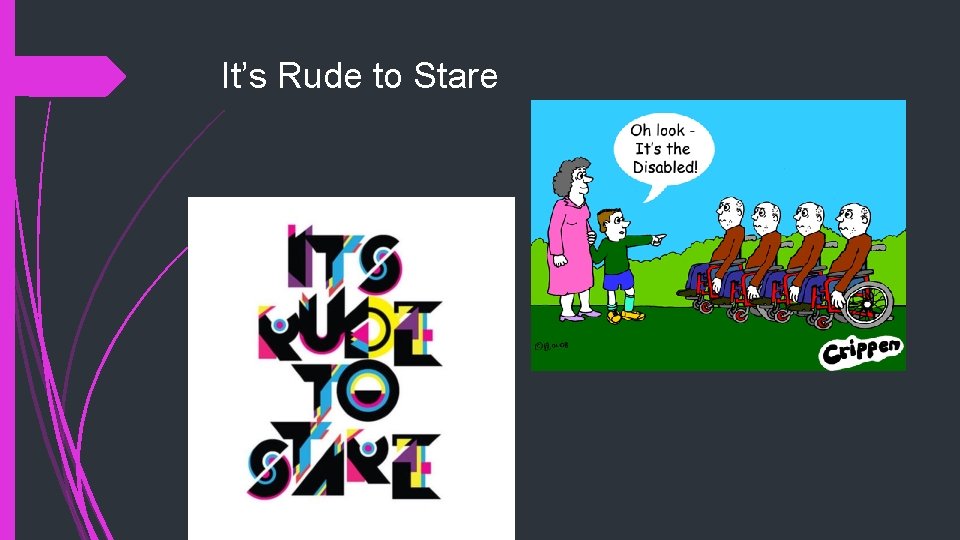
It’s Rude to Stare
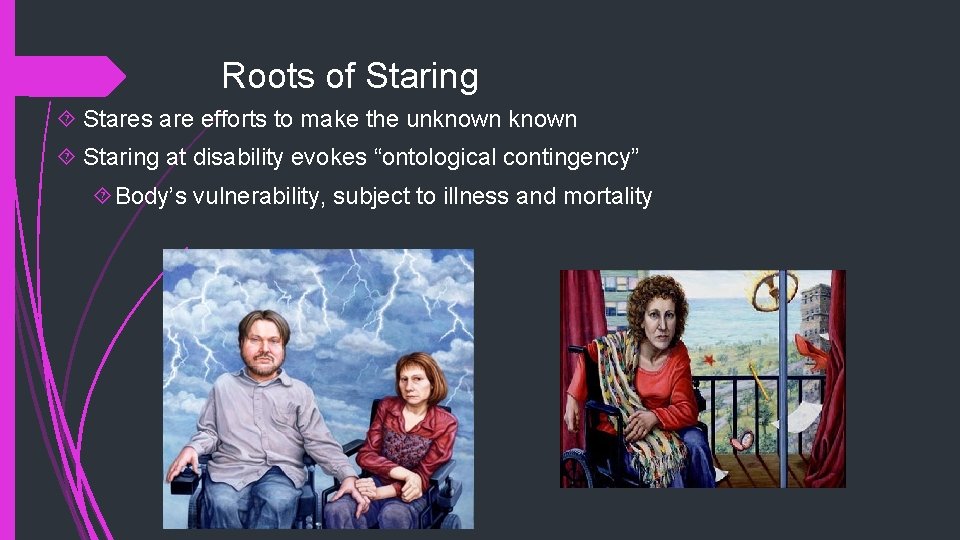
Roots of Staring Stares are efforts to make the unknown Staring at disability evokes “ontological contingency” Body’s vulnerability, subject to illness and mortality
Protect yourself from this - Karen Fiser Protect yourself from this, the sight of the lumpish woman in plate glass laboring to push herself along in her coat, in the sun. She looks to be a woman of a certain age, a nice woman, but forlorn, with too much pain in her face to be outdoors. You look away, then swiftly back, to see her struggle with the chair outside the heavy bank door, holding her packages upright in her lap with her teeth. She starts to mutter, how difficult things are. For an instant you allow yourself to feel her dread, her effort not to become another crazy crying on a Berkeley street. She is not what you feel yourself to be, but what you see you are, reflected in the world’s unyielding surfaces. You know you can never leave her, now.
Potentiality in Staring Not all starers are perpetrators, nor all starees victims “The encounter between starer and staree sets in motion an interpersonal relationship, however momentary, that has consequences” – R. Garland-Thomson Staring can be generative as well as oppressive – offers two people the opportunity to regard and be known to one another Bad and good staring Bad staring leads to indifference, complacency; reates feelings of security, produces unethical passivity Good staring – reaches out to the other and may lead to action (social justice)
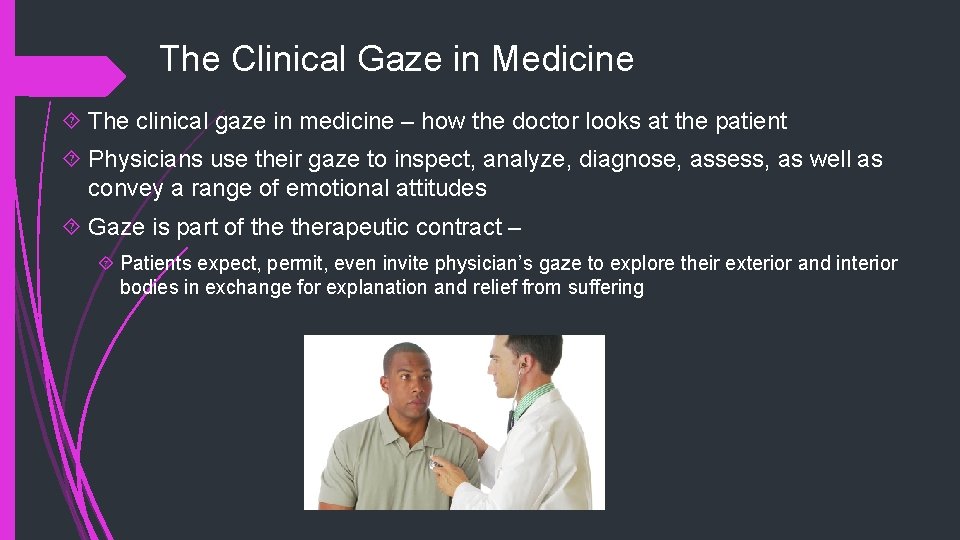
The Clinical Gaze in Medicine The clinical gaze in medicine – how the doctor looks at the patient Physicians use their gaze to inspect, analyze, diagnose, assess, as well as convey a range of emotional attitudes Gaze is part of therapeutic contract – Patients expect, permit, even invite physician’s gaze to explore their exterior and interior bodies in exchange for explanation and relief from suffering
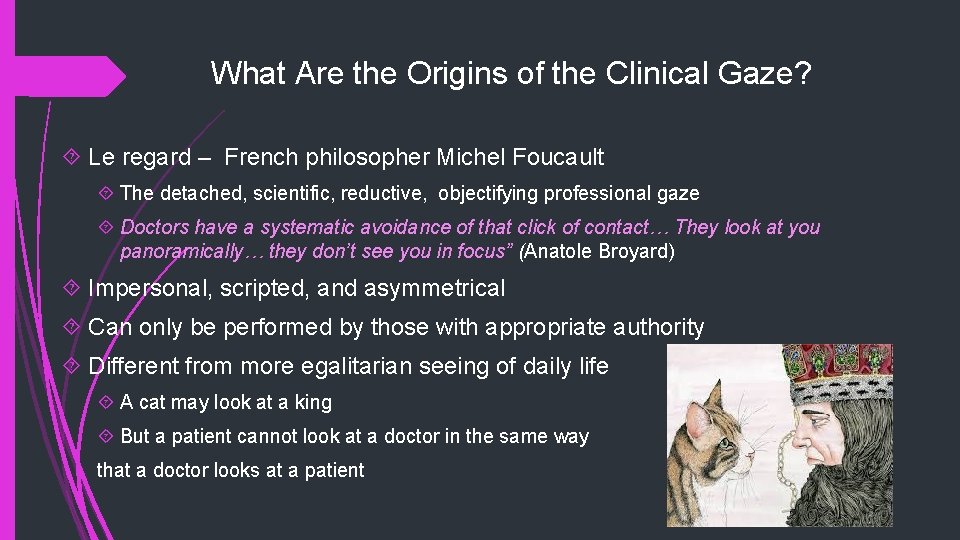
What Are the Origins of the Clinical Gaze? Le regard – French philosopher Michel Foucault The detached, scientific, reductive, objectifying professional gaze Doctors have a systematic avoidance of that click of contact… They look at you panoramically… they don’t see you in focus” (Anatole Broyard) Impersonal, scripted, and asymmetrical Can only be performed by those with appropriate authority Different from more egalitarian seeing of daily life A cat may look at a king But a patient cannot look at a doctor in the same way that a doctor looks at a patient
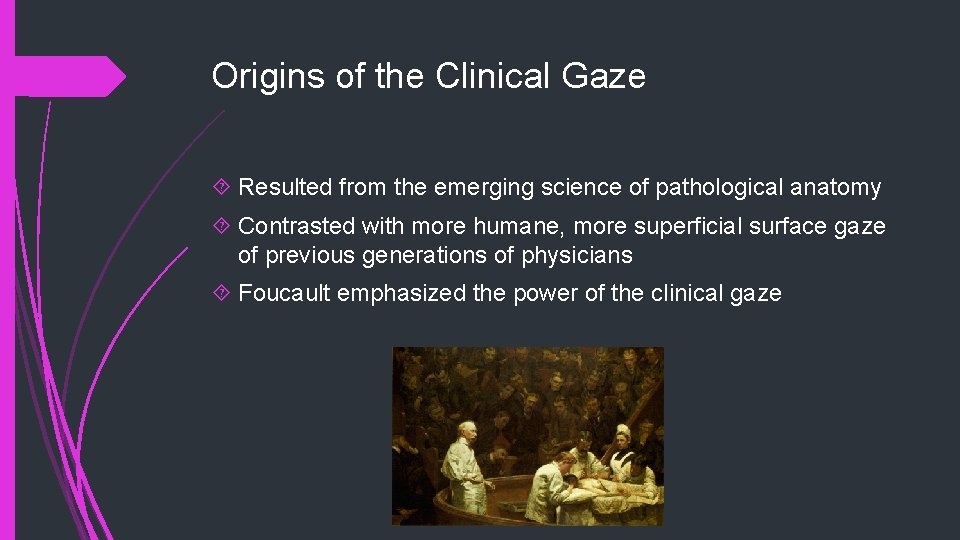
Origins of the Clinical Gaze Resulted from the emerging science of pathological anatomy Contrasted with more humane, more superficial surface gaze of previous generations of physicians Foucault emphasized the power of the clinical gaze
Gaze as Power Gaze becomes the determiner of truth: whatever cannot be seen or apprehended by the clinical gaze falls outside the domain of important knowledge Expert clinical gaze (complemented by technology) is privileged over subjective, unreliable patient narrative Act of dominance – used to enforce hierarchies of power and regulate access to resources Gaze can “colonize” the patient
Ordinary Stare vs. Expert Gaze The person on the street who stares often indulges in a kind of voyeurism Staring is all about difference, pushing away from the Other “Unworthy desire” (Sontag) – desire to show that Other is not self The doctor who gazes also identifies differences, but with the interventional desire to re-establish normalcy Staring separates but has no power to change The gaze is proactive – restoration of normalcy Should be approached with humility
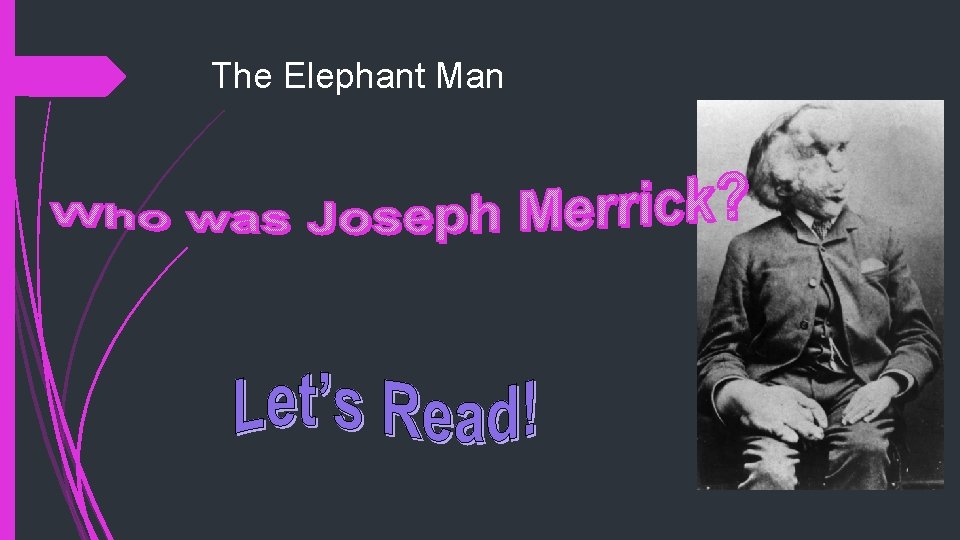
The Elephant Man
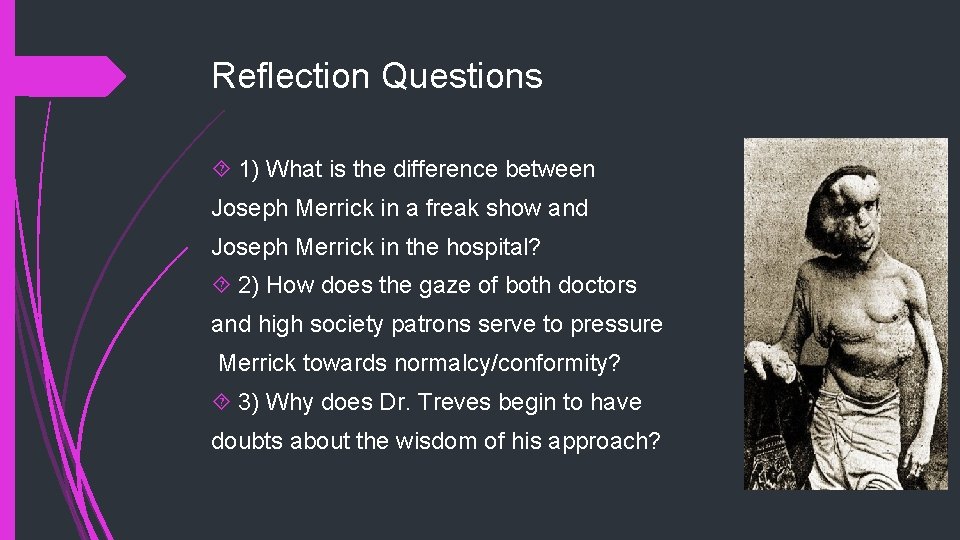
Reflection Questions 1) What is the difference between Joseph Merrick in a freak show and Joseph Merrick in the hospital? 2) How does the gaze of both doctors and high society patrons serve to pressure Merrick towards normalcy/conformity? 3) Why does Dr. Treves begin to have doubts about the wisdom of his approach?
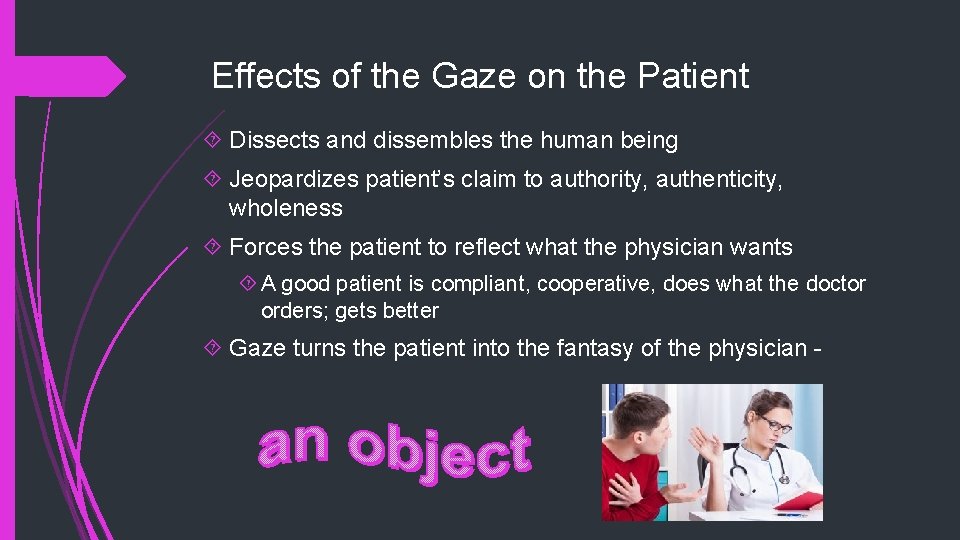
Effects of the Gaze on the Patient Dissects and dissembles the human being Jeopardizes patient’s claim to authority, authenticity, wholeness Forces the patient to reflect what the physician wants A good patient is compliant, cooperative, does what the doctor orders; gets better Gaze turns the patient into the fantasy of the physician -
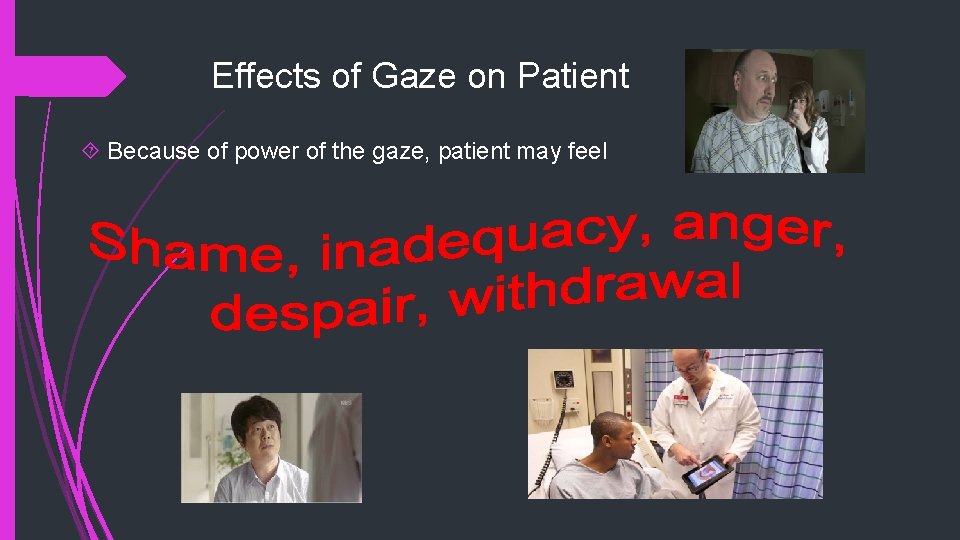
Effects of Gaze on Patient Because of power of the gaze, patient may feel
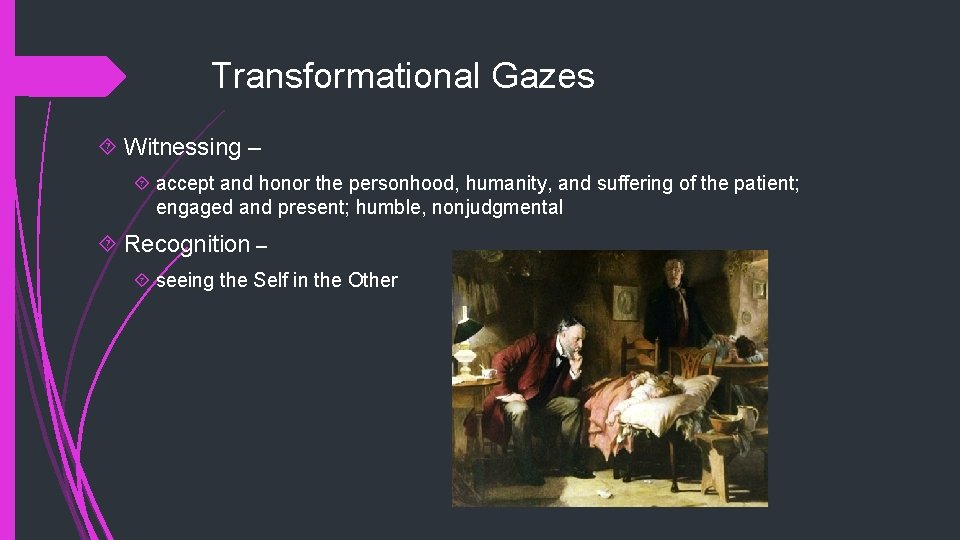
Transformational Gazes Witnessing – accept and honor the personhood, humanity, and suffering of the patient; engaged and present; humble, nonjudgmental Recognition – seeing the Self in the Other
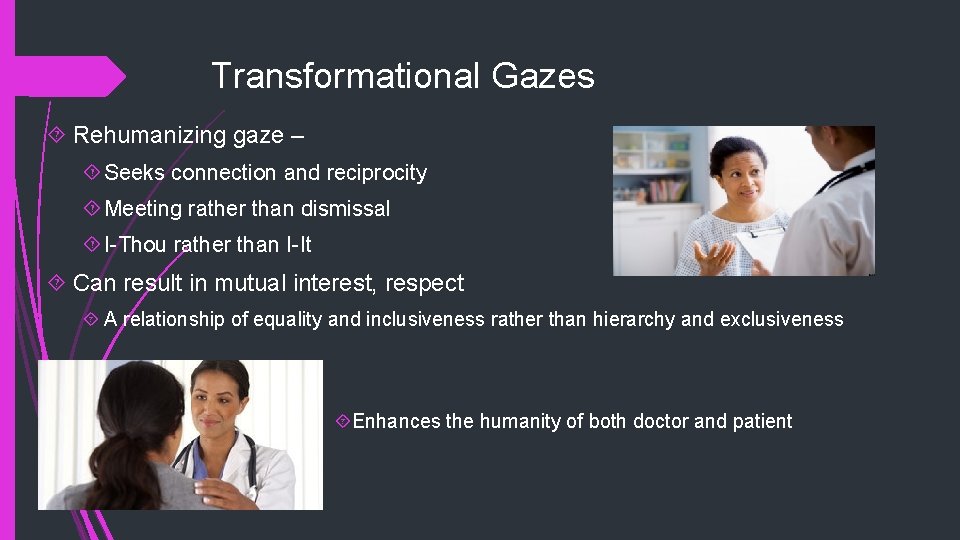
Transformational Gazes Rehumanizing gaze – Seeks connection and reciprocity Meeting rather than dismissal I-Thou rather than I-It Can result in mutual interest, respect A relationship of equality and inclusiveness rather than hierarchy and exclusiveness Enhances the humanity of both doctor and patient