
STARD trial Summary The acute remission rates were
- Slides: 25
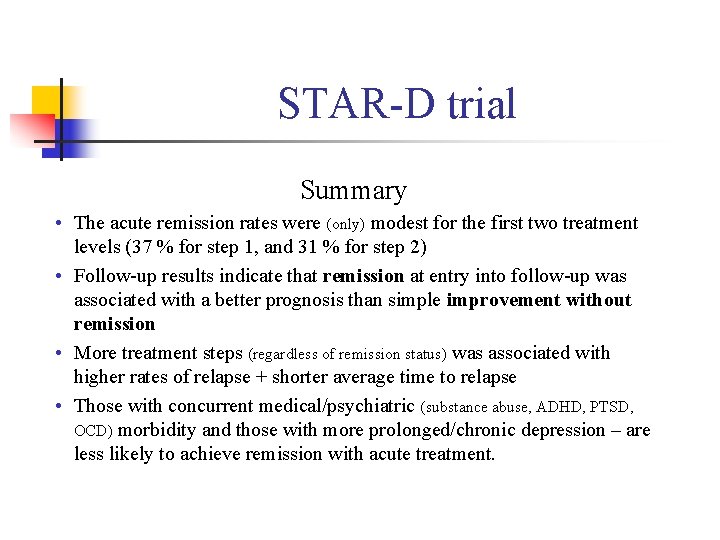
STAR-D trial Summary • The acute remission rates were (only) modest for the first two treatment levels (37 % for step 1, and 31 % for step 2) • Follow-up results indicate that remission at entry into follow-up was associated with a better prognosis than simple improvement without remission • More treatment steps (regardless of remission status) was associated with higher rates of relapse + shorter average time to relapse • Those with concurrent medical/psychiatric (substance abuse, ADHD, PTSD, OCD) morbidity and those with more prolonged/chronic depression – are less likely to achieve remission with acute treatment.
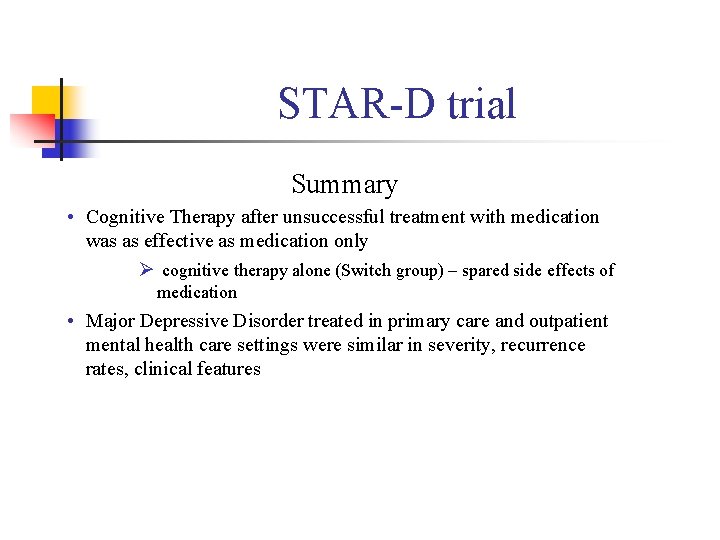
STAR-D trial Summary • Cognitive Therapy after unsuccessful treatment with medication was as effective as medication only Ø cognitive therapy alone (Switch group) – spared side effects of medication • Major Depressive Disorder treated in primary care and outpatient mental health care settings were similar in severity, recurrence rates, clinical features
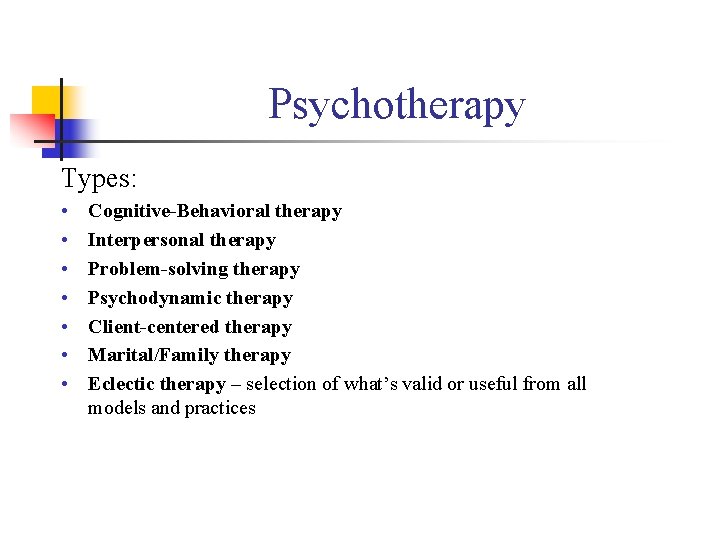
Psychotherapy Types: • • Cognitive-Behavioral therapy Interpersonal therapy Problem-solving therapy Psychodynamic therapy Client-centered therapy Marital/Family therapy Eclectic therapy – selection of what’s valid or useful from all models and practices
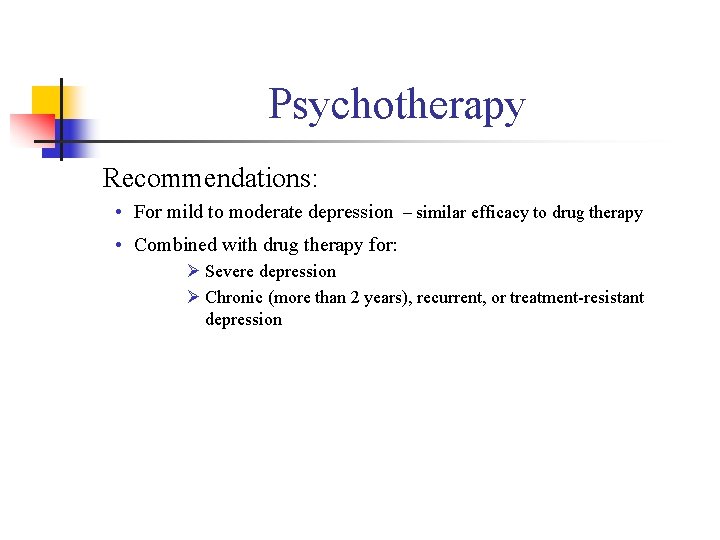
Psychotherapy Recommendations: • For mild to moderate depression – similar efficacy to drug therapy • Combined with drug therapy for: Ø Severe depression Ø Chronic (more than 2 years), recurrent, or treatment-resistant depression
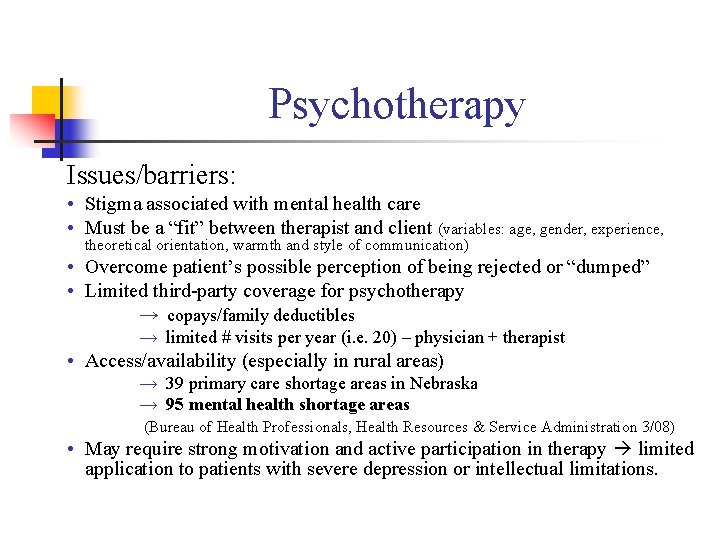
Psychotherapy Issues/barriers: • Stigma associated with mental health care • Must be a “fit” between therapist and client (variables: age, gender, experience, theoretical orientation, warmth and style of communication) • Overcome patient’s possible perception of being rejected or “dumped” • Limited third-party coverage for psychotherapy → copays/family deductibles → limited # visits per year (i. e. 20) – physician + therapist • Access/availability (especially in rural areas) → 39 primary care shortage areas in Nebraska → 95 mental health shortage areas (Bureau of Health Professionals, Health Resources & Service Administration 3/08) • May require strong motivation and active participation in therapy limited application to patients with severe depression or intellectual limitations.
Men and Depression Paternal Peripartum Depression
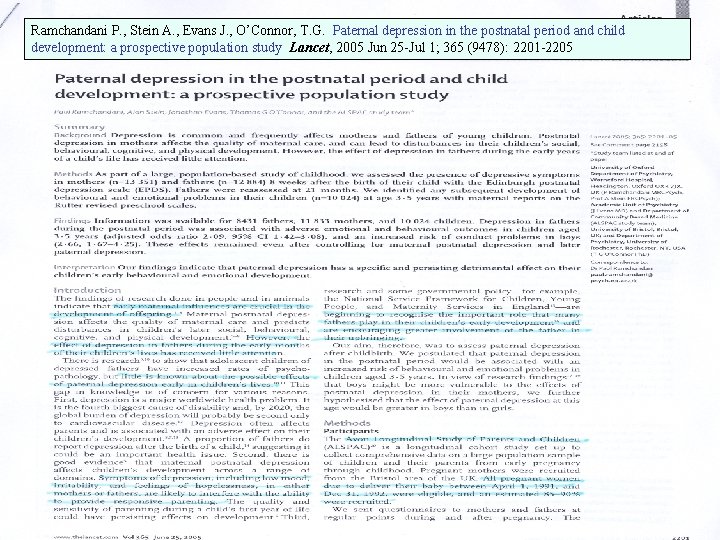
Ramchandani P. , Stein A. , Evans J. , O’Connor, T. G. Paternal depression in the postnatal period and child development: a prospective population study Lancet, 2005 Jun 25 -Jul 1; 365 (9478): 2201 -2205
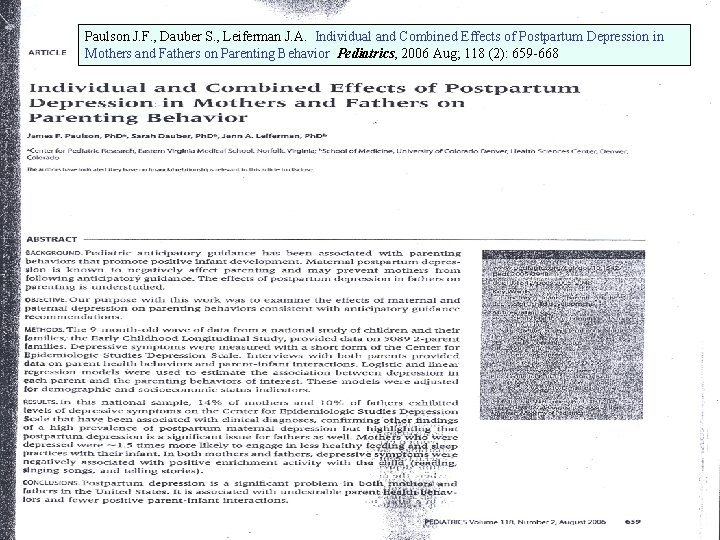
Paulson J. F. , Dauber S. , Leiferman J. A. Individual and Combined Effects of Postpartum Depression in Mothers and Fathers on Parenting Behavior Pediatrics, 2006 Aug; 118 (2): 659 -668
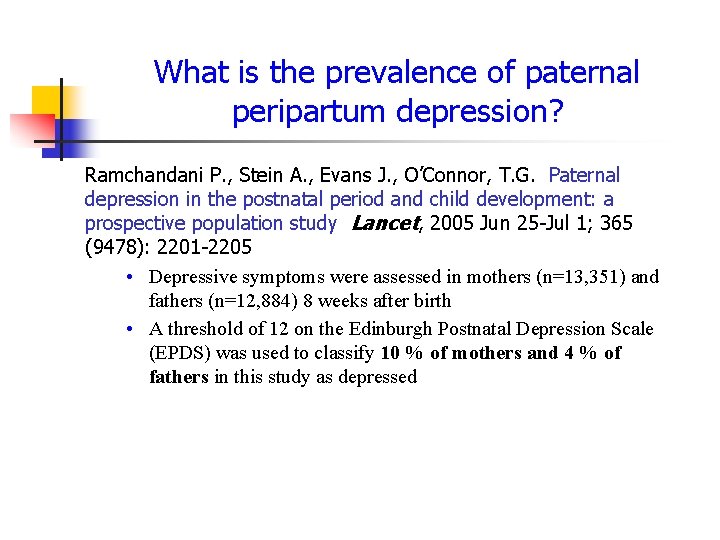
What is the prevalence of paternal peripartum depression? Ramchandani P. , Stein A. , Evans J. , O’Connor, T. G. Paternal depression in the postnatal period and child development: a prospective population study Lancet, 2005 Jun 25 -Jul 1; 365 (9478): 2201 -2205 • Depressive symptoms were assessed in mothers (n=13, 351) and fathers (n=12, 884) 8 weeks after birth • A threshold of 12 on the Edinburgh Postnatal Depression Scale (EPDS) was used to classify 10 % of mothers and 4 % of fathers in this study as depressed
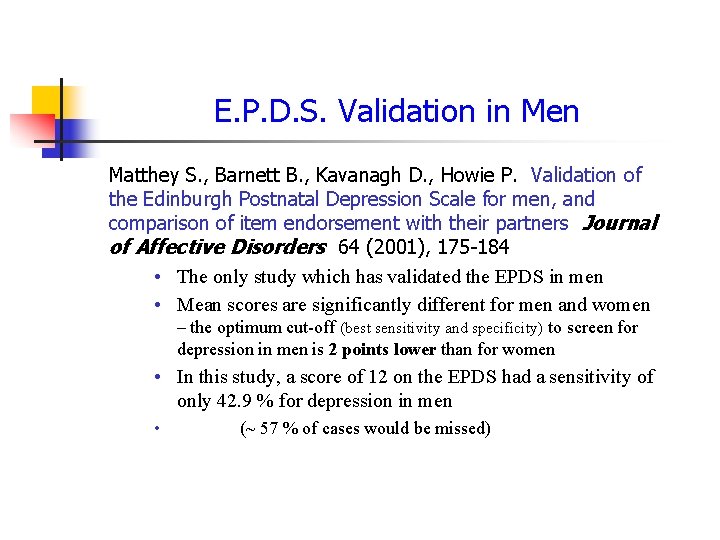
E. P. D. S. Validation in Men Matthey S. , Barnett B. , Kavanagh D. , Howie P. Validation of the Edinburgh Postnatal Depression Scale for men, and comparison of item endorsement with their partners Journal of Affective Disorders 64 (2001), 175 -184 • The only study which has validated the EPDS in men • Mean scores are significantly different for men and women – the optimum cut-off (best sensitivity and specificity) to screen for depression in men is 2 points lower than for women • In this study, a score of 12 on the EPDS had a sensitivity of only 42. 9 % for depression in men • (~ 57 % of cases would be missed)
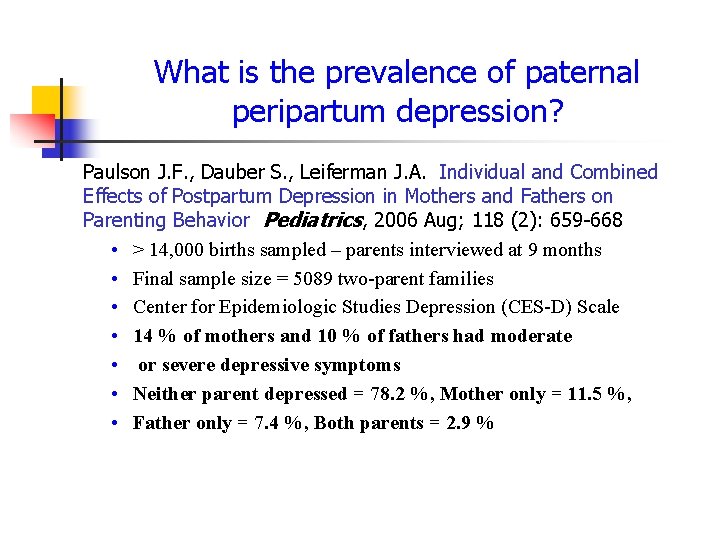
What is the prevalence of paternal peripartum depression? Paulson J. F. , Dauber S. , Leiferman J. A. Individual and Combined Effects of Postpartum Depression in Mothers and Fathers on Parenting Behavior Pediatrics, 2006 Aug; 118 (2): 659 -668 • > 14, 000 births sampled – parents interviewed at 9 months • Final sample size = 5089 two-parent families • Center for Epidemiologic Studies Depression (CES-D) Scale • 14 % of mothers and 10 % of fathers had moderate • or severe depressive symptoms • Neither parent depressed = 78. 2 %, Mother only = 11. 5 %, • Father only = 7. 4 %, Both parents = 2. 9 %
Does paternal peripartum depression impact the family? Ramchandani P. , Stein A. , Evans J. , O’Connor, T. G. Paternal depression in the postnatal period and child development: a prospective population study Lancet, 2005 Jun 25 -Jul 1; 365 (9478): 2201 -2205 • A depressed father at 8 weeks postpartum was found to double the risk of behavioral and emotional problems in children at 3. 5 years of age (after controlling for maternal peripartum depression and later paternal depression)
Does paternal peripartum depression impact the family? Paulson J. F. , Dauber S. , Leiferman J. A. Individual and Combined Effects of Postpartum Depression in Mothers and Fathers on Parenting Behavior Pediatrics, 2006 Aug; 118 (2): 659 -668 Findings: Maternal and Paternal depression each negatively impacts: 1) positive parent-child enrichment activities (reading, playing, singing) 2) parenting behaviors emphasized in anticipatory guidance by pediatricians (back to sleep, breastfeeding, putting infants to bed drowsy and without a bottle) Conclusions: Ø A depressed parent may negatively impact the well parent’s interaction with their child Ø Negative effects on children are exacerbated when both parents are depressed Ø A well parent may “compensate” for a depressed parent
Does paternal peripartum depression impact the family? Responsive care provided by the father can buffer a child from being negatively influenced by maternal peripartum depression during development ¹ Hossain Z. , Field T. , Gonzales J. , et. al. Infants of depressed mothers interact better with their nondepressed fathers. Infant Mental Health Journal 1994; 15: 348 -357 ² Tannenbaum L. , Forehand R. Maternal depressive mood: the role of the father in preventing adolescent problem behaviors. Behavior Research and Therapy 1994; 32: 321 -325 ³ Hart S. , Field T. , del Valle C. , Pelaez-Nogureas M. Depressed mothers’ interaction with their one year old infants. Infant Behavior and Development 1998; 21: 519 -525 �Murray L. The impact of postnatal depression on infant development. Journal of Child Psychology and Psychiatry. 1992; 33: 543 -561 �Mezulis A. H. , Hyde J. S. , Clark R. Father involvement moderated the effect of maternal depression during a child’s infancy on child behavior problems in kindergarten. Journal of Family Psychology 2004; Vol. 18, No. 4, 475 -588
Does paternal peripartum depression impact the family? Responsive care provided by the father can buffer a child from being negatively influenced by maternal peripartum depression during development Conrad M. , Harrem C. Protective and resource factors in high- and low-risk children: a comparison of children with unipolar, bipolar, medically ill, and normal mothers. Development and Psychopathology 1993; 5: 593 -607 7 Hops H. , Biglan A. , Sherman L. Home observations of family interactions of depressed women. Journal of Consulting and Clinical Psychology. 1987 Jun; 55 (3): 341 -346 8 Albertsson-Karlgren U. , Graff M. , Nettelbaladt P. Mental disease postpartum and parent-infant interaction – evaluation of videotaped sessions. Child Abuse Review 2001; 10: 5 -17 9 Edhborg M. , Lundh W. , Seimyr L. , Widstrom A. M. The parent-child relationship in the context of maternal depressive mood. Archives of Women’s Mental Health 2003; 6: 211 -216 6
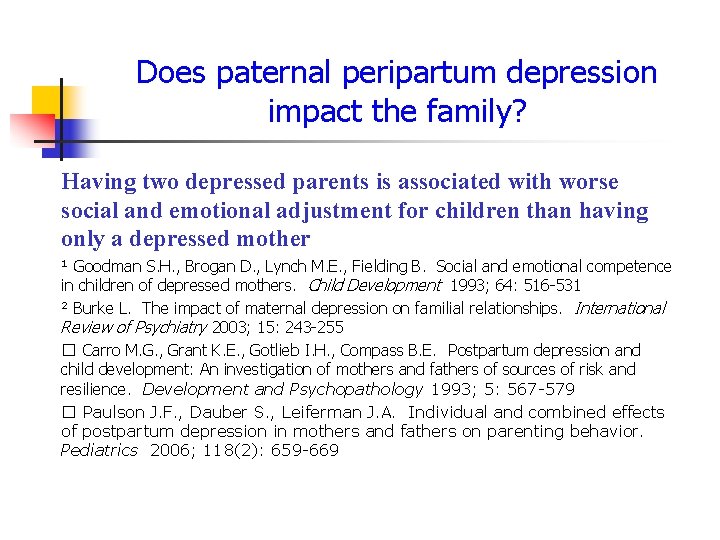
Does paternal peripartum depression impact the family? Having two depressed parents is associated with worse social and emotional adjustment for children than having only a depressed mother ¹ Goodman S. H. , Brogan D. , Lynch M. E. , Fielding B. Social and emotional competence in children of depressed mothers. Child Development 1993; 64: 516 -531 ² Burke L. The impact of maternal depression on familial relationships. International Review of Psychiatry 2003; 15: 243 -255 � Carro M. G. , Grant K. E. , Gotlieb I. H. , Compass B. E. Postpartum depression and child development: An investigation of mothers and fathers of sources of risk and resilience. Development and Psychopathology 1993; 5: 567 -579 � Paulson J. F. , Dauber S. , Leiferman J. A. Individual and combined effects of postpartum depression in mothers and fathers on parenting behavior. Pediatrics 2006; 118(2): 659 -669
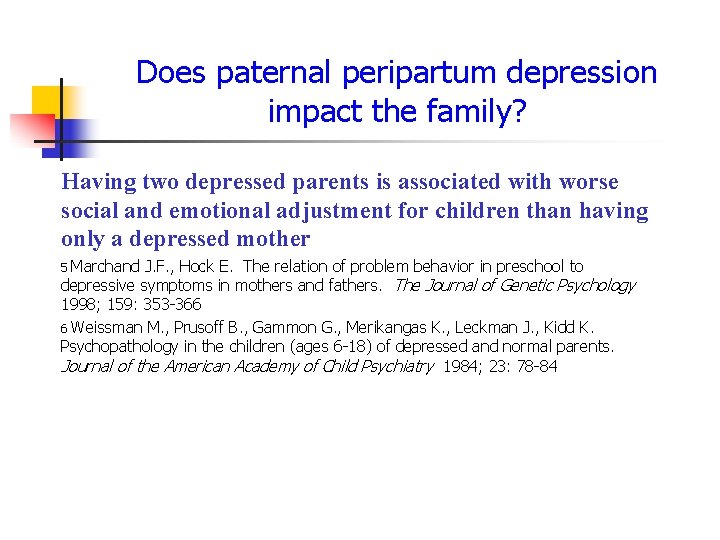
Does paternal peripartum depression impact the family? Having two depressed parents is associated with worse social and emotional adjustment for children than having only a depressed mother Marchand J. F. , Hock E. The relation of problem behavior in preschool to depressive symptoms in mothers and fathers. The Journal of Genetic Psychology 1998; 159: 353 -366 6 Weissman M. , Prusoff B. , Gammon G. , Merikangas K. , Leckman J. , Kidd K. Psychopathology in the children (ages 6 -18) of depressed and normal parents. Journal of the American Academy of Child Psychiatry 1984; 23: 78 -84 5
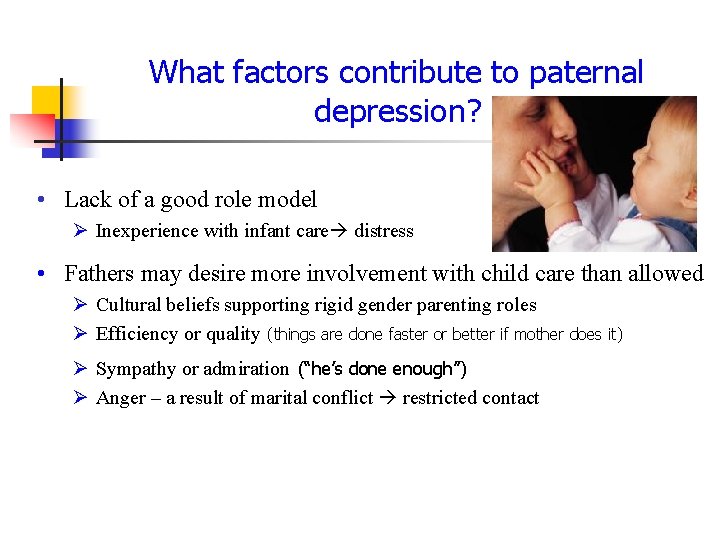
What factors contribute to paternal depression? • Lack of a good role model Ø Inexperience with infant care distress • Fathers may desire more involvement with child care than allowed Ø Cultural beliefs supporting rigid gender parenting roles Ø Efficiency or quality (things are done faster or better if mother does it) Ø Sympathy or admiration (“he’s done enough”) Ø Anger – a result of marital conflict restricted contact
What factors contribute to paternal depression? • Child = additional financial responsibility Ø a dilemma between Dad the “breadwinner” and Dad the caring/nurturing/involved parent Ø Lack of paternity work leave
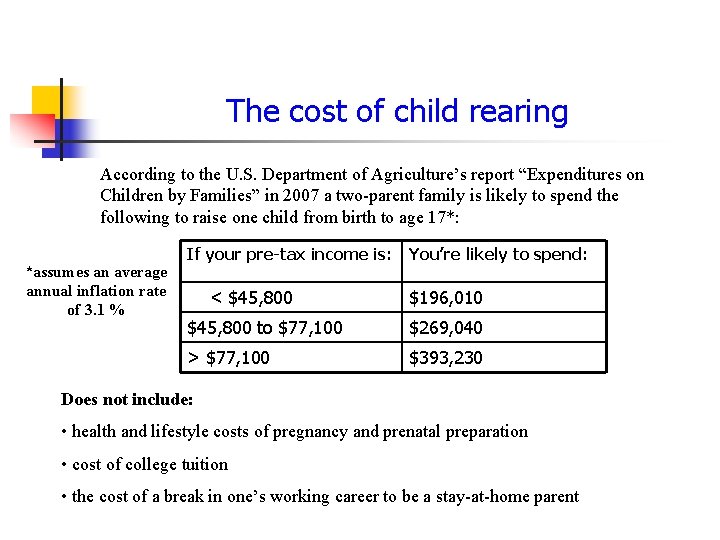
The cost of child rearing According to the U. S. Department of Agriculture’s report “Expenditures on Children by Families” in 2007 a two-parent family is likely to spend the following to raise one child from birth to age 17*: *assumes an average annual inflation rate of 3. 1 % If your pre-tax income is: < $45, 800 You’re likely to spend: $196, 010 $45, 800 to $77, 100 $269, 040 > $77, 100 $393, 230 Does not include: • health and lifestyle costs of pregnancy and prenatal preparation • cost of college tuition • the cost of a break in one’s working career to be a stay-at-home parent
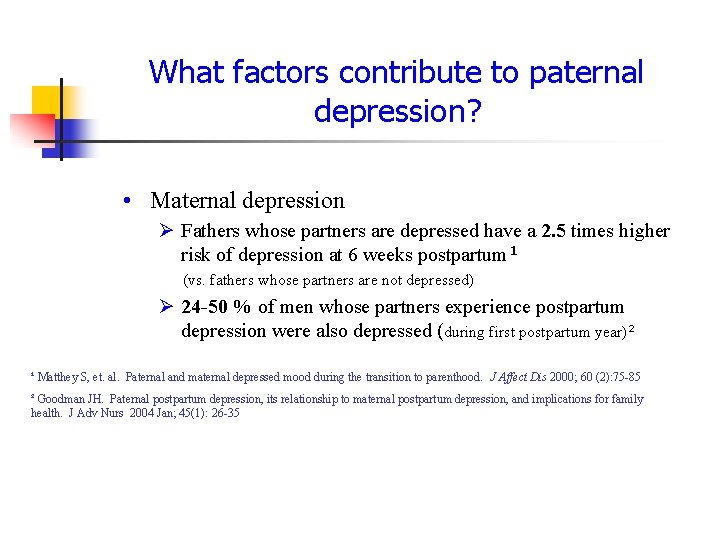
What factors contribute to paternal depression? • Maternal depression Ø Fathers whose partners are depressed have a 2. 5 times higher risk of depression at 6 weeks postpartum¹ (vs. fathers whose partners are not depressed) Ø 24 -50 % of men whose partners experience postpartum depression were also depressed (during first postpartum year)² ¹ Matthey S, et. al. Paternal and maternal depressed mood during the transition to parenthood. J Affect Dis 2000; 60 (2): 75 -85 ² Goodman JH. Paternal postpartum depression, its relationship to maternal postpartum depression, and implications for family health. J Adv Nurs 2004 Jan; 45(1): 26 -35
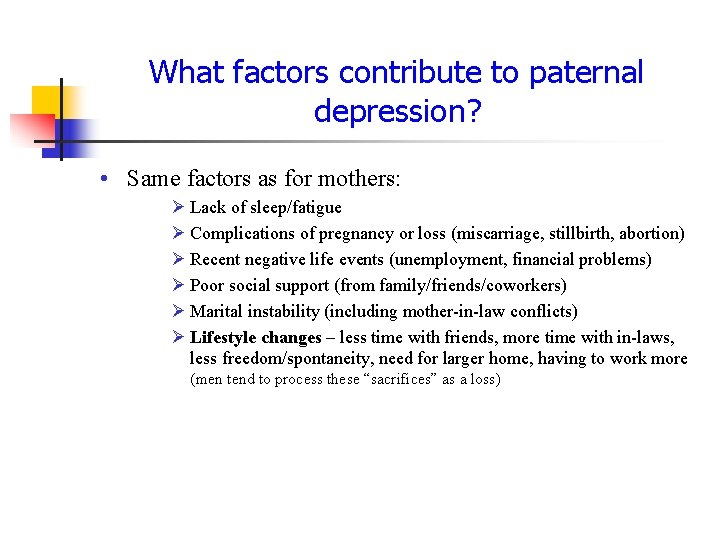
What factors contribute to paternal depression? • Same factors as for mothers: Ø Lack of sleep/fatigue Ø Complications of pregnancy or loss (miscarriage, stillbirth, abortion) Ø Recent negative life events (unemployment, financial problems) Ø Poor social support (from family/friends/coworkers) Ø Marital instability (including mother-in-law conflicts) Ø Lifestyle changes – less time with friends, more time with in-laws, less freedom/spontaneity, need for larger home, having to work more (men tend to process these “sacrifices” as a loss)
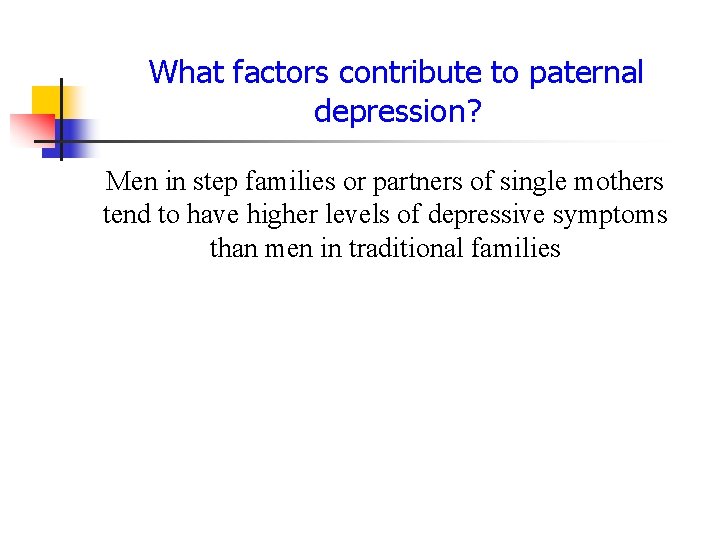
What factors contribute to paternal depression? Men in step families or partners of single mothers tend to have higher levels of depressive symptoms than men in traditional families
Men and Depression