
Star Spectra part 1 How do we use
- Slides: 17
Star Spectra (part 1) How do we use spectra to tell us about the stars? What can spectra tell us?
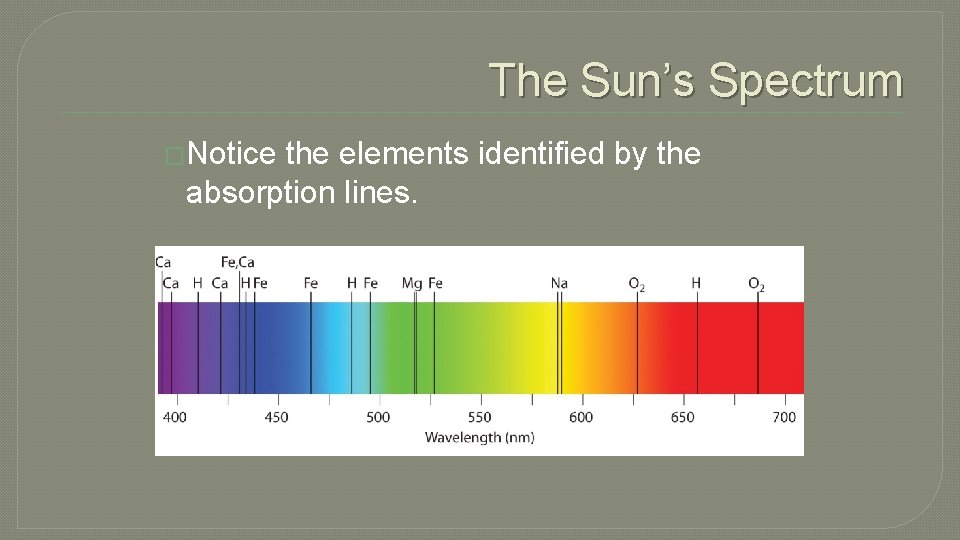
The Sun’s Spectrum �Notice the elements identified by the absorption lines.
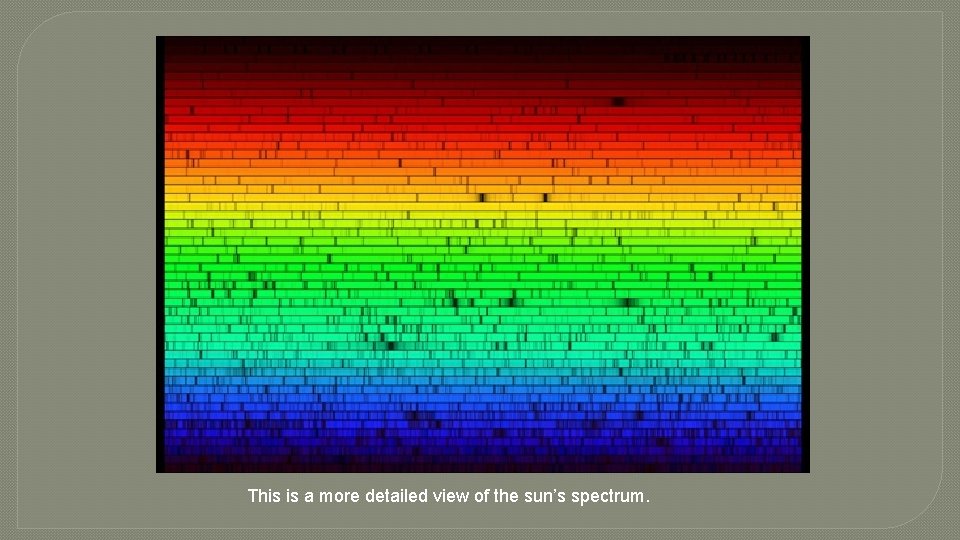
This is a more detailed view of the sun’s spectrum.
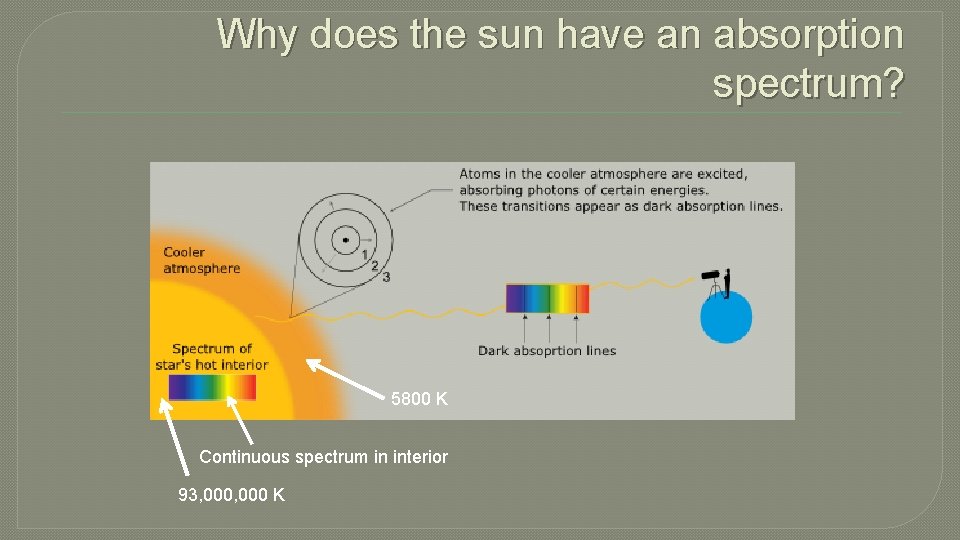
Why does the sun have an absorption spectrum? 5800 K Continuous spectrum in interior 93, 000 K
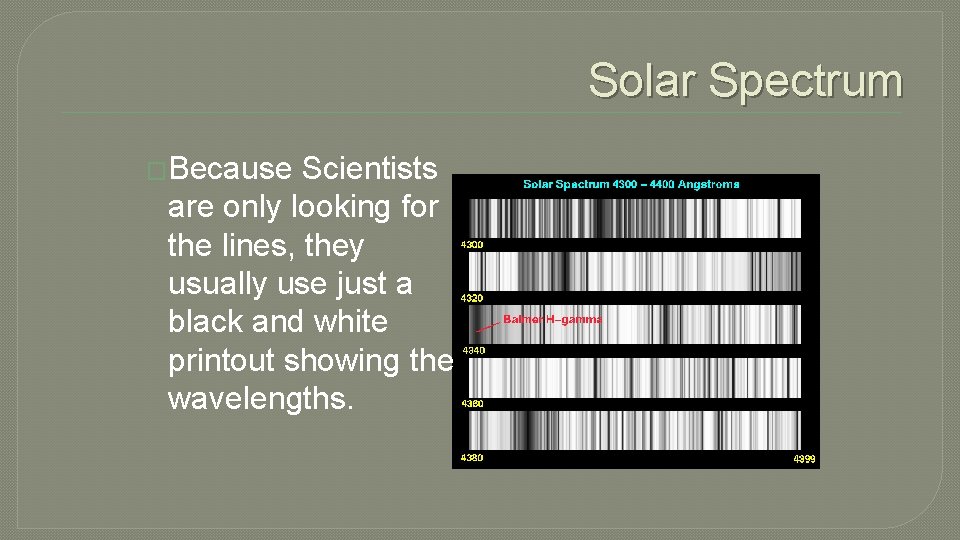
Solar Spectrum �Because Scientists are only looking for the lines, they usually use just a black and white printout showing the wavelengths.
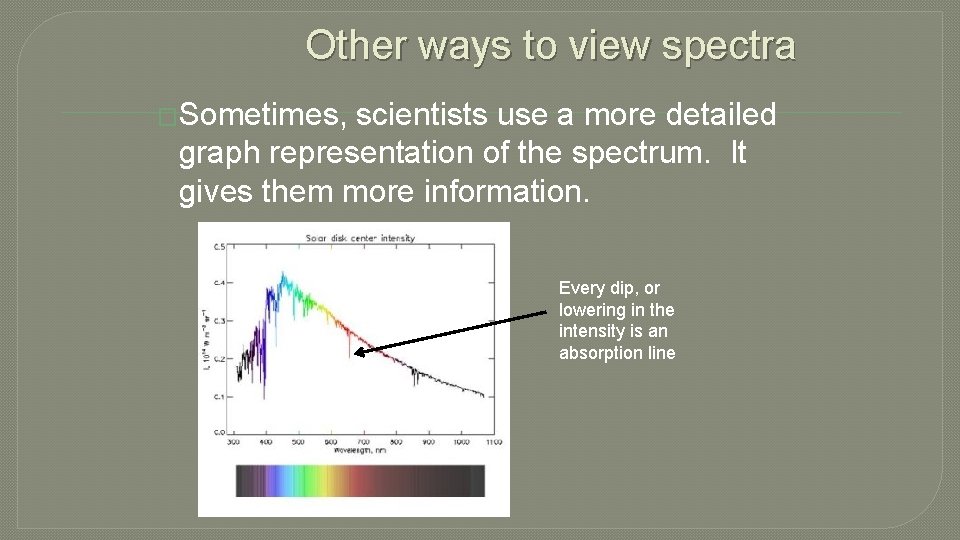
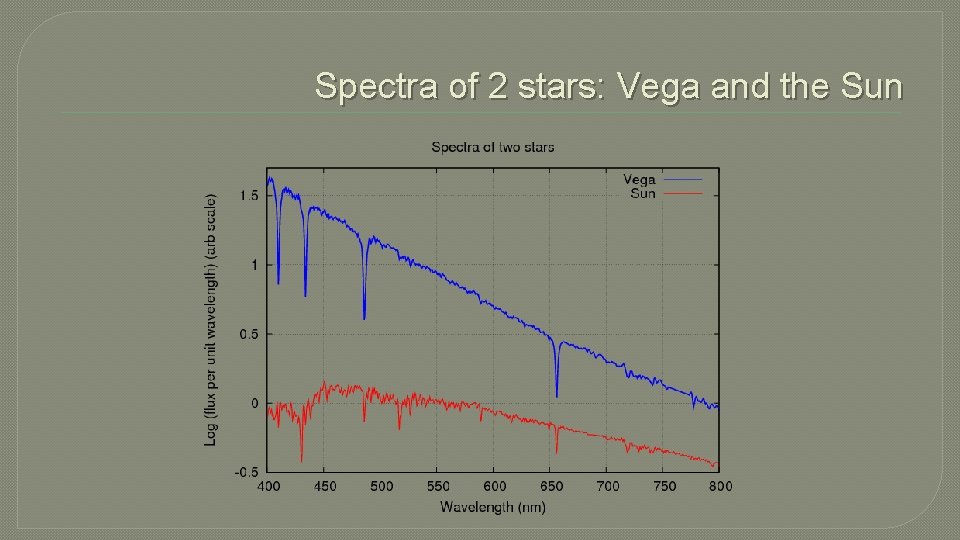
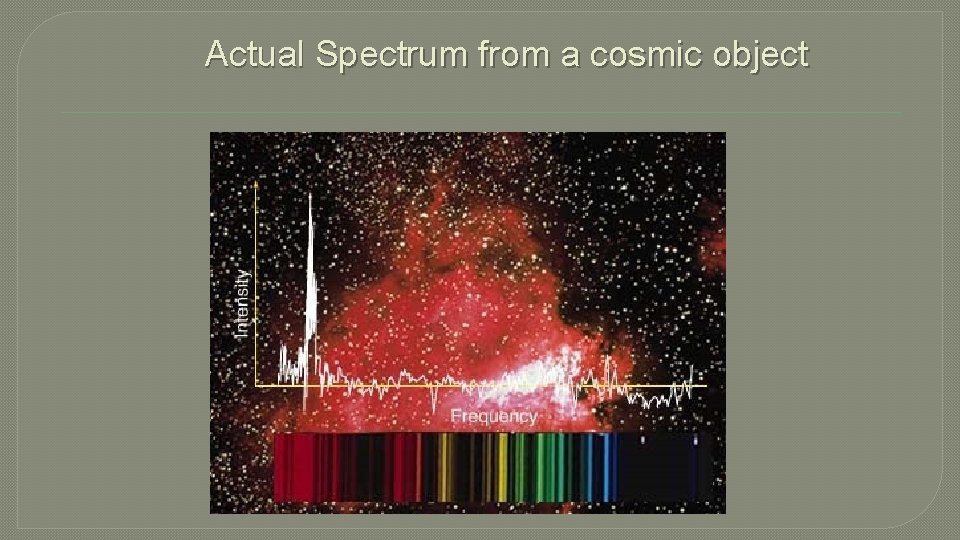
Other ways to view spectra �Sometimes, scientists use a more detailed graph representation of the spectrum. It gives them more information. Every dip, or lowering in the intensity is an absorption line
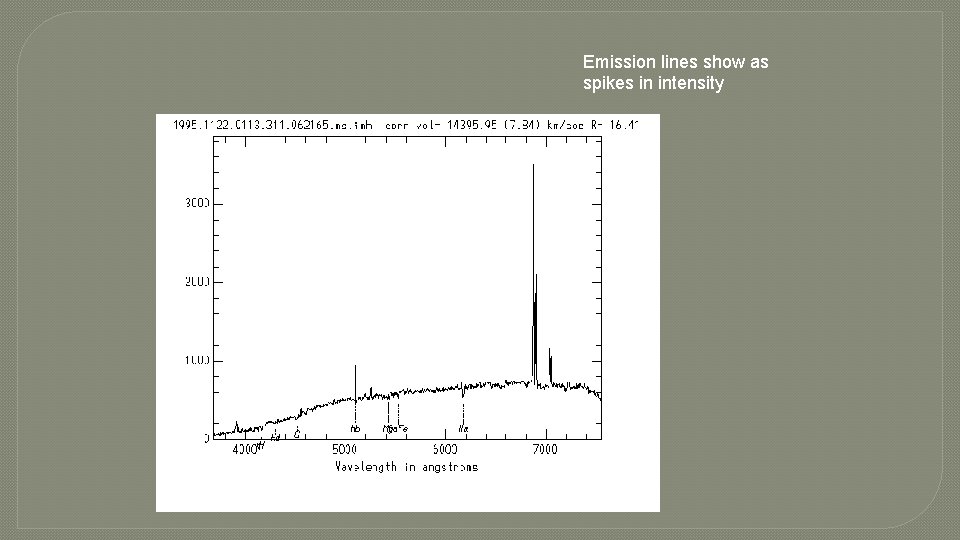
Emission lines show as spikes in intensity
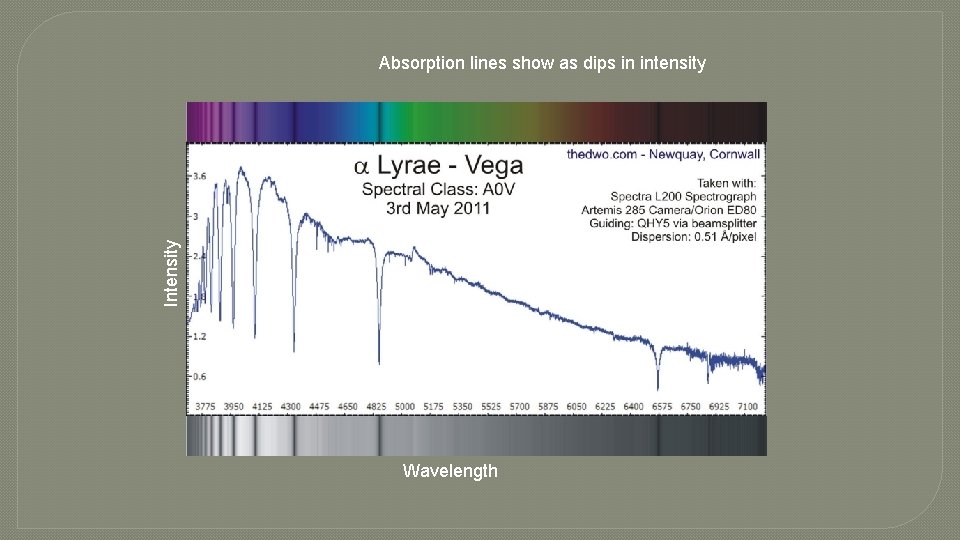
Intensity Absorption lines show as dips in intensity Wavelength
Spectra of 2 stars: Vega and the Sun
Actual Spectrum from a cosmic object
Spectral Line Analysis What can spectra from Cosmic objects tell us?
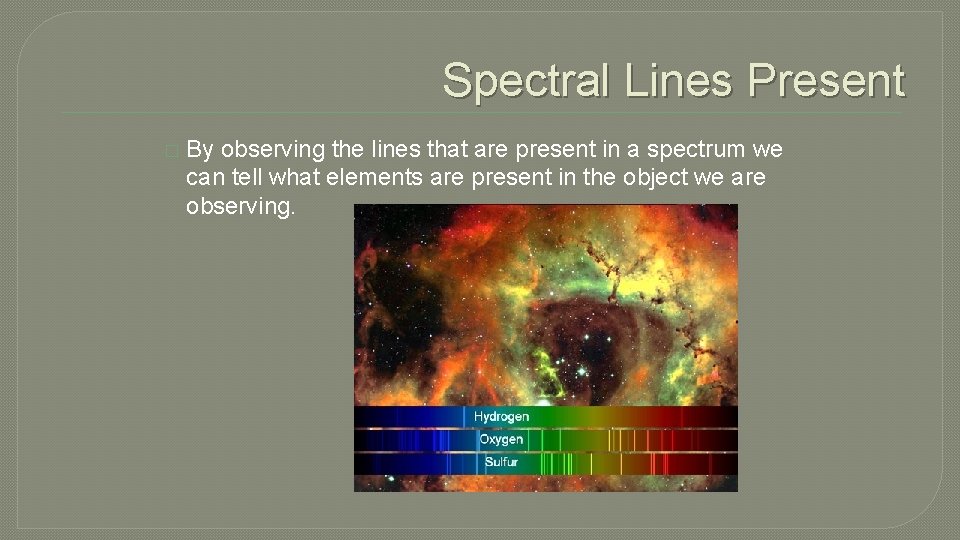
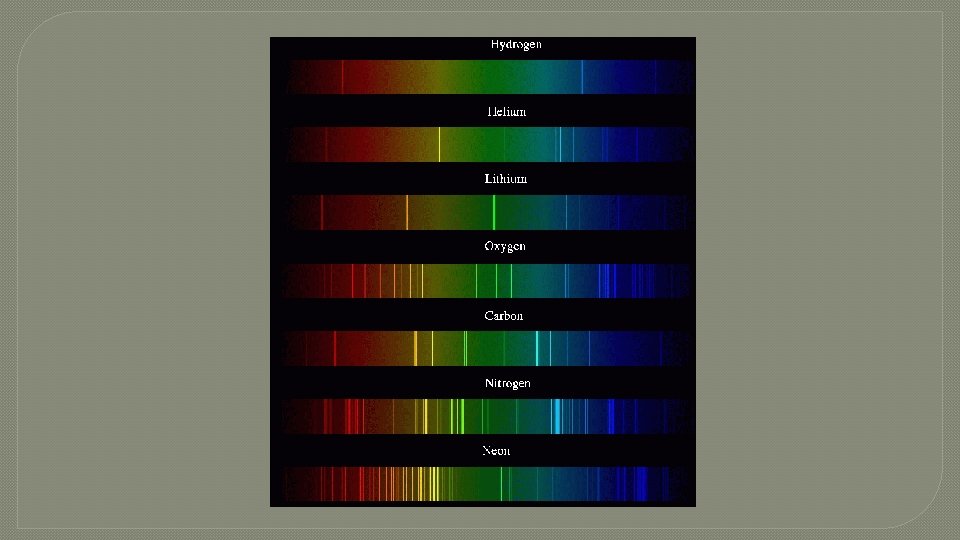
Spectral Lines Present � By observing the lines that are present in a spectrum we can tell what elements are present in the object we are observing.
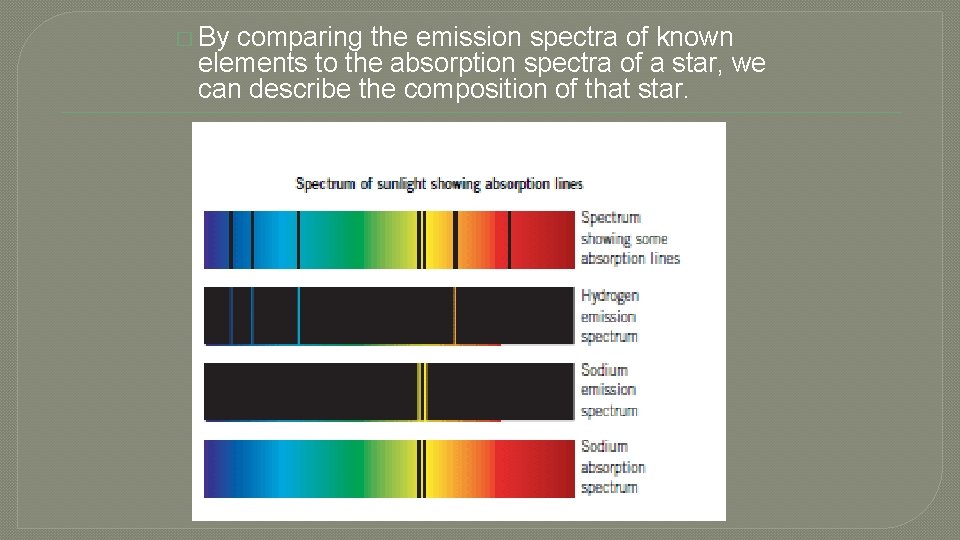
� By comparing the emission spectra of known elements to the absorption spectra of a star, we can describe the composition of that star.
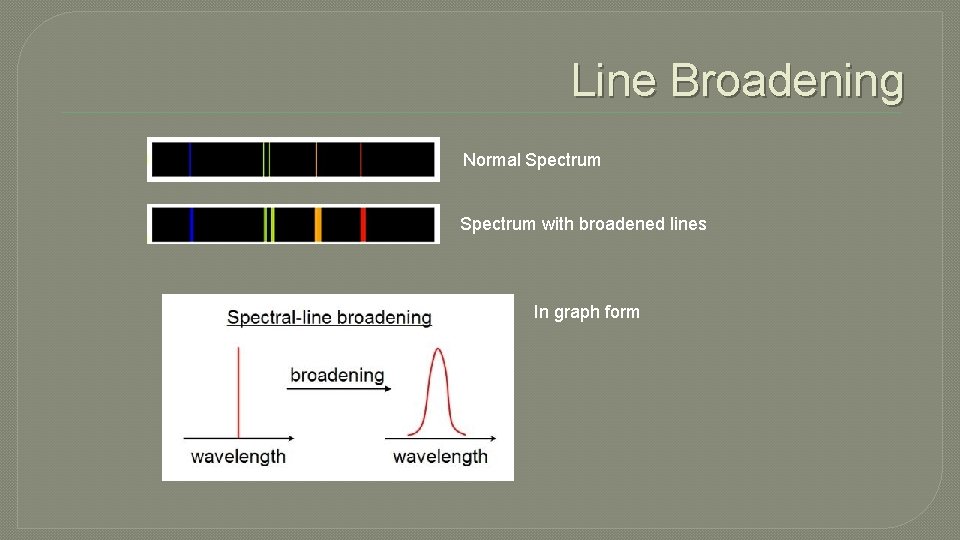
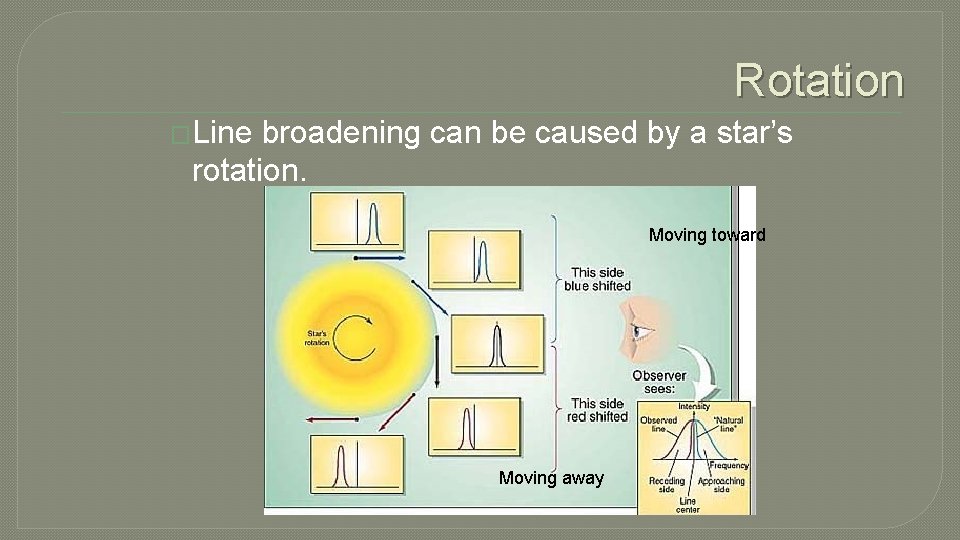
Line Broadening Normal Spectrum with broadened lines In graph form
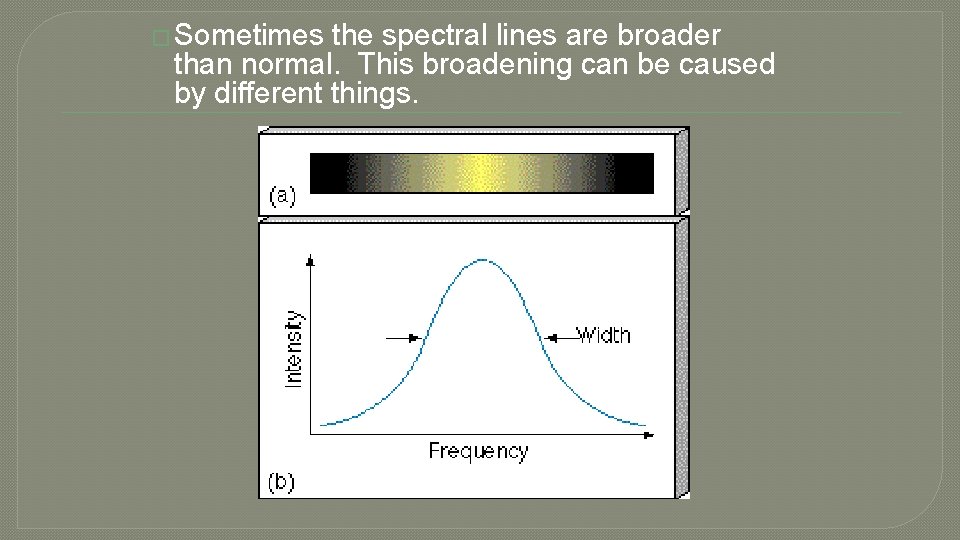
� Sometimes the spectral lines are broader than normal. This broadening can be caused by different things.
Rotation �Line broadening can be caused by a star’s rotation. Moving toward Moving away