
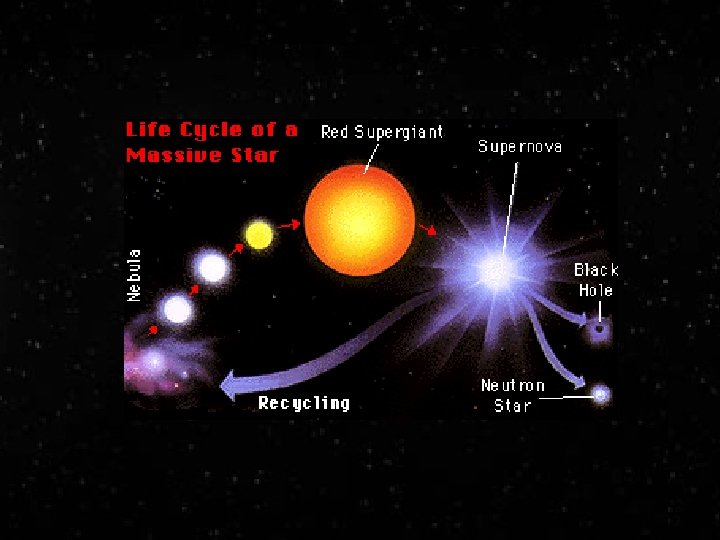
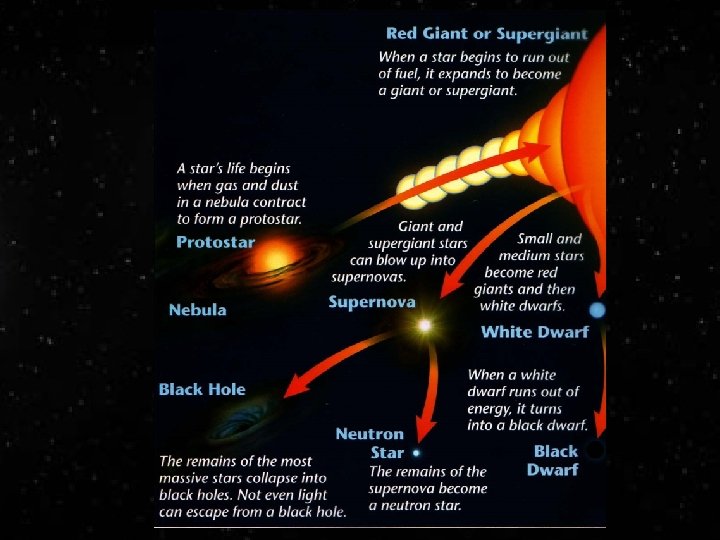
Star Formation Nebula Main Red Planetary Sequence Giant
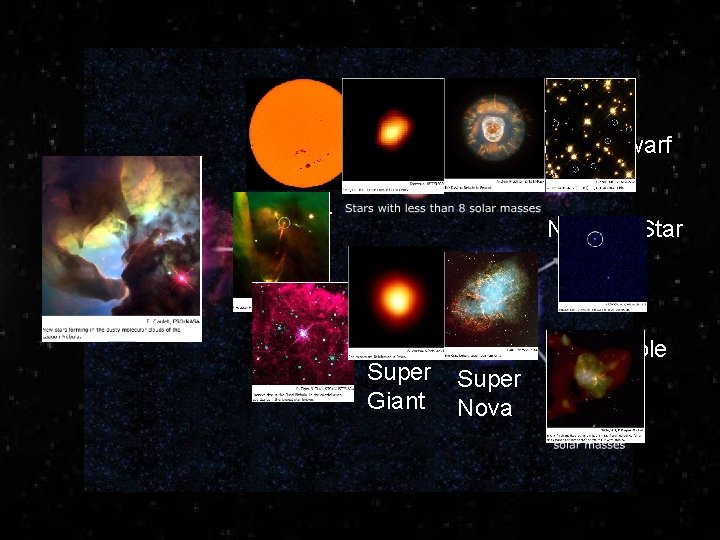
Star Formation Nebula Main Red Planetary Sequence Giant Nebula White Dwarf Star Protostar Massive Star Neutron Star Red Super Giant Black Hole Super Nova
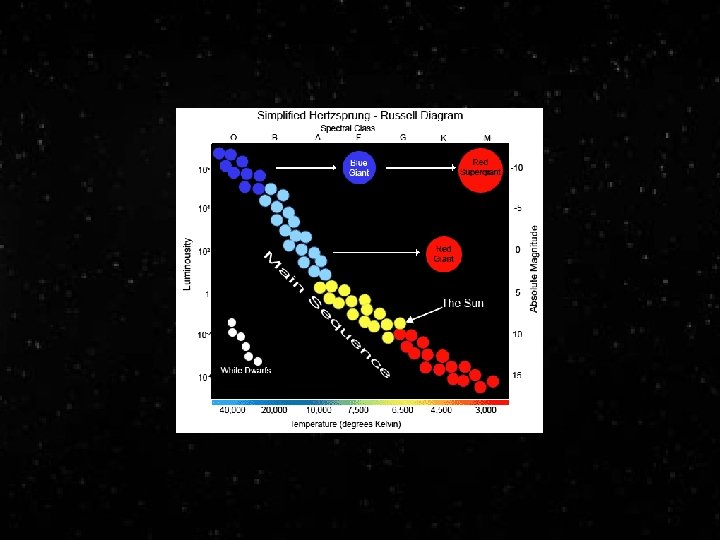
STARS ARE CLASSIFIED ACCORDING TO THEIR: Size Temperature Color Brightness
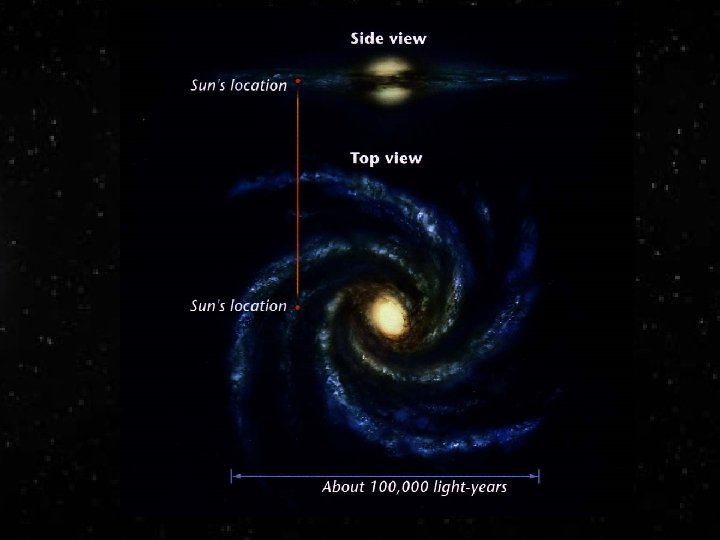
GALAXY- a group of stars, dust, gas, and other objects held together by gravitational forces.
Our fastest spacecraft travels 30 km/s; it can travel from Los Angeles to San Francisco in 25 seconds. At this speed, it would take 40, 000 years to travel to the nearest star (Alpha Centauri- 4. 3 light years), and it would take 10 billion years to travel across our galaxy.
LIGHT YEAR- The distance light travels in one year. This is equivalent to light traveling at 300, 000 km/s, or 186, 000 miles/s. ASTRONOMICAL UNIT (AU)- The distance between the Earth and the Sun (150 million km).
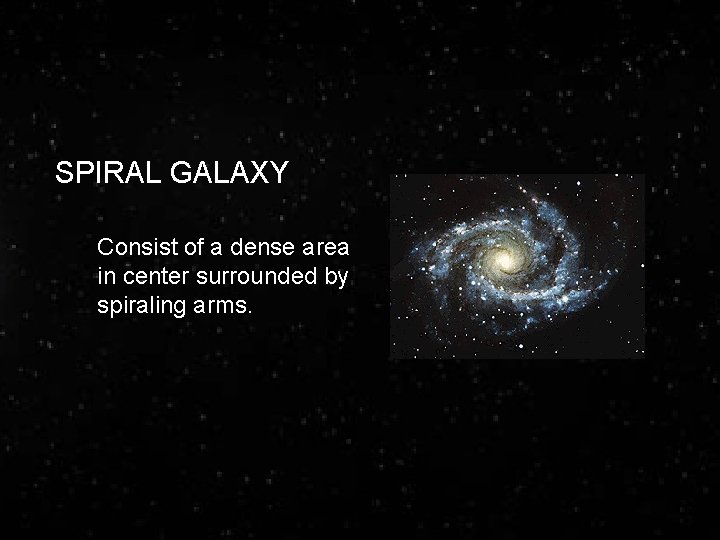
SPIRAL GALAXY Consist of a dense area in center surrounded by spiraling arms.
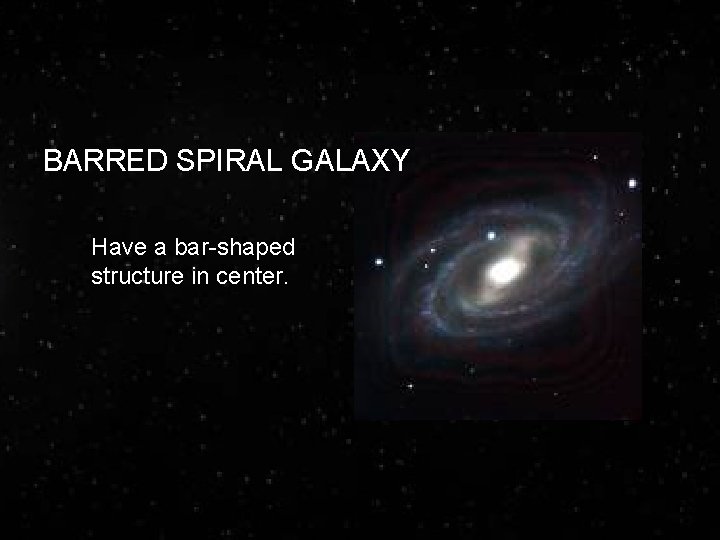
BARRED SPIRAL GALAXY Have a bar-shaped structure in center.
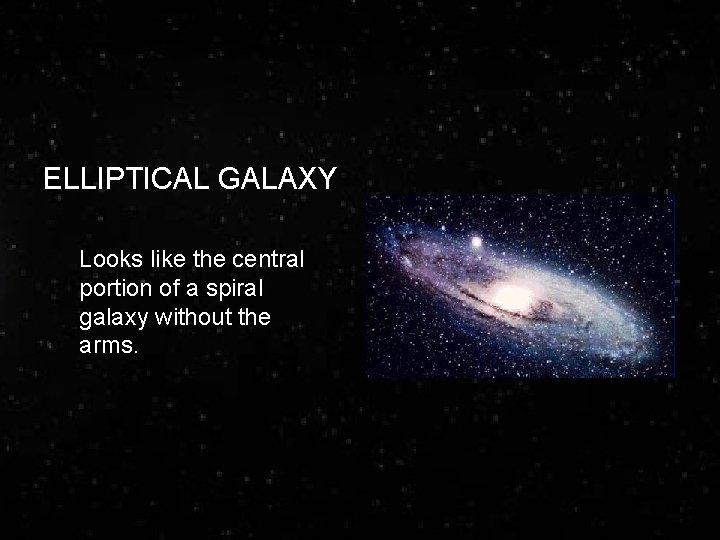
ELLIPTICAL GALAXY Looks like the central portion of a spiral galaxy without the arms.
LENTICULAR GALAXY Lens-shaped with a smooth, even distribution of stars and no central, denser area.
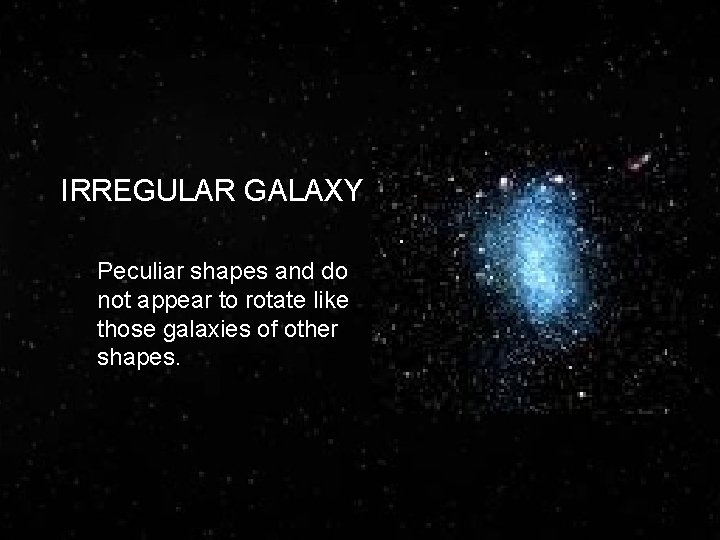
IRREGULAR GALAXY Peculiar shapes and do not appear to rotate like those galaxies of other shapes.
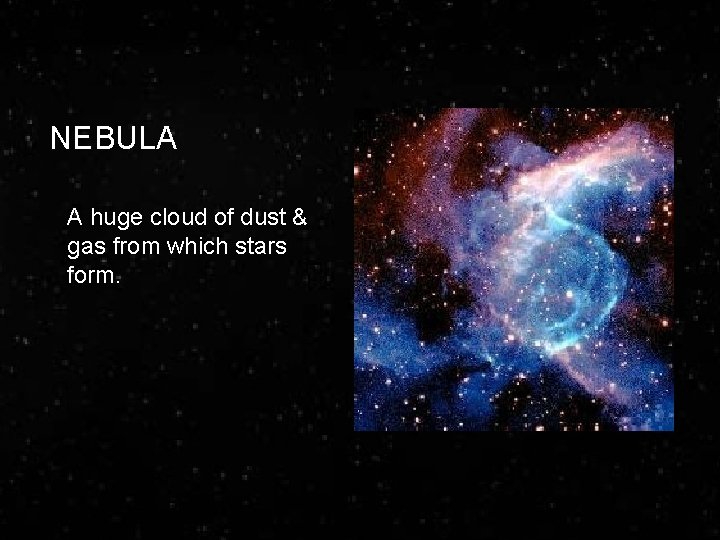
NEBULA A huge cloud of dust & gas from which stars form.
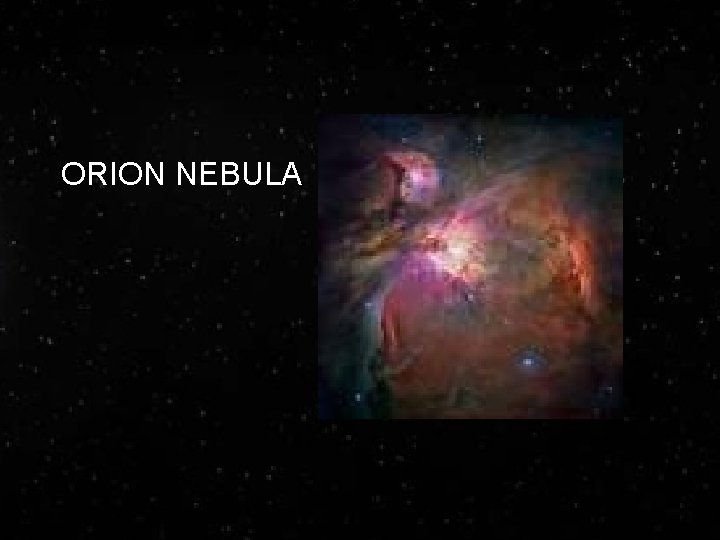
ORION NEBULA
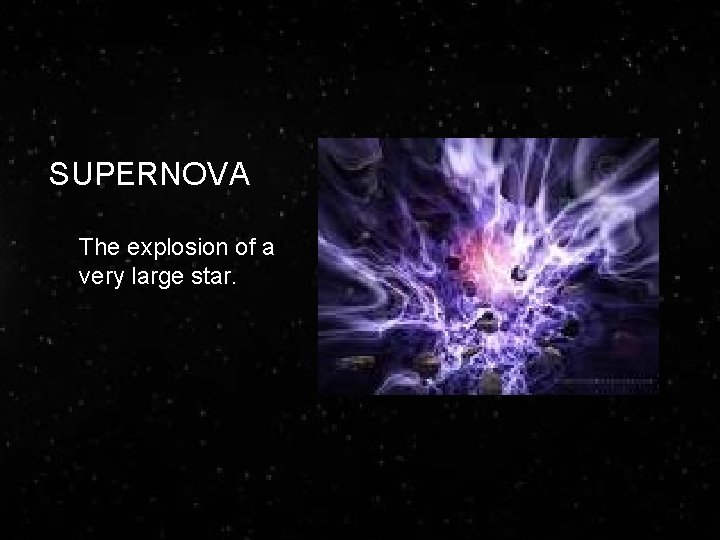
SUPERNOVA The explosion of a very large star.
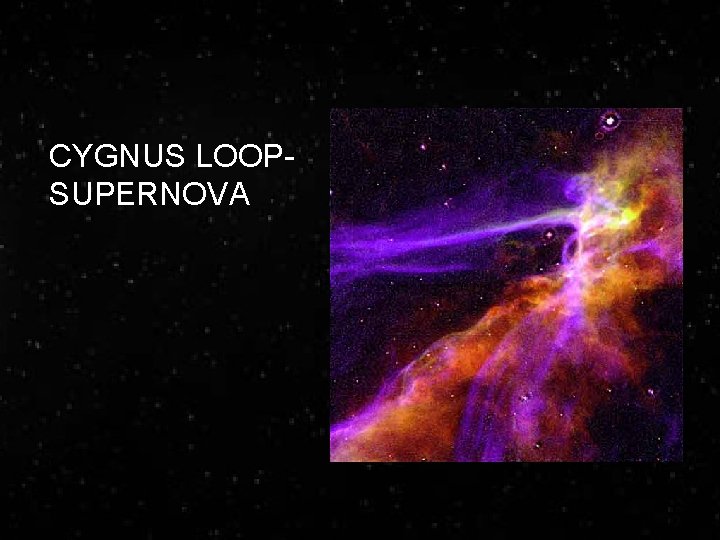
CYGNUS LOOPSUPERNOVA
CONSTELLATION- a pattern of stars in the sky.
- Slides: 30