
Star Clusters in the Galactic Center Donald F

- Slides: 37
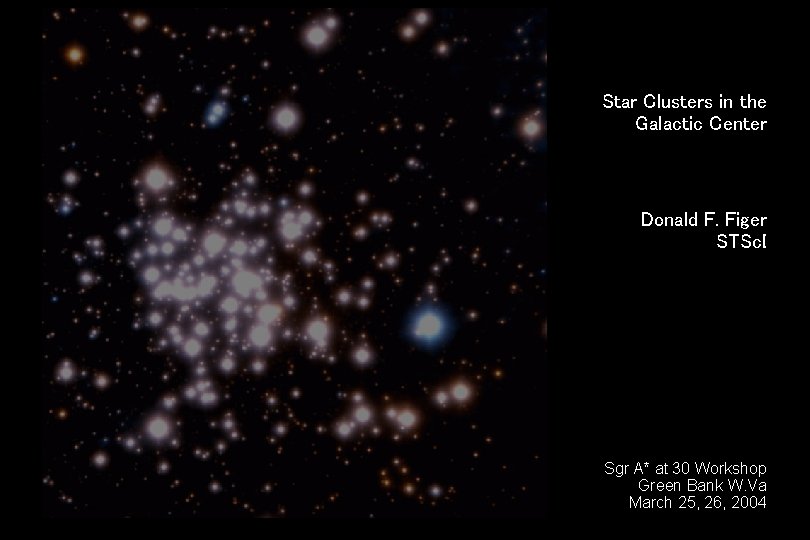
Star Clusters in the Galactic Center Donald F. Figer STSc. I Sgr A* at 30 Workshop Green Bank W. Va March 25, 26, 2004
Collaborators Massive Stars Paco Najarro, CSIC Tom Geballe, Gemini Rolf Kudritzki, UH IMF Andrea Stolte, UF Pavel Kroupa, U. Kiel Carsten Weidner, U. Kiel Stellar Velocities Mark Morris, UCLA Eric Becklin, UCLA Ian Mc. Lean, UCLA Cluster Dynamics Sungsoo Kim, KHU Star Formation History in GC Mike Rich, UCLA Gene Serabyn, JPL
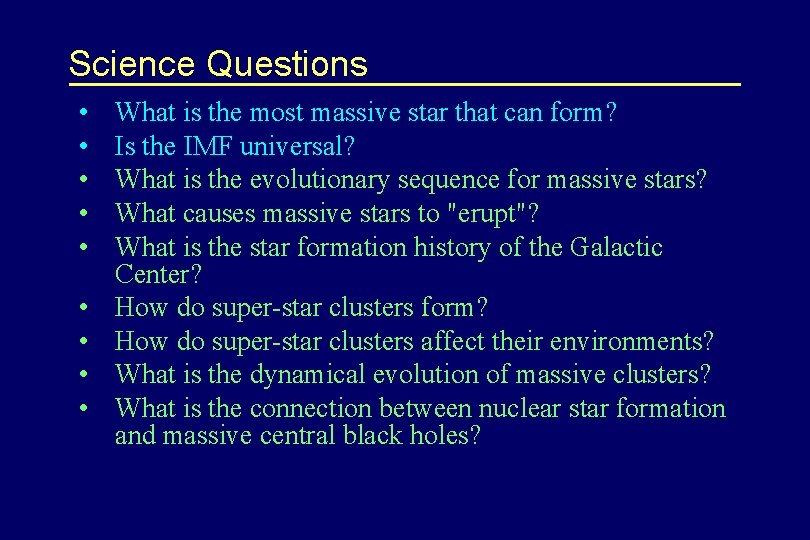
Science Questions • • • What is the most massive star that can form? Is the IMF universal? What is the evolutionary sequence for massive stars? What causes massive stars to "erupt"? What is the star formation history of the Galactic Center? How do super-star clusters form? How do super-star clusters affect their environments? What is the dynamical evolution of massive clusters? What is the connection between nuclear star formation and massive central black holes?
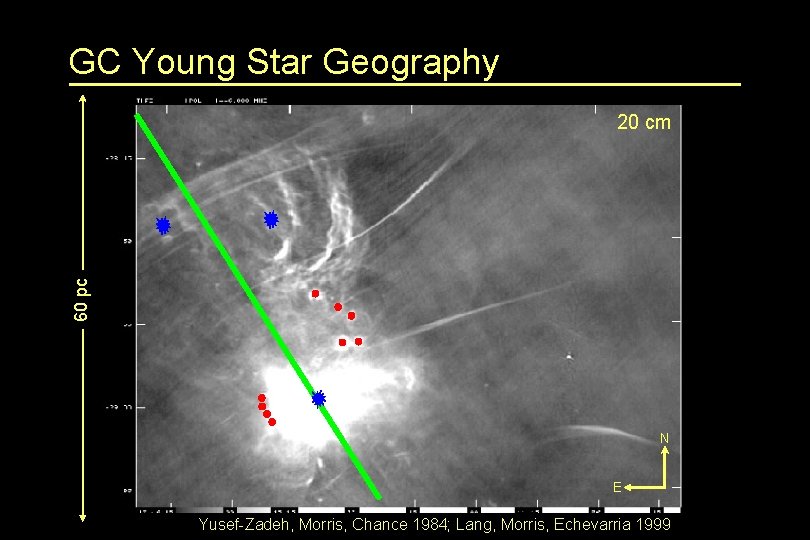
GC Young Star Geography 60 pc 20 cm N E Yusef-Zadeh, Morris, Chance 1984; Lang, Morris, Echevarria 1999
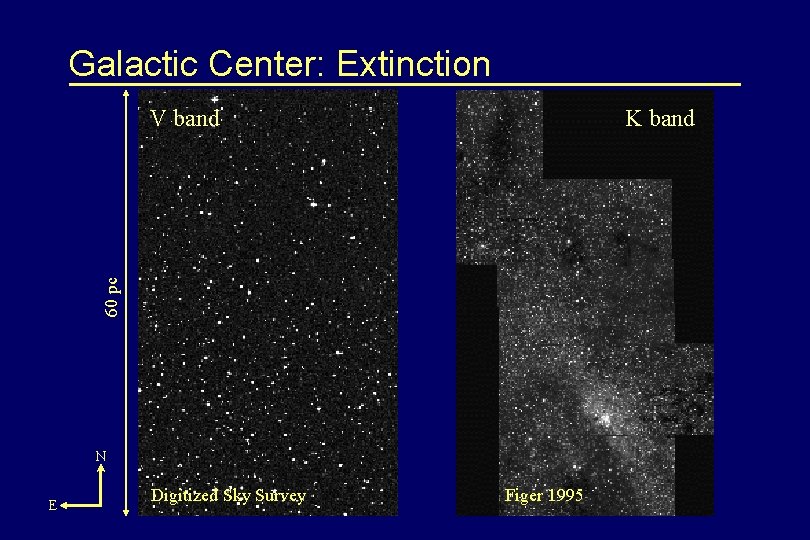
Galactic Center: Extinction K band 60 pc V band N E Digitized Sky Survey Figer 1995
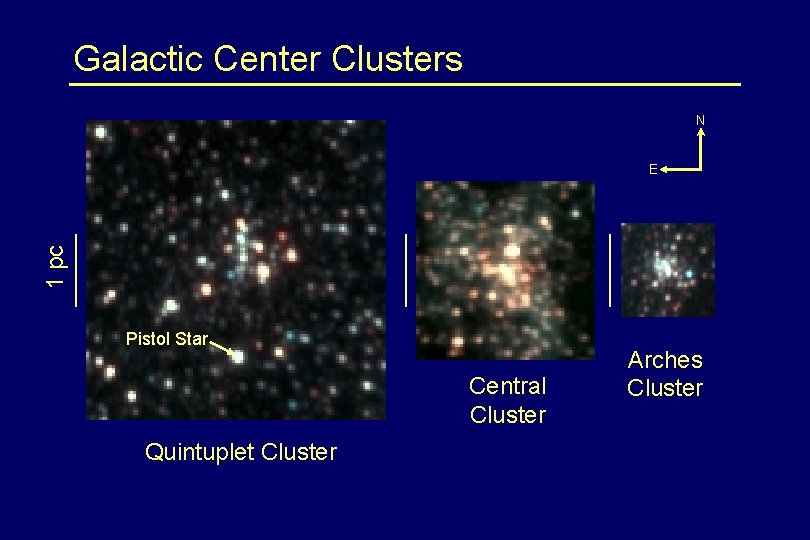
Galactic Center Clusters N 1 pc E Pistol Star Central Cluster Quintuplet Cluster Arches Cluster
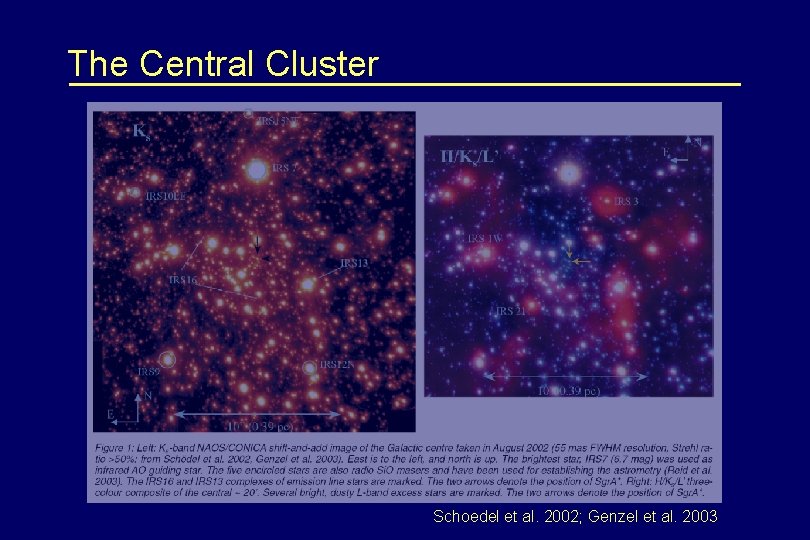
The Central Cluster Schoedel et al. 2002; Genzel et al. 2003
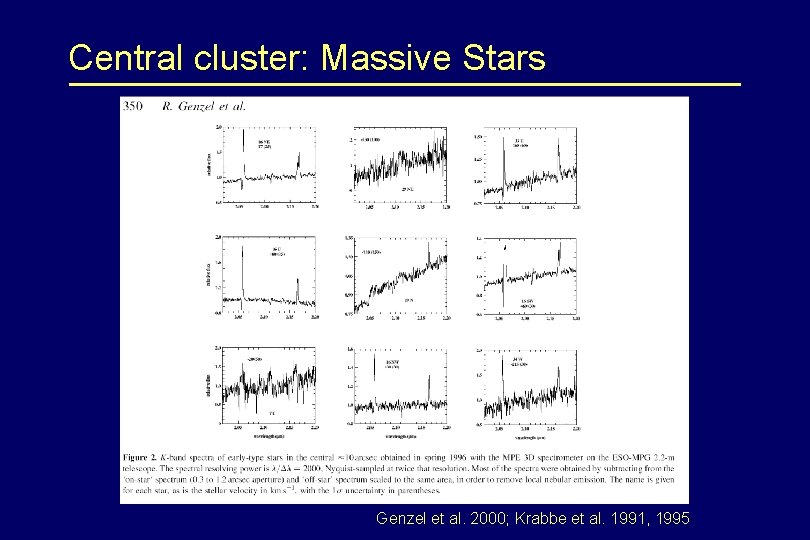
Central cluster: Massive Stars Genzel et al. 2000; Krabbe et al. 1991, 1995
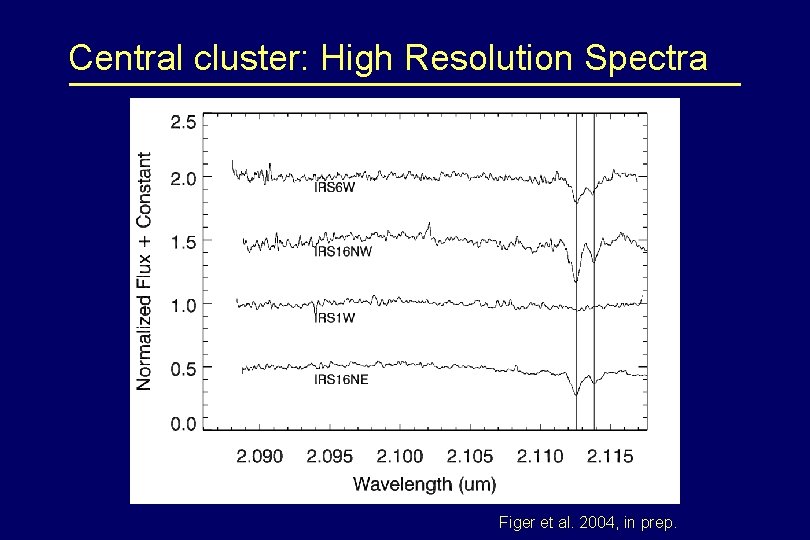
Central cluster: High Resolution Spectra Figer et al. 2004, in prep.
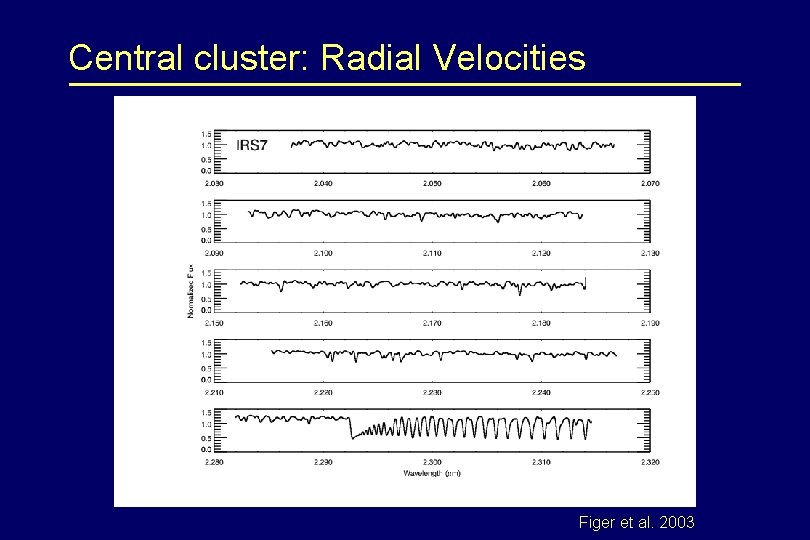
Central cluster: Radial Velocities Figer et al. 2003
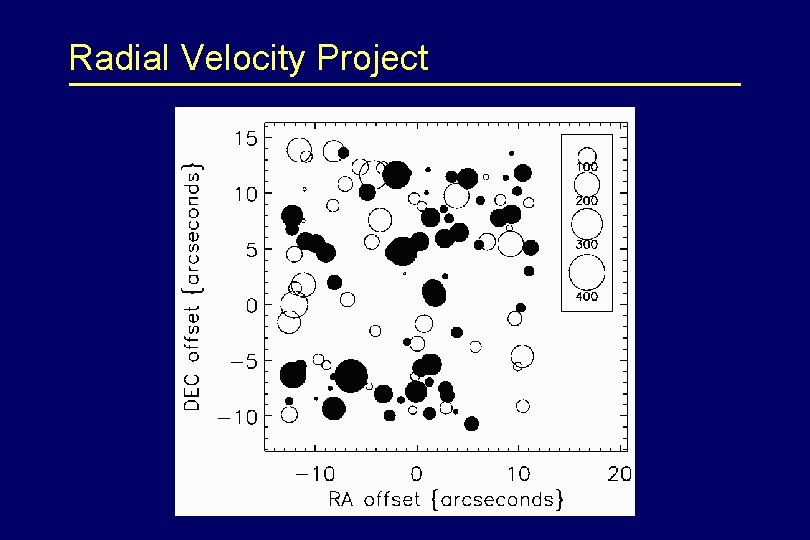
Radial Velocity Project
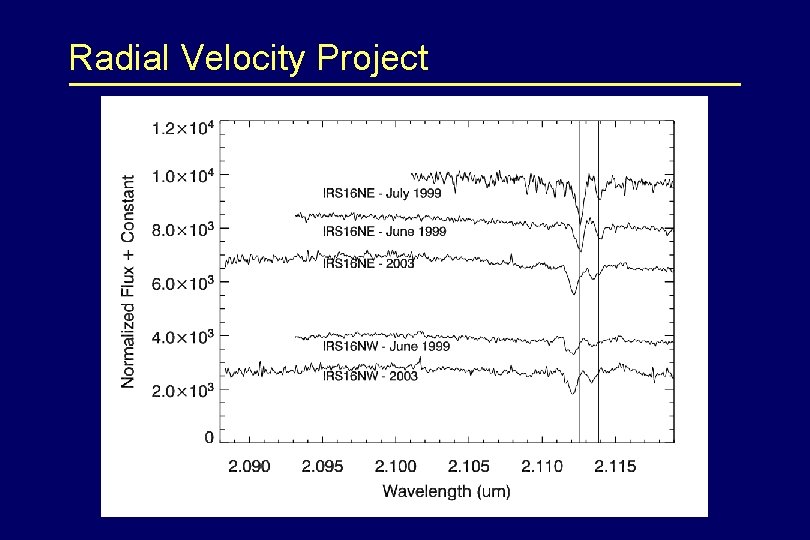
Radial Velocity Project
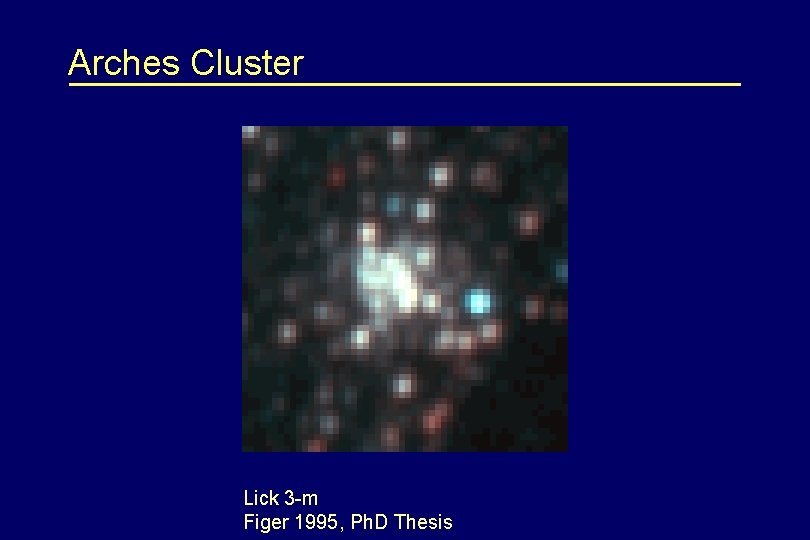
Arches Cluster Lick 3 -m Figer 1995, Ph. D Thesis
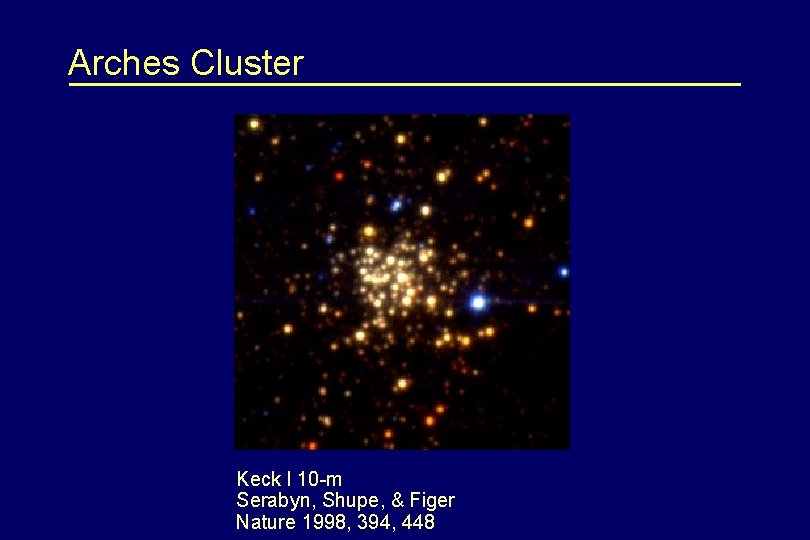
Arches Cluster Keck I 10 -m Serabyn, Shupe, & Figer Nature 1998, 394, 448
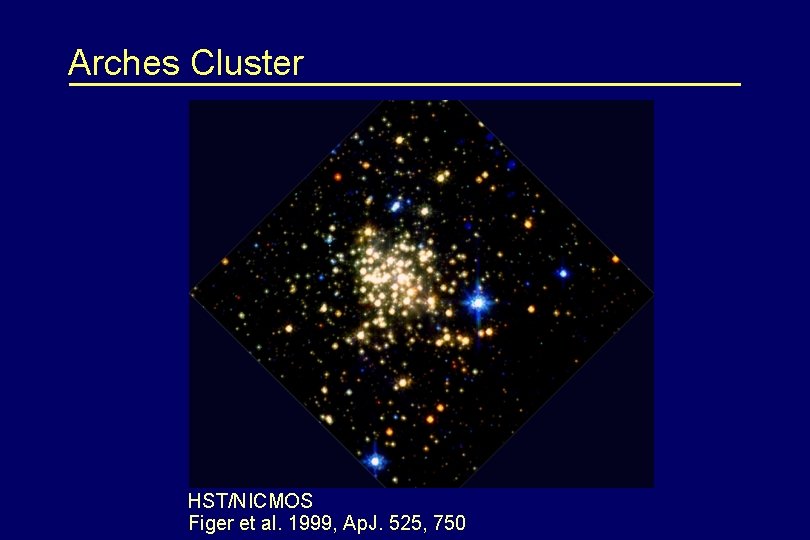
Arches Cluster HST/NICMOS Figer et al. 1999, Ap. J. 525, 750
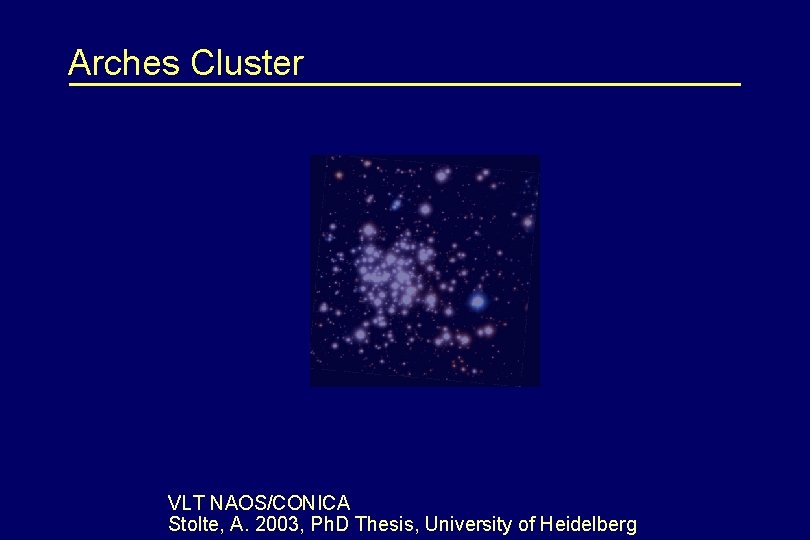
Arches Cluster VLT NAOS/CONICA Stolte, A. 2003, Ph. D Thesis, University of Heidelberg
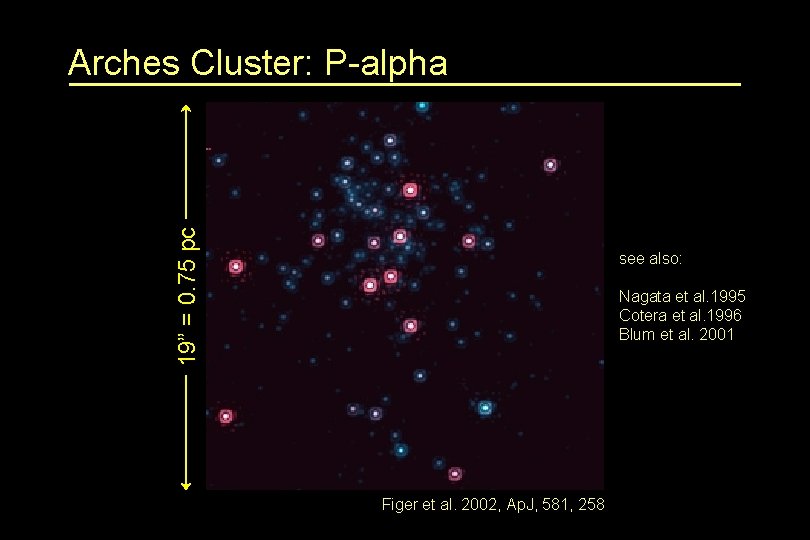
19” = 0. 75 pc Arches Cluster: P-alpha see also: Nagata et al. 1995 Cotera et al. 1996 Blum et al. 2001 Figer et al. 2002, Ap. J, 581, 258
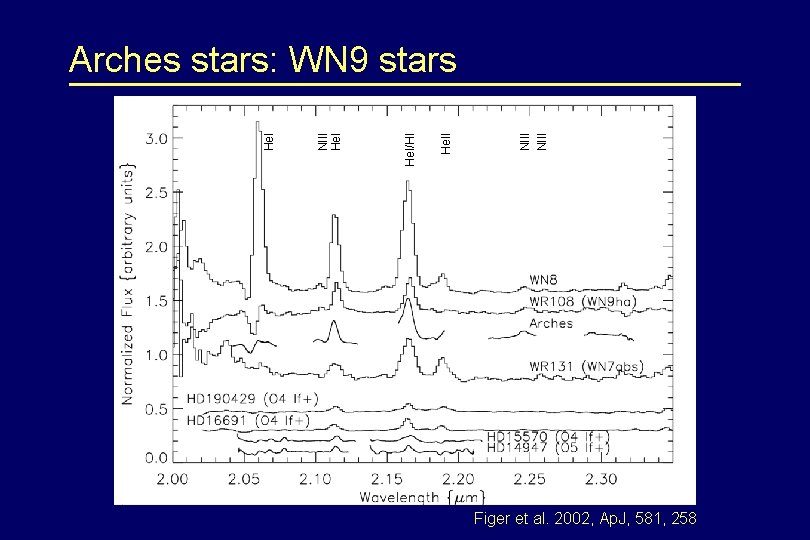
NIII He. I/HI NIII He. I Arches stars: WN 9 stars Figer et al. 2002, Ap. J, 581, 258
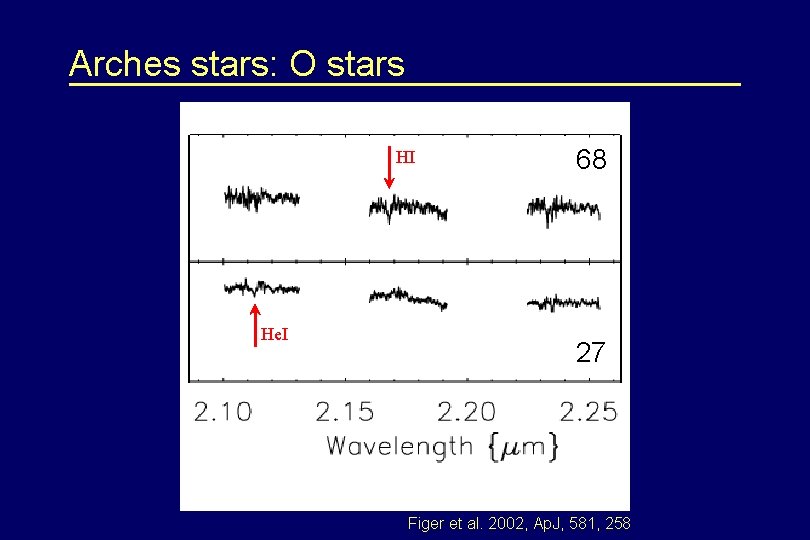
Arches stars: O stars HI He. I 68 27 Figer et al. 2002, Ap. J, 581, 258
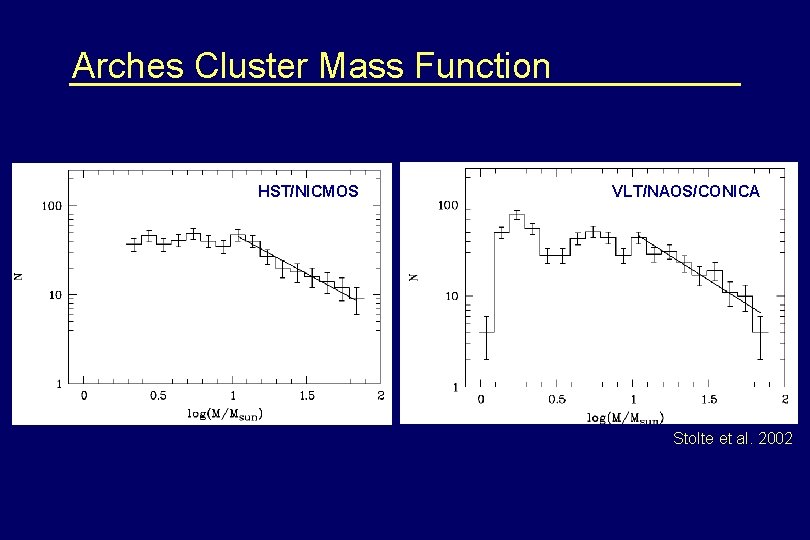
Arches Cluster Mass Function HST/NICMOS VLT/NAOS/CONICA Stolte et al. 2002
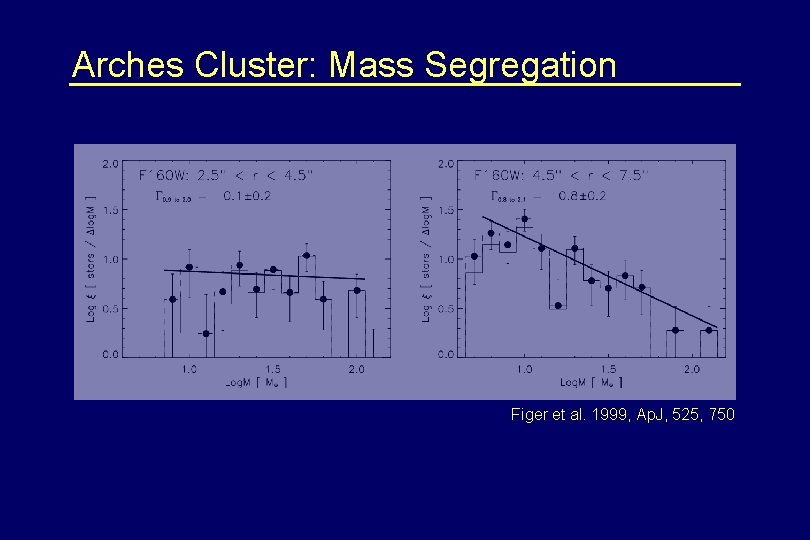
Arches Cluster: Mass Segregation Figer et al. 1999, Ap. J, 525, 750
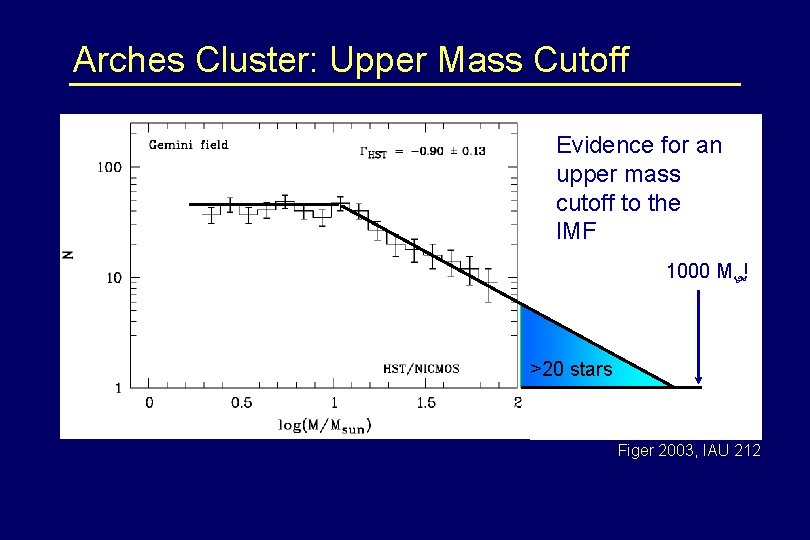
Arches Cluster: Upper Mass Cutoff Evidence for an upper mass cutoff to the IMF 1000 M ! >20 stars Figer 2003, IAU 212
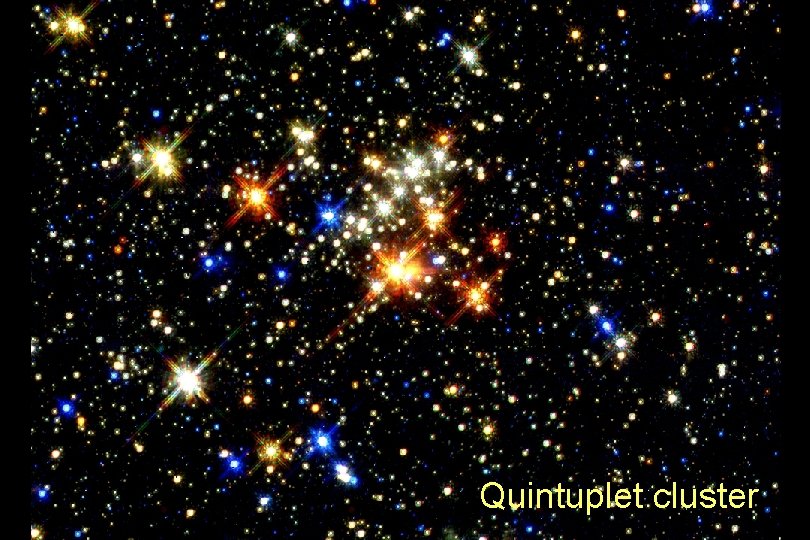
Quintuplet cluster
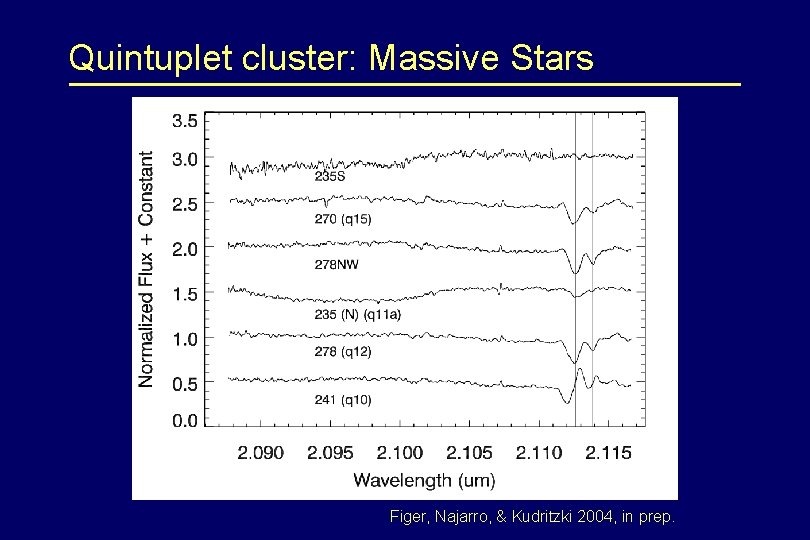
Quintuplet cluster: Massive Stars Figer, Najarro, & Kudritzki 2004, in prep.
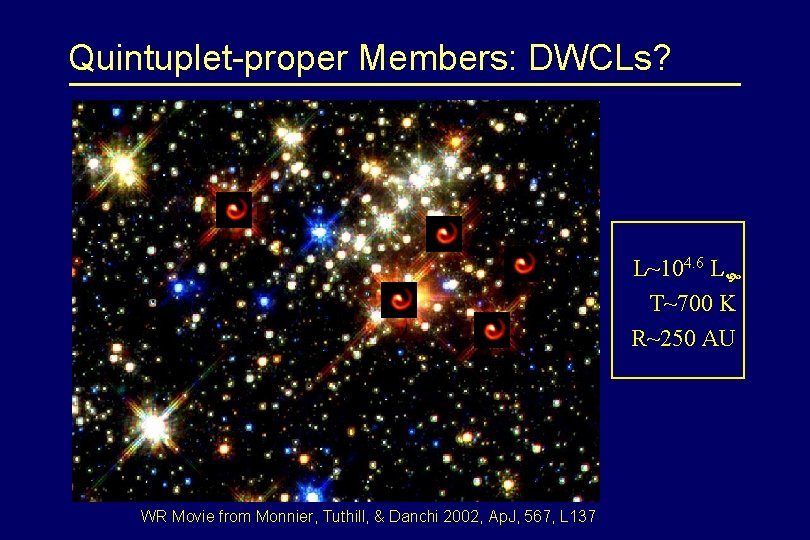
Quintuplet-proper Members: DWCLs? L~104. 6 L T~700 K R~250 AU WR Movie from Monnier, Tuthill, & Danchi 2002, Ap. J, 567, L 137
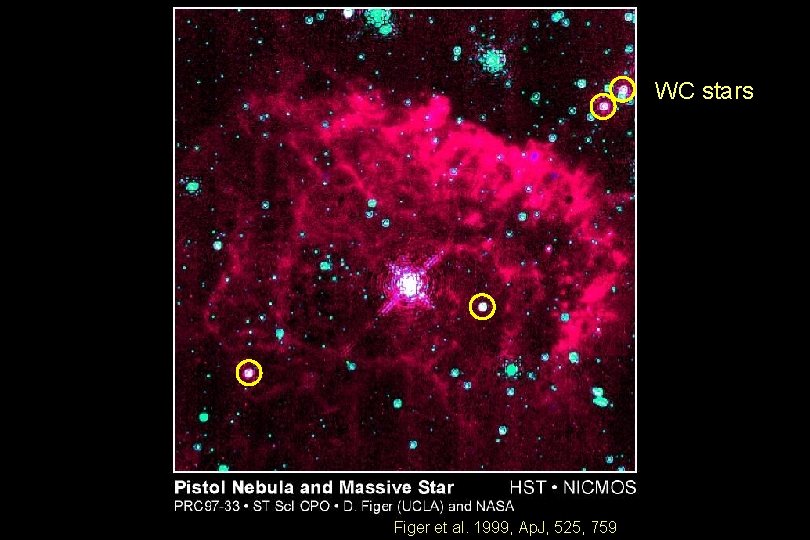
WC stars Figer et al. 1999, Ap. J, 525, 759
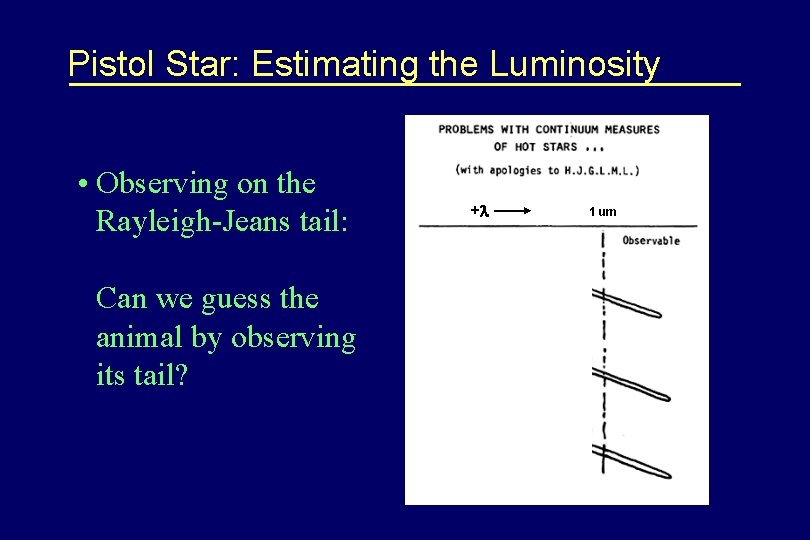
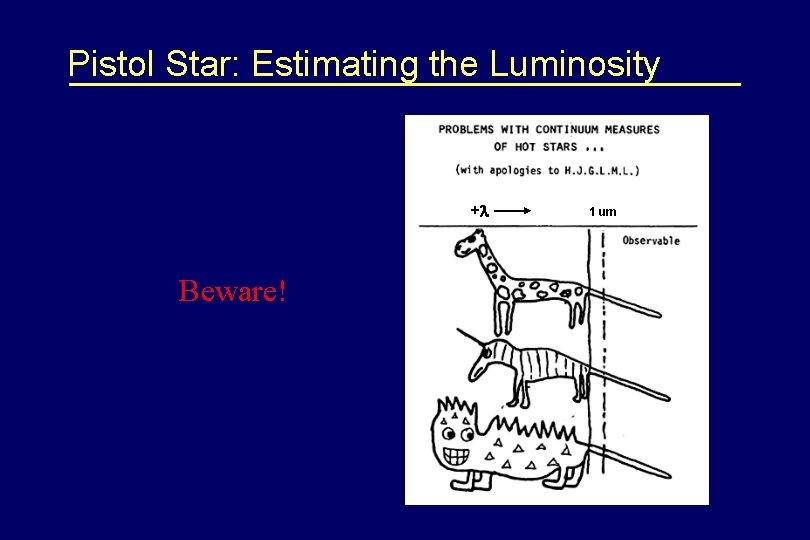
Pistol Star: Estimating the Luminosity • Observing on the Rayleigh-Jeans tail: Can we guess the animal by observing its tail? +l 1 um
Pistol Star: Estimating the Luminosity +l Beware! 1 um
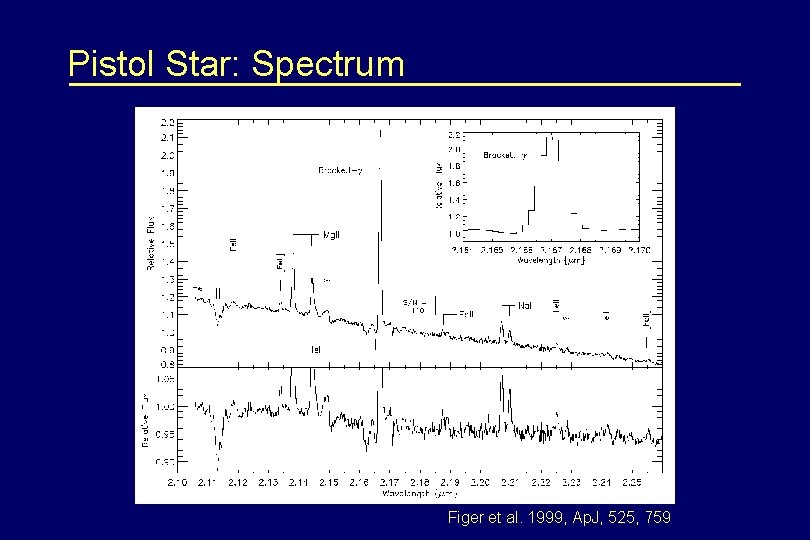
Pistol Star: Spectrum Figer et al. 1999, Ap. J, 525, 759
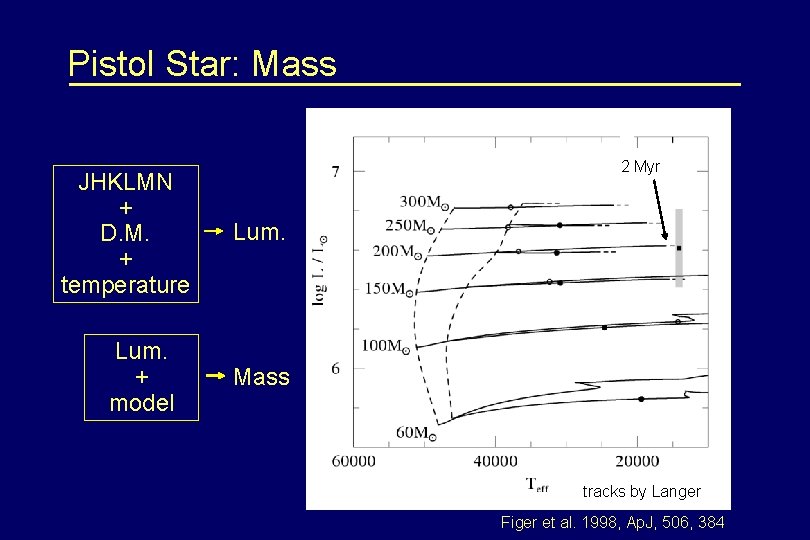
Pistol Star: Mass JHKLMN + D. M. + temperature Lum. + model 2 Myr Lum. Mass tracks by Langer Figer et al. 1998, Ap. J, 506, 384
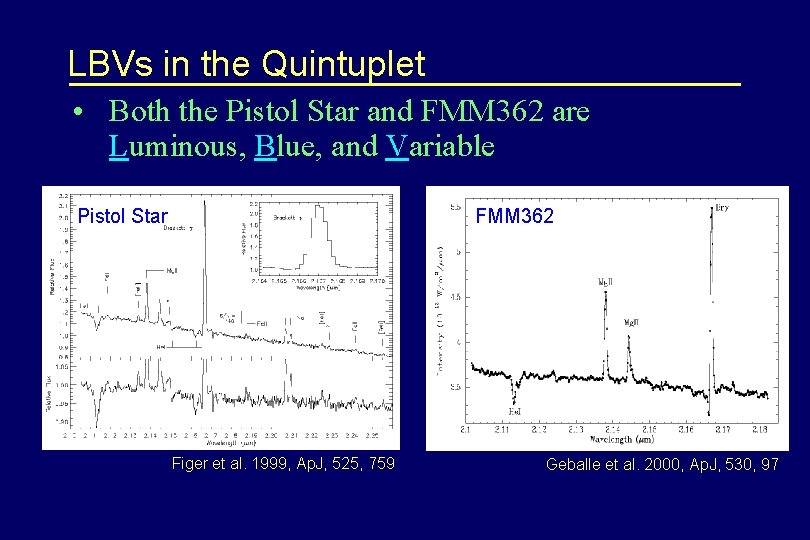
LBVs in the Quintuplet • Both the Pistol Star and FMM 362 are Luminous, Blue, and Variable Pistol Star FMM 362 Figer et al. 1999, Ap. J, 525, 759 Geballe et al. 2000, Ap. J, 530, 97
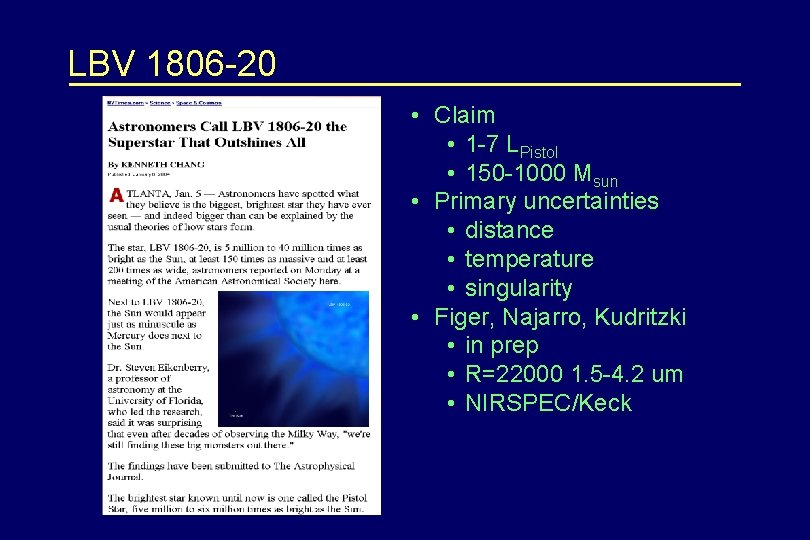
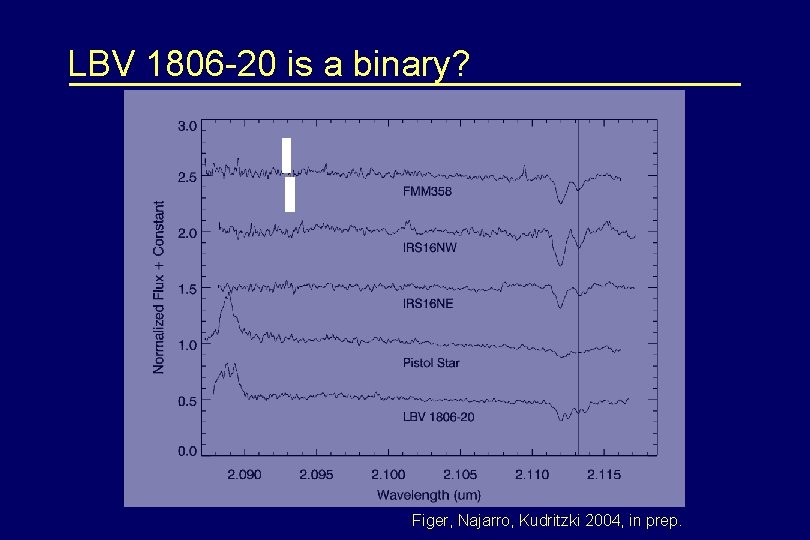
LBV 1806 -20 • Claim • 1 -7 LPistol • 150 -1000 Msun • Primary uncertainties • distance • temperature • singularity • Figer, Najarro, Kudritzki • in prep • R=22000 1. 5 -4. 2 um • NIRSPEC/Keck
LBV 1806 -20 is a binary? Figer, Najarro, Kudritzki 2004, in prep.
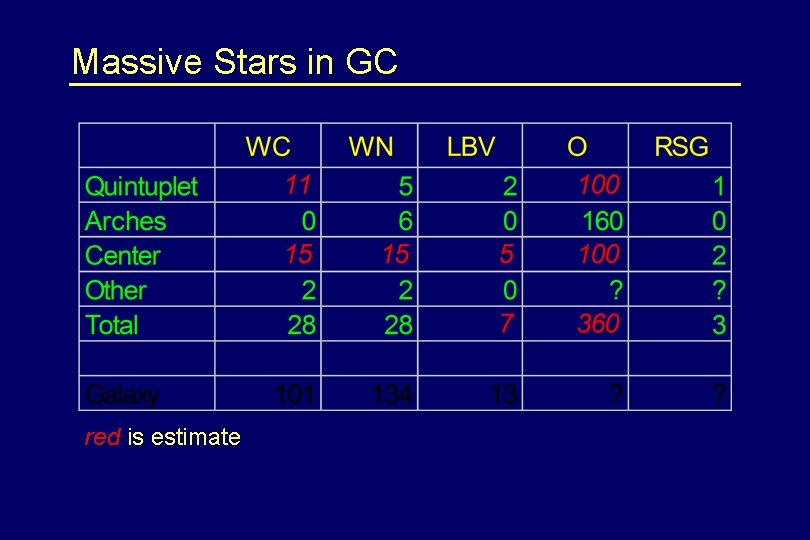
Massive Stars in GC red is estimate
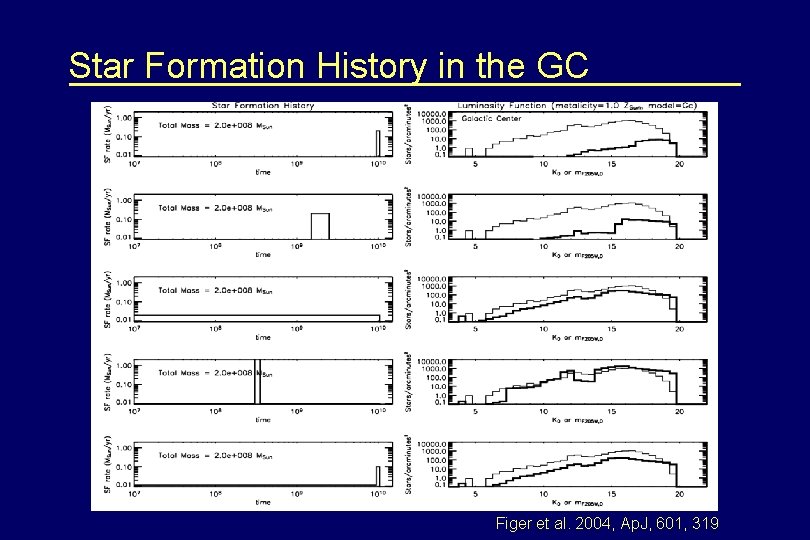
Star Formation History in the GC Figer et al. 2004, Ap. J, 601, 319
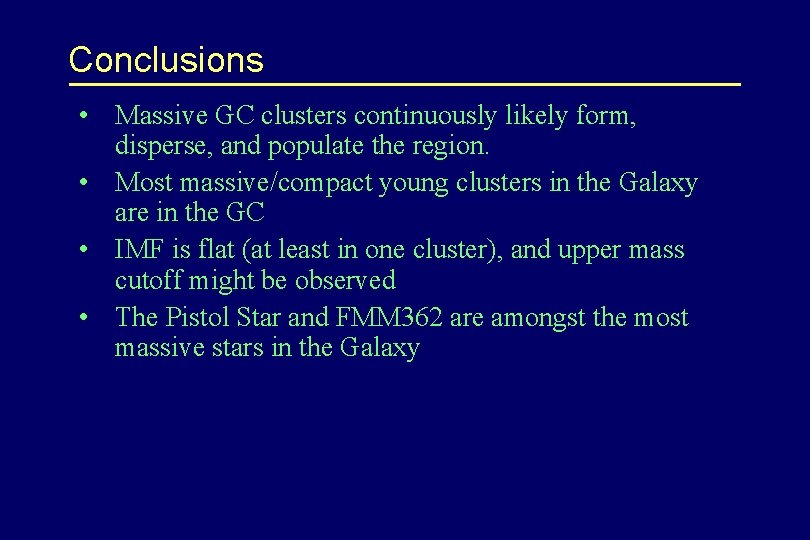
Conclusions • Massive GC clusters continuously likely form, disperse, and populate the region. • Most massive/compact young clusters in the Galaxy are in the GC • IMF is flat (at least in one cluster), and upper mass cutoff might be observed • The Pistol Star and FMM 362 are amongst the most massive stars in the Galaxy