
Staphylococcus aureus Characteristics v v Gram Positive Shape
- Slides: 1
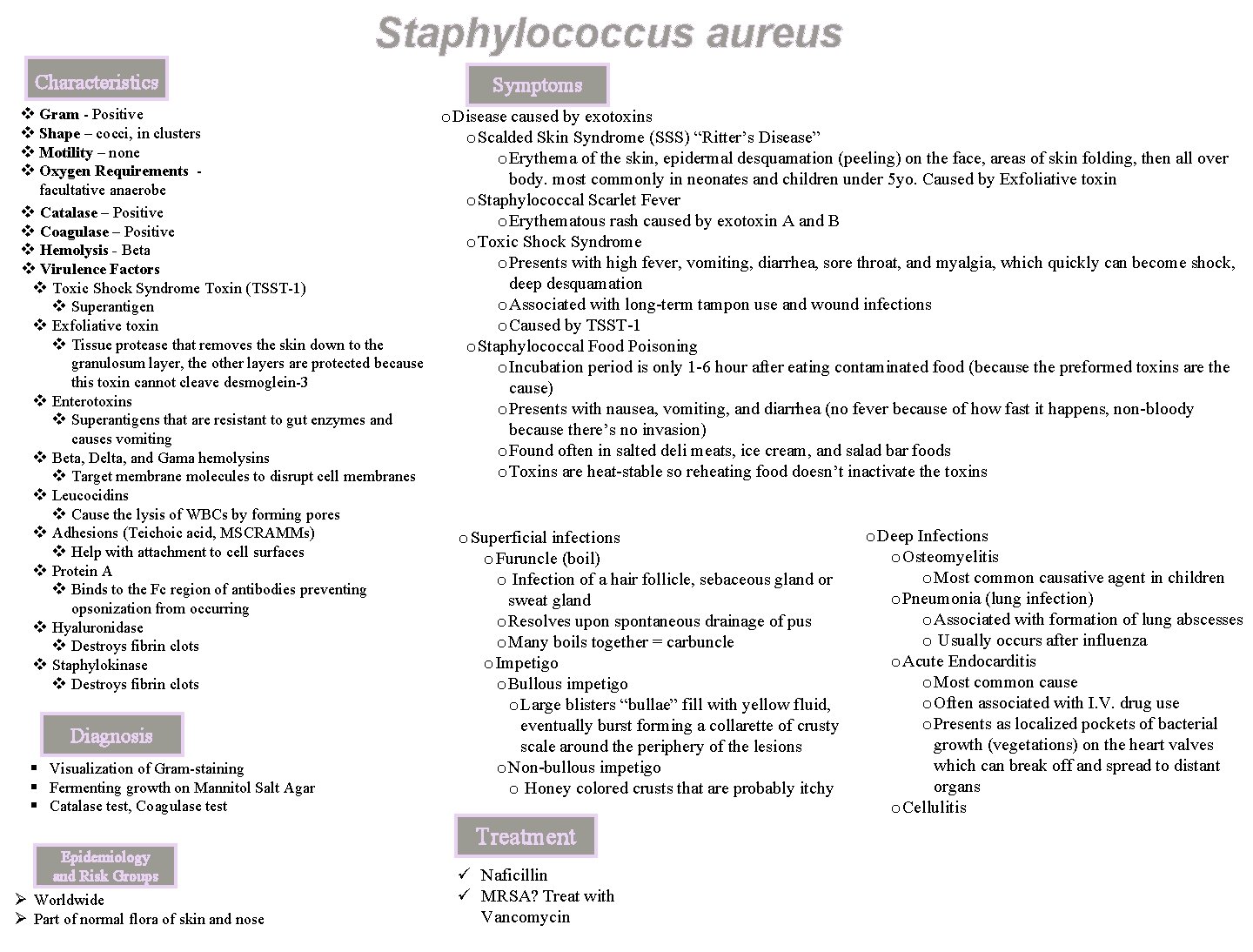
Staphylococcus aureus Characteristics v v Gram - Positive Shape – cocci, in clusters Motility – none Oxygen Requirements facultative anaerobe v Catalase – Positive v Coagulase – Positive v Hemolysis - Beta v Virulence Factors v Toxic Shock Syndrome Toxin (TSST-1) v Superantigen v Exfoliative toxin v Tissue protease that removes the skin down to the granulosum layer, the other layers are protected because this toxin cannot cleave desmoglein-3 v Enterotoxins v Superantigens that are resistant to gut enzymes and causes vomiting v Beta, Delta, and Gama hemolysins v Target membrane molecules to disrupt cell membranes v Leucocidins v Cause the lysis of WBCs by forming pores v Adhesions (Teichoic acid, MSCRAMMs) v Help with attachment to cell surfaces v Protein A v Binds to the Fc region of antibodies preventing opsonization from occurring v Hyaluronidase v Destroys fibrin clots v Staphylokinase v Destroys fibrin clots Diagnosis § Visualization of Gram-staining § Fermenting growth on Mannitol Salt Agar § Catalase test, Coagulase test Epidemiology and Risk Groups Ø Worldwide Ø Part of normal flora of skin and nose Symptoms o Disease caused by exotoxins o Scalded Skin Syndrome (SSS) “Ritter’s Disease” o Erythema of the skin, epidermal desquamation (peeling) on the face, areas of skin folding, then all over body. most commonly in neonates and children under 5 yo. Caused by Exfoliative toxin o Staphylococcal Scarlet Fever o Erythematous rash caused by exotoxin A and B o Toxic Shock Syndrome o Presents with high fever, vomiting, diarrhea, sore throat, and myalgia, which quickly can become shock, deep desquamation o Associated with long-term tampon use and wound infections o Caused by TSST-1 o Staphylococcal Food Poisoning o Incubation period is only 1 -6 hour after eating contaminated food (because the preformed toxins are the cause) o Presents with nausea, vomiting, and diarrhea (no fever because of how fast it happens, non-bloody because there’s no invasion) o Found often in salted deli meats, ice cream, and salad bar foods o Toxins are heat-stable so reheating food doesn’t inactivate the toxins o Superficial infections o Furuncle (boil) o Infection of a hair follicle, sebaceous gland or sweat gland o Resolves upon spontaneous drainage of pus o Many boils together = carbuncle o Impetigo o Bullous impetigo o Large blisters “bullae” fill with yellow fluid, eventually burst forming a collarette of crusty scale around the periphery of the lesions o Non-bullous impetigo o Honey colored crusts that are probably itchy Treatment ü Naficillin ü MRSA? Treat with Vancomycin o Deep Infections o Osteomyelitis o Most common causative agent in children o Pneumonia (lung infection) o Associated with formation of lung abscesses o Usually occurs after influenza o Acute Endocarditis o Most common cause o Often associated with I. V. drug use o Presents as localized pockets of bacterial growth (vegetations) on the heart valves which can break off and spread to distant organs o Cellulitis