
STANDING WAVES REFLECTION OF WAVES Occurs when a

- Slides: 19
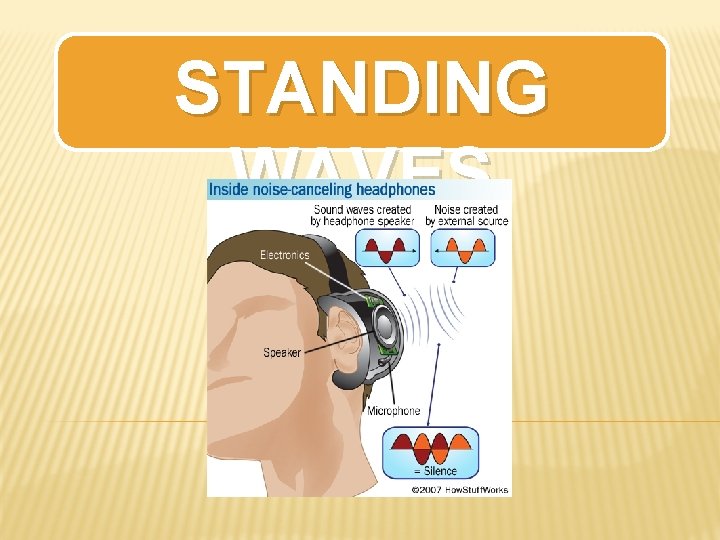
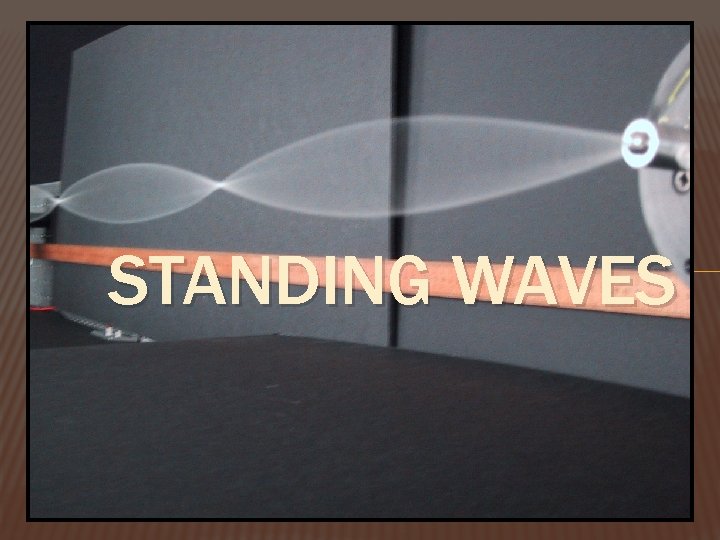
STANDING WAVES
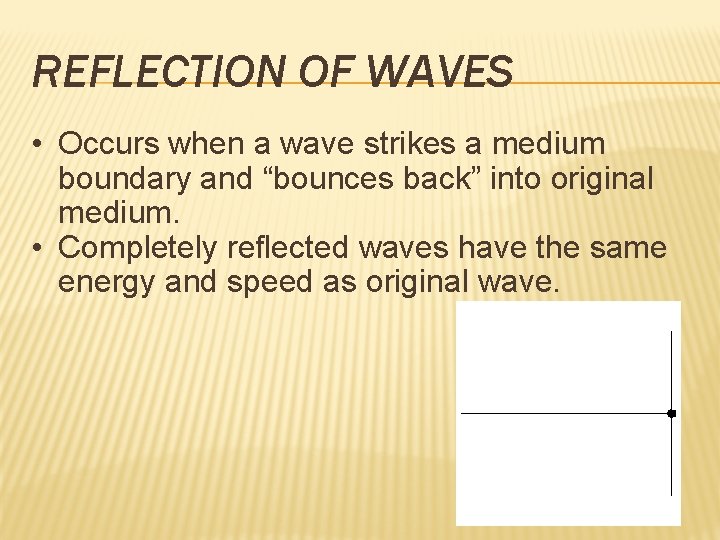
REFLECTION OF WAVES • Occurs when a wave strikes a medium boundary and “bounces back” into original medium. • Completely reflected waves have the same energy and speed as original wave.
When two waves collide, they don’t bounce or stick like objects do, they interfere This means they form one wave for a moment and then continue on unchanged The total amplitude of a wave is equal to the sum of the amplitudes of the individual waves http: //www. acs. psu. edu/drussell/demos/su perposition/superposition. html
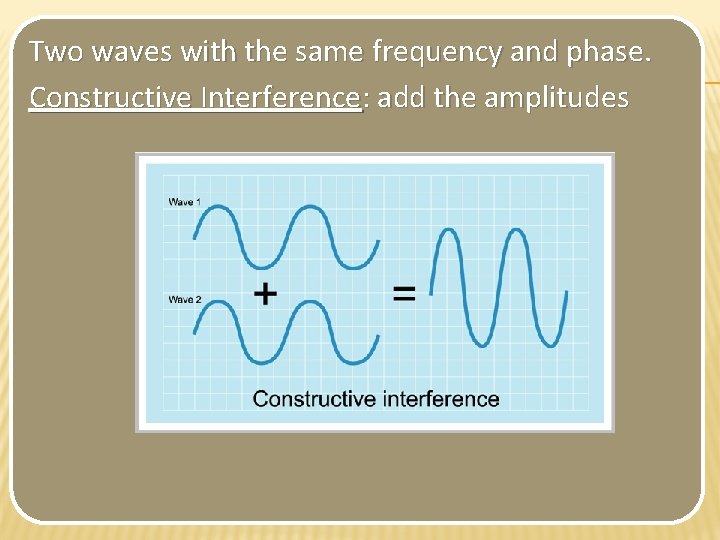
Two waves with the same frequency and phase. Constructive Interference: add the amplitudes
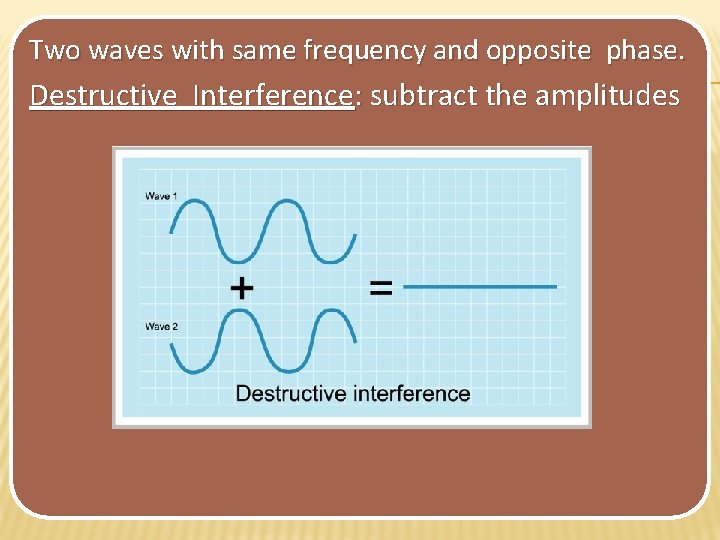
Two waves with same frequency and opposite phase. Destructive Interference: subtract the amplitudes
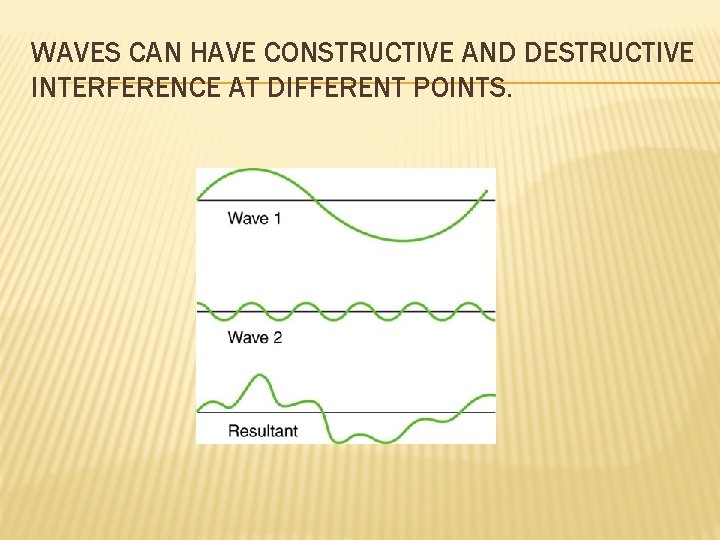
WAVES CAN HAVE CONSTRUCTIVE AND DESTRUCTIVE INTERFERENCE AT DIFFERENT POINTS.
STANDING WAVES
� � http: //www. acs. psu. edu/drussell/demos/supe rposition/superposition. html
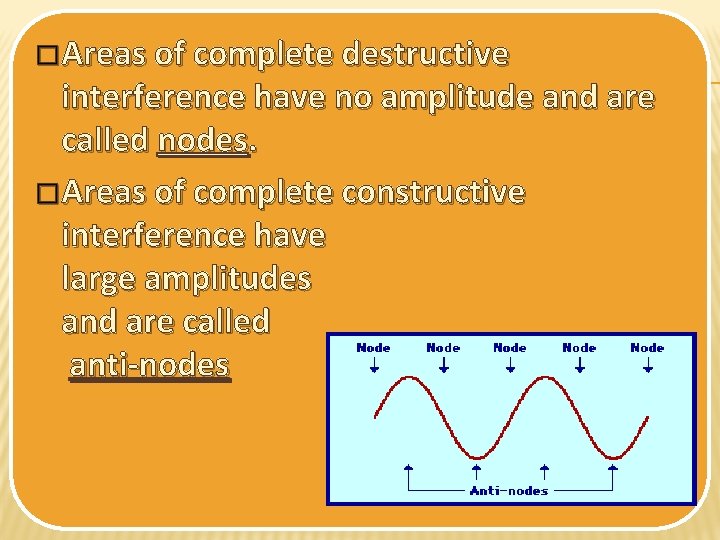
� Areas of complete destructive interference have no amplitude and are called nodes. � Areas of complete constructive interference have large amplitudes and are called anti-nodes
HARMONICS � Musical instruments vibrate in such a way that a standing wave pattern results � These patterns are only created within the instrument at specific frequencies of vibration; these frequencies are known as harmonic frequencies, or merely harmonics � The first frequency is called the fundamental frequency – it determines the pitch � The higher harmonics are called overtones
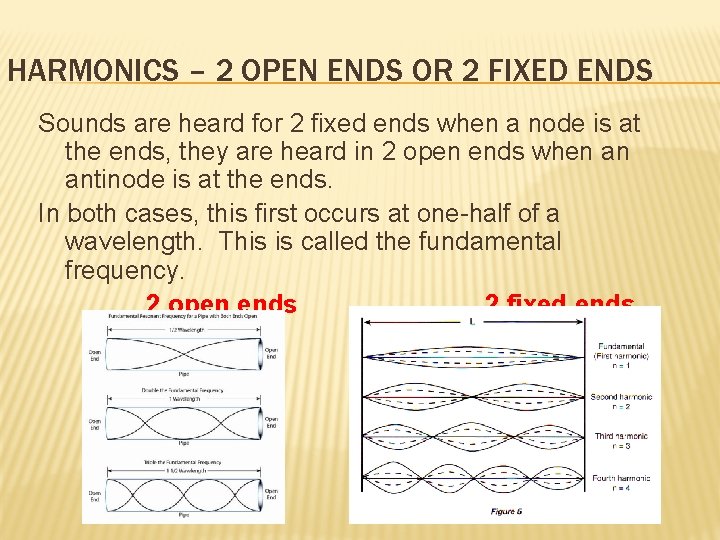
HARMONICS – 2 OPEN ENDS OR 2 FIXED ENDS Sounds are heard for 2 fixed ends when a node is at the ends, they are heard in 2 open ends when an antinode is at the ends. In both cases, this first occurs at one-half of a wavelength. This is called the fundamental frequency. 2 open ends 2 fixed ends
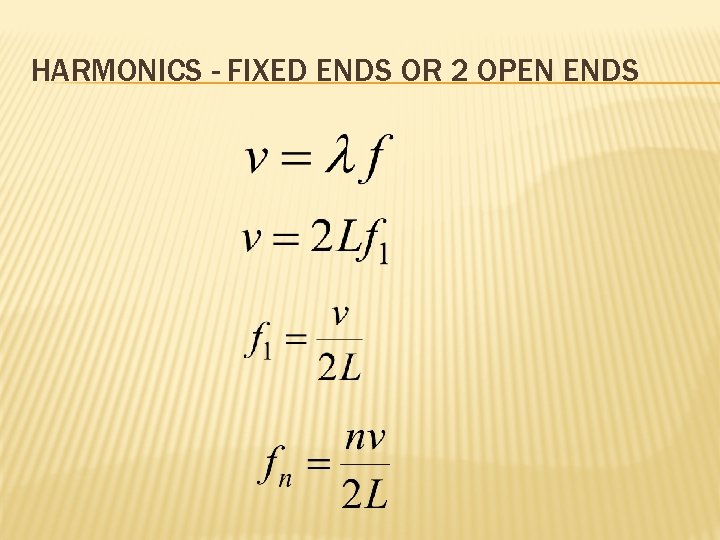
HARMONICS - FIXED ENDS OR 2 OPEN ENDS
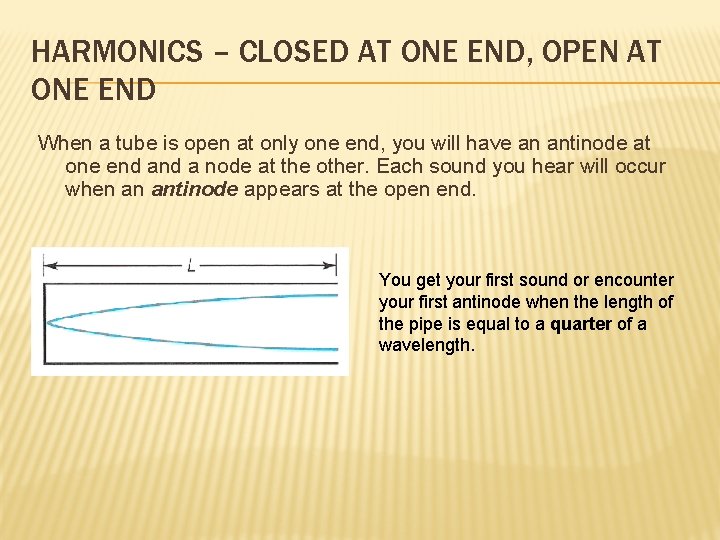
HARMONICS – CLOSED AT ONE END, OPEN AT ONE END When a tube is open at only one end, you will have an antinode at one end a node at the other. Each sound you hear will occur when an antinode appears at the open end. You get your first sound or encounter your first antinode when the length of the pipe is equal to a quarter of a wavelength.
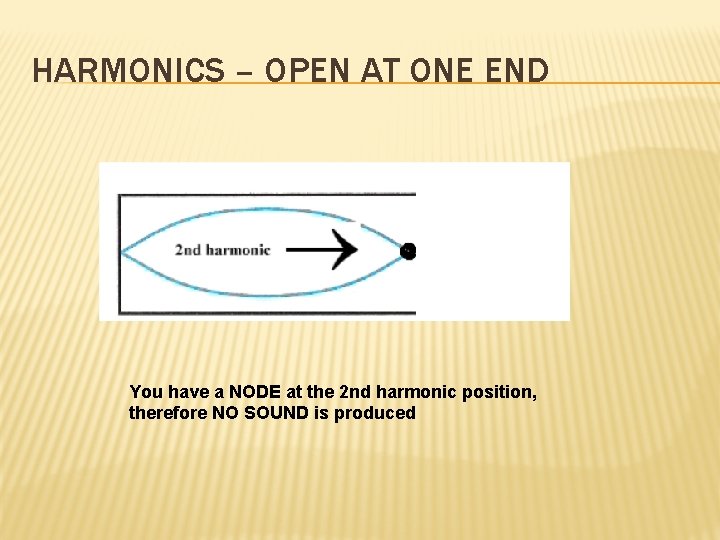
HARMONICS – OPEN AT ONE END You have a NODE at the 2 nd harmonic position, therefore NO SOUND is produced
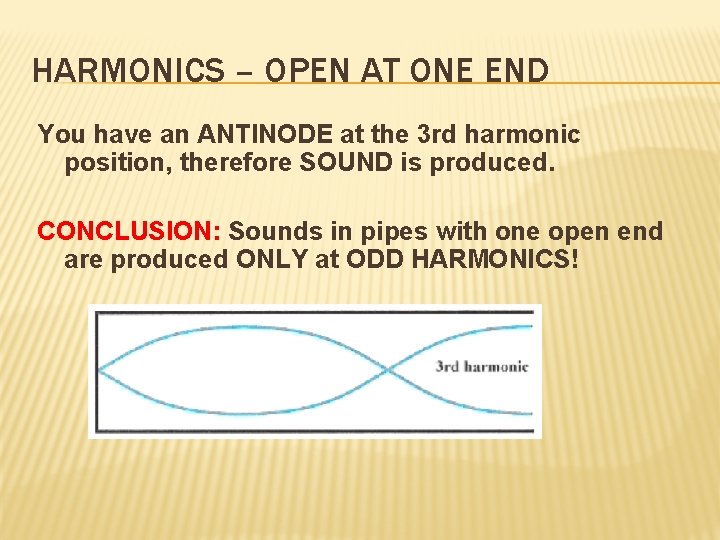
HARMONICS – OPEN AT ONE END You have an ANTINODE at the 3 rd harmonic position, therefore SOUND is produced. CONCLUSION: Sounds in pipes with one open end are produced ONLY at ODD HARMONICS!
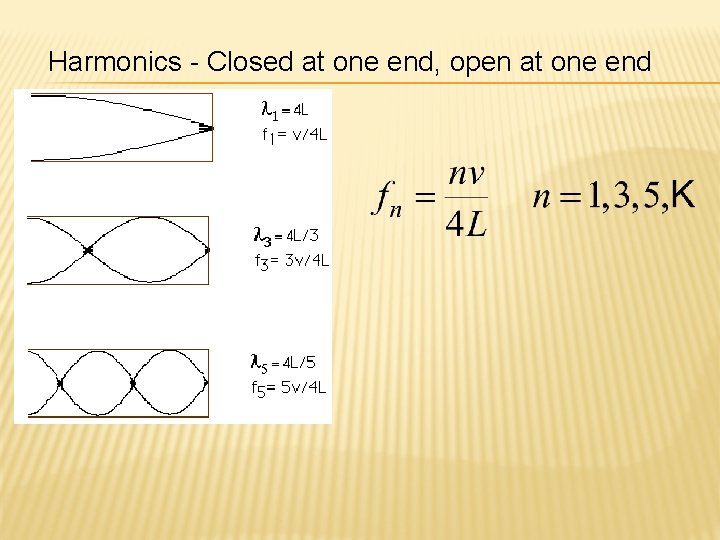
Harmonics - Closed at one end, open at one end
� http: //www. thephysicsa viary. com/Physics/Pro grams/Labs/Resonanc e. Tube. Lab/index. html
EXAMPLE � How long do you need to make an organ pipe (open at both ends) that produces a fundamental frequency of middle C (256 Hz)? The speed of the sound in air is 340 m/s. � B) What is the wavelength and frequency of the 2 nd harmonic? Draw the standing wave
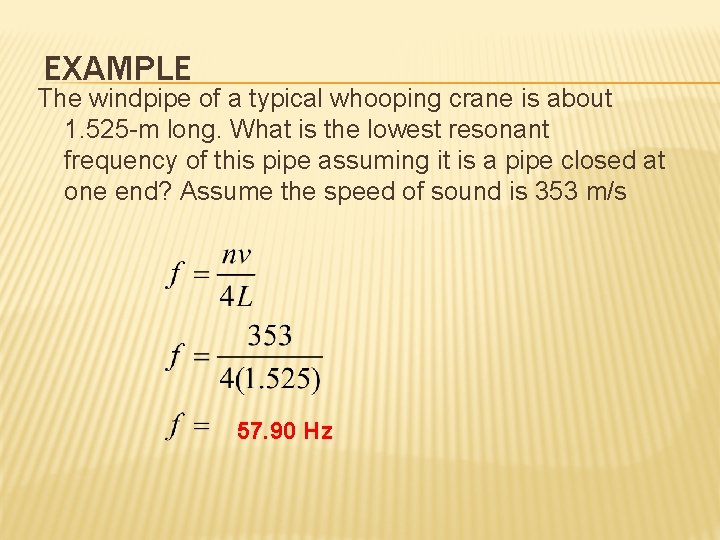
EXAMPLE The windpipe of a typical whooping crane is about 1. 525 -m long. What is the lowest resonant frequency of this pipe assuming it is a pipe closed at one end? Assume the speed of sound is 353 m/s 57. 90 Hz