
Standing Together universities and access organizations collaborating to
Standing Together: universities and access organizations collaborating to offer summer programming opportunities for low-income high school students NPEA • April 2018
This workshop discusses various partnership strategies between university-administered summer programs and education access organizations to identify lowincome students interested in getting a taste of college while still in high school.
Icebreaker activity (10 minutes) Gather in groups of 3 -8 at your table Discuss the following: - Do you currently have university/organization partnerships to support student participation in summer programs? If so, how many partnerships supporting how many students each summer? What kind of institutional support did that student receive during the application / registration process? What were some of the challenges they faced?
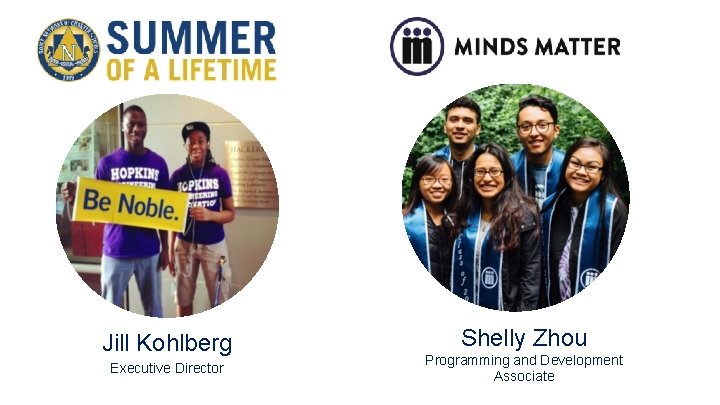
Jill Kohlberg Executive Director Shelly Zhou Programming and Development Associate
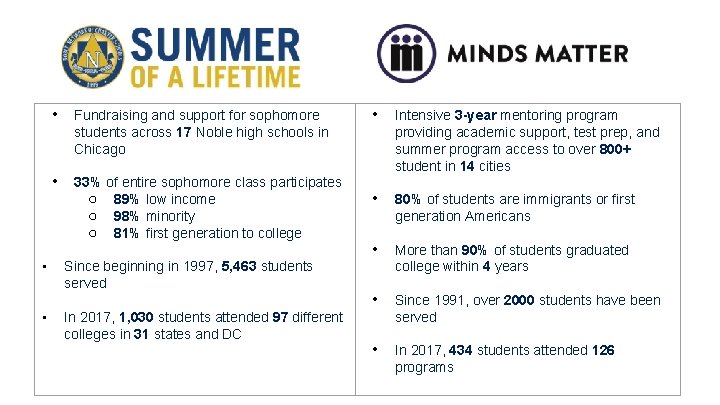
• • • Fundraising and support for sophomore students across 17 Noble high schools in Chicago • 33% of entire sophomore class participates ○ 89% low income ○ 98% minority ○ 81% first generation to college Since beginning in 1997, 5, 463 students served In 2017, 1, 030 students attended 97 different colleges in 31 states and DC • Intensive 3 -year mentoring program providing academic support, test prep, and summer program access to over 800+ student in 14 cities • 80% of students are immigrants or first generation Americans • More than 90% of students graduated college within 4 years • Since 1991, over 2000 students have been served • In 2017, 434 students attended 126 programs
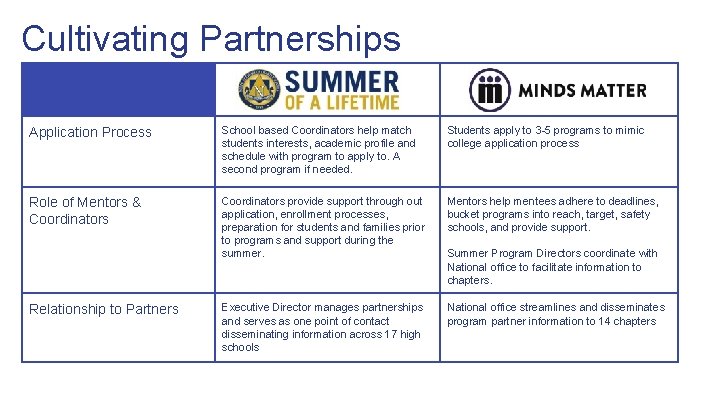
Cultivating Partnerships Application Process School based Coordinators help match students interests, academic profile and schedule with program to apply to. A second program if needed. Students apply to 3 -5 programs to mimic college application process Role of Mentors & Coordinators provide support through out application, enrollment processes, preparation for students and families prior to programs and support during the summer. Mentors help mentees adhere to deadlines, bucket programs into reach, target, safety schools, and provide support. Executive Director manages partnerships and serves as one point of contact disseminating information across 17 high schools National office streamlines and disseminates program partner information to 14 chapters Relationship to Partners Summer Program Directors coordinate with National office to facilitate information to chapters.
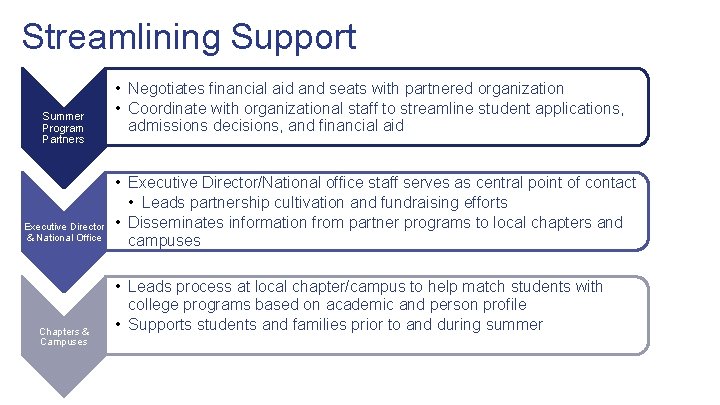
Streamlining Support Summer Program Partners Executive Director & National Office Chapters & Campuses • Negotiates financial aid and seats with partnered organization • Coordinate with organizational staff to streamline student applications, admissions decisions, and financial aid • Executive Director/National office staff serves as central point of contact • Leads partnership cultivation and fundraising efforts • Disseminates information from partner programs to local chapters and campuses • Leads process at local chapter/campus to help match students with college programs based on academic and person profile • Supports students and families prior to and during summer
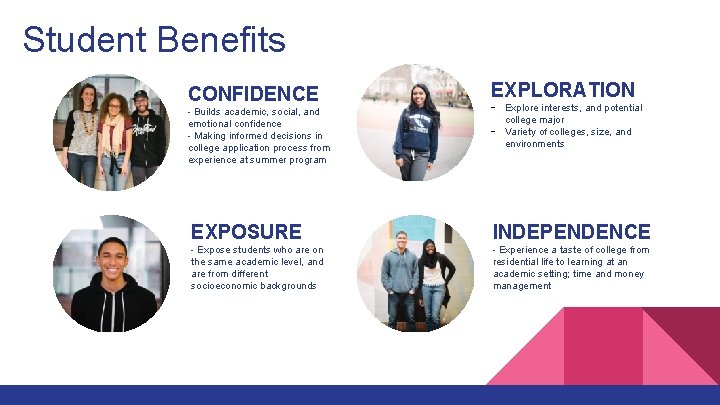
Student Benefits CONFIDENCE - Builds academic, social, and emotional confidence - Making informed decisions in college application process from experience at summer program EXPLORATION - Explore interests, and potential college major Variety of colleges, size, and environments EXPOSURE INDEPENDENCE - Expose students who are on the same academic level, and are from different socioeconomic backgrounds - Experience a taste of college from residential life to learning at an academic setting; time and money management
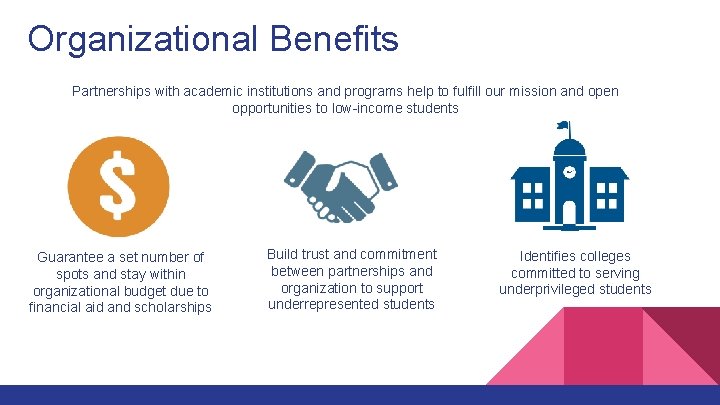
Organizational Benefits ● ● Partnerships with academic institutions and programs help to fulfill our mission and open opportunities to low-income students Guarantee a set number of spots and stay within organizational budget due to financial aid and scholarships ● Build trust and commitment between partnerships and organization to support underrepresented students ● Identifies colleges committed to serving underprivileged students
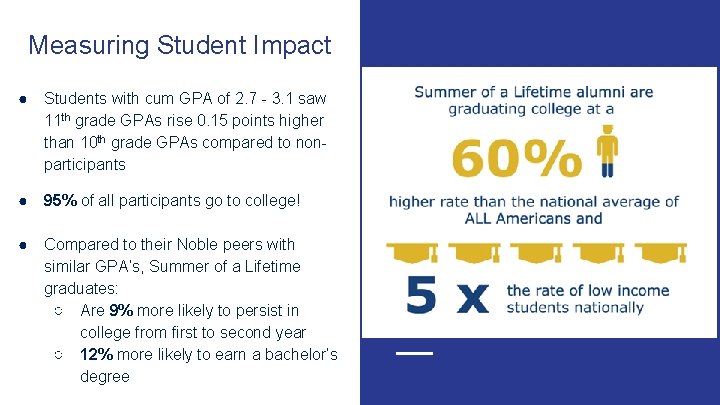
Measuring Student Impact ● Students with cum GPA of 2. 7 - 3. 1 saw 11 th grade GPAs rise 0. 15 points higher than 10 th grade GPAs compared to nonparticipants ● 95% of all participants go to college! ● Compared to their Noble peers with similar GPA’s, Summer of a Lifetime graduates: ○ Are 9% more likely to persist in college from first to second year ○ 12% more likely to earn a bachelor’s degree
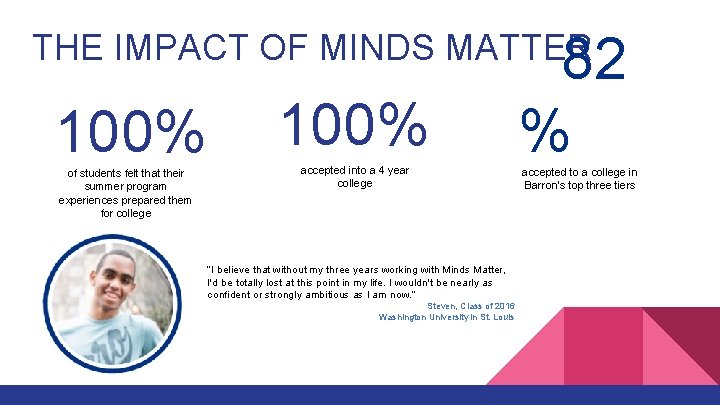
82 % THE IMPACT OF MINDS MATTER 100% of students felt that their summer program experiences prepared them for college 100% accepted into a 4 year college “I believe that without my three years working with Minds Matter, I'd be totally lost at this point in my life. I wouldn't be nearly as confident or strongly ambitious as I am now. ” Steven, Class of 2016 Washington University in St. Louis accepted to a college in Barron's top three tiers
What are the benefits to these sorts of partnerships?
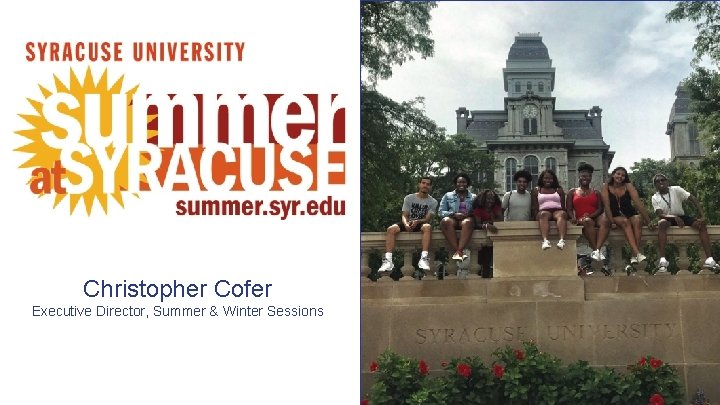
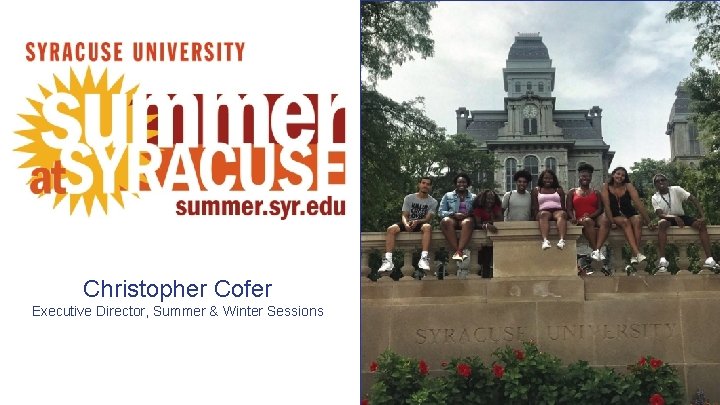
Christopher Cofer Executive Director, Summer & Winter Sessions
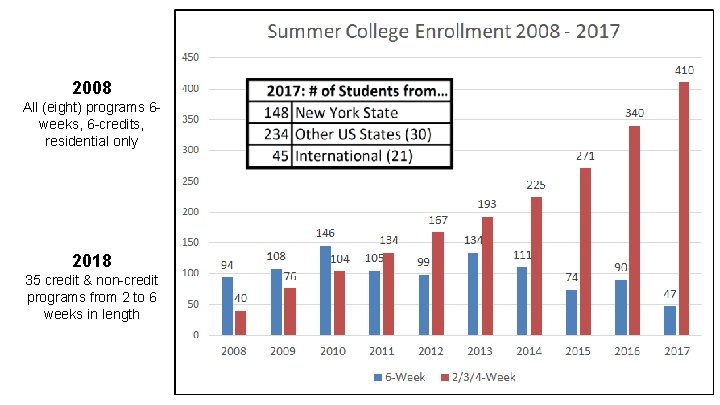
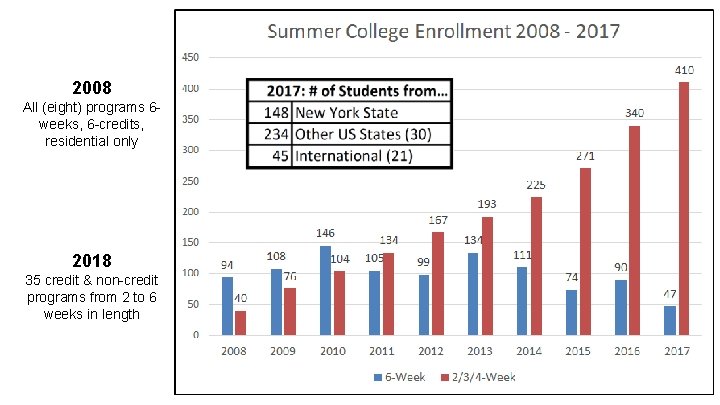
2008 All (eight) programs 6 weeks, 6 -credits, residential only 2018 35 credit & non-credit programs from 2 to 6 weeks in length
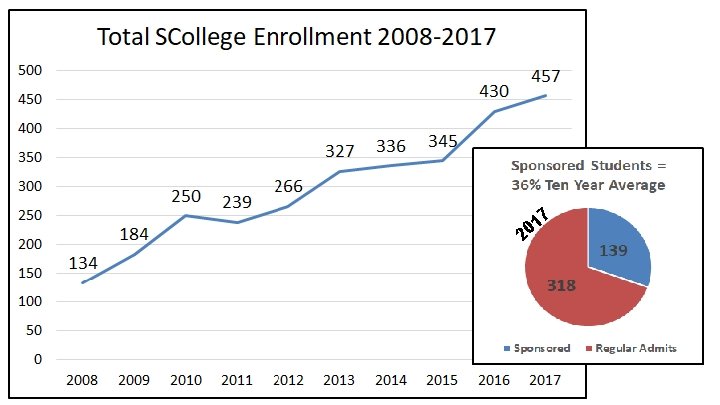
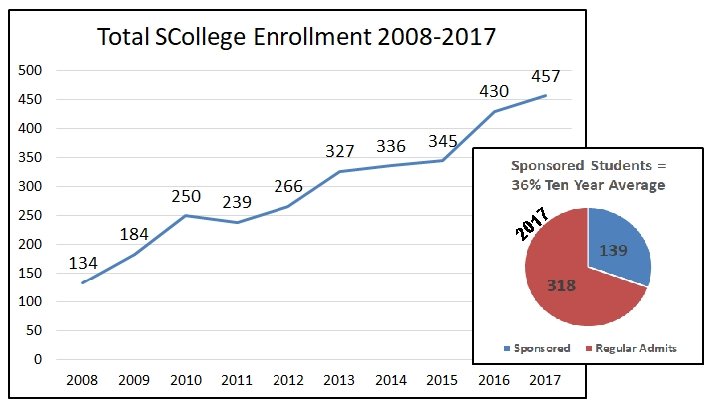
7 1 20
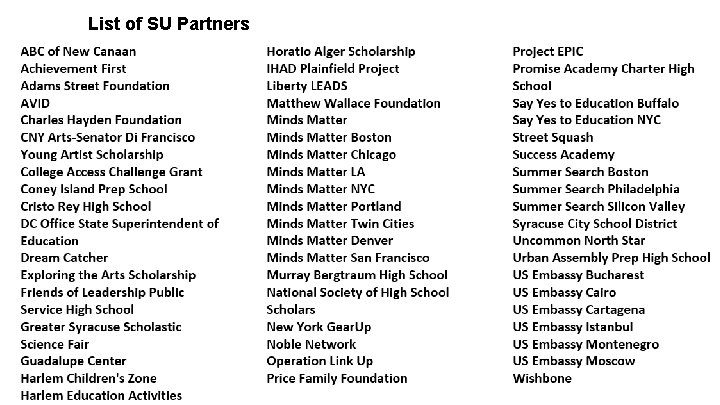
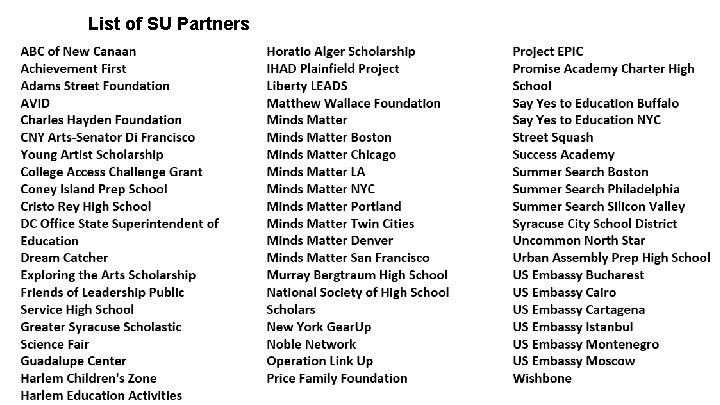
List of SU Partners
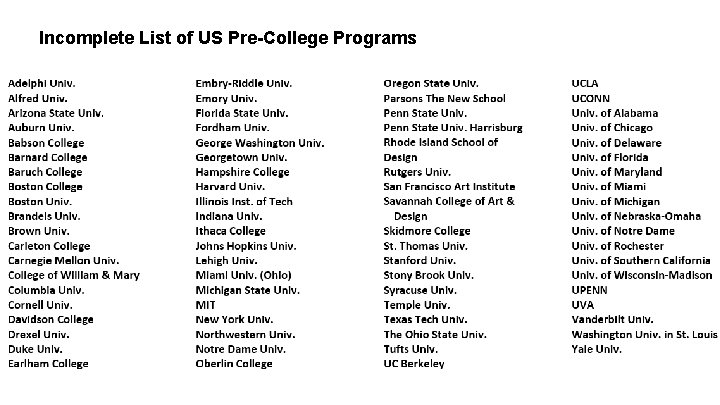
Incomplete List of US Pre-College Programs
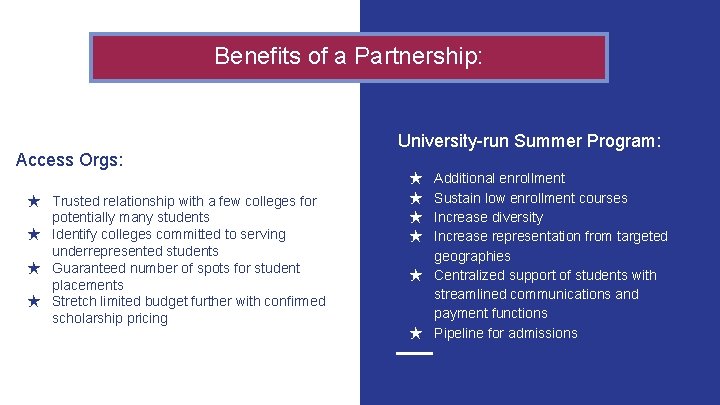
Benefits of a Partnership: Access Orgs: ★ Trusted relationship with a few colleges for potentially many students ★ Identify colleges committed to serving underrepresented students ★ Guaranteed number of spots for student placements ★ Stretch limited budget further with confirmed scholarship pricing University-run Summer Program: Additional enrollment Sustain low enrollment courses Increase diversity Increase representation from targeted geographies ★ Centralized support of students with streamlined communications and payment functions ★ Pipeline for admissions ★ ★
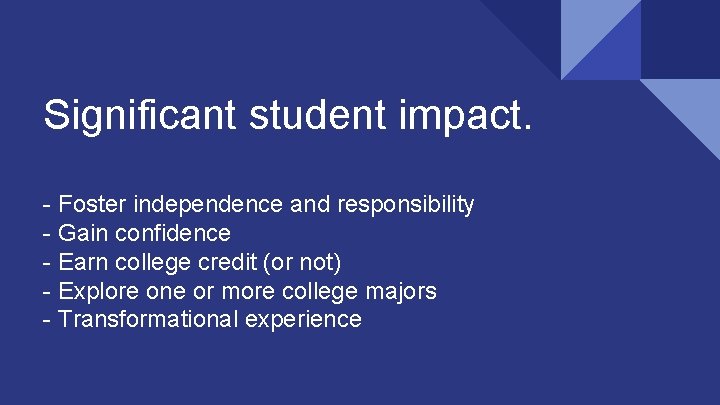
Significant student impact. - Foster independence and responsibility - Gain confidence - Earn college credit (or not) - Explore one or more college majors - Transformational experience
What does it take to establish a partnership?
Erin Schutte Wadzinski Director
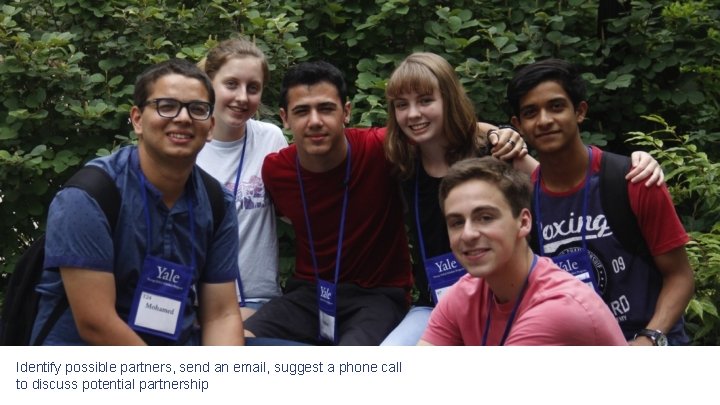
Identify possible partners, send an email, suggest a phone call to discuss potential partnership
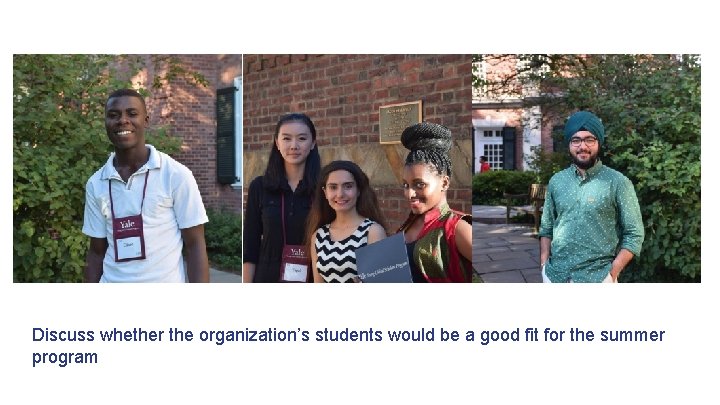
Discuss whether the organization’s students would be a good fit for the summer program
Elements needed for both partners to succeed: Access Orgs: ★ Organizational support to help guide students through the application and registration process and serve as liaison to partner ★ Sometimes (but not always) $$ to be able to contribute to their students’ summer program costs University-run Summer Program: ★ A commitment to providing an enriching experience and supportive community to lowincome students ★ Some $$ to contribute to the cost of programming for lowincome students
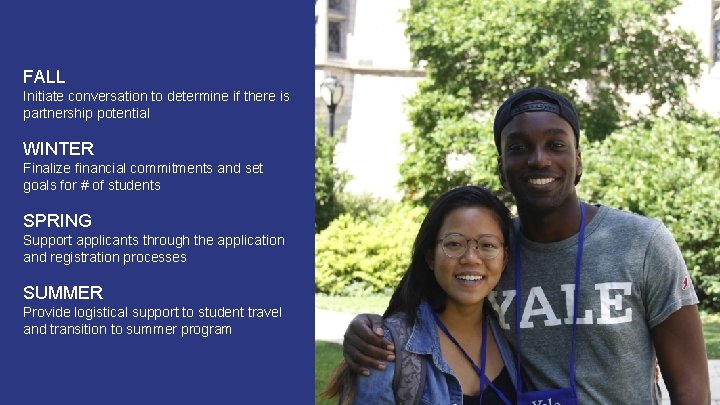
FALL Initiate conversation to determine if there is partnership potential WINTER Finalize financial commitments and set goals for # of students SPRING Support applicants through the application and registration processes SUMMER Provide logistical support to student travel and transition to summer program
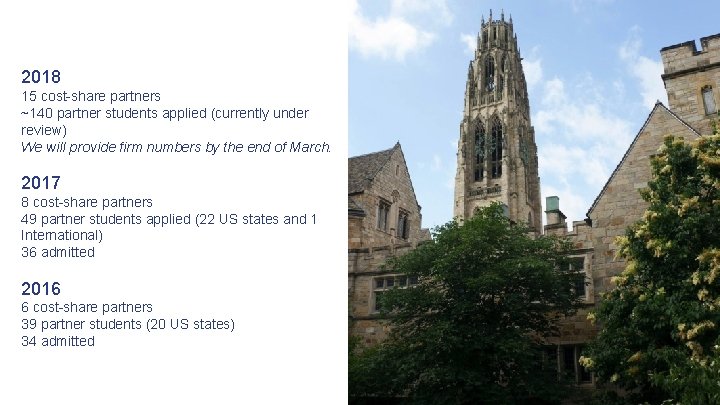
2018 15 cost-share partners ~140 partner students applied (currently under review) We will provide firm numbers by the end of March. 2017 8 cost-share partners 49 partner students applied (22 US states and 1 International) 36 admitted 2016 6 cost-share partners 39 partner students (20 US states) 34 admitted

Discussion & Questions?
What are the benefits to these sorts of partnerships?
Christopher Cofer Executive Director, Summer & Winter Sessions
2008 All (eight) programs 6 weeks, 6 -credits, residential only 2018 35 credit & non-credit programs from 2 to 6 weeks in length
7 1 20
List of SU Partners
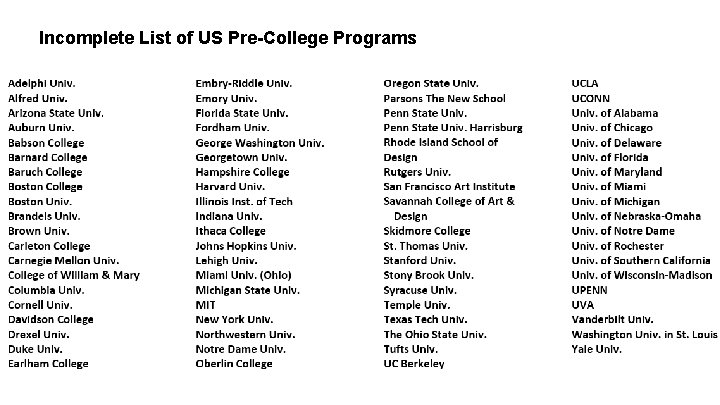
Incomplete List of US Pre-College Programs
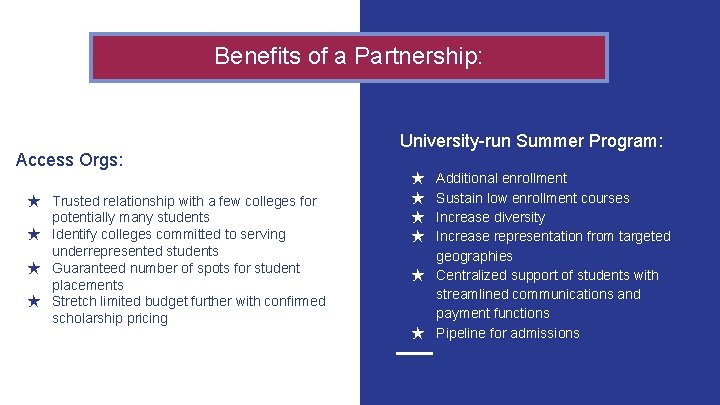
Benefits of a Partnership: Access Orgs: ★ Trusted relationship with a few colleges for potentially many students ★ Identify colleges committed to serving underrepresented students ★ Guaranteed number of spots for student placements ★ Stretch limited budget further with confirmed scholarship pricing University-run Summer Program: Additional enrollment Sustain low enrollment courses Increase diversity Increase representation from targeted geographies ★ Centralized support of students with streamlined communications and payment functions ★ Pipeline for admissions ★ ★
Significant student impact. - Foster independence and responsibility - Gain confidence - Earn college credit (or not) - Explore one or more college majors - Transformational experience
What does it take to establish a partnership?
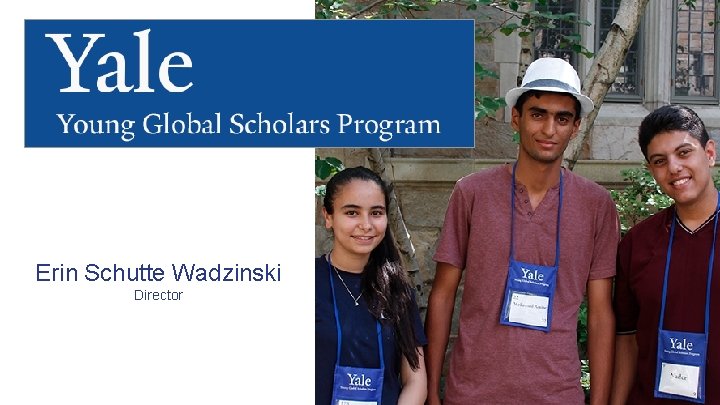
Erin Schutte Wadzinski Director
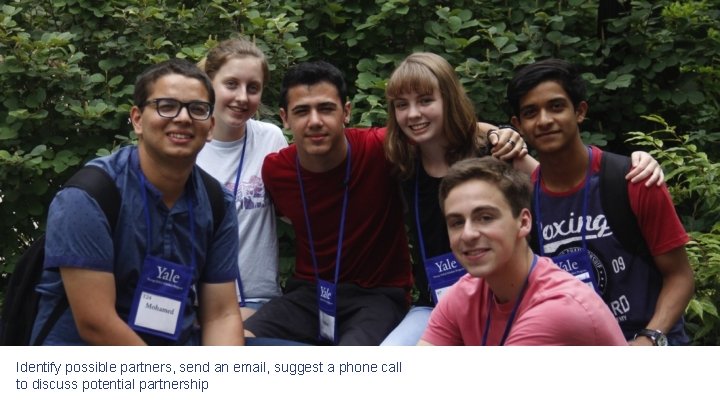
Identify possible partners, send an email, suggest a phone call to discuss potential partnership
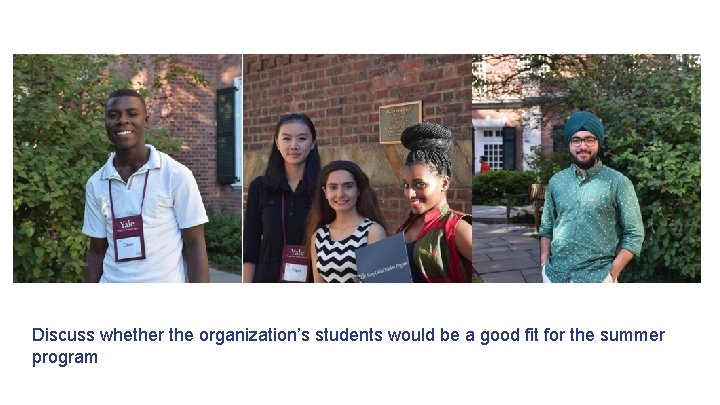
Discuss whether the organization’s students would be a good fit for the summer program
Elements needed for both partners to succeed: Access Orgs: ★ Organizational support to help guide students through the application and registration process and serve as liaison to partner ★ Sometimes (but not always) $$ to be able to contribute to their students’ summer program costs University-run Summer Program: ★ A commitment to providing an enriching experience and supportive community to lowincome students ★ Some $$ to contribute to the cost of programming for lowincome students
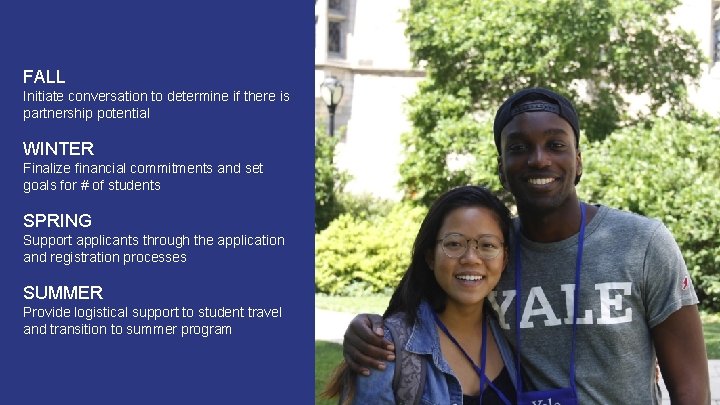
FALL Initiate conversation to determine if there is partnership potential WINTER Finalize financial commitments and set goals for # of students SPRING Support applicants through the application and registration processes SUMMER Provide logistical support to student travel and transition to summer program
2018 15 cost-share partners ~140 partner students applied (currently under review) We will provide firm numbers by the end of March. 2017 8 cost-share partners 49 partner students applied (22 US states and 1 International) 36 admitted 2016 6 cost-share partners 39 partner students (20 US states) 34 admitted

Discussion & Questions?
- Slides: 45