
Standards in Trading Standards Christine Heemskerk www tradingstandards









- Slides: 51
Standards in Trading Standards Christine Heemskerk www. tradingstandards. gov. uk
‘Standards’ in Trading Standards • • • Product Safety Metrology Environmental Safety Energy Efficiency Fair Trading Food Safety www. tradingstandards. gov. uk
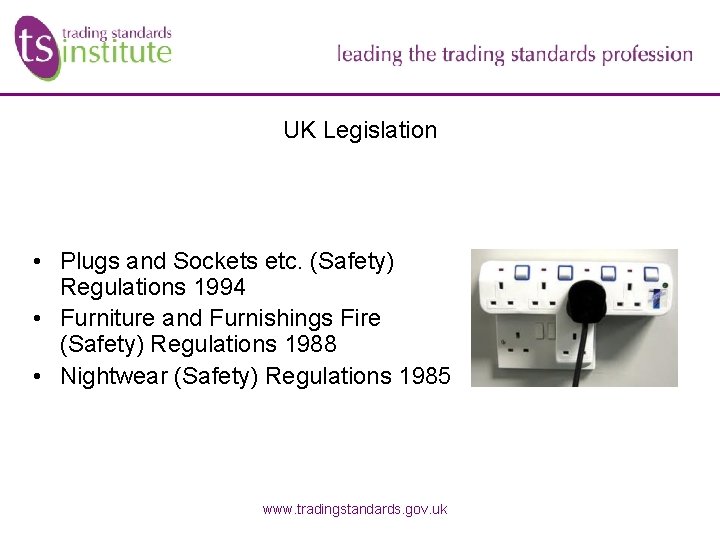
UK Legislation • Plugs and Sockets etc. (Safety) Regulations 1994 • Furniture and Furnishings Fire (Safety) Regulations 1988 • Nightwear (Safety) Regulations 1985 www. tradingstandards. gov. uk
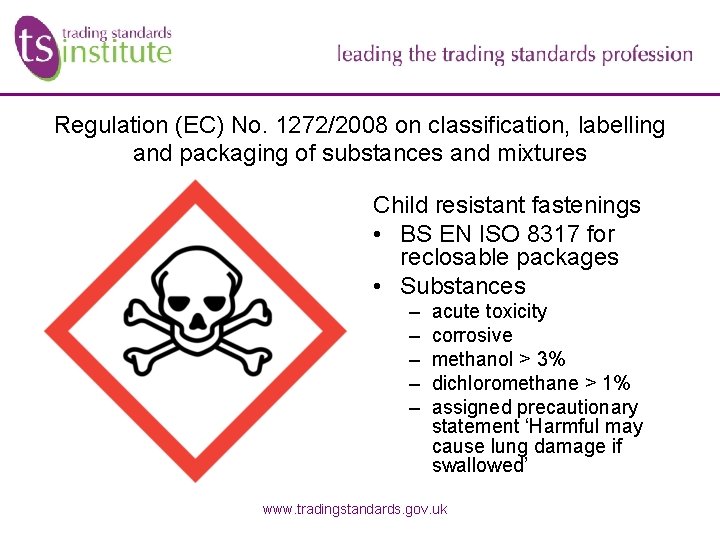
Regulation (EC) No. 1272/2008 on classification, labelling and packaging of substances and mixtures Child resistant fastenings • BS EN ISO 8317 for reclosable packages • Substances – – – acute toxicity corrosive methanol > 3% dichloromethane > 1% assigned precautionary statement ‘Harmful may cause lung damage if swallowed’ www. tradingstandards. gov. uk
European Legislation ─ New Approach Directives • • • Electrical Equipment Pressure Equipment Gas Appliances Construction Products Medical Devices Machinery Personal Protective Equipment Pressure Vessels Radio and Telecommunications Equipment Recreational Craft Toys Pyrotechnics Not all relate only to safety issues – Non automatic weighing machines – Electromagnetic compatibility – Packaging and package waste – Energy Efficiency www. tradingstandards. gov. uk 5
New Approach Directives Only products fulfilling the Essential Safety Requirements may be placed on the market and put into service Safety is assessed in a number of ways • European standards • Commission recommendations • National standards • International standards • Codes of good practice • ‘State of the art’ - reasonable consumer might expect • Independent opinion www. tradingstandards. gov. uk 6 6
Toys Safety Regulations 2011 What is a safe toy? - one that complies with the essential safety requirements made up of general and particular requirements 14 -part BS EN 71 series covers every possible aspect of toy safety www. tradingstandards. gov. uk
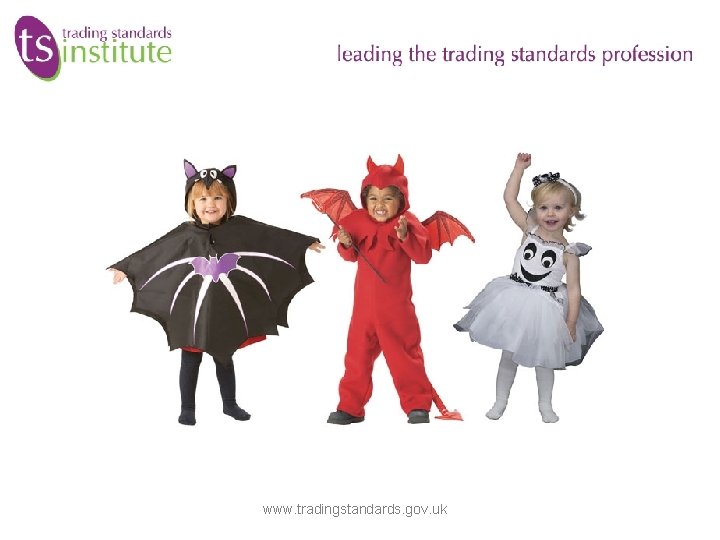
Claudia Winkleman relives Halloween fire that injured daughter Strictly Come Dancing presenter Claudia Winkleman has spoken for the first time about the serious burns her daughter suffered in a Halloween costume fire. Matilda, eight, was in a witch's costume when it brushed against a candle at a house in London last year. "We couldn't put her out, " Winkleman told BBC One's Watchdog programme. "Her tights had melted into her skin. " Matilda has had several operations. Her surgeon is calling for tougher fire safety laws on fancy dress outfits. Winkleman said: "She went up, is the only way I know how to describe it. It was not like fire I had seen before. " www. tradingstandards. gov. uk
www. tradingstandards. gov. uk
Toys Safety Regulations 2011 • • Toys must not constitute a dangerous flammable element in the child’s environment. They must therefore be composed of materials which fulfil one or more of the following conditions: they do not burn if directly exposed to a flame or spark or other potential source of fire they are not readily flammable (the flame goes out as soon as the fire cause disappears) if they do ignite, they burn slowly and present a low rate of spread of the flame irrespective of the toy’s chemical composition, they are designed so as to mechanically delay the combustion process. Such combustible materials must not constitute a risk of ignition for other materials used in the toy. www. tradingstandards. gov. uk
General Product Safety Regulations 2005 • Place a general duty on all suppliers of consumer goods to supply products that are safe in normal or reasonably foreseeable use • What is safe? – The characteristics including composition, packaging, instructions for assembly, installation and maintenance – Presentation, labelling, any warnings and instructions for its use and disposal – Categories of consumers at risk when using the product, in particular children and the elderly www. tradingstandards. gov. uk
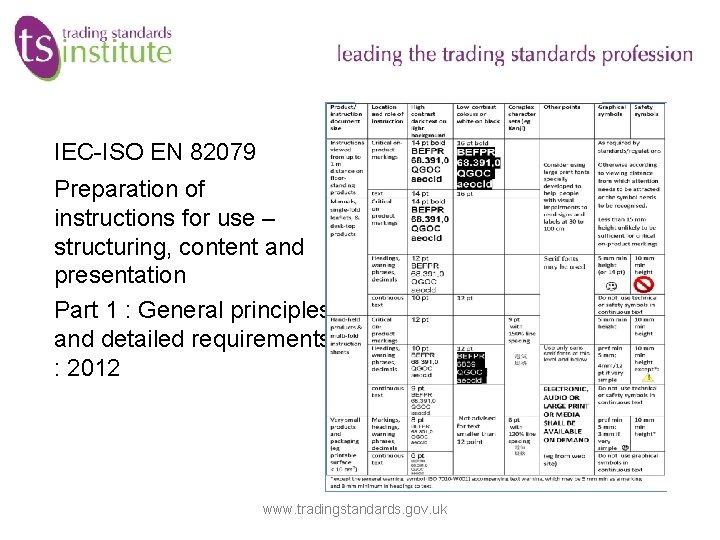
IEC-ISO EN 82079 Preparation of instructions for use – structuring, content and presentation Part 1 : General principles and detailed requirements : 2012 www. tradingstandards. gov. uk
Annex C 4. Checklist for communication effectiveness Wording and structure of text Refer to clauses 5. 15, 6. 1 4. 1 Text/use of words – words and phrases not complicated or over-sophisticated – short phrases – one sentence-one command. Not too much information in one sentence – direct active voice and assertive commands 4. 2 Terms used for features and user actions 4. 3 Communication principles – encouraging quick reactions (for example. simple and easy information for an emergency – setting out learning process for complex functions – answering the questions WHERE? WHO? WHAT? WHEN? HOW? WHY? www. tradingstandards. gov. uk
Nursery Goods Standards – Child use and care articles • • • • BS EN 14372: 2004 Cutlery and feeding utensils BS EN 747: 2012 Bunk beds and high beds for domestic use BS EN 1888: 2012 Wheeled child conveyances BS EN 13209: 2005 Baby Carriers BS EN 1466: 2004 Carry cots and stands BS EN 12790: 2009 Reclined cradles BS EN 1272: 1998 Table mounted chairs BS EN 12586: 2007 Soother holder BS EN 716: 2008 Children’s cots and folding cots for domestic use BS EN 1130: 1997 Cribs and cradles for domestic use BS EN 1930: 2011 Safety barriers BS EN 1273: 2005 Baby walking frames BS EN 14988: 2006 Children’s high chairs BS EN 1400: 2013 Soothers for babies and young children www. tradingstandards. gov. uk
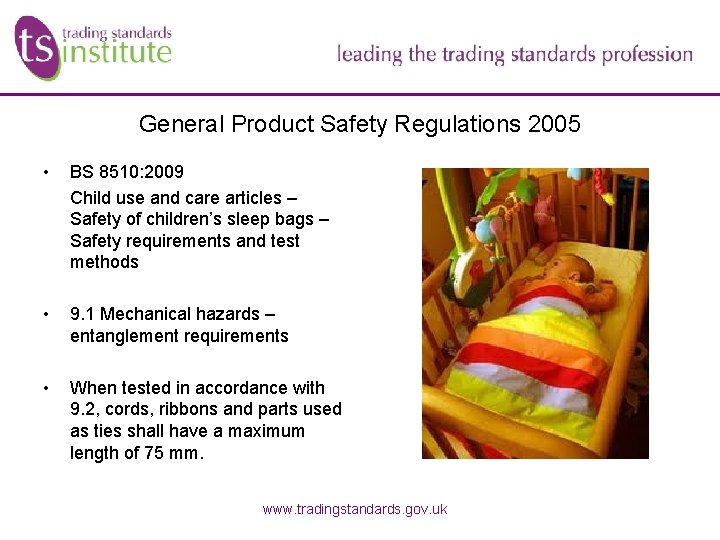
General Product Safety Regulations 2005 • BS 8510: 2009 Child use and care articles – Safety of children’s sleep bags – Safety requirements and test methods • 9. 1 Mechanical hazards – entanglement requirements • When tested in accordance with 9. 2, cords, ribbons and parts used as ties shall have a maximum length of 75 mm. www. tradingstandards. gov. uk
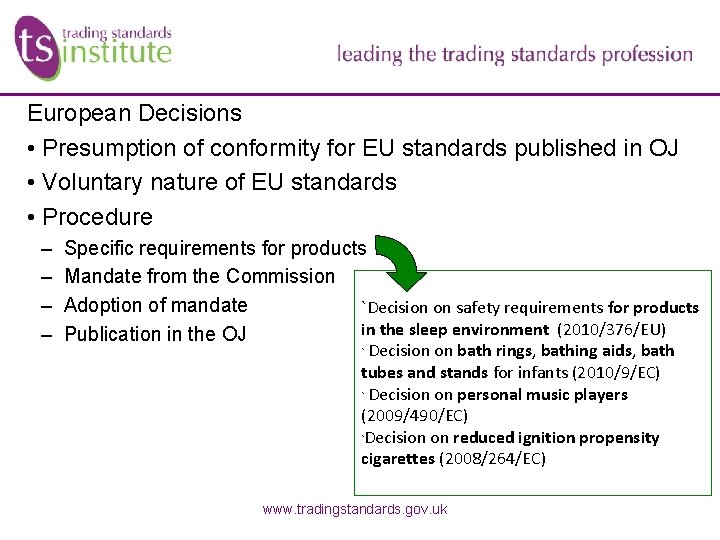
European Decisions • Presumption of conformity for EU standards published in OJ • Voluntary nature of EU standards • Procedure – – Specific requirements for products Mandate from the Commission Adoption of mandate `Decision on safety requirements for products in the sleep environment (2010/376/EU) Publication in the OJ Decision on bath rings, bathing aids, bath tubes and stands for infants (2010/9/EC) ` Decision on personal music players (2009/490/EC) `Decision on reduced ignition propensity cigarettes (2008/264/EC) ` www. tradingstandards. gov. uk
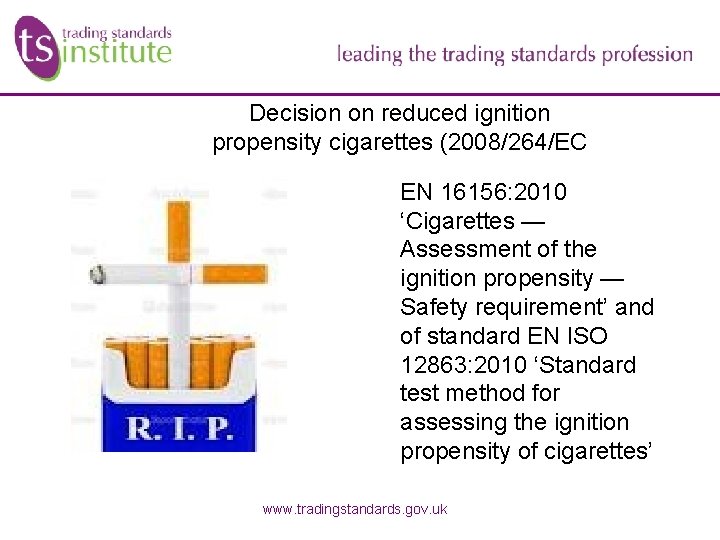
Decision on reduced ignition propensity cigarettes (2008/264/EC EN 16156: 2010 ‘Cigarettes — Assessment of the ignition propensity — Safety requirement’ and of standard EN ISO 12863: 2010 ‘Standard test method for assessing the ignition propensity of cigarettes’ www. tradingstandards. gov. uk
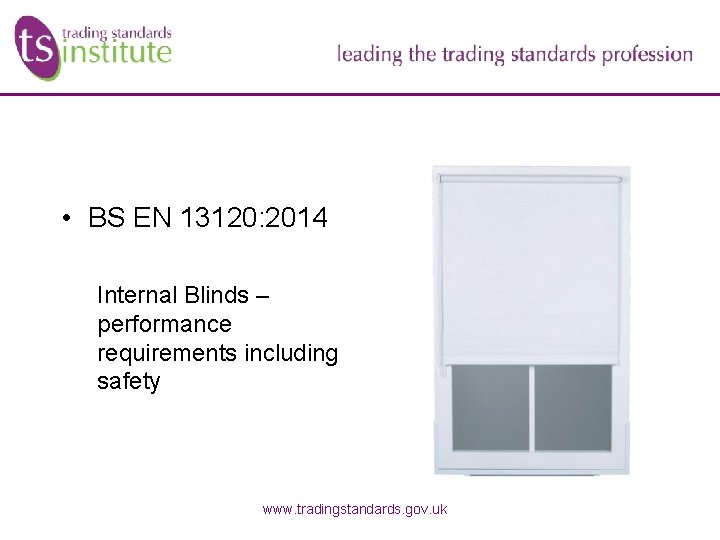
• BS EN 13120: 2014 Internal Blinds – performance requirements including safety www. tradingstandards. gov. uk
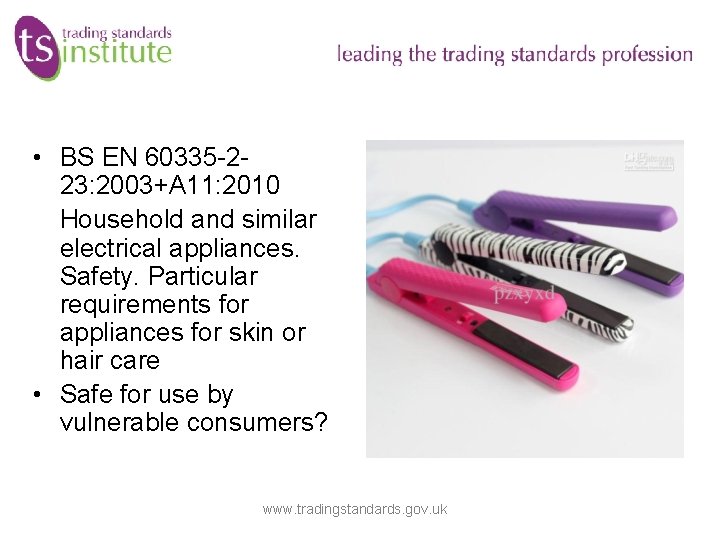
• BS EN 60335 -223: 2003+A 11: 2010 Household and similar electrical appliances. Safety. Particular requirements for appliances for skin or hair care • Safe for use by vulnerable consumers? www. tradingstandards. gov. uk
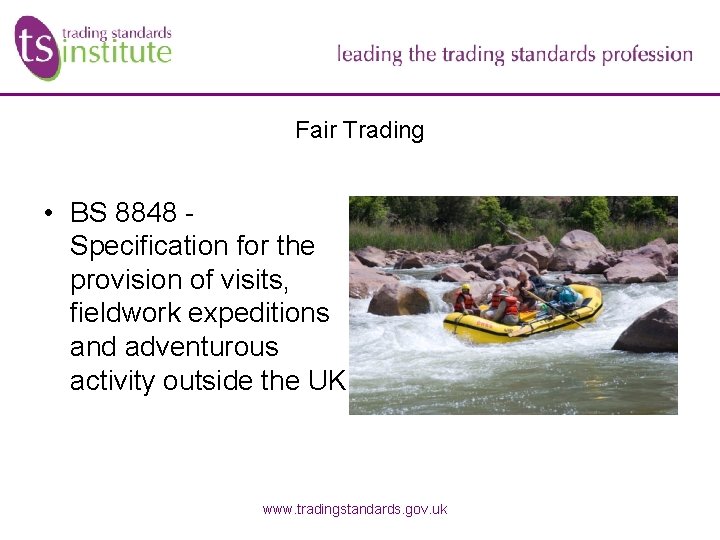
Fair Trading • BS 8848 Specification for the provision of visits, fieldwork expeditions and adventurous activity outside the UK www. tradingstandards. gov. uk
• Standards www. tradingstandards. gov. uk
ROLE OF STANDARDS IN COURT Gordon Hayward M. E. W. I. consumersafetyexpert. net
ROLE OF STANDARDS IN COURT Gordon Hayward M. E. W. I. consumersafetyexpert. net
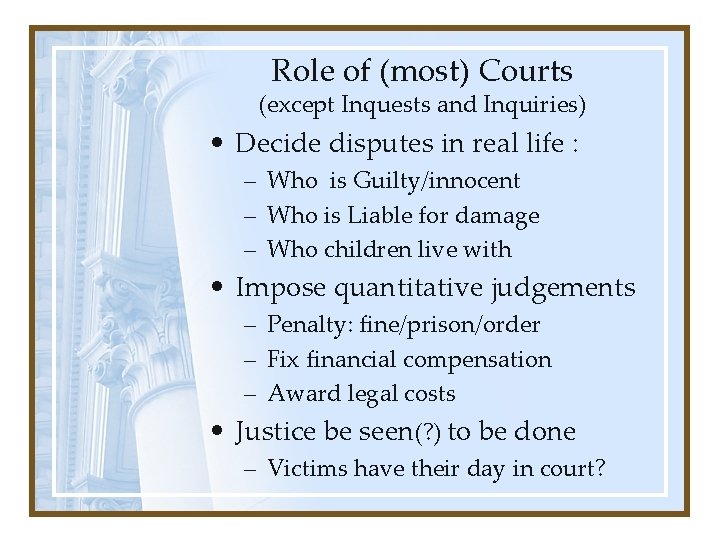
Role of (most) Courts (except Inquests and Inquiries) • Decide disputes in real life : – Who is Guilty/innocent – Who is Liable for damage – Who children live with • Impose quantitative judgements – Penalty: fine/prison/order – Fix financial compensation – Award legal costs • Justice be seen(? ) to be done – Victims have their day in court?
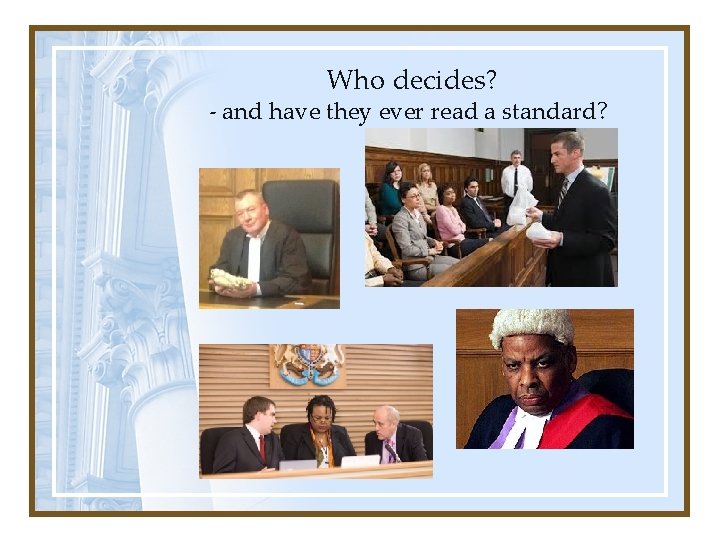
Who decides? - and have they ever read a standard?
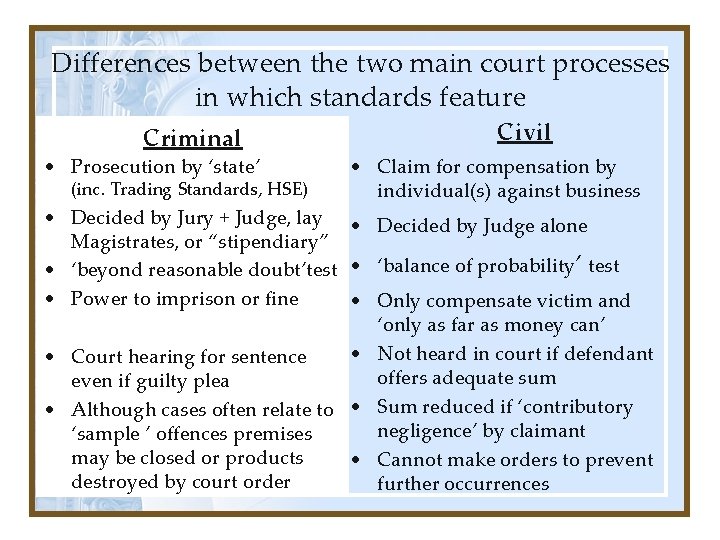
Differences between the two main court processes in which standards feature Criminal • Prosecution by ‘state’ (inc. Trading Standards, HSE) Civil • Claim for compensation by individual(s) against business • Decided by Jury + Judge, lay • Decided by Judge alone Magistrates, or “stipendiary” • ‘beyond reasonable doubt’test • ‘balance of probability’ test • Power to imprison or fine • Only compensate victim and ‘only as far as money can’ • Not heard in court if defendant • Court hearing for sentence offers adequate sum even if guilty plea • Although cases often relate to • Sum reduced if ‘contributory negligence’ by claimant ‘sample ’ offences premises may be closed or products • Cannot make orders to prevent destroyed by court order further occurrences
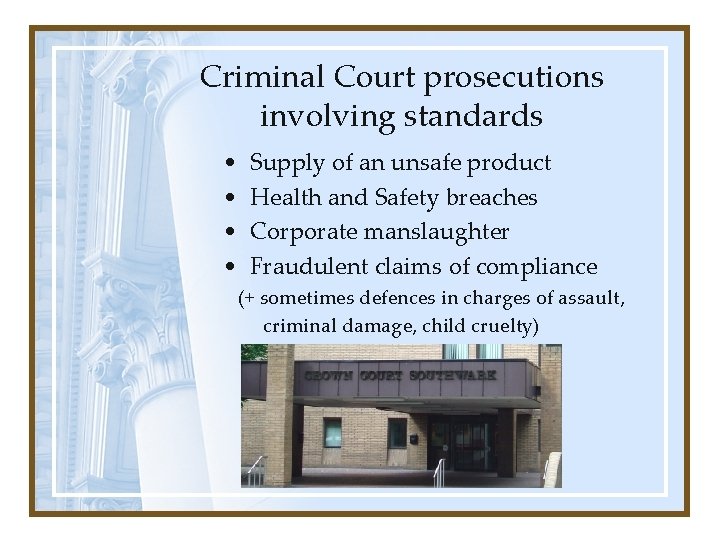
Criminal Court prosecutions involving standards • • Supply of an unsafe product Health and Safety breaches Corporate manslaughter Fraudulent claims of compliance (+ sometimes defences in charges of assault, criminal damage, child cruelty)
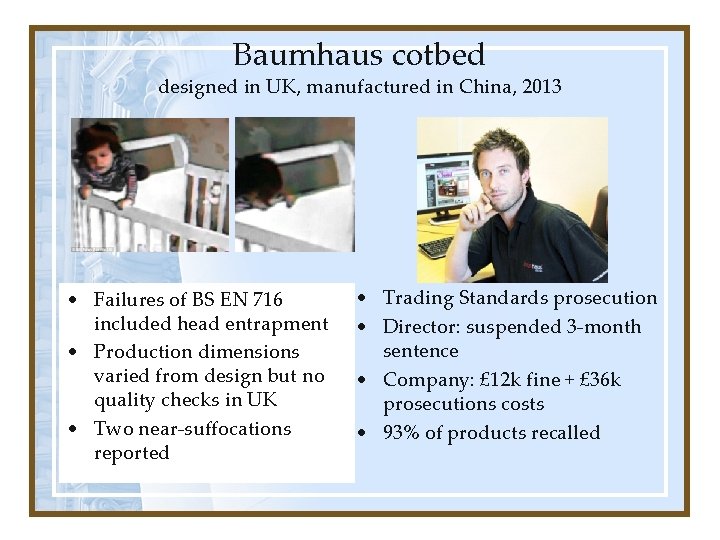
Baumhaus cotbed designed in UK, manufactured in China, 2013 • Failures of BS EN 716 included head entrapment • Production dimensions varied from design but no quality checks in UK • Two near-suffocations reported • Trading Standards prosecution • Director: suspended 3 -month sentence • Company: £ 12 k fine + £ 36 k prosecutions costs • 93% of products recalled
How standards influence prosecutions • Grounds for conviction/defence - Conformity to standard effectively mandatory to meet law/gives presumption of compliance - Standard taken as indicating minimum level (but not means) of protection required by law • The more clauses and samples are failed: - greater likelihood of prosecution/conviction - heavier the sentence …. . but - Courts also take into account evidence of the serious potential consequences – ie increased likelihood or severity of injury (not just a technical breach of min level or wording)
Standards in civil court cases
Civil Court claims involving safety standards • Injury/loss compensation claims: – Product Liability Directive – Sale of Goods Act – Employers Liability (defective equipment) – Occupiers Liability – Package Travel Regulations (local standards apply!) – Common Law tort of negligence where any duty of care exists
Non-injury civil damages claims where standards could be involved • Quality of goods or services (B-to-B or B-to-C): – to standards specified in contract – implied by mention of standards in advertising or verbally – in order to be fit for purpose • Nuisance (eg noise or pollution) • Duty of security or confidentiality • Provision of access facilities (disability discrimination) • Judicial review of decision by a public body
Legal tests for civil liability Strict/no-fault liability (based on legislation) Negligence (based on legal precedents) • A defect or inadequacy in care compared to provision compared to reasonable expectations what should be expected or foreseeability • The defect caused the • The lack of care caused claimed harm/loss. the claimed harm/loss. • The Defendant was the • The lack of care resulted provider from the fault (act or • Specific legislation makes omission) of the providers liable to such Defendant person/body claimants for such loss
How standards influence civil liability claims • Evidence of safety/protection expected – non-conformity may be judged a defect or • Evidence of what care expected – non-conformity may be judged negligence BUT • This Court only interested in non-conformities likely to have increased the risk or severity of the injury (or loss) actually suffered by the claimant. (Other defects or negligence irrelevant to case. )
EXPERT WITNESSES
Need for independent expert witnesses • Lawyers are expected to argue points of interpretation of laws in court, but disputed technical issues need to be presented to judge or jury as evidence (ie from witnesses). • Enforcement officers, defendants and Claimants may understand the technical issues, and give evidence of what they saw or did but have interests in the case. • Judges, magistrates (and especially juries) lack background knowledge required to decide when technical issues are disputed
Legal expectations of independent experts • In theory the only witnesses allowed to express (reasoned) opinions in Court • Each party to a case usually engages an expert, but their overriding duty is to give impartial views to the Court. • Usually have some professional qualification but relevant experience or perspective more important in practice. • Don’t need to be greatest authority in a field but must acknowledge limits of their own expertise or experience.
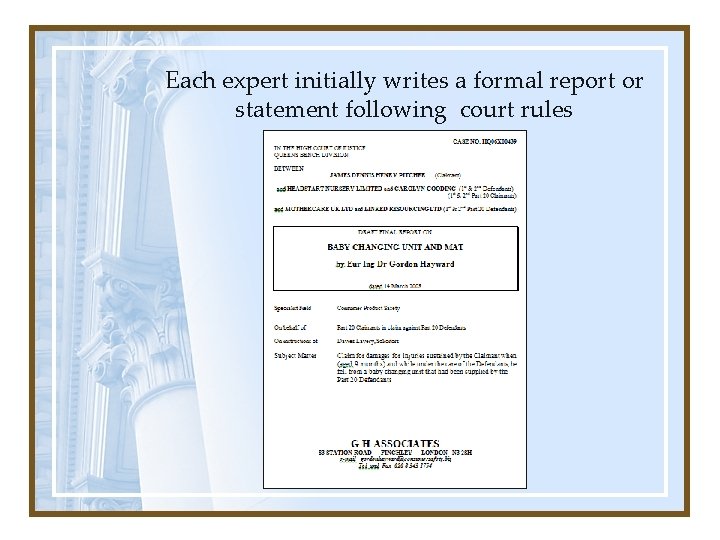
Each expert initially writes a formal report or statement following court rules
Expert reports may need to explain: • which standards apply to the product/ service and to what extent conformity is expected in the circumstances. • which clauses are relevant to the case: – because there may have been non-conformity. – because non-conformity could support the prosecution or claimant’s case • from available test reports, own examination or other evidence give their reasoned opinion whether the relevant clauses were conformed to and the effect.
Range of expert opinion • Court rules require an expert to indicate when they are aware of a range of views on an issue within their specialty…but • Standard requirements can be argued to be the consensus view of the national experts appointed to the drafting WG as to the level of safety expected of products within that standard’s scope.
HOW STANDARDS EVIDENCE IS PRESENTED
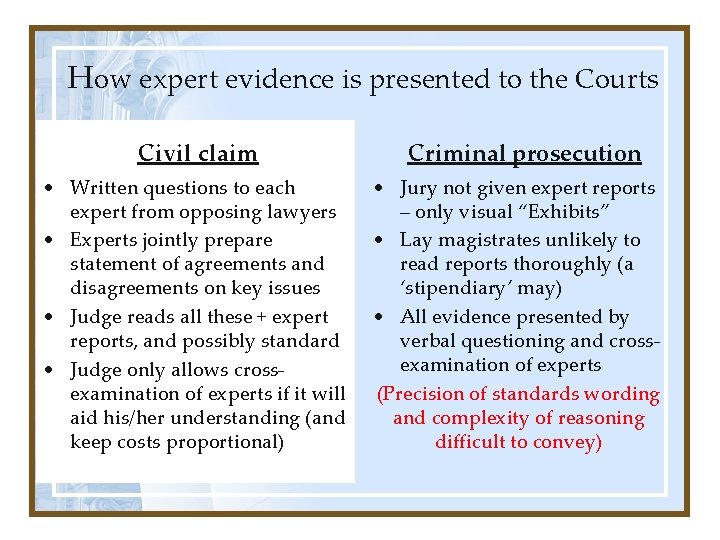
How expert evidence is presented to the Courts Civil claim • Written questions to each expert from opposing lawyers • Experts jointly prepare statement of agreements and disagreements on key issues • Judge reads all these + expert reports, and possibly standard • Judge only allows crossexamination of experts if it will aid his/her understanding (and keep costs proportional) Criminal prosecution • Jury not given expert reports – only visual “Exhibits” • Lay magistrates unlikely to read reports thoroughly (a ‘stipendiary’ may) • All evidence presented by verbal questioning and crossexamination of experts (Precision of standards wording and complexity of reasoning difficult to convey)
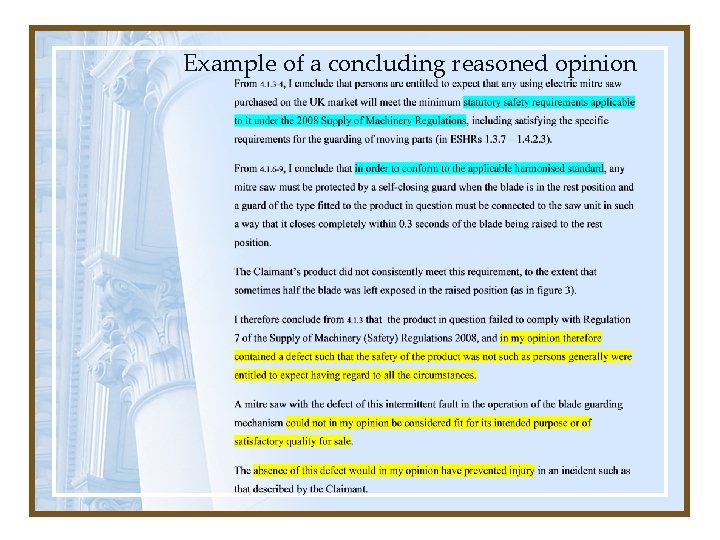
Example of a concluding reasoned opinion
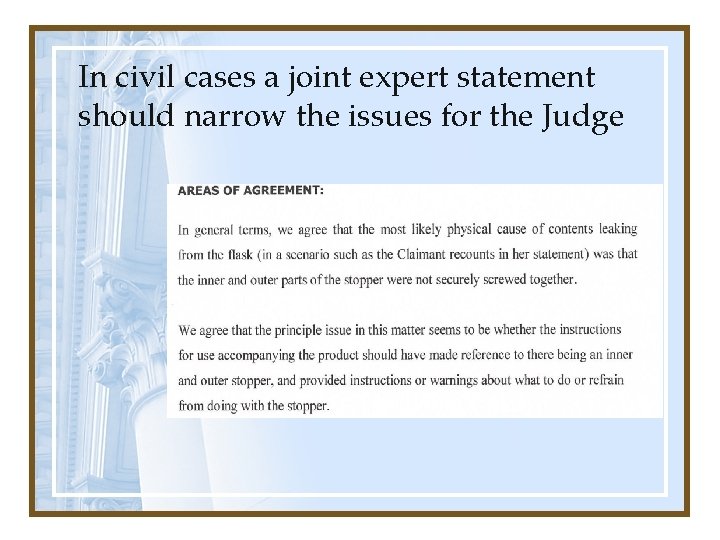
In civil cases a joint expert statement should narrow the issues for the Judge
In prosecutions technical reasons summarised in table/image exhibits are less easily misunderstood
TWO POINTS TO REMEMBER 1. Courts need to know reasons for requirements in standards: This need not mean an Annex giving rationales for each test method and pass criterion Simply beginning each clause by saying what hazard or type of human behaviour/error the requirement is aimed at protecting against.
2 nd point to remember Specifying warnings and instructions is less effective at preventing injuries than designing out hazards … but because warning of non-obvious hazards is generally a statutory requirement and… because judges and juries can usually see for themselves whether a specific warning was present… omissions of warnings cases are very difficult for Defendants to win in Court
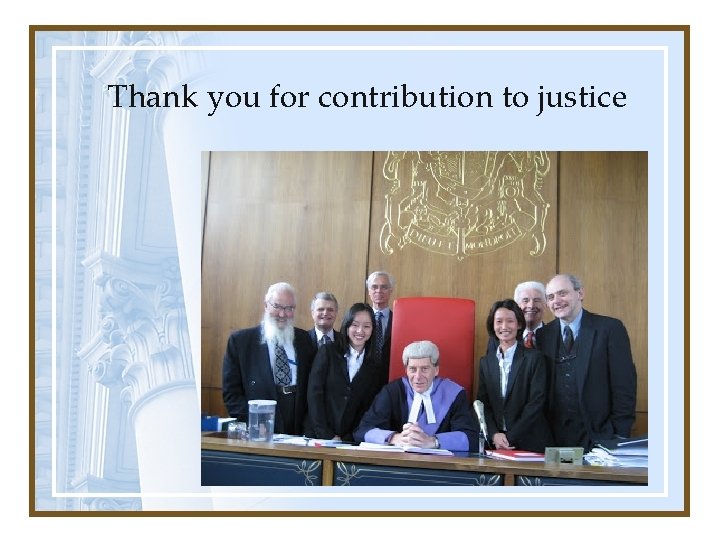
Thank you for contribution to justice
Sue Metham • Summer update • Consumer intern Joanna Rutt
New Consumer Intern Joanna Rutt • Joanna started 29 June • Working in Standards Policy department as consumer intern for 10 weeks • Student Mechanical Engineering degree • Projects involve contacting CPIN members • Helping with processes, website, recruitment • Database of skills, knowledge, background
Thank you for listening. . Visit: bsigroup. com/consumer Email: consumer@bsigroup. com Call: +44 (0)20 8996 7085 Write to: Consumer & Public Interest Unit 389 Chiswick High Road London W 4 4 AL United Kingdom . . any questions? 27/02/2021