
Standardized Observation of How Teachers Effectively Manage Behavior
Standardized Observation of How Teachers Effectively Manage Behavior in Pre-K Classrooms Ameena Sweeting Mentors: Dr. Jason Downer and Dr. Bridget Hamre University of Virginia July 2008 NCRECE
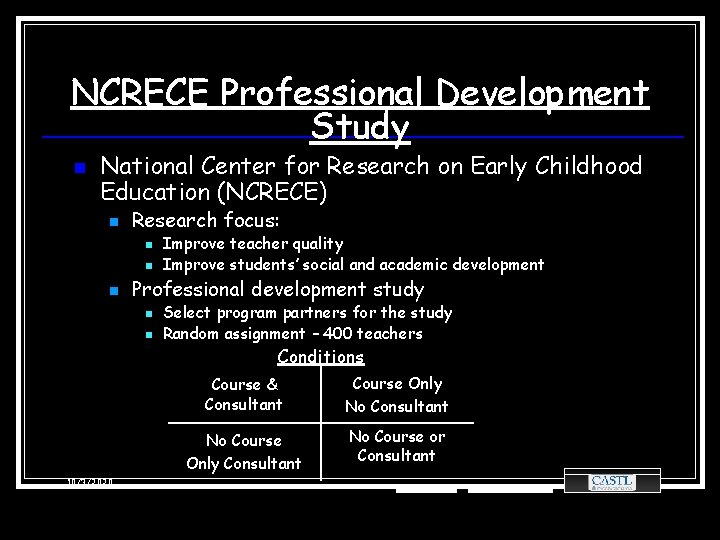
NCRECE Professional Development Study n National Center for Research on Early Childhood Education (NCRECE) n Research focus: n n n Improve teacher quality Improve students’ social and academic development Professional development study n n Select program partners for the study Random assignment – 400 teachers Conditions 10/3/2020 Course & Consultant Course Only No Consultant No Course Only Consultant No Course or Consultant NCRECE
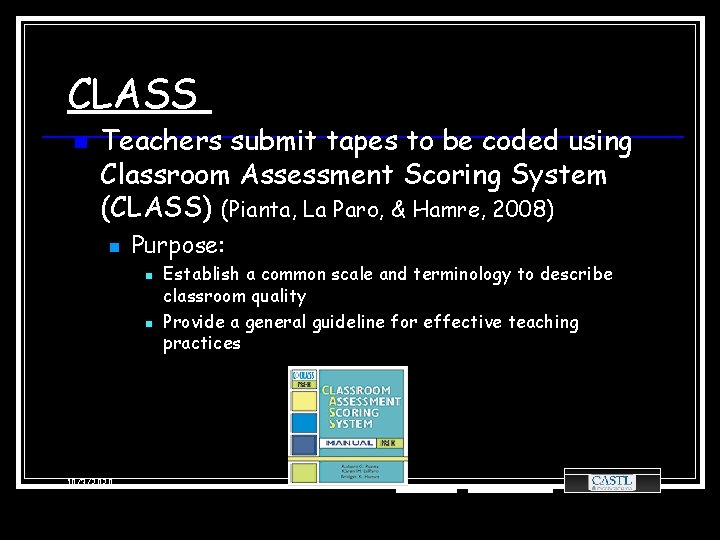
CLASS n Teachers submit tapes to be coded using Classroom Assessment Scoring System (CLASS) (Pianta, La Paro, & Hamre, 2008) n Purpose: n n 10/3/2020 Establish a common scale and terminology to describe classroom quality Provide a general guideline for effective teaching practices NCRECE
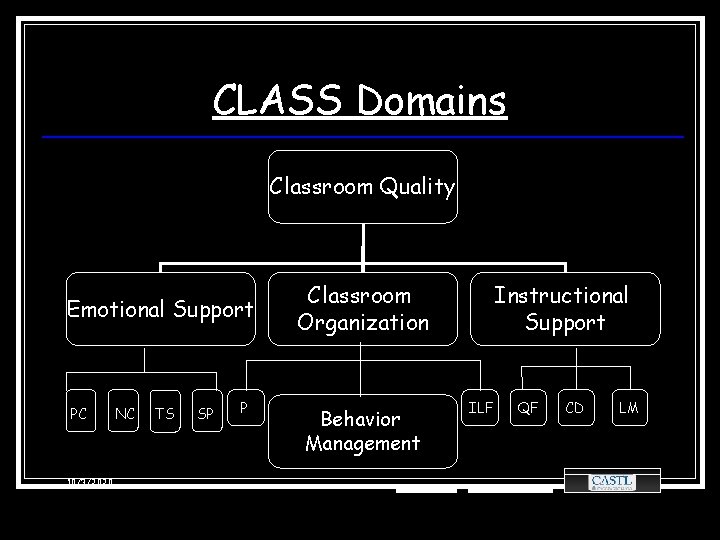
CLASS Domains Classroom Quality Emotional Support PC 10/3/2020 NC TS SP P Classroom Organization Behavior Management Instructional Support ILF QF CD LM NCRECE
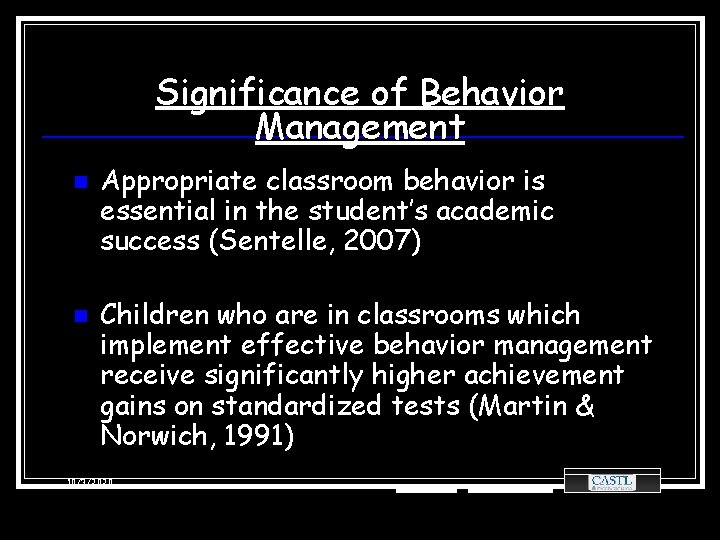
Significance of Behavior Management n n Appropriate classroom behavior is essential in the student’s academic success (Sentelle, 2007) Children who are in classrooms which implement effective behavior management receive significantly higher achievement gains on standardized tests (Martin & Norwich, 1991) 10/3/2020 NCRECE

Behavior Management (BM) n n Teacher’s ability to establish and implement clear behavioral expectations and prevent and redirect misbehavior (Pianta, La Paro, Hamre, 2008) Scores from 1 -7 were given based on the following indicators: n n 10/3/2020 Clear behavior expectations Proactive Redirection of misbehavior Student behavior NCRECE
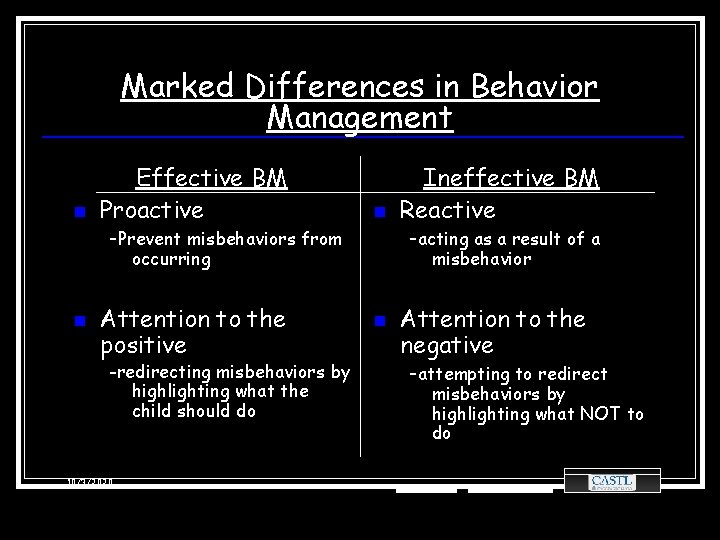
Marked Differences in Behavior Management n Effective BM Proactive n -Prevent misbehaviors from -acting as a result of a occurring n Attention to the positive -redirecting misbehaviors by highlighting what the child should do 10/3/2020 Ineffective BM Reactive misbehavior n Attention to the negative -attempting to redirect misbehaviors by highlighting what NOT to do NCRECE
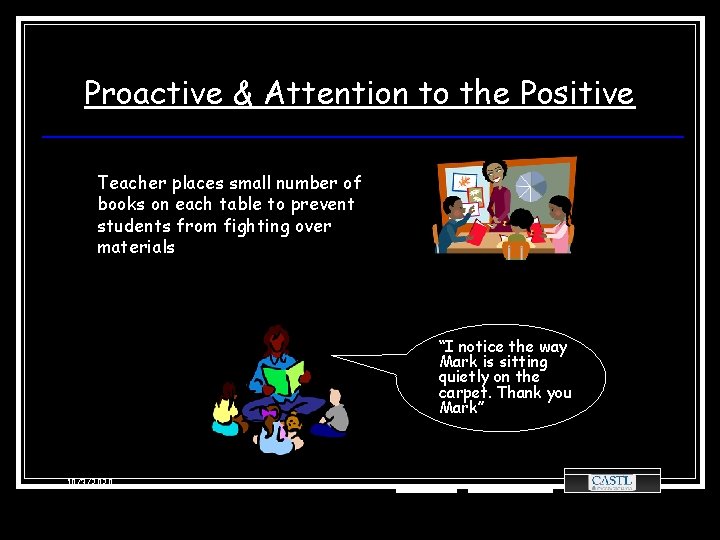
Proactive & Attention to the Positive Teacher places small number of books on each table to prevent students from fighting over materials “I notice the way Mark is sitting quietly on the carpet. Thank you Mark” 10/3/2020 NCRECE
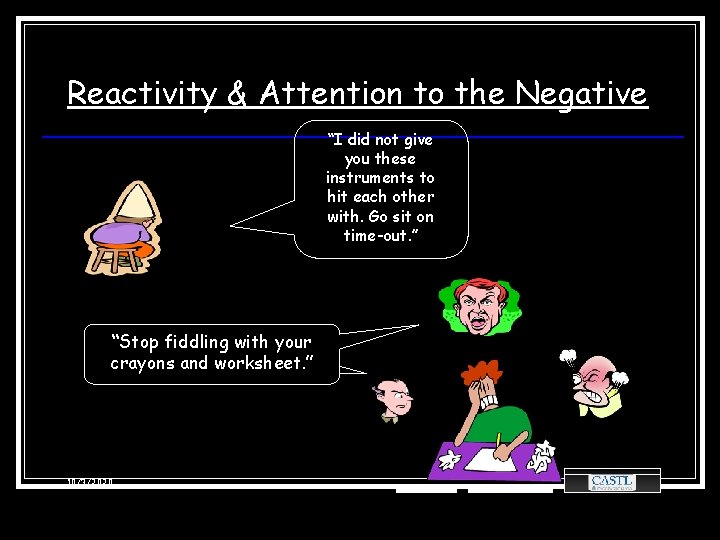
Reactivity & Attention to the Negative “I did not give you these instruments to hit each other with. Go sit on time-out. ” “Stop fiddling with your crayons and worksheet. ” 10/3/2020 NCRECE
Future Research n What are the long term effects of behavior management on a student’s behavior problems in the future? n n 10/3/2020 Differences in proactive and reactive teaching styles Influence of reactivity on the development of a child’s self-regulation ability NCRECE
Acknowledgements Mentors Dr. Jason Downer and Dr. Bridget Hamre Co-mentors Anne Henry, Terri Walters, Tess Krovetz CASTL UVA Curry School of Education RPES – SURP students Leadership Alliance 10/3/2020 NCRECE
- Slides: 11