
Standardization and Grading Standards grades and regulations Indications
- Slides: 11
Standardization and Grading • Standards, grades, and regulations • Indications of food quality • Content and labeling requirements • Grading MKTG 442 STANDARDIZATION AND GRADING Lars Perner, Instructor
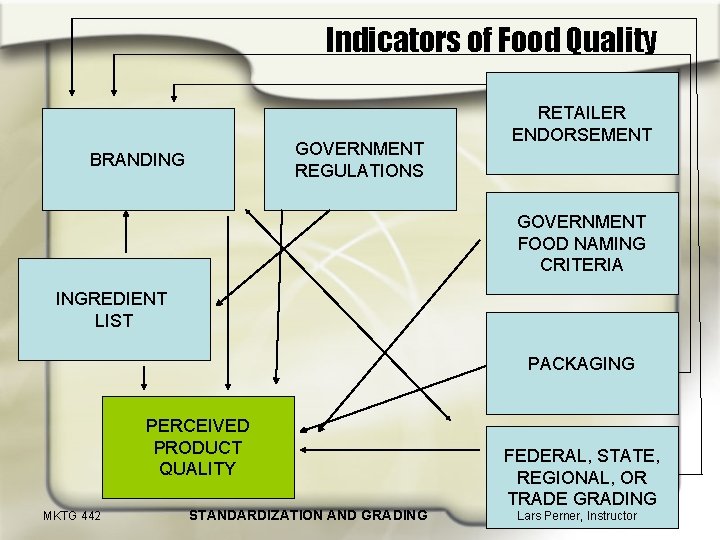
Indicators of Food Quality GOVERNMENT REGULATIONS BRANDING RETAILER ENDORSEMENT GOVERNMENT FOOD NAMING CRITERIA INGREDIENT LIST PACKAGING PERCEIVED PRODUCT QUALITY MKTG 442 STANDARDIZATION AND GRADING FEDERAL, STATE, REGIONAL, OR TRADE GRADING Lars Perner, Instructor
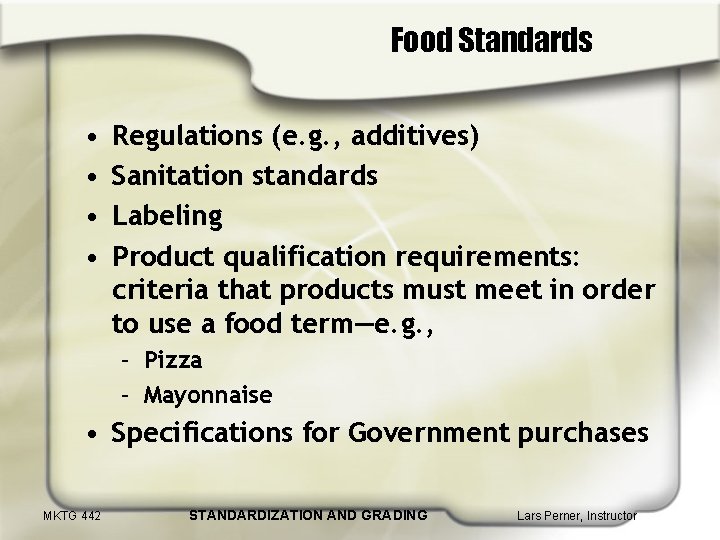
Food Standards • • Regulations (e. g. , additives) Sanitation standards Labeling Product qualification requirements: criteria that products must meet in order to use a food term—e. g. , – Pizza – Mayonnaise • Specifications for Government purchases MKTG 442 STANDARDIZATION AND GRADING Lars Perner, Instructor
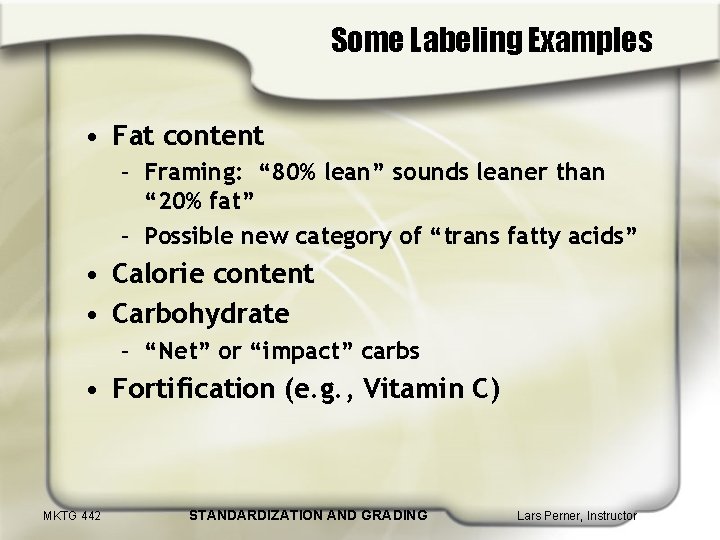
Some Labeling Examples • Fat content – Framing: “ 80% lean” sounds leaner than “ 20% fat” – Possible new category of “trans fatty acids” • Calorie content • Carbohydrate – “Net” or “impact” carbs • Fortification (e. g. , Vitamin C) MKTG 442 STANDARDIZATION AND GRADING Lars Perner, Instructor
Some Content Standards Examples • Beef stew • Chili con carne • Hamburger, ground beef • Pizza with sausage • Chicken soup MKTG 442 STANDARDIZATION AND GRADING Lars Perner, Instructor
Grading • Dividing disparate products within a product category into uniform sub-categories—e. g. , – Butter: AA, A, B C – Eggs: AA, A, B – Beef: USDA Prime, USDA Choice, USDA Select, USDA Standard – Potatoes: U. S. Extra No. 1, U. S. No. 1 • Benefits – – Consumer information Clear commercial transactions Futures contracts Poolability of products in shipments • 235 Federal grades MKTG 442 STANDARDIZATION AND GRADING Lars Perner, Instructor
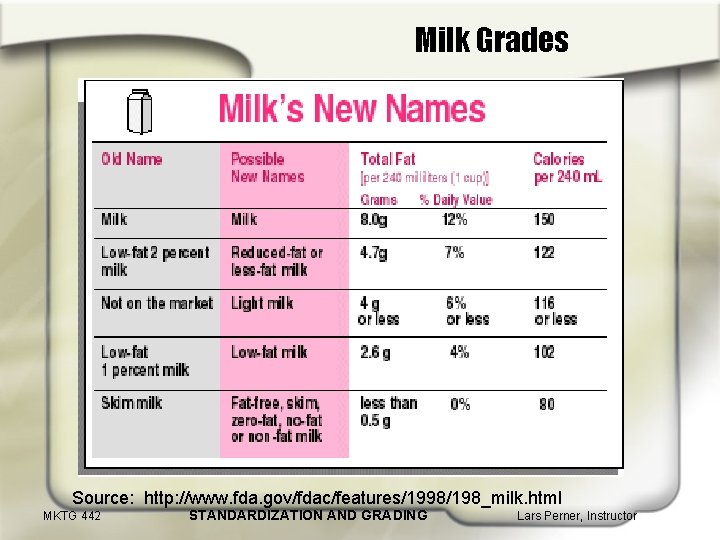
Milk Grades Source: http: //www. fda. gov/fdac/features/1998/198_milk. html MKTG 442 STANDARDIZATION AND GRADING Lars Perner, Instructor
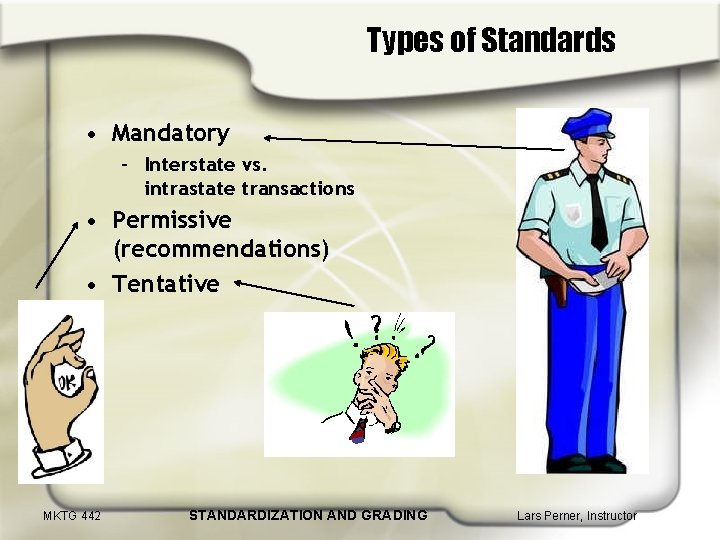
Types of Standards • Mandatory – Interstate vs. intrastate transactions • Permissive (recommendations) • Tentative MKTG 442 STANDARDIZATION AND GRADING Lars Perner, Instructor
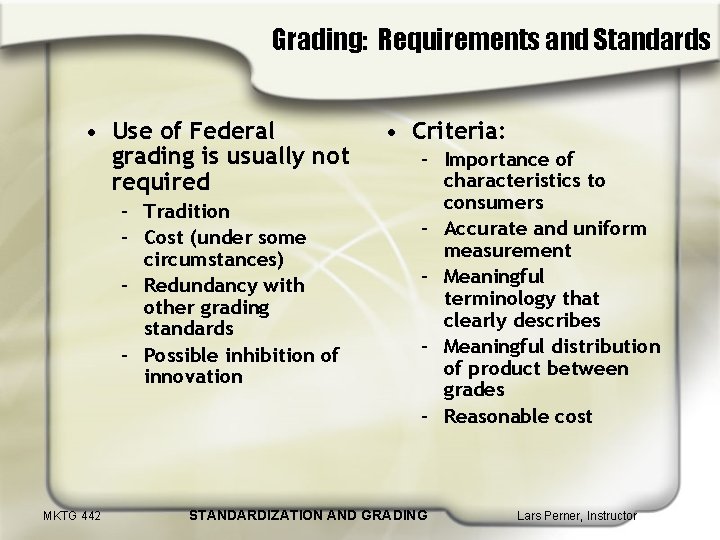
Grading: Requirements and Standards • Use of Federal grading is usually not required – Tradition – Cost (under some circumstances) – Redundancy with other grading standards – Possible inhibition of innovation MKTG 442 • Criteria: – Importance of characteristics to consumers – Accurate and uniform measurement – Meaningful terminology that clearly describes – Meaningful distribution of product between grades – Reasonable cost STANDARDIZATION AND GRADING Lars Perner, Instructor
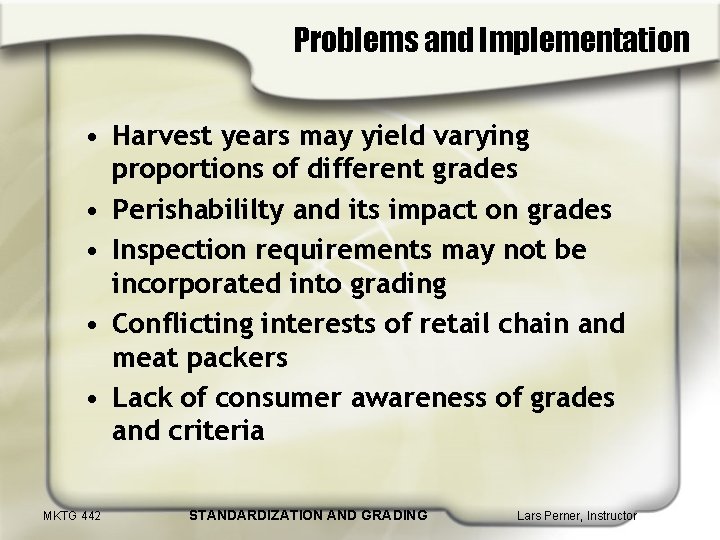
Problems and Implementation • Harvest years may yield varying proportions of different grades • Perishabililty and its impact on grades • Inspection requirements may not be incorporated into grading • Conflicting interests of retail chain and meat packers • Lack of consumer awareness of grades and criteria MKTG 442 STANDARDIZATION AND GRADING Lars Perner, Instructor
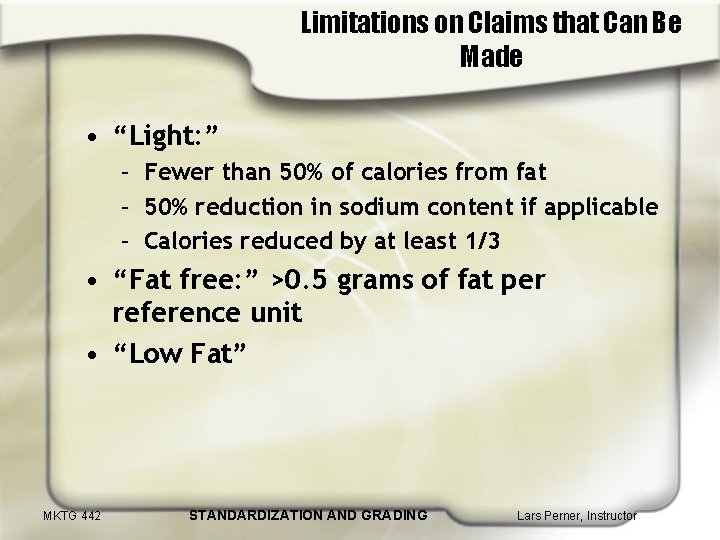
Limitations on Claims that Can Be Made • “Light: ” – Fewer than 50% of calories from fat – 50% reduction in sodium content if applicable – Calories reduced by at least 1/3 • “Fat free: ” >0. 5 grams of fat per reference unit • “Low Fat” MKTG 442 STANDARDIZATION AND GRADING Lars Perner, Instructor