
Standardisation of Auto Sampler cum Sample Preparation Unit




- Slides: 17
Standardisation of Auto Sampler cum Sample Preparation Unit at Nandan Washery Dr R Dasgupta and Dr Kalyan Sen, 1999
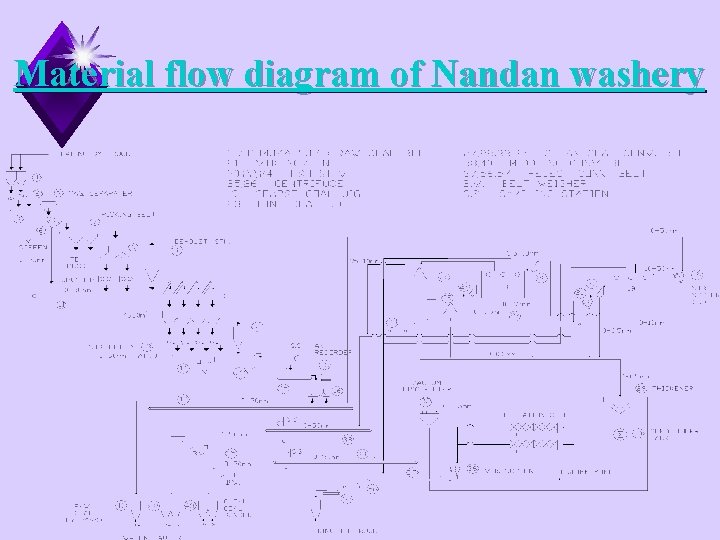
y r e h s a W n a d n Na Designed & Commissioned by M/S Voest-Alpine of Austria, 1984 3 -product Komag Jigs (Coarse & Fine Coals) Flotation Cleans to Bhilai Steel Plant for metallurgical use Sampler before the Storage cum Loading Bunker
Material flow diagram of Nandan washery
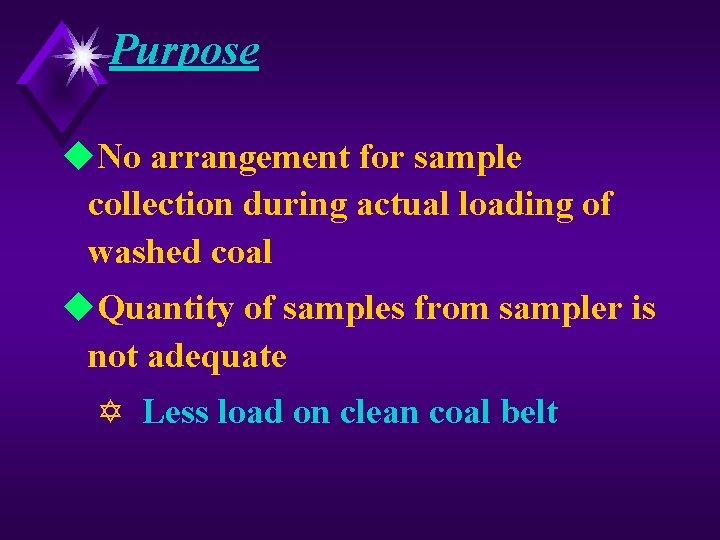
Purpose u. No arrangement for sample collection during actual loading of washed coal u. Quantity of samples from sampler is not adequate Y Less load on clean coal belt
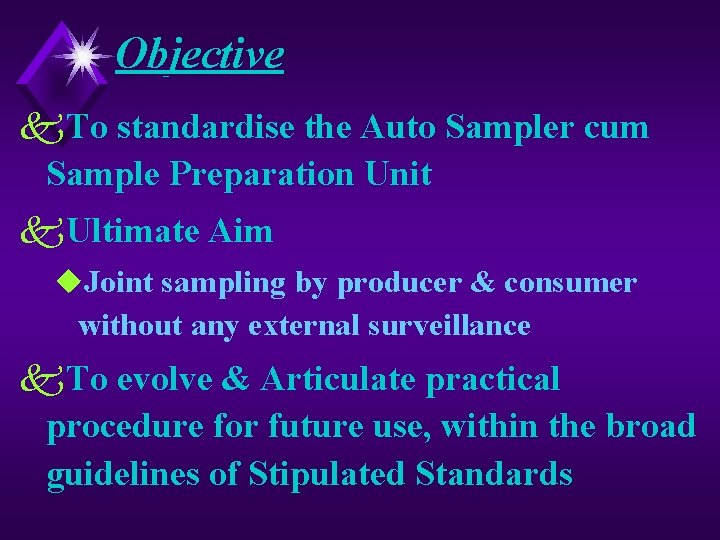
Objective k. To standardise the Auto Sampler cum Sample Preparation Unit k. Ultimate Aim u. Joint sampling by producer & consumer without any external surveillance k. To evolve & Articulate practical procedure for future use, within the broad guidelines of Stipulated Standards
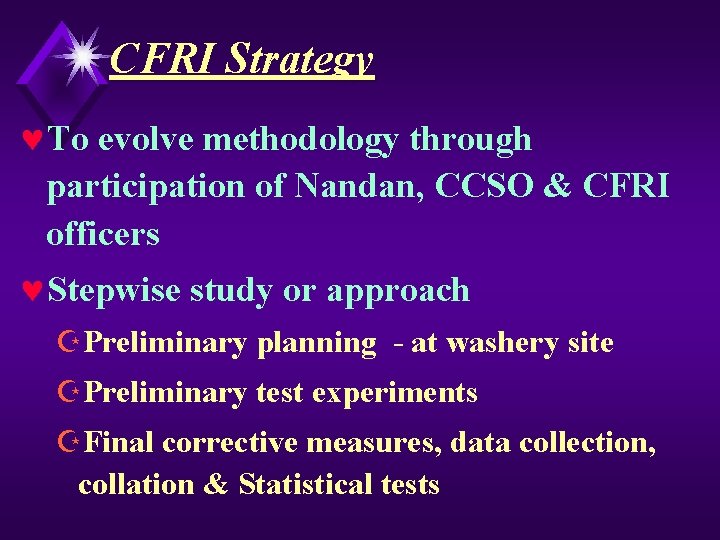
CFRI Strategy ©To evolve methodology through participation of Nandan, CCSO & CFRI officers ©Stepwise study or approach ZPreliminary planning - at washery site ZPreliminary test experiments ZFinal corrective measures, data collection, collation & Statistical tests
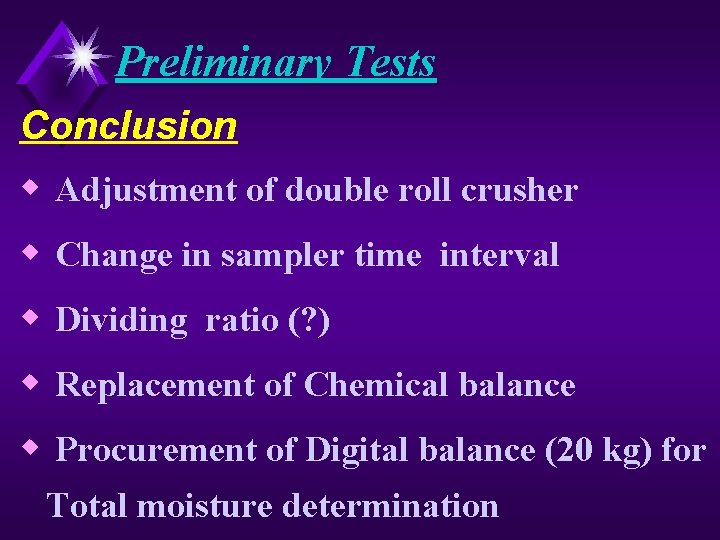
Preliminary Tests Conclusion w Adjustment of double roll crusher w Change in sampler time interval w Dividing ratio (? ) w Replacement of Chemical balance w Procurement of Digital balance (20 kg) for Total moisture determination
Test Methodology v Sample Collection and Preparation Z Sampling Points identification Z Sample collection & preparation < Ash < Total moisture
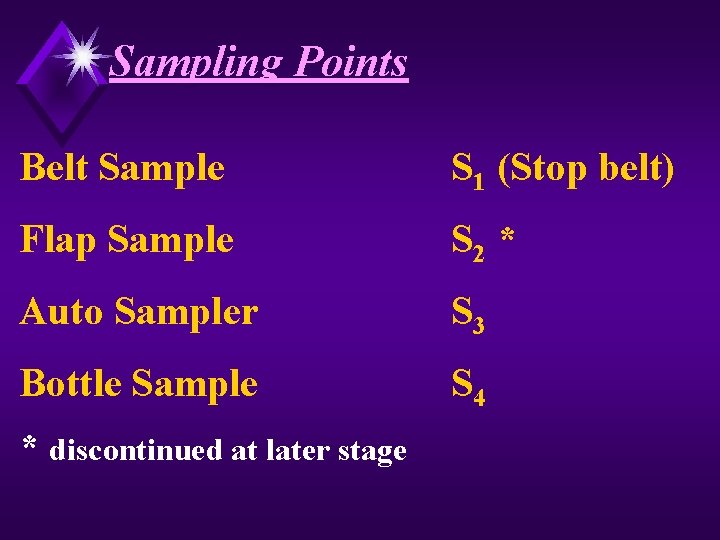
Sampling Points Belt Sample S 1 (Stop belt) Flap Sample S 2 * Auto Sampler S 3 Bottle Sample S 4 * discontinued at later stage
Sampler cum Sample Preparation S 3 S 1 S 4 S 2 - Flap
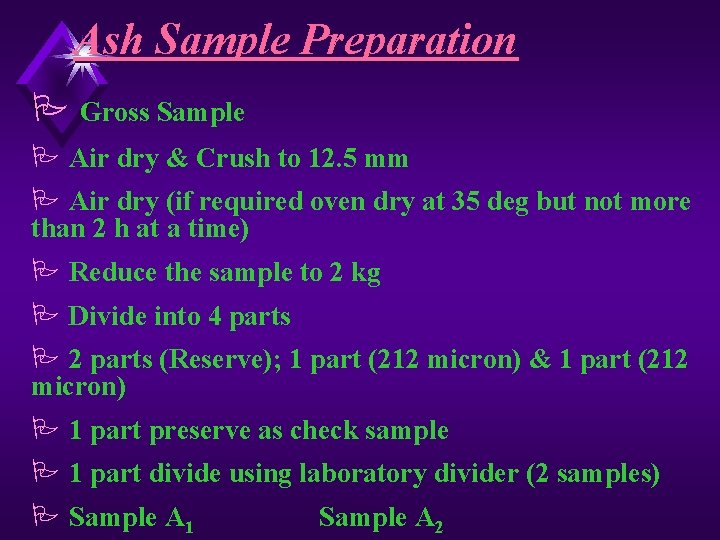
Ash Sample Preparation P Gross Sample P Air dry & Crush to 12. 5 mm P Air dry (if required oven dry at 35 deg but not more than 2 h at a time) P Reduce the sample to 2 kg P Divide into 4 parts P 2 parts (Reserve); 1 part (212 micron) & 1 part (212 micron) P 1 part preserve as check sample P 1 part divide using laboratory divider (2 samples) P Sample A 1 Sample A 2
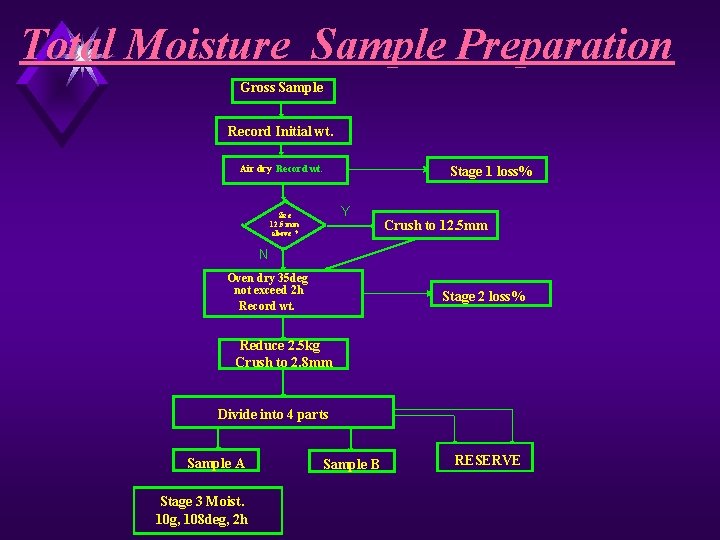
Total Moisture Sample Preparation Gross Sample Record Initial wt. Air dry Record wt. Stage 1 loss% Y Size 12. 5 mm above ? Crush to 12. 5 mm N Oven dry 35 deg not exceed 2 h Record wt. Stage 2 loss% Reduce 2. 5 kg Crush to 2. 8 mm Divide into 4 parts Sample A Stage 3 Moist. 10 g, 108 deg, 2 h Sample B RESERVE
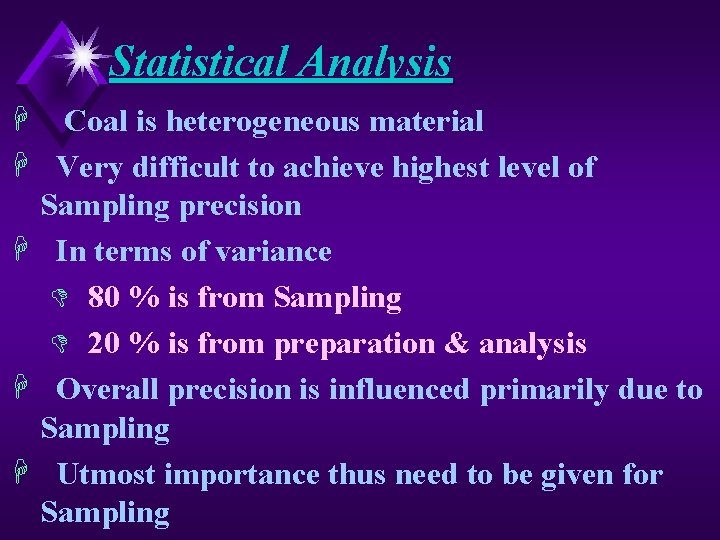
Statistical Analysis H Coal is heterogeneous material H Very difficult to achieve highest level of Sampling precision H In terms of variance D 80 % is from Sampling D 20 % is from preparation & analysis H Overall precision is influenced primarily due to Sampling H Utmost importance thus need to be given for Sampling
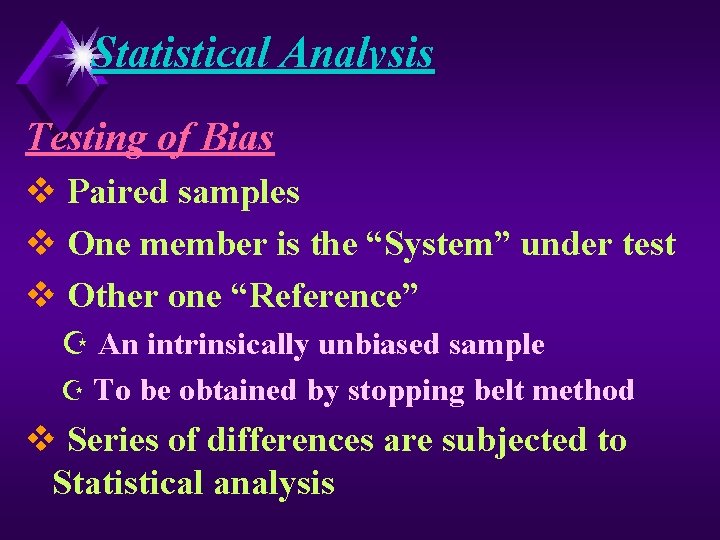
Statistical Analysis Testing of Bias v Paired samples v One member is the “System” under test v Other one “Reference” Z An intrinsically unbiased sample Z To be obtained by stopping belt method v Series of differences are subjected to Statistical analysis
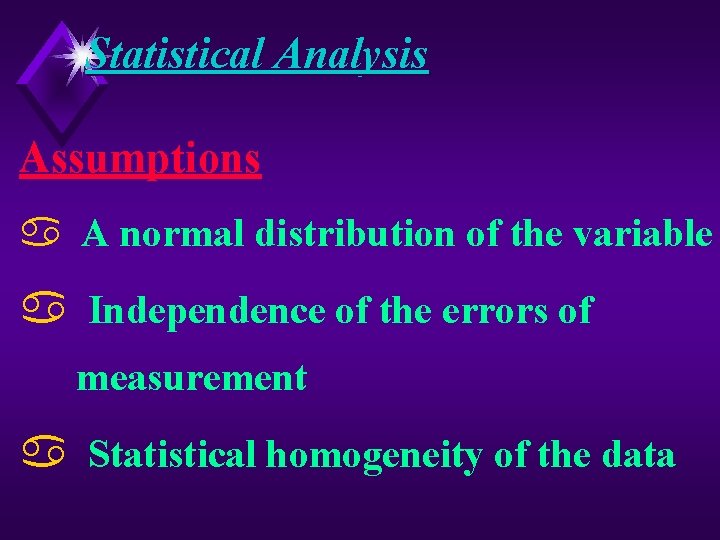
Statistical Analysis Assumptions a A normal distribution of the variable a Independence of the errors of measurement a Statistical homogeneity of the data
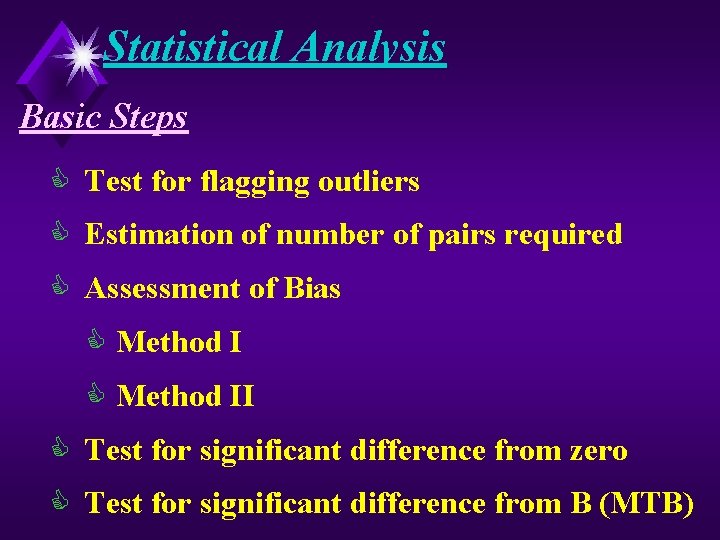
Statistical Analysis Basic Steps C Test for flagging outliers C Estimation of number of pairs required C Assessment of Bias C Method II C Test for significant difference from zero C Test for significant difference from B (MTB)
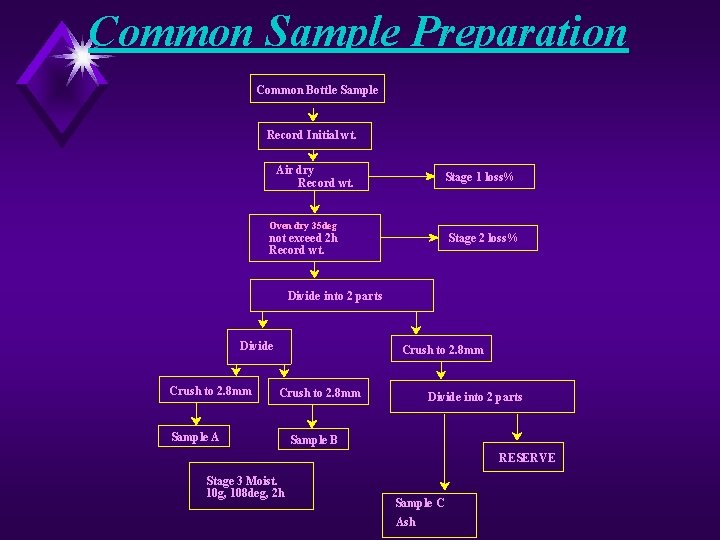
Common Sample Preparation Common Bottle Sample Record Initial wt. Air dry Record wt. Stage 1 loss% Oven dry 35 deg not exceed 2 h Record wt. Stage 2 loss% Divide into 2 parts Divide Crush to 2. 8 mm Sample A Divide into 2 parts Sample B RESERVE Stage 3 Moist. 10 g, 108 deg, 2 h Sample C Ash