
STANDARD ENGLISH VS NONSTANDARD PARTS OF A SENTENCE






- Slides: 12
STANDARD ENGLISH VS. NONSTANDARD PARTS OF A SENTENCE AND SUBJECT-VERB 6/9/15
AGENDA ❖Homework review ❖Subject-verb agreement ❖Standard vs. nonstandard English (WILL PROBABLY COVER THURSDAY TO FOCUS ON SUBJECT-VERB AGREEMENT TONIGHT) ❖PLEASE TURN IN WORKPLACE SCENARIOS TO ME EITHER VIA EMAIL OR HARD COPY TONIGHT OR TOMORROW!
HOMEWORK REVIEW 1. Switch letters with someone in the room. 2. Read over your new letter. 3. Mark any confusing, redundant, or meaningless words and phrases. 4. Make suggestions for how your letter might be improved. 5. Return the letter to its owner. 6. Hand in your letter to me so that I can make comments for you.
SUBJECT-VERB AGREEMENT Intro Video
BASIC RULES OF SUBJECTVERB AGREEMENT ❖A singular noun MUST be paired with a singular verb ❖Singular verbs often end in –s which seems counter-intuitive. ❖Example: My cat has fleas. (Cat=singular subject, has=singular verb) ❖A plural noun MUST be paired with a plural verb ❖My cats have fleas. (Cats=plural subject, have=plural verb)
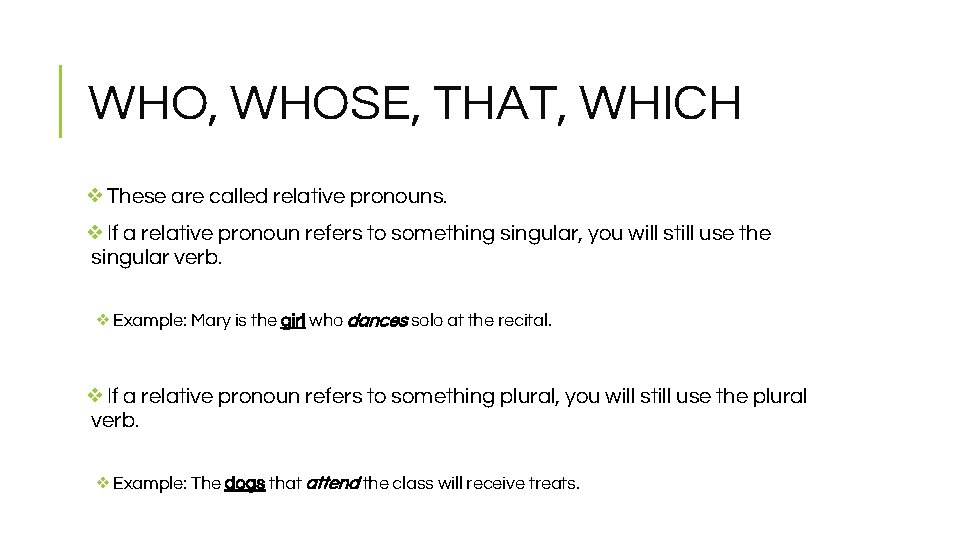
WHO, WHOSE, THAT, WHICH ❖These are called relative pronouns. ❖If a relative pronoun refers to something singular, you will still use the singular verb. ❖Example: Mary is the girl who dances solo at the recital. ❖If a relative pronoun refers to something plural, you will still use the plural verb. ❖Example: The dogs that attend the class will receive treats.
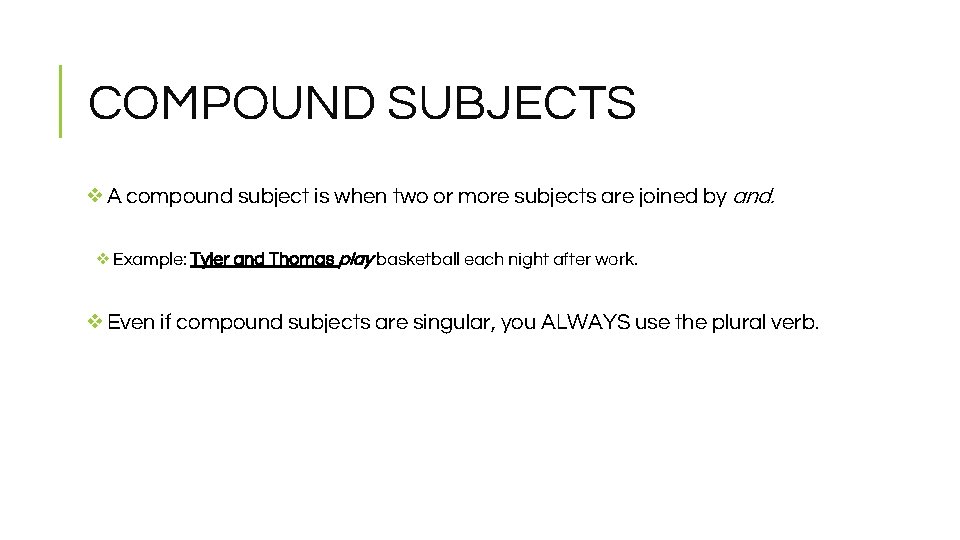
COMPOUND SUBJECTS ❖A compound subject is when two or more subjects are joined by and. ❖Example: Tyler and Thomas play basketball each night after work. ❖Even if compound subjects are singular, you ALWAYS use the plural verb.
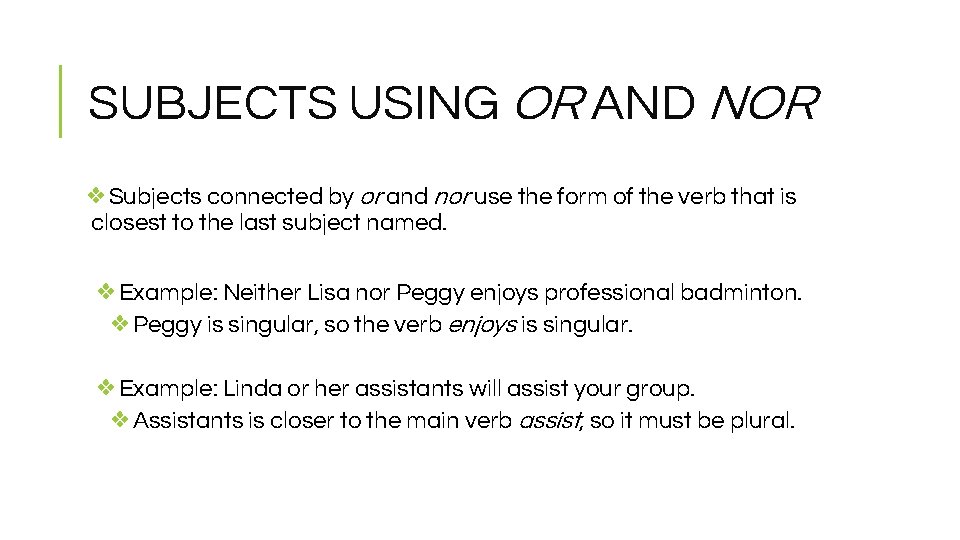
SUBJECTS USING OR AND NOR ❖Subjects connected by or and nor use the form of the verb that is closest to the last subject named. ❖Example: Neither Lisa nor Peggy enjoys professional badminton. ❖Peggy is singular, so the verb enjoys is singular. ❖Example: Linda or her assistants will assist your group. ❖Assistants is closer to the main verb assist, so it must be plural.
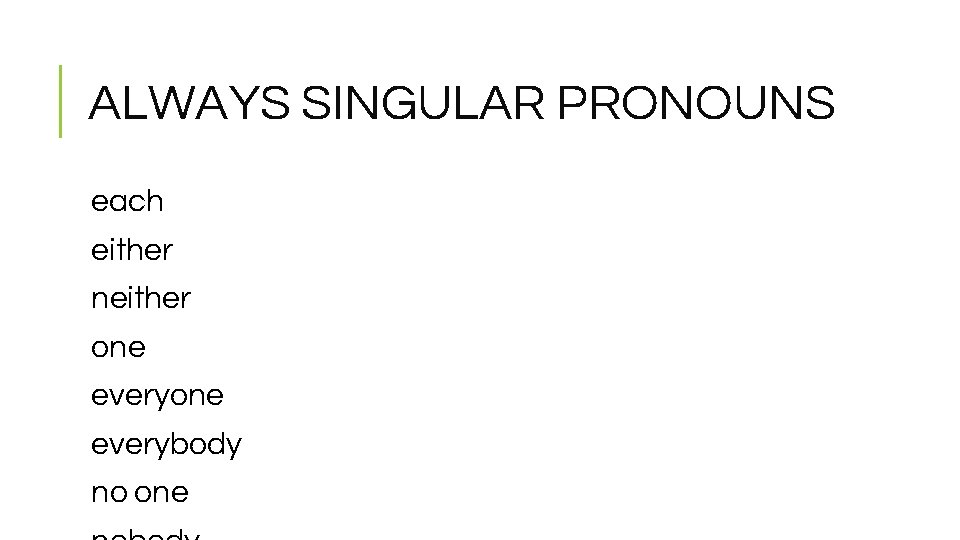
ALWAYS SINGULAR PRONOUNS each either neither one everybody no one
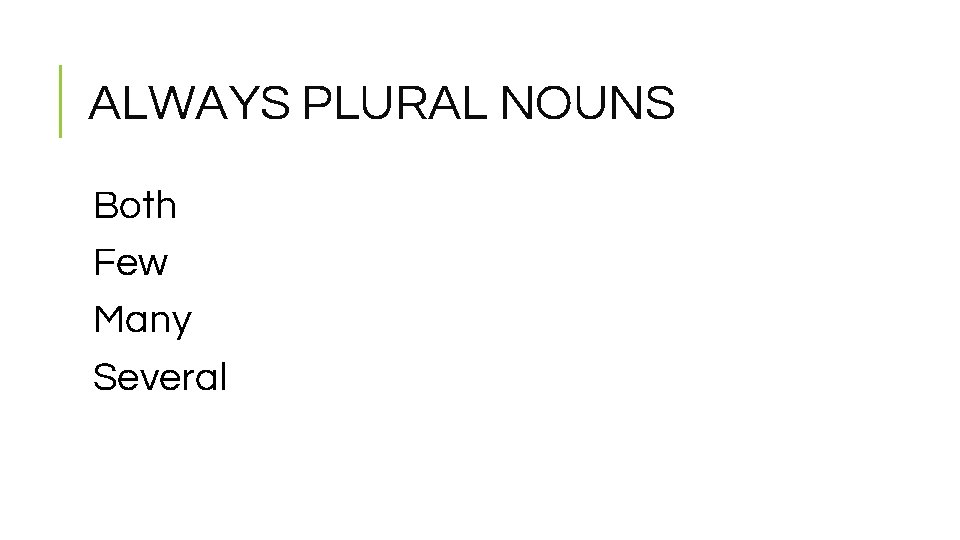
ALWAYS PLURAL NOUNS Both Few Many Several
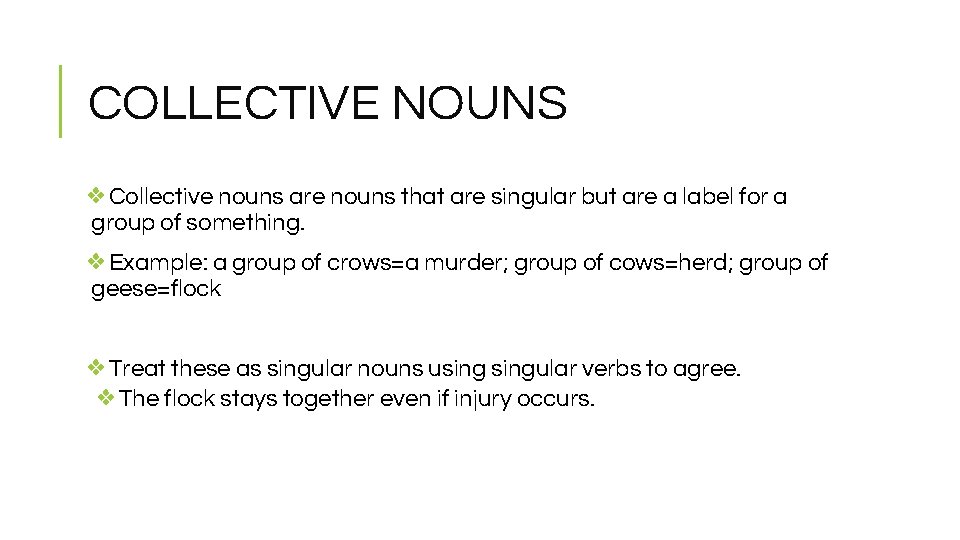
COLLECTIVE NOUNS ❖Collective nouns are nouns that are singular but are a label for a group of something. ❖Example: a group of crows=a murder; group of cows=herd; group of geese=flock ❖Treat these as singular nouns usingular verbs to agree. ❖The flock stays together even if injury occurs.
HOMEWORK Finish subject-verb agreement packet.