
Standard Energy Audit Manual for Government Buildings Presentation
Standard Energy Audit Manual for Government Buildings Presentation at workshop on Energy Efficient Procurement September 20, 2005 IIEC Technical support by Sudnya Industrial Systems Pvt. Ltd.
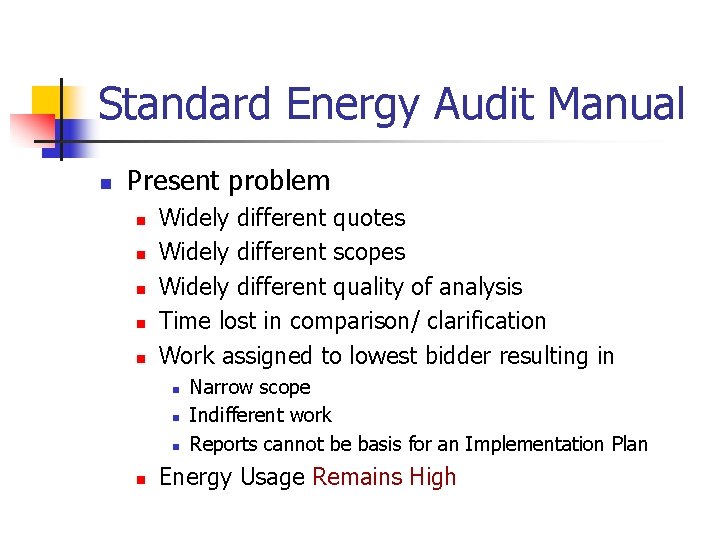
Standard Energy Audit Manual n Present problem n n n Widely different quotes Widely different scopes Widely different quality of analysis Time lost in comparison/ clarification Work assigned to lowest bidder resulting in n n Narrow scope Indifferent work Reports cannot be basis for an Implementation Plan Energy Usage Remains High
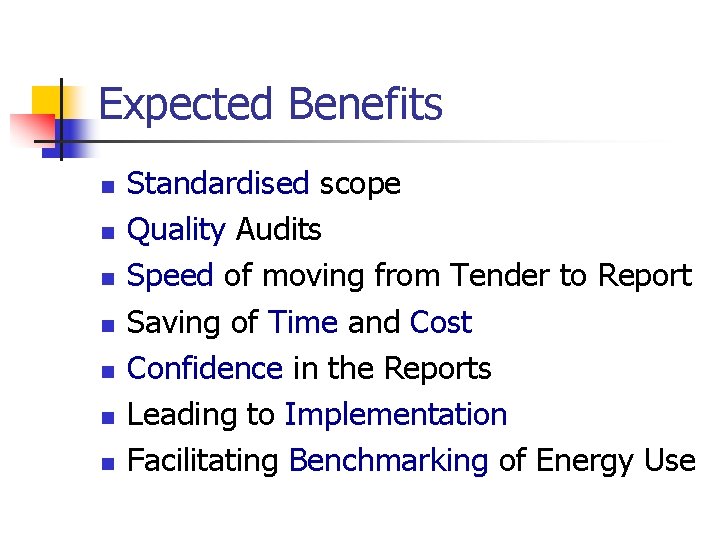
Expected Benefits n n n n Standardised scope Quality Audits Speed of moving from Tender to Report Saving of Time and Cost Confidence in the Reports Leading to Implementation Facilitating Benchmarking of Energy Use

Flowchart

Flowchart (continued)
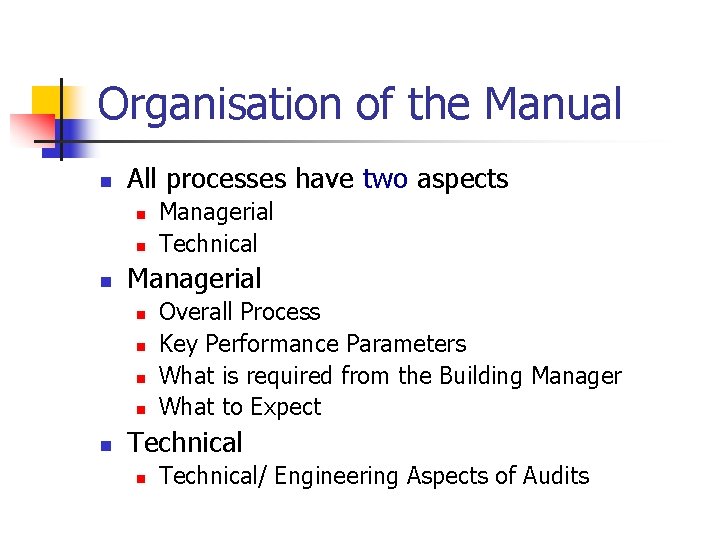
Organisation of the Manual n All processes have two aspects n n n Managerial Technical Overall Process Key Performance Parameters What is required from the Building Manager What to Expect Technical n Technical/ Engineering Aspects of Audits
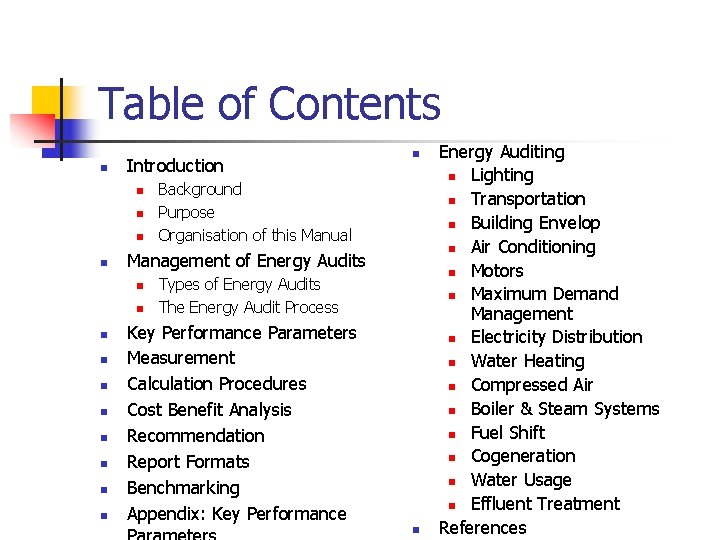
Table of Contents n Introduction n n n Background Purpose Organisation of this Manual Management of Energy Audits n n n Types of Energy Audits The Energy Audit Process Key Performance Parameters Measurement Calculation Procedures Cost Benefit Analysis Recommendation Report Formats Benchmarking Appendix: Key Performance n Energy Auditing n Lighting n Transportation n Building Envelop n Air Conditioning n Motors n Maximum Demand Management n Electricity Distribution n Water Heating n Compressed Air n Boiler & Steam Systems n Fuel Shift n Cogeneration n Water Usage n Effluent Treatment References

Key Performance Parameters n Key Performance Parameters for each major area of Energy Use, e. g. n n Lighting Air conditioning Pumping Transportation / Lifts
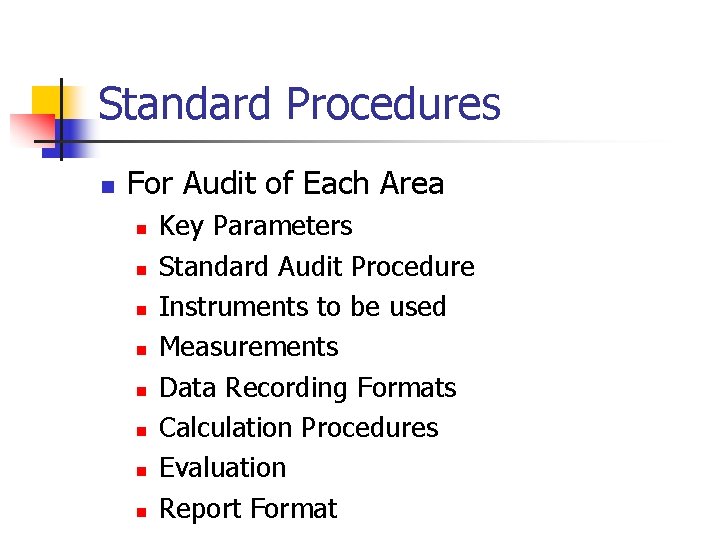
Standard Procedures n For Audit of Each Area n n n n Key Parameters Standard Audit Procedure Instruments to be used Measurements Data Recording Formats Calculation Procedures Evaluation Report Format
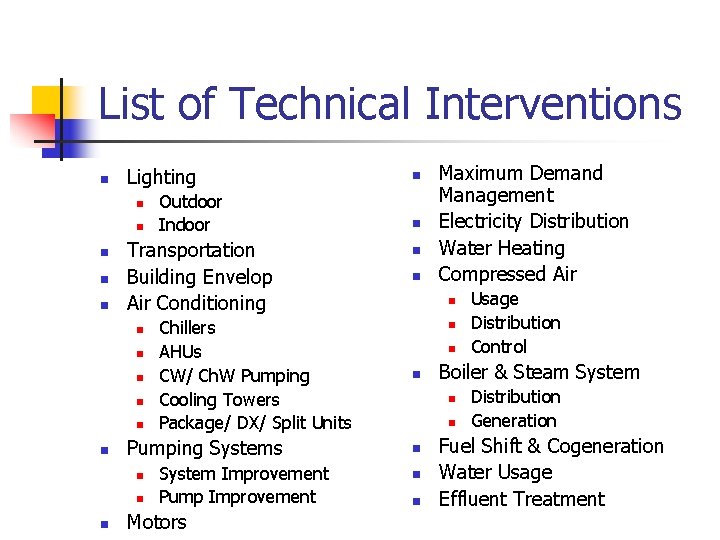
List of Technical Interventions n Lighting n n n Transportation Building Envelop Air Conditioning n n n Chillers AHUs CW/ Ch. W Pumping Cooling Towers Package/ DX/ Split Units Pumping Systems n n n Outdoor Indoor System Improvement Pump Improvement Motors n n Maximum Demand Management Electricity Distribution Water Heating Compressed Air n n Boiler & Steam System n n n Usage Distribution Control Distribution Generation Fuel Shift & Cogeneration Water Usage Effluent Treatment
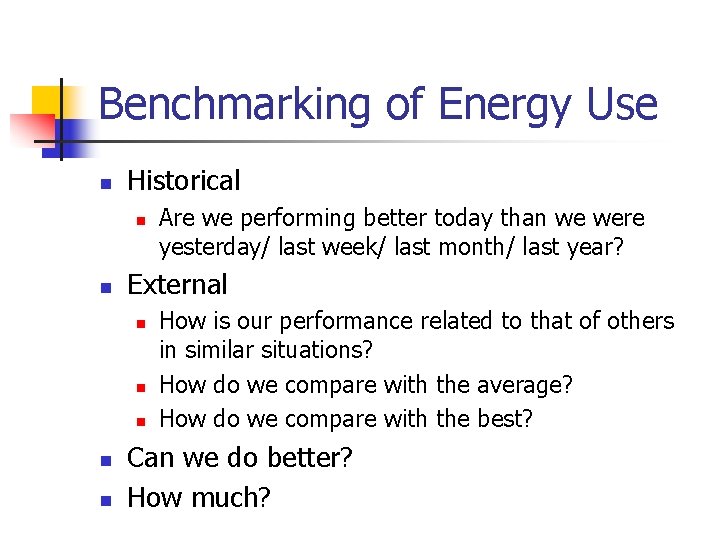
Benchmarking of Energy Use n Historical n n External n n n Are we performing better today than we were yesterday/ last week/ last month/ last year? How is our performance related to that of others in similar situations? How do we compare with the average? How do we compare with the best? Can we do better? How much?
Thank you! Felix Gooneratne, Team Leader – ECO II, IIEC Mahesh Patankar, Sr. Project Manager, IIEC Shishir Athalye, Consultant, IIEC
- Slides: 12