
Standard Days Method SDM Session I Characteristics of


- Slides: 14
Standard Days Method (SDM) Session I: Characteristics of the Standard Days Method Session I, Slide 1
Learning Objectives 1. Describe the characteristics of the Standard Days Method (SDM) in a manner that clients can understand including: • What is the Standard Days Method and how it works • Other characteristics (e. g. , absence of STI/HIV protection, role of couple communication, when to initiate and discontinue) • Effectiveness and requirements for correct use • Why some women like SDM 2. Demonstrate the ability to offer the SDM: • Screen clients for eligibility for SDM • Determine when to initiate SDM use (e. g. , postpartum, breastfeeding recent use of hormonal methods). Session I, Slide 2
Learning Objectives (continued) • Explain to client how to use the SDM to identify fertile days and monitor cycle length using both Cycle. Beads® and based instructions for SDM. • Discuss with client protection during fertile days by using condoms or avoiding intercourse. • Explain when the method will no longer work for the client (period comes too early or too late). • Explain when to seek assistance from a provider (e. g. , client no longer meets the method requirements or had sex on a fertile day. ). 4. Explain how to provide continuing support to the user. Session I, Slide 3
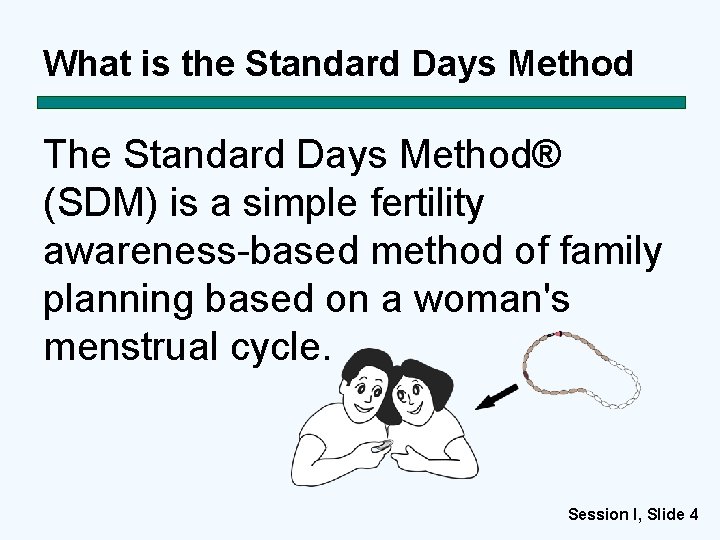
What is the Standard Days Method The Standard Days Method® (SDM) is a simple fertility awareness-based method of family planning based on a woman's menstrual cycle. Session I, Slide 4
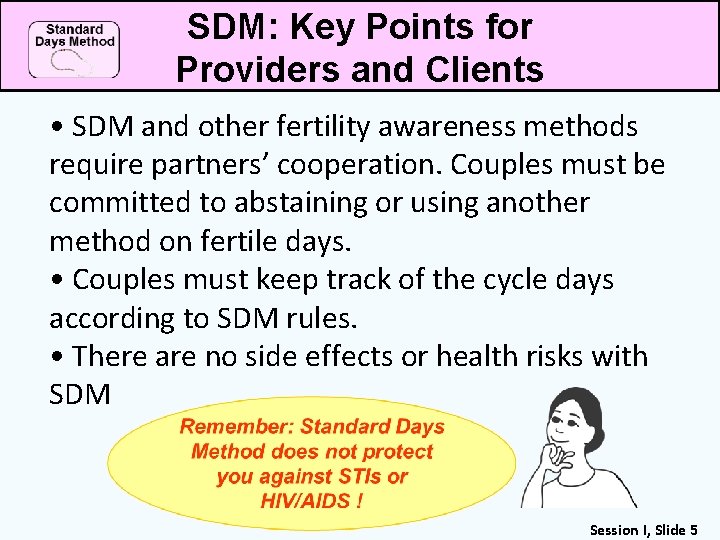
SDM: Key Points for Providers and Clients • SDM and other fertility awareness methods require partners’ cooperation. Couples must be committed to abstaining or using another method on fertile days. • Couples must keep track of the cycle days according to SDM rules. • There are no side effects or health risks with SDM Session I, Slide 5
Standard Days Method Characteristics • Identifies days 8 to 19 of the menstrual cycle as fertile days • Is appropriate for women with menstrual cycles between 26 and 32 days long (women who have their periods about once a month fit within this range. If a woman has a cycle outside this range more than once in a given year she should use a different family planning method. ) • Helps a couple avoid unplanned pregnancy by knowing which days they should not have unprotected sex • Helps a couple plan a pregnancy by knowing which days they should have sex Session I, Slide 6 • Does not protect against STIs/HIV
Effectiveness of SDM In this progression of effectiveness, where would you place SDM? More effective Implants Male Sterilization Female Sterilization Intrauterine Devices Progestin-only Injectables Combined Oral Contraceptives Male Condoms Standard Days Method Less effective SDM Female Condoms Spermicides Session I, Slide 7
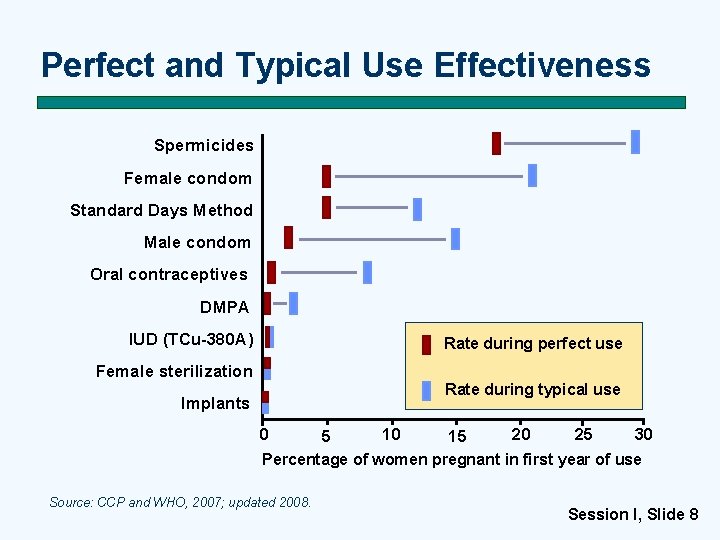
Perfect and Typical Use Effectiveness Spermicides Female condom Standard Days Method Male condom Oral contraceptives DMPA IUD (TCu-380 A) Rate during perfect use Female sterilization Rate during typical use Implants 0 5 10 15 20 25 30 Percentage of women pregnant in first year of use Source: CCP and WHO, 2007; updated 2008. Session I, Slide 8
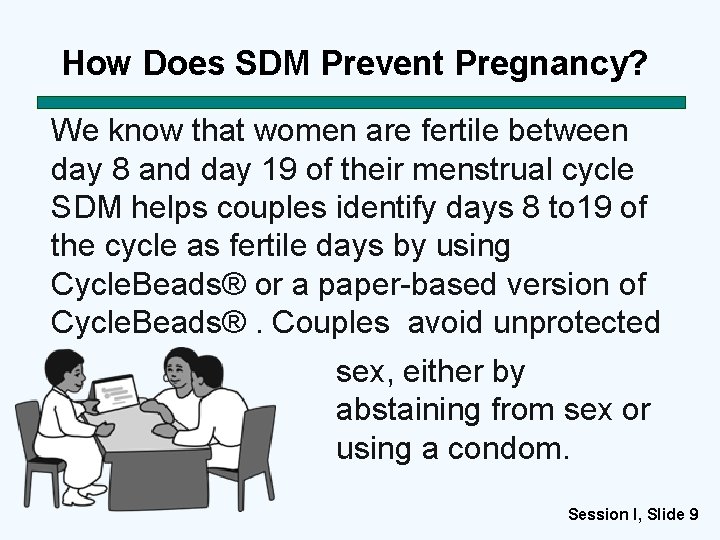
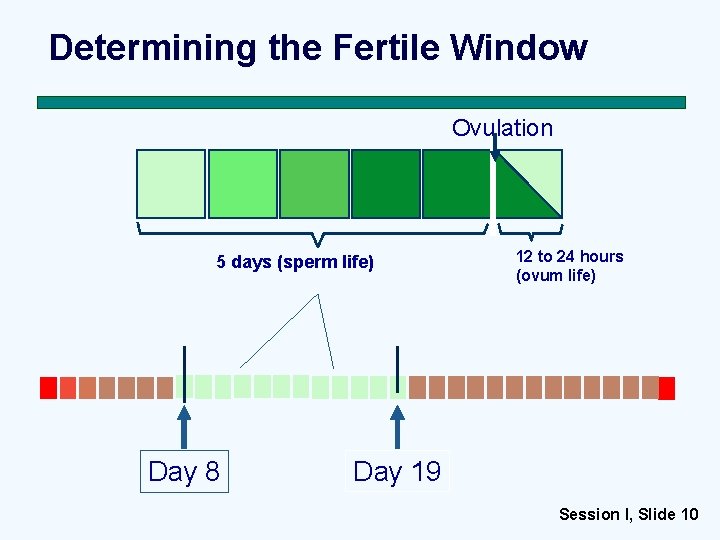
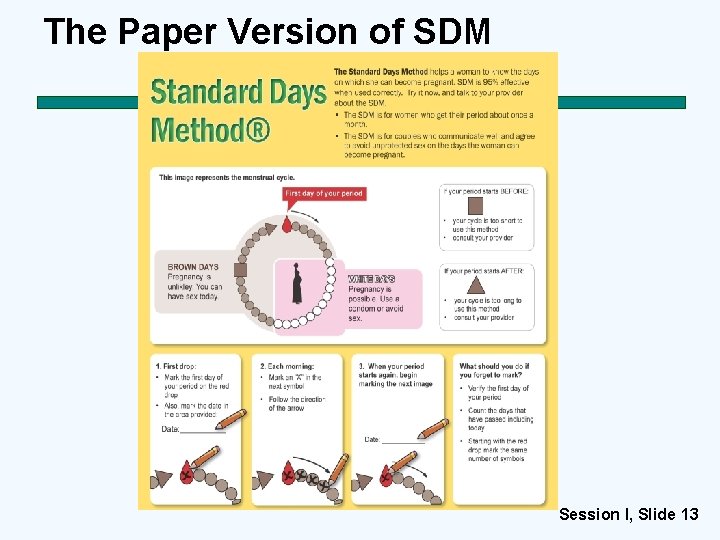
How Does SDM Prevent Pregnancy? We know that women are fertile between day 8 and day 19 of their menstrual cycle SDM helps couples identify days 8 to 19 of the cycle as fertile days by using Cycle. Beads® or a paper-based version of Cycle. Beads®. Couples avoid unprotected sex, either by abstaining from sex or using a condom. Session I, Slide 9
Determining the Fertile Window Ovulation 5 days (sperm life) Day 8 12 to 24 hours (ovum life) Day 19 Session I, Slide 10
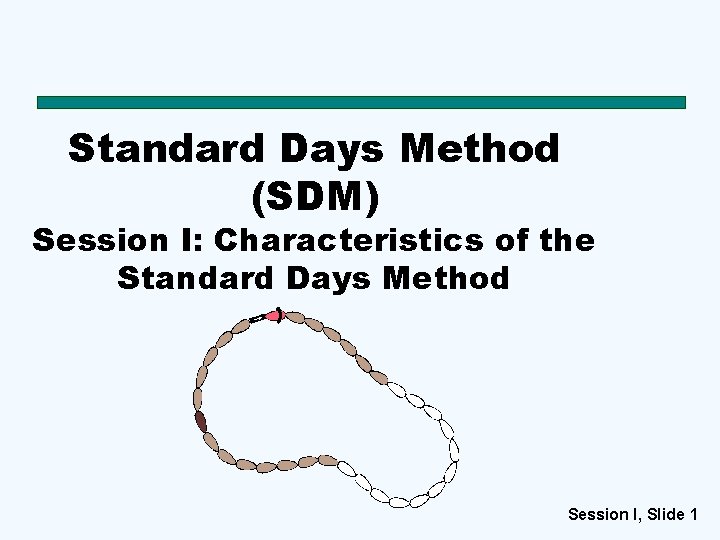
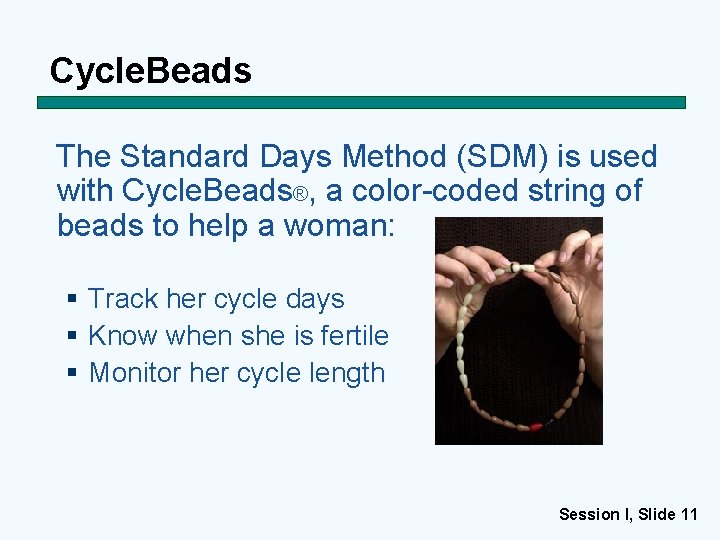
Cycle. Beads The Standard Days Method (SDM) is used with Cycle. Beads®, a color-coded string of beads to help a woman: § Track her cycle days § Know when she is fertile § Monitor her cycle length Session I, Slide 11
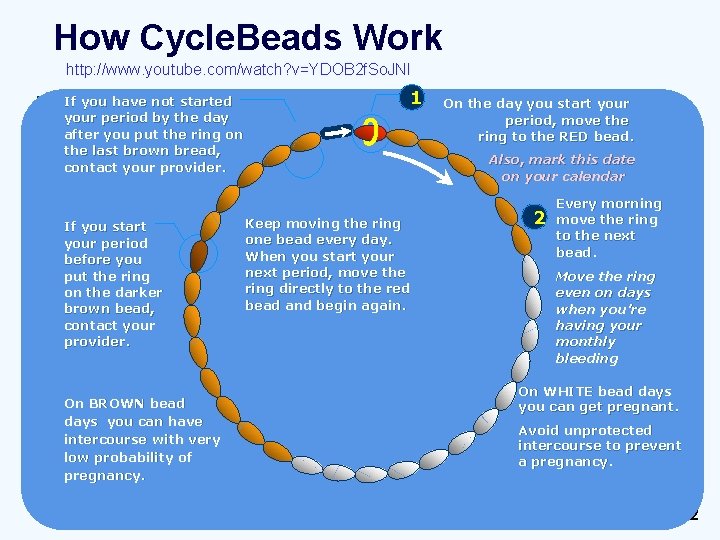
How Cycle. Beads Work http: //www. youtube. com/watch? v=YDOB 2 f. So. JNI If you have not started your period by the day after you put the ring on the last brown bread, contact your provider. If you start your period before you put the ring on the darker brown bead, contact your provider. On BROWN bead days you can have intercourse with very low probability of pregnancy. 1 On the day you start your period, move the ring to the RED bead. Also, mark this date on your calendar Keep moving the ring one bead every day. When you start your next period, move the ring directly to the red bead and begin again. 2 Every morning move the ring to the next bead. Move the ring even on days when you’re having your monthly bleeding On WHITE bead days you can get pregnant. Avoid unprotected intercourse to prevent a pregnancy. Session I, Slide 12
The Paper Version of SDM Session I, Slide 13
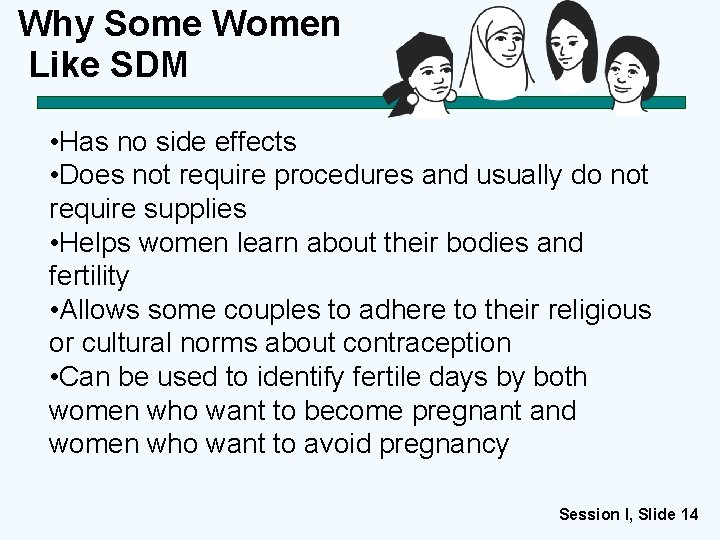
Why Some Women Like SDM • Has no side effects • Does not require procedures and usually do not require supplies • Helps women learn about their bodies and fertility • Allows some couples to adhere to their religious or cultural norms about contraception • Can be used to identify fertile days by both women who want to become pregnant and women who want to avoid pregnancy Session I, Slide 14