
Standard Addressed CH 22 SEC1 11 9 Students

- Slides: 52
Standard Addressed: CH 22 -SEC-1 11. 9 Students analyze U. S. Foreign policy since World War II. Lesson Objectives: CHAPTER 22: Section 1 - Moving Toward Conflict • 1. Summarize Vietnam’s history as a French colony and its struggle for independence. • 2. Examine how the United States became involved in the Vietnam conflict. • 3. Describe the expansion of U. S. military involvement under President Johnson.
QUIZ! First & Last Name Fill in your ID NUMBER! CH-22 -1
The Vietnam War Years The United States becomes locked in a military stalemate in Southeast Asia. U. S. forces withdraw after a decade of heavy war casualties abroad and assassinations and antiwar demonstrations at home. Section 1 Moving Toward Conflict To stop the spread of communism in Southeast Asia, the United States uses its military to support South Vietnam. NEXT
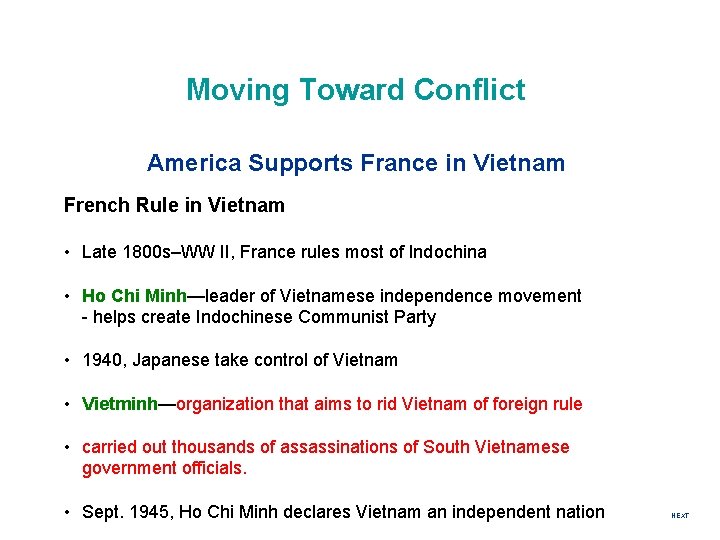
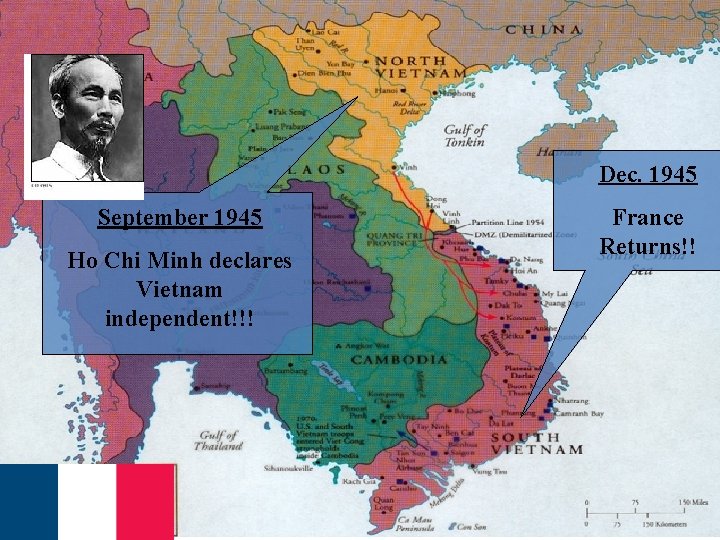
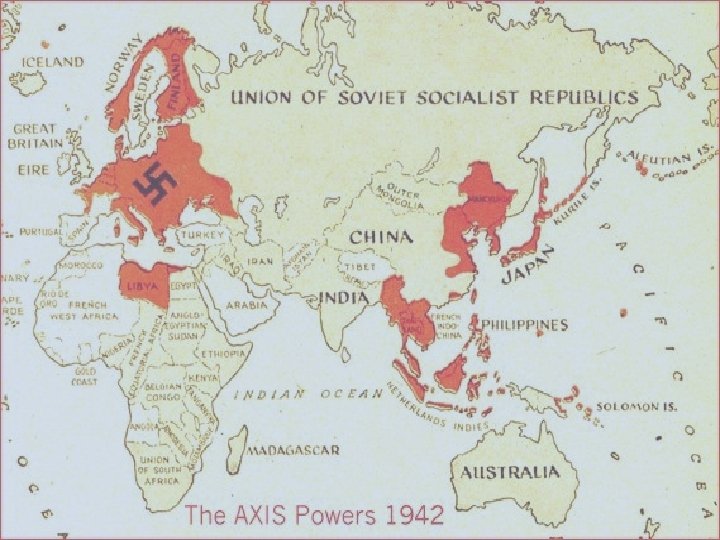
Moving Toward Conflict America Supports France in Vietnam French Rule in Vietnam • Late 1800 s–WW II, France rules most of Indochina • Ho Chi Minh—leader of Vietnamese independence movement - helps create Indochinese Communist Party • 1940, Japanese take control of Vietnam • Vietminh—organization that aims to rid Vietnam of foreign rule • carried out thousands of assassinations of South Vietnamese government officials. • Sept. 1945, Ho Chi Minh declares Vietnam an independent nation NEXT
Dec. 1945 September 1945 Ho Chi Minh declares Vietnam independent!!! France Returns!!
Guided Reading: 1. What did the Vietminh declare as its main goal? Vietnam’s Independence
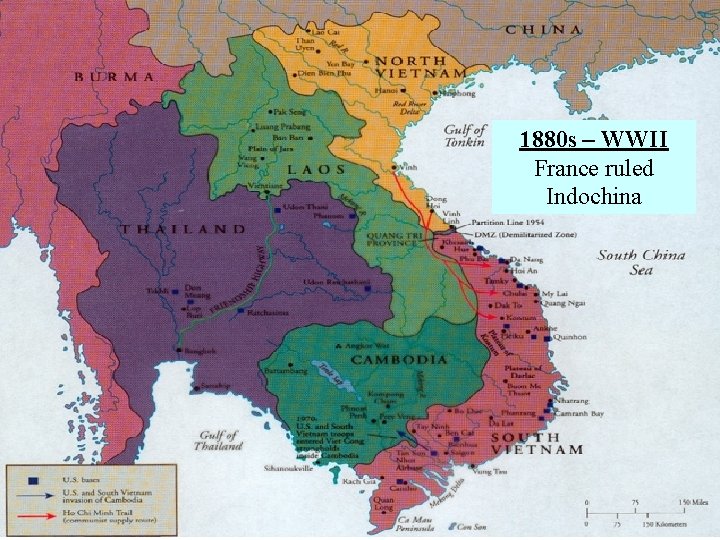
1880 s – WWII France ruled Indochina
Guided Reading: 2. What did Ho chi Minh declare after Japan was forced out? That Vietnam was an independent nation
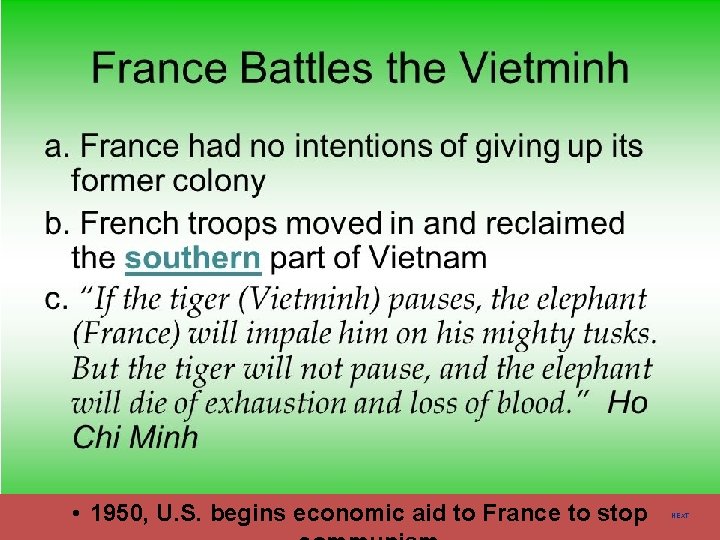
• 1950, U. S. begins economic aid to France to stop NEXT
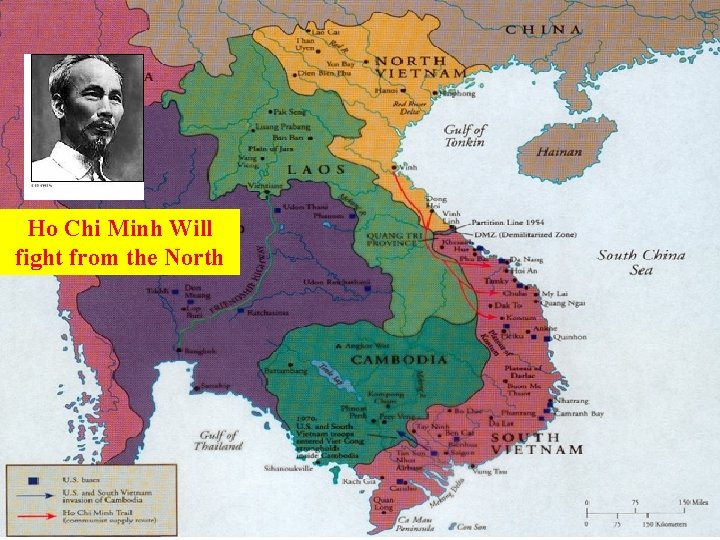
Ho Chi Minh Will fight from the North
Guided Reading: 3. How did Ho Chi Minh respond to the return of the French? Vowed to fight from North Vietnam to liberate the South.
MAIN IDEA QUESTIONS • A – How and why did the United States support France’s Vietnam War efforts? – The US provided France with economic and military support. – The goals were to keep France as an ally and to keep communism from spreading.
Guided Reading: 4. Whom did the U. S. support? France
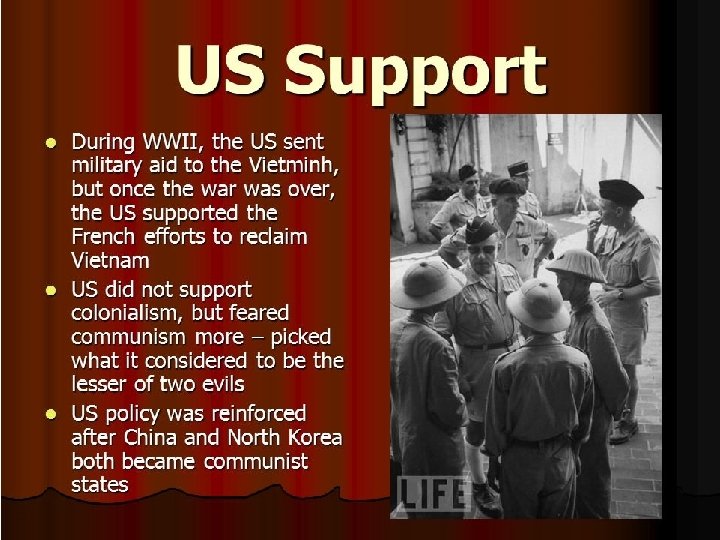
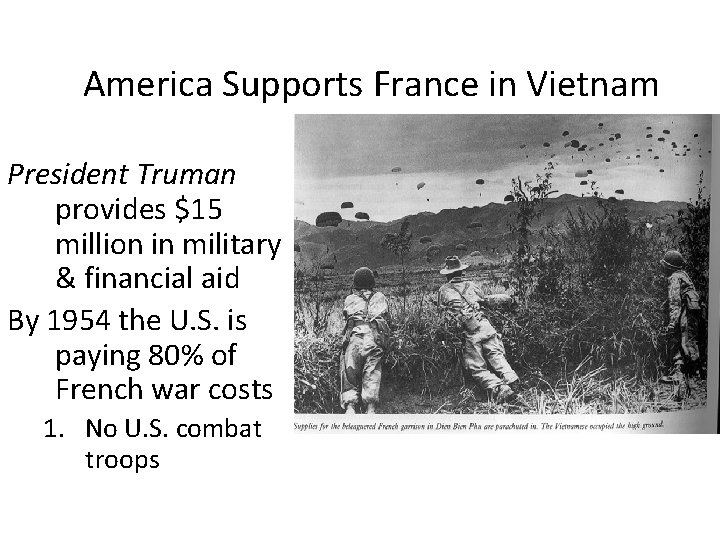
America Supports France in Vietnam President Truman provides $15 million in military & financial aid By 1954 the U. S. is paying 80% of French war costs 1. No U. S. combat troops
Guided Reading: 5. What aid did the U. S. provide? Economic aid (for military purposes)
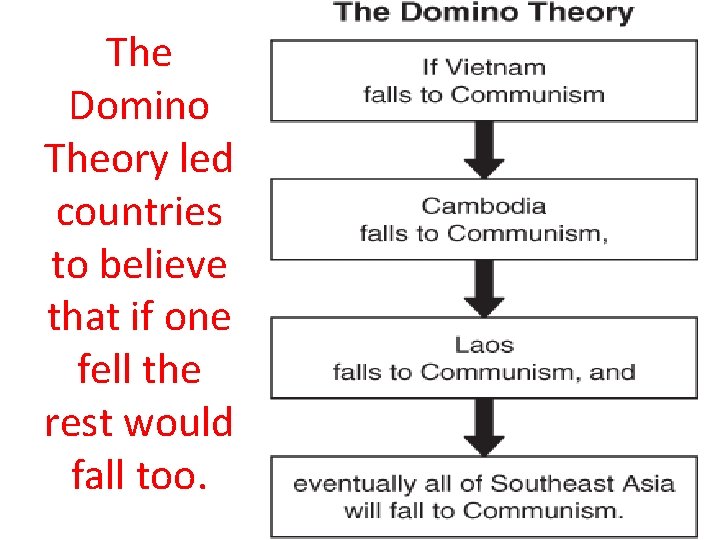
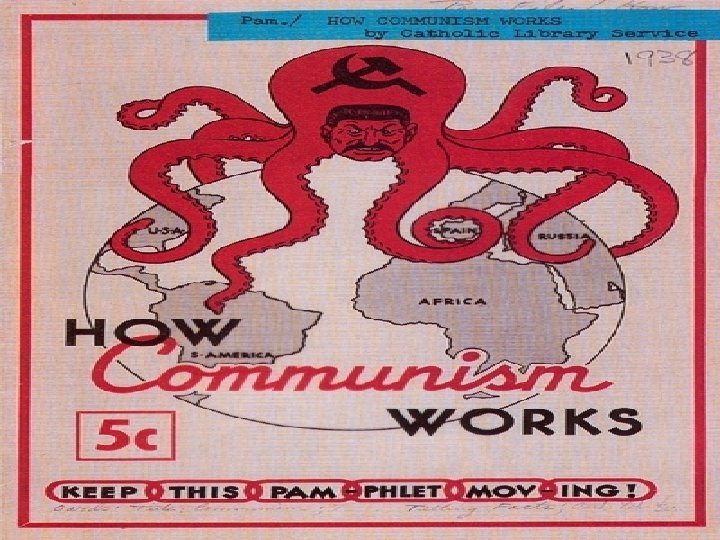
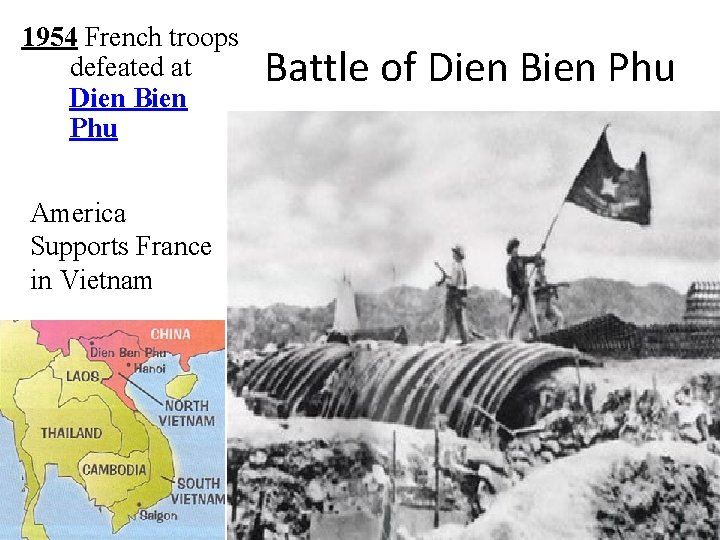
The Vietminh Drive Out the French • Domino theory—countries can fall to communism like row of dominoes • 1954, Vietminh overrun French at Dien Bien Phu; France surrenders • Geneva Accords divide Vietnam at 17 th parallel; Communists get north • Election to unify country called for in 1956 NEXT
The Domino Theory led countries to believe that if one fell the rest would fall too.
Guided Reading: 6. Why did the U. S. get involved in the struggle? To prevent another Asian country from becoming Communist.
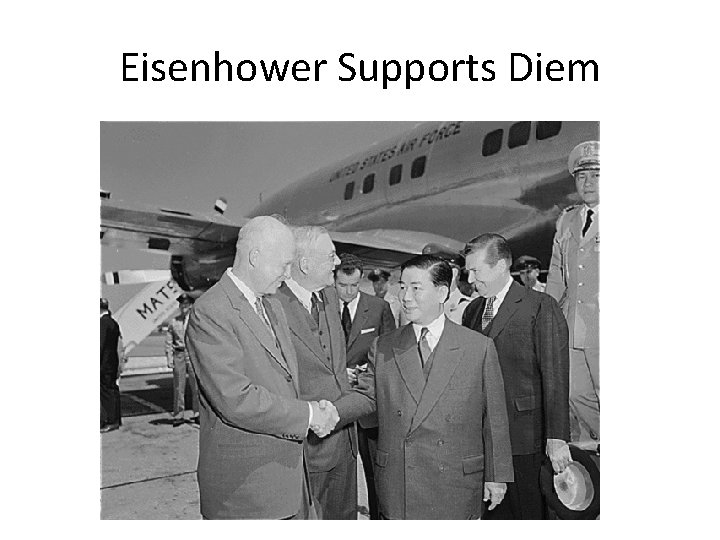
Eisenhower Supports Diem
Guided Reading: 7. What did Eisenhower compare to a row of dominos? Countries verging on communism
1954 French troops defeated at Dien Bien Phu America Supports France in Vietnam Battle of Dien Bien Phu
Guided Reading: 8. What did this Vietminh victory cause the French to do? Surrendered; pulled out of Vietnam.
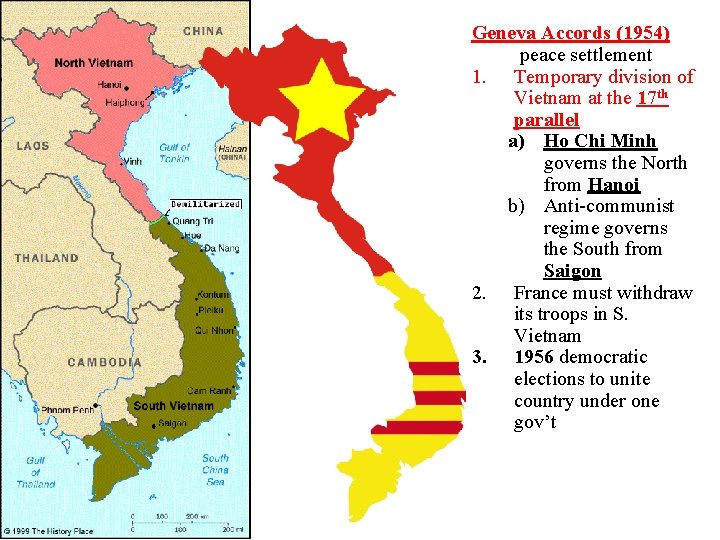
Geneva Accords (1954) peace settlement 1. Temporary division of Vietnam at the 17 th parallel a) Ho Chi Minh governs the North from Hanoi b) Anti-communist regime governs the South from Saigon 2. France must withdraw its troops in S. Vietnam 3. 1956 democratic elections to unite country under one gov’t
Guided Reading: 9. How did the Geneva Accords change Vietnam? Divided it along th the 17 parallel.
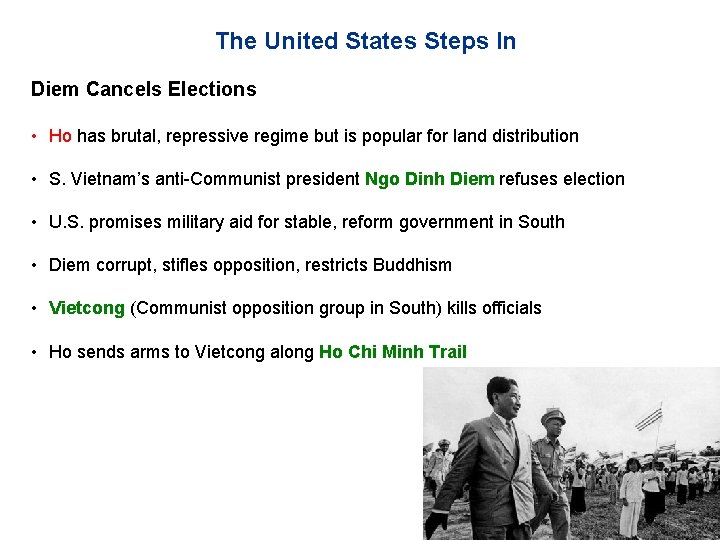
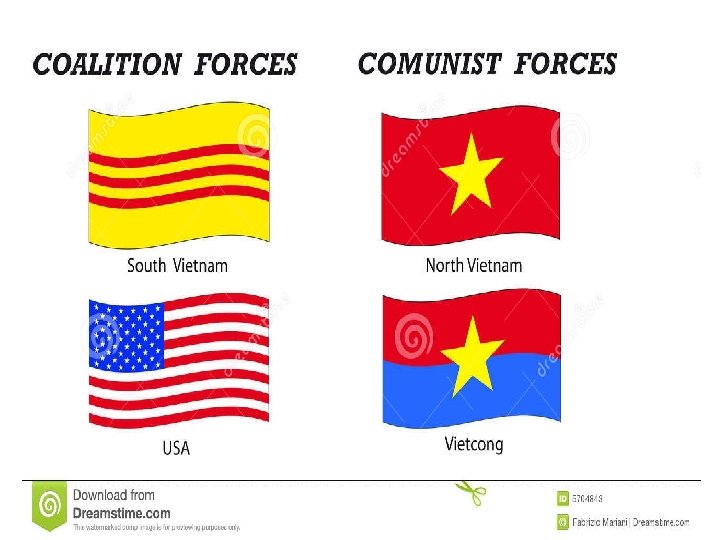
The United States Steps In Diem Cancels Elections • Ho has brutal, repressive regime but is popular for land distribution • S. Vietnam’s anti-Communist president Ngo Dinh Diem refuses election • U. S. promises military aid for stable, reform government in South • Diem corrupt, stifles opposition, restricts Buddhism • Vietcong (Communist opposition group in South) kills officials • Ho sends arms to Vietcong along Ho Chi Minh Trail NEXT
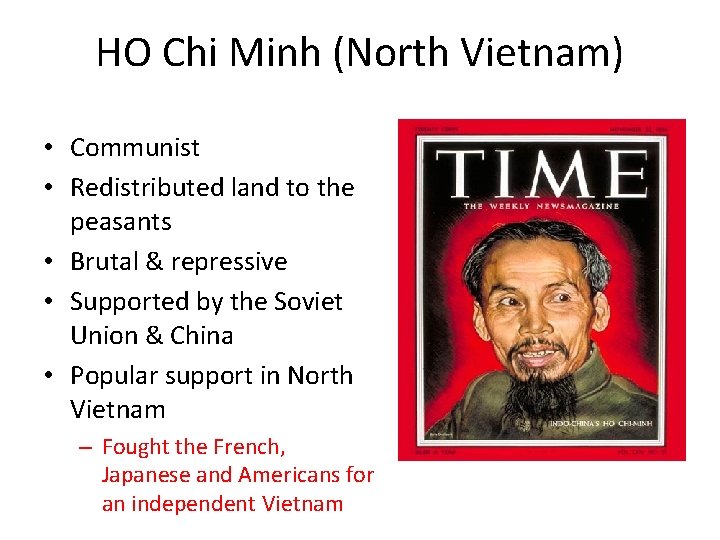
HO Chi Minh (North Vietnam) • Communist • Redistributed land to the peasants • Brutal & repressive • Supported by the Soviet Union & China • Popular support in North Vietnam – Fought the French, Japanese and Americans for an independent Vietnam
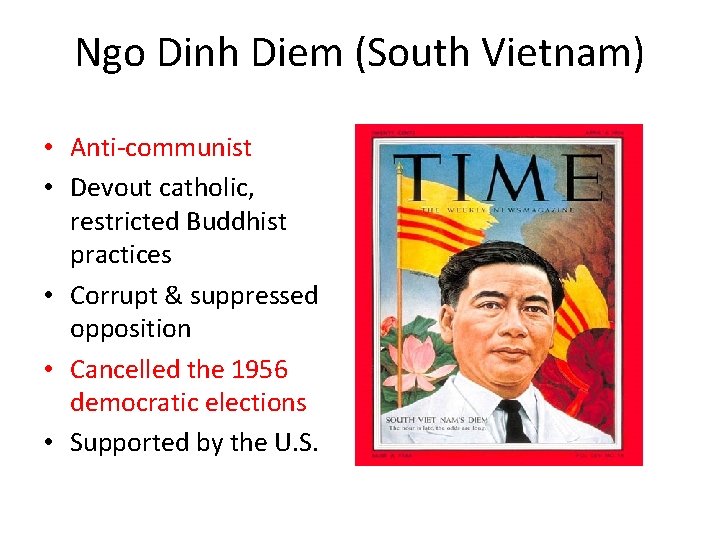
Ngo Dinh Diem (South Vietnam) • Anti-communist • Devout catholic, restricted Buddhist practices • Corrupt & suppressed opposition • Cancelled the 1956 democratic elections • Supported by the U. S.
MAIN IDEA QUESTIONS • B – Why did the United States support canceling elections? – Because it appeared that Ho Chi Minh would win the election and possibly unify Vietnam under communism
Guided Reading: 10. Who cancelled the Vietnamese elections? Why? President Diem(S. V. ), with U. S. support; b/c feared that ho Chi Minh (N. V) and the Communist would win.
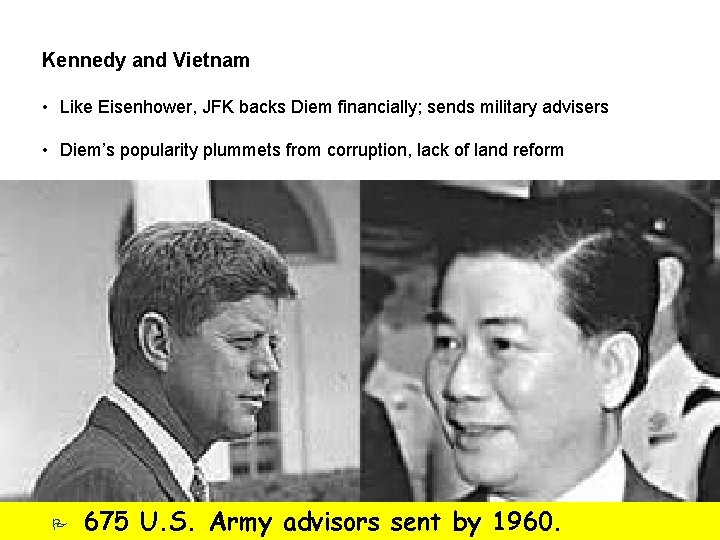
Kennedy and Vietnam • Like Eisenhower, JFK backs Diem financially; sends military advisers • Diem’s popularity plummets from corruption, lack of land reform P 675 U. S. Army advisors sent by 1960. NEXT
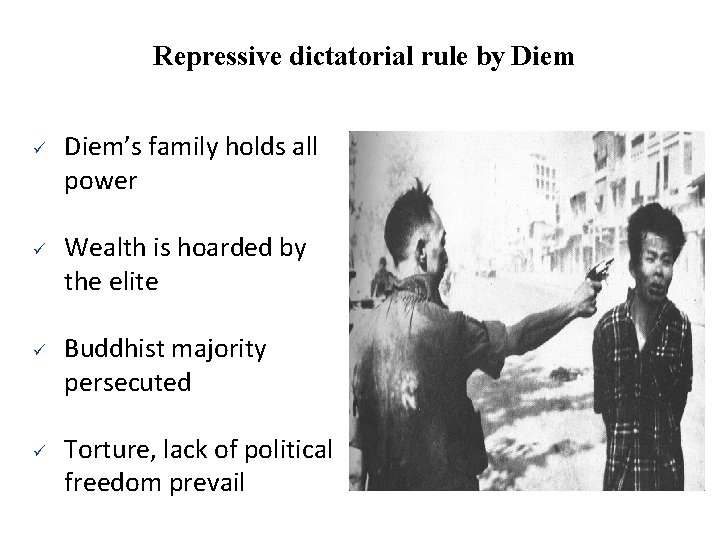
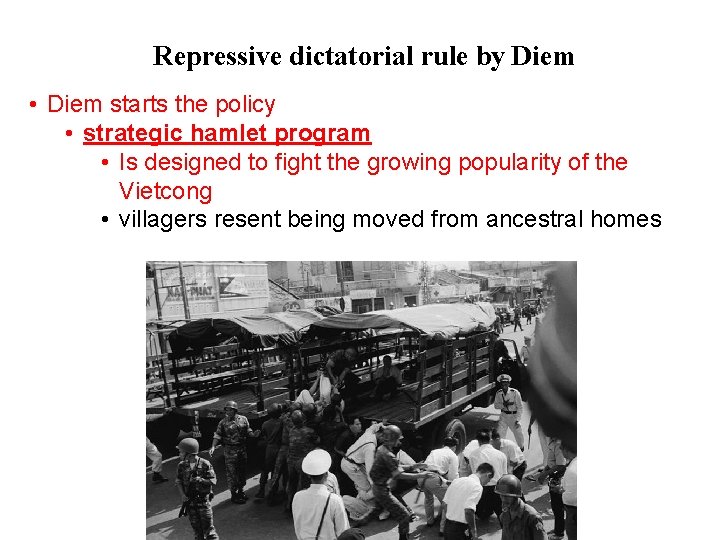
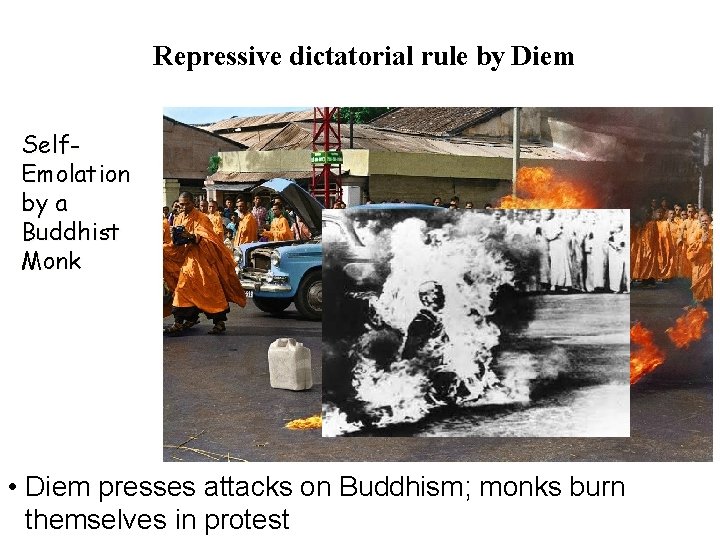
Repressive dictatorial rule by Diem ü ü Diem’s family holds all power Wealth is hoarded by the elite Buddhist majority persecuted Torture, lack of political freedom prevail
Repressive dictatorial rule by Diem • Diem starts the policy • strategic hamlet program • Is designed to fight the growing popularity of the Vietcong • villagers resent being moved from ancestral homes
Repressive dictatorial rule by Diem Self. Emolation by a Buddhist Monk • Diem presses attacks on Buddhism; monks burn themselves in protest
MAIN IDEA QUESTIONS • C – Why was the Diem regime unpopular? – Corruption, repressive tactics, and persecution of Buddhists.
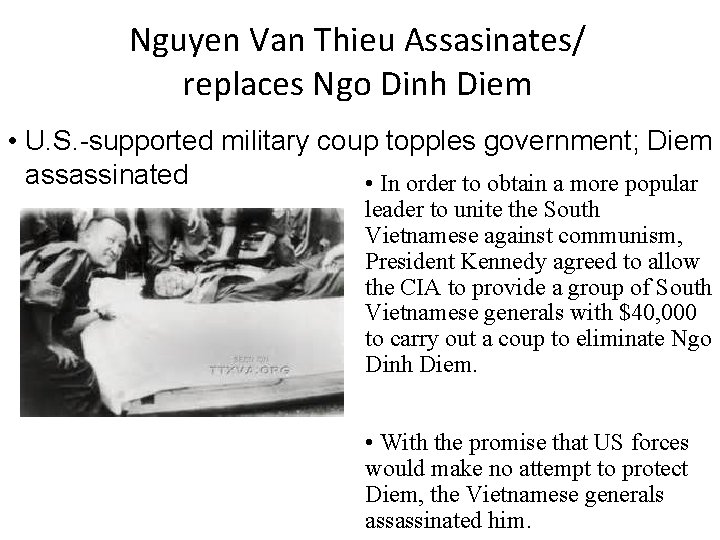
Nguyen Van Thieu Assasinates/ replaces Ngo Dinh Diem • U. S. -supported military coup topples government; Diem assassinated • In order to obtain a more popular leader to unite the South Vietnamese against communism, President Kennedy agreed to allow the CIA to provide a group of South Vietnamese generals with $40, 000 to carry out a coup to eliminate Ngo Dinh Diem. • With the promise that US forces would make no attempt to protect Diem, the Vietnamese generals assassinated him.
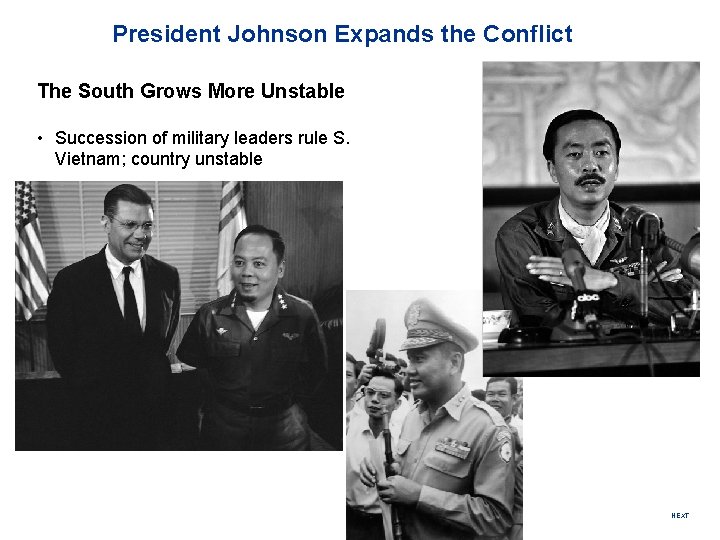
President Johnson Expands the Conflict The South Grows More Unstable • Succession of military leaders rule S. Vietnam; country unstable NEXT
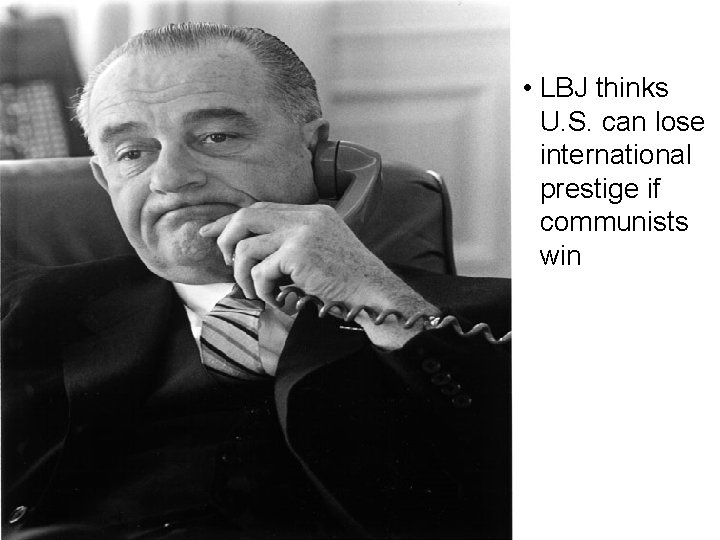
• LBJ thinks U. S. can lose international prestige if communists win
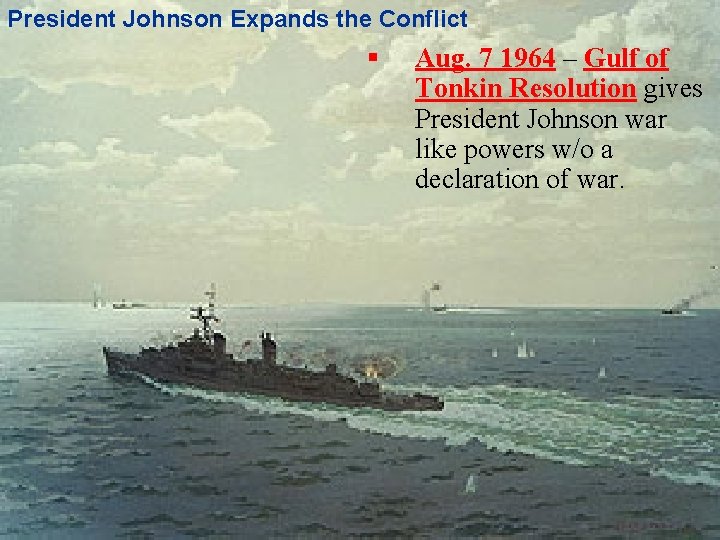
President Johnson Expands the Conflict § Aug. 7 1964 – Gulf of Tonkin Resolution gives President Johnson war like powers w/o a declaration of war.
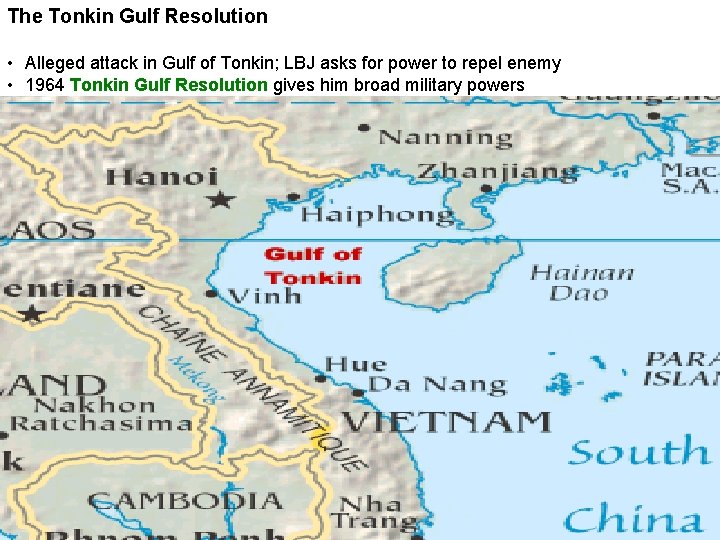
The Tonkin Gulf Resolution • Alleged attack in Gulf of Tonkin; LBJ asks for power to repel enemy • 1964 Tonkin Gulf Resolution gives him broad military powers
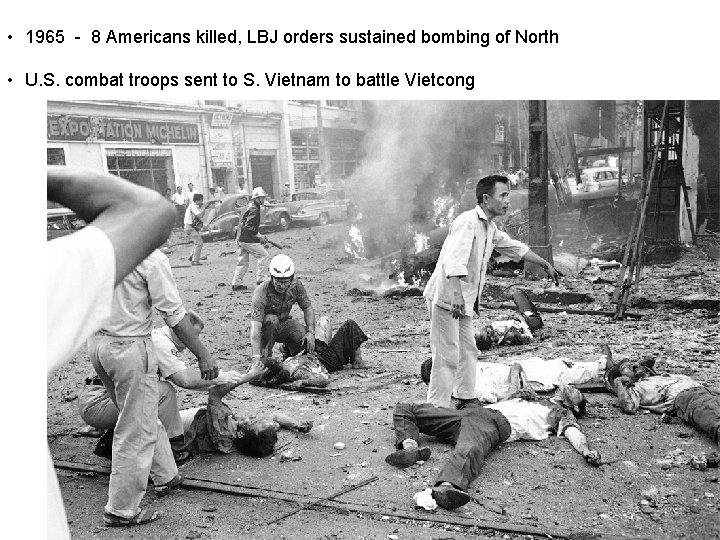
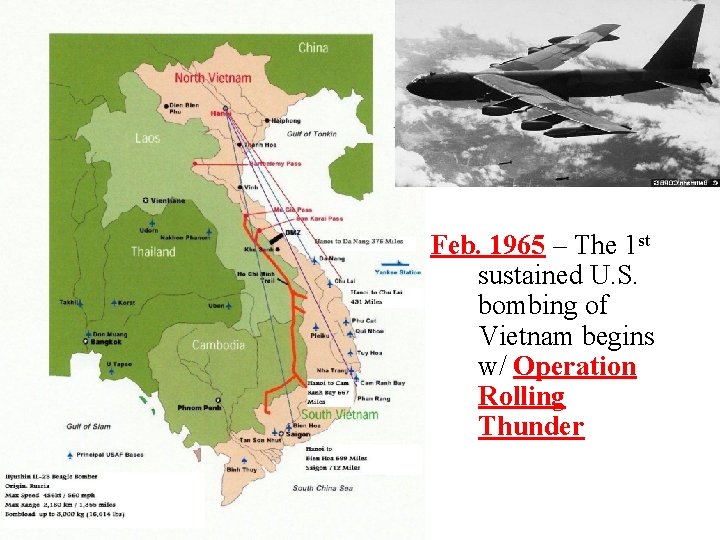
• 1965 - 8 Americans killed, LBJ orders sustained bombing of North • U. S. combat troops sent to S. Vietnam to battle Vietcong NEXT
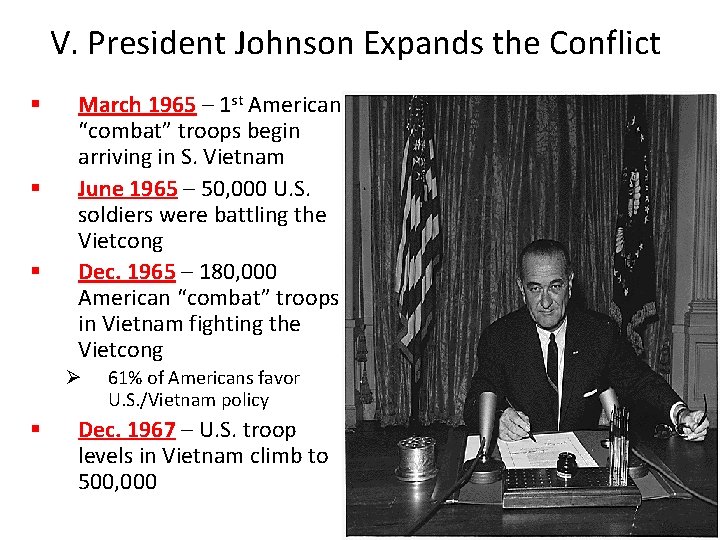
V. President Johnson Expands the Conflict § § § March 1965 – 1 st American “combat” troops begin arriving in S. Vietnam June 1965 – 50, 000 U. S. soldiers were battling the Vietcong Dec. 1965 – 180, 000 American “combat” troops in Vietnam fighting the Vietcong Ø § 61% of Americans favor U. S. /Vietnam policy Dec. 1967 – U. S. troop levels in Vietnam climb to 500, 000
MAIN IDEA QUESTIONS • D – How did the Tonkin Gulf Resolution lead to greater involvement in the Vietnam War? – It gave Johnson wide authority to widen the war.
Guided Reading: 11. What authority did the Tonkin Gulf Resolution grant to the U. S. president? Broad military powers in Vietnam.
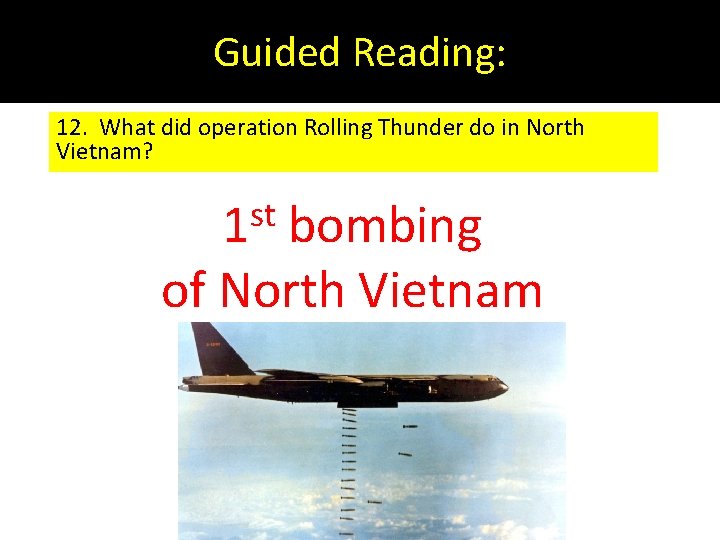
Feb. 1965 – The 1 st sustained U. S. bombing of Vietnam begins w/ Operation Rolling Thunder
Guided Reading: 12. What did operation Rolling Thunder do in North Vietnam? st 1 bombing of North Vietnam
QUIZ! First & Last Name Fill in your ID NUMBER! CH-22 -1