
Standard 5 4 Pyramid of Energy Illustrates that

- Slides: 29
Standard 5
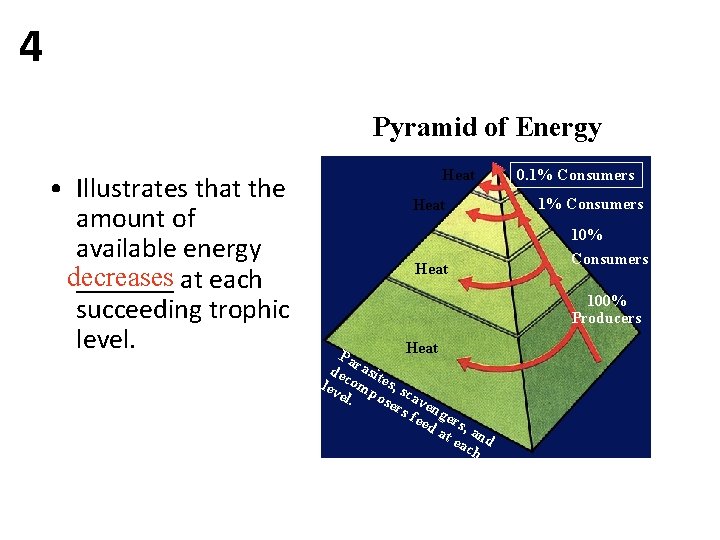
4 Pyramid of Energy • Illustrates that the amount of available energy decreases _______ at each succeeding trophic level. Heat 0. 1% Consumers 10% Heat Consumers 100% Producers Heat Pa r dec asit lev omp es, s el. ose cav rs eng fee ers da , a t e nd ach
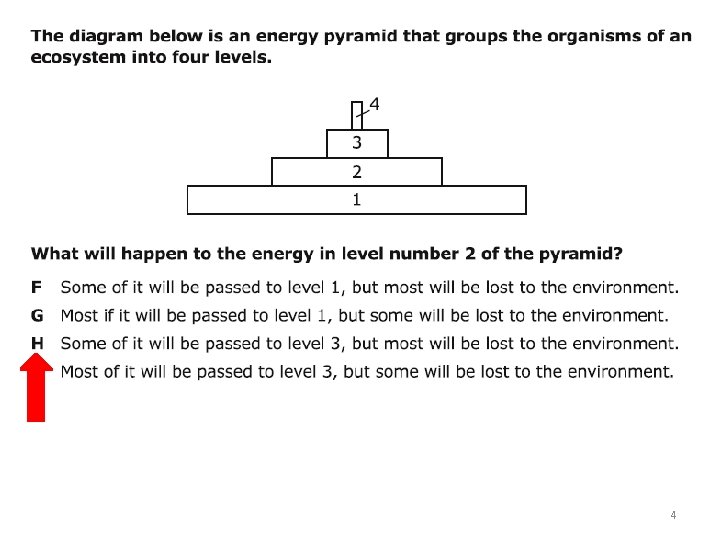
4
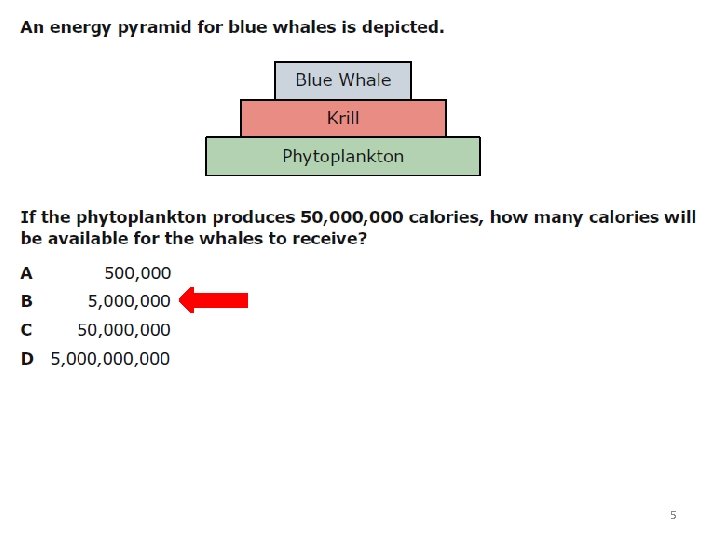
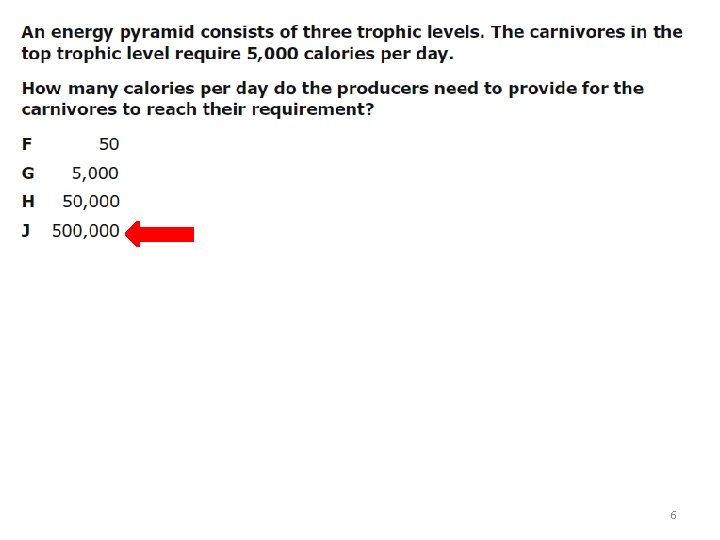
5
6
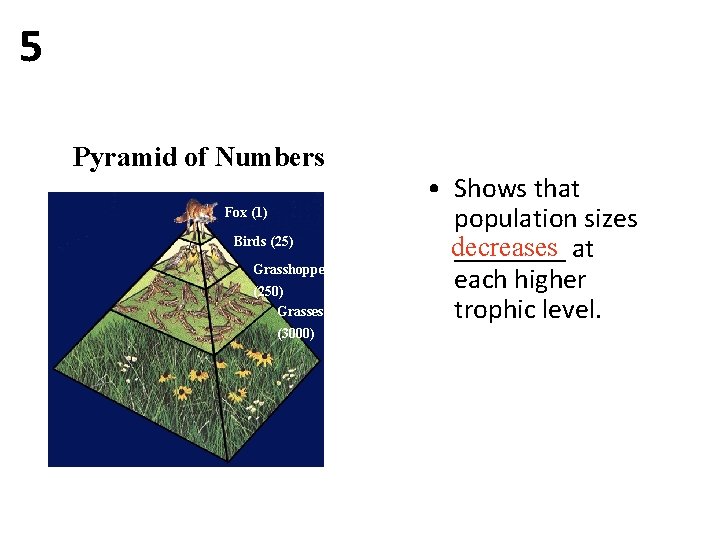
5 Pyramid of Numbers Fox (1) Birds (25) Grasshoppers (250) Grasses (3000) • Shows that population sizes decreases ____ at each higher trophic level.
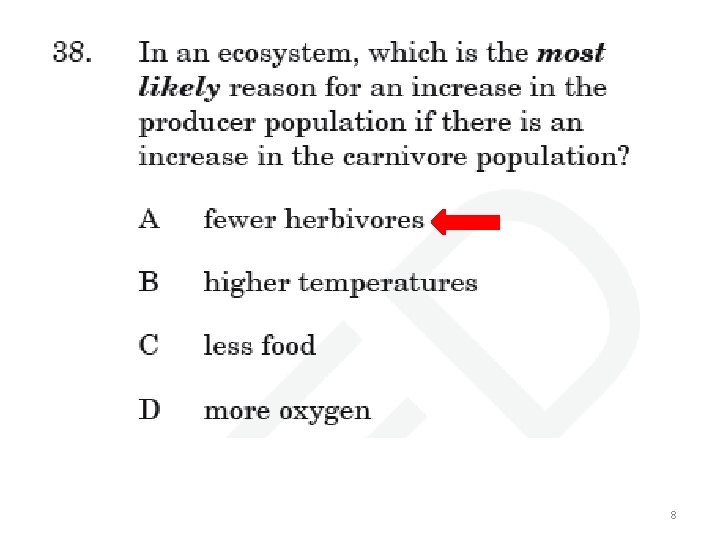
8
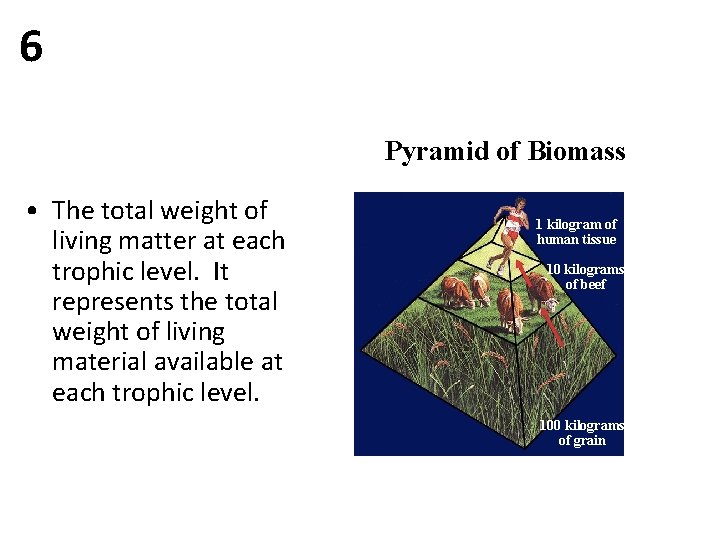
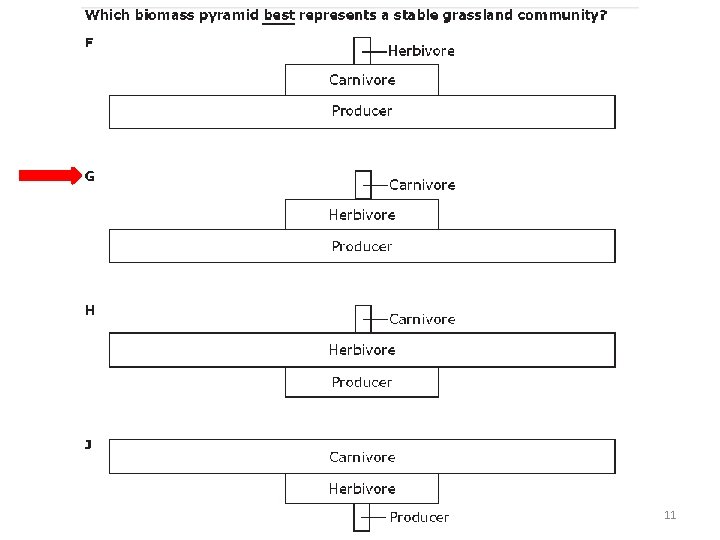
6 Pyramid of Biomass • The total weight of living matter at each trophic level. It represents the total weight of living material available at each trophic level. 1 kilogram of human tissue 10 kilograms of beef 100 kilograms of grain
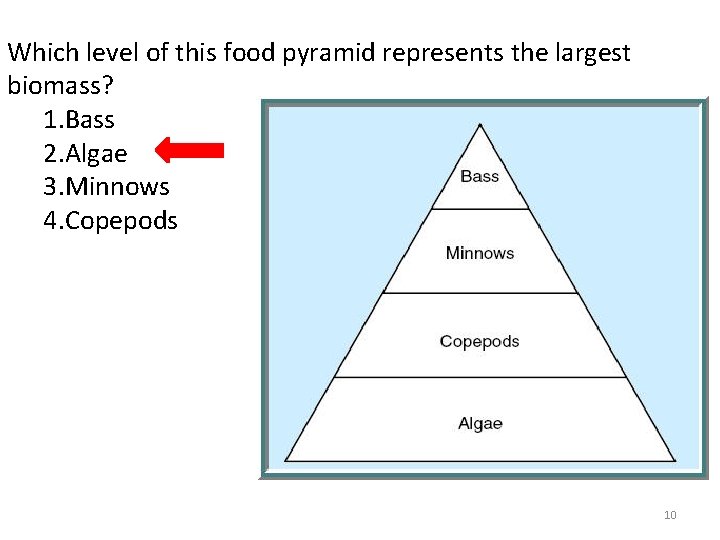
Which level of this food pyramid represents the largest biomass? 1. Bass 2. Algae 3. Minnows 4. Copepods 10
11
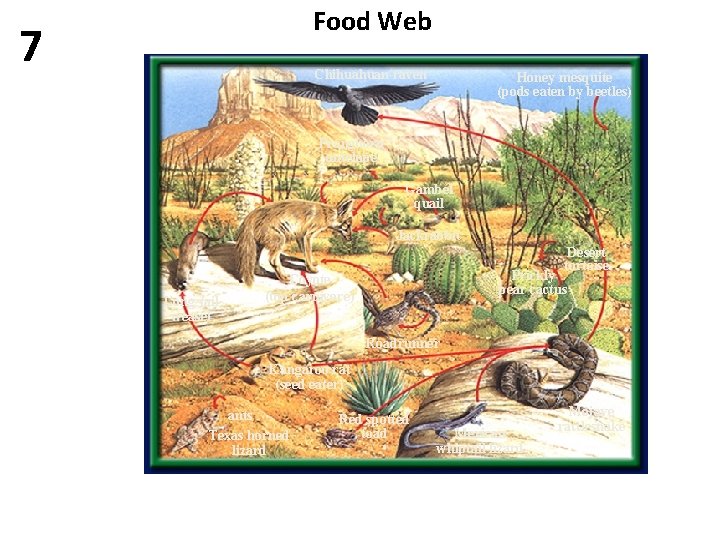
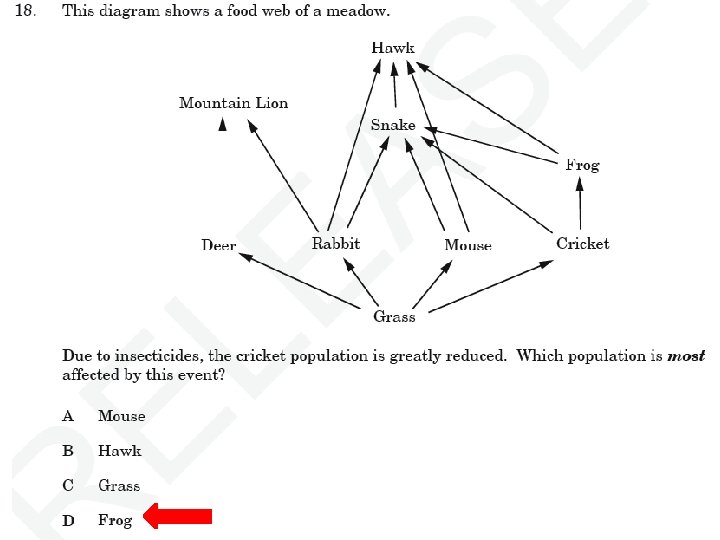
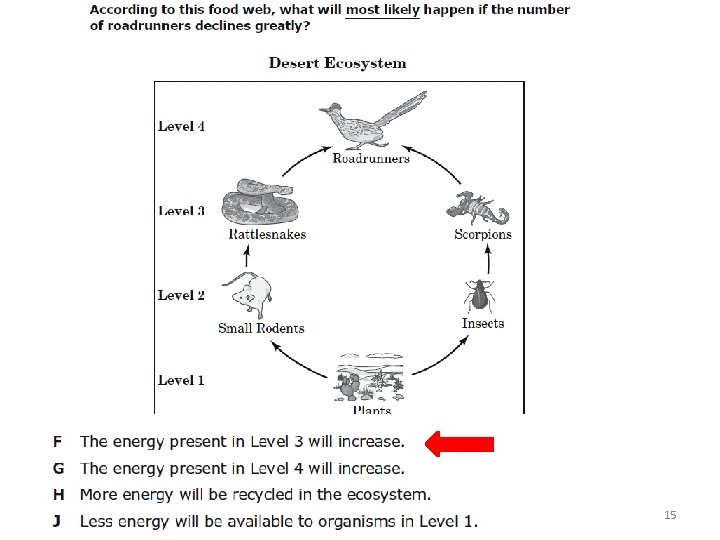
Food Web 7 Chihuahuan raven Honey mesquite (pods eaten by beetles) Pronghorn antelope Gambel quail Jackrabbit Long-tail weasel Desert tortoise Prickly pear cactus Coyote (top carnivore) Roadrunner Kangaroo rat (seed eater) ants Texas horned lizard Red spotted toad Mexican whiptail lizard Mojave rattlesnake
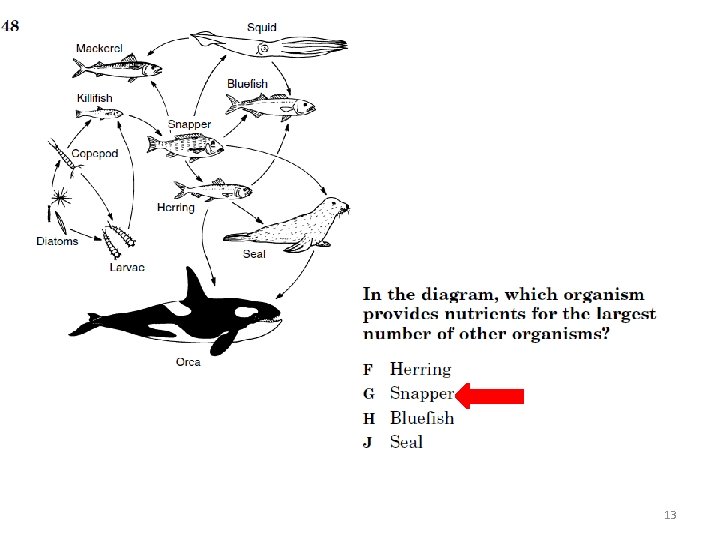
13
14
15
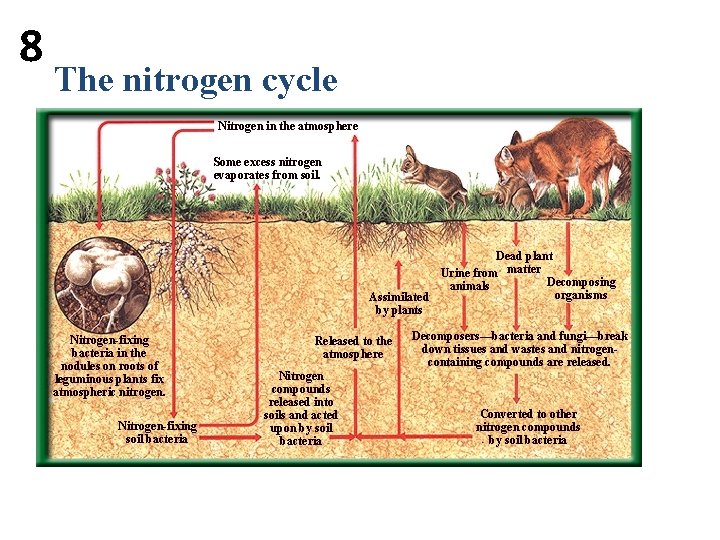
8 The nitrogen cycle Nitrogen in the atmosphere Some excess nitrogen evaporates from soil. Dead plant Urine from matter Decomposing animals organisms Assimilated by plants Nitrogen-fixing bacteria in the nodules on roots of leguminous plants fix atmospheric nitrogen. Nitrogen-fixing soil bacteria Released to the atmosphere Nitrogen compounds released into soils and acted upon by soil bacteria Decomposers—bacteria and fungi—break down tissues and wastes and nitrogencontaining compounds are released. Converted to other nitrogen compounds by soil bacteria
17
18
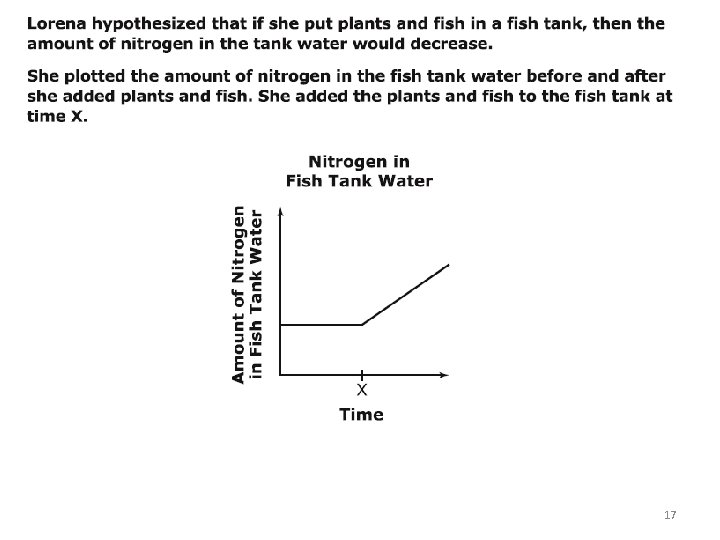
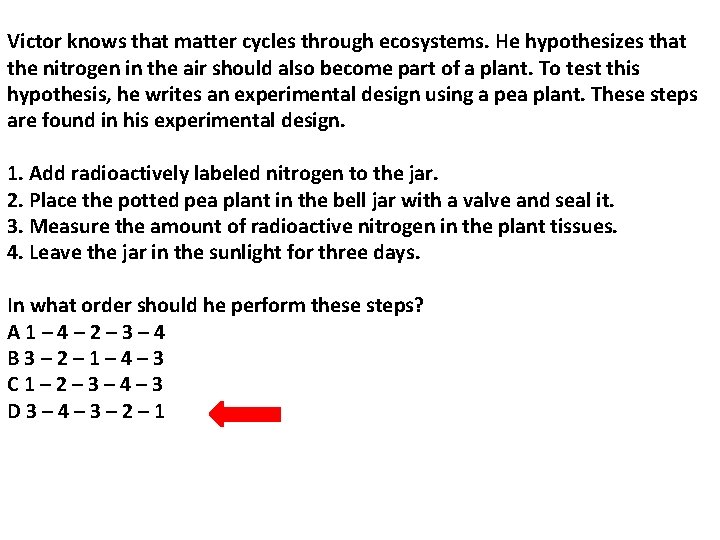
Victor knows that matter cycles through ecosystems. He hypothesizes that the nitrogen in the air should also become part of a plant. To test this hypothesis, he writes an experimental design using a pea plant. These steps are found in his experimental design. 1. Add radioactively labeled nitrogen to the jar. 2. Place the potted pea plant in the bell jar with a valve and seal it. 3. Measure the amount of radioactive nitrogen in the plant tissues. 4. Leave the jar in the sunlight for three days. In what order should he perform these steps? A 1– 4– 2– 3– 4 B 3– 2– 1– 4– 3 C 1– 2– 3– 4– 3 D 3– 4– 3– 2– 1
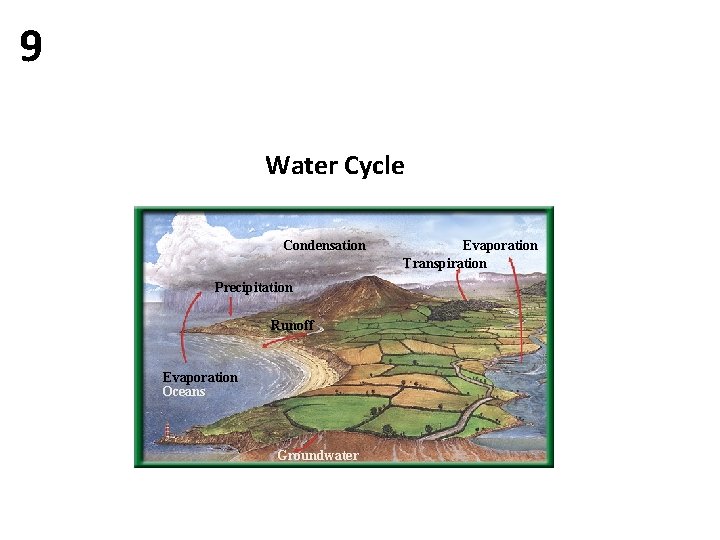
9 Water Cycle Condensation Precipitation Runoff Evaporation Oceans Groundwater Evaporation Transpiration
21
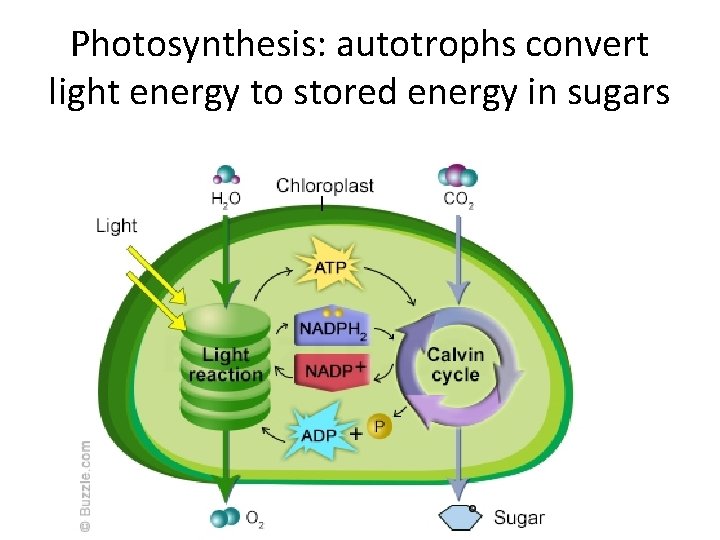
Photosynthesis: autotrophs convert light energy to stored energy in sugars
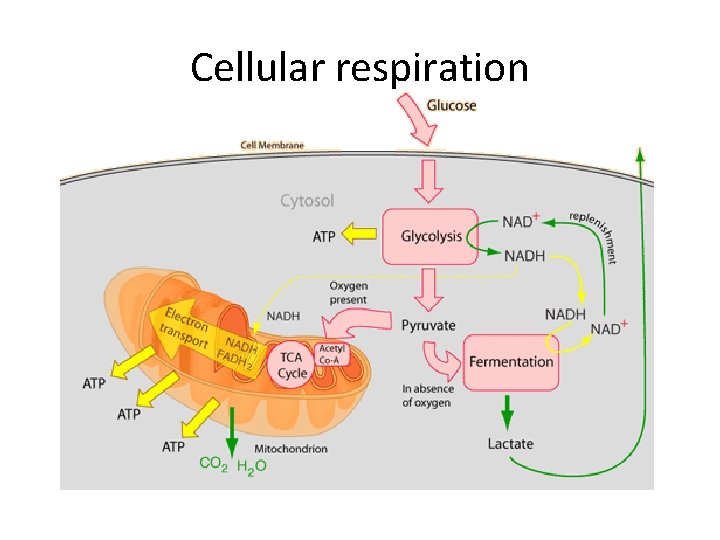
Cellular respiration
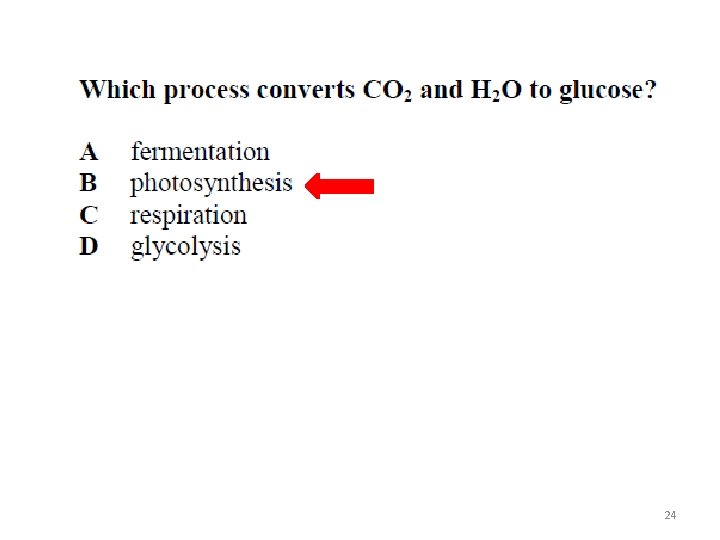
24
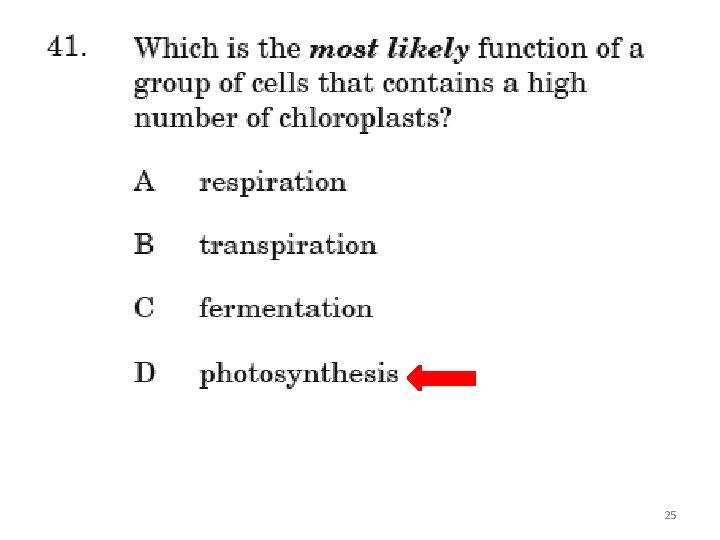
25
26
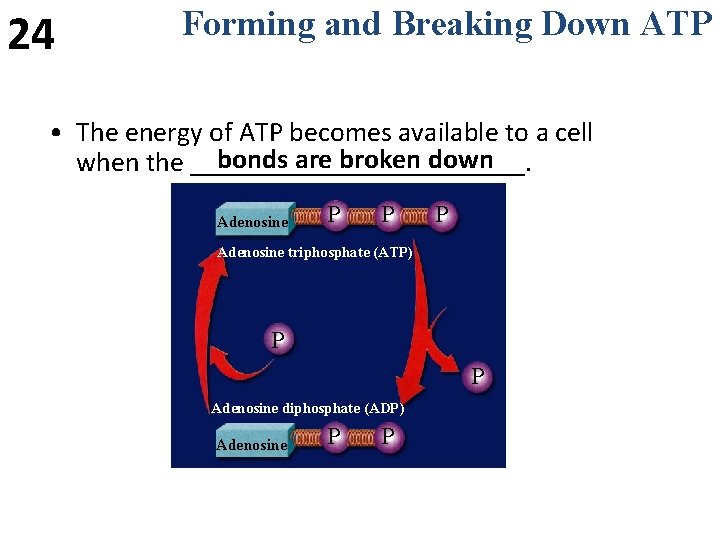
24 Forming and Breaking Down ATP • The energy of ATP becomes available to a cell bonds are broken down when the ____________. Adenosine P P P Adenosine triphosphate (ATP) P P Adenosine diphosphate (ADP) Adenosine P P
28
29