
Stakeholder Voice What it is telling us 202021
- Slides: 20
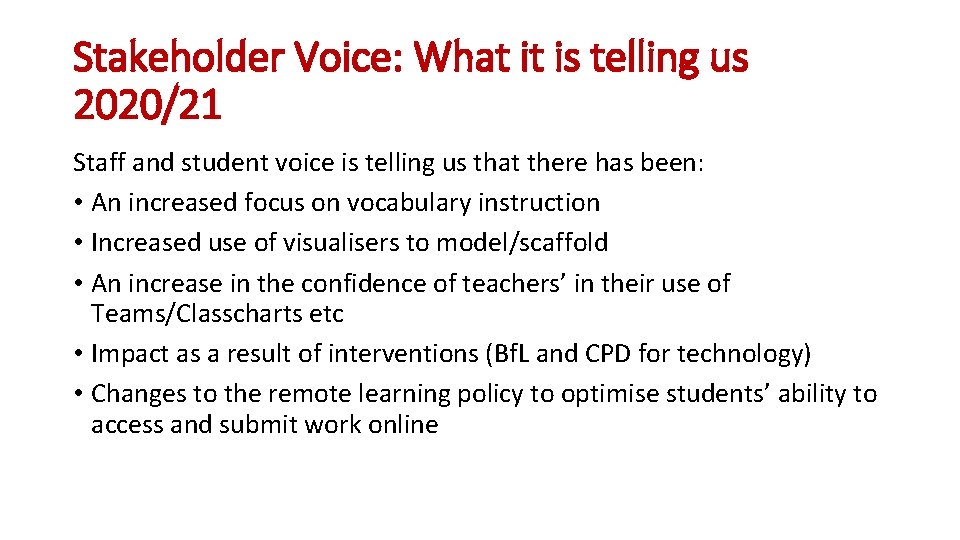
Stakeholder Voice: What it is telling us 2020/21 Staff and student voice is telling us that there has been: • An increased focus on vocabulary instruction • Increased use of visualisers to model/scaffold • An increase in the confidence of teachers’ in their use of Teams/Classcharts etc • Impact as a result of interventions (Bf. L and CPD for technology) • Changes to the remote learning policy to optimise students’ ability to access and submit work online
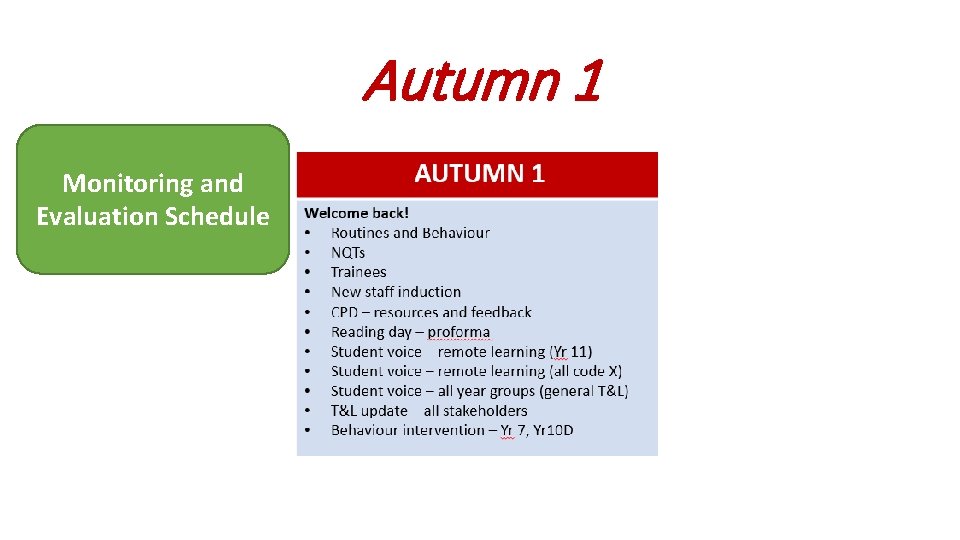
Autumn 1 Monitoring and Evaluation Schedule
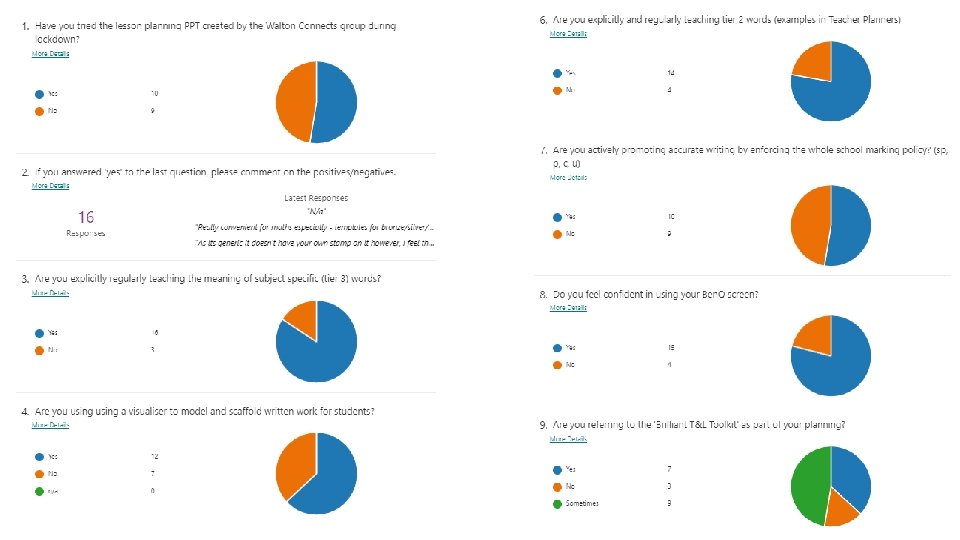
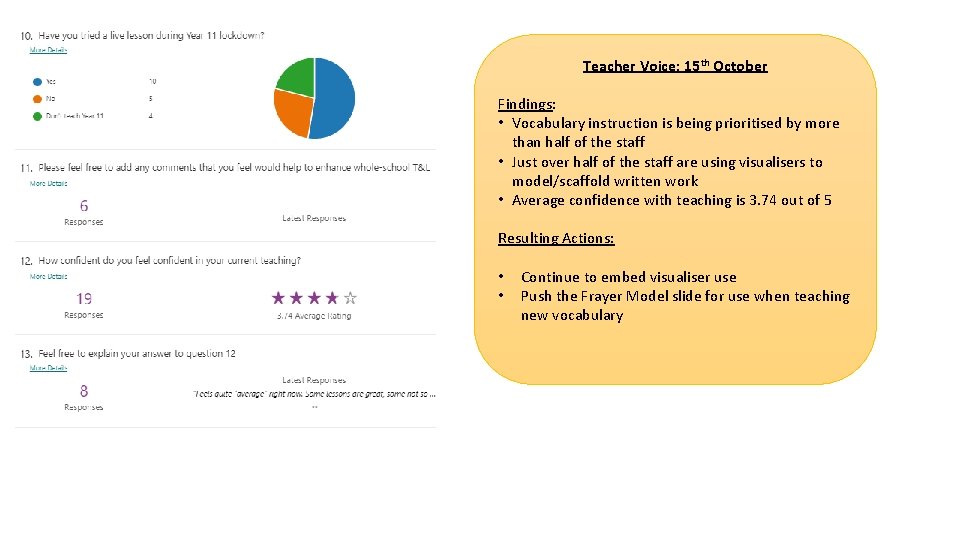
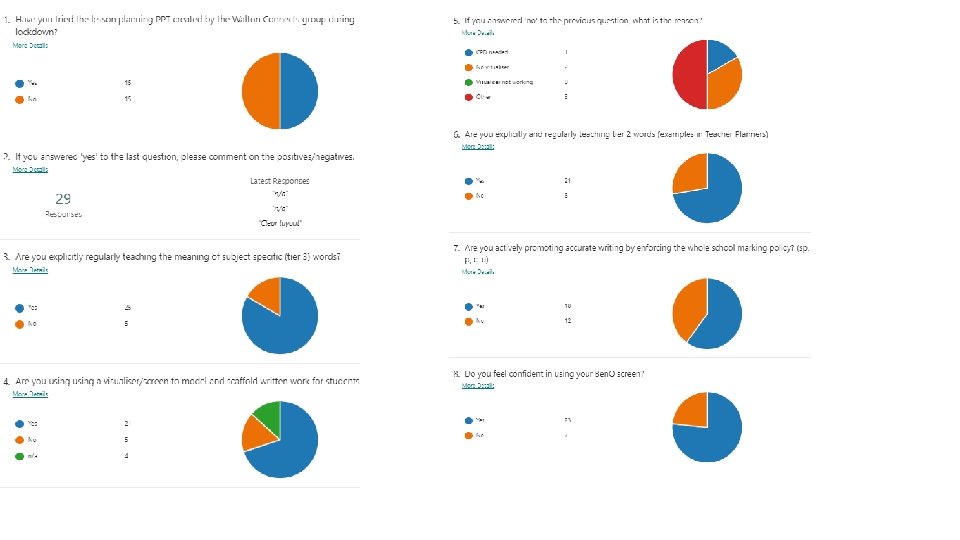
Teacher Voice: 15 th October Findings: • Vocabulary instruction is being prioritised by more than half of the staff • Just over half of the staff are using visualisers to model/scaffold written work • Average confidence with teaching is 3. 74 out of 5 Resulting Actions: • • Continue to embed visualiser use Push the Frayer Model slide for use when teaching new vocabulary
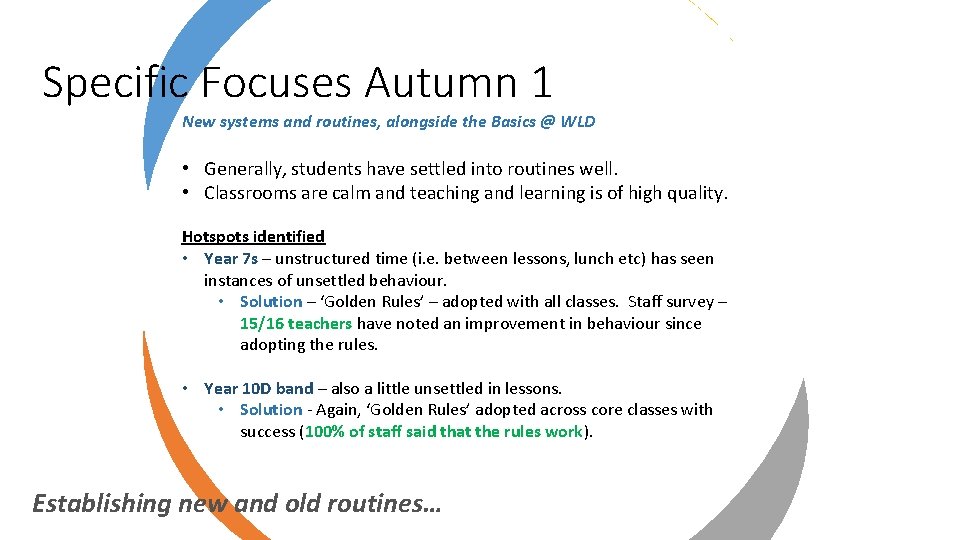
Specific Focuses Autumn 1 New systems and routines, alongside the Basics @ WLD • Generally, students have settled into routines well. • Classrooms are calm and teaching and learning is of high quality. Hotspots identified • Year 7 s – unstructured time (i. e. between lessons, lunch etc) has seen instances of unsettled behaviour. • Solution – ‘Golden Rules’ – adopted with all classes. Staff survey – 15/16 teachers have noted an improvement in behaviour since adopting the rules. • Year 10 D band – also a little unsettled in lessons. • Solution - Again, ‘Golden Rules’ adopted across core classes with success (100% of staff said that the rules work). Establishing new and old routines…
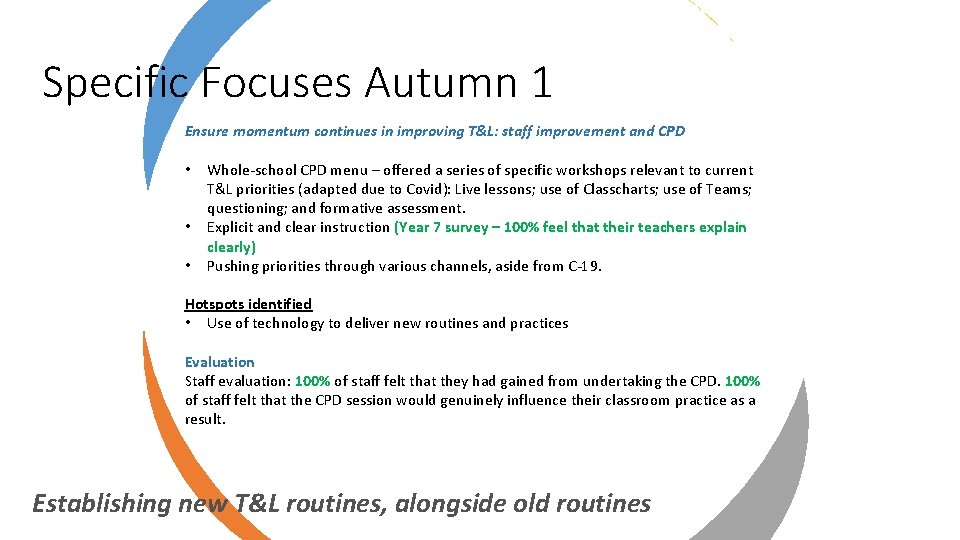
Specific Focuses Autumn 1 Ensure momentum continues in improving T&L: staff improvement and CPD • • • Whole-school CPD menu – offered a series of specific workshops relevant to current T&L priorities (adapted due to Covid): Live lessons; use of Classcharts; use of Teams; questioning; and formative assessment. Explicit and clear instruction (Year 7 survey – 100% feel that their teachers explain clearly) Pushing priorities through various channels, aside from C-19. Hotspots identified • Use of technology to deliver new routines and practices Evaluation Staff evaluation: 100% of staff felt that they had gained from undertaking the CPD. 100% of staff felt that the CPD session would genuinely influence their classroom practice as a result. Establishing new T&L routines, alongside old routines
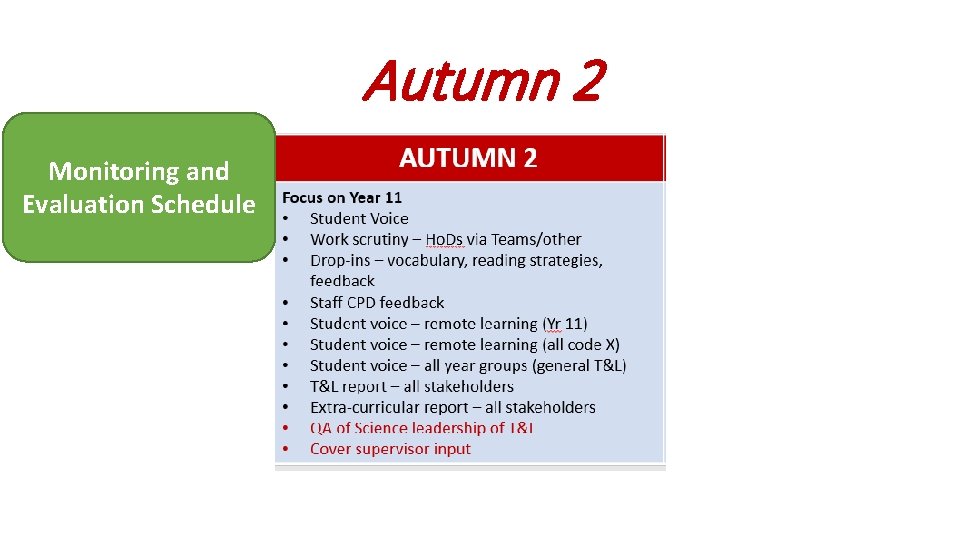
Autumn 2 Monitoring and Evaluation Schedule
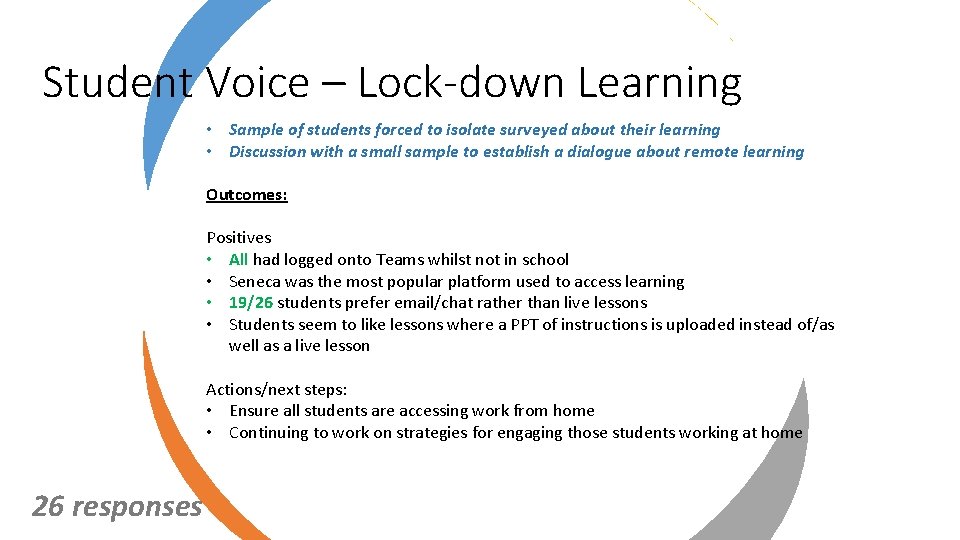
Student Voice – Lock-down Learning • Sample of students forced to isolate surveyed about their learning • Discussion with a small sample to establish a dialogue about remote learning Outcomes: Positives • All had logged onto Teams whilst not in school • Seneca was the most popular platform used to access learning • 19/26 students prefer email/chat rather than live lessons • Students seem to like lessons where a PPT of instructions is uploaded instead of/as well as a live lesson Actions/next steps: • Ensure all students are accessing work from home • Continuing to work on strategies for engaging those students working at home 26 responses
Moving Forward… • Embedding the ‘Teaching and Learning Policy’ and the Feedback-Plan. Teach philosophy. • Visualisers to improve extended writing (64% of staff currently using one) • Explicit instruction of vocabulary (79% of staff are currently doing this; moreso of the subject-specific vocabulary, rather than the tier 2 words). • Use of formative feedback to inform planning and teaching • Effective questioning – materials available for independent/departmental CPD • Promote independent reading using the Reciprocal Reading model (64% of staff currently using one) • Adapting to the shifting situation caused by the C-19 Pandemic. CPD to be offered where needed • Ensuring all students can access Teams and submit work …into Autumn 2
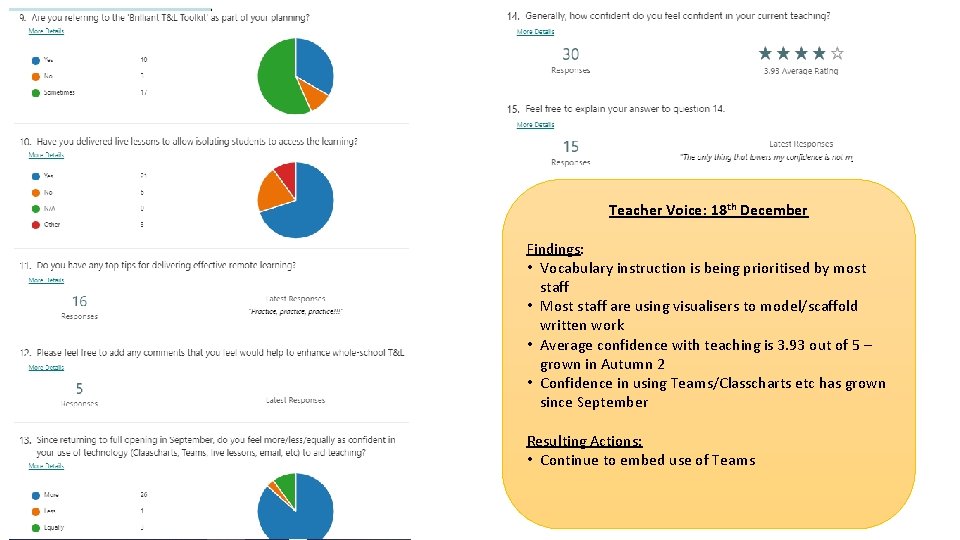
Teacher Voice: 18 th December Findings: • Vocabulary instruction is being prioritised by most staff • Most staff are using visualisers to model/scaffold written work • Average confidence with teaching is 3. 93 out of 5 – grown in Autumn 2 • Confidence in using Teams/Classcharts etc has grown since September Resulting Actions: • Continue to embed use of Teams
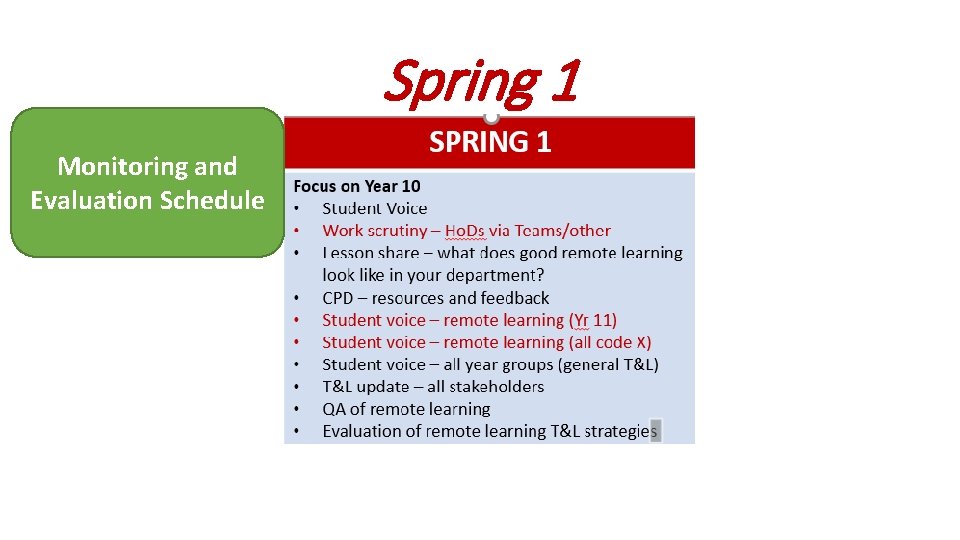
Spring 1 Monitoring and Evaluation Schedule
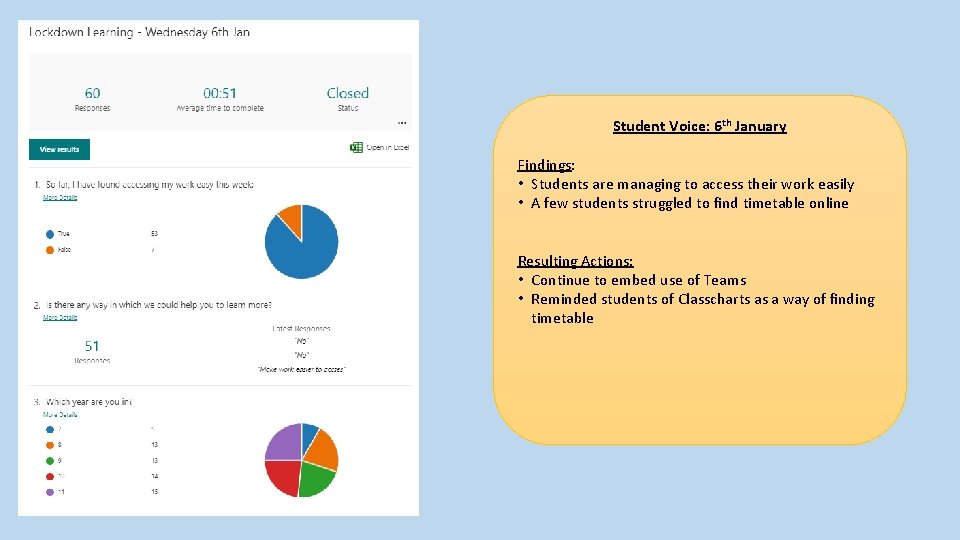
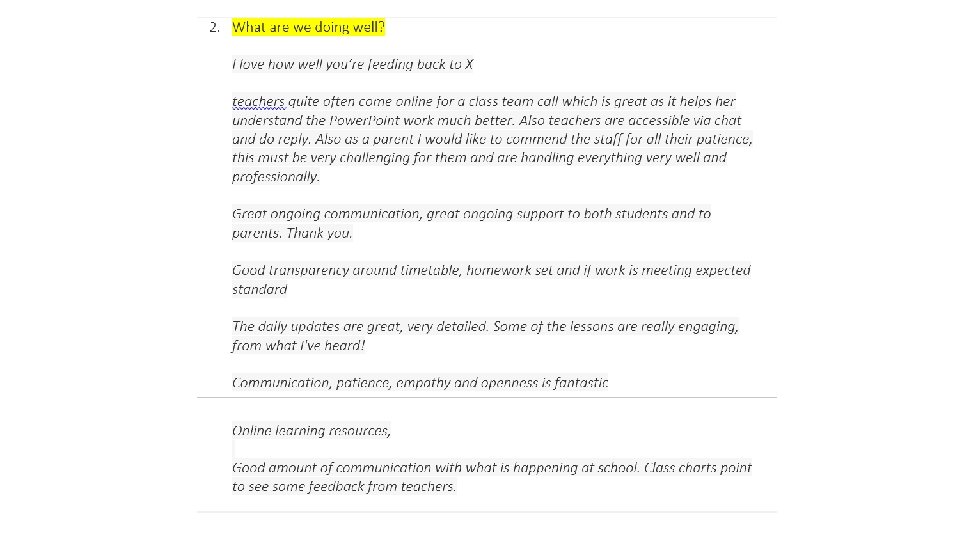
Student Voice: 6 th January Findings: • Students are managing to access their work easily • A few students struggled to find timetable online Resulting Actions: • Continue to embed use of Teams • Reminded students of Classcharts as a way of finding timetable
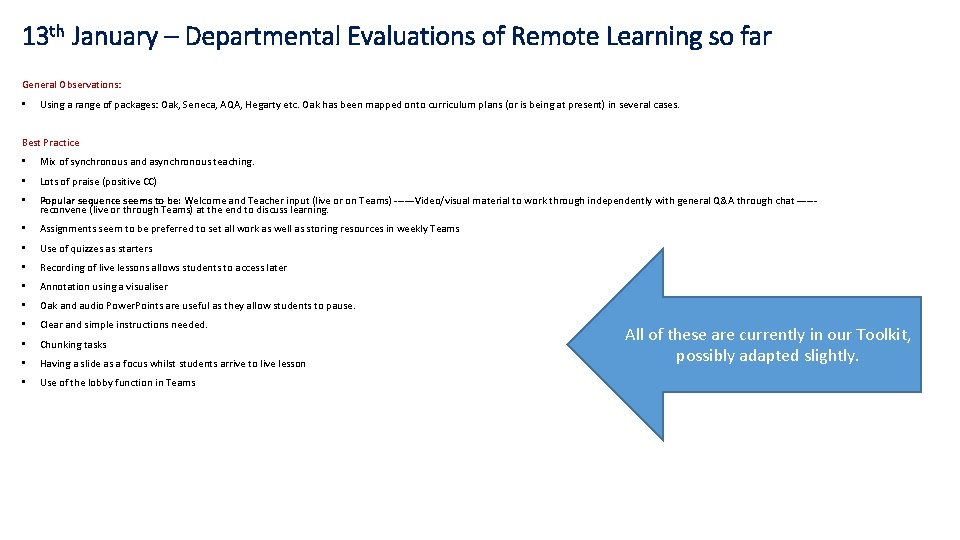
13 th January – Departmental Evaluations of Remote Learning so far General Observations: • Using a range of packages: Oak, Seneca, AQA, Hegarty etc. Oak has been mapped onto curriculum plans (or is being at present) in several cases. Best Practice • Mix of synchronous and asynchronous teaching. • Lots of praise (positive CC) • Popular sequence seems to be: Welcome and Teacher input (live or on Teams) ------Video/visual material to work through independently with general Q&A through chat -----reconvene (live or through Teams) at the end to discuss learning. • Assignments seem to be preferred to set all work as well as storing resources in weekly Teams • Use of quizzes as starters • Recording of live lessons allows students to access later • Annotation using a visualiser • Oak and audio Power. Points are useful as they allow students to pause. • Clear and simple instructions needed. • Chunking tasks • Having a slide as a focus whilst students arrive to live lesson • Use of the lobby function in Teams All of these are currently in our Toolkit, possibly adapted slightly.
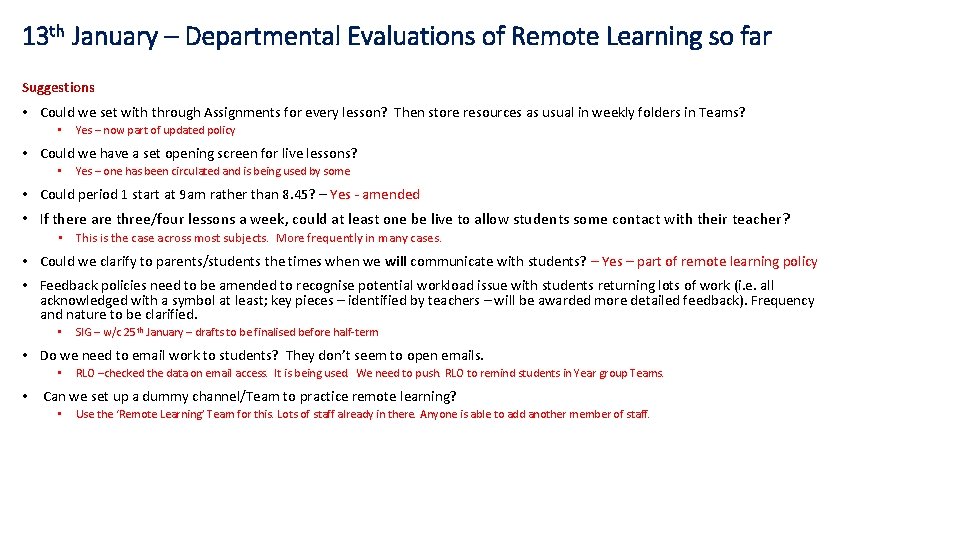
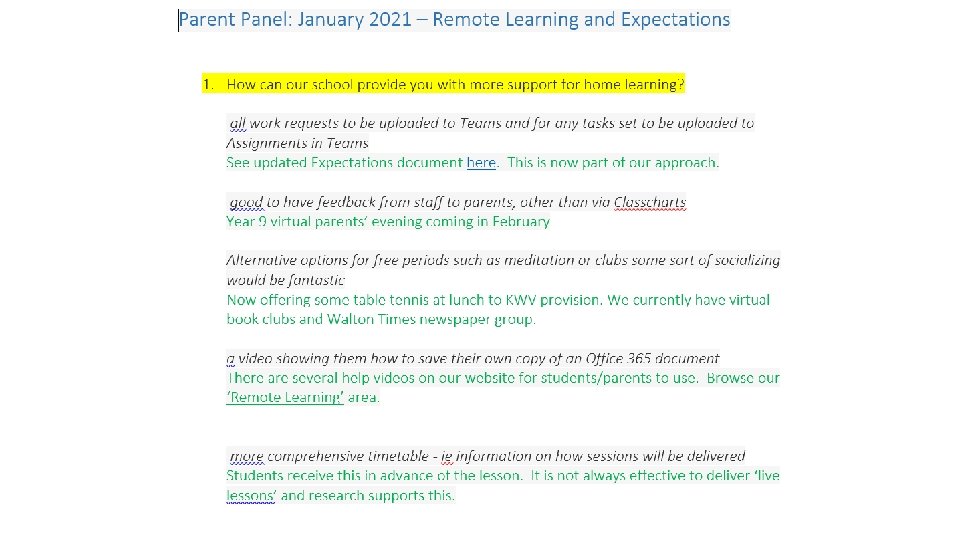
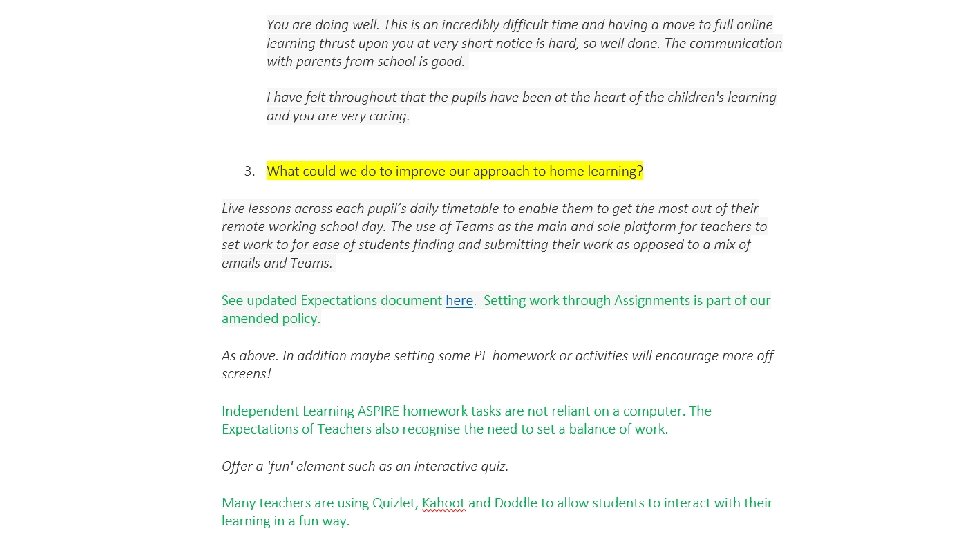
13 th January – Departmental Evaluations of Remote Learning so far Suggestions • Could we set with through Assignments for every lesson? Then store resources as usual in weekly folders in Teams? • Yes – now part of updated policy • Could we have a set opening screen for live lessons? • Yes – one has been circulated and is being used by some • Could period 1 start at 9 am rather than 8. 45? – Yes - amended • If there are three/four lessons a week, could at least one be live to allow students some contact with their teacher? • This is the case across most subjects. More frequently in many cases. • Could we clarify to parents/students the times when we will communicate with students? – Yes – part of remote learning policy • Feedback policies need to be amended to recognise potential workload issue with students returning lots of work (i. e. all acknowledged with a symbol at least; key pieces – identified by teachers – will be awarded more detailed feedback). Frequency and nature to be clarified. • SIG – w/c 25 th January – drafts to be finalised before half-term • Do we need to email work to students? They don’t seem to open emails. • • RLO –checked the data on email access. It is being used. We need to push. RLO to remind students in Year group Teams. Can we set up a dummy channel/Team to practice remote learning? • Use the ‘Remote Learning’ Team for this. Lots of staff already in there. Anyone is able to add another member of staff.
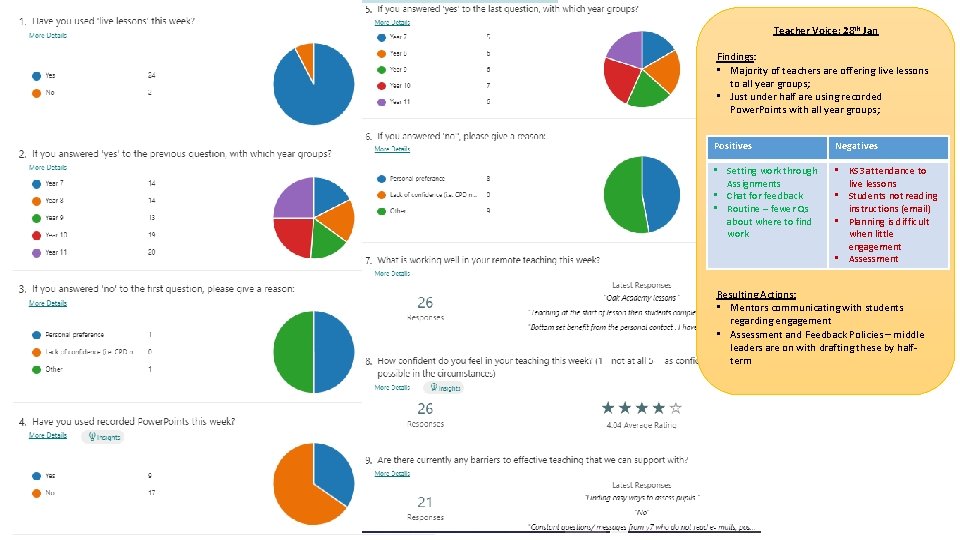
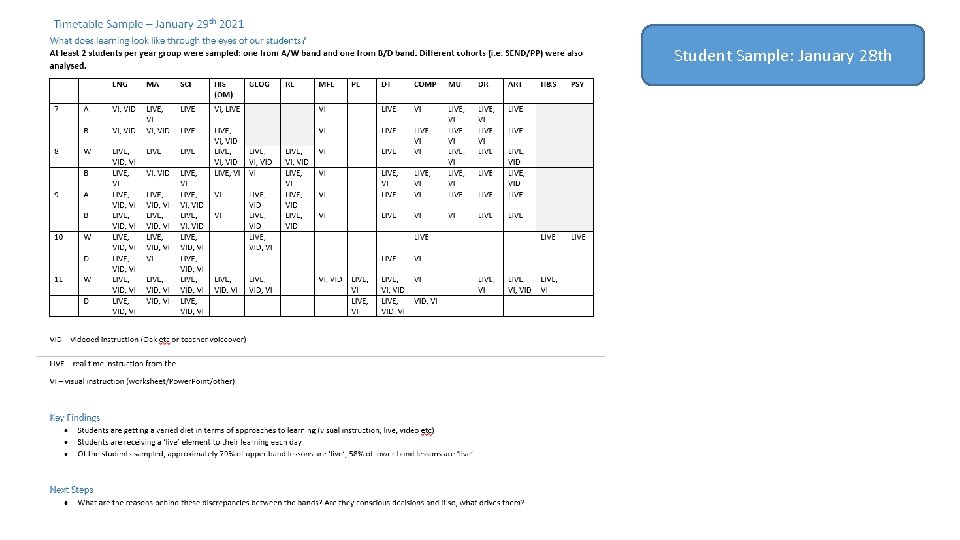
Teacher Voice: 28 th Jan Findings: • Majority of teachers are offering live lessons to all year groups; • Just under half are using recorded Power. Points with all year groups; Positives Negatives • Setting work through Assignments • Chat for feedback • Routine – fewer Qs about where to find work • KS 3 attendance to live lessons • Students not reading instructions (email) • Planning is difficult when little engagement • Assessment Resulting Actions: • Mentors communicating with students regarding engagement • Assessment and Feedback Policies – middle leaders are on with drafting these by halfterm
Student Sample: January 28 th