
Stainless Steel High Ni Cr Content Low Controlled


- Slides: 62
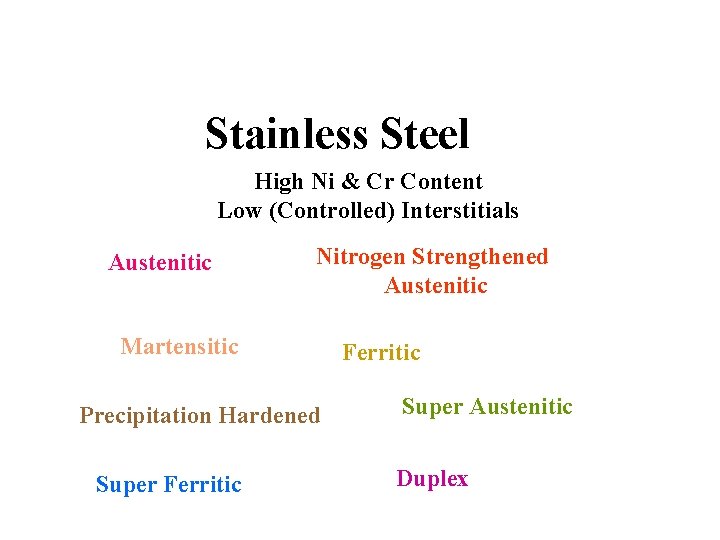
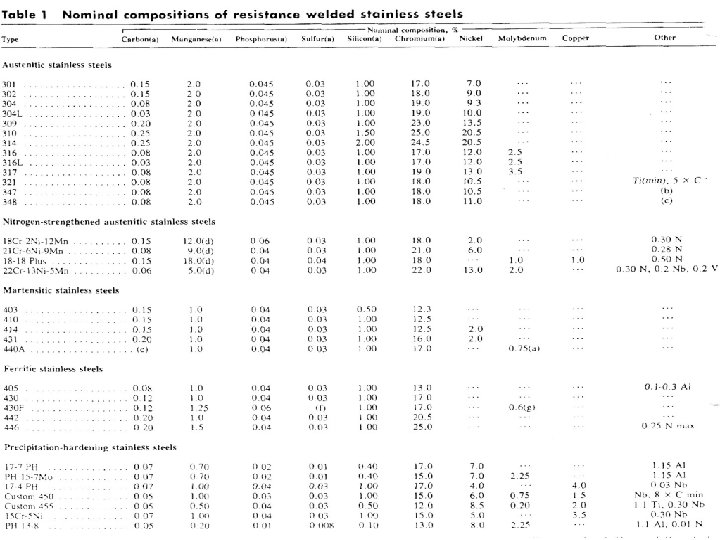
Stainless Steel High Ni & Cr Content Low (Controlled) Interstitials Austenitic Nitrogen Strengthened Austenitic Martensitic Precipitation Hardened Super Ferritic Super Austenitic Duplex
Resistance Welding Lesson Objectives When you finish this lesson you will understand: • Keywords Learning Activities 1. View Slides; 2. Read Notes, 3. Listen to lecture 4. Do on-line workbook
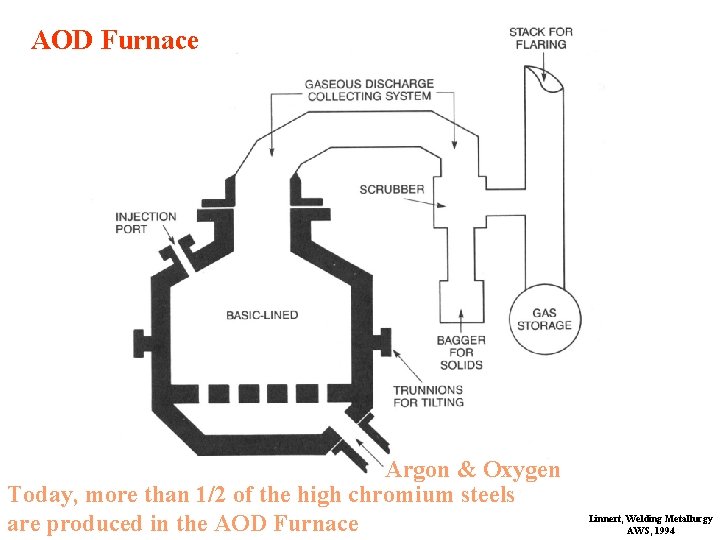
AOD Furnace Argon & Oxygen Today, more than 1/2 of the high chromium steels are produced in the AOD Furnace Linnert, Welding Metallurgy AWS, 1994
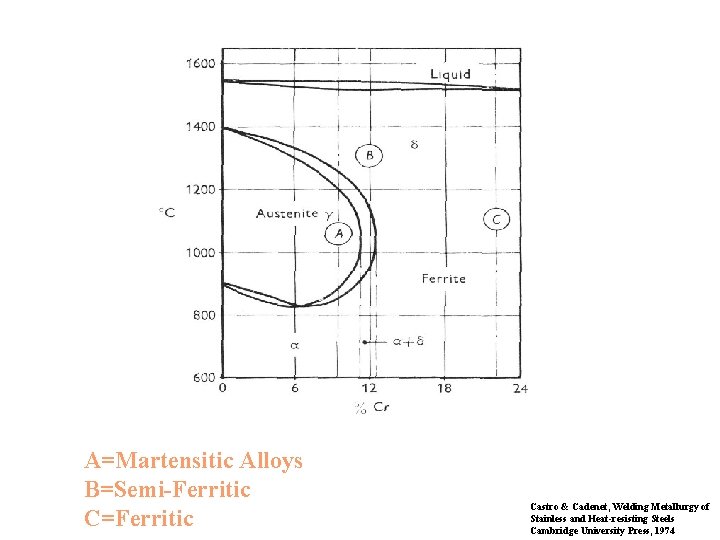
A=Martensitic Alloys B=Semi-Ferritic C=Ferritic Castro & Cadenet, Welding Metallurgy of Stainless and Heat-resisting Steels Cambridge University Press, 1974
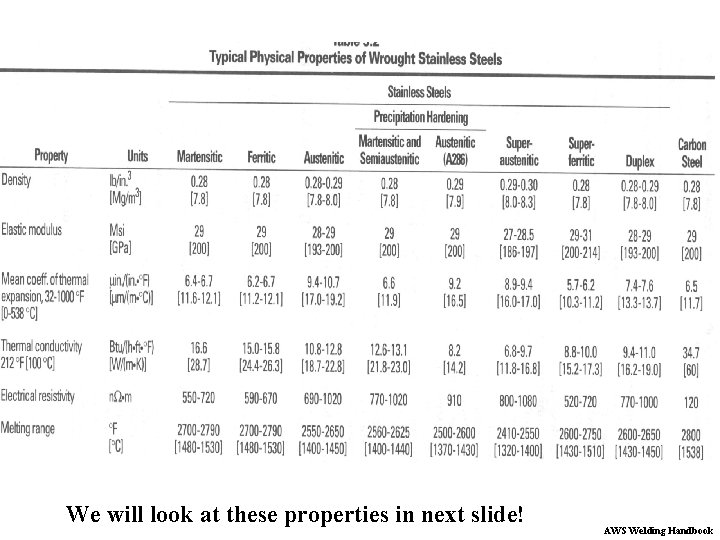
We will look at these properties in next slide! AWS Welding Handbook
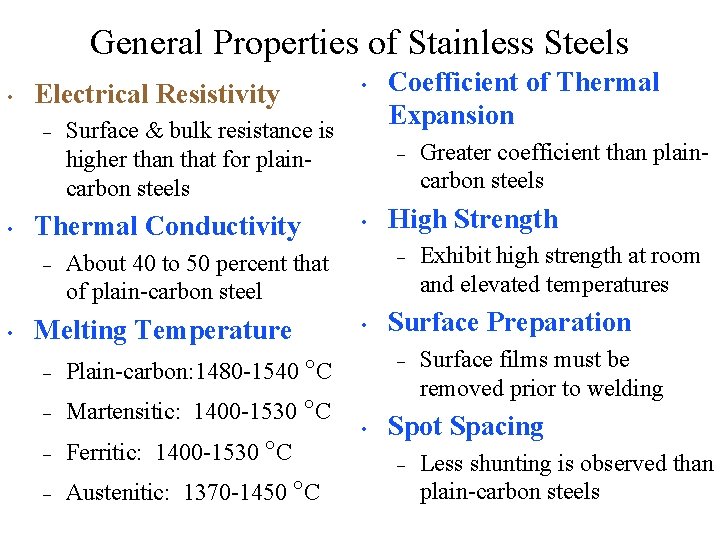
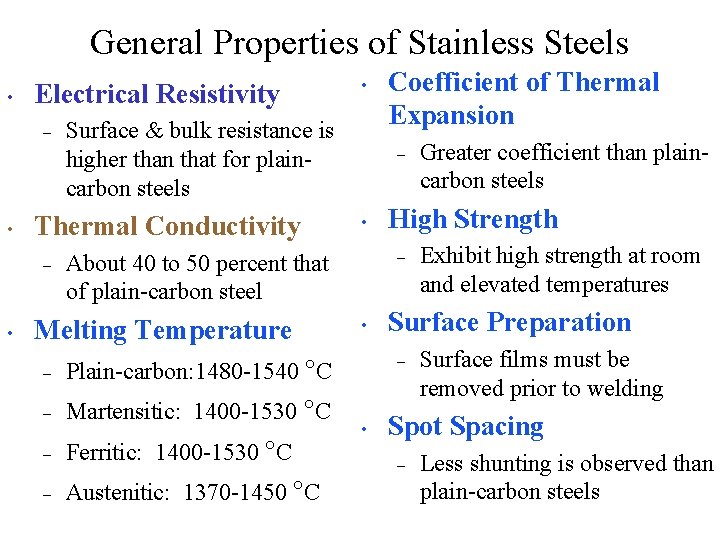
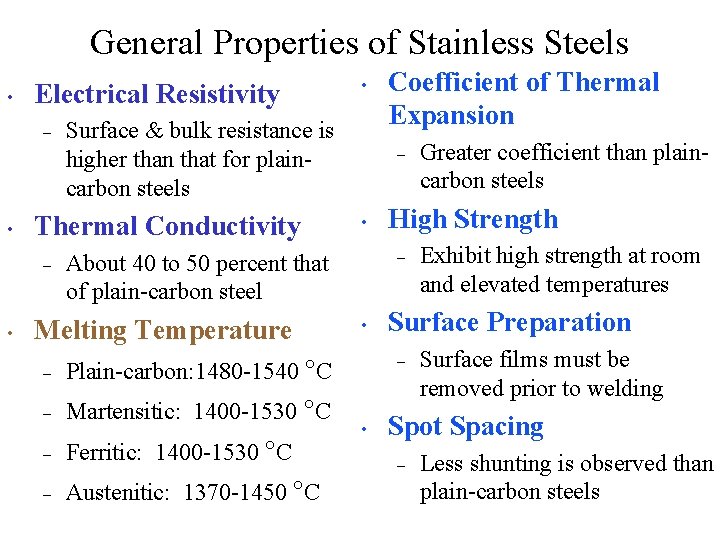
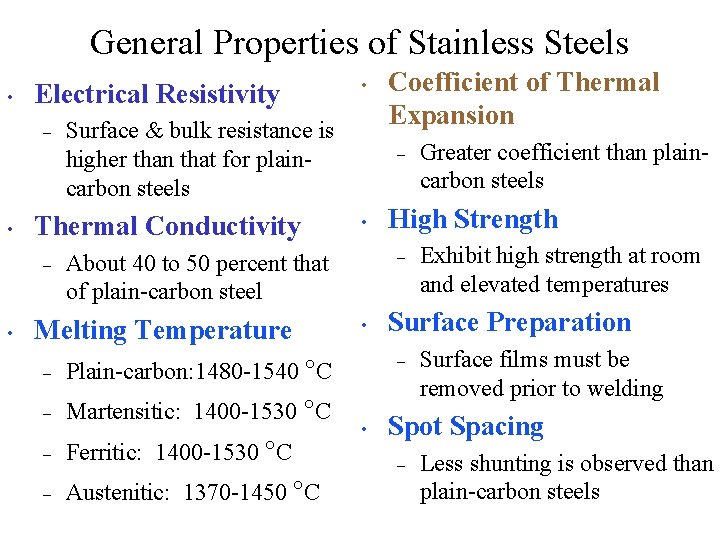
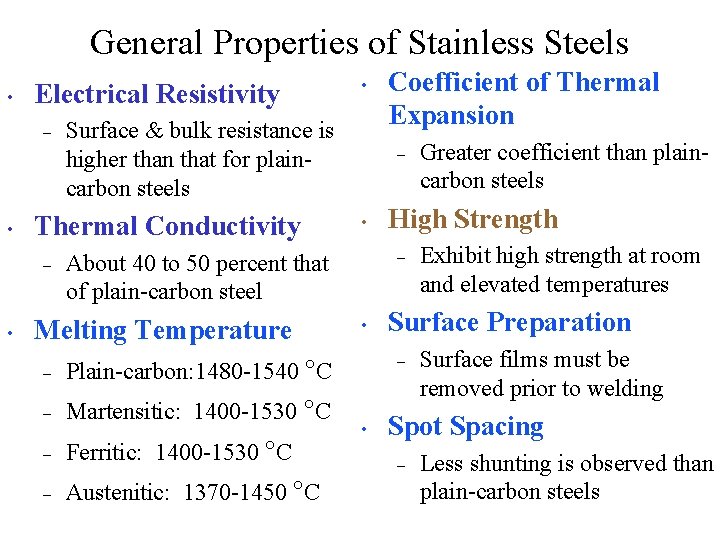
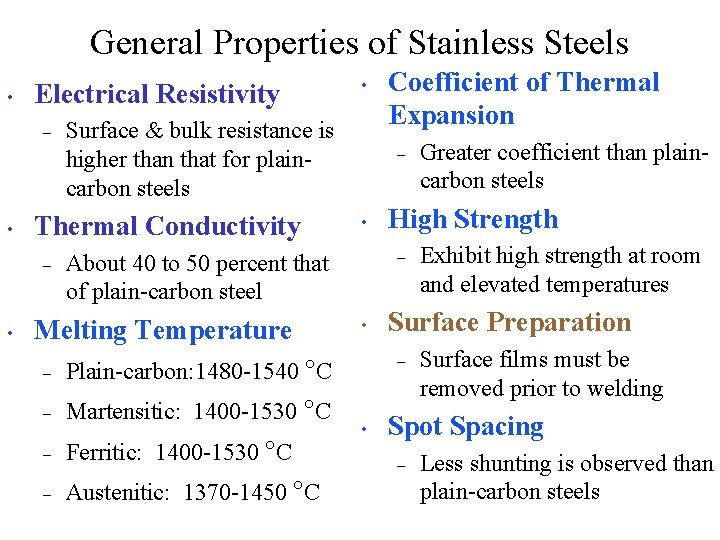
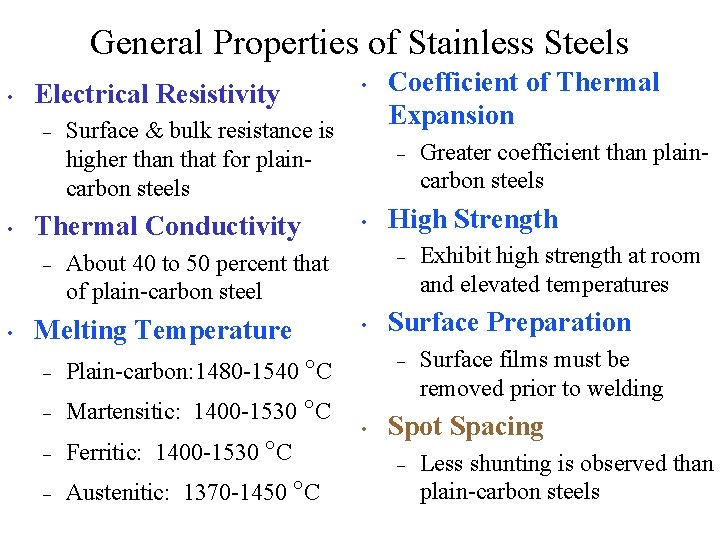
General Properties of Stainless Steels • Electrical Resistivity – • • Surface & bulk resistance is higher than that for plaincarbon steels Thermal Conductivity – • – Plain-carbon: 1480 -1540 °C – Martensitic: 1400 -1530 °C – Ferritic: 1400 -1530 °C – Austenitic: 1370 -1450 °C • Exhibit high strength at room and elevated temperatures Surface Preparation – • Greater coefficient than plaincarbon steels High Strength – About 40 to 50 percent that of plain-carbon steel Melting Temperature Coefficient of Thermal Expansion Surface films must be removed prior to welding Spot Spacing – Less shunting is observed than plain-carbon steels
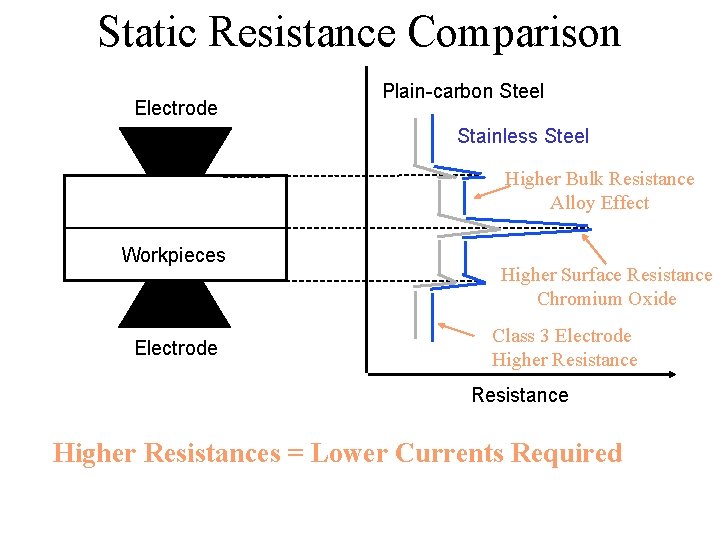
Static Resistance Comparison Electrode Plain-carbon Steel Stainless Steel Higher Bulk Resistance Alloy Effect Workpieces Electrode Higher Surface Resistance Chromium Oxide Class 3 Electrode Higher Resistances = Lower Currents Required
General Properties of Stainless Steels • Electrical Resistivity – • • Surface & bulk resistance is higher than that for plaincarbon steels Thermal Conductivity – • – Plain-carbon: 1480 -1540 °C – Martensitic: 1400 -1530 °C – Ferritic: 1400 -1530 °C – Austenitic: 1370 -1450 °C • Exhibit high strength at room and elevated temperatures Surface Preparation – • Greater coefficient than plaincarbon steels High Strength – About 40 to 50 percent that of plain-carbon steel Melting Temperature Coefficient of Thermal Expansion Surface films must be removed prior to welding Spot Spacing – Less shunting is observed than plain-carbon steels
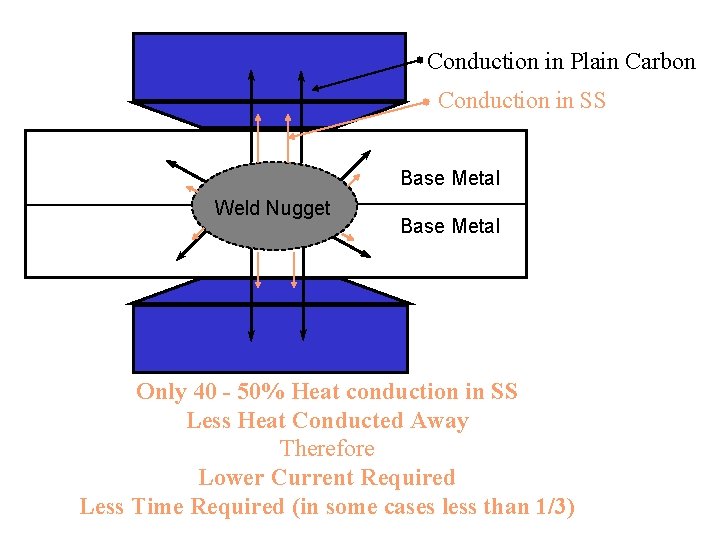
Conduction in Plain Carbon Conduction in SS Base Metal Weld Nugget Base Metal Only 40 - 50% Heat conduction in SS Less Heat Conducted Away Therefore Lower Current Required Less Time Required (in some cases less than 1/3)
General Properties of Stainless Steels • Electrical Resistivity – • • Surface & bulk resistance is higher than that for plaincarbon steels Thermal Conductivity – • – Plain-carbon: 1480 -1540 °C – Martensitic: 1400 -1530 °C – Ferritic: 1400 -1530 °C – Austenitic: 1370 -1450 °C • Exhibit high strength at room and elevated temperatures Surface Preparation – • Greater coefficient than plaincarbon steels High Strength – About 40 to 50 percent that of plain-carbon steel Melting Temperature Coefficient of Thermal Expansion Surface films must be removed prior to welding Spot Spacing – Less shunting is observed than plain-carbon steels
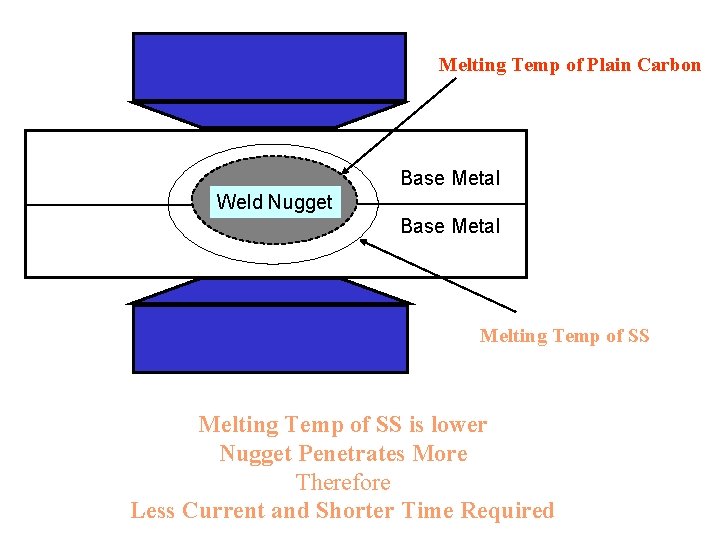
Melting Temp of Plain Carbon Base Metal Weld Nugget Base Metal Melting Temp of SS is lower Nugget Penetrates More Therefore Less Current and Shorter Time Required
General Properties of Stainless Steels • Electrical Resistivity – • • Surface & bulk resistance is higher than that for plaincarbon steels Thermal Conductivity – • – Plain-carbon: 1480 -1540 °C – Martensitic: 1400 -1530 °C – Ferritic: 1400 -1530 °C – Austenitic: 1370 -1450 °C • Exhibit high strength at room and elevated temperatures Surface Preparation – • Greater coefficient than plaincarbon steels High Strength – About 40 to 50 percent that of plain-carbon steel Melting Temperature Coefficient of Thermal Expansion Surface films must be removed prior to welding Spot Spacing – Less shunting is observed than plain-carbon steels
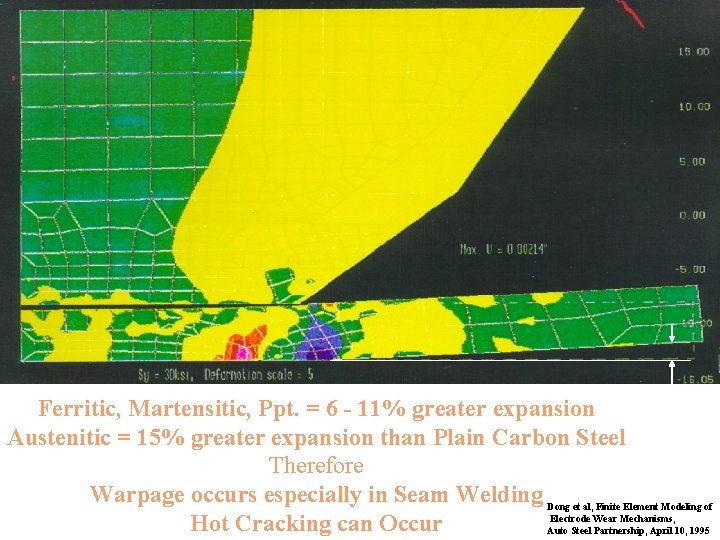
Ferritic, Martensitic, Ppt. = 6 - 11% greater expansion Austenitic = 15% greater expansion than Plain Carbon Steel Therefore Warpage occurs especially in Seam Welding Dong et al, Finite Element Modeling of Electrode Wear Mechanisms, Hot Cracking can Occur Auto Steel Partnership, April 10, 1995
General Properties of Stainless Steels • Electrical Resistivity – • • Surface & bulk resistance is higher than that for plaincarbon steels Thermal Conductivity – • – Plain-carbon: 1480 -1540 °C – Martensitic: 1400 -1530 °C – Ferritic: 1400 -1530 °C – Austenitic: 1370 -1450 °C • Exhibit high strength at room and elevated temperatures Surface Preparation – • Greater coefficient than plaincarbon steels High Strength – About 40 to 50 percent that of plain-carbon steel Melting Temperature Coefficient of Thermal Expansion Surface films must be removed prior to welding Spot Spacing – Less shunting is observed than plain-carbon steels
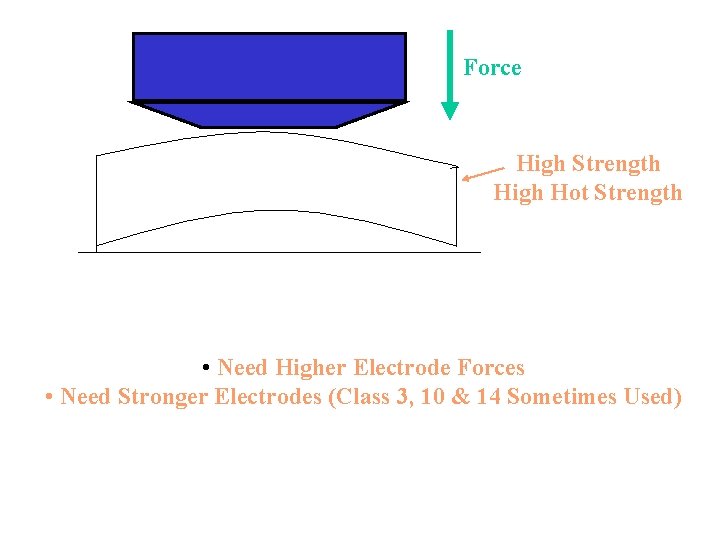
Force High Strength High Hot Strength • Need Higher Electrode Forces • Need Stronger Electrodes (Class 3, 10 & 14 Sometimes Used)
General Properties of Stainless Steels • Electrical Resistivity – • • Surface & bulk resistance is higher than that for plaincarbon steels Thermal Conductivity – • – Plain-carbon: 1480 -1540 °C – Martensitic: 1400 -1530 °C – Ferritic: 1400 -1530 °C – Austenitic: 1370 -1450 °C • Exhibit high strength at room and elevated temperatures Surface Preparation – • Greater coefficient than plaincarbon steels High Strength – About 40 to 50 percent that of plain-carbon steel Melting Temperature Coefficient of Thermal Expansion Surface films must be removed prior to welding Spot Spacing – Less shunting is observed than plain-carbon steels
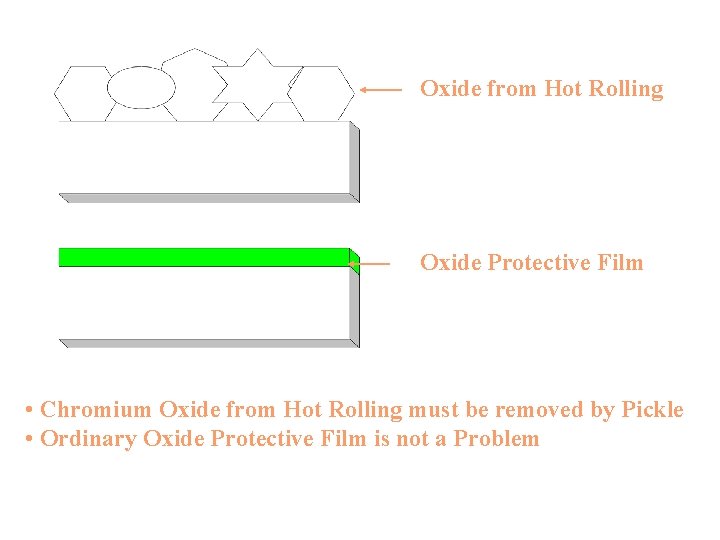
Oxide from Hot Rolling Oxide Protective Film • Chromium Oxide from Hot Rolling must be removed by Pickle • Ordinary Oxide Protective Film is not a Problem
General Properties of Stainless Steels • Electrical Resistivity – • • Surface & bulk resistance is higher than that for plaincarbon steels Thermal Conductivity – • – Plain-carbon: 1480 -1540 °C – Martensitic: 1400 -1530 °C – Ferritic: 1400 -1530 °C – Austenitic: 1370 -1450 °C • Exhibit high strength at room and elevated temperatures Surface Preparation – • Greater coefficient than plaincarbon steels High Strength – About 40 to 50 percent that of plain-carbon steel Melting Temperature Coefficient of Thermal Expansion Surface films must be removed prior to welding Spot Spacing – Less shunting is observed than plain-carbon steels
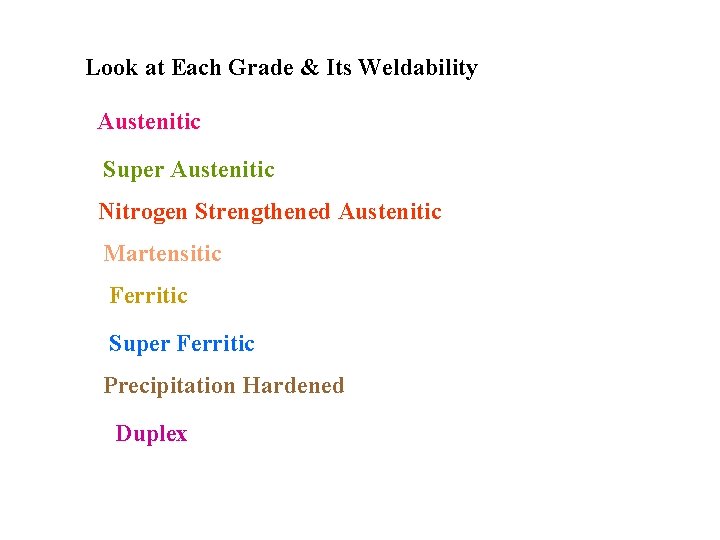
Look at Each Grade & Its Weldability Austenitic Super Austenitic Nitrogen Strengthened Austenitic Martensitic Ferritic Super Ferritic Precipitation Hardened Duplex
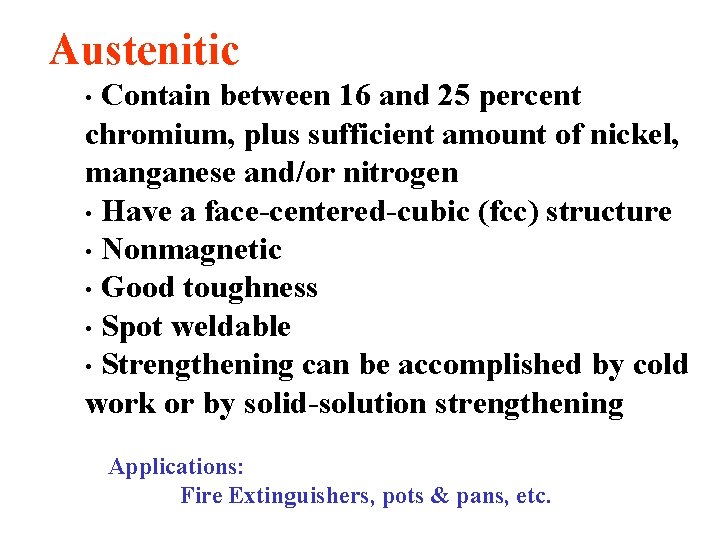
Austenitic Contain between 16 and 25 percent chromium, plus sufficient amount of nickel, manganese and/or nitrogen • Have a face-centered-cubic (fcc) structure • Nonmagnetic • Good toughness • Spot weldable • Strengthening can be accomplished by cold work or by solid-solution strengthening • Applications: Fire Extinguishers, pots & pans, etc.
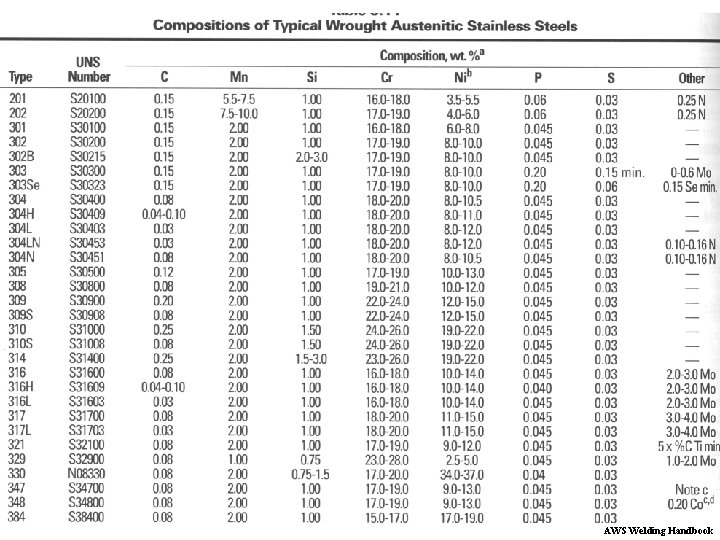
AWS Welding Handbook
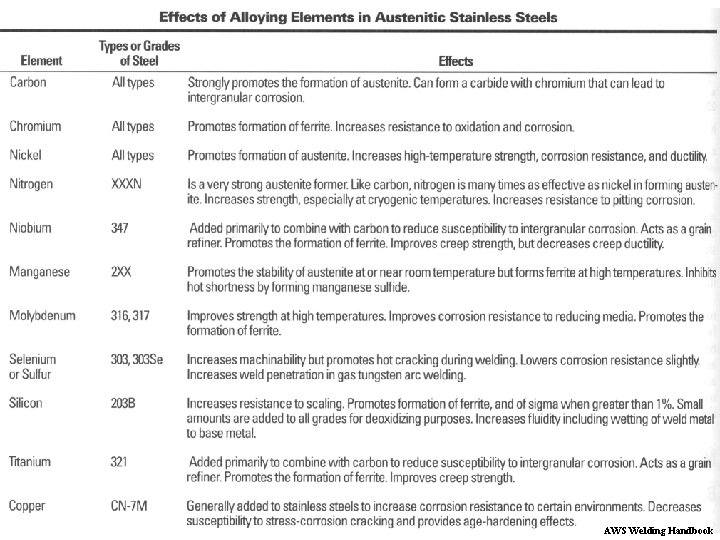
AWS Welding Handbook
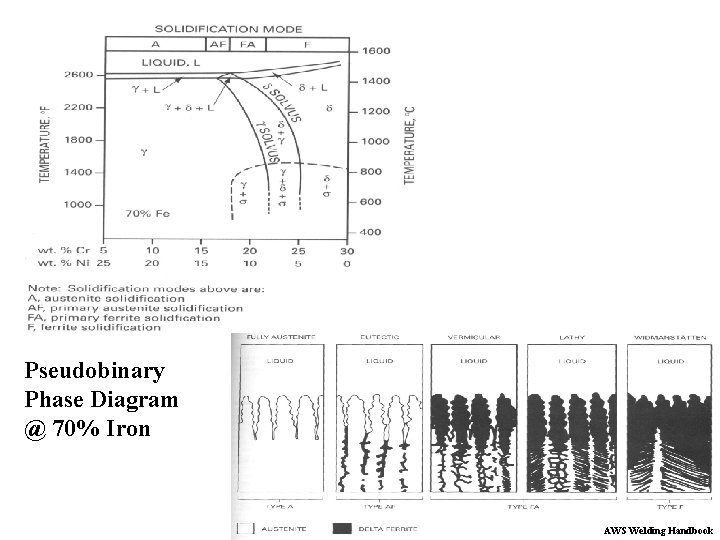
Pseudobinary Phase Diagram @ 70% Iron AWS Welding Handbook
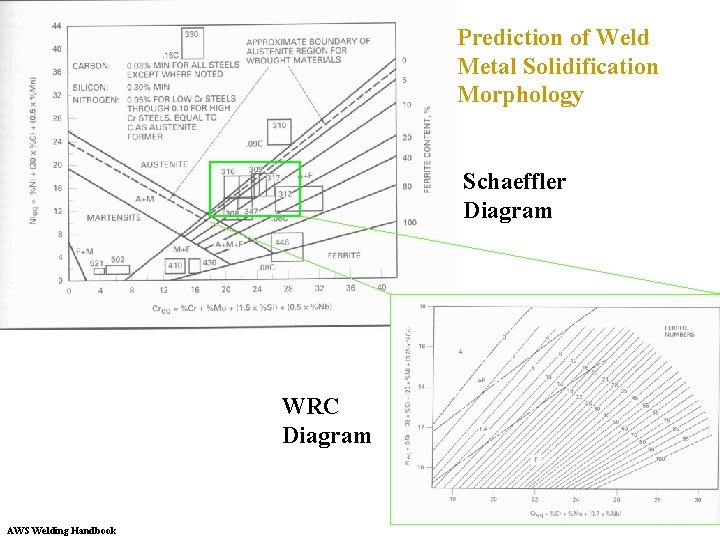
Prediction of Weld Metal Solidification Morphology Schaeffler Diagram WRC Diagram AWS Welding Handbook
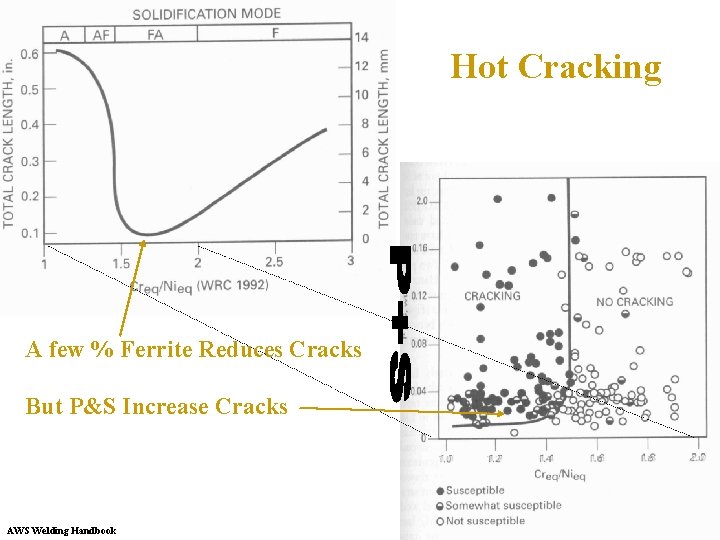
Hot Cracking A few % Ferrite Reduces Cracks But P&S Increase Cracks AWS Welding Handbook
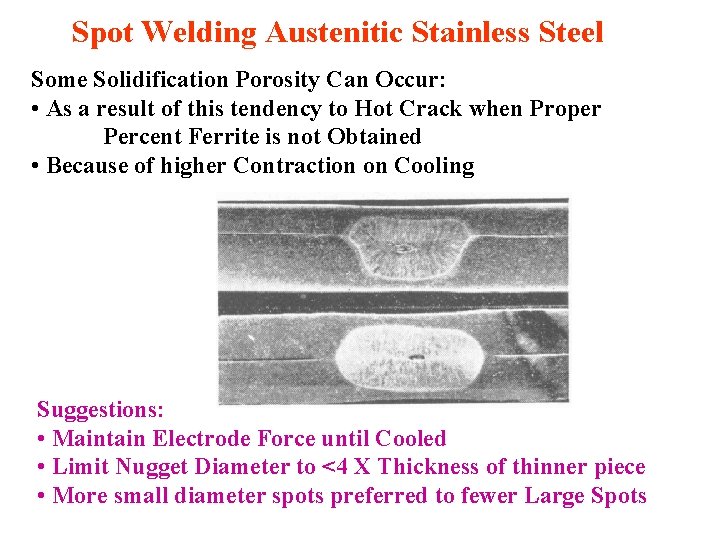
Spot Welding Austenitic Stainless Steel Some Solidification Porosity Can Occur: • As a result of this tendency to Hot Crack when Proper Percent Ferrite is not Obtained • Because of higher Contraction on Cooling Suggestions: • Maintain Electrode Force until Cooled • Limit Nugget Diameter to <4 X Thickness of thinner piece • More small diameter spots preferred to fewer Large Spots
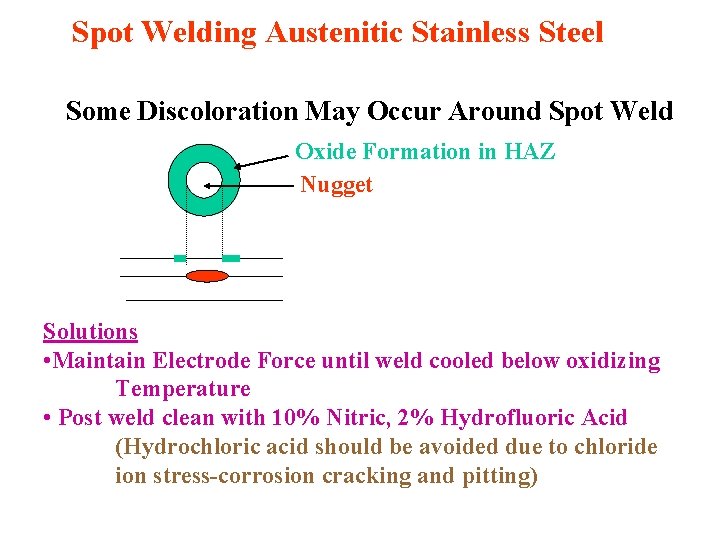
Spot Welding Austenitic Stainless Steel Some Discoloration May Occur Around Spot Weld Oxide Formation in HAZ Nugget Solutions • Maintain Electrode Force until weld cooled below oxidizing Temperature • Post weld clean with 10% Nitric, 2% Hydrofluoric Acid (Hydrochloric acid should be avoided due to chloride ion stress-corrosion cracking and pitting)
Seam Welding Austenitic Stainless Steel Somewhat more Distortion Noted Because of Higher Thermal Contraction Solution • Abundant water cooling to remove heat Knifeline Corrosion Attack in Austenitic Stainless Steel Seam Welds Solution • See Next Slide for more description
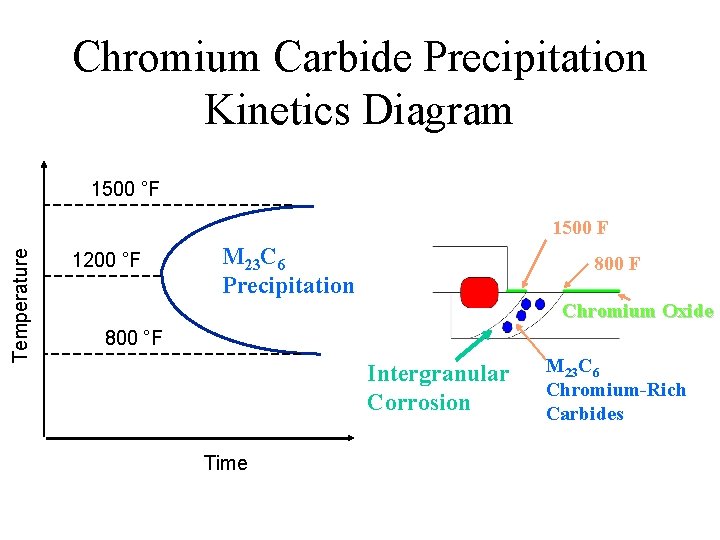
Chromium Carbide Precipitation Kinetics Diagram 1500 °F Temperature 1500 F 1200 °F M 23 C 6 Precipitation 800 F Chromium Oxide 800 °F Intergranular Corrosion Time M 23 C 6 Chromium-Rich Carbides
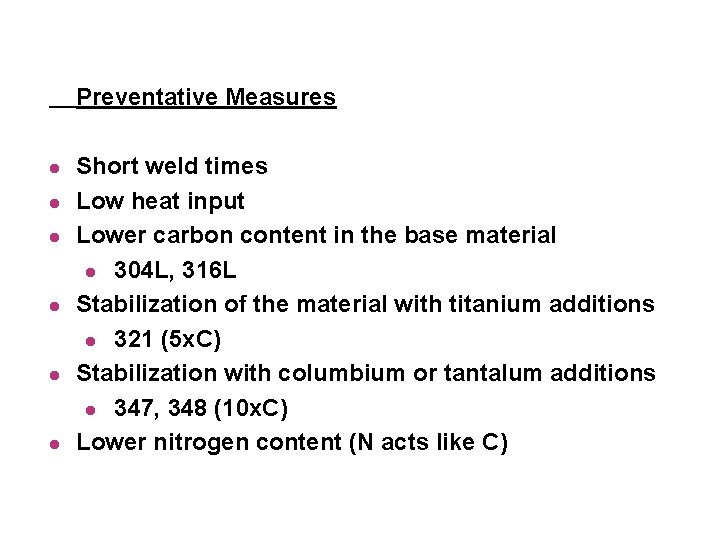
Preventative Measures l l l Short weld times Low heat input Lower carbon content in the base material l 304 L, 316 L Stabilization of the material with titanium additions l 321 (5 x. C) Stabilization with columbium or tantalum additions l 347, 348 (10 x. C) Lower nitrogen content (N acts like C)
Projection Welding Austenitic Stainless Steel Because of the Greater Thermal Expansion and Contraction, Head Follow-up is critical Solution • Press Type machines with low inertia heads • Air operated for faster action In Welding Tubes with Ring projections for leak tight application, electrode set-up is critical Solution • Test electrode alignment
Cross Wire Welding Austenitic Stainless Steel Often used for grates, shelves, baskets, etc. • Use flat faced electrodes, or • V-grooved electrodes to hold wires in a fixture • As many as 40 welds made at one time
Flash Welding Austenitic Stainless Steel • Current about 15% less than for plain carbon • Higher upset pressure • The higher upset requires 40 -50% higher clamp force • Larger upset to extrude oxides out
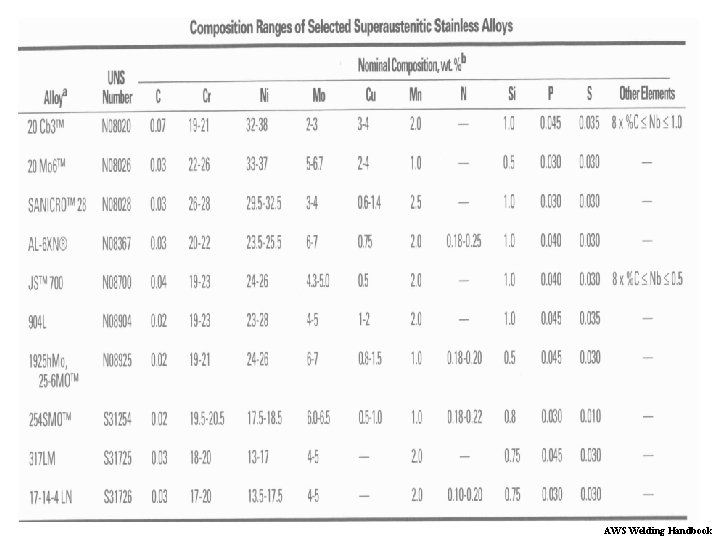
Super Austenitic Alloys with composition between standard 300 Austenitic SS and Ni-base Alloys • High Ni, High Mo • Ni & Mo- Improved chloride induced Stress Corrosion Cracking Used in • Sea water application where regular austenitics suffer pitting, crevice and SCC
AWS Welding Handbook
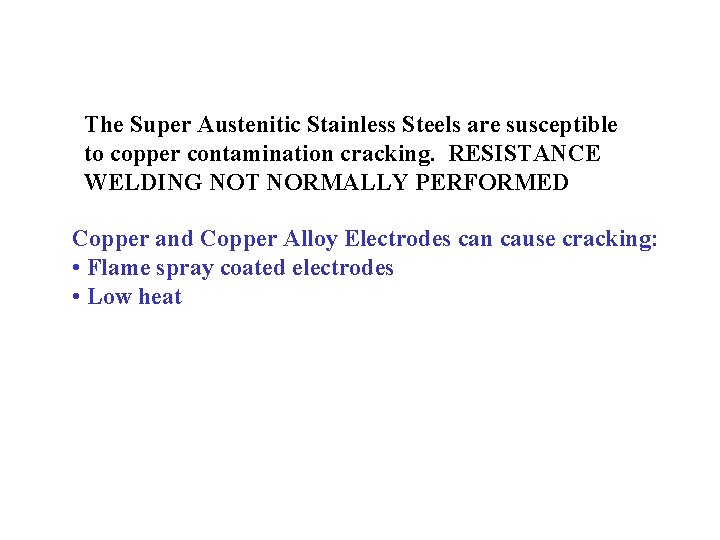
The Super Austenitic Stainless Steels are susceptible to copper contamination cracking. RESISTANCE WELDING NOT NORMALLY PERFORMED Copper and Copper Alloy Electrodes can cause cracking: • Flame spray coated electrodes • Low heat
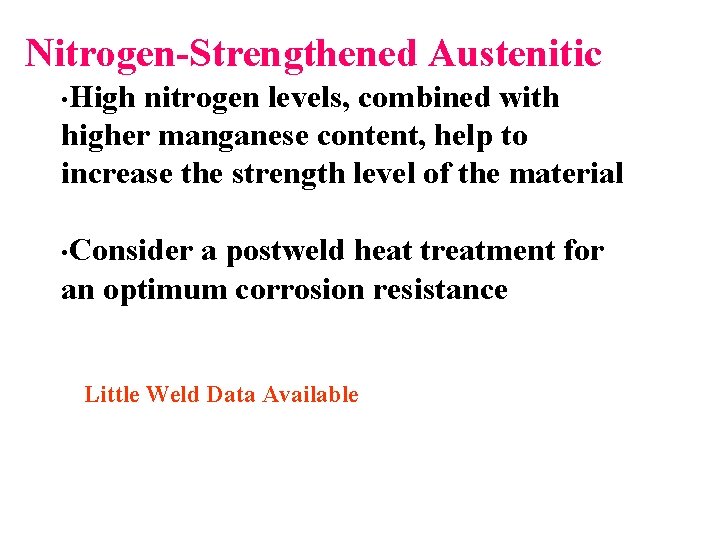
Nitrogen-Strengthened Austenitic • High nitrogen levels, combined with higher manganese content, help to increase the strength level of the material • Consider a postweld heat treatment for an optimum corrosion resistance Little Weld Data Available
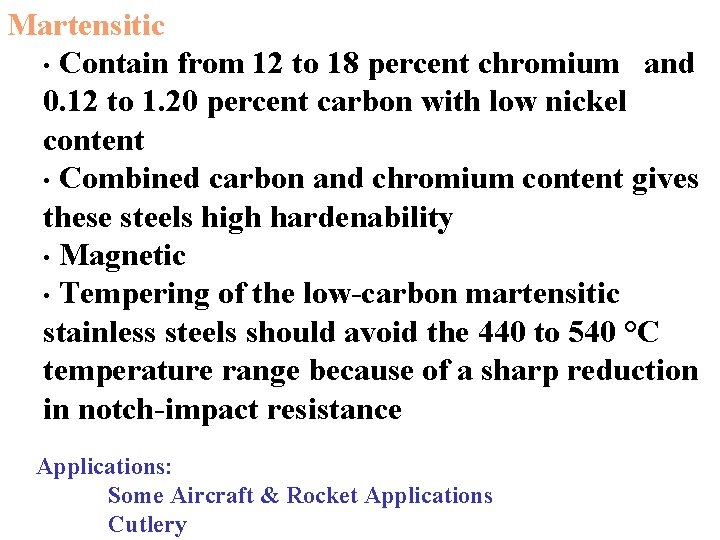
Martensitic • Contain from 12 to 18 percent chromium and 0. 12 to 1. 20 percent carbon with low nickel content • Combined carbon and chromium content gives these steels high hardenability • Magnetic • Tempering of the low-carbon martensitic stainless steels should avoid the 440 to 540 °C temperature range because of a sharp reduction in notch-impact resistance Applications: Some Aircraft & Rocket Applications Cutlery
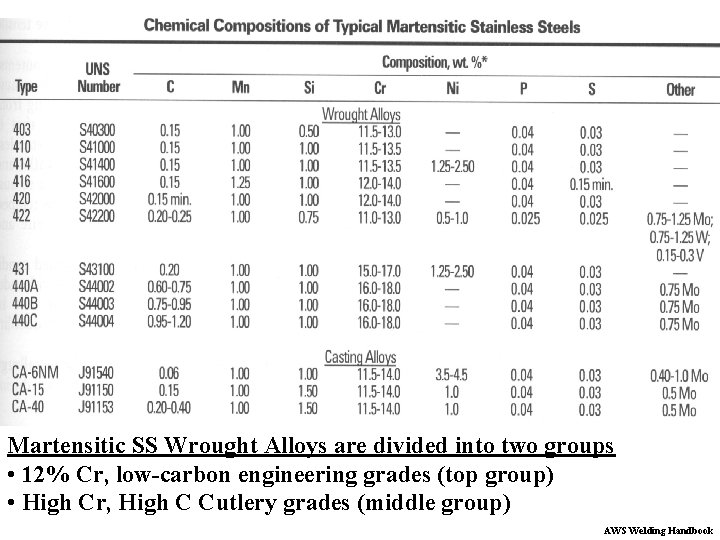
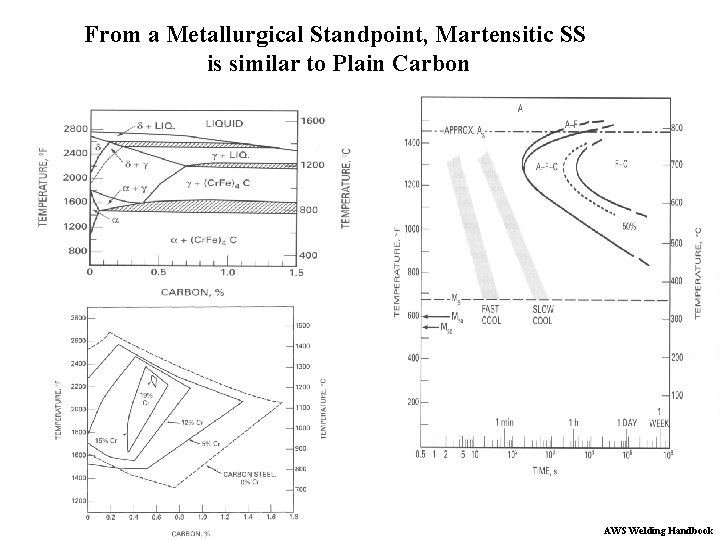
Martensitic SS Wrought Alloys are divided into two groups • 12% Cr, low-carbon engineering grades (top group) • High Cr, High C Cutlery grades (middle group) AWS Welding Handbook
From a Metallurgical Standpoint, Martensitic SS is similar to Plain Carbon AWS Welding Handbook
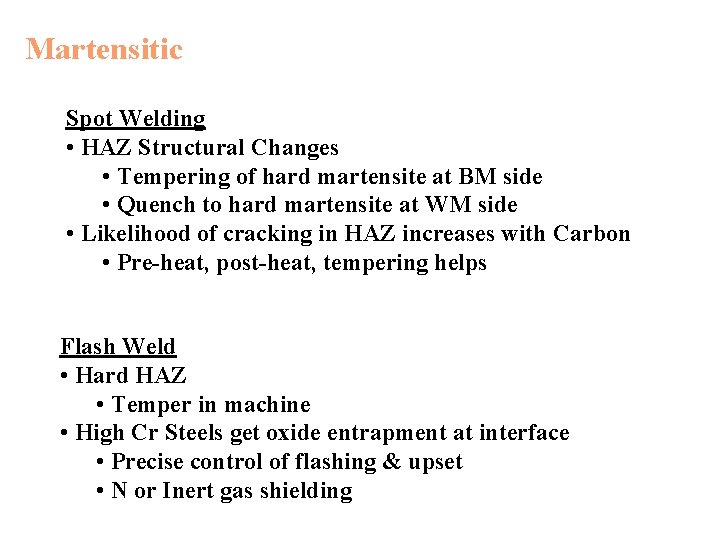
Martensitic Spot Welding • HAZ Structural Changes • Tempering of hard martensite at BM side • Quench to hard martensite at WM side • Likelihood of cracking in HAZ increases with Carbon • Pre-heat, post-heat, tempering helps Flash Weld • Hard HAZ • Temper in machine • High Cr Steels get oxide entrapment at interface • Precise control of flashing & upset • N or Inert gas shielding
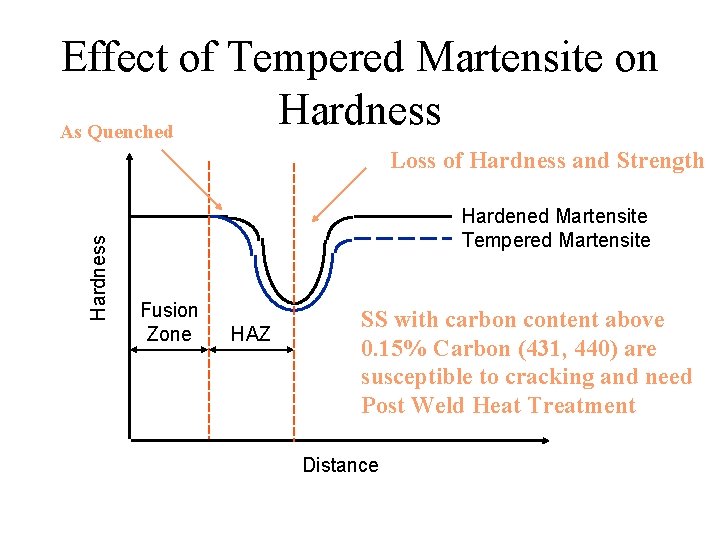
Effect of Tempered Martensite on Hardness As Quenched Hardness Loss of Hardness and Strength Hardened Martensite Tempered Martensite Fusion Zone HAZ SS with carbon content above 0. 15% Carbon (431, 440) are susceptible to cracking and need Post Weld Heat Treatment Distance
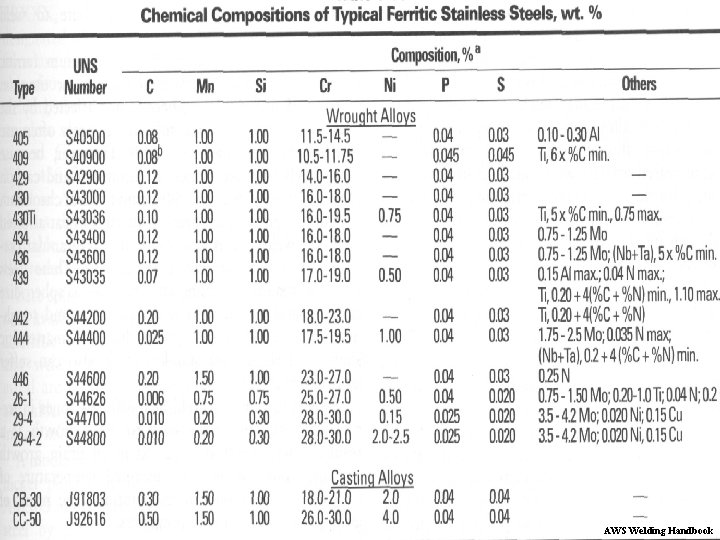
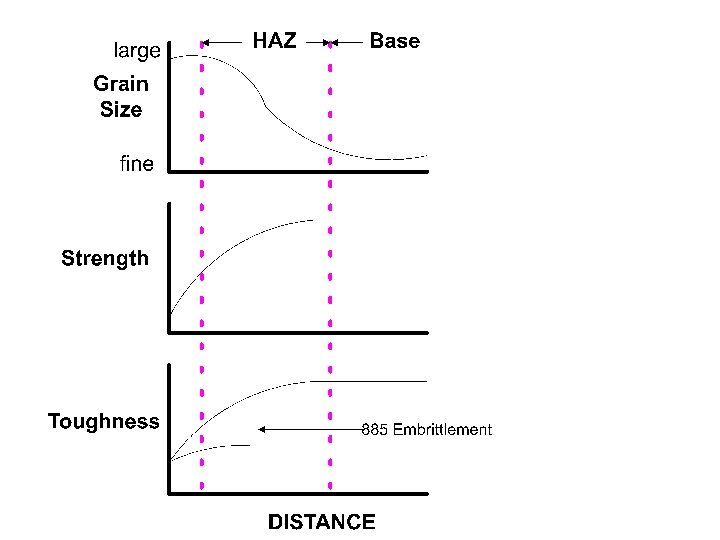
Ferritic Contain from 11. 5 to 27 percent chromium, with additions of manganese and silicon, and occasionally nickel, aluminum, molybdenum or titanium • Ferritic at all temperatures, no phase change, large grain sizes • Non-hardenable by heat treatment • Magnetic (generally) • Applications: Water Tanks in Europe Storage Tanks
AWS Welding Handbook
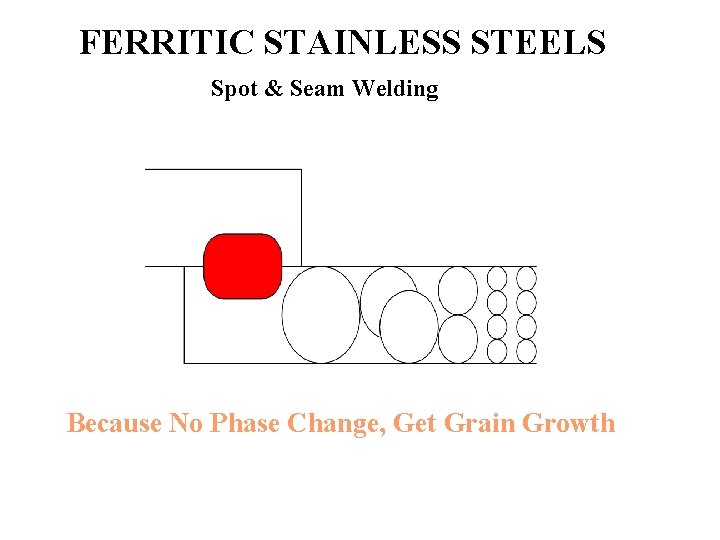
FERRITIC STAINLESS STEELS Spot & Seam Welding Because No Phase Change, Get Grain Growth
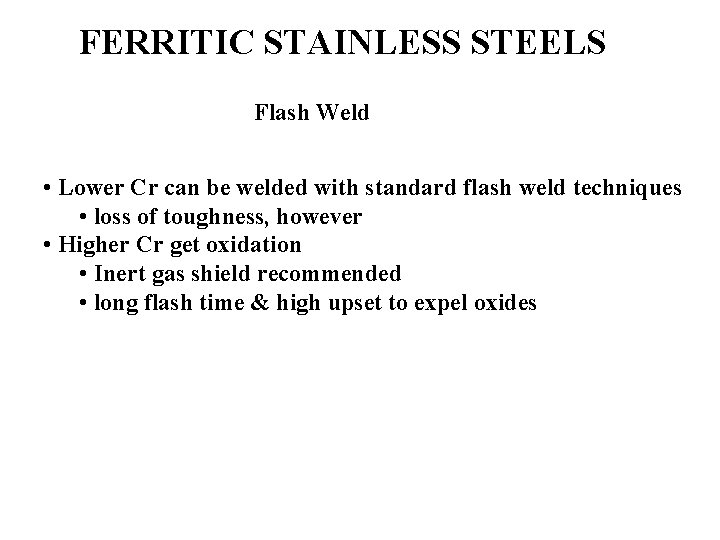
FERRITIC STAINLESS STEELS Flash Weld • Lower Cr can be welded with standard flash weld techniques • loss of toughness, however • Higher Cr get oxidation • Inert gas shield recommended • long flash time & high upset to expel oxides
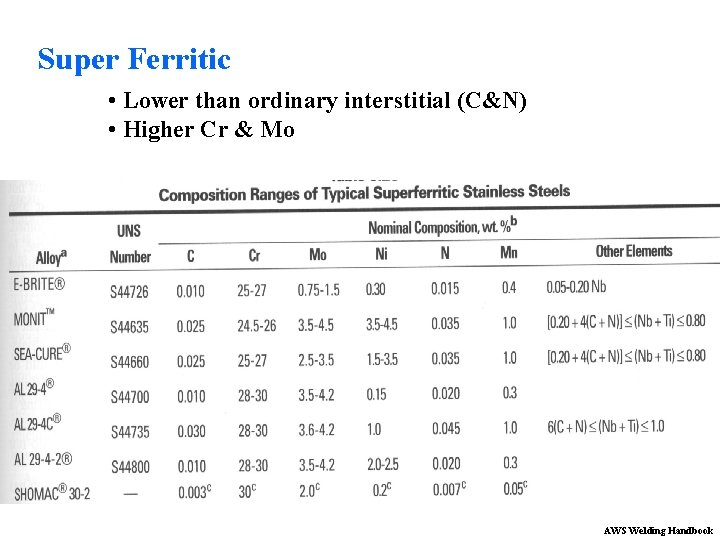
Super Ferritic • Lower than ordinary interstitial (C&N) • Higher Cr & Mo AWS Welding Handbook
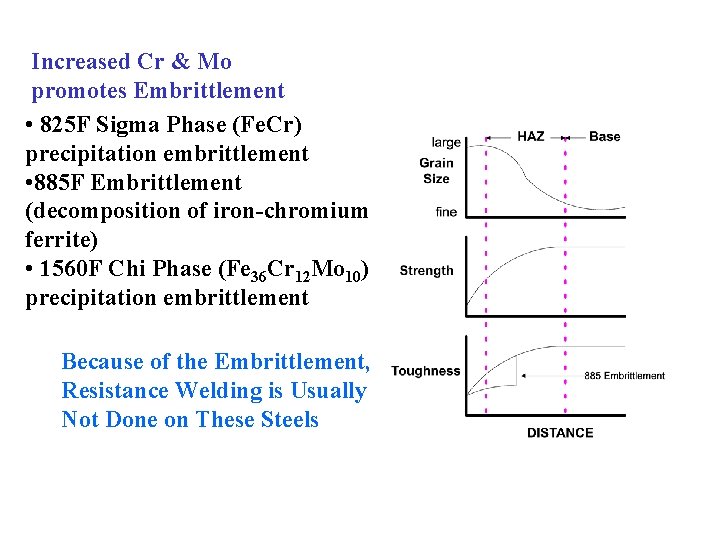
Increased Cr & Mo promotes Embrittlement • 825 F Sigma Phase (Fe. Cr) precipitation embrittlement • 885 F Embrittlement (decomposition of iron-chromium ferrite) • 1560 F Chi Phase (Fe 36 Cr 12 Mo 10) precipitation embrittlement Because of the Embrittlement, Resistance Welding is Usually Not Done on These Steels
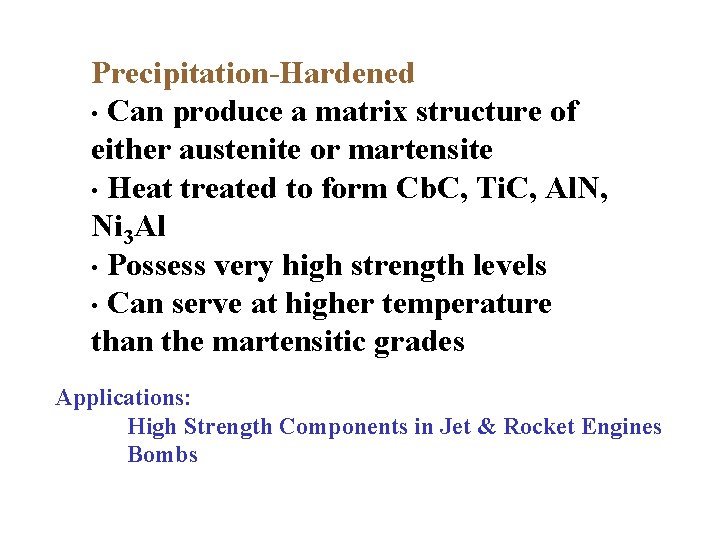
Precipitation-Hardened • Can produce a matrix structure of either austenite or martensite • Heat treated to form Cb. C, Ti. C, Al. N, Ni 3 Al • Possess very high strength levels • Can serve at higher temperature than the martensitic grades Applications: High Strength Components in Jet & Rocket Engines Bombs
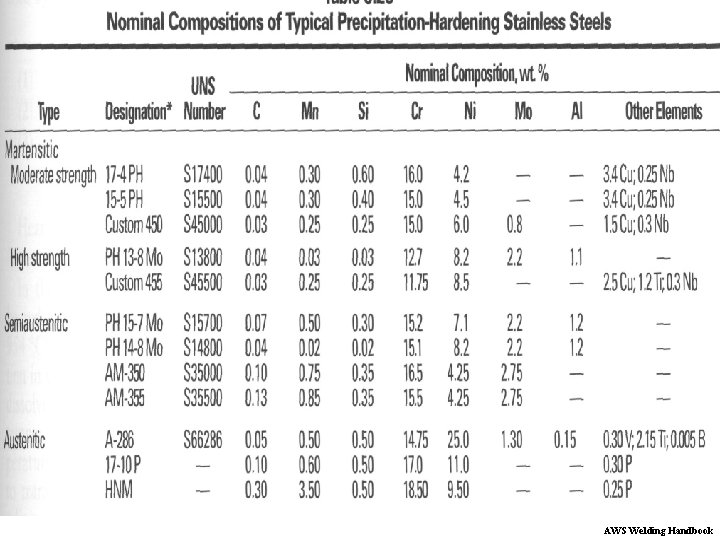
AWS Welding Handbook
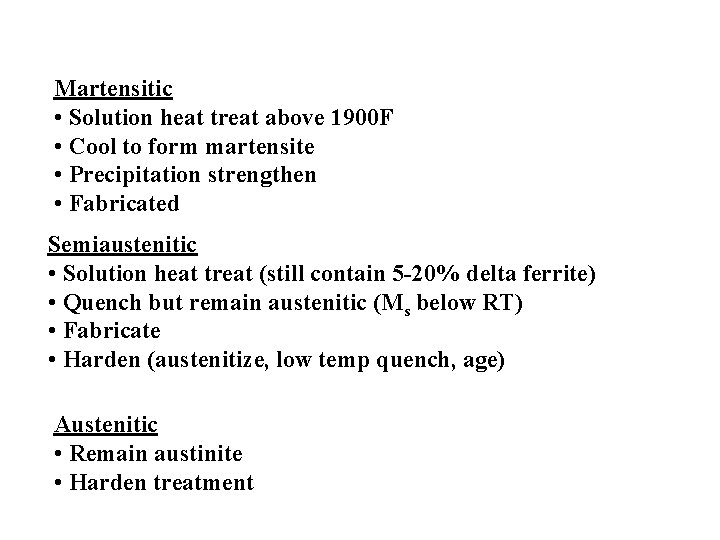
Martensitic • Solution heat treat above 1900 F • Cool to form martensite • Precipitation strengthen • Fabricated Semiaustenitic • Solution heat treat (still contain 5 -20% delta ferrite) • Quench but remain austenitic (Ms below RT) • Fabricate • Harden (austenitize, low temp quench, age) Austenitic • Remain austinite • Harden treatment
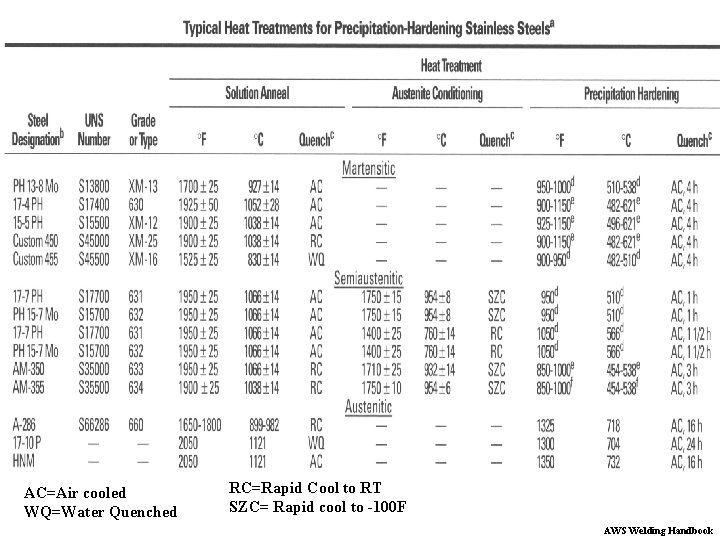
AC=Air cooled WQ=Water Quenched RC=Rapid Cool to RT SZC= Rapid cool to -100 F AWS Welding Handbook
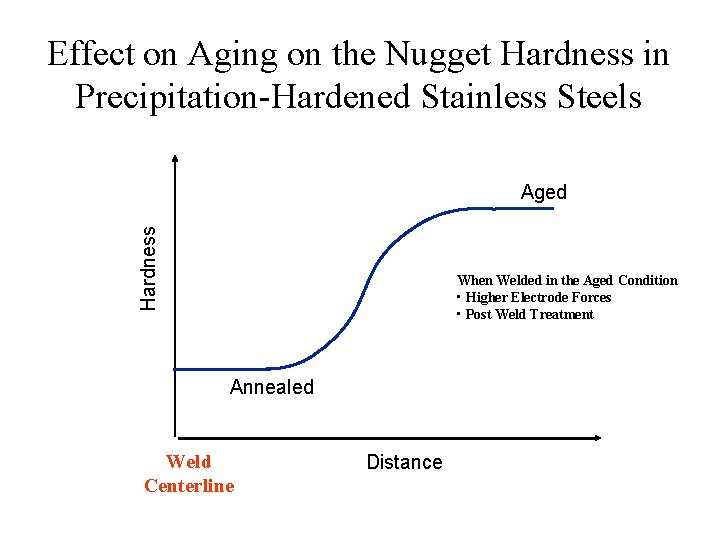
Effect on Aging on the Nugget Hardness in Precipitation-Hardened Stainless Steels Hardness Aged When Welded in the Aged Condition • Higher Electrode Forces • Post Weld Treatment Annealed Weld Centerline Distance
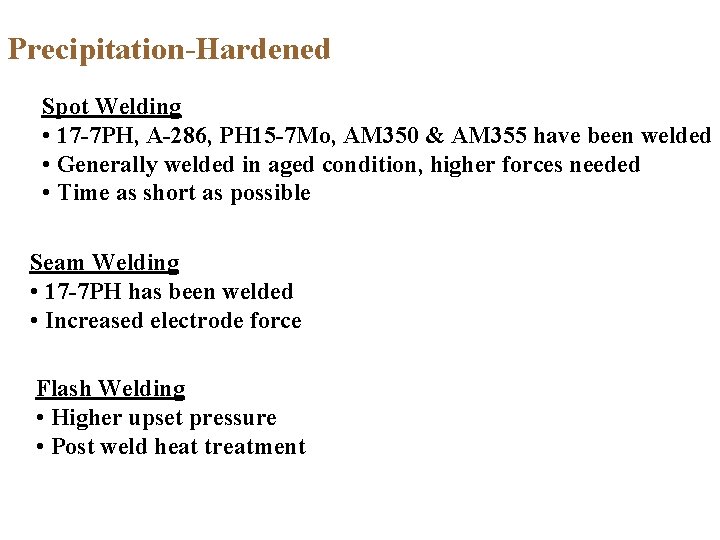
Precipitation-Hardened Spot Welding • 17 -7 PH, A-286, PH 15 -7 Mo, AM 350 & AM 355 have been welded • Generally welded in aged condition, higher forces needed • Time as short as possible Seam Welding • 17 -7 PH has been welded • Increased electrode force Flash Welding • Higher upset pressure • Post weld heat treatment
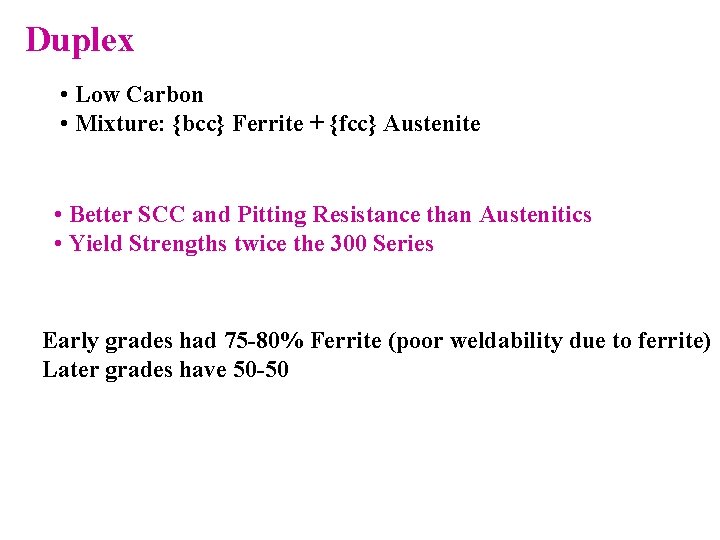
Duplex • Low Carbon • Mixture: {bcc} Ferrite + {fcc} Austenite • Better SCC and Pitting Resistance than Austenitics • Yield Strengths twice the 300 Series Early grades had 75 -80% Ferrite (poor weldability due to ferrite) Later grades have 50 -50
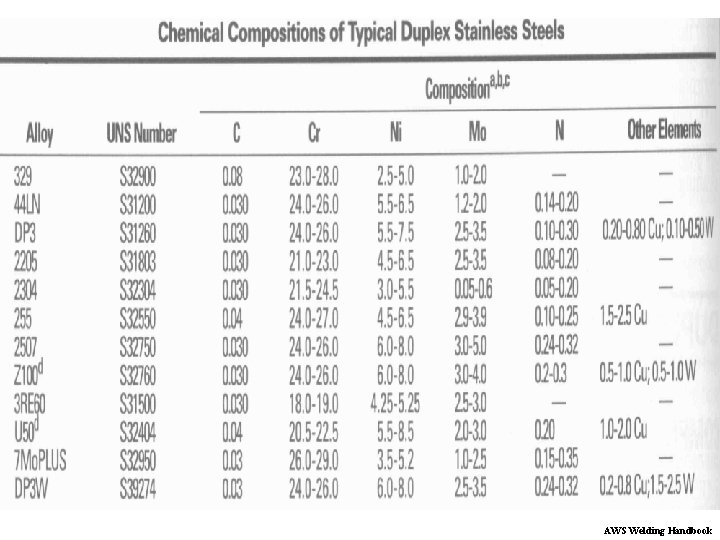
AWS Welding Handbook
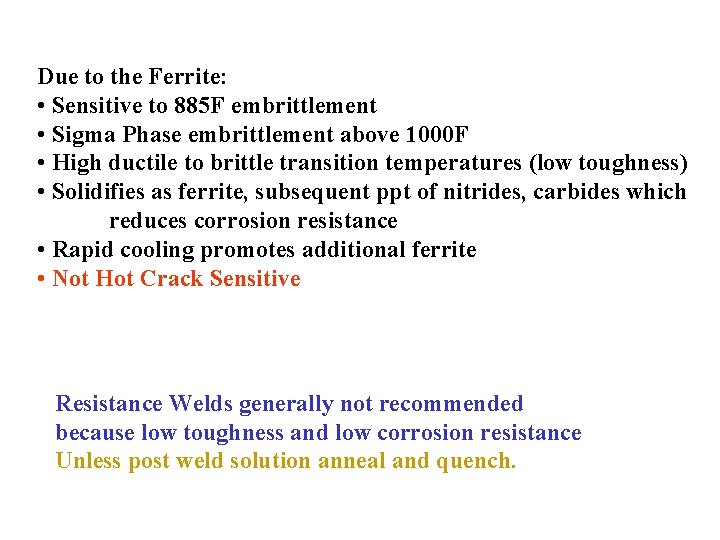
Due to the Ferrite: • Sensitive to 885 F embrittlement • Sigma Phase embrittlement above 1000 F • High ductile to brittle transition temperatures (low toughness) • Solidifies as ferrite, subsequent ppt of nitrides, carbides which reduces corrosion resistance • Rapid cooling promotes additional ferrite • Not Hot Crack Sensitive Resistance Welds generally not recommended because low toughness and low corrosion resistance Unless post weld solution anneal and quench.
Some Applications
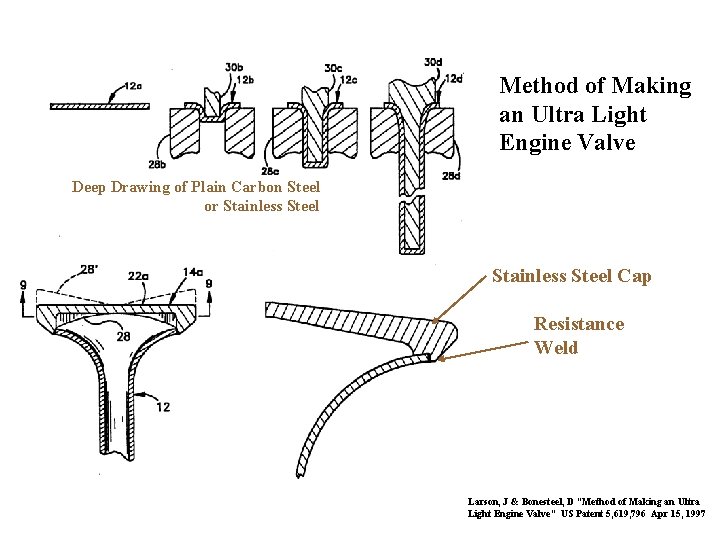
Method of Making an Ultra Light Engine Valve Deep Drawing of Plain Carbon Steel or Stainless Steel Cap Resistance Weld Larson, J & Bonesteel, D “Method of Making an Ultra Light Engine Valve” US Patent 5, 619, 796 Apr 15, 1997