
Stages of Readiness Principles Motivation exists along a
- Slides: 17
Stages of Readiness “Principles” Motivation exists along a continuum of readiness; Clients progress through stages in a spiral (not linear); When enhancing motivation, if the clinicians use strategies in a stage other than the one the client is in, the result could be treatment noncompliance; If clinicians push clients at a faster pace than they are ready to take, therapeutic alliance may break down; Relapse is an event, not a stage.
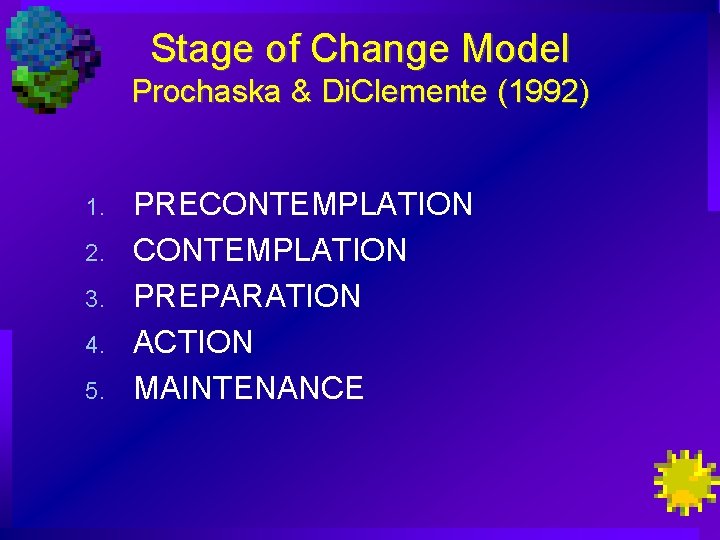
Stage of Change Model Prochaska & Di. Clemente (1992) 1. 2. 3. 4. 5. PRECONTEMPLATION PREPARATION ACTION MAINTENANCE
Stage 1: Pre-Contemplation Individual is unaware, unable, unwilling to change. No intent to change. Indicators: argue, interrupt, deny, ignore, avoid reading, talking, or thinking about the behavior… Individual is traditionally characterized as resistant, unmotivated.
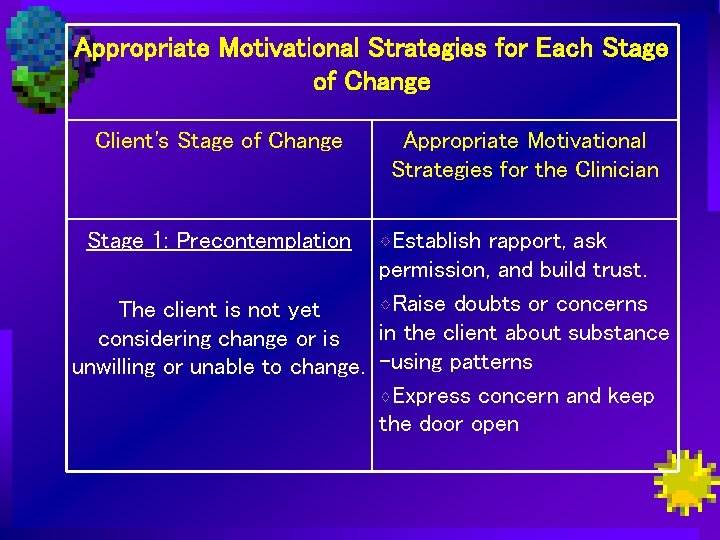
Stage 1: Pre-Contemplation: Clinical Tools Establish rapport Determine why the client has come to you. Introduce ambivalence about recovery – why it might be a good idea, e. g. , “why do you thing other people decide to manage their disorders? ” Give information on risks, pros & cons of use Acknowledge the client’s thoughts, feelings, fears, and concerns.
Stage 2: Contemplation Individual is ambivalent or uncertain regarding behavior change. Indicators: Individual meets clinician “half way, ” willing to look at pro and cons of behavior change Individual is traditionally characterized as unpredictable, time intensive.
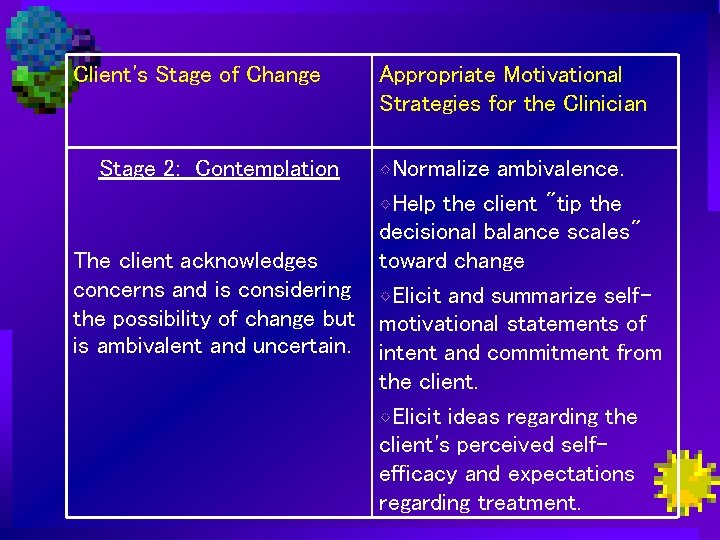
Stage 2: Contemplation Clinical Tools Discuss & weigh pros/cons of recovery Emphasize client’s free choice & responsibility Elicit self-motivational statements Discuss the client’s goals in life, how will recovery affect these? Reduce the fear of recovery through example and problem solving Ask questions that clarify motivation e. g. , “what’s most important to you… why? ”
Stage 3: Preparation Individual shifts from thinking about behavior change to planning first steps. Indicators: Individual asks questions, considers options, demonstrates openness in considering behavior change. Individual is traditionally characterized as compliant, “coming along, ”, “good to work with. ”
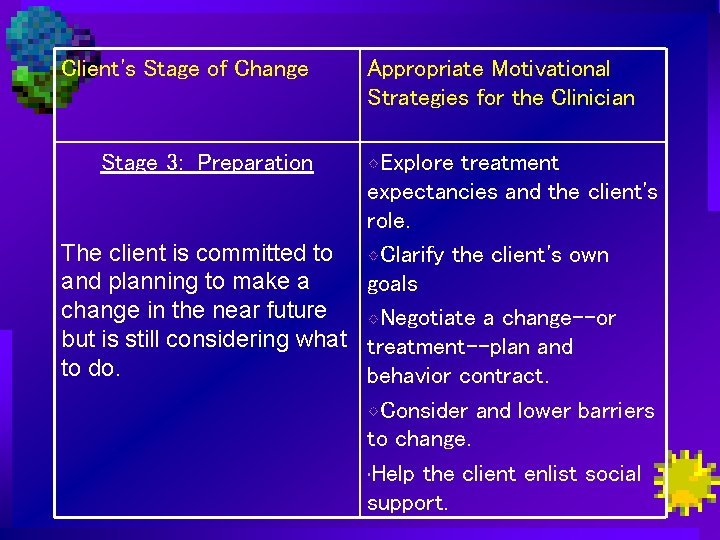
Stage 3: Preparation Clinical Tools Support efforts to change Clarify goals & identify successful strategies Structure plan of action with client based on client’s history and willingness, allowing client to decide Encourage client to commit to action Give client clear, consistent and unequivocal message about recovery
Stage 4: Action Individual demonstrates steps toward behavior change such as periods of abstinence. Indicators: Individual is receptive to clinical interventions. Treatment compliance is normal. Demonstrated behavior change affects positive outcomes in other areas (i. e. , relationships at home and work). Individual is traditionally characterized as “successful, ” “working the program. ”
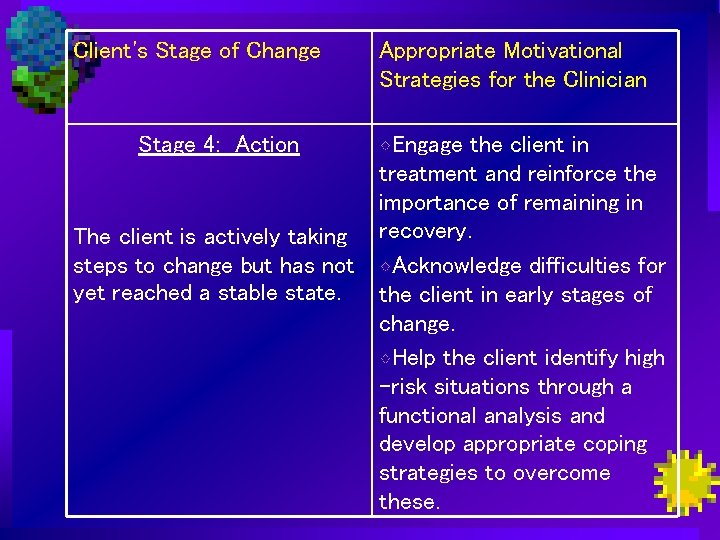
Stage 4: Action Clinical Tools Seek commitment to specific behavioral change at each session Acknowledge difficulties, support even minimal progress Identify risky situations, triggers & coping strategies Help client find new reinforcers Support perseverance (“Sticking to the plan”)
Stage 5: Maintenance Individual sustains treatment goals. Indicators: Individual has made behavior changes, practices stable abstinence, met treatment goals, and practices healthy coping strategies. Individual is traditionally characterized as “ready for successful discharge, ” “no longer needing treatment, ” “ready for aftercare. ”
Stage 5: Maintenance Clinical Tools Support and affirm changes Rehearse new coping strategies and countermeasures to triggers Review personal growth long-term goals Encourage client to contribute to recovery of others
Appropriate Motivational Strategies for Each Stage of Change Client's Stage of Change Stage 1: Precontemplation Appropriate Motivational Strategies for the Clinician Establish rapport, ask permission, and build trust. Raise doubts or concerns The client is not yet in the client about substance considering change or is unwilling or unable to change. -using patterns Express concern and keep the door open
Client's Stage of Change Stage 2: Contemplation The client acknowledges concerns and is considering the possibility of change but is ambivalent and uncertain. Appropriate Motivational Strategies for the Clinician Normalize ambivalence. Help the client "tip the decisional balance scales" toward change Elicit and summarize selfmotivational statements of intent and commitment from the client. Elicit ideas regarding the client's perceived selfefficacy and expectations regarding treatment.
Client's Stage of Change Stage 3: Preparation Appropriate Motivational Strategies for the Clinician Explore treatment expectancies and the client's role. The client is committed to Clarify the client's own and planning to make a goals change in the near future Negotiate a change--or but is still considering what treatment--plan and to do. behavior contract. Consider and lower barriers to change. • Help the client enlist social support.
Client's Stage of Change Stage 4: Action The client is actively taking steps to change but has not yet reached a stable state. Appropriate Motivational Strategies for the Clinician Engage the client in treatment and reinforce the importance of remaining in recovery. Acknowledge difficulties for the client in early stages of change. Help the client identify high -risk situations through a functional analysis and develop appropriate coping strategies to overcome these.
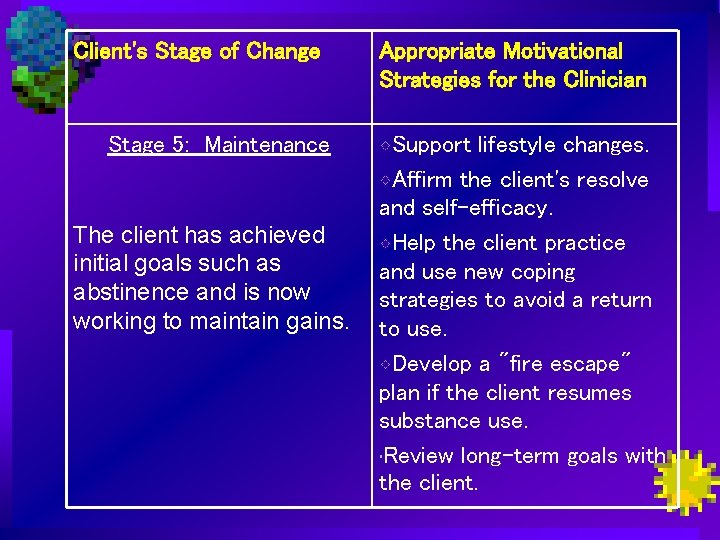
Client's Stage of Change Stage 5: Maintenance The client has achieved initial goals such as abstinence and is now working to maintain gains. Appropriate Motivational Strategies for the Clinician Support lifestyle changes. Affirm the client's resolve and self-efficacy. Help the client practice and use new coping strategies to avoid a return to use. Develop a "fire escape" plan if the client resumes substance use. • Review long-term goals with the client.